Across every culture that left written records, and many that didn’t, animals have served as the primary vocabulary humans used to talk about things they couldn’t otherwise name. The answer to what animal symbolism actually is turns out to be simpler than most sites suggest and stranger than most people expect, and the specific tradition you’re standing in changes the meaning entirely.
Key Takeaways
- Animal symbolism is culturally specific. A wolf means something different in Dena’ina Athabascan oral tradition than it does in medieval German folk belief, and flattening those two readings into one “universal” meaning loses both.
- “Totem,” “spirit animal,” and “power animal” come from distinct linguistic and cultural roots. They are not interchangeable, and using them as synonyms flattens meanings that took centuries to develop.
- Real animal behavior underlies most symbolic tradition. Deer antlers that die and regrow every year. Arctic terns that fly 70,000 kilometers and come back. Elephants that remember. The biology gives the story its legs.
- Ancient omen systems were communal and structured, not personal fortune-telling. Roman augurs read birds within formalized ritual categories. Haudenosaunee elders interpret animal appearances within established story cycles. Neither tradition was running a horoscope service.
- Meaningful engagement with animal symbolism means knowing whose tradition you’re drawing on and why. A one-size-fits-all meaning list is the least reliable guide available.
What Is Animal Symbolism and Why Does It Matter Spiritually?
Richard Alois has worked in raptor rehabilitation for years in the North Carolina mountains. Animal symbolism is the practice of reading meaning into animals based on their behavior, appearance, and role in the world around us. Every recorded human culture has done this. Not some cultures. All of them. The specific meanings differ, sometimes dramatically, but the impulse to look at a hawk on a fence post and ask what it’s telling you is as old as the fence post, and older than the word “spiritual.” Understanding dead animals meanings is part of this ancient tradition.
I want to be honest about what this site does and doesn’t claim. I’m not a shaman. I hold no spiritual credentials. What I have is years of wildlife rehabilitation at a local wildlife center, a grandmother’s notebook of Bavarian folk-animal stories dating to the 1920s, and a reading habit that runs from Carl Jung to Cynthia Moss. I write about animal symbolism because the animals kept showing up in my life at moments when I needed to pay attention, and I wanted to understand what humans have historically made of that experience across traditions that actually named their sources.
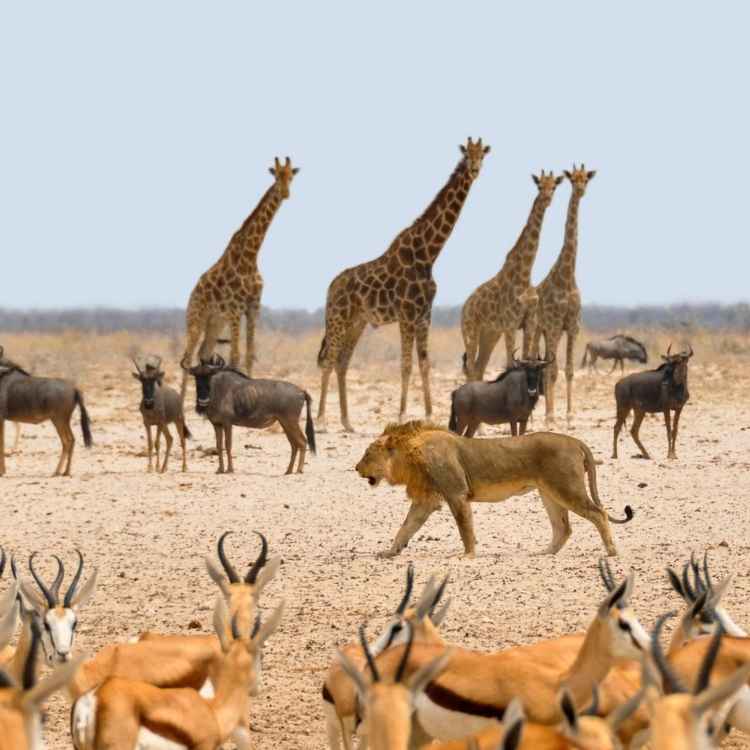
What strikes me most, after years of reading on this, is that animal symbolism across world cultures is not a collection of superstitions layered on top of biology. It’s closer to the opposite: it’s biology noticed so carefully, over so many generations, that the patterns started to carry weight.
How Have Animals Been Used as Spiritual Symbols Across Human History?
The oldest written record we have of animals as structured spiritual symbols comes from the Śatapatha Brāhmaṇa, composed in Sanskrit roughly between the 8th and 6th centuries BCE. In early Vedic fire ritual, domesticated animals, cows, goats, horses, were described as “cosmic currency,” offered to maintain ṛta, the cosmic order. This wasn’t casual folk belief. It was a documented system, described in texts, performed by specialists, and tied to specific outcomes.
Wendy Doniger’s Hindu Myths: A Sourcebook Translated from the Sanskrit (1975) traces how that sacrificial framing slowly shifted into something different: animals as vāhana, divine vehicles. The bull Nandin carries Śiva. The mouse carries Gaṇeśa. The eagle Garuḍa carries Viṣṇu. The animal stops being the offering and becomes the companion. That’s a significant conceptual move, and it happened over centuries.
In pharaonic Egypt, Erik Hornung documents in Conceptions of God in Ancient Egypt (1971, English translation 1982) that animals served as primary mediators between humans and gods. Falcon-headed Horus. Jackal-headed Anubis. Ibis-headed Thoth. These weren’t decorative choices. The forms were chosen because the animals’ observable behaviors matched the divine qualities being named. Thoth got the ibis because ibises are methodical, precise, and found along the Nile’s edges, appropriate for a god of writing and calculation.
And then there’s classical Greece, where Robert Parker’s Miasma: Pollution and Purification in Early Greek Religion (1983) documents a system so structured it required professional interpreters. Roman augurs read bird flight according to formalized categories. You couldn’t just look up and decide the eagle meant something good. The direction mattered, the species mattered, the ritual frame mattered. This is the opposite of personal omen-reading.
What Do Ancient Egyptian Religious Traditions Reveal About Animal Symbolism?
The short answer: Egyptians did not worship animals. This misconception has been repeated so often it’s become background noise, and Hornung’s scholarship cuts through it cleanly. What temple inscriptions at Edfu and Dendera show is that Egyptians distinguished sharply between the physical animal and the divine principle manifesting through it.
Bastet, the cat goddess, represents domestic protection and the contained, manageable aspect of solar power. The cat earns this role because cats are genuinely protective of households, genuinely territorial, and genuinely difficult to coerce. The animal’s real behavior is the foundation. The deity is the interpretation built on top of it.
Sobek, the crocodile god, embodied the Nile’s dangerous fertility. Anubis, jackal-headed, guarded the dead, jackals were observed near burial grounds, which Egyptians noticed and built meaning from. The animal mummies found at Saqqara represent a votive economy, offerings made to the divine principle the animal represented, not worship of the animal itself.
What this tradition reveals is something I find genuinely useful as a framework: the animal is the door. What’s on the other side of the door depends on what that specific culture observed about that specific animal over generations of watching.
What Does Hindu and Vedic Tradition Teach About the Spiritual Meaning of Animals?
Two distinct phases, and they’re worth keeping separate. Early Vedic tradition, as described in the Śatapatha Brāhmaṇa, treats animals as participants in cosmic maintenance. The sacrifice is not cruelty but transaction: the animal marks the boundary between the human world and the divine one, and its passage across that boundary is the ritual’s whole point. Frits Staal’s scholarship on Vedic ritual emphasizes this threshold function, the animal stands exactly at the line between human, divine, and non-human worlds.
Later Hindu devotionalism changes this substantially. The vāhana tradition reframes the animal as companion rather than offering. And what’s interesting is how precisely the vehicle matches the deity. Gaṇeśa, remover of obstacles, rides a mouse, small, adaptive, capable of getting through any gap. Viṣṇu, preserver of cosmic order, rides Garuḍa, the eagle, which hunts snakes (disorder) and ranges across vast distances. These aren’t arbitrary pairings. Someone watched these animals carefully before assigning them their theological roles.
According to Doniger’s Hindu Myths, the sacred cow occupies a specific position in this system: not a goddess, but a sign of divine abundance made visible. The cow is honored as a carrier of meaning, which is different from being the meaning itself. That distinction matters, and most popular spiritual content flattens it.
What Do Haudenosaunee and Indigenous North American Traditions Say About Animal Symbolism?
I want to be careful here, because this is not my tradition and I am not going to summarize it as if it were a chapter I read and now own. What I can do is point to the primary sources and say what they actually contain.
Arthur C. Parker’s Seneca Myths and Folk Tales (1923) and the earlier recitations recorded by John Arthur Gibson document a cosmology in which animals are not symbols in the Western sense at all. They are relatives. Co-creators. The Sky Woman narrative, widely attested across Haudenosaunee oral tradition, places a great turtle as the foundation of the earth itself. Turtle Island isn’t a metaphor. It’s a kinship claim. The muskrat who brings up mud from the bottom of the water is doing the same kind of work as any other community member.
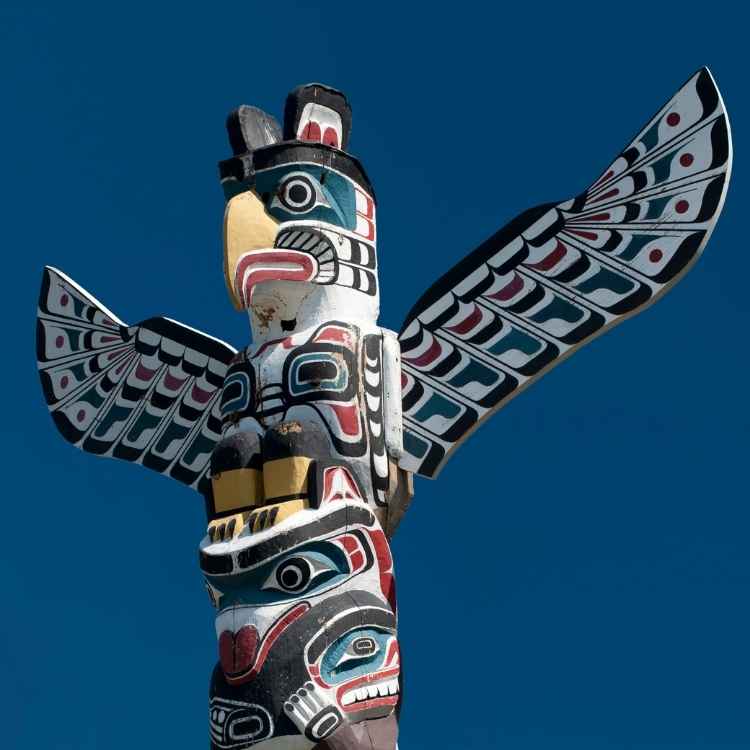
Clan systems among the Haudenosaunee peoples, Onondaga, Seneca, Mohawk, Oneida, Cayuga, Tuscarora, encode animal identities as social and political realities. Bear clan associations with healing are not spiritual aesthetics; they carry actual obligations within the community. The animal shapes what you are expected to do, and what you are expected to feel.
This is significantly different from the modern “spirit animal” concept, and I’ll address that divergence directly in the terminology section below. The short version: these traditions are communal and embedded in specific kinship systems. They were never individualized horoscopes.
What Did Ancient Greek and Classical Traditions Understand About Animal Omens?
Greek and Roman omen-reading was a profession. Not a hobby, not a personal practice, a specialized skill requiring years of training, performed within formal ritual contexts. The word hieroscopy refers to reading the entrails of sacrificed animals for omens, and it was conducted by trained haruspices at civic and military events. You didn’t do this alone before making a decision. You hired someone.
Bird augury worked similarly. According to Homer’s Iliad and Odyssey, warriors interpreted bird flight as signs of victory or doom, but within established categories. An eagle carrying prey in its talons, flying to the right: favorable. The direction, the species, the prey, the flight path, all of it mattered. Robert Parker’s Miasma documents how these systems functioned as communal risk-assessment tools, not personal guidance.
The Oxyrhynchus Papyri, a collection of documents found in Egypt dating from the 1st through 6th centuries CE, includes divinatory manuals that show how systematized this had become by the Hellenistic period. These were reference texts, consulted by specialists. The modern equivalent would be a physician consulting diagnostic criteria, not a person googling their symptoms at midnight.
And the snake. Snakes in classical Greek tradition belong to Asclepius, god of medicine, and appear wound around his staff (the caduceus conflation with Hermes is a later confusion, but that’s a longer story). Snakes here represent healing specifically because of their skin-shedding, their apparent renewal. Biology again, turned into symbol by observation.
What Is the Real Meaning of “Spirit Animal,” “Totem,” and “Power Animal”, and Are They the Same Thing?
No. They’re not the same thing, and the conflation matters for reasons beyond academic correctness.
Totem comes from Anishinaabemowin (Ojibwe) doodem, meaning clan. Henry R. Schoolcraft documented this in 1847, and later anthropologists confirmed the core meaning: a totem is a social-political identity marker, shared by a kin group, carrying specific obligations and prohibitions. It is inherited. It is communal. You don’t choose a totem by meditating or taking a quiz.
Nagual (or nahual) comes from Nahuatl nāhualli, a Mesoamerican term for a human’s companion or alter-ego spirit, often in animal form. Alfredo López Austin’s The Human Body and Ideology (1988) documents how this concept functions in Nahua tradition: the nagual is not chosen by the individual but assigned at birth based on the day-sign calendar. It is a cosmological fact about a person, not a reflection of their personality.
Familiar is an early modern English term from 16th and 17th-century English and Scottish witch trial records. An animal spirit allied with a witch. Cats, toads, hares. This is a specific European folk-magic tradition, and it has nothing to do with the Ojibwe doodem system.
Power animal is largely a product of Michael Harner’s 1980 book The Way of the Shaman, which synthesized shamanic practices from multiple cultures into a workshop-ready framework. It’s not a traditional term. It’s a modern synthesis.
Across traditions, the common thread is that animal companions or markers were serious, specific, and embedded in community life. The modern version, pick an animal that resonates with you, is a significant departure from all of these. I’m not saying it has no value. I’m saying it’s a different thing with a different history, and calling it by the older names obscures that.
How Do an Animal’s Real Behaviors Shape Its Spiritual Symbolism?
The symbolism is not arbitrary. It maps directly onto observed behavior, and this is the part that I find most useful as someone who has spent years watching actual raptors recover from actual injuries at a local wildlife center.
White-tailed deer males grow and shed antlers every year. According to the IUCN Red List account for Odocoileus virginianus (2016), antlers can grow more than two centimeters per day at peak season. Die and regrow, die and regrow, annually, visibly, dramatically. The antlered figure Cernunnos on the Gundestrup Cauldron, dating to the 1st century BCE, is not an arbitrary image. Someone watched stags every autumn and every spring for generations before carving that figure. Cyclical renewal as a symbol comes from cyclical renewal as a biological fact.
Arctic terns. Oh, their migrations. Geolocator studies published by Egevang et al. in 2010 and summarized by BirdLife International’s species factsheet for Sterna paradisaea (2022) show that Arctic terns migrate more than 70,000 kilometers annually, between Arctic breeding grounds and Antarctic waters. Round trip. Every year. This is a bird the size of a coffee mug crossing the equivalent of nearly two trips to the moon. The symbolism of birds as messengers between worlds comes from watching birds go somewhere and come back. The tern takes this to a degree that makes the symbol almost too obvious.
African savanna elephants (Loxodonta africana) live more than 60 years in the wild, with a generation length of about 25 years according to the IUCN Red List assessment (2021). Cynthia Moss’s Elephant Memories (1988) documented matriarchs retaining detailed memory of water sources and social partners across decades. The symbolism of elephants as embodiments of wisdom and steadfastness, in Hindu, Buddhist, and popular iconography, grows directly from watching elephants do the thing that wisdom requires: remember accurately over a long time.
What Are the Most Widely Recognized Animal Symbols and What Do They Mean Across Cultures?
Rather than listing meanings as if they were facts, I want to show where the readings agree and where they genuinely conflict. The conflicts are more useful than the agreements.
Wolf: In some Dena’ina Athabascan narratives, wolves are admired kin, intelligent hunters worth watching and learning from. In medieval German rural folklore, wolves are witch-associated, dangerous, creatures of the forest’s dark edge. Same animal. Opposite valence. Which reading is “correct” depends entirely on whether you live inside a tradition that sees the wolf as neighbor or as threat.
Owl: Wise in Athenian iconography (the owl of Athena, the little owl Athena noctua, on the coin). Ominous in many Middle Eastern and Mediterranean folk beliefs, where an owl calling near a house foretells a death. My grandmother Theresa wrote about owls in her notebook from the Bavarian Forest, and her entry is not about wisdom. It’s about warning. I grew up with that tradition before I ever knew there was a competing one. I hold both now, and I don’t think either one is wrong, I think they’re reading the same bird from different life experiences.
For a deeper breakdown by specific species, including different owls and their meanings, see our guide to dead animal encounters and their meanings, which covers what specific sightings have historically signaled across documented traditions.
Crow and raven: Messengers in Norse tradition (Odin’s ravens Huginn and Muninn, “Thought” and “Memory,” sent out each morning to report on the world). Tricksters in many Pacific Northwest indigenous traditions. Death-adjacent in some European folk belief. The crow in Theresa’s notebook is a messenger. I’ve come to think of the messenger reading as the most structurally consistent across traditions, but I want to be honest: I haven’t read everything, and the folk record is messier than any summary suggests.
Butterfly, turtle, eagle, bear, snake, hawk, deer: These deserve their own full articles, which we have. The short version: the symbolism of each one tracks closely with what the animal actually does. Butterflies transform. Turtles carry their homes and live slowly. Eagles see from height. Bears hibernate and return. Snakes shed their skins. Hawks hunt from above with precision. Deer regenerate. Across traditions, the common thread is that the symbolic meaning follows the behavior. Start with the biology and you’ll understand the symbol faster than starting with the meaning list.
What Do Ocean and Water Animals Symbolize Spiritually?
This is the section competitors mostly skip, which is a gap worth filling, because water animals carry a specific weight in symbolic tradition that land animals don’t share: they live in the part of the world that humans cannot inhabit, which makes them natural stand-ins for the unconscious, the unknown, and the world below the surface of ordinary experience.
In Haudenosaunee cosmology, as documented in Arthur C. Parker’s Seneca Myths and Folk Tales, water is the original world. The earth as we know it is built on top of the sea, on the back of a turtle. Water creatures, turtle, muskrat, loon, are the ones who make the habitable world possible. They’re not symbols of the unconscious; they’re ancestors.
What Are the Biggest Misconceptions About Animal Symbolism You Should Stop Believing?
Misconception one: animals have one universal meaning everywhere. According to research on animal symbolism misconceptions, the wolf-equals-loyalty claim that appears on dozens of sites is contradicted by documented traditions in which wolves are dangerous outsiders. Owls are wise in Athens and ominous in Babylon. No single meaning travels cleanly across all cultures, because meaning is made by people inside specific histories, not by the animals themselves.
Frequently Asked Questions
What is the difference between a spirit animal and a totem animal?
A totem animal comes from Anishinaabemowin (Ojibwe) doodem, documented by Henry R. Schoolcraft in 1847, and refers to a clan identity marker that is inherited, communal, and carries social obligations. A spirit animal, as used in modern popular culture, is a personal guide chosen or identified by an individual. These are different concepts from different origins. The modern spirit animal idea draws loosely from multiple traditions without belonging to any of them. A totem is a social fact. A spirit animal, in current usage, is a personal relationship, a distinction worth holding onto.
Is it disrespectful to claim a spirit animal if I am not Indigenous?
The short answer is that using the term “spirit animal” to describe a personal animal affinity borrows a specific term from Ojibwe and related traditions in a way those communities have consistently said they find reductive. The underlying experience, feeling drawn to a particular animal, finding meaning in repeated sightings, is not disrespectful. It’s human. The disrespect is in claiming the specific cultural vocabulary without the cultural context. Many European folk traditions have their own animal-companion frameworks, including the familiar from English witch trial records and the Bavarian Tiersymbolik my grandmother practiced. There are other words available.
Which animal symbolizes protection across the most cultures?
I’d put the dog and the bear as the strongest candidates, though I hold that loosely. Dogs appear as guardians across Egyptian, Greek, Norse, and Mesoamerican traditions, often specifically at thresholds and in death-passage contexts. Bears appear as protectors in Haudenosaunee clan systems, in Germanic folk belief, and in Siberian shamanic traditions documented by ethnographers in the 19th and early 20th centuries. The snake, counterintuitively, also carries protective symbolism in Egyptian household religion (the uraeus cobra on royal headdresses) and in Greek Asclepian healing cults. No single animal wins universally, the cultural context shapes the reading too much.
What does it mean when an animal crosses your path?
Historically, this reading comes from structured augury systems, not spontaneous folk belief. Roman augurs read bird flight direction as favorable or unfavorable depending on which side the bird crossed from, within a formalized ritual space. Outside that ritual frame, the reading becomes less structured and more personal. What I’d say: if an animal crosses your path and the encounter sticks with you, that sticking is meaningful information about your own state of attention. What the animal itself “means” depends on which tradition’s reading you find most credible. The encounter is real. The interpretation is yours to make, with whatever sources you trust.
Do different colors of the same animal change its spiritual meaning?
Yes, in documented traditions. White animals carry distinct weight across multiple traditions: white deer in Bavarian and Irish folk belief appear as otherworldly messengers or guides at threshold moments. White crows appear in Welsh mythology as marked, unusual, significant. Black animals carry their own freight, often associated with the night, the underworld, or the boundary between life and death. A white owl and a barn owl are both owls, but they read differently in the traditions that paid attention to color. The short answer is: yes, color matters, and the specific tradition’s reading of a color matters more than any general rule.
What animals are considered bad omens and in which cultures?
Owls in many Middle Eastern and Mediterranean folk traditions signal death approaching. Ravens in some medieval European contexts, though in Norse tradition they are Odin’s messengers and carry no negative charge. Crows in certain Central European rural folklore carry disease associations. Bats in some Han Chinese folk belief carry good fortune (the word for bat, fú, sounds like the word for good luck), while in many Western European traditions bats are associated with witchcraft. The pattern I find most useful: animals associated with night, with carrion, or with the transition between life and death tend to carry warning associations in traditions where those boundaries are heavily managed.
How do I know if an animal is my personal symbol versus a random sighting?
Honestly, I don’t think there’s a reliable test for this, and I’d be suspicious of anyone who claims there is. What the documented traditions use as a threshold is repetition over time, significance of timing, and community confirmation. A single sighting is an event. The same species appearing at multiple significant moments, across months or years, starts to feel like a pattern, and patterns are worth taking seriously even when you can’t explain them. I keep a notebook for exactly this reason. Not because I’m certain the pattern means something outside my own mind, but because noticing it carefully seems worthwhile either way.
What is a nagual and how does it differ from a Western spirit animal?
A nagual (from Nahuatl nāhualli) is a person’s companion or alter-ego spirit in animal form, assigned at birth according to the day-sign calendar in Nahua tradition. According to Alfredo López Austin’s The Human Body and Ideology (1988), the nagual is a cosmological fact about a person’s constitution, not a chosen relationship. You don’t discover your nagual through meditation. It’s determined by the intersection of your birth date and the ritual calendar. This is completely different from modern spirit-animal discourse, in which personal resonance determines the relationship. The nagual is assigned. The modern spirit animal is chosen. Same surface concept, opposite structural logic.
Are national animals the same as spiritual animal symbols?
No. National animals are political decisions, made by governments or national bodies, often in the 19th or 20th centuries during periods of nation-building. The bald eagle as the United States national bird was chosen in 1782 by the Continental Congress, and Benjamin Franklin famously objected, preferring the turkey. Whether the bald eagle carries spiritual significance in any indigenous tradition is a separate question with a separate answer, and the two shouldn’t be conflated. Countries and their national animals are a political category. Animal symbolism in spiritual traditions is a different category with different origins and different stakes.
How do I use animal symbolism in meditation or spiritual practice without cultural appropriation?
Stay inside traditions you have some legitimate connection to, by heritage, by sustained study, or by explicit welcome from communities within those traditions. If you have European ancestry, there are substantial folk-animal traditions in German, Scandinavian, Irish, and English folklore that have been under-documented compared to indigenous traditions and deserve more attention. If you’re drawn to traditions outside your heritage, read the primary sources and the scholars those communities trust, cite your sources, and don’t dress the practice in vocabulary that belongs to a different community. The underlying practice of paying attention to animals is human. The specific terminology and framework belongs to specific people.
Sources
- Skullbliss: Animal Symbolism, What Do Different Animals Represent?
- Odysseus Theme Park: Myths and Reality About Animals (Part 2)
- IFAW: Animals and Their Symbolic Meaning Around the World
- Root and Seed: Animals with Cultural Significance
- European Academy of Religion and Society: Sacred Animals Across Religious Traditions
- Yale Teachers Institute: Animal Symbolism in World Cultures (1998)
- Rau Antiques: Animal Symbolism in Fine Art and Antiques
- Scientific Research Publishing: Animal Symbolism (peer-reviewed journal article)
- Wendy Doniger, Hindu Myths: A Sourcebook Translated from the Sanskrit (Penguin, 1975)
- Erik Hornung, Conceptions of God in Ancient Egypt: The One and the Many (Cornell University Press, 1982)
- Arthur C. Parker, Seneca Myths and Folk Tales (Buffalo Historical Society, 1923)
- Robert Parker, Miasma: Pollution and Purification in Early Greek Religion (Oxford University Press, 1983)
- Alfredo López Austin, The Human Body and Ideology (University of Utah Press, 1988)
- Cynthia Moss, Elephant Memories (William Morrow, 1988)
- Egevang et al., geolocator migration study of Arctic terns, Proceedings of the National Academy of Sciences (2010)
- IUCN Red List: Odocoileus virginianus (2016) and Loxodonta africana (2021)
- BirdLife International species factsheet: Sterna paradisaea (2022)