In medieval Europe, black goats were sacrificed at crossroads to ask for safe passage through dangerous territory. That choice tells you the animal wasn’t just a farm beast; it was a guide people trusted to move between worlds. Whether a black goat means protection or trickery depends on which old tradition you’re standing in.
Key Takeaways
- Goat symbolism varies sharply by culture and time period. No single meaning holds across all traditions.
- The Biblical scapegoat ritual in Leviticus 16 is about communal purification and the removal of impurity, not an inherently black or evil animal.
- Ancient Greek goat imagery, Pan, satyrs, the word tragōidia, centers on wilderness, fertility, and the edges of civilization, not on evil.
- The Satanic goat image (Baphomet, the horned figure) is substantially a 19th-century occult construction, not an ancient universal symbol.
- A black coat is a normal color variation in domestic goats. Its ritual significance is locally specific, not a cross-cultural sign of bad luck.
What Is the Spiritual Meaning of a Goat?
The goat’s core symbolic territory, across the traditions that have written about it most carefully, is the edge. Not evil, exactly. Not holiness either. The edge: the place where the domesticated world ends and the wild one begins. Domestic goats descend from wild goats of southwestern Asia, domesticated roughly 10,000 years ago, and they were never entirely tamed the way cattle or sheep were. They browse on margins, climb cliffs, eat bark and thorns, go where other livestock stop. That behavioral fact is the substrate of almost everything humans have made the goat mean.
So: independence, yes. Stubbornness, often. The capacity to carry something, sin, illness, grief, out of the inhabited world and into the wild.

What the goat is not, in most of the world’s older traditions, is simply evil. That reading came later, from one specific cultural moment. I’ll get to that.
What Does Goat Symbolism Look Like Across World Cultures?
The common thread across traditions is the goat as go-between: an animal that crosses from the human world into some other space and carries something with it. What it carries, and where it goes, changes by culture.
In ancient Israelite ritual, the goat carried communal sin into the wilderness.In Greek mythology, goat-figures like Panstood at the border of civilization and the wild beyond it. Among the Torghut Mongols of Hobogsair, Xinjiang, a black goat is used in a local protective ceremony meant to suppress a specific restless ghost. In recorded Slavic folk belief, a black goat’s pelt could appease a water spirit.

The goat is not the same animal in all these stories. But it is doing a recognizably similar job in each one: standing at a threshold, carrying something across it. What strikes me about goat symbolism is how consistent that threshold role is across cultures that never met. The specifics, which direction, what it carries, what color it is, depend entirely on local context.
What Did the Ancient Israelite Scapegoat Ritual Actually Mean?
The Yom Kippur ritual in Leviticus 16 is probably the most consequential goat story in Western cultural history, and it is also one of the most misread. Two male goats were brought before the priest. One was sacrificed to YHWH. The other had the community’s iniquities, the sins, the violations, the accumulated wrong of the year, confessed over it by the high priest, then sent alive into the wilderness, toward a place or figure named Azazel.
The text in Leviticus does not specify that this goat was black. According to Bible Odyssey’s 2024 entry on the scapegoat, the animal’s role was to physically carry contamination beyond the inhabited and sacred space, a ritual of communal purification and impurity transfer, not a condemnation of the animal itself. The word we now use, scapegoat, is not an ancient Hebrew term. It is a translation artifact: early interpreters read “the goat for Azazel” as an “emissary goat” or a goat “sent away,” and the English word followed from that.

Yosef Marcus, in “The Scapegoat Ritual: Between Biblical and Tannaitic Law” (2022), documents how Rabbinic interpretation later altered the practice, including traditions that the goat was eventually pushed from a cliff rather than simply released. Those later developments changed the tone. But the original ritual is about removal and purification, not about a black animal and not about the devil.
How Did Ancient Greece Use Goat Imagery in Religion and Mythology?
Greek goat symbolism runs through Pan, the satyrs, and a word most people use every day without knowing where it came from. The Greek word tragos means “male goat.” From it comes tragōidia, literally “goat song”, which is where the English word tragedy arrives. I don’t know exactly what the goat had to do with early Athenian drama; the etymology is well documented and the explanation still contested. But the connection is there.
Pan was part goat, legs, hooves, horns, and ears, and he was not a villain. He was the god of wild places, shepherds, and the music that gets into you when you’re alone in the hills. The uncanny feeling of open landscape, what the Greeks called panikon (panic), was his doing. The satyrs shared his goat characteristics and were associated with wine, sex, and the edges of the civilized world.

None of this is demonic in the Christian sense. Projecting later Christian demonology back onto Pan or the satyrs is a category error that distorts both traditions. When goat-figures became associated with Satan in medieval Christian iconography, that was a new reading, borrowing the visual vocabulary of wilderness-divinity and inverting it. The Greek original is not the source of the inversion. It is what the inversion was working against.
What Does the Torghut Black Goat Sacrifice Reveal About Color Symbolism?
This is the most specific piece of black goat documentation I have found, and it matters precisely because it is specific. Black Goat Sacrifice Among Torghuts in Hobogsair (Cambridge Repository, 2022) records a ceremony practiced by Torghut Mongols in Hobogsair county, Xinjiang, China. Practitioners carry a black goat to a mountain ritual site, offer its organs and body with sweets and libations, burn juniper, and walk in circles around the offerings. Local accounts explain that the rite is intended to suppress the ghost of a specific Kazakh woman and prevent illness or disaster from reaching the community.
So here, a black goat is used in a protective ceremony. Not evidence of evil. The animal chosen to address a specific local threat: a named ghost, a named fear. The black color may mark the animal as appropriate for the task (as it does in some Slavic practices) or may simply be what was available. The Cambridge record does not resolve that question.

What the Torghut ceremony shows is that black goat symbolism is locally situated. It means what it means in Hobogsair because of that community’s specific history and cosmology. It does not transfer to a universal rule.
What Role Does the Goat Play in Slavic Folk Belief?
Recorded Slavic folk belief places the goat, particularly a black one, at the intersection of the living world, the dead, and nonhuman powers. Encyclopedia.com’s entry on sheep and goats in folk tradition documents the belief that a water spirit could be appeased with the pelt of a black goat, and that a black goat could also be sacrificed on behalf of a deceased person.
This is a mediating role. The goat stands between categories: living and dead, human and spirit, the settled and the watery unknown. That is consistent with what the goat does in other traditions: it goes where other animals don’t, it crosses from one world into another.
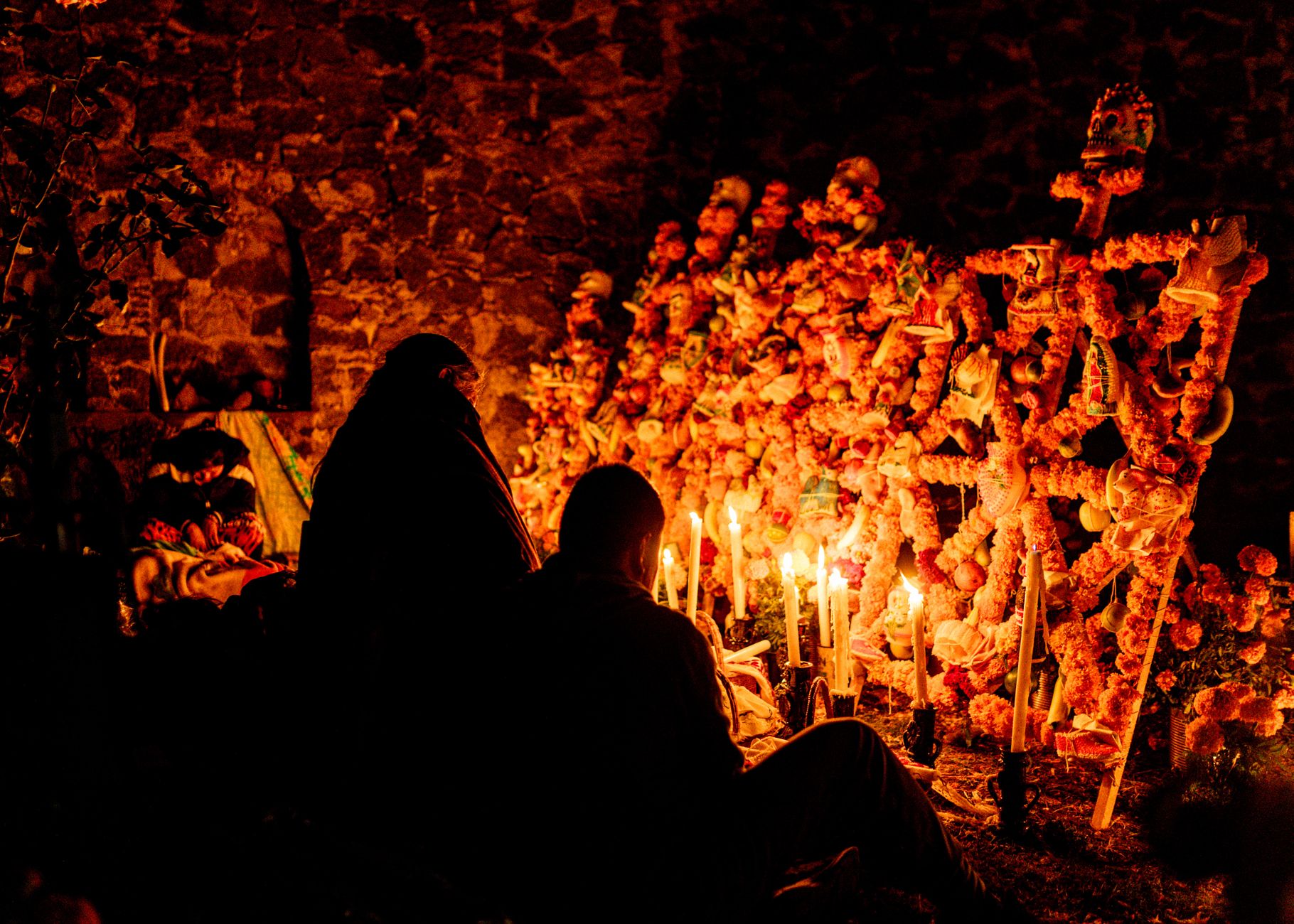
But I want to be careful here. “Slavic folk belief” covers a large and diverse set of communities across centuries. The sources available describe reported beliefs without always naming a specific ethnic group, region, or historical period. I’d treat this as genuine but geographically limited, a documented thread in a wider fabric, not a uniform Slavic doctrine.
What Do Goat Behavioral and Natural History Facts Tell Us About Its Symbolism?
The symbolism is not arbitrary. It maps directly onto observed behavior. According to the Merck Veterinary Manual’s 2025 entry on goat behavior, goats live in what researchers call a “fission-fusion” social structure: groups merge and separate as animals move through the landscape, with feral group sizes ranging from one to one hundred individuals. They browse leaves, bark, shrubs, and grasses across a wide range of terrain, not just the flat pastures preferred by sheep and cattle.
The Smithsonian’s National Zoo records that goats occur in solid black, white, red, brown, spotted, and mixed color forms and are described as generally sociable, inquisitive, and independent. They climb, run, crawl, and reach elevated branches. A black coat is a normal color variation. Not rarer, not more dangerous, not spiritually marked by default.
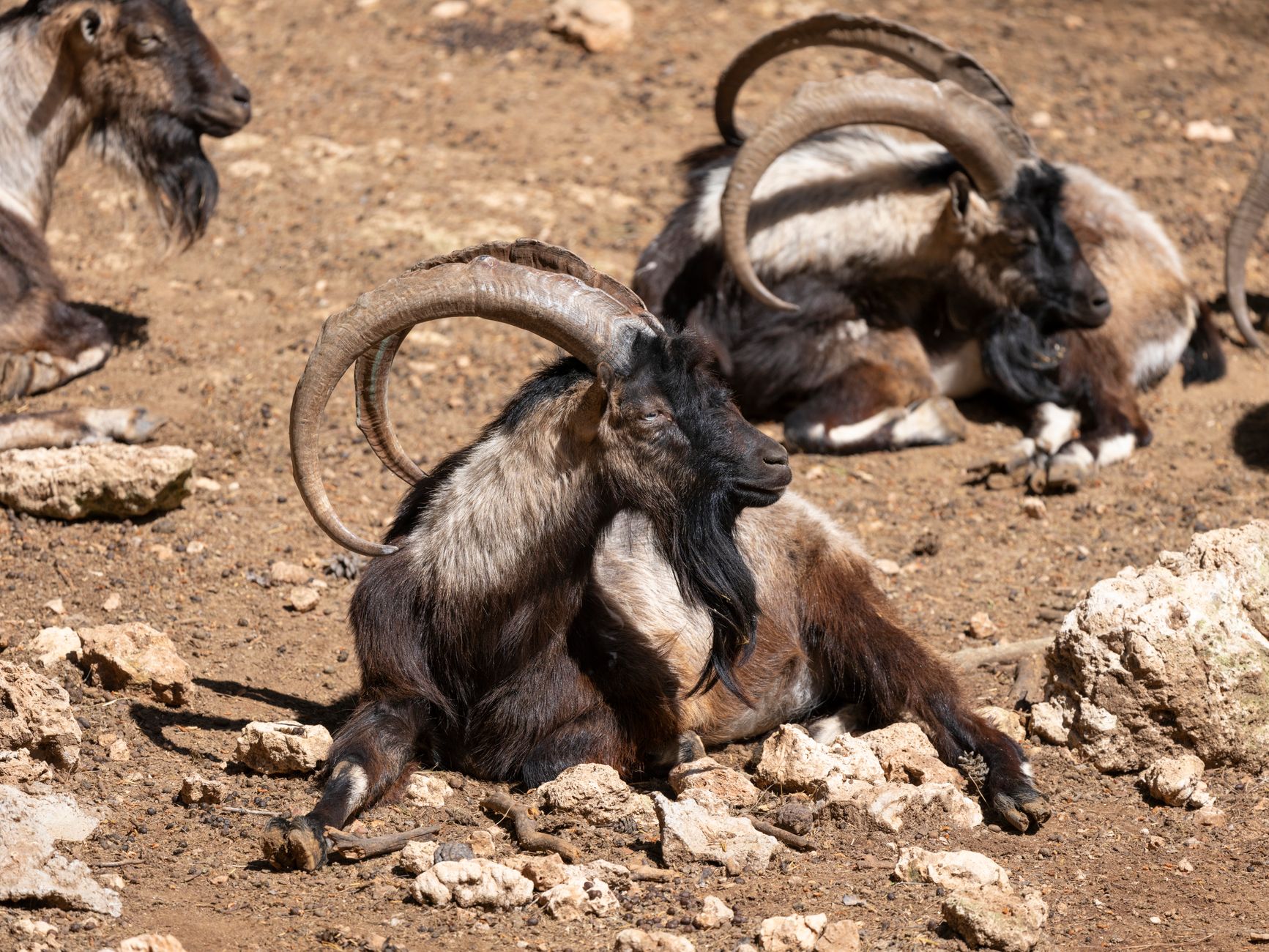
What all of this explains is the stubborn, boundary-crossing, margin-dwelling character the goat carries in folklore. It earned those associations by actually living that way. The animal that eats thorns and climbs cliff faces becomes, over time, the animal that goes where you can’t follow. That is exactly the role it plays in ritual traditions from Jerusalem to Hobogsair.
What Is the Etymology of “Goat” and How Does Language Shape Its Symbolism?
The English word goat comes from Old English gat, from Proto-Germanic gaitaz, which traces back to Proto-Indo-European ghaidos, meaning “young goat.” Related forms include Old Norse geit, Dutch geit, and German Geiss. Ernest Klein’s A Comprehensive Etymological Dictionary of the English Language (1966) traces the Germanic root through these cognates without any embedded meaning of darkness, evil, or danger. The word just means the animal.
The Biblical Hebrew term in Leviticus is sa’ir, commonly translated “he-goat” or sometimes “hairy one.” The phrase rendered in English as “scapegoat” is more literally “the goat for Azazel”, the goat sent toward a specific wilderness entity or place. Early Greek translators read this as an “emissary goat,” and the Latin Vulgate followed suit.The English word “scapegoat” entered thelanguage through William Tyndale’s 1530 translation of the Bible and has since passed into everyday use as a general term for someone blamed on behalf of others.
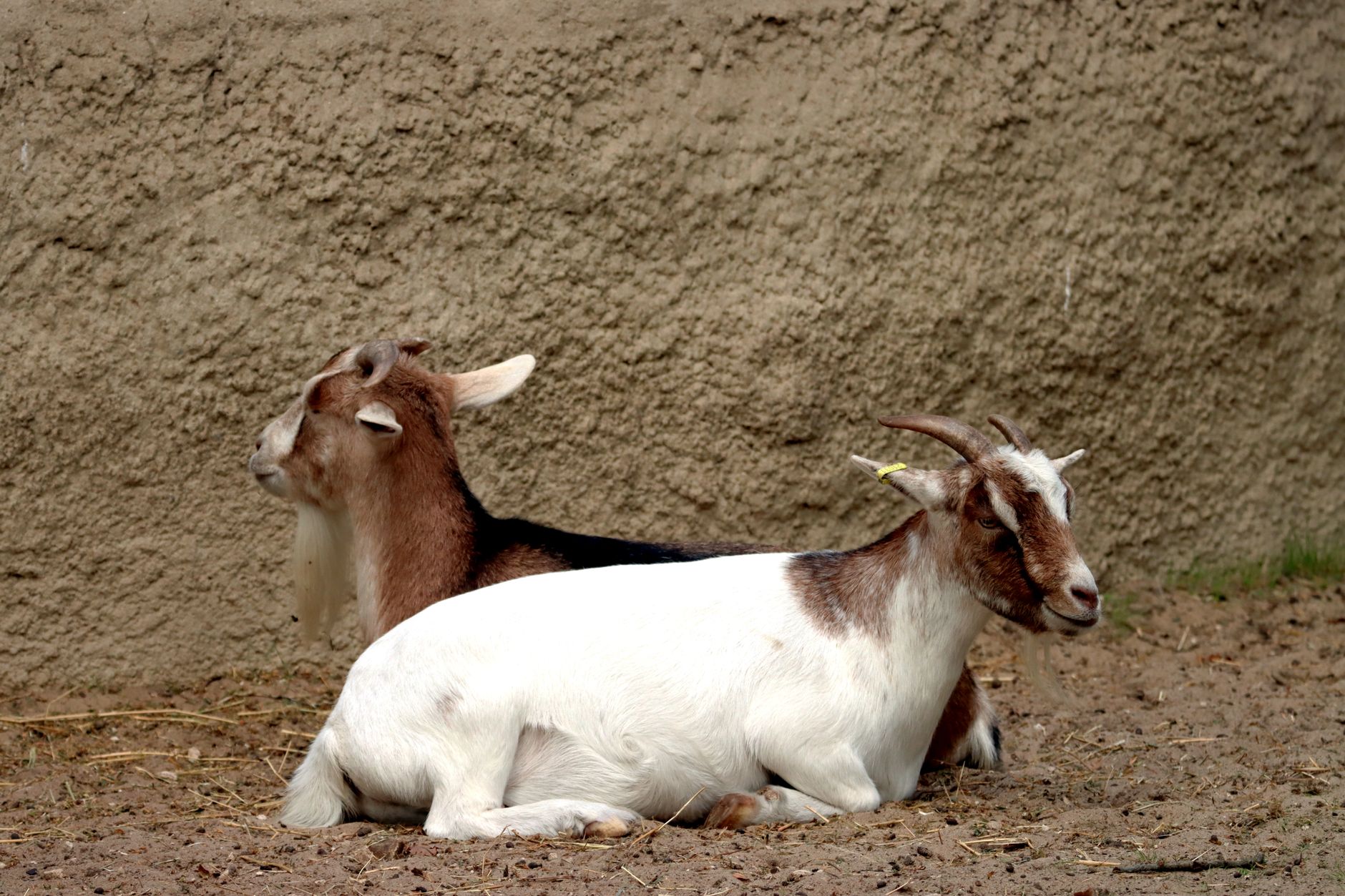
So “scapegoat” is a translation artifact, not an ancient English name for a black animal. The language does not encode the evil that later tradition read into the concept.
What Is the Goat as a Spirit Animal?
If the goat has shown up as a repeated presence for you, in dreams, in the landscape, in what pulls your attention, the qualities most traditions associate with it are worth taking seriously. Sure-footedness on difficult terrain. The willingness to go into places where others balk. An appetite for what others leave untouched.
My grandmother Theresa kept a leather notebook of Bavarian animal stories, and I have it on my desk still. She didn’t write much about goats, the forest animals she recorded were mostly birds and deer, but the animals she did document as spirit-figures shared one trait: they were the ones that went to the edge. That is what I read in the goat. Not wildness for its own sake, but the comfort to be in hard terrain and not turn back.

If the goat functions as a spirit animal for you, the questions worth sitting with are: Where are you currently unwilling to go? What margins are you avoiding? The goat’s symbolic weight, across traditions, is less about power and more about persistence in difficult ground.
What Does It Mean If the Goat Is Your Totem Animal?
A totem animal, in traditions where the concept is used properly, operates at the level of a family, a clan, or a lineage rather than an individual. It is a collective marker of identity and responsibility, not a personal guide. I don’t claim expertise in the specific cultures where totem traditions are practiced, and I’d be cautious about any article that flattens that distinction.
What I can say is this: if you identify with the goat at the level of “this is who my people are,” the qualities that come forward are communal. The capacity to sustain a community in hard conditions, to find nourishment where others find nothing, to maintain social bonds through terrain that breaks easier animals. The goat was one of the first domesticated animals precisely because it could survive where cattle couldn’t. That resilience is worth something as a lineage marker.
What Does It Mean to Dream About a Goat?
For a full treatment of goat dream symbolism, see the goat dream meaning article, which covers specific scenarios in more depth. But briefly: the most common goat dreams tend to cluster around a few patterns.
A goat climbing, especially reaching a high ledge or rocky peak, usually signals movement through difficulty. The cultural thread here is consistent: the animal that climbs where others can’t suggests the dreamer is navigating something that requires unusual persistence. A butting goat in a dream is worth reading as a confrontation that needs addressing rather than avoiding. Black goats in dreams carry the weight of this article’s main argument: the meaning depends on the dream’s emotional texture, not just the color. A white goat in a dream tends toward abundance and clarity in folk interpretation, though I’d hold that lightly, dream symbolism is personal first and cultural second.
What Is the Spiritual Difference Between a Goat and a Sheep?
In Matthew 25, Jesus describes thefinal judgment as a separation: the sheep to his right, the goats to his left. The sheep inherit the kingdom; the goats are sent elsewhere. This is probably the single most influential text shaping Western intuitions about goats being on the wrong side of things.
But notice what the text is actually doing. It’s not saying goats are evil animals. It’s using a distinction shepherds would have understood, sheep and goats were kept together and had to be sorted, since they have different needs and different behaviors at night, to describe a moral sorting. The goat’s role in that metaphor is the independent one, the one that doesn’t follow easily. Whether that’s a condemnation or a description depends on what you think of following easily.
The symbolic contrast holds across traditions: the sheep represents community, conformity, pastoral safety, and willingness to be guided. The goat represents independence, the margins, the capacity to survive without being managed. Neither is simply good or bad. They are different orientations toward the world.
Is the Satanic Goat Symbol an Ancient Tradition or a Modern Invention?
Mostly modern.The Baphomet image, a winged, horned, goat-headed figure, was not drawn from ancient folklore. It was designed in 1854 by the French occultist Éliphas Lévi as an allegorical figure representing the balance of opposites. The image was later adopted by the Church of Satan in the 20th century and has since become the most recognizable “Satanic goat” symbol in popular culture.
The backward pentagram with a goat’shead inside it, often called the Sigil of Baphomet, is associated with the Church of Satan, founded in 1966 in San Francisco. These are recent inventions by specific people with documented names and dates, not inherited ancient folk symbols.
What the Satanic goat image drew on was the visual vocabulary of Pan and the Christian iconography of the devil, which had already incorporated goat features (horns, cloven hooves) during the medieval period as a way of associating the pagan wild-deity image with Satan. But that medieval synthesis was not the original Greek meaning, and the 19th-century occult image was not the medieval meaning. Each step borrowed from the previous one while adding something new. The chain is real. The idea of one ancient universal “devil goat” is not.
What Are the Most Common Misconceptions About Black Goat Symbolism?
Two misconceptions show up constantly, and they are worth addressing directly.
The first is that a black goat universally symbolizes Satan, death, or evil. It doesn’t. The ancient Israelite ritual used goats without specifying black ones. Greek goat-figures were wilderness deities, not demons. The Torghut ceremony uses a black goat in a protective rite. The Slavic tradition places a black goat at the intersection of the living and the dead, as a mediating animal. The specific cultural situations where black goats carry negative associations are real, but they are local and contextual. No cross-cultural universal rule supports the generalization.
The second misconception is that seeing a black goat is an ancient, universal omen of misfortune. No such rule appears in the ethnographic or ritual record. What appears instead is a set of locally specific beliefs: in some communities, a black animal is appropriate for rites involving the dead or the spirit world; in others, it has no special status at all. I’ve read through several dream-dictionary lists presenting bad luck, shadow self, hidden enemies, and spiritual attack as inherited folklore. I found no sourcing for any of them.
Frequently Asked Questions
What does a goat symbolize in the Bible?
In the Hebrew Bible, the goat’s most significant role is in the Yom Kippur ritual described in Leviticus 16, where one goat is sacrificed and another, the goat “for Azazel”, has the community’s sins confessed over it and is released into the wilderness as a form of purification. Bible Odyssey’s 2024 entry on the scapegoat frames this ritual as one of removing communal impurity, not condemning the animal. In the New Testament, Matthew 25 uses the separation of sheep from goats as a metaphor for final judgment, casting the goat as the independent, less compliant figure.
What does a goat symbolize in the Chinese zodiac and Han Chinese folk tradition?
In the Chinese zodiac, the Goat(also translated as Sheep or Ram, depending on the source) is the eighth of twelve signs and is associated with gentleness, creativity, and a preference for peace over conflict.People born in Goat years, 1955, 1967, 1979, 1991, 2003, 2015, are traditionally described as artistic, calm, and empathetic. The Goat sign carries none of the ominous associations sometimes attached to goats in Western traditions. It is generally considered a mild and fortunate sign, though prone to worry.
Is a goat a good or bad omen?
That depends entirely on the tradition you’re drawing from, and I’d be skeptical of any source that gives you a flat answer. In Leviticus, the ritual goat performs a necessary function: purification. In Greek tradition, goat-figures are wild and fertile, not threatening. In some Slavic folk beliefs, a black goat mediates between the living and the dead, which is powerful but not simply bad. The “black goat is bad luck” idea is largely a product of later Western Christian iconography and 19th-century occult imagery, not ancient universal belief.
What does a white goat symbolize spiritually?
White goats carry associations with abundance, purity, and clarity in several folk traditions. In some European contexts, a white goat appearing in a field was read as a sign of good harvest or household prosperity. In dream interpretation traditions, a white goat tends toward positive readings: health, clean beginnings, the resolution of a tangle. That said, I want to be honest, the specific sourcing for white goat symbolism in older traditions is thinner than the black goat record. Many of the readings circulating online appear to be modern constructions rather than documented folk beliefs.
What does a black goat symbolize in dreams?
A black goat in a dream is not automatically a negative image, whatever some dream dictionaries suggest. The most useful frame, drawing on the cultural symbolism established here, is the goat as a figure of independence and boundary-crossing: a black version may signal something you’re avoiding, a threshold you haven’t crossed, or a situation that calls for the goat’s characteristic willingness to go into difficult territory. The emotional texture of the dream matters more than the color. For a fuller treatment, see the goat dream meaning article.
What does it mean when a goat crosses your path?
Folk traditions don’t have a single consistent answer for this, and I haven’t found a well-documented historical record for goat-crossing-path omens in the way that exists for black cats or specific birds. If you’re inclined to read the encounter symbolically, the goat’s established associations point toward questions of independence, willingness to go into new terrain, and the edges of your current path rather than the center. If the goat was moving with purpose, that tends to read as directional energy in folk interpretation. If it stopped and looked at you, I genuinely don’t know what tradition would tell you about that one.
What is the difference between a goat spirit animal and a goat totem?
A spirit animal, in traditions that use the concept, is an individual guide, a presence that shows up in your life or dreams and whose qualities mirror something you need. A totem animal operates at the collective level: a marker for a family line, a clan, or a community, defining that group’s identity and responsibilities over generations. The goat as a personal spirit animal speaks to individual qualities like persistence and boundary-crossing. The goat as a totem speaks to a lineage’s capacity to sustain itself in hard conditions. The distinction matters because conflating them flattens how both concepts actually work in the traditions where they originated.
Why is the goat associated with the devil in Christianity?
The association built gradually. Medieval Christian iconography borrowed visual features from Pan and other pagan wild-deity figures, horns, cloven hooves, an animal’s lower body, and applied them to representations of Satan. This was partly strategic: it cast the old pagan gods as demonic figures by using their visual signatures. The goat’s association with wilderness, margins, and the unchurched world made it useful for that iconographic project. By the time Éliphas Lévi drew Baphomet in 1854, he was working within an established visual vocabulary and adding his own occult layer. The medieval origin of the association is documented, though the specific transmission from Pan to Christian devil iconography involves steps that historians still debate.
What does the goat symbol mean in astrology (Capricorn)?
Capricorn, the tenth sign of theWestern zodiac (roughly December 22 to January 19), is represented by the sea-goat, a figure with a goat’s upper body and a fish’s tail, drawn from Babylonian astronomical tradition. The goat component of the sign is associated with ambition, discipline, and the willingness to climb difficult terrain steadily rather than quickly. The sea element adds depth, intuition, and adaptability. Capricorn’s ruling planet is Saturn, associated with structure and time. The sign’s character, persistent, goal-oriented, comfortable in difficult conditions, maps onto the goat’s behavioral and symbolic profile in a way that seems deliberate rather than accidental.
Are goats considered sacred in any culture?
Yes, in several. The Hindu deity Agni, the god of fire, is traditionally depicted riding a goat, and the goat is associated with his transforming fire in Vedic religious texts.The Norse god Thor was saidto pull his chariot with two goats, Tanngrisnir and Tanngnjóstr, who could be slaughtered and eaten and then resurrected the following day, making them figures of abundance and renewal. In some West African traditions, goats hold ceremonial importance as sacrifice animals in rituals involving ancestors. And across these different contexts, the goat’s role is again about crossing between states, it moves, it carries things, it comes back.
Sources
- Bible Odyssey, “Scapegoat” (2024)
- Yosef Marcus, “The Scapegoat Ritual: Between Biblical and Tannaitic Law” (2022)
- Black Goat Sacrifice Among Torghuts in Hobogsair, Cambridge Repository (2022)
- Merck Veterinary Manual, “Behavior of Goats” (2025)
- Smithsonian’s National Zoo and Conservation Biology Institute, “Goat” (2016)
- Online Etymology Dictionary, “goat” (drawing on Ernest Klein’s A Comprehensive Etymological Dictionary of the English Language, 1966)
- Wikipedia, “Goat”, domestication history and general natural history
- Encyclopedia.com, “Sheep and Goats”, Slavic folk belief documentation
- Cambridge Repository, additional Torghut ritual documentation (2022)
- Wikipedia, “Azazel”, etymology and textual history of the Leviticus ritual
- www.britannica.com
- www.kqed.org
- en.wikipedia.org
- china-panorama.com
- www.farmersalmanac.com
- en.wikipedia.org
- journals.openedition.org
- www.biblegateway.com