A bird at your window, a snake in your bedroom, a raccoon in the attic—something wild where it shouldn’t be. Ancient Babylonian scribes recorded what each animal meant based on location and room. But the same animal in your front door reads nothing like one in your cellar, and no two traditions agree on what matters most.
Key Takeaways
- Wild animals entering a home are treated across cultures as boundary-crossing events with symbolic weight, not accidents.
- Three themes repeat across traditions: the animal as omen, as ancestral or spiritual visitor, and as a signal about the household’s protection.
- Species and location within the home both change the reading. There is no single master key.
- Roman, Mesopotamian, Ojibwe, Yoruba, and European folk sources all record formal ways of responding to these encounters.
- A grounded response starts with acknowledgment, then moves to practical action: calm removal and checking how it got in.
What Does It Mean When a Wild Animal Enters Your Home?
You are not making this up. The feeling that an animal inside your house means something is older than any religion you know by name.
In Roman domestic religion, an unexpected creature in the domus was classified as a prodigium, a sign that the boundary between the household and the larger world had been crossed. The Roman response was not fear; it was procedure. The household noted the species, consulted records, and took steps to restore order. The animal required a response. Not a verdict.
Three interpretive frames repeat across cultures with enough consistency to be worth naming. The animal as omen: it arrives before a change, and the tradition reads the species as a clue about what kind. The animal as visitor: it carries the presence of an ancestor, a spirit, or a protective force, and its entry is a form of contact. And the animal as household signal: its presence means the home’s protection is being offered or needs attention. Most traditions use all three frames depending on context. None of them require catastrophe.
How Have Ancient Cultures Interpreted Animals Crossing Into the Home?
The oldest written animal-omen records come from Mesopotamia. The Babylonian Summa alu texts, cuneiform tablets compiled around 1000 BCE and studied extensively by scholar Francesca Rochberg, contain hundreds of entries in the form “if a snake enters a man’s house.” Each entry pairs the species, the entry point, and the predicted outcome, prosperity, warning, neutral, and the outcomes vary. A snake entering through the front door meant something different from one found near the hearth. The location was part of the reading.
In Roman domestic religion, the household gods known as the Lares were understood to protect the bounded space of the home. Any wild creature crossing the threshold uninvited drew attention because it had moved between categories: outside (wild, uncontrolled) to inside (protected, domestic). A bird in the atrium, a snake near the lararium, a bat at dusk. The interpretation was never automatic. Species, behavior, and timing all counted.
In Han-period Chinese household cosmology, documented by Wolfram Eberhard in A Dictionary of Chinese Symbols (1986), different creatures entering the home carried distinct associations linked to the five directions and the household gods assigned to each. A cricket near the hearth was fortunate. A bat entering through a window was explicitly auspicious; the Chinese word for bat, fu, shares its sound with the word for luck. I find that last fact genuinely strange and worth sitting with, because it inverts the Western reflex entirely.
What Do Indigenous and Folk Traditions Say About Animals Entering a House?
In several Ojibwe oral traditions, as recorded by ethnographer Frances Densmore in her 1929 study Chippewa Customs, an animal that entered a dwelling without being invited carried a message from the spirit world. The content depended on the animal’s clan associations. A bear, a crane, a loon, each belonged to a clan, and clan animals entering human space were read as contact, not intrusion. The appropriate response was acknowledgment: a word spoken to the animal, recognition that it had arrived for a reason.
In West African Yoruba tradition, documented by scholar Wande Abimbola in his work on Ifa divination, certain animals are associated with specific orishas. An animal entering a home could signal that an orisha was making its presence known or requesting ritual attention. Again: contact, not catastrophe.
My grandmother Theresa kept a leather notebook of animal lore from the Bavarian Forest, entries in 1920s German cursive that I have been slowly reading for years. The pages on household animals had a simple grammar. Birds meant news, soon. Snakes near the threshold meant the home was being tested, either guarded or warned. Spiders were left alone because they were workers, builders, quiet keepers of corners. The tradition had no master key. It required attention to the specific creature and the specific moment. (Some pages have stuck together over the years. I am not sure I have read all of it yet.)
European folk belief more broadly, as surveyed in Katharine Briggs’ A Dictionary of British Folk-Tales, treated household animals as operating in a moral economy: some species brought good, some brought warning, and most brought something that depended on how you treated them afterward. Killing the animal was almost always the wrong response.
Does the Type of Animal Change the Meaning?
Yes. Species changes everything, and a lot of surface writing about animal symbolism fails because it treats “an animal entering your home” as one event with one meaning. That is not how any tradition I have read actually works.
Birds entering a home are among the most widely documented cases. In English folk belief recorded across multiple county collections, a bird in the house meant news incoming. The species mattered: a robin at the window meant one thing; a crow or rook another. A wren inside a house, in Irish folk tradition documented by Lady Wilde in Ancient Legends, Mystic Charms, and Superstitions of Ireland (1887), was treated as a visitor deserving careful, respectful handling. Not something to shoo out with a broom.
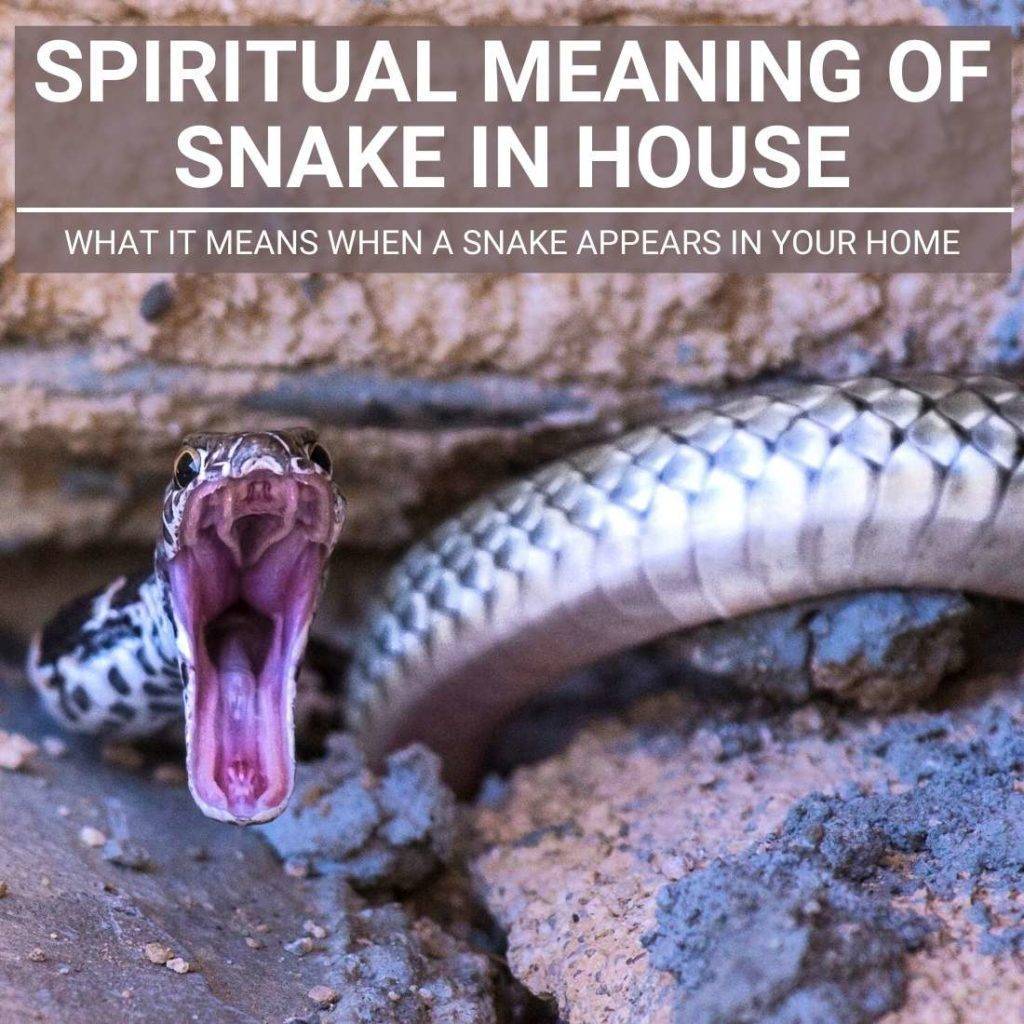
Snakes entering a home carry the widest range of associations. In Lakota tradition, as recorded by James R. Walker in his 1917 ethnographic work The Sun Dance and Other Ceremonies of the Oglala Division of the Teton Dakota, snakes near a dwelling required attentive reading of behavior and direction of approach. In contrast, medieval German rural folk belief associated a house snake, die Hausschlange, with the protective spirit of the home itself. Killing one was bad luck. Feeding it milk was considered sound household practice.
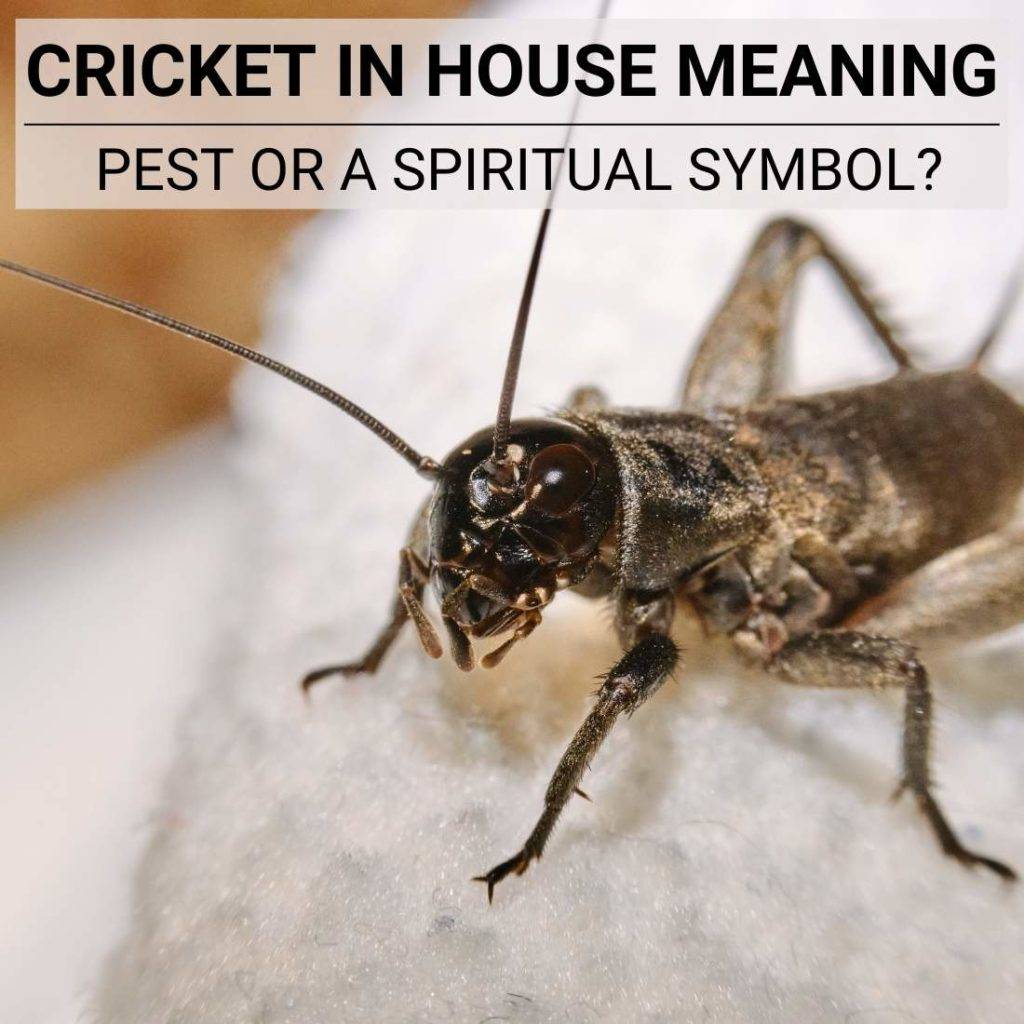
Bats, moths, crickets, and ladybugs each carry their own record. Bats in the home are linked to luck in Chinese folk belief, as noted above, and to death-adjacent warnings in 19th-century English rural tradition, two readings that could not be more different. Crickets are positive across nearly all Asian and European folk records: a cricket in the hearth meant warmth, abundance, the house was alive. For more on how animals appear as symbols across history and visual culture, this overview of animal symbolism in fine art and antiques traces how these associations moved from folk life into the painted record.
Look up the specific animal in the tradition you feel drawn to. This article covers the framework. Species-specific pages go deeper.
Does It Matter Where in the House the Animal Appears?
Threshold spaces carry the most weight. Consistently. Across Roman, Mesopotamian, Cherokee, and European folk records, an animal at the front door or window sits in a different category from one found in the bedroom.
The door is a boundary. Every tradition with a word for household protection also has a word for the threshold, and most have a ritual associated with keeping it clear. An animal at the door has not yet committed to one world or the other. In several Appalachian folk-magic practices, ones I know from years of living in the Blue Ridge, not from any claim to practice them, the front door threshold was precisely where protective plants, salt lines, or iron objects were placed. Animals and spirits both read it as the crossing point.
Windows occupy an in-between position. A bird that flies in through a window sits at a place that is glass-bounded, transparent, a view without a crossing. In karmic and Hindu folk interpretations of animals visiting the home, the specific direction of approach also shifts the reading, since direction carries elemental and deific associations in that tradition.
Frequently Asked Questions
Is a wild animal entering your home always a bad omen?
No, and the “bad omen” reading is not even the dominant one in the global record. In Han Chinese folk belief, a bat entering the home was straightforwardly lucky. In Ojibwe tradition recorded by Frances Densmore, a clan animal entering the space was a form of ancestral contact, not a warning. In Bavarian rural folk belief, a house snake near the hearth meant the home was protected. The catastrophic reading comes largely from 19th-century English rural collections, and English-language symbolism writing drew heavily from those sources, which skewed what most people hear first.
What does it mean spiritually when a bird flies into your house?
In English folk tradition recorded across multiple county ethnographies, a bird in the house meant news was coming, not necessarily bad, but significant. Species carried weight: a robin meant one thing, a crow another. In Irish folk belief documented by Lady Wilde in Ancient Legends of Ireland (1887), a wren inside the house was treated as a guest deserving careful release. I read bird-in-the-house encounters as the tradition’s way of marking attention: something in your life is shifting, and the bird arrived at the crossing point.
What does it mean when a snake enters your home?
This one splits sharply by tradition. In Germanic folk belief, the Hausschlange was a protective spirit. Feeding it was good practice; killing it was unlucky. In Lakota tradition as recorded by James Walker in 1917, snakes near a dwelling required attentive reading of behavior and direction. In Indian folk belief, a cobra near the home is associated with Naga spirits and treated with respect rather than alarm. There is no universal verdict. Where you are from shapes what you see, and I mean that literally.
What does it mean when a bat gets inside your house?
Bats are the clearest case of two traditions saying opposite things. In Chinese folk belief the bat is luck; the word fu covers both. Five bats together, the wufu, represent the five blessings: longevity, wealth, health, virtue, and a peaceful death. In 19th-century English rural tradition, a bat in the house was linked to someone leaving or something ending. I don’t have a confident resolution here. The folk record is split, and which reading you carry probably depends on which tradition you grew up inside, consciously or not.
What does it mean when an insect appears inside your home?
Crickets are positive in almost every tradition I know: warmth, abundance, a sign the house is alive and well. A cricket in the hearth, in both East Asian and European folk records, was left alone. Moths near a light carry more ambivalence, in some Appalachian and Irish folk records, a large moth in the house was associated with a soul passing through, not a death but a transit. Ladybugs are welcome in nearly every tradition I have encountered. Spiders, in the Bavarian tradition I grew up adjacent to, were builders and were left in corners for good reason.
Is there a difference in meaning between an animal entering through a door versus a window?
Yes, and most household-religion traditions treat it as significant. A door crossing is deliberate, the animal navigated to the entry point humans use. A window crossing is an accident in most cases, since glass is invisible to birds and many insects. The Babylonian Summa alu texts distinguish entry points explicitly, attaching different predictions to front door, back door, and wall breaches. I read the door-crossing as more charged, symbolically, because the threshold is the most intentional boundary in the home’s design.
Do different spiritual traditions agree on what an animal in the house means?
They agree on the framework more than the verdict. Every tradition I have read treats an animal entering the home as a boundary event worth noticing. They disagree on what the specific animal means and whether that meaning is ominous, auspicious, or neutral. What they share is the assumption that your home has a boundary, that the boundary has meaning, and that an animal crossing it is not random. That shared assumption is the thing I find worth trusting, regardless of which tradition’s specific reading you follow.
How do I know if the animal’s visit was a message or just a coincidence?
That is probably not the most useful question to start with. The more useful one is: did you notice it? If yes, why? The traditions that have thought longest about this, Roman domestic religion, Ojibwe oral tradition, Bavarian folk belief, all assume that what you notice is part of the message. The animal did not choose you. But your attention chose to stop and stay with it. That is where meaning lives, and it is not a small thing. You are not making this up. You are doing what humans have done for as long as humans have had homes.
Sources
- Hindustan Times: The hidden karmic meaning of animals visiting your home
- RAU Antiques: Animal Symbolism in Fine Art and Antiques
- YouTube: Animals and Spiritual Meaning
- IFAW: Animals and Their Symbolic Meaning Around the World
- Skull Bliss: Animal Symbolism Guide
- Robbie George Photography: Understanding Animals as Spirit Guides