
Most people assume a praying mantis in the house means danger or a warning of death coming. But the Greek name mantis just means seer or prophet, pointing to focus and clear sight instead. Whether that reading sticks depends on whether the mantis showed up while you were stuck or moving forward.
Key Takeaways
- A praying mantis in the house is read across several traditions as a sign of stillness, guidance, or meaningful presence, not a bad omen.
- The Greek word mantis (μάντις) means “seer” or “prophet,” making divination the oldest named cultural layer behind any guidance reading.
- San |Xam tradition from southern Africa treats the mantis as the shape of the trickster-deity |Kaggen, an ambivalent spirit-mediator, not simply good luck.
- Where in your home the mantis appeared, front door, bedroom, kitchen window, shifts the reading in traditions that treat thresholds as meaningful.
- Modern angel and spirit-guide readings of a house mantis are a recent synthesis, drawing from Greek, Christian, and mindfulness sources rather than any single old tradition.
What Does It Mean When a Praying Mantis Comes Into Your House?
The short answer: across the traditions that documented this insect most carefully, a mantis entering your home is read as a prompt to slow down, pay attention, or receive direction. Something here is asking you to be still.
The Greeks named it mantis, seer, prophet, before they’d worked out much of anything else about it. The San |Xam people of southern Africa built an entire deity around it. The French called it mante religieuse, the religious mantis. Every language that tried to name it reached for the same two ideas: prayer and prophecy. That is not nothing.
The symbolism maps directly onto observed behavior. A mantis sits for hours without moving, forelegs folded, watching. Whatever you bring to that image, the image itself is consistent, this is what focused attention looks like, and every culture that noticed it apparently noticed the same thing.
My grandmother Theresa’s leather notebook from the Bavarian Forest doesn’t have a mantis entry. The insect doesn’t live that far north. But it has entries for the praying postures of other creatures, and the posture was always the point. The gesture read as devotion before anyone decided what the creature was devoted to.
What Should You Do When You Find a Praying Mantis Inside Your Home?
Practically: leave it alone if you can. Mantises are beneficial insects, entomologists who study mantis behavior note they eat aphids, flies, moths, and mosquitoes, and they do this quietly, without any help from you. A mantis inside your house followed prey in through a window or door. It is not lost. It is hunting.
If you want to move it outside, cup it in your hands or coax it onto a piece of paper. They rarely bite. When they do, it is not serious. Release it near a shrub or garden bed where the hunting is better.
The symbolic question is separate. Across traditions that treat a mantis visit as meaningful, the suggested response is the same: pause. Sit with it a moment before you do anything. That’s not bad advice regardless of what you believe.
How Does the Word “Mantis” Shape Its Spiritual Meaning?
The English name “praying mantis” comes from two sources that have almost nothing to do with each other. “Praying” describes the forelegs: folded upward at rest, they look like hands held in prayer. “Mantis” comes from ancient Greek μάντις, meaning seer or prophet, someone who reads omens and speaks for the gods.
Put them together and you have an insect whose very name says: this creature prays, and it sees.
Other languages found the same image independently. The French mante religieuse translates roughly as “religious cloak,” evoking a monk or nun at prayer. The Afrikaans bidsprinkaan joins bid (to pray) and sprinkaan (grasshopper). In each language, people looked at the same posture and named the same thing: devotion, stillness, something set apart from ordinary insect life.
This matters for the house-meaning question. When a creature whose name means “prophet” crosses your threshold, every tradition that uses language to build meaning is already halfway to calling it a sign.
What Did Ancient Greek Tradition Say About the Praying Mantis as a Guide?
Ancient Greek tradition holds that the mantis could show lost travelers the way home. Cultural-history research on praying mantis myths and beliefs traces this to the Greek word mantis as prophet or diviner, someone with the ability to perceive what others cannot. The insect’s stillness, its unblinking watch, its sudden precision, all mapped onto what Greeks expected a seer to look like: present, patient, uncannily accurate.
The practical implication for a house encounter is direct. If a creature associated with prophetic guidance appears inside your dwelling, the Greek interpretive frame says: pay attention to what direction your life needs to take right now. Not panic. Not disaster. Direction.
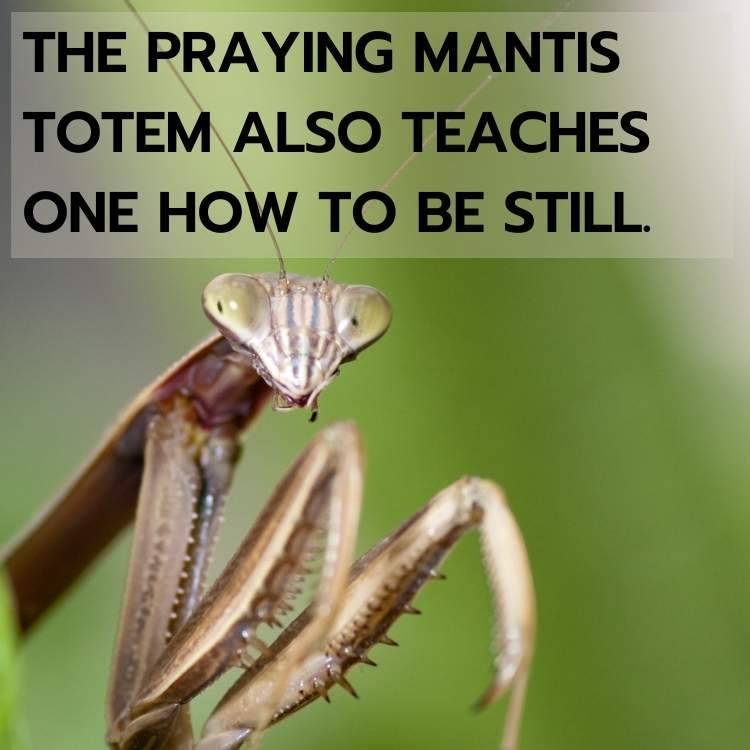
You don’t need to be Greek or believe in prophecy for that reading to be useful. The mantis in the room is still asking you to stop and look.
What Does San (|Xam) Tradition Reveal About a Mantis Entering a Living Space?
This is the reading I find most honest, and also the most complex. Among the southern San |Xam people of South Africa, the mantis is not a good-luck symbol. It is the shape of |Kaggen, a trickster deity who takes animal forms, creates things, steals things, disrupts order, and occasionally puts it back. Bleek and Lloyd’s Specimens of Bushman Folklore (London: George Allen, 1911), the foundational record of |Xam oral tradition, documents many narratives in which |Kaggen-as-mantis enters domestic spaces: huts, camps, the places where people sleep and cook and keep their things.
Mathias Guenther’s Tricksters and Trancers (Indiana University Press, 1999) builds on this record and emphasizes that in |Xam belief, animals acting as spirit-mediators appear specifically in in-between spaces, edges, thresholds, hearths, places where inside and outside meet. A mantis that enters your home, in this framework, is not simply a visitor. It is an ambivalent presence demanding respect, careful attention, and what Guenther describes as “ritualized speech”: acknowledgment, not dismissal.
That is a harder reading than “angels are watching over you.” But it is also a more interesting one. The trickster doesn’t come to comfort. It comes to make you pay attention.
What Does Celtic-Inspired Symbolism Say About a Praying Mantis in the House?
Celtic and neopagan readings of the mantis focus on two qualities: warrior patience and deliberate stillness before decisive action. Cultural-history overviews of mantis lore describe this tradition as treating the mantis as a creature that waits rather than charges, the fighter who holds ground, the mind that doesn’t move until the moment is right.
When a mantis appears at your threshold or windowsill, Celtic-inspired interpretation reads it as a call to hold steady. Not to act immediately. Not to retreat. To wait with intention until the right moment becomes clear.
Contemporary neopagan practice has built on this, drawing from both Christian “prayer” imagery and reconstructed Celtic animal symbolism. Whether you find that useful depends entirely on what is going on in your life right now. But “wait and watch carefully before you act” tends to hold up regardless of what you believe.
What Does Chinese Tradition Say About the Praying Mantis Indoors?
The Chinese name for the praying mantis is tángláng (螳螂), and the tradition most associated with it among Han Chinese martial artists is martial arts. Praying mantis boxing, 螳螂拳, developed in Shandong province and takes the insect’s hunting posture as its model: precision over power, timing over speed, complete stillness and then total commitment. The mantis doesn’t waste motion. Neither does the style built around it.
This isn’t a house-omen tradition in the way the Greek or |Xam readings are. The Chinese martial framework treats the mantis as a model for how to act, not a sign about what is happening to you. But the underlying quality is the same one that runs through every culture’s reading of this insect: disciplined stillness as a form of readiness.
So when that small green patient hunter sits completely still on your kitchen wall, the martial tradition would say: watch it for a minute. This is what focused attention looks like.
Does the Location in Your Home Change the Meaning?
In traditions that treat thresholds as meaningful spaces, yes. The Greek, San |Xam, and neopagan readings all place particular weight on where the insect crosses from outside to inside.
Frequently Asked Questions
Is a praying mantis in the house good luck or bad luck?
Good luck, in most traditions that have an opinion. Ancient Greek folklore linked the mantis to prophecy and guidance. San |Xam tradition from southern Africa treats it as a complex presence, not simply lucky, but not malevolent either. Contemporary Euro-American spiritual readings lean toward protection and blessing. The only folk tradition I’ve come across that treats a house mantis negatively involves killing it, which many cultures warn against. Finding one alive inside your home reads positively across the folk record I’ve been able to check.
Should I remove a praying mantis from my house or leave it alone?
Either is fine, practically. A mantis will eventually find its way out on its own, or it will stay and hunt whatever small insects gather around your windows. I usually move them outside rather than leave them, not for any symbolic reason, but because they do better outdoors where the hunting is better. If you want to relocate it, cup it gently and release it near a plant. It won’t cause harm either way.
What does it mean if a praying mantis lands on you inside your home?
Modern spiritual readings treat a mantis landing on you as a more direct form of the message already present in a house visit: the call to stillness is now personal. Behaviorally, it just means the insect has assessed you as not a threat. But in the neopagan and mindfulness readings, contact is an intensification, the guidance or presence is specifically for you, rather than merely for the household. I find that reading coherent, even if I can’t trace it to a single named older source.
What does a praying mantis at the front door specifically mean?
The front door is the threshold reading at its clearest. In ancient Greek tradition, a creature associated with prophecy standing at your entrance is positioned exactly where a guide would stand, at the point between where you are and where you’re going. Neopagan traditions follow the same logic: the front door mantis is a directional sign, something asking you to pay attention to a choice or transition currently in front of you. San |Xam tradition would add: acknowledge it. Don’t walk past without noticing.
Is a praying mantis in the house a sign of a deceased loved one?
I don’t have a confident answer here, and I want to be honest about that. The folk record connecting specific insects to the presence of the dead is mostly built around butterflies and moths, not mantises. The claim that a praying mantis carries a message from someone who has died appears in contemporary spiritual forums, but I haven’t found it in any named older tradition. If that reading feels true to you, I’m not in a position to say it isn’t. But I can’t point you to a source that would confirm it.
What does it mean if a praying mantis keeps returning to your home?
Behaviorally, a mantis returns to where the hunting is good. If your home has light sources that attract moths and flies at night, you may see the same individual several times near those windows. But across symbolic traditions, a recurring appearance is generally read as an amplification of the original message. The Greek seer reading would say the guidance is insistent. The neopagan reading would say the call to stillness hasn’t been answered yet. The |Xam reading would say |Kaggen is still in the neighborhood, keep paying attention.
Does the color of the praying mantis change its meaning indoors?
Most house mantises in North America are green or brown. The Chinese mantis (Tenodera sinensis) and the Carolina mantis (Stagmomantis carolina) are the two species you’re most likely to encounter, and color in both reflects camouflage and seasonal change, not separate symbolic categories. Contemporary readings sometimes assign green to growth and brown to groundedness, but I haven’t found that color distinction in the older folk traditions. Worth noticing, not a fixed meaning.
Is it bad luck to kill a praying mantis that enters your house?
Multiple folk traditions warn against it. In parts of the American South, killing a praying mantis was considered genuinely unlucky, documented in Appalachian folk traditions alongside similar warnings about killing spiders and crickets indoors. The French name mante religieuse carries an implicit prohibition, you don’t kill something religious. In the |Xam tradition, harming the mantis form of |Kaggen invites the trickster’s retaliation. And practically speaking, the mantis eats pest insects and won’t harm you. There’s no good reason to kill one.
Sources
- Praying mantises in ancient myths and beliefs: Symbolism and ecological impact (Scribd)
- Mantis Lore: Praying Mantis in Cultural History, USMantis
- Praying Mantis: Dispelling Myths, Mimicry, and the Facts, USMantis
- Praying Mantis Symbolism and Meaning, Study.com
- Praying Mantis Spiritual Symbolism, SpiritAnimal.info
- Praying Mantis Symbolism Discussion, Facebook Community Group
- Bleek, W.H.I. and Lloyd, L.C. Specimens of Bushman Folklore. London: George Allen, 1911.
- Guenther, Mathias. Tricksters and Trancers: Bushman Religion and Society. Bloomington: Indiana University Press, 1999.



Thank you for the insight into deeper meaning of my recent visitor. All info was very helpful in direction for my personal wellbeing in trying times ~ Also helpful in termini me how fast teaching Gratitude Compassion Generosity toward others is much needed with Great importance in our world today.
Dear TerrieAnn, I’m really glad to hear that the insights provided were helpful to you, especially during challenging times.
It’s wonderful that you’re embracing the lessons of gratitude, compassion, and generosity. These are indeed powerful values that can bring about positive change in our world.
Keep shining your light and spreading kindness. Your journey is inspiring. Take care and stay strong!
Richard
My brother just passed away. Both meanings positive and negative ring very true around his death. Thank you for the insight.
Dear Arlesha,
I’m so sorry to hear about your brother’s passing. It’s one of the hardest things to go through. It’s interesting how the symbolism of the praying mantis can reflect both the joy and sorrow we experience in life.
Remember, it’s okay to grieve and take time to heal. Your brother’s love for you doesn’t end with his passing; he’s still with you, watching over you.
I’m sending you all my love and strength during this challenging time. Take care of yourself.
Richard
I’m going threw a bad relationship so I really don’t know, this person and cannot talk without arguing.. I’ve got a kind heart and put up with ALOT of BS. Cry alot noone knows. I’ve seen praying mantis twice once it landed on me so I think the meaning for me my guardian angel watching over me. Please comment tell me what you think.
Dear Robin, I’m really sorry to hear that you’re going through such a tough time. Relationships can be challenging, and it’s important to remember to take care of yourself first.
Seeing a praying mantis, especially one landing on you, is indeed a powerful sign. It could be a message from your guardian angel, reminding you to take a step back, be patient, and evaluate your situation from a fresh perspective.
Remember, it’s okay to prioritize your own peace and happiness. You’re stronger than you think, and you’re definitely not alone.
Sending you lots of love and strength.
Richard
Two days ago, December 11, 2022, I purchased a metal Praying Mantis (12 inches long) from a catalog for my garden next Spring. Today, December 13, 2022, I found a baby Praying Mantis in the hallway in my house! I got a jar, covered it and put a piece of paper under to put it outside until I realized it was a Praying Mantis. So, I put it in with my Pencil plant and gave it a water source and hopefully it will survive the winter indoors eating plant pests.
This is not the season for them but I had to relate this story because it is so synchronous! They usually hatch in May or June. I’ve watched them emerge before…it is fascinating and there are hundreds.
We’ll see if I can produce a positive update in the Spring.
Blessings always
Hi Stepehen, wow, that’s an incredible coincidence! Buying a metal praying mantis and then finding a real one in your house – it’s like the universe is playing a delightful little joke. It’s really kind of you to take care of the little critter, especially during the off-season.
I’m sure it appreciates the cozy new home with your pencil plant. I’m eagerly waiting to hear how your unexpected guest fares over the winter.
Sending you and your tiny mantis buddy all the best vibes for the spring! ??✨
Thx for your comment!
Richard