
Every folk tradition I can actually trace to a named source reads a ladybug in your house the same way: good luck, household protection, a small blessing on wherever it landed. Not a neutral event. The question worth sitting with is which tradition you’re drawing from, and whether the spot where it appeared changes anything.
Key Takeaways
- A ladybug entering your home is read as a sign of incoming luck, protection, and household blessing across Italian, German, English, and North American folk traditions.
- The insect’s name in four languages, English “ladybird,” Italian coccinella della Madonna, German Marienkäfer, Russian bozh’ya korovka, marks it as a divine messenger before any folklore kicks in.
- Where it appears inside the home matters: threshold locations (doors, windowsills) carry the strongest omen weight in most traditions.
- A dead ladybug found indoors is not an ill omen. The folk record reads it as a cycle completing, luck already received.
- Killing a ladybug is widely considered to reverse whatever fortune it brought. The right response is gentle release.
What Does It Mean When a Ladybug Comes Into Your House?
The fact that you noticed it is part of the answer. Across centuries of folk belief in Europe and North America, a ladybug crossing the threshold into a home was welcomed, sometimes literally greeted, as a carrier of blessing. Not feared. Not shooed out.
You are not making this up.

The short version: in Italian rural Catholic tradition, in German Tiersymbolik, in English country lore, and in the folk belief that came across the Atlantic with settlers, a ladybug in the house signals incoming good fortune, household protection, or the loosening of something that has been stuck. Which framing fits depends on what is actually going on in your life right now. I’ll lay out each tradition so you can find the one that matches.
One practical note before we get into the folklore. Ladybugs (specifically the Asian lady beetle, Harmonia axyridis, which arrived in North America in the 1980s) do overwinter in homes in clusters; according to Thomas Pest Services’s 2017 breakdown of ladybug myths, this is the most common reason for sudden indoor appearances in autumn and winter. Knowing that doesn’t cancel the other question. It just means you can hold both frames at once.
What Are the Roots of the Ladybug’s Name, and Why Does That Matter?
The weight this creature carries in folk tradition starts before any story is told. It starts with what people chose to call it.
Merriam-Webster’s word history for “ladybug,” drawing on the OED, traces “ladybird” directly to “Our Lady’s bird,” a name given by English Catholics who associated the seven-spot species (Coccinella septempunctata) with the Virgin Mary. The seven spots were read as her Seven Sorrows. The red wings as her cloak. This was not metaphor exactly; it was taxonomy by faith. The insect was identified as belonging to Mary before it was assigned to any genus.
The pattern repeats across languages. Italian dialect gives us coccinella della Madonna and uccellino della Madonna, “little bird of Our Lady.” German gives us Marienkäfer, “Mary’s beetle,” and secondarily Himmelskäfer, “heaven’s beetle.” Russian children call it bozh’ya korovka, “God’s little cow,” and chant verses asking it to carry messages skyward.
Four unrelated language traditions converged on the same reading: this small red insect moves between the sacred and the domestic. So when one enters your house, the logic embedded in the names themselves says you’re receiving a visitor that every grandmother in those traditions would have recognized as significant.
What Do Italian and German Folk Traditions Say About a Ladybug in the Home?
In Italian folk Catholicism, a ladybug crossing the domestic threshold was understood as a Marian visit. The Italian Jewelry Company’s survey of Italian ladybug superstition records that farmers in central and northern Italy saw ladybugs on their vines as omens of a good harvest and family security, and that a ladybug landing on a person foretold money, health, or happiness. Inside the home specifically, the reading intensified: the Madonna’s protection was understood to extend over the household and, in particular, its children. Harming the insect was unlucky—it was, in that framework, a small act of disrespect toward Mary herself.
German-speaking Central Europe recorded similar beliefs. The Handwörterbuch des deutschen Aberglaubens, the multi-volume German folklore encyclopedia compiled by Bächtold-Stäubli between 1927 and 1942, documents that harming a Marienkäfer brings misfortune, while its presence brings divine favor. A beetle found indoors was read as a blessing on the dwelling, a sign of fair weather and prosperity.
What Does English and Scottish Folklore Say About Ladybirds Indoors?
The English version is less overtly Marian. Protestant England stripped the explicit Catholic framing after the Reformation, but the luck-and-protection reading survived intact. According to Simpson and Roud’s A Dictionary of English Folklore (Oxford University Press, 2000), the nursery rhyme “Ladybird, ladybird, fly away home / Your house is on fire, your children all gone” frames the ladybird as a tiny householder and mother in her own right. The rhyme sounds alarming on its surface. But its function in folk tradition was protective: you said it to send the ladybird safely on her way before she came to harm.
The taboo on killing a ladybird is consistent across English county records. Finding one indoors and letting it live was good luck; finding one and killing it, even by accident, was a reliable way to bring misfortune. Modern English and Scottish oral tradition still preserves this: a ladybird appearing in the house means money coming, a wish granted, or simply that the home is in good standing.
Does Where the Ladybug Appears in Your Home Change the Meaning?
Yes. And I think this is the question most articles skip entirely.
Threshold appearances, front door, kitchen window, bedroom window, carry the strongest omen weight across these traditions. A doorway or window is where inside and outside meet, and in folk belief about any winged visitor, that liminal point is where messages arrive. A ladybug found directly on your front doorstep or windowsill is, by the logic of German and Italian domestic folk belief, delivering its blessing at the point of entry. That’s the most charged location.
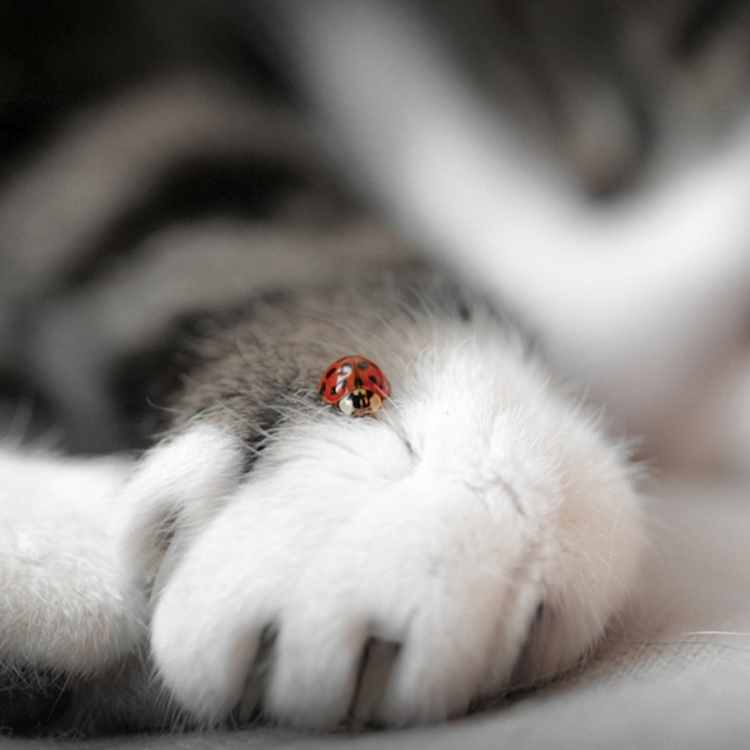
Kitchen appearances carry associations with household provision and abundance. In Italian rural belief, the kitchen was where the family’s material wellbeing was most concentrated. A ladybug in the kitchen reads, in that tradition, as a sign of incoming food security or financial ease.
What Does a Dead Ladybug in Your House Mean?
Take a breath, because this is where people spiral.
A dead ladybug indoors is not, in any tradition I can find that names its sources, an omen of harm. The folk logic runs in the opposite direction: the insect brought its luck, completed its visit, and the cycle is done. Luck received. Chapter closed.

The seasonal context matters. Ladybugs that overwinter in homes often die there, particularly in late winter and early spring when the warmth of the house keeps them active past their biological reserves. Thomas Pest Services notes in their 2017 overview that a ladybug found dead indoors in winter died of exhaustion or dehydration, not of anything directed at you.
What Should You Do When a Ladybug Enters Your Home?
The cross-cultural answer here is clear. Notice it. Make a wish if it lands on you, the South Carolina Aquarium’s 2018 educational piece on ladybug luck records this as standard North American folk belief, and it matches the German children’s rhyme tradition of asking the beetle to carry a wish toward heaven. Then release it gently outdoors.
Do not kill it. This is the one near-universal taboo. In English, Italian, German, and North American folk traditions alike, killing a ladybug reverses whatever luck it brought. The reversal isn’t punishment exactly; it’s more like refusing a gift after you’ve already received it.

If it flew in through a window, open the same window and let it find its way back. If it’s in the kitchen and you can’t figure out where it came from, carry it outside on a piece of paper. The act of gentle release is itself part of the folk logic: you are completing the exchange, doing more than simply disposing of an insect.
There is no version of this that means you should be afraid.
Frequently Asked Questions
Is a ladybug in the house good or bad luck?
Good luck, consistently, across every folk tradition I’ve been able to trace that names its sources. Italian rural Catholic belief reads it as a Marian blessing on the household. German Marienkäfer lore records it as a sign of divine favor and prosperity. English country tradition calls it a sign of incoming money or happiness. North American folk belief, documented by the South Carolina Aquarium in 2018, treats it as one of the clearest good-luck omens in the domestic sphere. I have not found a single named tradition that reads a live ladybug in the house as harmful.
How many ladybugs in the house is considered lucky?
The folk record is thin here and I won’t pretend otherwise. In Italian tradition, a swarm of ladybugs on the grapevines was read as an omen of a particularly abundant harvest, so numbers amplified the luck rather than canceling it. The Asian lady beetle, which overwinters in North American homes in clusters of dozens or hundreds, has no specific folk numerology attached to it that I can find. My read: one is a sign, many is the same sign arriving louder. If you have a true infestation, that’s an overwintering behavior, not a spiritual emergency.
What does it mean if a ladybug lands on you inside your home?
According to Thomas Pest Services’s 2017 summary of North American ladybug belief, a ladybug landing on you is an invitation to make a wish before it flies away. The German children’s tradition carries the same idea: the beetle is a small messenger between here and wherever wishes go, and direct contact gives you access to that channel. In Italian folk belief, a ladybug landing on a person specifically foretold health or money. All three traditions agree that contact is auspicious, not alarming.
What does it mean if a ladybug keeps coming back to your house?
The most likely explanation is overwintering behavior. Asian lady beetles return to the same structures year after year, navigating by chemical traces left from previous seasons. So a recurring ladybug presence in autumn is, biologically, that same beetle or her descendants finding a known shelter. But the folk frame and the biological frame don’t contradict each other here: a home that ladybugs keep choosing is, in German and Italian belief, a home that carries sustained luck. Whether you frame that as the insect or the home matters less than the pattern.
Is it bad luck to remove or kill a ladybug found indoors?
Removing it gently is fine, that’s the recommended response in all the traditions I’ve read. Killing it is the problem. English country lore, German folk belief documented in the Handwörterbuch des deutschen Aberglaubens, and North American folk tradition all hold that killing a ladybug, even unintentionally, reverses the good fortune it carried. The logic is consistent: the insect arrived as a gift, and destroying the gift voids the exchange. If you find one dead already, that’s different; it completed its visit on its own terms.
What does a ladybug in the house mean for love or relationships?
I find this one harder to source than the prosperity and protection meanings. Some contemporary folk belief, particularly in English-speaking North America, associates a ladybug landing on you with incoming romantic luck or news from someone you care about. I haven’t found this in the older German or Italian records. The Marian symbolism in those traditions emphasizes household protection and material wellbeing rather than romantic fortune specifically. So: if love is what you’re thinking about when the ladybug arrives, that attention is yours. The older traditions don’t claim it.
Does the number of spots on the ladybug change the meaning?
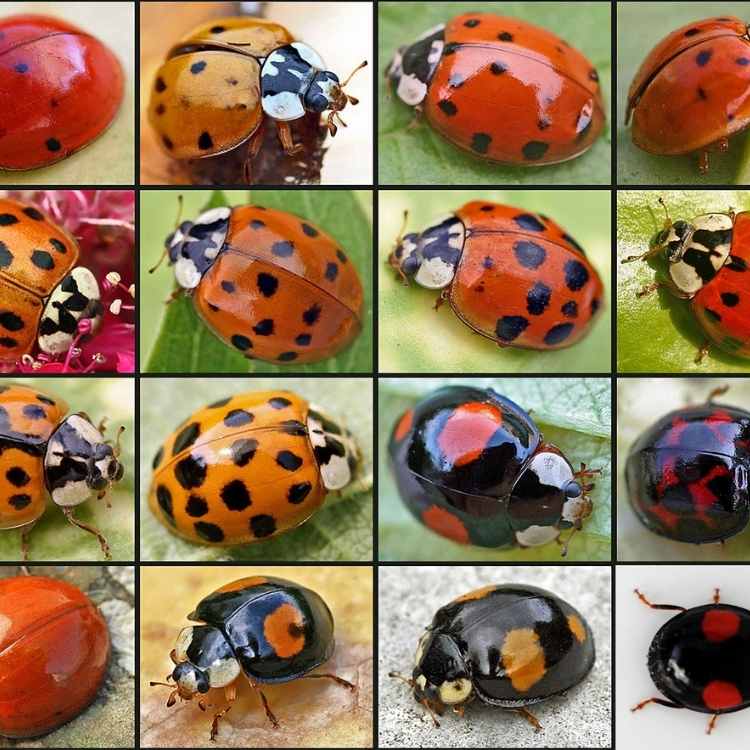
In traditional Italian and English belief, the seven-spot ladybug (Coccinella septempunctata) was most closely associated with Mary’s Seven Sorrows and considered the most auspicious species. Other species exist, two-spot, fourteen-spot, the invasive Asian lady beetle with variable spots, but the folk record mostly doesn’t distinguish between them numerologically beyond the seven-spot association. If you want to assign meaning to the spots, the seven-spot species carries the clearest traditional weight. Anything else, I’m not confident enough to claim a firm reading.
What does it mean spiritually if you find a ladybug in your bedroom specifically?
The bedroom sits at the private center of the home, away from the threshold where most folk omen-reading concentrates. The most consistent reading I find across English and Italian domestic folk belief is that a ladybug in the bedroom signals rest, restoration, or a relationship beginning to settle after difficulty. Some North American folk belief connects it to incoming news from a loved one. I hold these loosely, the bedroom-specific evidence is thinner than the general household evidence. But none of the traditions I’ve read suggest it means anything harmful. The insect is the same creature it was at the front door. It just found its way further in.
Sources
- Merriam-Webster Word History: “ladybug” (citing OED), Etymology tracing “Our Lady’s bird”
- The Italian Jewelry Company. “The Lucky Ladybug and Italian Superstition.”, Italian folk Catholic belief; coccinella della Madonna
- South Carolina Aquarium. “Luck Be a Lady…bug.” 2018, Contemporary North American folk belief
- Thomas Pest Services. “Separating Lady Bug Facts from Myths.” 2017, North American wish-making belief; overwintering behavior
- Simpson, J. & Roud, S. (2000). A Dictionary of English Folklore. Oxford University Press, English and Scottish ladybird lore and nursery rhyme tradition
- Discover Magazine. “Why Ladybugs Symbolize Good Luck and Other Facts”, General natural history and luck symbolism overview






❤️
I found it in my bed
If you’re wondering why it ended up in your bed, ladybugs sometimes enter homes in search of warmth and shelter. They can also be attracted to light and may come in through small openings in doors, windows, or walls.
Remember, ladybugs are generally harmless and are even beneficial as they eat other insects. However, if you’re uncomfortable with its presence, you can gently move it outside or to a plant where it can find food. If you start to notice a lot of ladybugs in your home, it might be a sign of an infestation, and you may want to consult with a pest control professional.
I hope this information helps you understand why the ladybug might have found its way to your bed. Remember, it’s generally seen as a sign of good luck!
❤️
?
I have had 4 then it grew to 6 lady bugs on my ceiling and they were here for about 5 days… Then I woke up at 2 am and I could not find them… But my fiancee has been looking for a job for three months and we just found out that we might be loosing our home with three kids .. so I was taking it as a sign that something as far as a job will hit soon and with that job we will end up ok when. It comes time to look for a new home… Cause they showed up right when he got the call for the interview and it was like wow .. I said if that is not a sign I don’t know what is…. Am I right for saying that??
Dear Stephanie,
I’m truly sorry to hear about the challenges you and your fiancée are facing right now. Life can indeed throw us curveballs, and it’s natural to seek signs and symbols to find hope and meaning during tough times.
Ladybugs are often seen as symbols of good luck and positivity. The timing of their appearance in your home, especially around the time of the interview call, is indeed intriguing. While everyone interprets signs differently, if the presence of the ladybugs brought you comfort and hope, then it’s a sign worth holding onto. Remember, sometimes it’s the little things, like the surprise visit of a ladybug, that can bring a glimmer of hope in challenging times.
I genuinely hope things turn around for your family soon, and that you find the stability and security you’re seeking. Sending you positive vibes and best wishes for the future. ?❤️
Richard
This ladybug has been in my home for about 3 days, and wherever I am it tends to follow me. Like I noticed it in my living room on the ceiling then I noticed it in the bedroom where I was laying. What does that mean?
Hey Elizabeth, Wow, that’s really something, isn’t it? A ladybug following you from room to room for three days straight feels like more than just a coincidence. In many cultures, these little guys are seen as good omens—bringing luck, love, or even signaling a time of personal growth. So, who knows? This tiny winged visitor might be a sign that something awesome is coming your way. Or maybe it just likes the vibe of your home! Either way, it’s a special little moment to enjoy. ?
I have 5 red ladybugs in my bedroom, what is the significance? I recently retired.
Dear Lucie, how lovely to have 5 red ladybugs gracing your bedroom! And congrats on your recent retirement—that’s a big milestone! In the world of symbolism, ladybugs are often seen as little messengers of good luck and positive change. The red ones? They’re like the VIPs of good vibes, often linked to courage and love. Given you’ve just stepped into this new chapter of retirement, these tiny visitors could be a sign that you’re on the path to some really wonderful experiences. So, why not take it as the universe giving you a little retirement gift? Enjoy this special time! ?❤️