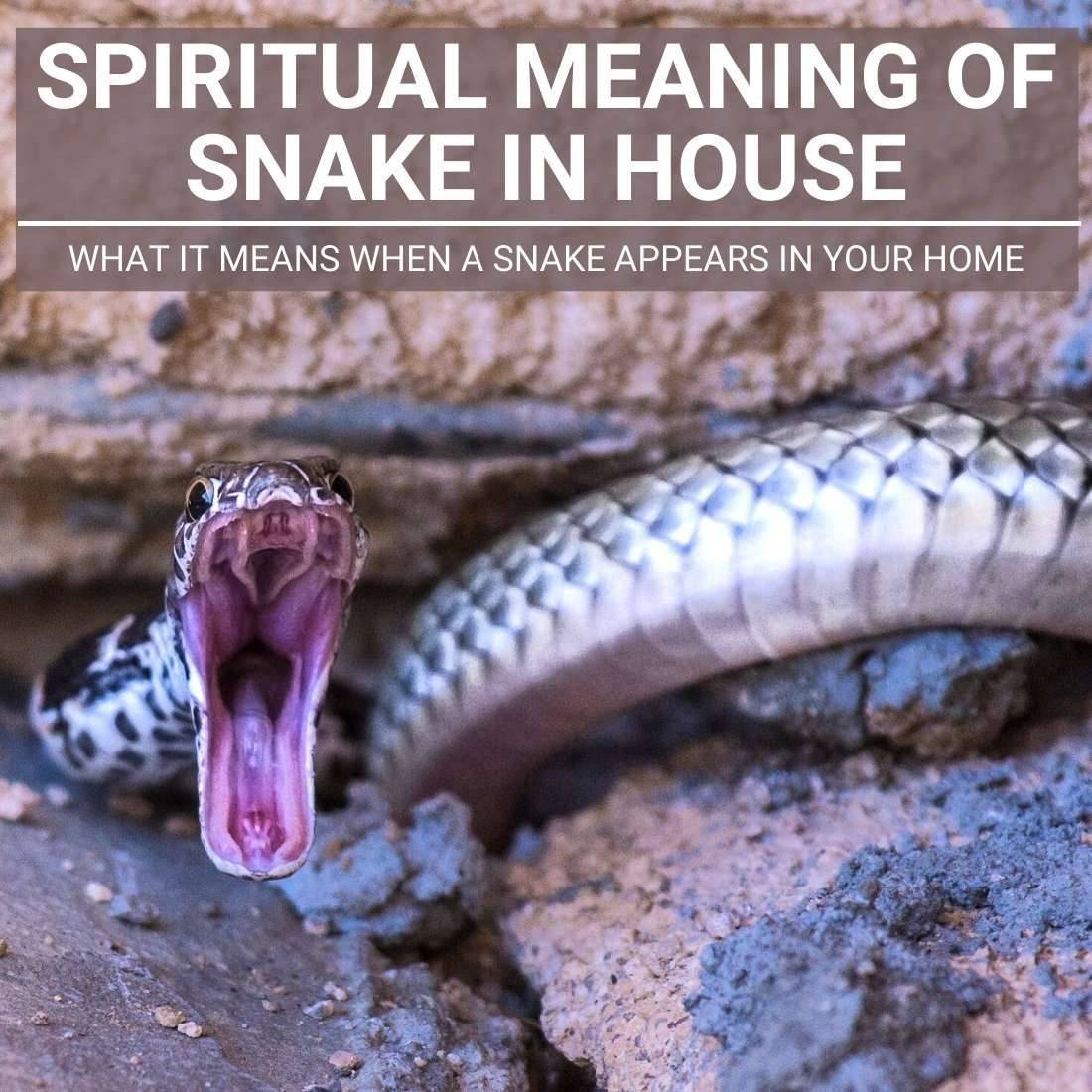
Serpents held symbolic significance in ancient Greek households, where they served as protective guardians called the Agathos Daimon – a practice Walter Burkert documents as deliberate and widespread in classical Athens. The cultural meaning of such creatures shifted dramatically depending on context: their origin, behavior, and direction of movement fundamentally altered how Greeks interpreted their presence.
Key Takeaways
- A snake entering your home is treated as spiritually significant across dozens of unconnected traditions, not just one or two.
- The dominant readings are transformation, ancestral presence, protection, and incoming change. Fear is rarely the intended message.
- Where you find the snake inside your home shifts the meaning. Bedroom, kitchen, doorway, and basement each carry different weight.
- Hindu tradition treats a house cobra as a naga visitor deserving respectful acknowledgment, not removal by force.
- The response across most traditions is the same: stay calm, acknowledge the animal, remove it safely, and sit with what comes up.
What Does It Mean When You Find a Snake in Your House?
The short answer: finding a snake in your house is not a bad omen in most traditions that have thought seriously about it. The longer answer depends on which tradition you ask, where in your house the snake appeared, and whether it was alive or dead.
I’ve spent years doing wildlife rehabilitation at a local wildlife center, and I can tell you that snakes enter houses for entirely ordinary reasons: warmth, prey, a gap in the foundation. That’s the practical truth. But I’ve also read enough comparative religion to know that the practical truth and the symbolic one aren’t actually in competition. The snake shows up. You notice. Something in you asks why. That question is worth taking seriously.
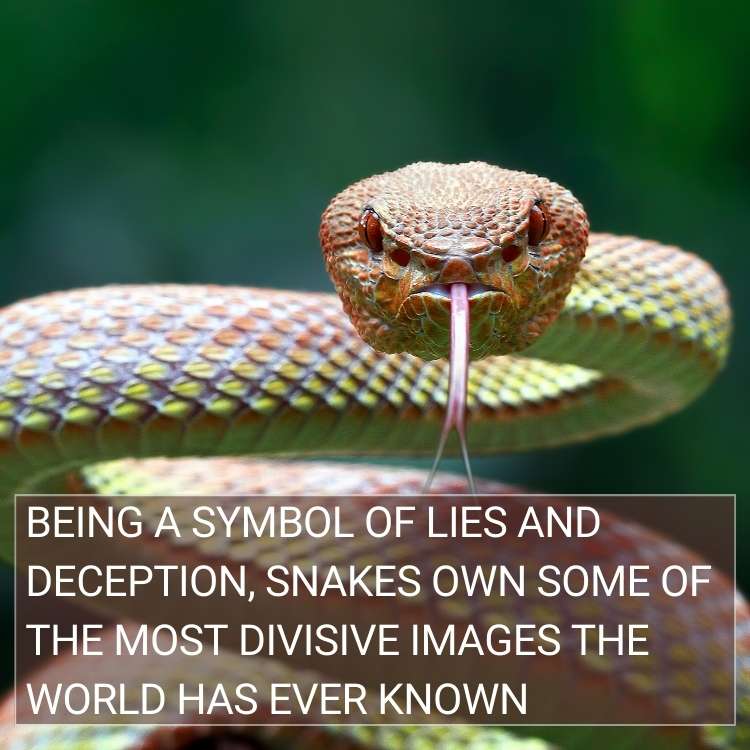
According to Mircea Eliade’s Patterns in Comparative Religion (1958), the serpent is one of only a handful of animals that appear as a religious symbol on every inhabited continent. The house snake specifically, the one that crosses into domestic space, tends to carry the strongest readings. It has crossed a boundary. It has come to you.
What Are the Most Common Spiritual Meanings of a Snake Entering Your Home?
Five readings come up again and again, across traditions that had no contact with each other. The common thread is not danger. It’s change.
Transformation. The snake sheds its skin completely and emerges whole. This is something the animal actually does, and every culture that watched it drew the same conclusion: this creature knows something about renewal that we don’t. When one enters your house, many traditions read it as a sign that a significant change is already in motion in your life, whether you’ve named it yet or not.
Ancestral visitation. In West African Yoruba tradition, as documented by scholar Wande Abimbola, certain snakes are understood as ancestors returning to check on the household. The snake doesn’t speak. It shows up. That is enough. A similar belief appears in parts of rural Appalachia. My neighbors here in Black Mountain, not me, I should say, I’m not from here originally, sometimes speak of black snakes around the house as old family watching over things.
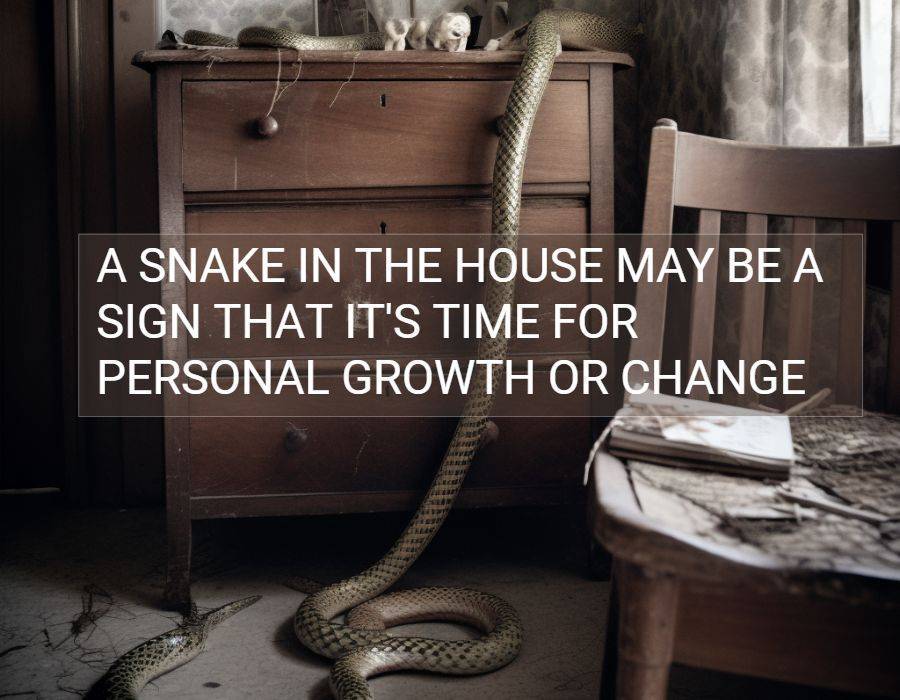
Healing. The caduceus is not an accident. The snake has been linked to medicine and recovery since at least the ancient Greek cult of Asclepius, where non-venomous serpents were kept in healing temples. A snake in your house, in this frame, reads as a prompt: something in your body or your life needs attention.
Protection. Several traditions hold that a snake choosing to enter and stay in a home is guarding it. Not threatening it. The ancient Greeks had a specific name for this: the Agathos Daimon, the good spirit of the household, often depicted as a serpent.
Good fortune and incoming abundance. In Hindu household belief, a snake near the threshold or the kitchen is read as an auspicious sign, associated with naga blessings and the promise of prosperity.
What Do Different Cultural Traditions Say About Snakes Inside the Home?
The ancient Greek tradition is one I find particularly specific. According to Walter Burkert’s Greek Religion (1985), the Agathos Daimon was a protective spirit of the household often depicted as a snake, and householders made regular offerings to it. A serpent seen in the home was not removed. It was fed. Burkert documents this practice as widespread in classical Athens, not confined to any single social class. The snake was the house’s good spirit made visible.
In West African and Afro-diasporic traditions, particularly those of the Fon people of Benin, the rainbow serpent Dan is associated with wealth, continuity, and the connection between living and ancestral worlds. A snake crossing into your home is treated as a message from the other side of that boundary, not a threat.

Vastu Shastra, the classical Hindu system of sacred architecture, holds that the land beneath any home is inhabited by nagas, serpent beings associated with the earth, water, and the protection of boundaries. A snake appearing inside the home is, in this reading, a naga who has surfaced. The recommended response is not to kill it. You offer respect and guide it out.
And in the folk traditions of rural Appalachia, which I know only as an observer, not a practitioner, the black rat snake is sometimes called the “house snake” and left alone deliberately, because it keeps mice out and because something in the older mountain belief holds that it keeps worse things out too.
What Does Hindu Tradition Specifically Teach About a Snake in the House?
Hindu tradition gives the most detailed answer to this question, so it deserves its own section. According to C. J. Fuller’s The Camphor Flame: Popular Hinduism and Society in India (Princeton University Press, 1992), the naga tradition is deeply embedded in both Shaiva and Vaishnava household practice across South Asia. Cobras are associated with Shiva (who wears one around his neck) and with Vishnu (who rests on the cosmic serpent Shesha). A cobra near the home, or inside it, is treated as an auspicious presence, not an intrusion.
The Garuda Purana, a classical Sanskrit text on ritual, omens, and death rites, addresses the house snake directly. A snake entering the home and moving toward the puja room or the kitchen is read as especially auspicious, associated with naga blessings on the family. A snake found dead inside the home is treated differently: it requires ritual purification, because a naga that died on your threshold may indicate a disruption in the protective energy of the house.
What strikes me about this tradition is how specific it is. Most folk traditions about house snakes are vague: good omen, bad omen, depends. The Hindu naga tradition actually tells you where the snake was, what it was doing, and what to do next. That specificity is, I think, what makes it worth trusting as a source.
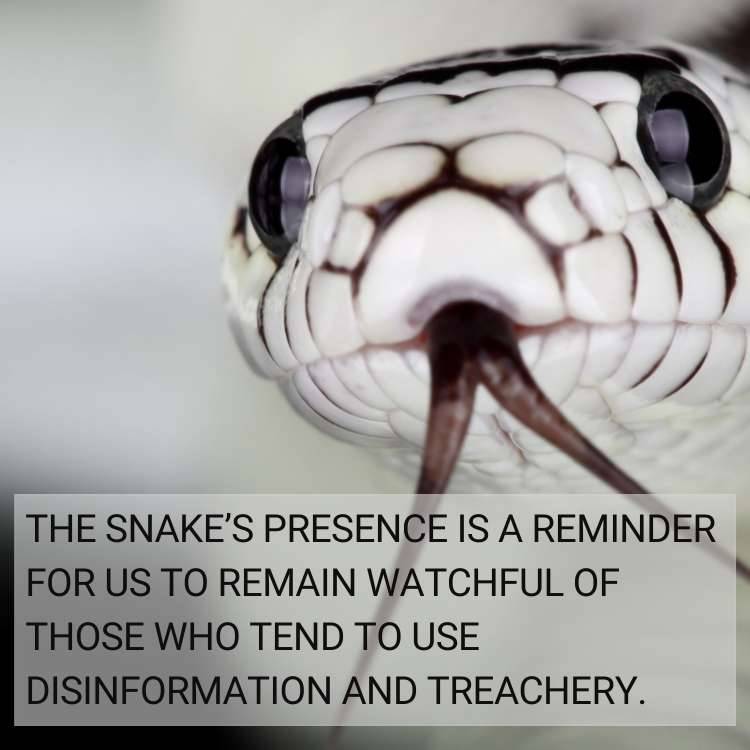
According to Stephanie W. Jamison and Joel P. Brereton’s translation of The Rigveda (Oxford University Press, 2014), serpent figures appear in the oldest Sanskrit hymns as guardians of water, treasure, and the thresholds between worlds. The naga tradition that Fuller documents in modern India has roots going back roughly three thousand years.
That is not nothing.
Does the Location Inside Your Home Change the Spiritual Meaning?
It does. Not in every tradition, but in enough of them that location is worth paying attention to.
Bedroom. A snake found in the bedroom tends to be read as connected to personal relationships or to the self. Transformation is the dominant reading here: something in your intimate life, or in your relationship to your own body, is shifting. Several folk traditions in South Asia associate a bedroom snake with a change in partnership or a pregnancy.
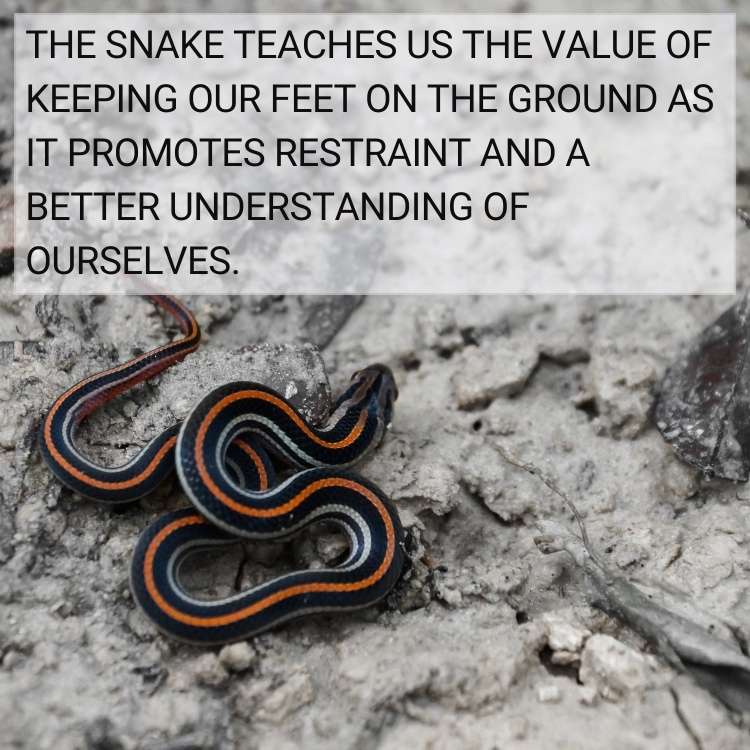
Kitchen. The kitchen is the space of nourishment in almost every culture. A snake in the kitchen leans toward abundance readings: incoming resources, a period of plenty, ancestral blessing on the household’s wellbeing. In the Vastu Shastra framework, the kitchen is one of the most spiritually significant rooms in the house, and a naga appearing there is treated as an especially good sign.
Frequently Asked Questions
Is a snake in the house good luck or bad luck?
Mostly good, across the traditions that have thought about it most carefully. The Agathos Daimon of ancient Greek household religion, documented by Walter Burkert in Greek Religion (1985), was a protective serpent spirit associated with prosperity. Hindu naga tradition treats a house snake as an auspicious visitor. West African Fon tradition reads it as an ancestral messenger. The “bad luck” reading is a minority position, and I haven’t found it in any tradition that has a detailed theology of the house snake. It tends to appear in general superstition collections rather than documented religious practice.
What does it mean if a snake enters your house and then leaves on its own?
A snake that enters and leaves without being chased out is, in the Vastu Shastra reading, completing a visit. The naga came, assessed the household, and departed satisfied. I read this as the gentlest version of the encounter: something checked in on you and found things in order. Whether you take that literally or as a useful frame for thinking about your own life, a guardian who came and left without incident is not a frightening image.
What does it mean when a snake appears in your house after someone dies?
This is the question I get most often, and I want to answer it carefully. In West African Yoruba tradition, documented by scholar Wande Abimbola, certain snakes are understood as ancestors returning to the household after death. In some South Asian folk practice, a snake appearing near the home shortly after a death in the family is treated as the departed checking on the living. I don’t believe in messages from the dead. But I do believe that grief makes us pay attention to things we would otherwise walk past, and that paying attention is its own kind of meaning.
Is there a difference in meaning between a venomous and a non-venomous snake?
Honestly, the folk record is thinner on this distinction than you might expect. The Hindu naga tradition focuses heavily on cobras, which are venomous, and treats them as especially auspicious. The venom is part of what makes them significant rather than what makes them dangerous. In North American folk tradition, the black rat snake (non-venomous) is the classic house snake, the one left alone. My best reading is that the distinction matters less than the behavior: a snake that moves slowly, doesn’t strike, and seems unbothered by your presence is the one traditions tend to read as a guardian.
What does it mean spiritually if a snake keeps returning to your home?
A returning snake is, practically, using your house as habitat. There is warmth, prey, or shelter it has found useful. Symbolically, several traditions read repetition as emphasis: the message is not being received, or the change the snake signals is still in progress. I’d check the practical explanation first (a gap in the foundation, a mouse problem). If you address those and the snake keeps coming back, sit with the question of what in your life has been asking for your attention repeatedly without getting it.
Do all spiritual traditions agree that a house snake is a positive sign?
No. Some Christian folk traditions, particularly in parts of Europe shaped by the Genesis story, treat the house snake as an ill omen or a sign of spiritual corruption in the household. I’ve also seen snake-in-house readings associated with betrayal in some Eastern European folk magic collections, though the sources are not well documented. The majority position, globally, is positive. But the negative readings exist, and I’m not going to pretend otherwise. The most internally consistent traditions, Hindu, ancient Greek, West African, lean strongly toward protection and auspicious change.
Should I kill the snake I found in my house?
From a practical standpoint: no. Almost every snake you’ll find inside a home in North America is non-venomous and useful. Killing it is unnecessary. From a symbolic standpoint, multiple traditions actively warn against killing a house snake. The Garuda Purana notes that killing a naga that has entered the home brings negative consequences to the household. The ancient Greek Agathos Daimon, if harmed, was understood to withdraw its protection. The practical and symbolic answers here point in the same direction: remove it alive.
The snake-as-healer tradition is one of the oldest in the world. The staff of Asclepius, the Greek god of medicine, is a single serpent coiled around a rod, and it is still the symbol of medicine today. Asclepius’s healing temples kept live non-venomous snakes. A snake appearing during a period of illness, your own or someone close to you, is read in this tradition as a sign that healing is available, not that death is near. According to cross-cultural symbol analysis, the healing association appears independently in traditions across the ancient Mediterranean, South Asia, and parts of the Americas. The common thread is the snake’s own biology: it sheds its skin, it survives venom, it moves between underground and surface worlds.
Sources
- Cross-cultural symbol research, comparative religion studies (JSTOR)
- Cross-cultural symbol analysis, healing and serpent traditions
- Serpent symbolism across world traditions
- C. J. Fuller, The Camphor Flame: Popular Hinduism and Society in India (Princeton University Press, 1992)
- Stephanie W. Jamison and Joel P. Brereton, The Rigveda (Oxford University Press, 2014)
- Mircea Eliade, Patterns in Comparative Religion (Sheed and Ward, 1958)
- Walter Burkert, Greek Religion (Harvard University Press, 1985)
- Garuda Purana, classical Sanskrit text on ritual and omens
- Wande Abimbola, documented scholarship on Yoruba tradition and ancestral belief