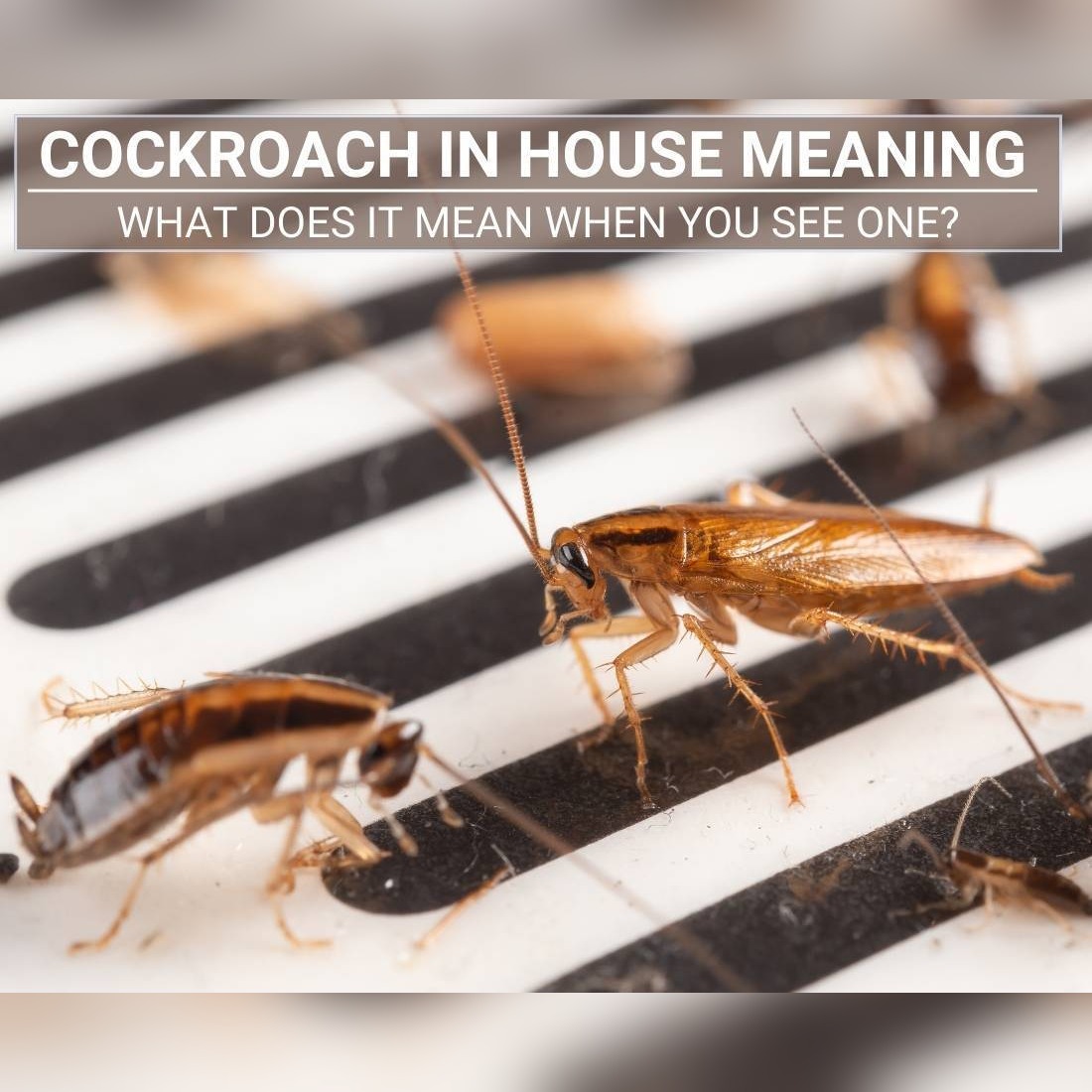
You found a cockroach and Googled it: bad luck? Rarely. Russian folk tradition held that cockroaches signified a well-maintained house, and seeing them breed meant money was coming. What shifts this reading is location, quantity, and whether your home felt neglected or cared for. There’s a practical way forward.
Key Takeaways
- In Russian domestic folk tradition recorded by Vladimir Gura (2005), a black cockroach in the home is read as a sign of incoming material fortune, not misfortune.
- The symbolic reading turns on household condition: order versus neglect, stored abundance versus scarcity.
- Location changes the reading. A cockroach in the kitchen carries different weight than one in the bedroom or at the front door.
- Han Chinese folk belief associates the cockroach with resilience and endurance, but also reads its appearance as a signal that something in the household needs attention.
- The right response combines a genuine look at your household’s current state with whatever practical action the situation calls for.
What Does It Mean When a Cockroach Enters Your House?
The short answer: your home is being read, by something very old in the human mind, as a living system with a condition. Not you personally. The house. Across the folkloristics record documented in contemporary ethnographic studies, cockroaches entering a dwelling are treated as indicators of the household’s state, its balance between stored resources and decay, between warmth and neglect.
My grandmother Theresa kept a leather notebook of Bavarian animal lore from the 1920s, German cursive, falling apart at the spine. Cockroaches don’t appear in it. But the same logic does, on almost every page: creatures that cross the threshold of a home are crossing into a space the human mind has always treated as charged. You’re not making this up. The unease is older than you are.
No version of this encounter, in any tradition I’ve found with a named source and a documented history, means you are cursed or targeted. What it does mean requires looking at your specific situation: the room, the number, the timing.
What Do Different Cultures Say About Cockroaches in the Home?
The most specific documentation I’ve found comes from Russian folk tradition. According to Vladimir Gura’s 2005 ethnographic work on Russian domestic belief narratives, cited in a contemporary folkloristics study on cockroach belief systems, large black house cockroaches, called prusaks in rural oral tradition, are treated as signs of material wellbeing. Explicitly. A household where black cockroaches reproduce and increase is understood as a household attracting abundance. The traditional response is not extermination. It is acknowledgment.
This is documented rural and urban oral tradition, not generalized “Slavic” myth. The specificity matters: it is the black cockroach, it is proliferation, it is the domestic space as the arena of meaning.
Han Chinese urban household belief, documented in folk religion scholarship and reflected in Chinese symbolic traditions around insects, tends in a different direction. Here, cockroaches carry associations with resilience and endurance, but their appearance also signals that the household needs attention, that something is accumulating unaddressed. The insect’s legendary survival capacity becomes a mirror. What in this space has been left to persist unchecked?
A third reading comes from traditions that treat the cockroach as a creature of hidden spaces and thresholds between light and dark. In some West African folk systems, insects that emerge from walls or floors are associated with ancestral presence, with the boundary between the seen and unseen parts of domestic life. I don’t have a single named source here that I trust fully, so I’ll say that plainly. The folk record in this area is thinner than in the Russian and Chinese cases, and I’d rather admit that than paper over it.
Is a Cockroach in Your House a Good Sign or a Bad One?
It depends on context, number, and what the household looks like right now. That’s the honest answer, and it’s more useful than a flat verdict either way.
The fortune reading from Russian prusak tradition is specifically tied to proliferation in a well-kept house. The insect is read as attracted to stored abundance, warmth, resources. A single cockroach in a clean home, by this logic, is an early signal of incoming good fortune, an advance scout of sorts. But the same tradition implicitly assumes a household that is maintained, not neglected.
The decay reading flips the same logic. A cockroach in a space that has been left unattended, where things are piling up physically or emotionally, is read as a mirror of that state. Not a cause. A reflection. The creature does not bring neglect into the house. It shows you what is already there.
So the question worth asking is not “is this good or bad?” It’s: what does my home look like right now, honestly? And I mean that in the widest sense. Whether you swept last Tuesday or how you’ve organized your entire space.
What Does the Location Inside Your Home Say About the Meaning?
Location is the variable most people skip, and it’s the one that matters most to the folk reading.
Kitchen: The kitchen is the room of sustenance, stored resources, the household’s material foundation. A cockroach here, in the Russian tradition, carries the strongest fortune association. It’s also, practically, where they are most likely to appear. The two readings are not mutually exclusive.
Bedroom: The bedroom is the room of rest, intimacy, the private self. A cockroach here registers differently. Folk traditions across several cultures associate insects in sleeping spaces with disrupted rest, or something in the intimate life of the household that needs attention. Not doom. Attention.
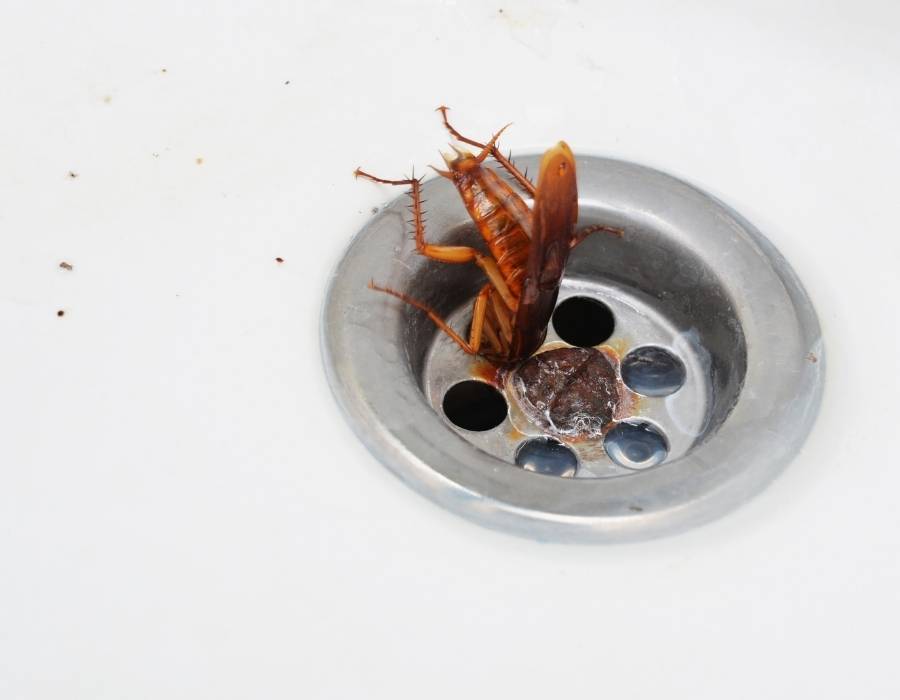
Bathroom: Associated in many traditions with purification and the body’s limits. An insect here is read as a signal about what is being cleaned away, or not. Something in the house’s cycle of renewal may be stuck.
Front door or threshold: The threshold has symbolic weight in nearly every folk tradition that bothers to think about domestic space. A cockroach at the front door is treated, in several systems, as the clearest threshold signal: something is trying to cross in, or something inside is trying to be noticed.
What Is the Cockroach Pointing Toward in Your Home?
If I had to distill what the cross-cultural record actually says, it comes down to four household states the cockroach is said to point toward. Not predict. Point toward.
Order versus neglect. Prosperity versus scarcity. Healing versus harm. Light versus what is being kept in the dark.

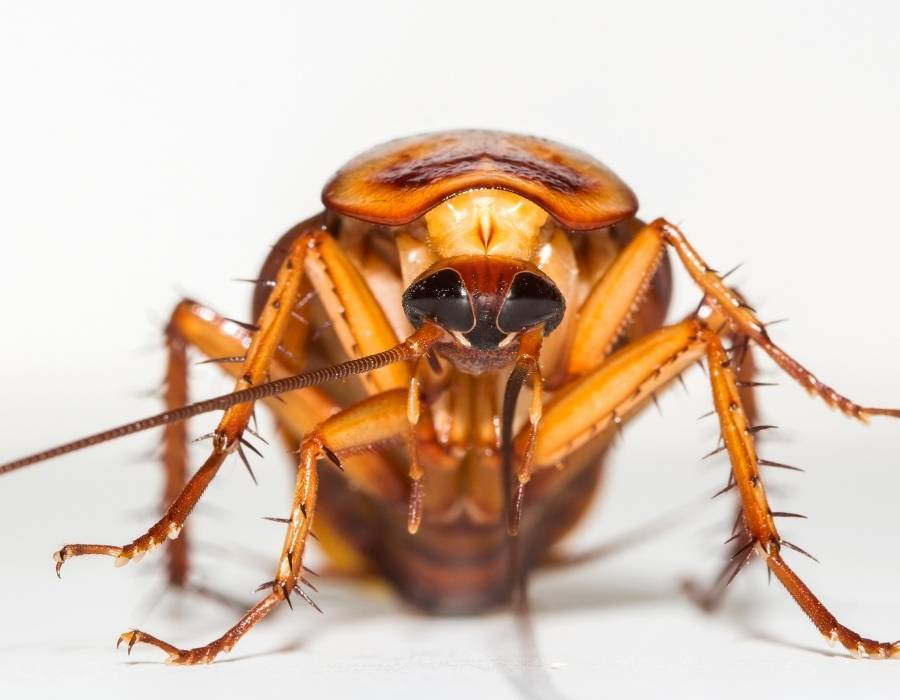
The cockroach is, biologically, a creature of hidden spaces. It does not choose the center of a room in daylight unless something has pushed it there. That biological fact maps onto the symbolic reading in a way I find genuinely interesting: the thing that lives in the hidden parts of your house comes into view when conditions shift. The reading of the cockroach as an uninvited messenger about household condition draws on exactly this. It is not bringing a message from outside. It is surfacing one that was already inside.
The fact that you noticed this is part of the answer. The insect has been here, in every house you’ve ever lived in, whether you saw it or not. The fact that you saw it today means something shifted. Worth asking what.
What Should You Do After Seeing a Cockroach in Your House?
Two tracks. You need both.
The practical track is not optional. Cockroaches enter homes through gaps, drains, and cracks; according to the National Pest Management Association’s 2021 survey, roughly 63 percent of homes in the United States contain detectable levels of cockroach allergens, concentrated in kitchens and bathrooms. Check those entry points. Look at what is stored, stacked, or left undisturbed. This is not dismissing the symbolic reading. It is completing it. The folk tradition that treats cockroaches as fortune signs also assumes you are paying attention to the household.
The reflective track is also not optional, if you came here because the sighting felt like something. Sit with the four household states above. Not as a cosmic verdict, but as a prompt. Is there something in the domestic space, physical or relational, that has been left unaddressed? Is there an area of scarcity, literal or otherwise, that you’ve been avoiding? The cockroach is not a diagnosis. It is a question.
Some traditions recommend a small cleansing action after an unexpected insect encounter: opening windows, burning dried rosemary or sage, washing the threshold area. I find these useful not because I think they remove spiritual contamination, but because physical action on a space changes how you relate to it. Do what settles you. The settling is real even if the mechanism is psychological.
How Does the Number of Cockroaches Change the Reading?
One cockroach is a messenger. A threshold moment.
An infestation is a different signal, and the traditions are consistent here even when they disagree on direction. In Gura’s documentation of Russian folk belief, proliferation is explicitly associated with fortune, but the key word is household attraction, the idea that the insects are drawn by what the space holds. An infestation in a neglected space reads the same logic in reverse: the household is attracting something, but what it’s attracting is the creature of decay and hidden places, not abundance.
So quantity amplifies rather than changes the reading. A single cockroach asks you to look at the household’s current state. Thirty cockroaches are telling you, loudly, that the answer to that question is already visible if you look.
The practical and symbolic response to an infestation are the same. Full attention. Not panic. Attention.
Frequently Asked Questions
Is seeing one cockroach a bad sign?
Not according to the folk traditions with the clearest documentation. In Russian domestic folk belief recorded by Vladimir Gura in 2005, a single black cockroach entering the home is associated with incoming fortune, not harm. Most other traditions I’ve found treat one cockroach as a threshold signal, a prompt to look at the household’s current condition, rather than a verdict of any kind. You are not being warned of catastrophe. You are being asked to pay attention to something.
What does it mean if a cockroach runs toward you?
I’ll be honest: I don’t have a confident answer from named folk sources here. The folk record on directional movement is thin, and I haven’t found anything I’d stake a claim on. What I can say is that in several symbolic frameworks, an animal moving toward rather than away from a person is read as a more direct signal, something trying harder to be seen. If I had to apply the household-messenger logic, I’d read it as: whatever the cockroach is reflecting about your situation, it is not subtle right now.
What does it mean if a cockroach appears during the day?
Cockroaches are active at dusk and through the night. A nighttime sighting is their natural pattern and carries no particular weight beyond the standard household-condition reading. A daytime sighting is different. When an insect that normally stays hidden appears in full light, something has pushed it out of its usual zone. That biological fact maps onto the symbolic reading: a daytime appearance suggests a more urgent signal, something in the household’s condition that can no longer stay in the background.
Does killing a cockroach affect the meaning?
In the Russian tradition that treats cockroaches as fortune signs, killing them was specifically discouraged, precisely because the insect was seen as an indicator of household abundance. Exterminating the messenger was considered bad form, practically and symbolically. And in the decay-and-neglect reading, removing the cockroach without addressing the underlying household condition it reflects changes nothing. The question it raised is still there. So: you can kill it, but deal with what it was pointing to.
What does a cockroach in the bedroom specifically mean?
The bedroom is the room of the private self, rest, and intimacy. Most folk traditions that parse domestic space by room treat insects in sleeping spaces as signals about the intimate life of the household: a relationship under stress, something in the personal sphere being left unaddressed, disrupted rest that has a cause beyond the physical. The way I read it: whatever the cockroach is reflecting, it has gotten into your private space. The area of your life that most needs attention right now is probably not the kitchen.
Are cockroaches ever considered protected in any tradition?
The Russian household tradition comes closest. Not sacred exactly, but protected: black cockroaches were not to be killed because their presence indicated the household’s good standing. There is also a strand of folk belief, documented in passing across several Eastern European oral traditions, that killing a house insect without cause invites the departure of whatever fortune it carried. But I haven’t found a tradition that treats the cockroach as sacred in a formal religious sense, the way some cultures treat certain birds. “Do not destroy the messenger” is a consistent thread. That’s about as far as the record goes.
What does it mean if cockroaches keep coming back?
The practical answer and the symbolic answer converge here. Practically, cockroaches return because the entry point or the attraction, food, moisture, warmth, was not fully addressed. Symbolically, the folk-messenger logic says the household condition the insect was reflecting has not changed. Both answers point to the same action. Look more carefully at what you haven’t addressed. Not the cockroach. The underlying condition the cockroach was showing you. Recurring visits mean the question is still open.
Sources
- Cockroaches: From Belief Narratives to the Contemporary, SciSpace (includes citation of Vladimir Gura’s 2005 ethnographic work on Russian domestic folk belief)
- Cockroach Symbolism in Chinese Cultural Tradition, DreamLens
- Spiritual Meaning of the Cockroach, Spirituality Animals
- Spiritual Meaning of Cockroaches in the House, Spells8
- Cockroach Spiritual Meaning, Aunty Flo
- Cockroach Symbolism and Messages, Spirit Animals