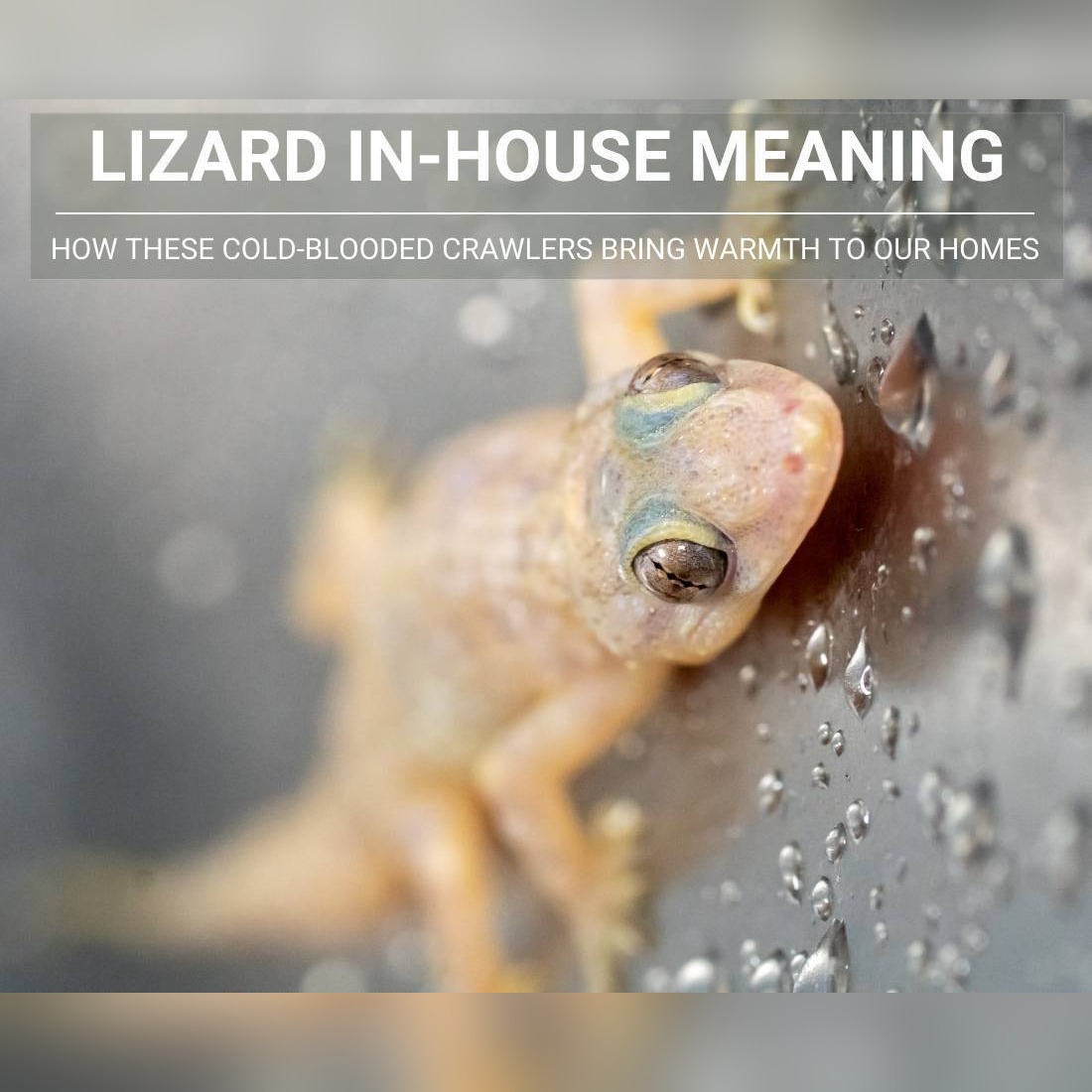
You found a lizard in your house and looked it up. That instinct has a long tradition behind it, and the answer is more specific than most sites suggest, because it depends on where the lizard appeared, what it did, and which tradition you find yourself reaching for.
Key Takeaways
- Across South Asian, Southeast Asian, and Pacific traditions, a house lizard is read as a protective household presence, not a curse.
- South Indian folk astrology called Gauli Shastra assigns specific meanings based on where the lizard is on the wall and what it does.
- Maori tradition reads lizards near the home as kaitiaki: guardians that hold the boundary between the living and the ancestral dead.
- The lizard’s ability to regrow its tail is the single trait most traditions connect to surviving loss and coming back from it.
- Location matters. A lizard in your bedroom carries a different reading than one crossing your front threshold.
What Does a Lizard in Your House Mean Spiritually?
The short answer: in most traditions where house lizards appear in folk belief, they are read as protective. The longer answer involves which tradition, because the same small gecko on your wall means something different in Chennai than it does in Auckland or in the Hopi villages of Arizona.
My grandmother Theresa kept a leather notebook of animal lore from the Bavarian Forest, and I have it on my desk right now, 1920s German cursive, some pages stuck together from age. Lizards barely appear in it. They’re not native to the Bavarian climate, so this is one of the few topics where I come to the material as a researcher rather than as someone with inherited lore. I want to be honest about that upfront.
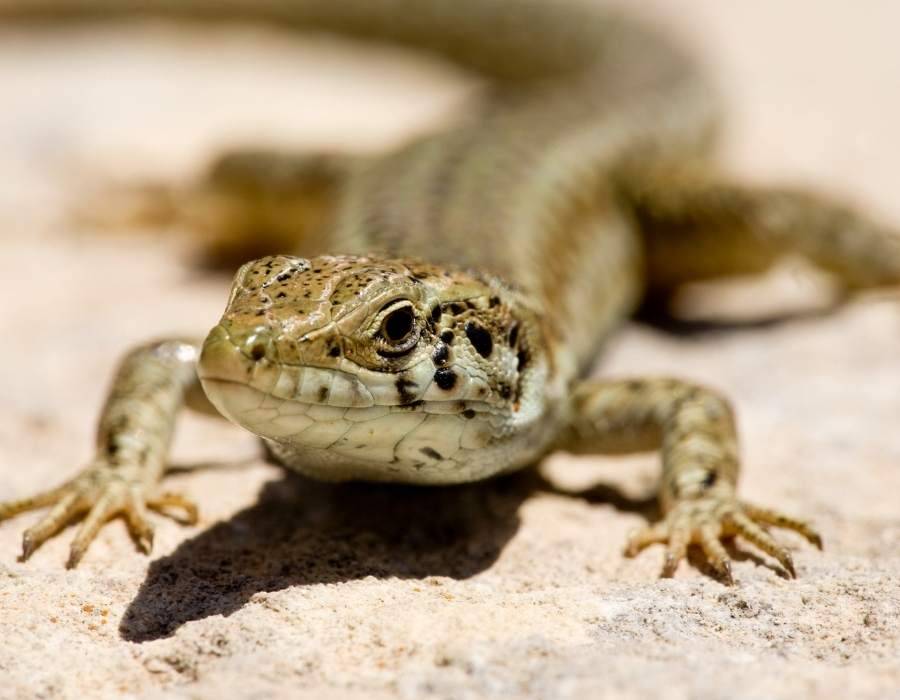
What I can tell you is this: the house lizard, specifically the small gecko that clings to walls and hunts moths around your ceiling light at night, shows up in the domestic symbolism of South Asia, the Pacific, and the American Southwest with more consistency than almost any other animal. And the reading is almost always some version of the same thing. A guardian. A watcher. A sign that the house is not empty of meaning.
For a broader look at lizard symbolism across traditions, see the full reference article on lizard spiritual meaning.
Is a Lizard in Your House Good Luck or a Warning?
Mostly good luck. But which tradition you’re drawing from determines whether that reading actually applies to you.
Across South India, Sri Lanka, Southeast Asia, and the Pacific Islands, house geckos are treated as guardians. Wild Gratitude’s survey of lizard symbolism notes that in these regions the lizard’s presence inside the home is actively welcomed, its chirping considered auspicious, its sudden appearance read as a sign that the household is watched over. The common house gecko, sometimes called the Asian house gecko (scientific name: Hemidactylus frenatus), has spread to warm climates across the globe because it thrives near human habitation. There’s something in that. An animal that actively chooses to share your walls is a different kind of visitor than one that wanders in by accident.
The cautionary readings come primarily from parts of sub-Saharan Africa. According to the South African National Museum’s documentation of myths and superstitions about reptiles, some Zulu communities regard lizard contact with suspicion, associating certain species with misfortune. The same source is careful to note that the claims about physical harm from lizards are biologically unfounded. Not a danger. But not universally lucky either. The reading varies.
You are not making this up. The fact that you noticed is part of the answer.
What Does South Indian Hindu Tradition Say About a Lizard in the House?
South Indian Hindu folk astrology has an entire system for reading house gecko behavior. It’s called Gauli Shastra, and it’s one of the more specific omen frameworks I’ve come across in this work.
According to IndiaNetzone’s description of Gauli Shastra, cited via Green Matters, the system reads the lizard’s position on the wall, its chirping, and where on the human body the lizard falls, as distinct fate-indicators for household members. Different body parts map to different outcomes: fortune, illness, danger, auspiciousness. The chirping of a gecko near a person is considered holy rather than alarming.
This is a Brahminical folk-astrological practice, not temple ritual. It assumes the common wall gecko that lives indoors. Mircea Eliade, in Patterns in Comparative Religion (1958, Sheed and Ward), argues that repetitive, predictable animal behaviors become the raw material of omen systems precisely because they are reliable. A gecko that chirps at a specific hour, falls from the wall, appears in the kitchen rather than the bedroom: these are legible events in a system that needs repetition to function. The gecko is the perfect candidate. It shows up. Every night.
I don’t know whether Gauli Shastra maps perfectly onto your situation if you’re reading this in Ohio or London. Probably not perfectly. But the underlying framework, that the lizard’s behavior and location carry distinct meanings, is worth holding onto regardless of where you are.
What Do Maori Traditions Say About Lizards Near the Home?
This one surprised me when I first read it. Not alarming. Genuinely different from the South Asian guardian reading.
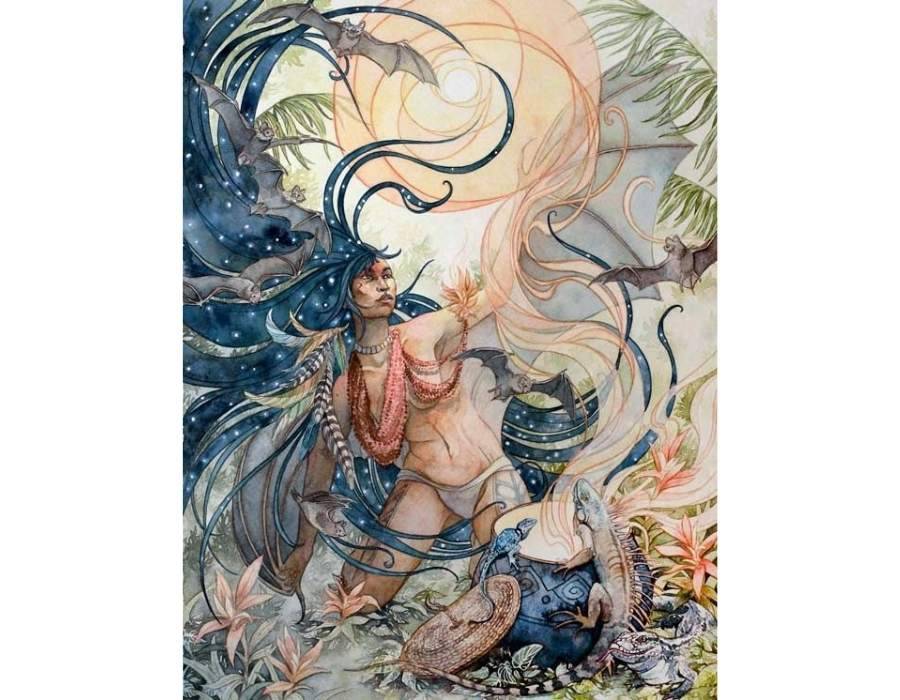
According to the New Zealand Department of Conservation’s documentation of Maori relationships with native wildlife, lizards in Maori tradition are associated with Te Po, the realm of the dead, the darkness that precedes and follows life. They are not evil. They are kaitiaki: guardians. But what they guard is the boundary between the living and the ancestral dead.
Anne Salmond’s scholarship on Maori cosmology, particularly Hui: A Study of Maori Ceremonial Gatherings (1975, Reed), provides context for how tapu creatures operate in spaces where the living and the ancestors intersect. A lizard near the sleeping area, near the threshold, near the place where the household gathers at night: in Maori understanding, that is exactly where this animal belongs. Not because it brings death. Because it watches the door between worlds.
So if a lizard appeared near your bedroom or at your entryway, the Maori reading is not bad news. It is a presence at the boundary, a reminder that the household is held by something older than the people currently living in it.
What Do Hopi and Pueblo Traditions Say About the Lizard’s Spiritual Significance?
The Hopi and broader Pueblo traditions of the American Southwest read lizards through a lens of healing and right conduct rather than house omens specifically. But the traits that matter here, tail regeneration, skin shedding, the ability to survive what would kill something else, are the same ones that make a house gecko feel worth paying attention to.
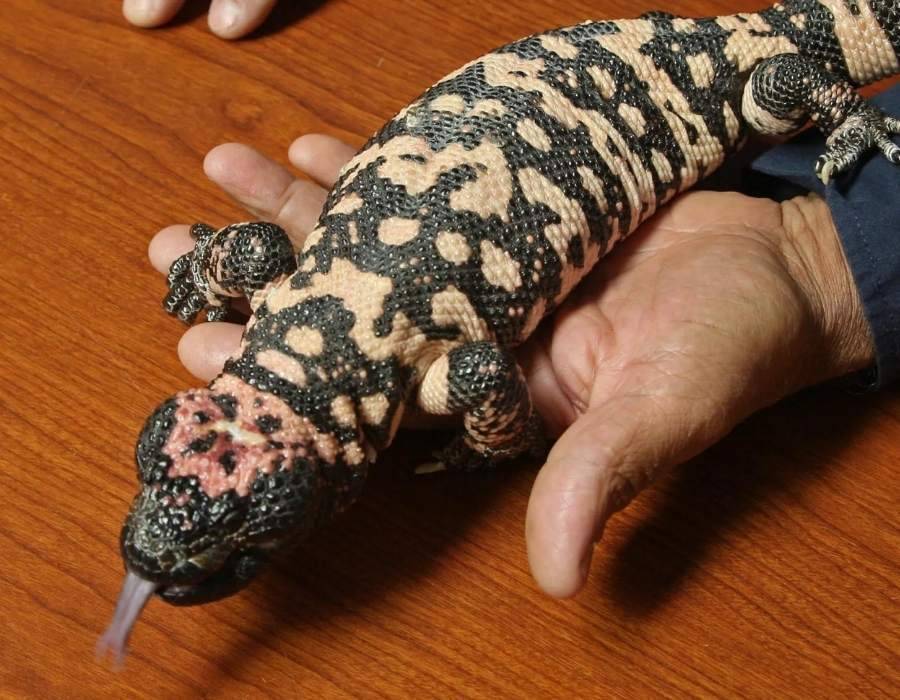
According to Kachina House’s ethnographic summary of Hopi and Pueblo lizard traditions, some Southwestern communities call the horned lizard “Grandpa” and associate it with healing power tied to its regenerative biology. The Hopi Monongya katsina, modeled partly on the collared lizard, appears in ceremony as a warrior and disciplinarian. The Gila Monster appears in Hopi and Navajo medicine stories as an animal that knows about injury and can restore life in some tellings.

Jesse Walter Fewkes documented lizard-related katsina iconography in his early twentieth-century reports for the Smithsonian Bureau of American Ethnology. These are not domestic gecko sightings. The Southwest traditions deal with different species in different contexts. But the logic is the same: the lizard that survives, sheds, regrows, is the animal the mind reaches for when it needs a way to think about recovery.
What Does It Mean When a Lizard Appears in a Specific Room or Location?
Location refines the reading. This is the part most sites skip over.
What Should You Do After Finding a Lizard in Your House?
- Note where it appeared and what time of day. If you’re working with Gauli Shastra’s framework, location and behavior are what matter.
- Observe without disturbing it. Most traditions that read lizards as guardians treat them as guests, not objects. Let it move on its own.
- If you want a small acknowledgment: some people say a word of thanks to the animal, or light a candle near the threshold where it appeared. No particular tradition I know prescribes this. It’s the folk improvisation that people have always done, and I don’t think it’s ridiculous.
- If you need to remove it for practical reasons, do it gently. A piece of cardboard slid under the animal, released outside. No tradition I’ve read treats the respectful removal of a living lizard as bad luck.
Frequently Asked Questions
What is the spiritual meaning of a gecko specifically in the house?
The gecko, the small pale wall-climbing lizard that hunts moths at night, is the species most folk traditions are actually describing when they talk about house lizards. In South Indian Gauli Shastra, it’s specifically the wall gecko whose chirping is called holy and whose movements are read as signs. In Southeast Asian and Pacific traditions, it’s the gecko that is welcomed as a household guardian. Geckos choose houses. That choosing is part of why they carry meaning in these traditions, and why the reading skews toward protection rather than warning.
What does it mean when a wall gecko chirps inside your home?
According to the Gauli Shastra system documented by IndiaNetzone and cited by Green Matters, gecko chirping near a person inside the house is considered auspicious. The sound signals the animal’s active presence, which in that tradition means the household guardian is alert. I’ll be honest: I don’t know how this translates to 2 a.m., which is when geckos are loudest. But the folk record reads the chirp as good news. If anything, silence from a gecko that was previously active would be the thing worth noticing.
Is it bad luck to kill a lizard in your house?
Across traditions that treat house lizards as guardians, South Indian, Southeast Asian, and Pacific belief systems particularly, killing a house lizard is considered inauspicious. The Good Luck Gift Shop’s summary of gecko symbolism notes that in these traditions the lizard’s death inside the home is treated as the loss of a protector. I don’t have a confident answer for whether this carries weight outside those specific cultural contexts. The folk record is clear within them and thin everywhere else. If you accidentally killed one, a small acknowledgment is probably enough.
What does it mean if a lizard runs across your path inside the home?
Movement matters in omen-reading traditions. A lizard crossing your path rather than sitting still reads differently in most frameworks. In South Indian folk belief, movement across a person’s path is an active sign rather than a background presence. The direction sometimes matters too, left to right versus right to left, though the specifics vary by region and which astrological manual is being consulted. My read: a lizard that moves toward you or across your path is harder to dismiss than one sitting quietly on the ceiling. It has chosen to be in your way. That’s worth a moment.
Does the color of the lizard change its spiritual meaning?
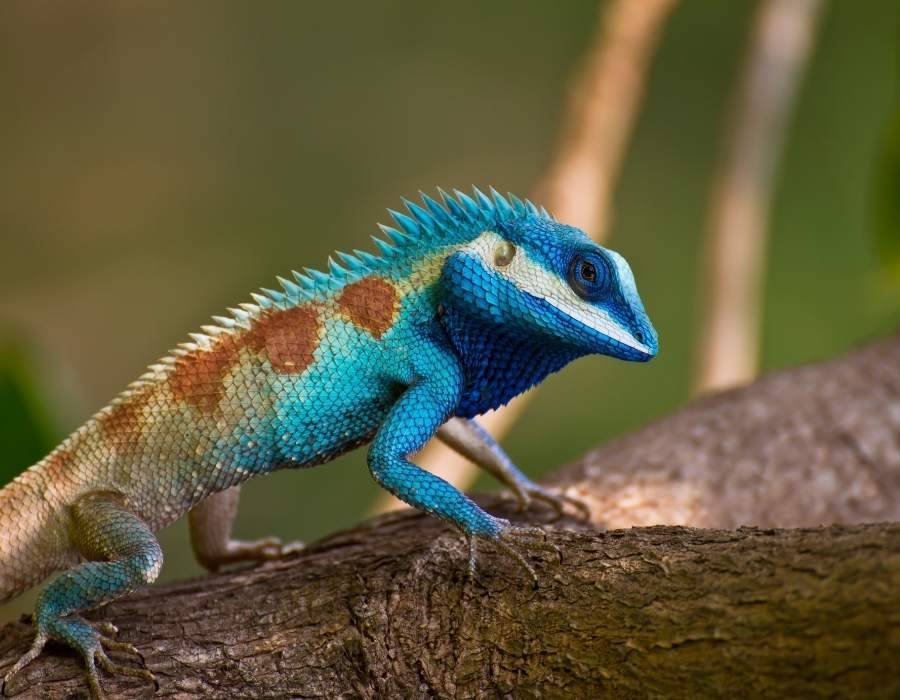
Honestly, I’ve looked for a consistent color-based framework and haven’t found one I trust. The common house gecko is typically pale, almost translucent at night. Ground lizards and skinks come in brown, green, sometimes vivid collar colors in the Southwest. The Hopi Monongya katsina is associated with the collared lizard, which has bright coloring, but the ceremonial meaning is about the lizard’s role in ceremony, not the color itself. If you found a brightly colored lizard, that’s usually a different species than a house gecko, and different traditions may apply. I’d focus on behavior and location before color.
What does it mean when a lizard keeps returning to the same spot in your house?
Geckos are territorial and strongly habitual. A 2019 study in Behavioral Ecology found that individual house geckos return to the same hunting spots night after night and will defend those spots against other geckos. So returning is just what they do. But in traditions that read house lizards symbolically, a consistent presence at a specific spot, especially a threshold, a window, or a sleeping area, is read as deliberate guardianship of that location. In the Maori framework, that kind of steady presence near a liminal space is precisely what a kaitiaki does. It holds the boundary.
Is there a difference between a lizard visiting once versus living in your house long-term?
Yes, and most traditions make this distinction implicitly. A single encounter is read as a message or signal, something passing through that carries meaning in the moment. A gecko that takes up residence, that you see regularly over weeks and months, sits in the tradition of the household guardian: a creature that has decided your home is worth protecting. The South Indian and Southeast Asian readings of the house gecko assume long-term residency, not a one-time visit. If you’ve had a gecko living with you for months, those traditions apply more fully than they would to a single sighting.
Sources
- Kachina House, “The Lizard in Hopi and Pueblo Kachina Tradition”
- South African National Museum, “Myths and Superstitions About Reptiles and Amphibians”
- Wild Gratitude, “Lizard Meaning”
- The Good Luck Gift Shop, “Are Geckos and Lizards Good Luck?”
- Green Matters, “The Lizard’s Spiritual Meaning and Symbolism” (citing IndiaNetzone on Gauli Shastra)
- Mircea Eliade, Patterns in Comparative Religion (1958), Sheed and Ward
- Anne Salmond, Hui: A Study of Maori Ceremonial Gatherings (1975), Reed
- Jesse Walter Fewkes, Smithsonian Bureau of American Ethnology reports on Hopi katsina iconography (early 20th century)