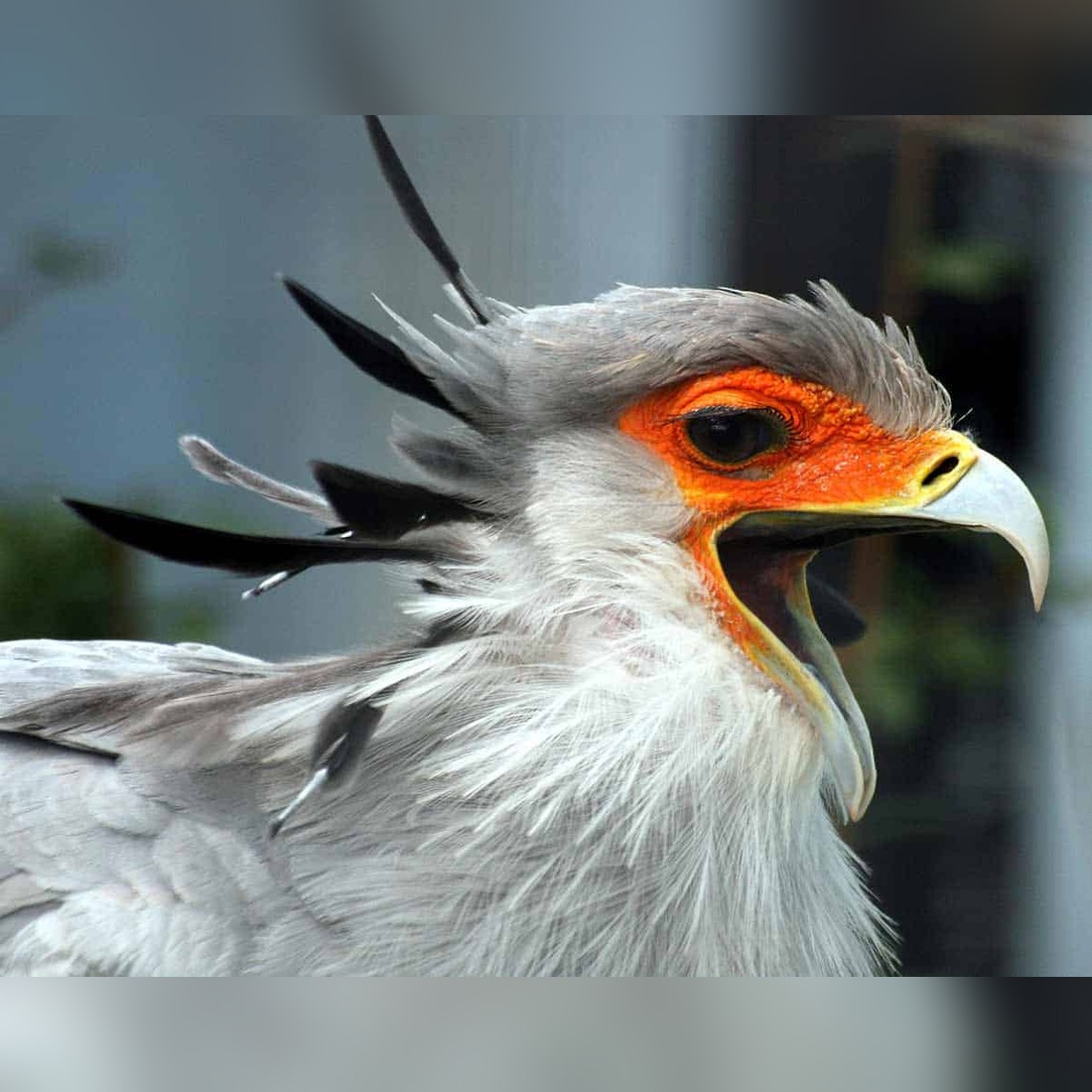
Africa has a diverse range of raptors of any continent. Almost a third of the world’s species occur in the region. This makes Africa a perfect vacation spot for bird lovers. If you are interested in birds of prey, you will be spoilt for choice. They range from the Circaetus, Cape Verde buzzard and long-legged buzzard to the black kite, dark chanting goshawk and bearded vulture. While covering all of them would require this post to be super long, we shall be taking a look at the top 10 African birds of prey, their habitat and size. Let’s get started.
1. Crowned Eagle
Habitat: Riparian Woodlands and Forests.
Size: Up to 39 inches in length and a wingspan of 4ft 11 inches to 5ft 11 inches
Weight: 10 pounds
Also referred to as the crowned hawk-eagle or the African crowned eagle, the crowned eagle is a large bird found in sub-Saharan Africa. When measured in terms of the weight of its prey items, the crowned eagle is considered to be Africa’s most powerful eagle. The crowned eagle mostly feeds on mammals like bushbuck which can weigh up to 66 pounds. It has strong legs and talons and often kills by crushing the skull.
2. Martial Eagle
Habitat: open woods, woodland edges, thorn-bush and wooded savannah
Size: up to 38 inches in length and a wingspan of 6ft 10 inches.
Weight: 10.4 pounds
The martial eagle is a large eagle native to sub-Saharan Africa. It is one of the most powerful and largest species of booted eagle. Its prey selection varies from mammals to reptiles and birds. Due to its habit of taking livestock and valuable game, it’s a highly persecuted bird species. Both game wardens and local farmers seek to eliminate the martial eagles.
3. Red-necked Buzzard
Habitat: Forest edges and clearings
Size: 15 inches in length and a wingspan of 3ft 7 inches
Weight: 2 pounds
Also referred to as the African red-tailed buzzard, the red-necked buzzard is mostly found in north-central and western Africa. It is a medium-sized bird of prey with a very distinctive rufous neck. The rufous color extends over the crown and down to the upper back. The rest of the upperparts are blackish except the rufous upper tail feathers. The underparts are white. The red-necked buzzard feeds on reptiles, mammals and insects.
4. Circaetus
Habitat: Open habitats
Size: 28 inches long and a wingspan of up to 6ft 5 inches
Weight: 5.1 pounds
Circaetus is also referred to as the snake eagle. It is a medium-sized eagle with a rounded head and broad wings. It is a resident African species. However, the migratory short-toed snake eagle breeds from the Mediterranean basin into the Middle East, Russia and India. In winter they move to sub-Saharan Africa and Indonesia. While they prefer open habitats, they build their stick nests in trees. They mainly feed on snakes and other reptiles.
5. Barbary Falcon
Habitat: semi-desert and dry open hills
Size: 15 inches long and a wingspan of 38 inches
Weight: 2.9 pounds
This is a medium-sized falcon that is the same size as a crow. It is mainly found in Northern and Eastern parts of Africa in semi-desert and dry open hills. Adults have paler grey-blue upperparts that those of the peregrine falcon. The nape is rufous but quite hard to see. Their call is a high-pitched ‘rek-rek-rek’. It is important to note that the barbary falcon also bears resemblance to the lanner falcon.
6. Eastern Chanting Goshawk
Habitat: Savannah and open woodlands
Size: 21 inches long and a wingspan of 43 inches
Weight: 1.85 pounds
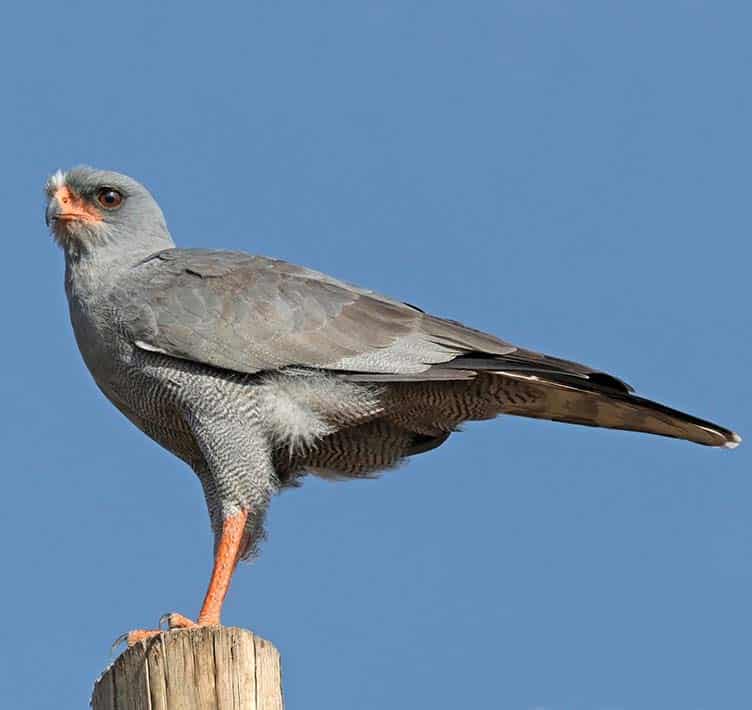
Also referred to as the Somali chanting goshawk, the eastern chanting goshawk is native to East Africa. It is intermediate between the pale chanting goshawk and the dark chanting goshawk. Like the other chanting goshawks, it has a lot of resemblance to the accipiter except for the shorter and graduated tail. An adult has a grey head, neck, breast and upperparts. The upper-tail covert is lightly barred or white.
7. Common Kestrel
Habitat: Open Habitat
Size: 15 inches long and a wingspan of 32 inches.
Weight: 11.1oz
The common kestrel is a bird of prey also known as the Old World kestrel, Eurasian kestrel or European kestrel. It is the smallest bird of prey. The species is widespread in Africa. It is light chestnut brown with blackish spots on its upper-side. The underside is buff with narrow blackish streaks. Unlike other raptors, the common kestrel displays sexual color dimorphism.
8. Little Owl
Habitat: Open Countryside
Size: 8.7 inches long with a wingspan of 22 inches
Weight: 6.3oz
The little owl is also referred to as the owl of Minerva. This is a bird of prey common in the warmer parts of North Africa. It is small, cryptically colored and mostly nocturnal. The little owl can be found in a vast range of habitats including woodland fringes, farmland, semi-deserts and steppes. It feeds primarily on earthworms, insects, small vertebrates and invertebrates. (Read more about Owls here)
9. Secretary Bird
Habitat: Open grasslands, shrub-land and savannas
Size: 4ft 3 inches tall with a wingspan of 85 inches.
weight: 9.4 pounds
Secretary-birds are widespread in sub-Saharan Africa and are non-migratory. They are locally nomadic as they follow rainfall and the resulting abundance of prey. Its range extends from Somalia to Senegal and south to South Africa. Secretary birds can be recognized easily because of their large size and crane-like legs and an eagle-like body. They breed at any time of year and build their nest on top of thorny trees. They hunt on the ground.
10. Egyptian Vulture
Habitat: Arid open areas
Size: 26 inches long with a wingspan of 70.2 inches
Weight: 5.3 pounds
Egyptian vultures are also known as pharaoh’s chicken or white scavenger vulture. They are widely distributed in North Africa and are easily recognizable by their contrasting underwing pattern and wedge-shaped tail. They soar in thermals during the warmer parts of the day. They feed mostly on carrion but can prey on birds, small mammals, reptiles and birds. They are unique in that they use tools. These raptors toss pebbles to break eggs and use twigs to roll up wool for use in the nest. Read more about vultures here.
Best Birding Spots in Africa
Birding in Africa is quite diverse. There are more than 2,250 bird species in mainland Africa all with varied habitats. A total of 1,500 bird species are only found in Africa. For the best birding experience, you should consider the following hotspots.
- Bwindi Impenetrable Forest (Uganda)
- Cape Town’s ocean coast (South Africa)
- The Rift Valley lakes (Kenya)
- Isimangaliso Wetland Park (South Africa)
- Caprivi Strip (Namibia)
- Bale Mountain National Park (Ethiopia)
- Kruger National Park (South Africa)
- Murchison Falls National Park (Uganda)
There is no shortage of birdwatching hotspots all across Africa. For the best experience, you should identify the bird you want to see and research the best spots to find it.
More about birds of prey
[Video] Birds of Africa Part II – Birds of Prey
Frequently Asked Questions
Why is Africa considered a premier destination for bird of prey watching?
Africa hosts nearly a third of the world’s raptor species, making it exceptionally diverse. With over 2,250 bird species across the continent and 1,500 endemic to Africa alone, bird enthusiasts encounter unparalleled variety in raptors ranging from crowned eagles to secretary birds across distinct habitats.
What is the most powerful eagle in Africa by prey weight?
The crowned eagle is Africa’s most powerful eagle when measured by prey weight capacity. It hunts mammals like bushbuck weighing up to 66 pounds, using strong legs and talons to kill by crushing the skull. Found in sub-Saharan riparian woodlands and forests, it weighs approximately 10 pounds itself.
How does the Circaetus eagle hunt, and what makes it unique?
Circaetus, or snake eagle, specializes in hunting snakes and reptiles across open African habitats. This medium-sized eagle features a distinctive rounded head and broad wings. While some are resident African species, migratory populations breed from the Mediterranean to Russia and India, migrating to sub-Saharan Africa seasonally.
What distinguishes the secretary bird from other African raptors?
Secretary birds are uniquely recognizable by their crane-like legs combined with an eagle-like body, standing 4ft 3 inches tall. Unlike most raptors, they hunt on the ground across sub-Saharan grasslands and savannas, building stick nests atop thorny trees and breeding year-round while following rainfall patterns.
Why are martial eagles heavily persecuted across Africa?
Martial eagles are persecuted by game wardens and local farmers due to their habit of taking livestock and valuable game animals. These large, powerful booted eagles weigh over 10 pounds and prey on mammals, reptiles, and birds across open woods and savannas, making them economically problematic for rural communities.
What unique behavior do Egyptian vultures exhibit that other raptors don’t?
Egyptian vultures, or pharaoh’s chickens, are tool-users among raptors. They toss pebbles to break eggs and manipulate twigs to roll up wool for nest construction. These 26-inch vultures scavenge carrion but also hunt small prey, soaring in thermals across North African arid regions with distinctive underwing patterns.
How do chanting goshawks differ from other African raptors?
Eastern chanting goshawks are intermediate between pale and dark chanting goshawk species, featuring grey heads, necks, and upperparts with lightly barred white upper-tail coverts. Unlike accipiters, they have shorter, graduated tails. These 21-inch raptors inhabit East African savannas and open woodlands, resembling but distinct from other hawk species.
What makes the common kestrel Africa’s smallest bird of prey?
The common kestrel, weighing only 11.1 ounces, is the smallest African bird of prey. Also called the Eurasian or European kestrel, this light chestnut-brown raptor displays sexual color dimorphism unlike most raptors. It inhabits open habitats across the continent with blackish spots on upperparts and buff underside streaks.
Where are the best locations to observe African raptors in their natural habitats?
Prime birding hotspots include Bwindi Impenetrable Forest (Uganda), Kruger National Park (South Africa), Rift Valley lakes (Kenya), and Murchison Falls (Uganda). Each location offers distinct raptor species across varied ecosystems—from forests to wetlands to grasslands—with seasonal variations influenced by rainfall and prey availability.
How do African raptor habitats vary across different species?
African raptors occupy diverse habitats reflecting their hunting strategies: crowned eagles prefer riparian woodlands, martial eagles inhabit open woods and savannas, Circaetus favor open areas, secretary birds hunt grasslands, and little owls occupy warmer North African countryside. Habitat selection directly correlates with prey availability—snakes in open areas, mammals in forests, carrion in arid zones.