
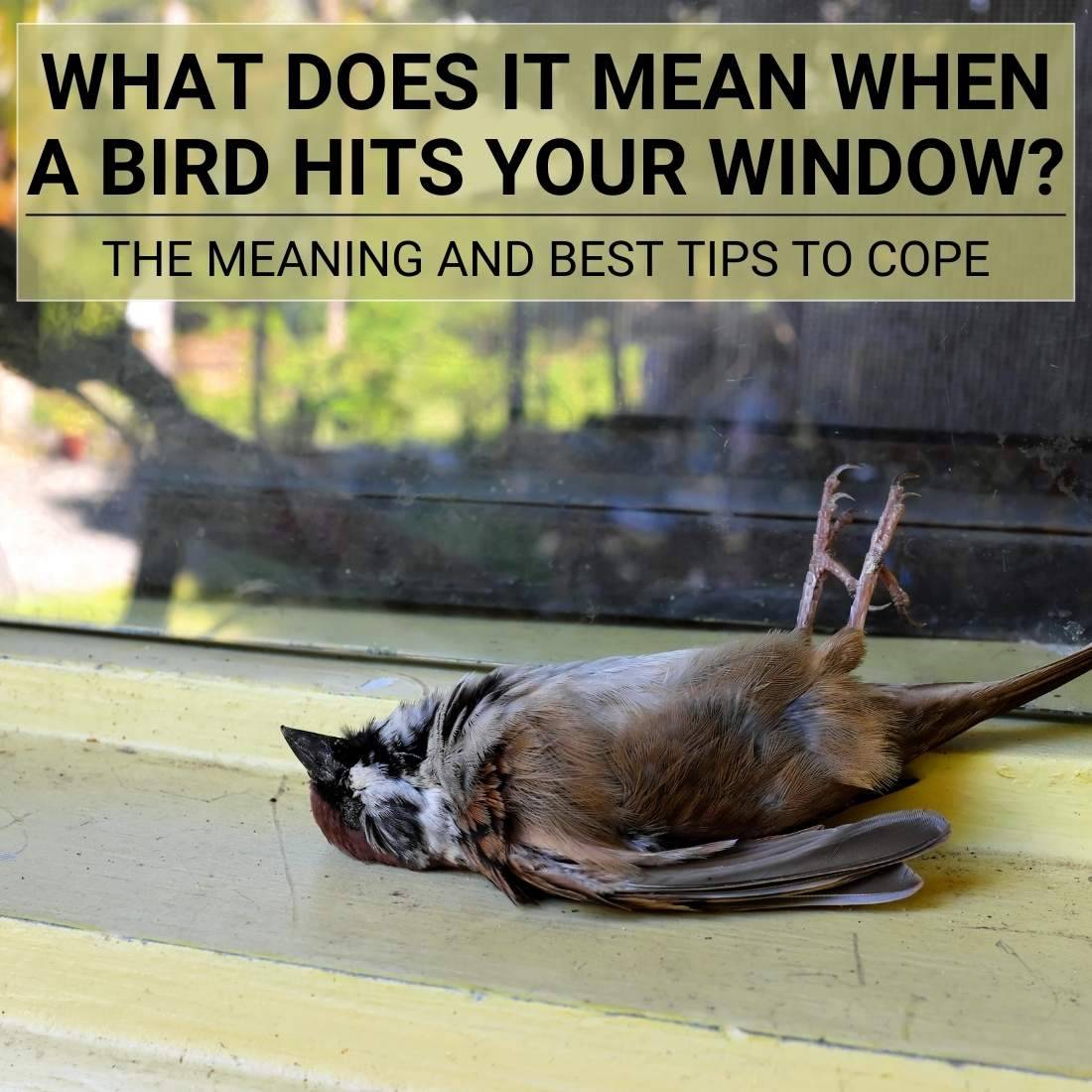
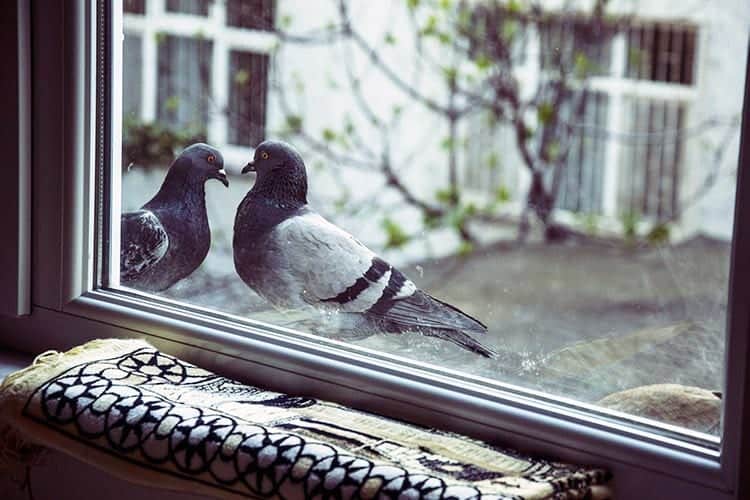
You hear the thud and freeze, heart jumping before you even turn around. In Irish tradition that Lady Wilde wrote down, a bird hitting the glass meant sickness or death was coming your way. But the bird’s alive or dead, the kind it was, and what you were already scared of all change what it means.
Key Takeaways
- The folk omen connecting window strikes to death warnings is real and historically documented, primarily in Irish, Northern English, and Pennsylvania German household belief, but it is not universal and it is not a verdict.
- Contemporary spiritual readings about change and awakening are a modern reframing, not ancient tradition. They came out of therapeutic self-help language, not ethnographic record.
- The zoological cause is plain: birds cannot read glass as a barrier. Mass Audubon estimates several hundred million birds die in the US each year from window collisions, drawn by reflected sky into what looks like open air.
- Even a bird that flies away after impact may be seriously injured. A stunned bird needs quiet, not handling.
- Prevention is well-documented. You are not powerless here.
What Does It Mean When a Bird Hits Your Window?
Two honest answers. The first is from the folk record: across Irish, Northern English, and Pennsylvania German household tradition, a bird striking a window was read as a signal, something that said pay attention, usually tied to illness or loss in the household. Not a curse. A signal. The second answer is from biology: birds hit glass because they cannot see it. They fly toward the sky they see in your window, not into your life.
Both of those things are true at the same time, and I don’t think they cancel each other out.
I’m Richard Alois. I write about animal symbolism from a cabin in Black Mountain, North Carolina, and I’ve spent thirteen years handling injured raptors at the Western North Carolina Nature Center. What I’ve learned is that the question what does this mean is almost never the wrong question. The fact that you noticed it is part of the answer. What I can do is give you the specific traditions that actually recorded this event, and the practical biology underneath it, so you have something real to hold onto.
You are not making this up.
Is a Bird Hitting Your Window Really a Bad Omen?
The death-omen tradition is real, but it’s narrower than most retellings suggest. Lady Wilde’s 1887 collection of Irish rural belief records a robin, wren, or sparrow persistently striking or tapping at a windowpane as a “token,” a sign that a soul would soon pass, particularly near a sickbed. This belongs to a broader Irish pattern where birds stand in for the human soul at moments of crossing. It is vernacular Catholic folk belief, not formal church teaching, and it was specific about species. A robin meant something different from a generic “bird.”
Henderson’s 19th-century collection of Northern English and Lowland Scottish folklore records something similar: a small bird beating against glass was seen as a spirit pressing at the threshold between the living world and whatever lies beyond it. But here is what most retellings miss. These traditions treated the event as a call to prepare, not as a sentence. You prayed. You sat with whoever might be ailing. You paid attention. The tradition was about readiness, not dread.

Take a breath. The tradition that rattled you is real and old. It is also a tradition of attention, not doom.
What Do Different Cultural Traditions Say About Birds Striking Windows?
The Pennsylvania German traditions recorded by Harry Middleton Hyatt in Folk-Lore From Adams County, Illinois (1935) and Don Yoder in his work on Pennsylvania German beliefs (1947) add a different texture. In vernacular Protestant and Anabaptist households, a bird hitting the window was sometimes read as news arriving from far away, an accident, a death in the extended family, but many accounts put the emphasis on warning rather than fixed prediction. Some narrators specifically said it meant you should pray. Hold the people you love a little more carefully that week. That is not a catastrophic reading. It is a human one.
My grandmother Theresa kept a leather notebook of animal lore from the Bavarian Forest. There’s an entry about birds at the window, though the German cursive is faded enough that I can’t read every word of it. What I can read says something about the window as a place where the inside and outside press against each other. The glass sits between worlds. The Northern English threshold tradition says the same thing. A bird striking it from the outside is pressing against that membrane. The question the tradition asks is not who will die but what are you not looking at. I find that more useful. Most grief arrives before we’ve named it.
I should say: I don’t know the full scope of these traditions, and I’ve read three competing scholarly explanations that don’t entirely agree on the Scottish variants. The folk record is genuinely thin in places. What I can tell you is that the death-sentence reading is the most dramatic version of a tradition that is really about attentiveness, not prophecy.
What Does Contemporary Spirituality Say a Bird Hitting Your Window Means?
The modern spiritual reading, that a bird hitting your window signals change, awakening, or a message from a guardian, is real in the sense that many people hold it and find it useful. But it isn’t old. Contemporary spiritual sites frame the encounter as a “gentle message” about life transitions, alignment, or a soul checking in. These readings came out of therapeutic self-help language blended with a general idea of birds as messengers, not from any specifically documented folk practice. They coalesced largely in online spirituality communities in the late 20th and early 21st centuries.
I’m not dismissing them. If the reframe toward “change is coming and that’s okay” lands for you, that is a psychologically sound response to an unsettling event. Carl Jung would say you are using the bird as a mirror, and the mirror is showing you something true about your own interior state. But you deserve to know the difference between a tradition Lady Wilde recorded in the 1880s and something that gathered on Pinterest in 2015. Both can carry meaning. They are not the same thing.
Why Do Birds Actually Fly Into Windows?
This part matters. It doesn’t erase the other question, but you should have it.
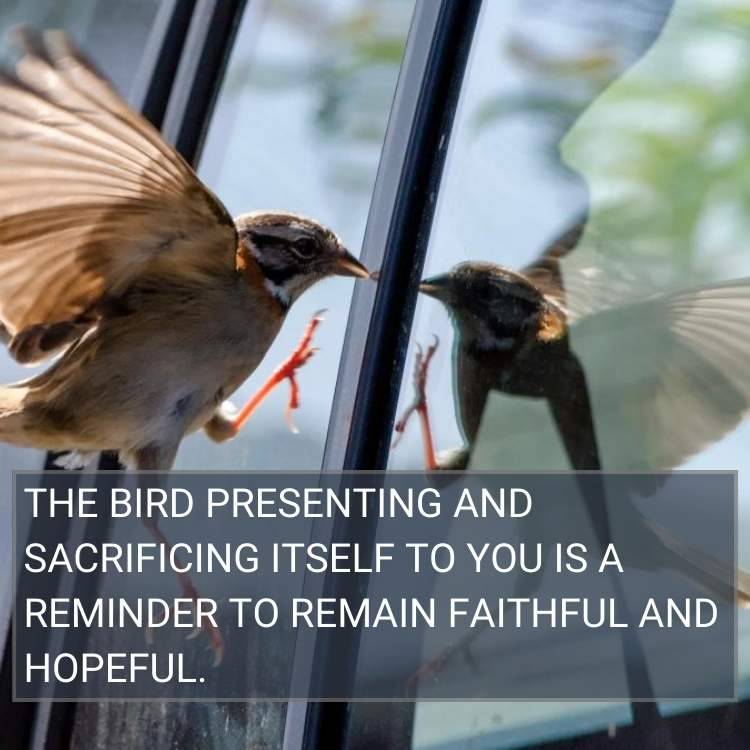
According to Mass Audubon’s window collision guidance, birds cannot perceive glass as a barrier. They see the reflection of sky or greenery and fly toward what looks like open habitat. At residential windows, the combination of transparency and reflectivity is what makes it dangerous. The bird is not flying into your window. It is flying into the sky it sees in your window.

A synthesis by Loss et al. (2014), published in The Condor, estimated between 365 million and 988 million birds die annually in the United States from building collisions, with low-rise residential structures making up the largest share. The Minnesota Bird Coalition documents that reflectivity creates an illusion of open flight path, which is why even a window facing a brick wall can cause strikes. The bird sees sky in the reflection above or trees off to the side.
Night migration makes this worse. Many songbirds migrate after dark, navigating by stars, and artificial light can pull them off course into built environments. Collisions cluster in spring and autumn, which are seasons already loaded with human significance: planting time, harvest, the anniversary of a loss. The timing feels meaningful. The biology doesn’t require it to be. Neither does it prevent it.
What Should You Do When a Bird Hits Your Window?
First, the bird. If it is alive and stunned, do not pick it up immediately. Put a cardboard box with air holes over it to keep it contained and calm in a dark, quiet space for up to two hours. The American Bird Conservancy’s stop bird collisions resource notes that even birds that fly off after impact may have internal injuries or brain swelling and can die later. A bird that seems fine in five minutes is not necessarily fine. If it hasn’t recovered and flown off within two hours, contact your local wildlife rehabilitator.
How Can You Stop Birds From Flying Into Your Windows?

- Window film or decals with 2-inch spacing: Markers on the glass break up the reflection. The pattern needs to cover the whole pane, not just a central decal. Birds will fly through any gap larger than 2 by 4 inches.
- External screens or netting: Hung close to the glass, they interrupt the flight path before impact.
- Repositioning bird feeders: Feeders within 3 feet of the window are safer than those at 10 to 30 feet. At close range, birds don’t build up enough speed to be seriously injured.
- Tempera paint patterns: Applied directly to the outside of the glass during migration season, washable with rain or a hose afterward.
Frequently Asked Questions
What does it mean if a bird hits your window and dies?
In the Irish rural Catholic tradition Lady Wilde documented in 1887, a bird dying at the window was the more serious version of the omen, a token that death or serious illness was near. But “near” in that tradition meant something relational: pay attention to who is struggling, who you haven’t called, who might need you. In the biological reading, death at the window means the impact was severe. I don’t think holding both of those at once is a contradiction. It’s just honest.
What does it mean if the bird hits your window and survives?
In the Pennsylvania German folk tradition Hyatt recorded in 1935, the event itself was the signal, regardless of whether the bird survived. Many accounts treated a surviving bird as lighter news than a death, but the call to prepare remained. From a conservation standpoint, a bird flying away after impact is not automatically fine. Internal injury can still be fatal hours later. Give it the full quiet-box recovery period before you assume it’s well.
Is a bird tapping repeatedly on a window different from a single strike?
Behaviorally, yes, and the distinction matters. Repeated tapping is almost always territorial: the bird sees its own reflection and attacks the rival it thinks it sees. This is common in robins and Northern Cardinals in spring. Henderson’s Northern English folklore records persistent tapping as a more urgent warning than a single strike, but the behavioral explanation is straightforward. For repeated tapping I lean toward the territorial reading. It’s usually a breeding-season male fighting glass, which is its own kind of exhausting to watch.
Does the time of day or season affect the meaning?
Seasonally, yes. Spring and autumn are peak collision seasons because those are migration windows, and many songbirds fly at night using stars to navigate. Urban light pulls them off course. A strike in April or October near dawn is almost certainly a migrating bird confused by glass. The folk traditions I’ve read suggest morning strikes carried more weight than afternoon ones, but I don’t have a strong scholarly source for that specific detail. The record is thin there, and I won’t pretend otherwise.
Which bird hitting a window is considered the worst omen?
In Irish and Northern English tradition, the robin carries the most weight. It was called “God’s bird” in both cultures and associated closely with the soul. A robin striking the window near a sick person was taken very seriously. Wrens and sparrows appear in some accounts as secondary omen-birds. I’m not aware of any documented tradition where a hawk or larger raptor striking the window carries death-omen status. Those birds rarely hit residential glass the way small songbirds do during migration. Species matters here.
What does it mean if the same bird keeps hitting your window?
Almost certainly a territorial male seeing his reflection. This runs February through June in North America, and the fix is to break up the reflection on that specific pane: a temporary screen, some painter’s tape in a grid, a sheet of paper taped to the outside. The bird is not delivering a repeated message. It is wearing itself out fighting an imaginary rival, which is its own kind of sad. Treat the window.
Is there a difference in meaning between a bird hitting the front window versus the back?
In the threshold traditions from Northern England and Scotland, the front of the house carried more symbolic weight. A bird striking the front window was read as touching something outward-facing, affecting the household in the world. A back-window strike was sometimes read as more interior or personal. I find the distinction worth noting, but I hold it loosely. I haven’t found a definitive ethnographic source that makes this a firm rule, and the back-versus-front specifics are thinly documented.
Sources
- Mass Audubon: Bird Window Collisions
- Minnesota Bird Coalition: Window Collisions
- American Bird Conservancy: Stop Bird Collisions FAQ
- PeckPerk: Bird Keeps Flying Into Your Window
- YourTango: Spiritual Meaning of Birds Flying
- Guardian Glass: Myths and Misconceptions About Bird-Friendly Glass
- Pallimed Arts: Bird Hits Window (medical humanities review)
- Reconnect with Nature: Why Do Birds Fly Into Windows?


So many times I’ve had to find information on this subject. More so after me and my partner run into issues.
Then, and only then do I have a particular magpie who walks across my windowsill, pecks or flaps at it (daily I may add). This is the first informative article I’ve found without having to find other articles.
Thanks Richard 🫡✨