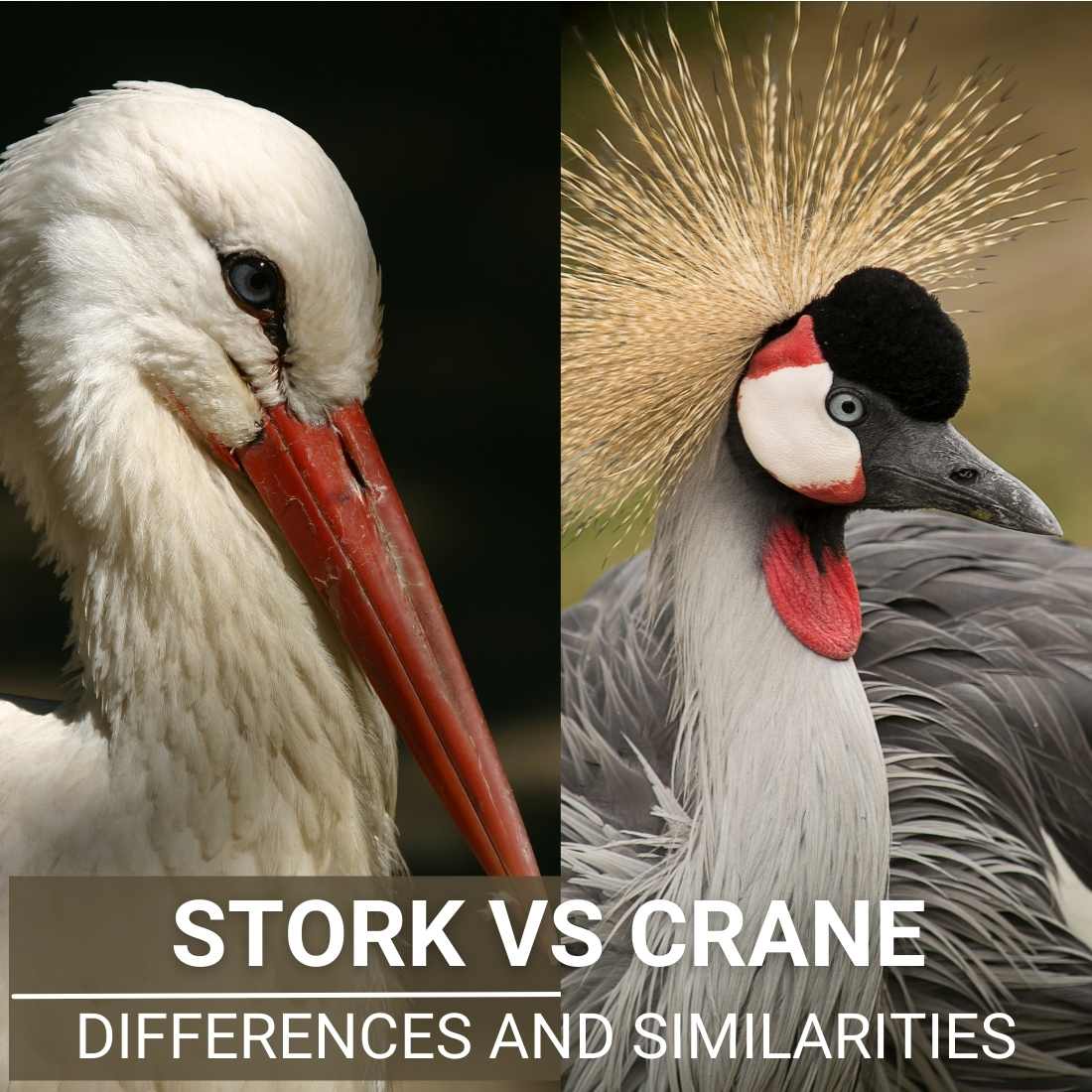
Cranes and storks are intriguing birds that belong to two distinct bird families. Both birds have a wide range of personality traits that distinguish them from one another. Despite the physical differences between them, they both have exceptional flying skills. However, even if some of the differences may be seen by even the most inexperienced eye, it is crucial to differentiate and explain them.
Differences btween Stork Vs Crane
Storks are categorized as members of the order Ciconiiformes, whereas cranes are regarded as members of the order Gruiformes. Cranes are classified into four genera and have 15 species.
Similar to this, there are 19 recognized species of storks in the world, which are grouped into six genera, with the most noteworthy being the Painted, Black-necked, Woolly-necked, Openbills, adjutants, and Marabou storks. The majority of stork species are migratory birds, as is the case with most other birds but cranes show less migration behavior. Not all cranes migrate large distances, as some Storks do. Cranes Their foraging versatility has prevented them from putting their lives in danger when traveling great distances. The majority of cranes have a wingspread of 2.4 meters, but the Stork has the largest wing diameter, measuring more than 3.2 meters in length.
Cranes are unique in that they can adapt their diet to suit the availability of food, their energy, and nutritional requirements, as well as the local climate conditions. That is unquestionably a fantastic adaptation for their survival in any environment, but storks often do not alter their regular diet in any way. On the other hand, Storks are usually deafeningly quiet, while cranes have a robust vocal communication system with a large vocabulary. Cranes are regarded as the tallest flying bird, but storks are not the tallest of all.
Other noticeable differences between stork vs crane are given in this table:
| Cranes | Storks |
|---|---|
| Cranes are lighter but taller than Storks. | Storks are bigger and shorter than Cranes. |
| Change their diet according to availability. | Storks prefer the same diet without much change. |
| 4 Genra, 15 species | 6 Genra, 19 species |
| Shorter beak/bill than Storks | Stork bills/beaks are considerably large as compared to Crane’s. |
| They have robust vocal communication, which is rich with a vast vocabulary | Storks are mute. They never produce any sound. |
| Do not have webbed toes. | Storks have slightly webbed toes. |
| Cranes are not known to bring luck. | Storks are said to bring luck. |
Similarities between Stork and Cranes
The legs and necks of both the Stork and the Crane are pretty lengthy. In addition, both of these intriguing birds favor or prefer aquatic habitats to dry surroundings, which is a testament to their uniqueness.
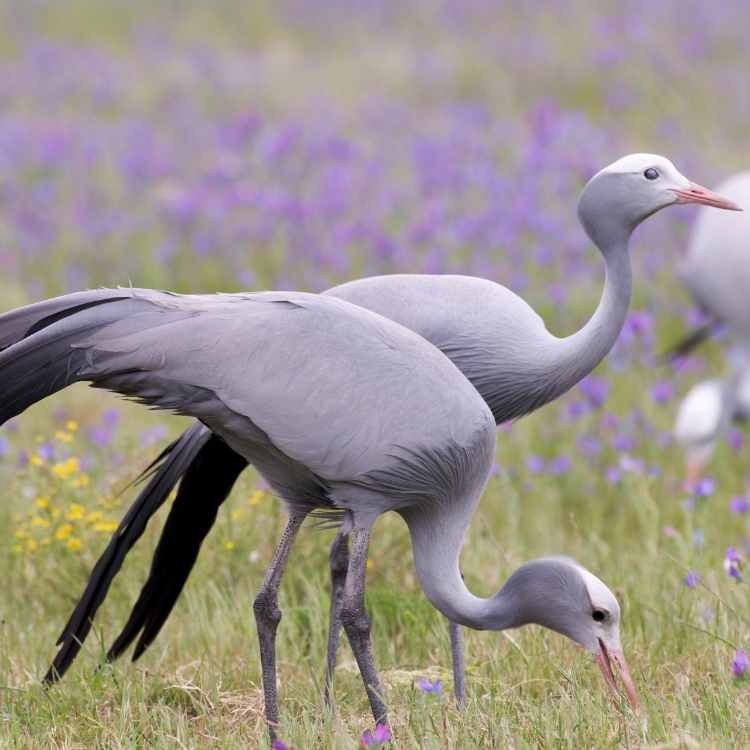
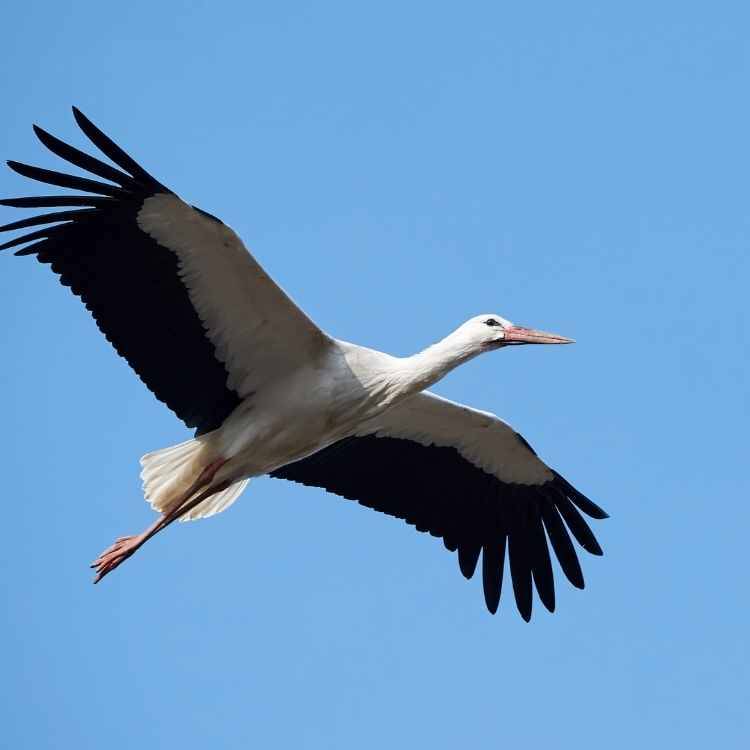
Another similarity between Stork Vs Crane is that they both fly with their necks extended as they take flight. These are two magnificent wild birds that have the ability to fly at vast altitudes and for long periods of time. Because of their large and broad wings, which are also extremely powerful in nature, they have remarkable adaptations for long-distance flying, as evidenced by their large and broad wings.
The final similarity between these two birds is that both Crane and Stork are loyal birds, and they spend their whole life with the same partners.
Interesting facts about Cranes
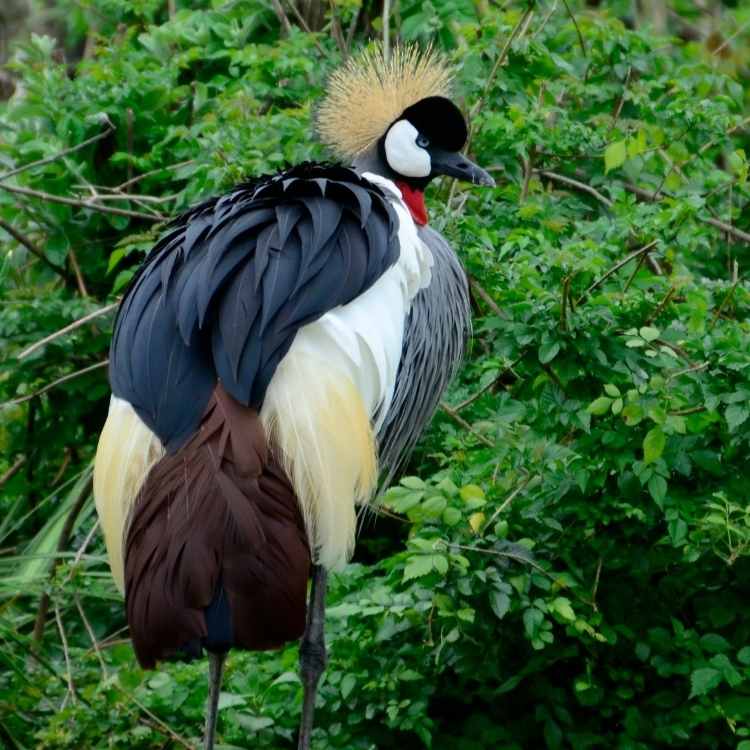
Cranes are large birds with long legs and necks. They have a body form that is similar to that of herons and egrets (also see our post: egret symbolism), although they tend to be heavier (in another post we also compared the crane vs heron). A crane’s color is usually described as brown, gray, or white; however, African crowned cranes have a stunning gold crown of feathers on their heads.
The Crane’s mating dance is one of nature’s most magnificent displays. With their wings partly open, the birds move stiffly around each other with quick steps, jumping high in the air on alternating occasions. During this time, the cranes make a deep bow and lengthen their necks. Following that, the cranes pick up twigs or blades of grass and toss them into the air, stabbing them with their beaks as they come to a landing. The dances are attended by people of both sexes, both mature and immature.
Males and females call together when they point their beaks to the sky, and the male Crane raises part of his wing over his back to join the female Crane in their call. For almost 10 seconds, the two birds communicate back and forth. Scientists believe that these cries help to strengthen the relationship between a monogamous couple and serve to protect their area.

Other interesting facts to note are as follows:
- Cranes are excellent flyers, with some being able to fly over the Himalayas at speeds of up to 60 miles per hour.
- Cranes create monogamous couple relationships that last their whole lives.
- Cranes fly with their neck and head straight out in front of them, while the rest of their body is curved behind them during migration. They are capable of reaching altitudes ranging from 4,900 to 8,000 meters. Because their journey is so lengthy and challenging, many die due to exhaustion, starvation, or predation by birds of prey.
- Check also our post about the crane symbolism and further articles about cranes: egret vs crane or crane vs heron.
Here you can check all Crane sounds
Interesting facts about Storks
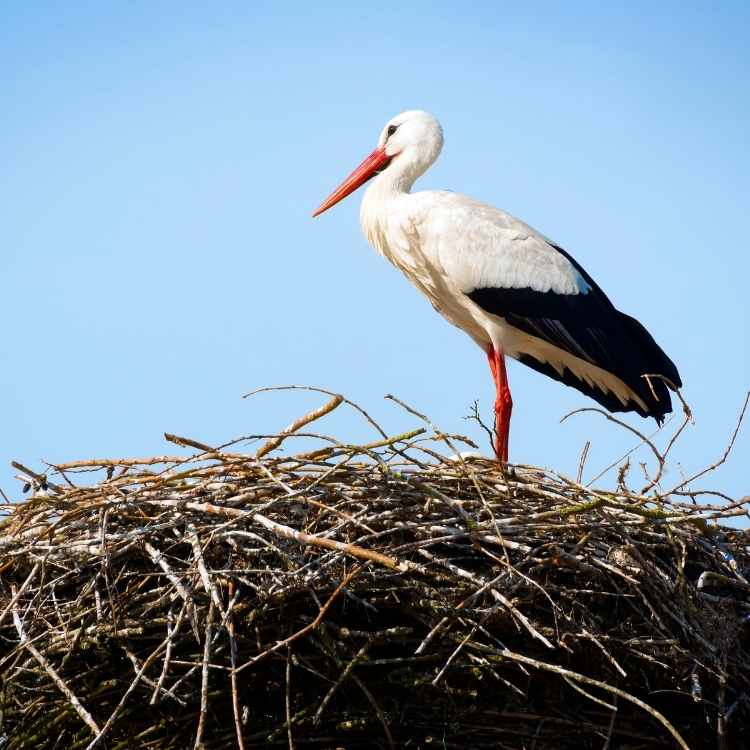
One of the most notable traits of Stork is the absence of syrinx muscles, as well as the presence of a vocal gland that is only partially formed, which has resulted in their silent or mute behavior. They are, however, capable of making noise by cracking their strong bills against one another. Storks build large nests in which to raise their young. Some nests have been estimated to be more than two meters (six feet) in diameter and approximately three meters (ten feet) in-depth, with some measuring more than two meters (six feet) in diameter and around three meters (ten feet) in depth.
They construct their nests to be used for a long period of time, suggesting that they are sedentary birds. Read also about the stork symbolism.
When stork chicks hatch, they are practically naked, but they quickly develop a protective layer of soft down feathers to protect them from the harsh environment in which they are raised. Being altricial and in need of parental care, both parents are kept occupied flying back and forth to provide meals to them regularly. Chicks can swallow up to 60% of their own body weight during a single feeding session.
Other interesting facts are as follows:
- Depending on her size, the average stork female lays between 2 and 5 eggs every cycle. Storks have a 25-35-day incubation period.
- When flying long distances, storks usually use jumping and gliding flight to conserve their energy reserves.
- Depending on their size, their diet may consist of small frogs, earthworms, tiny fish, and perhaps other small creatures.
- Storks are wading birds native to the Old World, with their plumage typically consisting of white and black color.
Here you can check all Storks sounds
Who will emerge victorious from the bird’s battle?
You can’t really tell which is better when it comes to their fight because they both are totally different and can’t fight each other. But Stork has the advantage of a larger beak and bulkier body. So they may give more harm to cranes if they fight.
In case you’re interested we also compared: Stork vs Pelican.
Frequently Asked Questions
What are the main taxonomic differences between cranes and storks?
Cranes belong to order Gruiformes with 15 species across 4 genera, while storks belong to order Ciconiiformes with 19 species across 6 genera. Both are distinct bird families with different evolutionary lineages and biological classifications.
How do crane and stork wingspans compare?
Storks have larger wingspans, exceeding 3.2 meters, while most cranes have wingspans around 2.4 meters. Despite smaller wings, cranes are exceptional flyers capable of reaching 60 mph and crossing the Himalayas at altitudes up to 8,000 meters.
Why are cranes considered vocal birds while storks are silent?
Cranes possess robust vocal communication systems with extensive vocabularies for territory protection and pair bonding. Storks lack syrinx muscles and have underdeveloped vocal glands, making them mute. They communicate through bill-cracking instead.
What dietary differences exist between cranes and storks?
Cranes adapt their diets based on food availability, climate, and nutritional needs, enhancing survival versatility. Storks maintain consistent diets without significant changes, primarily consuming small frogs, fish, earthworms, and small creatures regardless of environmental conditions.
Do cranes and storks migrate the same distances?
Storks typically migrate longer distances as migratory birds, while cranes show less migration behavior overall. Not all crane species migrate extensively, though some undertake challenging journeys across mountainous terrain during seasonal movements.
What makes crane mating displays unique?
Crane mating involves elaborate choreographed dances featuring synchronized movements, high jumps, stiff stepping, deep bows, and neck extensions. Males and females call together for up to 10 seconds, strengthening pair bonds and territorial communication through vocal duets.
How do stork nesting behaviors differ from cranes?
Storks build massive permanent nests exceeding 2 meters diameter and 3 meters deep, used for extended periods indicating sedentary habits. They lay 2-5 eggs with 25-35 day incubation periods, requiring both parents for intensive chick feeding sessions.
What physical features distinguish cranes from storks besides size?
Cranes have shorter beaks, no webbed toes, and lighter frames despite greater height. Storks possess considerably larger bills, slightly webbed feet, bulkier bodies, and shorter statures, giving them structural advantages in aquatic foraging environments.
How do cranes and storks fly during long-distance migration?
Both extend their necks forward during flight with powerful, broad wings enabling high-altitude travel. Storks use energy-efficient jumping and gliding techniques, while cranes reach 4,900-8,000 meter altitudes, though many face exhaustion, starvation, or predation challenges.
Are cranes and storks monogamous birds?
Yes, both are loyal birds forming monogamous pairs lasting their entire lifespans. They maintain consistent partnerships for breeding and territorial purposes, with vocal communication strengthening relationship bonds across generations and seasonal cycles.