
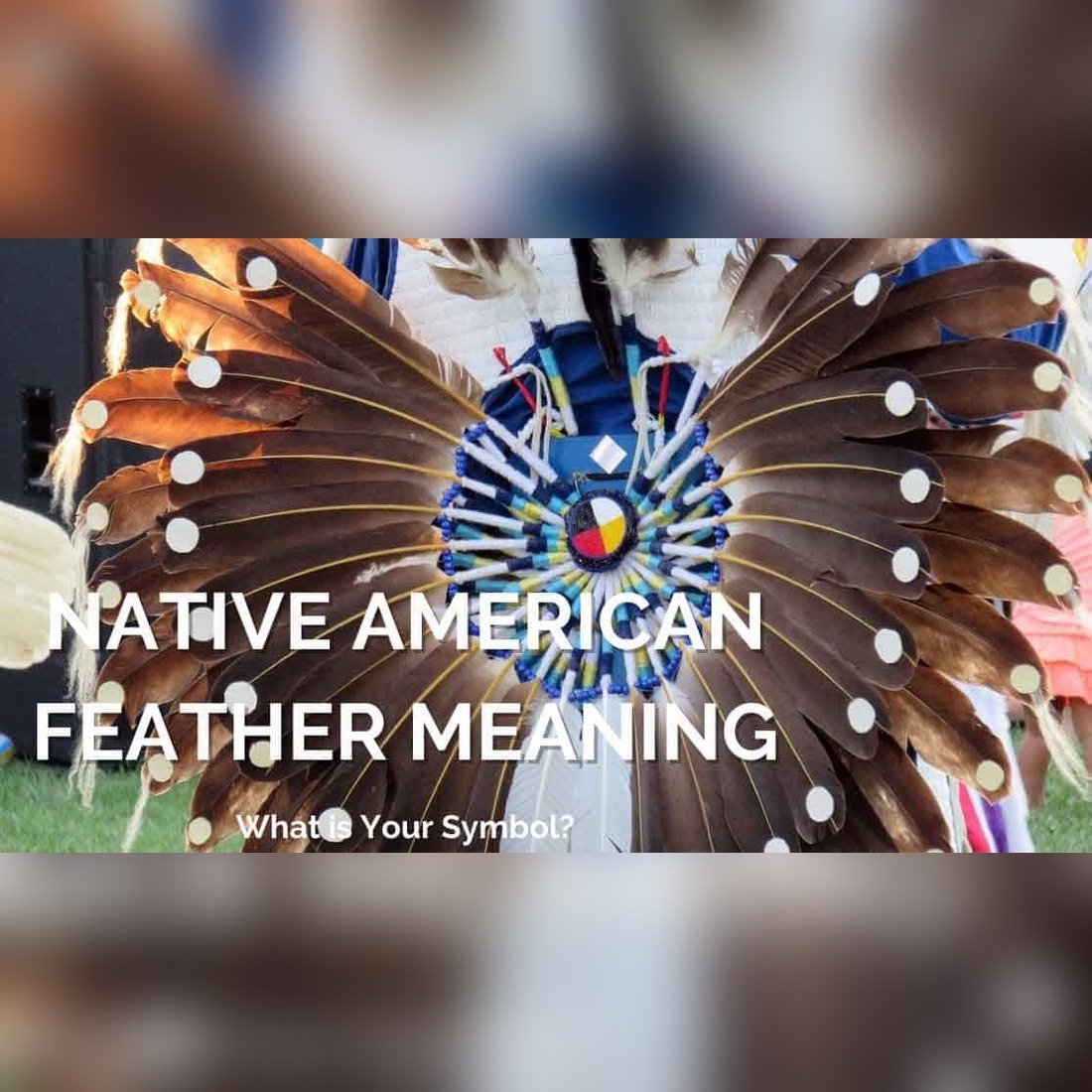
Feathers in many Indigenous North American traditions are sacred, not mere decorative objects. In some communities, they’re treated as still carrying something of the bird that made them. Their meaning depends on which nation you ask, which bird produced the feather, and how it was obtained. These distinctions matter more than most articles suggest.
Key Takeaways
- Feathers in many Indigenous North American traditions are sacred objects, treated as living extensions of a bird’s spirit, not generic good-luck symbols.
- Eagle feathers hold the highest rank across multiple nations and are earned through publicly recognized acts of courage, service, or leadership, not purchased or casually collected.
- Feather meaning is nation-specific. Color, species, and physical modification (notches, dye, cutting) carry encoded information that varies by tradition.
- Receiving a feather as a gift is a formal act of honor. The weight of the gift is inseparable from the relationship in which it is given.
- Eagle feathers are federally protected under the Bald and Golden Eagle Protection Act. Possession by non-tribal members is illegal in the United States, regardless of how the feather was found.
What Is the Meaning of Feathers in Native American Traditions?
The feather is not a symbol in the way a heart shape is a symbol. In many Indigenous North American communities, it is an object with weight that does not turn off when the ceremony ends. Native Hope’s documentation of feather traditions describes feathers across many Plains and Woodland nations as marks of high honor, earned through demonstrated courage, generosity, or service, then formally recognized by elders or a tribal council. The word “earned” does real work there. A feather given without that context is not the same object as one given with it.
I am not Indigenous. I am a German-American writer who has spent years working in raptor rehabilitation at a local wildlife center, and I want to be plain about what that means for this article: I can tell you what the scholarly and cultural record says, I can name my sources, and I can flag where I am uncertain. What I cannot do is speak from inside these traditions.
One more thing. The phrase “Native American” covers more than 570 federally recognized nations in the United States, speaking distinct languages, maintaining distinct ceremonies, holding distinct relationships with birds and feathers. The common thread across many of them is the seriousness with which feathers are handled. The specific meanings vary considerably, and collapsing them into one summary is the single most common error in articles on this subject.
What Do Lakota and Plains Traditions Say About Feather Symbolism?
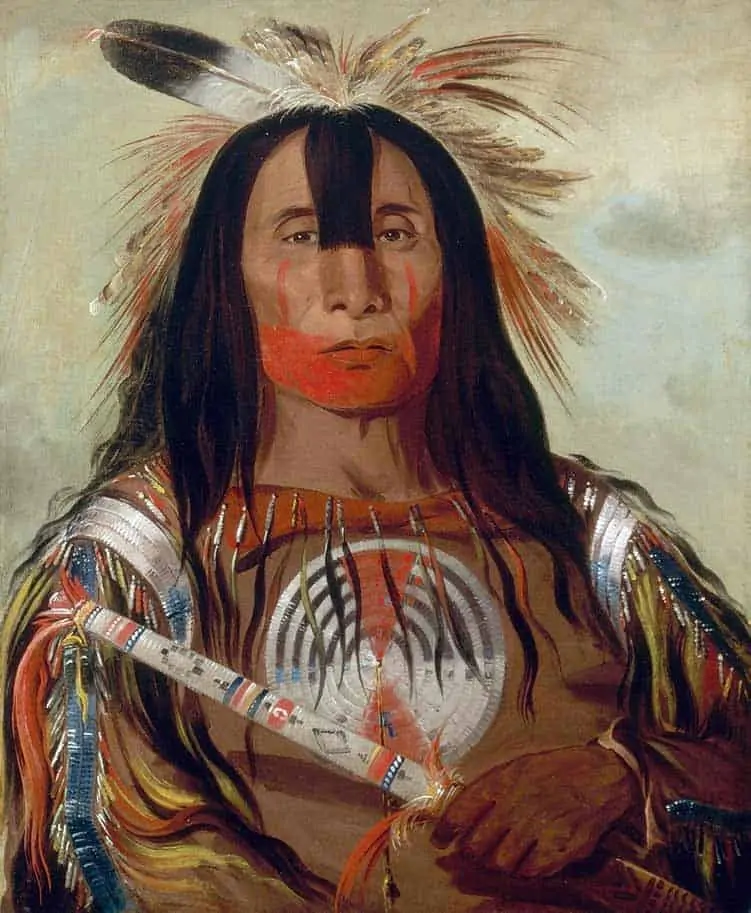
Among the Lakota and other Plains nations, eagle, hawk, and falcon feathers worked as formal records of deeds. Not metaphors for deeds. Records. Ethnographer Thomas E. Mails documented in Mystic Warriors of the Plains (Doubleday, 1973) that specific modifications to a feather, a notch cut here, a dye applied there, a particular trim, encoded the nature of the act being recognized: counting coup on an enemy, surviving a wound in battle, protecting the people at personal risk. A warrior who accumulated enough individually recognized feathers could eventually assemble a war bonnet, but only after each feather had been publicly awarded by the tribal council.
Joseph E. Brown’s Animals of the Soul: Sacred Animals of the Oglala Sioux (Element Books, 1991) records the eagle feather’s role as both a mark of honor and a prayer object. Lakota ceremonial practice holds that an eagle feather dropped on the ground must be retrieved through ceremony, rather than simply picked up and replaced. The feather carries a petition toward the Creator when held correctly in prayer, and that function does not turn off between ceremonies.
This is the gap most general articles miss. The feather is an active object in an ongoing relationship between the person who holds it, the bird it came from, and the Creator that bird is understood to serve. It is not a static symbol you can summarize in a sentence and shelve.
How Do Anishinaabe (Ojibwe) Teachings Interpret the Eagle Feather?
Anishinaabe teachings connect the eagle feather directly to the Seven Grandfather Teachings: nibwaakaawin (wisdom), zaagi’idiwin (love), minaadendamowin (respect), aakode’ewin (bravery), gwayakwaadiziwin (honesty), dabaadendiziwin (humility), and debwewin (truth). The eagle holds the highest place among birds because it flies closest to the Creator and acts as messenger between the human world and something beyond it. The feather carries that messenger quality into the hands of the person who holds it.
In contemporary Anishinaabe practice, as documented in Ojibwe cultural education sources, an eagle feather given as a gift is a formal act of recognition. You do not buy one. You do not find one and claim it. You receive one because someone with the standing to give it has decided you have earned it, through bravery, through service, through years of quiet work the community has noticed. The giving is the recognition. The object and the act are not separable.

Eagle feathers are also used in Anishinaabe ceremony for smudging and prayer, held upright to focus the mind and direct communication. The tradition holds that it helps the person praying maintain attention, and that attention directed toward the Creator, sustained through ceremony, is the point.
What Does Southeastern Ceremonialism Reveal About Feather Use?
Southeastern nations, Cherokee, Muscogee (Creek), Choctaw, Chickasaw, among others, maintained feather traditions that the Penn Museum’s scholarship on Southeast American Indian ceremonialism has documented in considerable depth. The ritual logic in this region connected birds, feathers, and cosmic order in ways distinct from Plains traditions but no less structured.
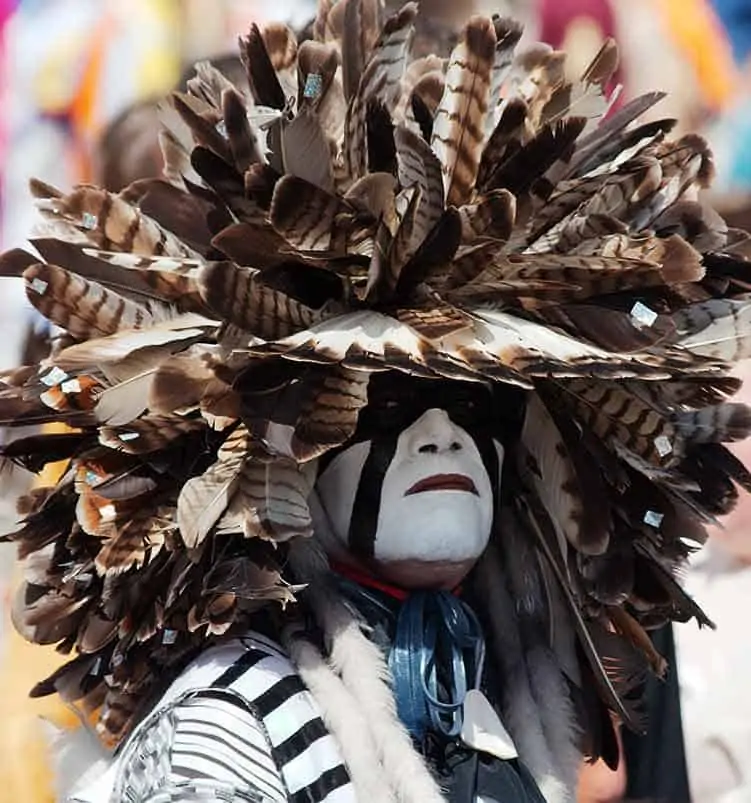
The Green Corn Ceremony, observed across multiple Southeastern nations, involved specific feathered regalia worn by ceremonial leaders. Those feathers were not decorative. They marked the wearer’s role in the ritual and their relationship to the cosmic order the ceremony was re-establishing. The Cherokee Eagle Dance, performed by trained dancers wearing eagle feathers and tails, required years of preparation and the sanction of the community.

What strikes me about the Penn Museum’s analysis is how consistently the Southeastern material pushes back against the idea that feather symbolism was loose or personal. The feather’s meaning in ceremony was established by the tradition, carried by trained practitioners, and understood by the community witnessing it. The individual wearer was not inventing the meaning. They were enacting it on behalf of everyone present.
What Is the Spiritual Significance of the Eagle Feather Across Traditions?
The eagle feather holds the highest rank across Lakota, Anishinaabe, many Southeastern, and numerous other nations, and the reason is consistent even when the specific protocols differ. Eagles fly higher than any other large bird. In many traditions, that altitude is proximity to the Creator; the eagle can see both the human world and something beyond it, and so it works as messenger between the two.
This is not a coincidence across traditions that had no contact with each other. It is the kind of observation that comes from watching eagles closely for a long time. Bald Eagles regularly soar above 10,000 feet when riding thermals. I have watched them from the ridge above Black Mountain, and understood immediately why people looked up at that silhouette and thought: that bird is closer to something I cannot reach than I will ever be.
The spiritual weight follows from the observed behavior. That is how the best symbolic traditions work. The symbolism is not arbitrary; it maps onto what people actually saw when they watched the bird.
What Do Different Feather Colors Mean in Native American Symbolism?
Color meanings vary by nation and ceremonial context, and I want to flag that plainly before going through them. What follows is drawn from documented sources, not a universal key.
White feathers are associated with peace, purity, and the Creator’s protection across many Plains and Woodland traditions. In Lakota ceremony, a white feather can signal goodwill and peaceful intent. In Anishinaabe practice, white feathers may mark prayer objects used in healing ceremonies.
Black feathers carry associations with protection and strength in several traditions, and in some Plains contexts with the ability to absorb or deflect negative forces. Not a bad omen. Protection requires engaging with what you are protecting against.
Red feathers appear in warrior contexts across multiple nations, associated with courage, the life force, and readiness. In some Southeastern ceremonial regalia, red-dyed feathers marked specific roles in ceremony.
Yellow and gold feathers, where they appear in documented traditions, are associated with the sun, with vitality, and with the east, the direction of sunrise and new beginnings in many Indigenous ceremonial frameworks.
Brown and grey feathers from smaller birds carry their own meanings in traditions that work with those species. Turkey feathers, for instance, appear in specific ceremonial and regalia contexts quite distinct from eagle feathers.
What Do Different Bird Species’ Feathers Symbolize?
Hawk feathers, owl feathers, turkey feathers, raven feathers, heron feathers. Each carries a distinct weight in the traditions that work with them, and lumping them together as “bird feathers” loses what makes each one meaningful.
Hawk feathers in Lakota tradition are awarded to warriors who showed particular speed and precision in battle. The distinction between a hawk feather award and an eagle feather award was not semantic; it encoded specific information about what the recipient had done.
Owl feathers carry associations with night, with the ability to see what is hidden, and in some traditions with the spirits of the dead. In many Plains communities, owl feathers were handled with particular care and were not casually given or worn. My Cherokee colleague Linda Walkingstick at the wildlife center has noted, more than once, that the owl’s role in Eastern Cherokee tradition is more layered than most general sources capture, and that the layering is not hers to pass along to outsiders without the full ceremonial context.
Turkey feathers appear extensively in Pueblo and Southeastern ceremonial regalia, where the turkey’s relationship to the earth and to abundance gave its feathers a ceremonial weight distinct from the eagle’s sky-connection. In the Southwest, turkey feathers were woven into prayer sticks and blankets used in ceremony.
Raven feathers appear in Northwest Coast traditions in ceremonial contexts connected to the Raven figure, who in those traditions is a creator and transformer. Not a death symbol, despite what many non-Indigenous sites assume.
Heron feathers, in some Woodland traditions, carry associations with patience, with standing still in the right place long enough for what you need to come to you. I find that one personally accurate. Great Blue Herons on the Swannanoa River do not hunt by chasing. They wait, and the fish comes.
How Were Feathers Used in Headdresses and Regalia?
The Plains war bonnet, the full feathered headdress most non-Indigenous people picture when they think of Native American feathers, was not a decoration. It was a document.
According to Thomas E. Mails’ ethnographic records in Mystic Warriors of the Plains (1973), each feather represented a deed publicly recognized by the tribal council. The bonnet could not be assembled by the warrior alone; it required the community to have witnessed and validated each act that earned each feather. A war bonnet with thirty feathers represented thirty separately recognized public deeds. The man wearing it had, in effect, carried thirty written citations from his people.
This is why non-Indigenous people wearing war bonnets as costumes causes genuine offense. It is not a sensitivity issue. It is a category error. The headdress is a record of service, earned across years, validated by a community. Wearing one without that history is like wearing a Medal of Honor you did not receive, and that is not a metaphor. The Native American Rights Fund has been involved in legal cases defending the right of Native graduates to wear eagle feathers at commencement, cases that turned precisely on the distinction between earned regalia and decoration.
Not all feathered regalia are war bonnets, and not all nations used them. Southeastern nations had distinct feathered regalia for specific ceremonial roles, as the Penn Museum documents. Pueblo nations integrated feathers into kachina dolls, prayer sticks, and ceremonial dress in ways structured entirely differently from Plains traditions. The specifics matter.
What Role Do Feathers Play in Ceremony, Prayer, and Healing?
Feathers are active in ceremony, not passive. That distinction is worth sitting with.
In Anishinaabe smudging ceremonies, an eagle feather directs the smoke from burning sage, cedar, or sweetgrass toward the person being cleansed or the sacred space being prepared. The feather’s function is physical and ceremonial at the same time; it moves the smoke, and in doing so it carries the prayer the smoke represents. You are not waving a symbol around. You are performing an action with a sacred tool.
In Lakota healing ceremonies documented by Joseph E. Brown, feathers work as conduits between the healer’s intention and the Creator’s response. The healer holds the feather above the person being healed, directing prayer. The ceremony is not the healer acting on the patient; it is the healer requesting, through the feather and other objects, that the Creator act.
Across Southeastern ceremonialism, feathers mark sacred space. Their presence in a ceremonial area signals that what happens there is under different rules than ordinary time and space. When the ceremony ends and the feathers are put away, the space returns to ordinary use. The feathers are the boundary markers.
What Does It Mean to Receive or Gift a Feather?
Receiving a feather from someone who has the standing to give it is one of the most serious acts of recognition in many Indigenous traditions. The English word “honor” loses some weight in translation. The Lakota concept behind it carries the idea that the person giving the feather is lending their own standing to the recipient. The gift is a public claim about the recipient’s character, far more than a mere object changing hands.
The Native American Rights Fund’s documentation of graduation feather cases, cases in which Native graduates asserted the right to wear eagle feathers at commencement ceremonies that several school districts had tried to prohibit, rested partly on this logic: the feather was a formal mark of recognition from the graduate’s community, earned through years of demonstrated commitment. Prohibiting it was not a dress code enforcement. It was a refusal to acknowledge a formal community record.
A feather bought at a craft market and given as a present is not the same object as a feather given by an elder to a person they have watched and recognized over years. The object may look similar. The act is entirely different.
How Are Feathers Understood in Dreams and Visionary Experience?
In Plains and Woodland visionary traditions, a feather appearing in a dream or vision quest may signal contact with a spirit helper, an ally who has chosen to make itself known. The tradition holds that the dreamer’s response matters: to acknowledge the feather, to receive what it offers, or to decline if the relationship does not feel right.
The vision quest tradition in Plains cultures, a period of isolation, fasting, and prayer intended to invite a vision, sometimes produced feather imagery that was then incorporated into the seeker’s personal medicine bundle. The specific feather or feathered creature seen in vision became a relationship to maintain, not a one-time sign to interpret and set aside.
I don’t know how to map this cleanly onto what most Western readers mean when they say they dreamed of a feather. The frame is different enough that direct translation loses something. What I can say is that across these traditions, the feather in vision or dream is understood as an invitation to relationship, not a message to decode. If you are drawn to think about this in a Western folk or Christian frame, our piece on what it means when feathers appear in unexpected places may be more directly relevant to where you are starting from.
How Should Non-Indigenous People Understand and Respect Feather Traditions?
The U.S. Eagle Feather Law, the Bald and Golden Eagle Protection Act, first passed in 1940 and amended several times since, prohibits the possession, purchase, or sale of eagle feathers by anyone who is not an enrolled member of a federally recognized tribe. This is not a cultural sensitivity guideline. It is federal law with criminal penalties. Finding an eagle feather on the ground does not make it yours to keep. The legal answer is to contact the U.S. Fish and Wildlife Service, which maintains a repository of legally obtained feathers available to enrolled tribal members for ceremonial use.
That law exists because eagle populations were devastated by the mid-twentieth century (the Bald Eagle was listed as endangered in 1978, and its recovery to delisted status by 2007 required decades of protection), and because the ceremonial demand for eagle feathers from Indigenous communities is real and ongoing. The law protects both the bird and the tradition.
For non-Indigenous people, the practical guidance is simpler than it might seem. Do not wear eagle feathers. Do not purchase them, regardless of what the seller claims. Do not wear a Plains war bonnet as a costume. Do not refer to feathers you find on the ground as “gifts from the universe” in a context that borrows the frame of Native American tradition without the content.
If you are genuinely curious about a specific nation’s traditions, read scholarship written by members of that nation, or look for cultural centers and organizations run by the community itself. The common thread across traditions is this: feathers carry meaning within specific relationships and specific communities. Respecting that is not complicated. It is just accurate.
Frequently Asked Questions
Is it disrespectful for non-Native people to wear feathers?
It depends on the feather and the context. Wearing eagle feathers without being an enrolled tribal member is illegal under federal law and culturally discouraged. Wearing a Plains war bonnet as a costume is a category error; those headdresses are earned records of publicly recognized deeds, not decorative objects. Wearing a chicken or peacock feather as an accessory is a different matter entirely. The question worth asking is: are you borrowing the form of a sacred object while discarding what makes it sacred?
What does it mean when you find a feather on the ground, in a Native American context?
Honestly, it depends on the tradition and the bird. In Lakota practice, a dropped eagle feather is retrieved through ceremony, not simply picked up and pocketed. If you find an eagle feather, federal law requires you to leave it or contact U.S. Fish and Wildlife. The spiritual question of what the encounter means is separate from those legal and cultural obligations, and I’d say secondary to them. Start there before asking what it means for you personally.
Are all feathers considered sacred, or only eagle feathers?
Eagle feathers hold the highest ceremonial rank across many nations, but other species carry significant weight in specific traditions. In Pueblo and Southeastern communities, turkey feathers appear extensively in ceremonial regalia. Hawk feathers in Lakota tradition encode specific military deeds distinct from eagle feather honors. Owl feathers are handled with particular care in several traditions because of their associations with night and the spirit world. “Sacred” is not a single category; it is a spectrum of protocols that differ by nation and by bird.
What is the difference between a war bonnet and other feathered regalia?
A Plains war bonnet is assembled from eagle feathers each representing a publicly recognized deed, awarded by elders or a tribal council. The bonnet as a whole is a record of a warrior’s life of service. Other feathered regalia, Southeastern ceremonial dress, Pueblo kachina regalia, Northwest Coast ceremonial objects, are structured entirely differently, with their own protocols and meanings that don’t map onto the war bonnet frame. Treating all feathered headdresses as the same object is like treating all written documents as legal contracts.
No. And I say that not as a hedge but as the most important single thing this article can tell you. There are more than 570 federally recognized nations in the United States, speaking distinct languages and maintaining distinct ceremonial traditions. The eagle feather’s high status is a common thread across many Plains and Woodland nations, but the specific protocols vary considerably. An Anishinaabe eagle feather ceremony and a Lakota eagle feather ceremony are not the same ceremony. Treating them as interchangeable misses the point.
What does a white feather mean in many Indigenous traditions?
White feathers carry associations with peace, purity, and the Creator’s protection across many Plains and Woodland nations. In some Lakota contexts, a white feather signals peaceful intent. In Anishinaabe practice, white feathers may appear in healing ceremonies as prayer objects. These associations are not universal. In traditions where white is associated with the north or with winter in the ceremonial color system, white feathers may carry those additional resonances rather than, or alongside, peace and purity.
What does a black feather mean?
In several Plains traditions, black feathers are associated with protection and strength, the ability to absorb or deflect what might harm you. This is not a bad omen. Protection requires awareness of what you are protecting against, and black in many ceremonial color systems carries that watchfulness. I have seen this reading conflated with Western associations of black with death and misfortune, which are separate traditions with separate logic. Worth knowing which frame you are working in before drawing conclusions.
Can a woman receive or carry an eagle feather?
Yes, in many nations. The idea that eagle feathers are exclusively male is a misreading that probably comes from the visibility of Plains warrior traditions in popular culture. In Anishinaabe practice, eagle feathers are given to women who have demonstrated the qualities the Seven Grandfather Teachings describe. The Native American Rights Fund’s graduation feather cases have included women. I don’t have a complete picture of every nation’s protocols here, and I want to say that plainly; the record is more varied than a single yes or no can hold.
What should you do if you find an eagle feather?
Under U.S. federal law, you cannot legally keep it unless you are an enrolled member of a federally recognized tribe. The Bald and Golden Eagle Protection Act covers both Bald and Golden Eagles and applies regardless of how the feather was obtained. Your practical options are to leave it where it is, or contact the U.S. Fish and Wildlife Service. The Service maintains a National Eagle Repository in Colorado that collects legally obtained feathers and distributes them to enrolled tribal members for ceremonial use.
How is the eagle feather used in modern Indigenous ceremonies today?
According to documentation of ongoing Native American feather traditions, the eagle feather remains active in graduation ceremonies, naming ceremonies, healing ceremonies, and powwows across many nations. The eagle feather staff carried at powwows holds the same ceremonial weight it always has. Individual nations have adapted their protocols over time while maintaining the core understanding that the feather is earned, not acquired. The legal fight for the right to wear eagle feathers at public school graduation ceremonies, which the Native American Rights Fund has pursued in multiple states, is itself evidence of how seriously these traditions are maintained in contemporary life.
Sources
- Native Hope, “The Feather: A Symbol of High Honor” (2023)
- Indian Traders, “Native American Feather Symbolism”
- Kachina House, “The Importance of Feathers in Hopi and Pueblo Ceremonial Practice”
- Native American Rights Fund, Graduation Feather Cases
- Reasons to Be Cheerful, “Sacred Feathers: The Repository Serving Native American Traditions”
- Georgia State University, “Some Native American Feathers” (2018)
- Moonlight Feather, “Feathers Across Cultures: Myths, Legends, and Folklore”
- Joseph E. Brown, Animals of the Soul: Sacred Animals of the Oglala Sioux (Element Books, 1991)
- Thomas E. Mails, Mystic Warriors of the Plains (Doubleday, 1973)
- Penn Museum, “Feathers in Southeast American Indian Ceremonialism” — available through the Penn Museum online collections




I simply wanted to send a remark to appreciate you for the unique tips you are writing on this site. My incredibly long internet investigation has at the end of the day been honored with reliable facts and techniques to talk about with my friends and family. I would admit that most of us visitors actually are really endowed to live in a superb network with many marvellous professionals with interesting plans. I feel very blessed to have seen your web site and look forward to some more thrilling minutes reading here. Thanks again for a lot of things.
My sister and I just meet our biological dad in person this year 2022. We did not know about each other. My sister and I are of Native American and German Heritage. Our dad turned 88 years old this year. He dressed up for his birthday and wore a blue hat. I remember him telling someone all he needed was a feather. So I am looking for the right kind of feather for him. Thank you.
Thanks for reading my article. Native American and German are a lovely combination!
I, too, am finding your articles clear and informative, leading me rightly. Thank you.