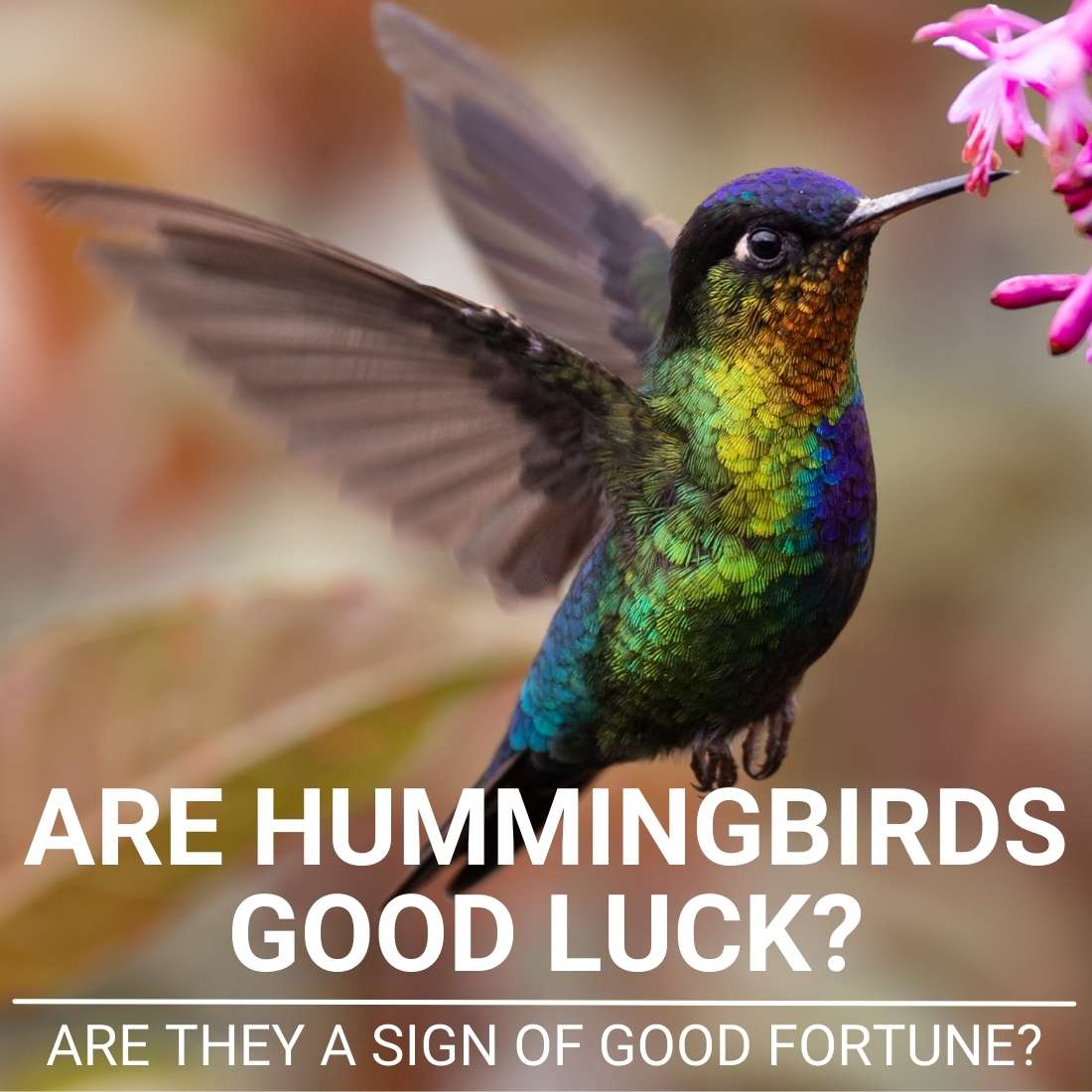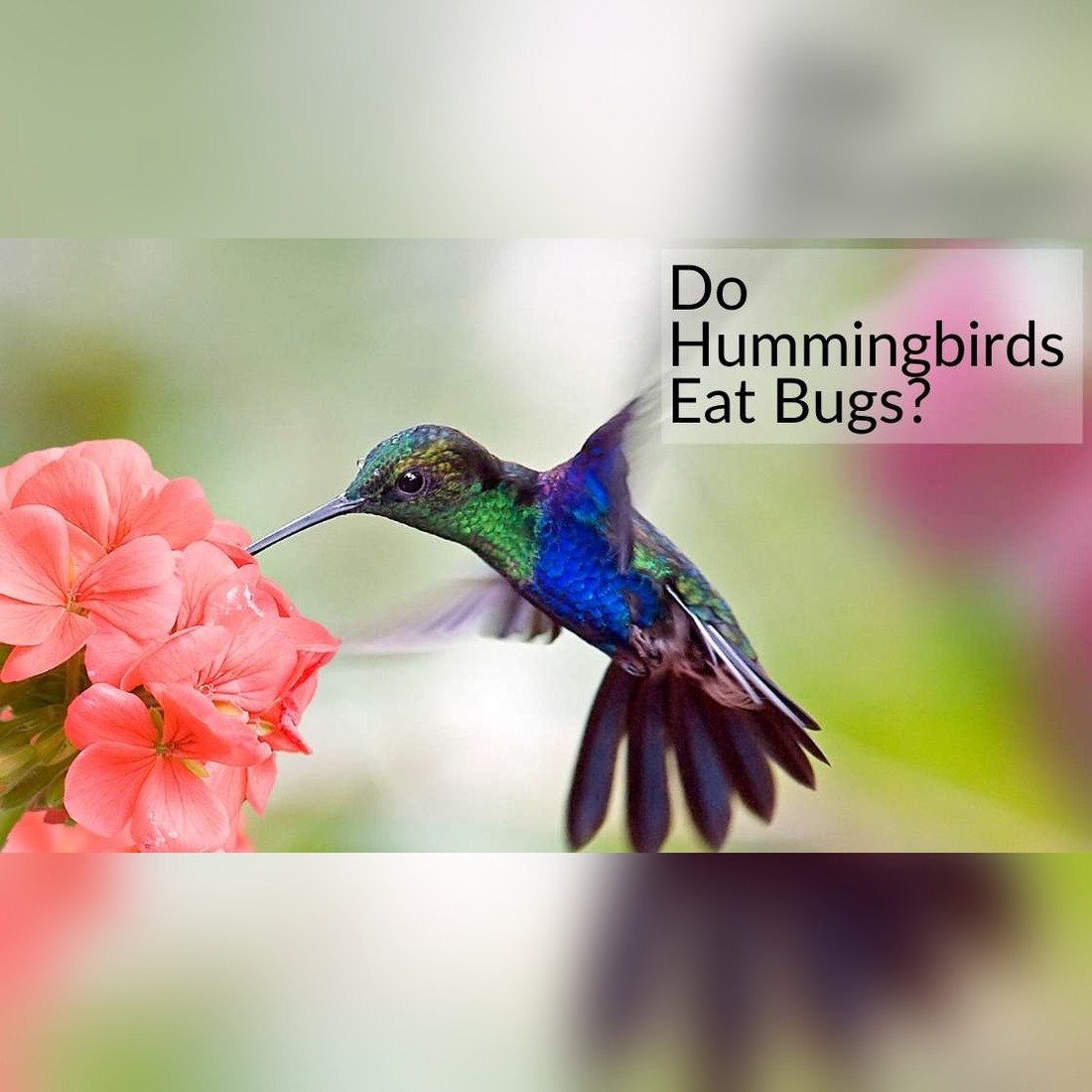
Hummingbirds are some of the world’s most fascinating creatures. They can fly backward, their wings beat so fast that they create a humming sound, and they have an incredible ability to hover in one place for long periods of time – which is why it might seem strange that many people wonder if these birds eat bugs or just nectar.
Hummingbirds are the smallest birds in the world. They weigh almost equal to the weight of a coin. The rapid climate changes due to human activity are leading to the destruction of their natural habitat. This has raised a great concern for protecting these birds from extinction. Human activities are also resulting in the scarcity of food for these birds.
You may think that hummingbirds have a very small appetite which can easily be fulfilled by the nectar of the flowers, other sugary liquids, or fallen fruits. However, this is not completely true. Hummingbirds have a good appetite that gets fulfilled by a meal consisting of carbohydrates and other nutrients. So do hummingbirds eat bugs to meet their nutrient requirements? Let’s find out.
Do hummingbirds eat bugs?
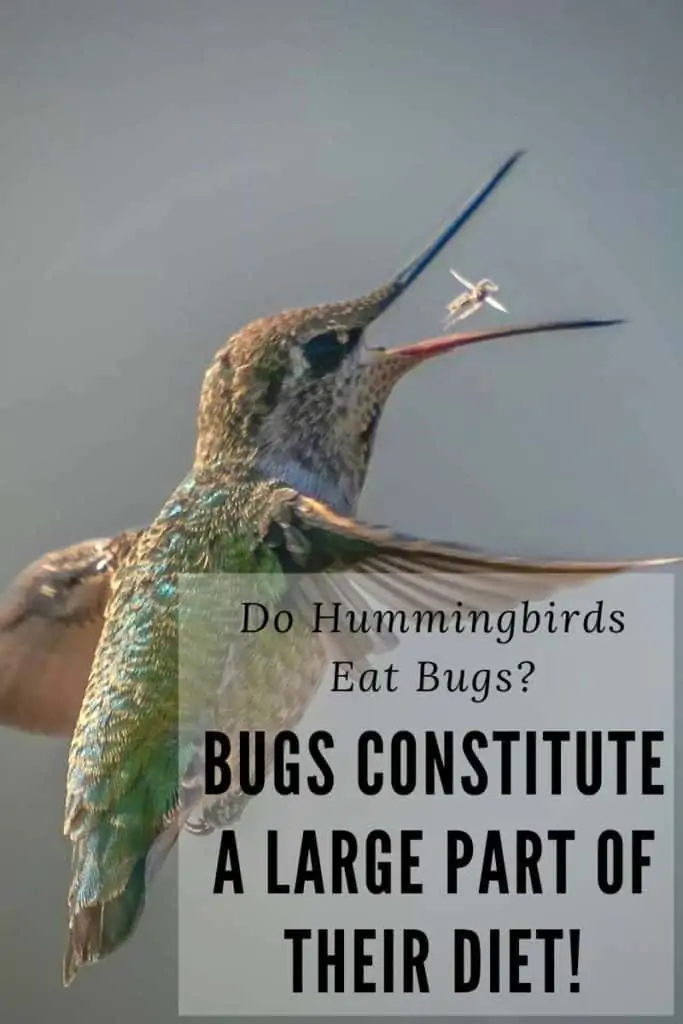
Yes, hummingbirds eat bugs. As a matter of fact, bugs constitute a large part of their diet. Like all other living organisms, hummingbirds also need various nutrients like minerals and vitamins to stay alive. These nutrient requirements of the hummingbirds cannot be fulfilled by feeding on flower nectar or any other sugary feed as they can only meet the carbohydrate requirements of these birds. Hence, hummingbirds prey on bugs such as beetles, wasps, leafhoppers, harvestmen, and so on.
In fact, the Hummingbird’s insect consumption is almost as high as it is with drinking nectar! You may be wondering what bugs have to offer these birdies. Well, let me tell you: they’ve got minerals and vitamins on lock; proteins can easily help them build muscle mass while amino acids provide necessary building blocks of protein utilization which will keep your little feathered friends healthy and strong. Fiber helps regulate digestion so that all those hardworking organs stay perky when food goes through them smoothly (not to mention fat keeps us warm!).
What insects do hummingbirds eat?
Hummingbirds eat insects such as ants, aphids, beetles, mosquitoes, weevils, fruit flies, gnats, spiders, and so on. Even among these insects, there are a few species that hummingbirds mostly prefer. For example, among beetles, there are certain species like ground beetles, tiger beetles, sawyer beetles, stag beetles that are most commonly preyed upon by hummingbirds. In the same way, eye gnats, sand gnats, and buffalo gnats are common species of gnats that are eaten by hummingbirds.
Spiders?
Yes, hummingbirds eat spiders. Spiders are one of the favorite foods of hummingbirds. It is estimated that 60-80% of their food comprises spiders. In addition to being food for hummingbirds, a spider’s web is also useful for hummingbirds. The spider web has spider silk that is extremely valuable for hummingbirds to build their nests and keep them stuck to the tree branches.
The hummingbirds use the spider web as a way of catching prey because insects get entangled in the spider webs and can be eaten by hummingbirds. They have to be extremely careful while hunting over spider webs as they may themselves get caught in the spider web.
Mosquitoes?
Yes, hummingbirds eat mosquitoes. They locate the tiny mosquitoes through their exceptional vision and sense. These birds can eat a few dozen to a thousand insects like mosquitoes in a day. Mosquitoes, being small insects, are easy for hummingbirds to capture and swallow. They catch mosquitoes by hovering around them in the air and then attacking them. They hunt over spider webs and sap well to find and prey on them.
RichardAlois recommends…


The Genius of Birds
An award-winning science writer tours the globe to reveal what makes birds capable of such extraordinary feats of mental prowess.
- “Lovely, celebratory. For all the belittling of ‘bird brains,’ [Ackerman] shows them to be uniquely impressive machines . . .” —New York Times Book Review
- “A lyrical testimony to the wonders of avian intelligence.” —Scientific American


Muse Garden Hummingbird Feeder for Outdoors, Hand Blown Glass, 25 Ounces, Containing Ant Moat, Fireworks
- 4.7 OUT OF 5 (5,511 RATINGS)
- WONDERFUL COLORS TO ATTRACT HUMMINGBIRDS
- HANDMADE MEANS UNIQUE
- ALL-ROUND CARE FOR HUMMINGBIRDS
- CONVENIENT TO USE
- RECYCLED MATERIALS
Do insects eat hummingbirds?
No, insects do not usually eat hummingbirds. This is because they have a great speed of movement. They can fly over 20-30 miles per hour, which makes it extremely hard to be caught by predators. There can be instances when hummingbirds are eaten by insects. These birds can get caught in the spider web where the spiders can eat them. There are some insects that are hummingbird predators. Here are a few examples.
Robber Fly
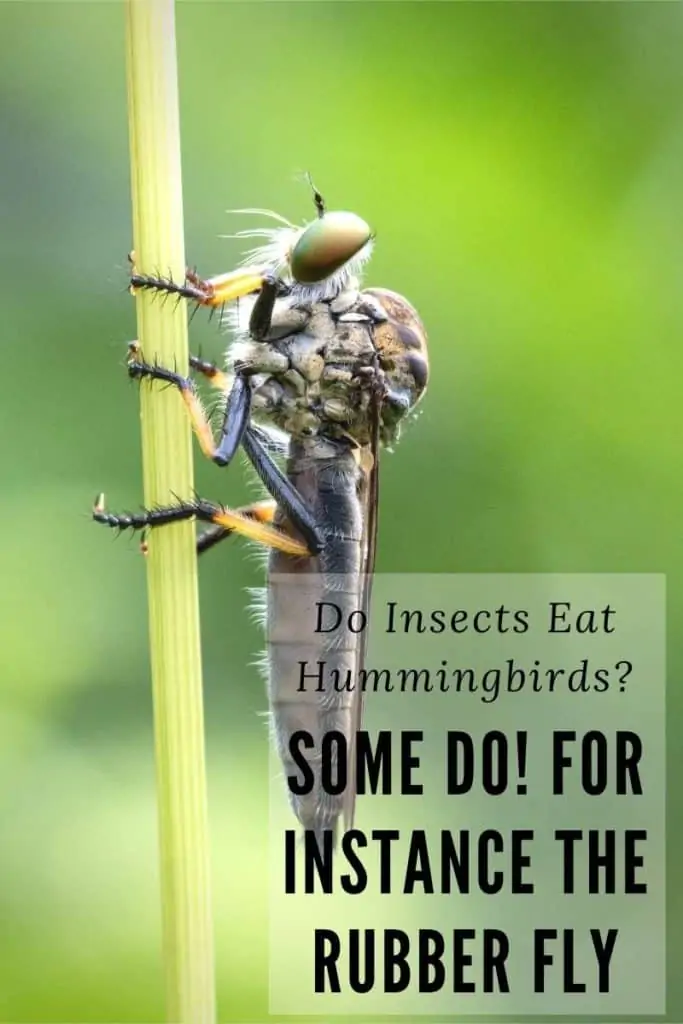
Robber flies are hummingbird predators which kill the hummingbirds by wrapping their wings around them and eating them afterward.
Dragonfly
There are not many instances where dragonflies eat hummingbirds except in some very rare scenarios.
Praying Mantis
Praying Mantis, specifically Chinese Mantis, was brought from China to kill the insects preying on the ornamental plants. These insects turned out to be hummingbirds’ predators as well.
See the video where a Praying Mantis Attacks a Hummingbird:
Conclusion
Hummingbirds, being the smallest bird in the world, are a complete delight to the human eye and humans don’t prey on them. These nectar-feeding birds require insects and bugs for meeting their nutrients requirements like vitamins, minerals, and proteins. They hunt spiders, mosquitoes, beetles, wasps, and many other bugs. Spiders and harvestmen are among their favorite food. The hummingbirds have excellent flying abilities which make them very hard to be eaten by any other insects.
PS: read also about The Meaning and Symbolism of Seeing a Hummingbird and Where Do Hummingbirds Sleep?, are hummingbirds good luck?
Frequently Asked Questions
What percentage of a hummingbird’s diet consists of insects?
Insects comprise nearly as much of a hummingbird’s diet as nectar. Spiders alone account for 60-80% of their food intake. Hummingbirds consume dozens to thousands of insects daily, including mosquitoes, beetles, and gnats, to obtain essential proteins, minerals, and vitamins that nectar alone cannot provide.
Why do hummingbirds need to eat insects if they drink nectar?
While nectar provides carbohydrates for energy, insects deliver critical nutrients nectar lacks: proteins for muscle development, amino acids for cellular function, minerals for bone health, vitamins for immunity, and fats for warmth. This balanced nutrition keeps hummingbirds healthy and fuels their extraordinarily fast metabolism.
Do hummingbirds prefer spiders over other insects?
Yes, spiders are among hummingbirds’ favorite prey. They consume 60-80% spiders as part of their diet. Beyond nutrition, hummingbirds use spider silk to construct and anchor their tiny nests to tree branches, making spiders doubly valuable for these birds’ survival and reproduction.
How many mosquitoes can a hummingbird eat in one day?
Hummingbirds can eat dozens to over a thousand mosquitoes daily, depending on availability. Their exceptional vision and sensing abilities help them locate tiny mosquitoes mid-air. They hover around insects, attack swiftly, and often hunt over spider webs and sap wells where mosquitoes congregate.
What types of beetles do hummingbirds eat?
Hummingbirds specifically hunt ground beetles, tiger beetles, sawyer beetles, and stag beetles. These beetle species provide dense nutrition compared to larger insects. Their small size makes them ideal prey for hummingbirds’ delicate beaks and rapid feeding patterns.
Can insects catch and eat hummingbirds?
Rarely, due to hummingbirds’ 20-30 mph flight speed. However, robber flies attack by wrapping wings around hummingbirds; praying mantises (especially Chinese species) ambush them; and spiders occasionally trap them in webs. Dragonfly predation is extremely uncommon but documented in rare instances.
How do robber flies hunt hummingbirds?
Robber flies are specialized hummingbird predators that wrap their wings tightly around hummingbirds to immobilize them, then consume their prey. Their predatory strategy exploits the birds’ hovering behavior, making them dangerous despite hummingbirds’ typically superior agility and speed.
What gnat species do hummingbirds commonly eat?
Hummingbirds frequently consume eye gnats, sand gnats, and buffalo gnats. These small gnats are easy to capture and swallow, making them efficient dietary choices. Hummingbirds locate them using exceptional vision and hunt them in swarms, often around vegetation and water sources.
Do hummingbirds use spider webs for hunting?
Yes, hummingbirds intentionally hunt over spider webs where insects become entangled, then extract trapped prey. However, they must navigate carefully to avoid getting caught themselves. Spider webs serve dual purposes: food sources and construction materials for building hummingbird nests.
Why are insects essential for hummingbird survival despite habitat loss?
Climate change and habitat destruction reduce flowering plants, making nectar scarce. Insects become increasingly critical as alternative nutrition sources. Without adequate insects for proteins, minerals, and vitamins, hummingbirds cannot sustain their rapid metabolism or reproduce successfully, contributing to population decline.