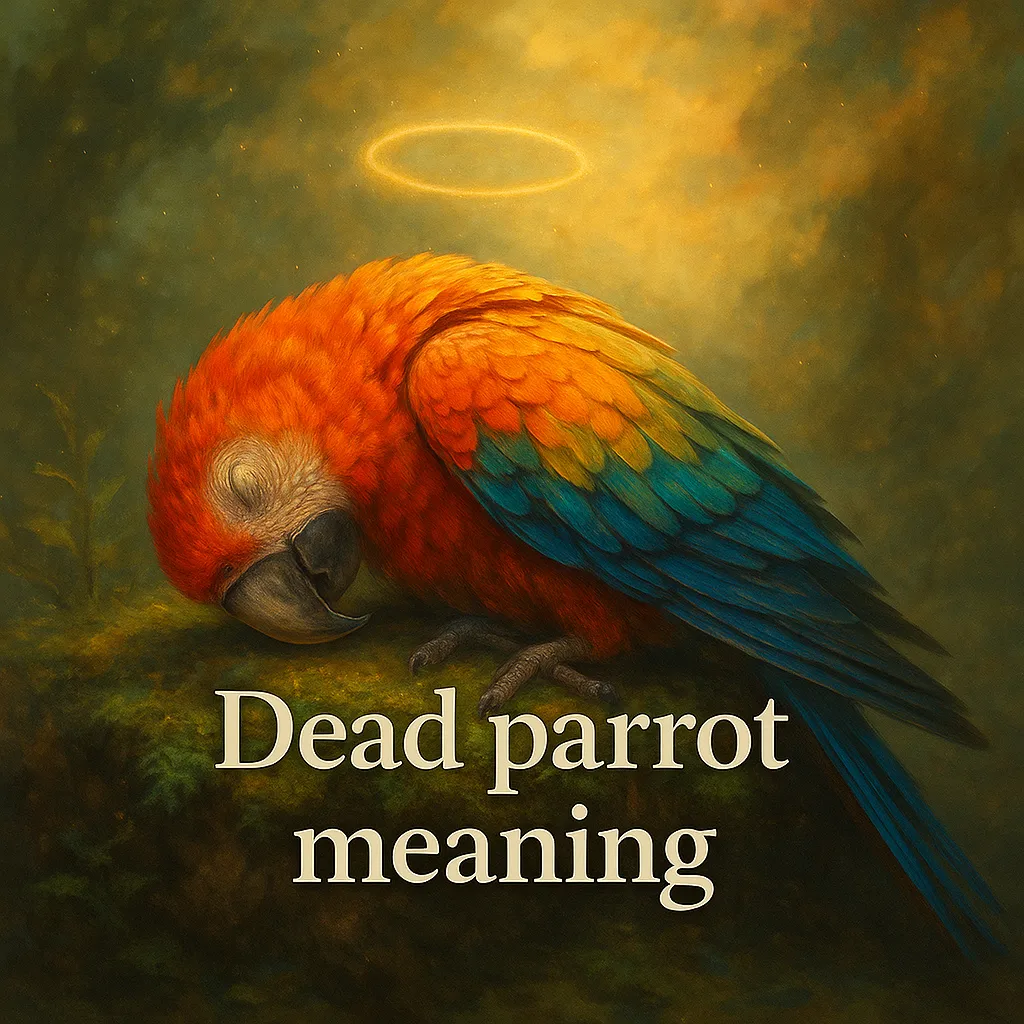
You find the parrot on the cage floor, and those words it threw back at you go silent. In the *Shukasaptati*, a 14th-century Sanskrit text, the parrot was the messenger who spoke for someone else, bridging people who couldn’t meet. When it dies, that bridge collapses, leaving you alone with your own voice – which might be the scariest part.
Key Takeaways
- Across Hindu, medieval Christian, and Indo-Persian tradition, the parrot carries borrowed words, someone else’s speech, performed faithfully but not originated. Its death marks the end of that intermediary role.
- No named tradition I have found reads a dead parrot as a death omen. The reading is about voice, not mortality.
- Where you found it matters: indoors points toward communication patterns inside your close relationships; at the threshold points toward the version of yourself you present to the world.
- In dreams, a dead parrot tends to surface when a persona you’ve been running, a habitual script, a role you perform, has worn through.
- The encounter asks a question more than it delivers a verdict: what would you say if you stopped repeating what you think you’re supposed to say?
What Does It Mean When You Find a Dead Parrot?
The parrot is the only bird most people explicitly associate with human language. That’s not a modern projection, it runs through Hindu mythology, Renaissance Christian art, and Persian court storytelling, and in all three the parrot carries the same weight: speech that belongs to someone else. Borrowed words, repeated with precision, passed along faithfully. When the parrot dies, that borrowed script ends with it.
I find this reading more honest than the vague “transformation” language that drifts around these encounters. The fact that this bird stopped you in your tracks probably has something to do with what parrots already mean to you, which is voice and language and the question of whether what you say is really what you mean.
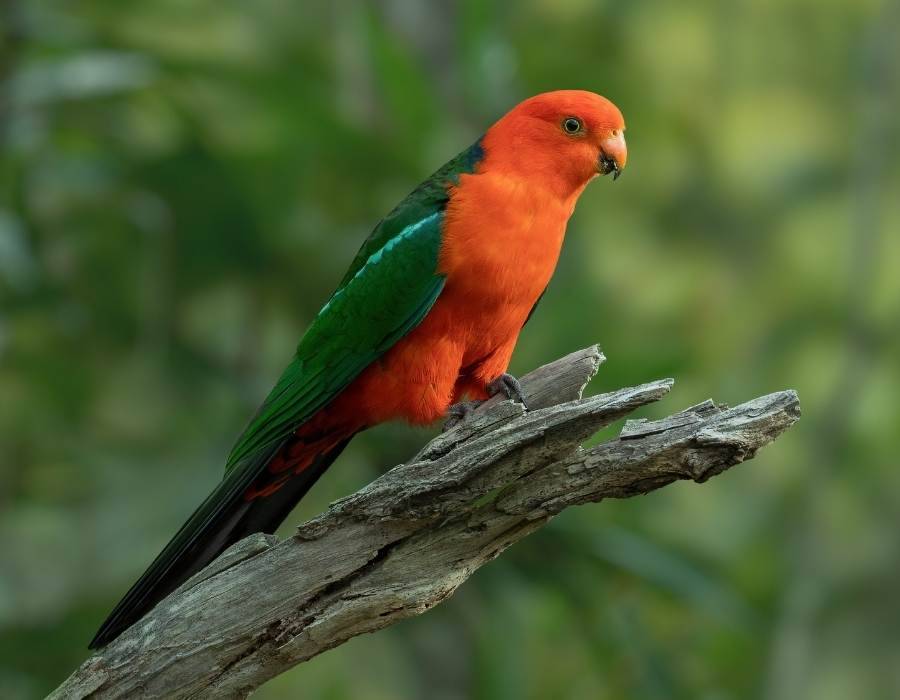
There is no tradition I have been able to document that frames this as a sign of someone dying. What the old sources are pointing at is quieter than that, and, I’d argue, more worth your attention.
What Are the Most Common Spiritual Meanings of a Dead Parrot?
The thread that runs through almost every tradition that has written about parrots is this: the parrot speaks, but it does not originate. It is the ideal messenger, the ideal mimic, the carrier of words between people with more authority. A living parrot symbolizes mediation, charm, and the smooth transfer of language. Its death is the silencing of that go-between.
What that means for you depends on where the mediation was happening. In a relationship, it might point to communication that had gone rote, the same arguments, the same reassurances, the same lines running on automatic. In a work context, some people read it as the end of performing a role that was never quite theirs. I don’t know which fits your situation. But the pattern across traditions is clear enough that I trust the general direction.
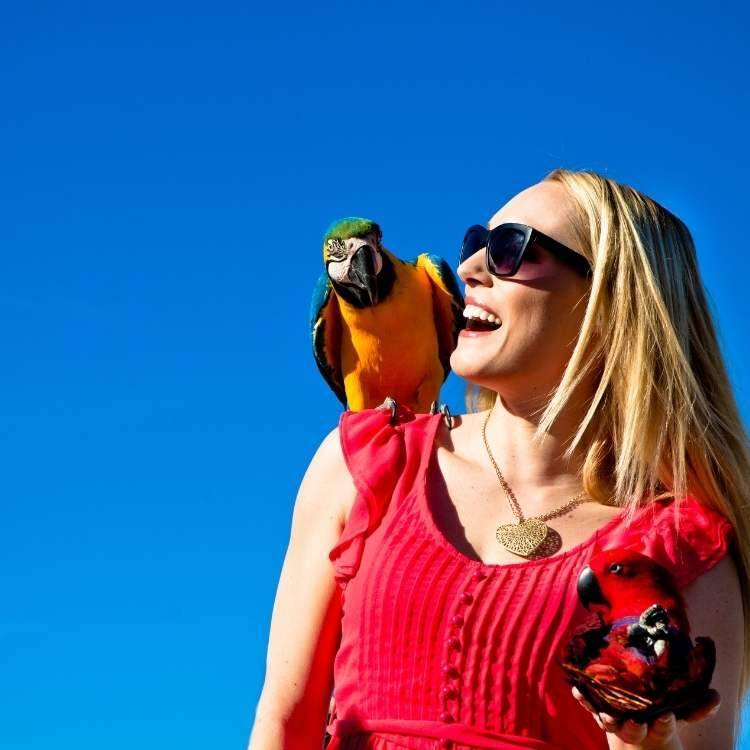
There’s a biological detail that sharpens this. A 2022 survey of vocal mimicry in companion parrots published in PMC found that parrots produce contextually appropriate speech far more often than random repetition, their mimicry is more calculated than we typically assume. The parrot isn’t mindlessly repeating. It is choosing which borrowed words to use, and when. The symbolism gets sharper once you know that.
What Does Hindu Tradition Say About the Parrot’s Death as a Symbol?
In classical Sanskrit tradition, the parrot (*shuka*) is the vehicle of Kama, the god of desire. Kama carries a bow strung with bees and rides a parrot, the bird that speaks of longing in someone else’s words, carrying messages of love between people who cannot say what they mean directly. David Kinsley’s scholarship on Hindu goddesses and their attendant figures describes the *shuka* as a mediator between desire and moral order, choosing words that move people toward or away from ethical choices.
The *Shukasaptati* (“Seventy Tales of the Parrot”) takes this further. In it, a wise parrot tells a series of stories to keep a woman from making a reckless decision each night her husband is away. The parrot is voice, caution, and wisdom in one, deployed in place of the absent person. When the stories run out, the parrot’s role ends.

A dead parrot read through this frame is the collapse of scripted, seductive, or intermediary speech. The go-between has gone silent. Whatever was being said on behalf of desire, habit, or social expectation, that channel is closed. And something more direct is being asked of you.
What Does Early Christian and Renaissance Art Reveal About the Dead Parrot’s Meaning?
Medieval and Renaissance Christian art places parrots near the Virgin Mary, which sounds odd until you know why. According to art historical research documented at Alberti’s Window, the connection comes from an old anecdote: a parrot reportedly greeted Octavian Caesar with “Ave, Caesar,” and Christian writers read this as a pagan foreshadowing of Gabriel’s “Ave, Maria.” The parrot, already famous for repeating human words, became an emblem of grace-filled speech.
But there’s an edge to that. The parrot near Mary is reciting. Performing the Ave, not praying it from the inside. And the rosary, which the parrot came to represent in some Marian paintings, is precisely a devotional practice that can slide into rote repetition if the practitioner isn’t careful. The parrot in this tradition is pious but mechanical.

A dead parrot in this frame is the end of that mechanical piety. The repetitions have run out. Whatever prayer, practice, or belief you have been performing by rote, the parrot’s death asks whether you have anything underneath it that is actually yours.
What Does the Indo-Persian Tutinama Tradition Tell Us About a Parrot’s Death?
The *Tutinama*, or “Tales of a Parrot,” is a 14th-century Indo-Persian narrative cycle that became popular at the Mughal court. In it, a merchant’s wife is kept from a series of bad decisions by a wise pet parrot who tells her a new story each night, each designed to delay her long enough that she reconsiders. The parrot is narrator, counselor, and moral anchor. All in one bird.
The structure matters. The parrot’s stories are what stands between the woman and reckless action. Take the parrot away, and the stories stop. The protection ends.

Read this way, a dead parrot in the *Tutinama* tradition is the silencing of the wise intermediary. Not a curse. A shift in responsibility. The voice that was guiding you through borrowed narrative has gone quiet. Whatever decision you’ve been deferring, whatever pattern has been held in place by the stories you tell yourself, those stories have done what they could. What happens next is yours to carry, not the narrator’s.
What Does the Location of the Dead Parrot Change About Its Meaning?
Location is worth paying attention to, and I say that as someone who has spent years around animals that show up in places they shouldn’t be. Where you found it changes what the question is pointing at.
Inside the home, especially in a room where you spend real time: most traditions read this as a disruption of domestic communication patterns. What is being said in that space, and by whom, and on whose behalf? A dead parrot in the kitchen or a shared room often gets read as a sign that a long-overdue conversation can no longer be proxied or put off.
On a doorstep or porch: threshold territory. The door is where your private self meets your public one, where you choose what to carry out and what to leave inside. A dead parrot at the threshold, in folk readings I find credible, points to how you present yourself to the world. The script for that presentation may have run its course.
In an open space, away from your home: the most open reading, and honestly the least urgent. The release-from-social-performance angle makes sense here. The mimicry has ended, and what remains is something less performed.
What Does a Dead Parrot Mean in a Dream or Vision?
Dreams are their own territory and I am careful about claiming too much authority over them. But the pattern I read in Jungian terms lines up with the waking-encounter readings above.
What Should You Do After Finding a Dead Parrot?
Practically: handle the body with gloves if you can. Parrots can carry psittacosis, a bacterial infection that transfers to humans through contact with feathers or droppings. Veterinary guidance on bird handling recommends double-bagging before disposal. If it was a wild bird, your local animal control office can advise on legal requirements.
Frequently Asked Questions
Is finding a dead parrot considered bad luck in any culture?
Not in any tradition I have been able to document with a named source. The parrot’s symbolic weight in Hindu mythology, medieval Christian art, and Indo-Persian storytelling is about speech and mediation, not misfortune. The folk record on parrots is thinner than I’d like, most bird-omen traditions focus on crows, owls, and doves. I won’t rule out regional beliefs I haven’t encountered, but I can’t point you to a named tradition that reads this the way a dead owl might be read.
Does the color of the parrot change its symbolic meaning when found dead?
Green parrots are by far the most common in both wild populations and symbolic art. The Indian Ring-necked Parakeet appears in Hindu temple iconography going back centuries. Red or scarlet parrots carry stronger associations with passion and seductive speech in several traditions. Blue is rarer symbolically. My honest answer is that color as a modifier of the dead-parrot reading is not well-documented in the sources I trust. The core reading about borrowed speech applies regardless of color; treat color as a secondary layer if it matters to you.
What does it mean spiritually if the dead parrot belonged to you or a loved one?
This is different, and the difference matters. A pet parrot is a relationship: years of voice, habit, and daily presence. Grief for a companion animal is grief, and it doesn’t need a symbolic frame to be legitimate. If you’re looking for meaning alongside that grief, the question the parrot puts to you is the same one it always put to you while alive: were you really listening to each other? The mimicry went both ways in a pet relationship. What it reflected back to you about your own voice is worth thinking about.
Is there a difference in meaning between a wild parrot and a pet parrot found dead?
Yes, in the sense that context changes what the encounter is. A wild parrot found dead near your home is an external event you are interpreting. A pet parrot that dies is a loss you are processing. The symbolic readings, end of borrowed speech, collapse of the intermediary role, apply more cleanly to the wild-bird encounter, where you had no prior relationship. With a pet, the personal history between you shapes the meaning more than any cross-cultural tradition will.
What does it mean if you keep dreaming about the same dead parrot more than once?
Recurring dreams about the same image tend to mean the psyche hasn’t finished with whatever the image is pointing at. If the parrot keeps coming back dead, I’d take that as a sign that whatever script or persona its death represents, the role you’ve been performing, the borrowed language you’ve been using, is still unresolved. The dream is patient. It will keep returning the image until you engage the underlying question: what are you still saying that isn’t yours?
Are there any omens or superstitions specifically tied to dead parrots in Caribbean or Latin American folk traditions?
I don’t have a confident answer here. The folk record is genuinely thin for this specific combination. Parrots appear throughout Caribbean and Latin American folk culture, kept as household birds across the region, carrying associations with trickster figures and clever speech in several oral traditions. But dead-parrot omens specifically? I haven’t found named documentation I’d trust enough to cite. If you know of a specific regional tradition I’ve missed, I’d genuinely want to know.
How is the dead parrot different symbolically from other dead birds like crows or doves?
Crows and ravens carry death-omen associations in European folk tradition going back to Norse mythology and medieval plague literature. They are scavengers, and their presence near death is ecological before it is symbolic. Doves carry peace and presence, and their death reads as loss of peace, end of a message. The parrot is distinct because its entire symbolic identity is built on speech and mimicry. No other common bird carries that specific weight. A dead crow is about death. A dead dove is about lost peace. A dead parrot is about the end of borrowed words.
Sources
- Alberti’s Window, “Notes on Parrot Symbolism in Poetry and Religious Art” (2021)
- PMC / NIH, “A Survey of Vocal Mimicry in Companion Parrots” (2022)
- Homey Gnome Vet, “Fact vs. Fiction: The Truth About Bird Care Myths and Misconceptions”
- Nautilus, “Ancient People Traded Live Parrots Across South America for Thousands of Years”
- Northern Parrots, “Do Parrots Know What They Say?”
- Wikipedia, “Parrot” (overview of species, distribution, and cultural history)