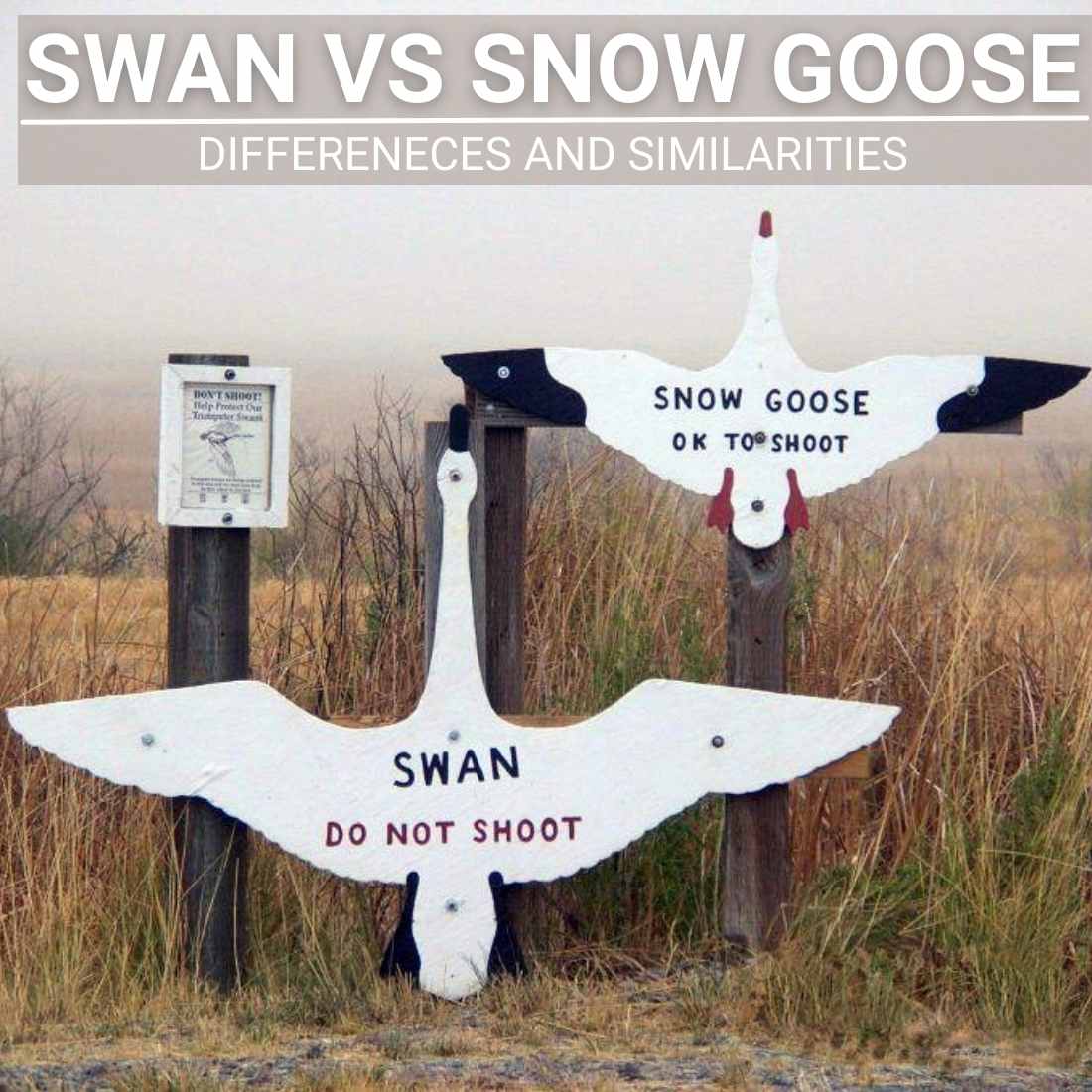
At first glance, a swan and a snow goose may appear to be quite similar birds. Swans are seabirds of the Anatidae family and are members of the genus Cygnus. Geese are also members of this family, although they are not related to swans in any way. Both have proper webbed feet, which aid them in propelling themselves forward when swimming. But keep in mind that all of the birds in the bird kingdom have significant similarities and variances from one another. As a bird watcher, you must be familiar with the differences and similarities that exist between these two species of water birds.
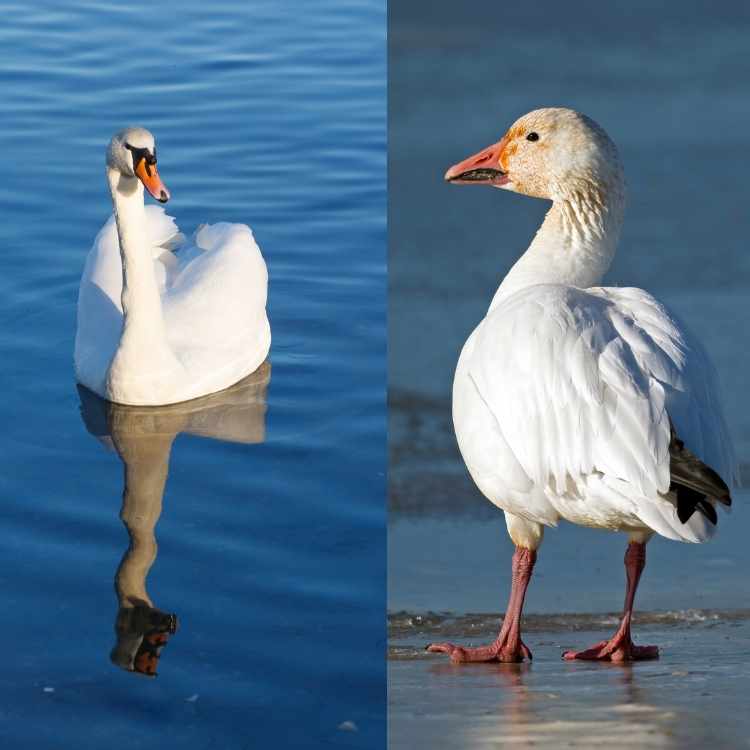
Take a look at the below-mentioned overview to observe how the swan and the snow geese vary from one another.
Overview
| Swan | Snow Goose | |
|---|---|---|
| Swans make the distinctive deep, trumpeting “oh-oh” sound. | Snow Geese are considered the noisiest of all the waterfowl. They make a nasal, one-syllable honk that serves as their primary communication signal. | |
Larger wings, weight, and body length than a snow goose | Smaller length, lighter weight, and short wingspan than swans | |
| Pointed wings | Slightly pointed wings | |
| Northern swans are white with orange beaks, and they are found in the north of Canada, the USA, etc. Southern swans are white and black in color, with beaks that are crimson, red, or black. | The color of a snow goose’s beak ranges from rose to purple-pink. | |
| Their necks are long and narrow, with an evident S-shaped curvature. | Short and thick neck, which is straight and longer than swans. | |
| With the exception of Antarctica, they are typically found in cold or temperate climates. | Found in the subarctic and arctic tundra | |
| Flock size is small, 20-200 | Their flock size is large, from 2000 to 11000. | |
| White feathers with black spots or completely black on a few instances. | White feathers with black tipsUsually eat aquatic vegetation, small fish, mollusks, worms, frogs, small grass from land. | Usually eats stems, bulbs, roots, leaves, shoots, grain, and small insects |
| The average lifespan is twenty years (wild) | The average lifespan is fifteen years (wild) | |
| Resident or short-distance migrant (4000 km) | Long-distance migrant (thousands of kilometers) | |
| Have seven eggs in on the clutch | Have five eggs in on the clutch |
Differences between Swan vs Snow Goose
Appearance
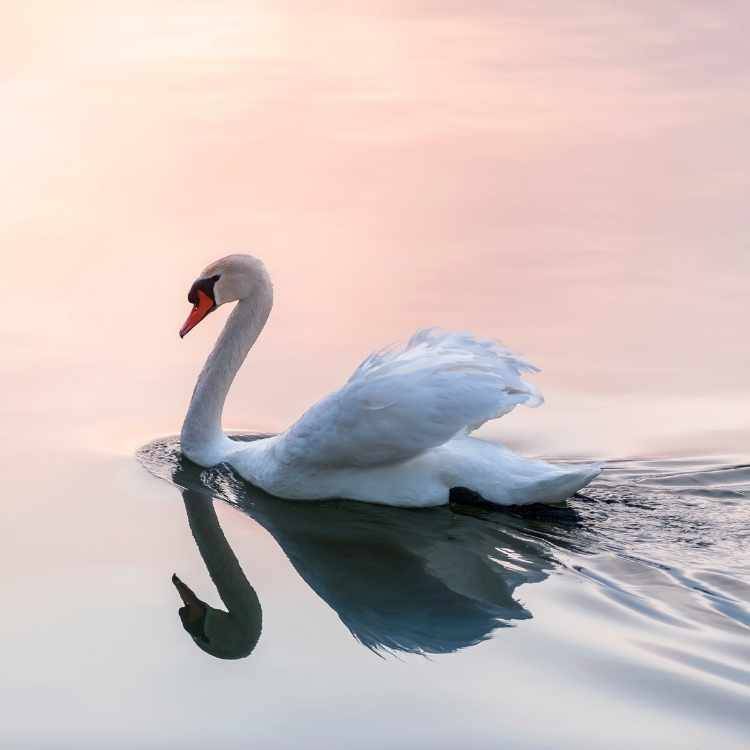
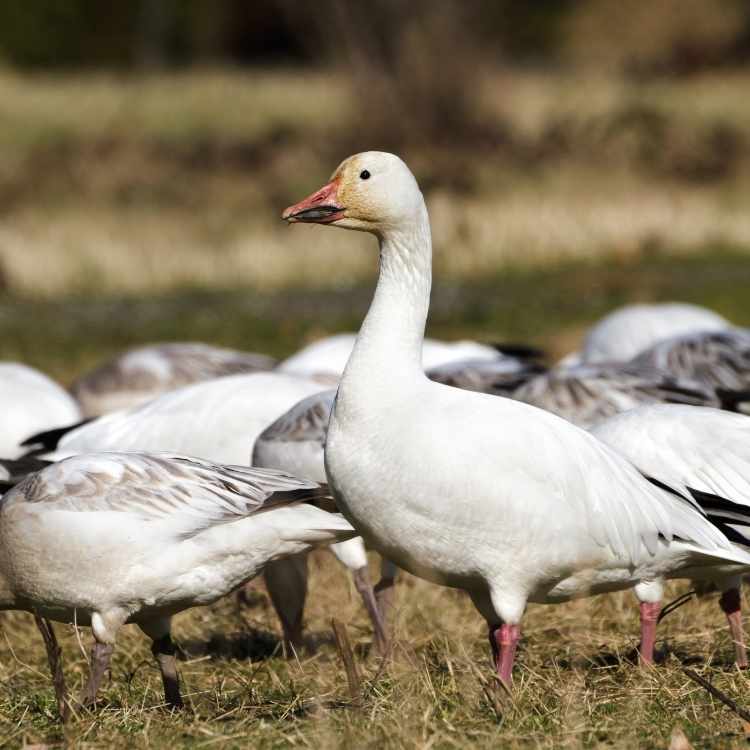
When comparing the swan to the goose, the swan has a longer neck. The swan’s neck is carved into an ‘S’ form, but the snow goose’s neck is straighter and shorter.
On the other hand, the swan is far larger than the snow geese, reaching 30 – 45 pounds in weight. Swans are also noticeably larger than snow geese, reaching a maximum length of six ft in comparison to the latter.
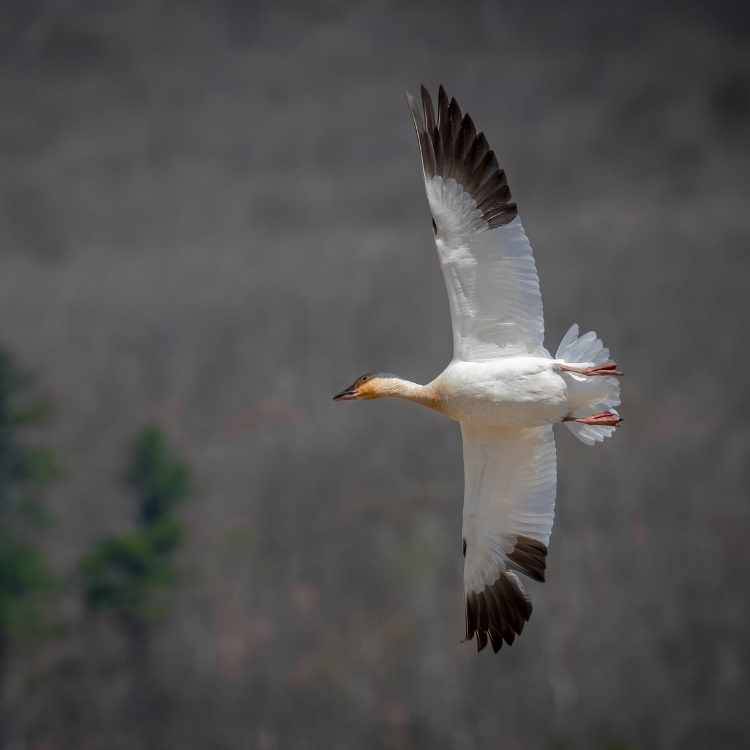
Swans are generally white with black spots, whereas snow geese have black wing ends while their other bodies are white. Geese also have different patterns on their feathers that can be useful in distinguishing between a swan and a goose in the field. These patterns are frequently found on the undersides of the animals or their tails.
Swans have a more slim and longer physique than snow geese, while snow geese have bigger legs than swans on average. When it comes to the look of their beaks, both swans and geese have unique variances depending on the species in which they are found.
In the case of the trumpeter swan, the top and lower mandibles of its bill are black with a reddish border between them. On the other hand, the snow goose has a pinkish to purple bill with a black grin patch in the center.
Habitat
Swans enjoy floating and swimming in shallow water bodies, such as ponds, lakes, marshes, and sluggish water streams, and they are especially fond of wetlands.
When they are in the process of building their nests, they seem to prefer to near water areas. In fact, their cradles may be found on small water platforms, reed beds, and in dense vegetation along the edges of water sources, among other places.
Snow geese are more numerous, and as a result, they may thrive in a greater variety of environments. However, there must be a water supply nearby wherever they dwell. As a result, they prefer cold arctic water.
Diet
Like the vast majority of birds, Swans are herbivores, meaning that they exist mostly on plants. They obtain their food from soil and water sources, consuming food if it is supplied to them.
They utilize their long slender necks as a terrific tool to pull plants into the water and their strong beaks to dip through the muck to get to their meal.
When they are on land, their powerful beaks assist them in breaking and tearing grass and other plants for nourishment. In addition to roots and stems, they eat flowers and fruits as well as all other plant components.
The same as Swans, Snow Geese consume plant matter; but, certain species have developed a more diverse diet that includes insects and other tiny animals. A nesting snow goose is one that consumes a wide variety of foods in order to maintain a high level of egg production.
Behavior
Swans often begin reproducing after they have reached the age of three years or more in the wild. There must have been some kind of pairing by then. Initially, these two birds would court each other by bobbing their little heads against each other, and then they will come face to face with quivering wings.
They begin mating between April and June and continue through the summer. And within this time frame, they choose a spot that is close to a water source, has lots of food, and will have little disruptions. The female swan will pick the nesting place in most cases, while the male swan will defend the nest. The nest is constructed of tiny sticks, branches, grasses, and any other type of vegetation that may be found nearby.
However, while the time of year when geese breed varies depending on where they live. For example, the most typical period for snow goose is during their first quarter of the year, between February and April.
In addition to being monogamous birds, snow geese only pick their clutch once during their lifetime, and the female is in charge of the decision. Also snow, For example, the geese have only one mating partner for the rest of his or her life. The female bird looks for the best-qualified partner who will safeguard her and her young ones while she is raising them.
Their nests are built on a high platform near a body of water that provides a plentiful supply of food. The sites they create are visited year after year. Snow goose nests may be close together or far apart, depending on their aggressiveness.
Similarities between Swan vs Snow Goose
First and foremost, both of these birds can coexist peacefully with humans in public parks and open fields (if raised as pets).
There are several more parallels between the swan and the snow goose, such as the fact that both birds’ colors are difficult to distinguish due to the identical predominant white hue of both species’ plumage. Females of both birds exhibit paler coloring when compared to their male counterparts. Swans and snow geese are both members of the Anatidae family and are members of the genus Cygnus. And finally, both have webbed feet, which aid them in propelling themselves forward when swimming.
Interesting facts about Swans
Trumpeter and Tundra Swans are the only two types of swans that are endemic to North America. They are also the species that have historically faced the greatest threat to their survival. Despite their similar appearance to mute swans, Trumpeter swans distinguish themselves by having completely black bills and cheeks. Trumpeter swans may be identified by their loud honking noises. Because of American settlers’ westward expansion and encroachment on their environment during the twentieth century, they were driven to the verge of extinction. Although their populations have declined in some locations, they have returned in others, and they may be hailed as a major conservation success story in the future.
Here are some more interesting facts about Swans:
- Trumpeter swans are the biggest native waterfowl in North America, and they are also the biggest flying birds in the country.
- Swans may live for more than 20 years in the wild!
- They never change their mate.
- Read more about the swan meaning or what do swans eat.
Here you can check all swan sounds
Interesting facts about Snow Geese
In Greenland, Iceland, the Arctic, and the northeastern point of Siberia (north of the timberline), the Snow Goose lives and breeds. They go as far south as Mexico during the winter and then return to the Arctic tundra to lay their eggs in the spring. Snow Geese are social creatures who prefer to travel in groups of at least a couple dozen other geese, and they may create flocks of several thousand birds.
There are a few other fascinating facts about Snow Geese that you should know:
- Snow geese are extremely fast flyers, capable of reaching speeds of up to 50 mph.
- They frequently fly in big flocks of more than 1,000 birds in the fall. Spring flocks can range in size from a few dozen to several hundred birds.
- During their migration, they fly during the day and at night.
- Read more about the Goose symbolism.
Here you can check all Snow Goose sounds
Field identification tips
Swans
Swans have large S-shape necks. Swans make the distinctive deep, trumpeting “oh-oh” sound. They have numerous body colors such as brown, white, black due to soo many distinct species, but usually, their color is white with black spots.
Snow Geese
Snow Geese are among the noisiest of all the waterfowl. They make a nasal, one-syllable honk that serves their primary communication signal. Their body color is white with blackish wing ends. Their bill color is usually purplish pink.
Final verdict
Both swans and snow goose have basic white coloration, and they love vegetation and plants. Both are beautiful water birds, and they have webbed feet to aid themselves in living underwater conditions.
Frequently Asked Questions
What is the main difference between a swan and a snow goose?
Swans are significantly larger with longer S-shaped necks, weighing 30-45 pounds and reaching up to 6 feet long. Snow geese are smaller, lighter, with shorter, straighter necks. Swans make deep trumpeting sounds, while snow geese produce nasal honking calls. Both belong to the Anatidae family but are distinct species.
How can you identify a swan versus a snow goose in the field?
Look for swans’ characteristic S-shaped necks and larger body size. Swans typically have white plumage with black markings and make distinctive deep ‘oh-oh’ sounds. Snow geese are smaller with straight necks, white bodies with black wing tips, pinkish-purple bills, and loud nasal honks.
Why do swans and snow geese have different beak colors?
Beak coloration varies by species and evolutionary adaptation. Trumpeter swans have black bills with reddish borders, while snow geese evolved pinkish to purple bills with black markings. These distinct colorations help species recognition, mate selection, and visual communication within their respective populations.
What habitats do swans and snow geese prefer?
Swans prefer shallow freshwater bodies like ponds, lakes, and marshes in temperate climates, nesting near vegetation-rich shores. Snow geese inhabit arctic and subarctic tundra, requiring cold water sources. Both species need proximity to water for feeding and nesting, but snow geese tolerate harsher environments.
How long do swans and snow geese live in the wild?
Swans typically live around 20 years in the wild, making them longer-lived than snow geese, which average 15 years. Both species can form lifelong pair bonds, contributing to their longevity through stable social structures and reduced stress during breeding seasons.
Are swans and snow geese monogamous birds?
Yes, both are monogamous species that typically mate for life. Swans begin reproducing around age three, courting through head-bobbing and wing quivering. Snow geese are equally committed partners, with females selecting mates based on their ability to protect offspring and maintain nesting territories.
What do swans and snow geese eat, and are their diets different?
Both birds are primarily herbivorous, consuming aquatic vegetation, roots, stems, and grass. Swans use their long necks to reach underwater plants and tear grass on land. Snow geese, especially during nesting, supplement their plant diet with insects and small animals to increase protein for egg production.
How many eggs do swans and snow geese lay per clutch?
Swans typically lay seven eggs per clutch, while snow geese lay approximately five eggs. The female is responsible for nest selection in both species. Swans breed April-June in temperate zones, whereas snow geese breed February-April in arctic regions, each adapted to their respective climate cycles.
What is the flock size difference between swans and snow geese?
Swans form small flocks of 20-200 birds, preferring smaller social groups. Snow geese are highly social, creating massive flocks ranging from 2,000 to 11,000 birds during migration. This behavioral difference reflects their respective ecological niches and survival strategies in different environments.
How far do swans and snow geese migrate?
Swans are short-distance migrants, typically traveling around 4,000 kilometers. Snow geese are long-distance migrants, traveling thousands of kilometers between arctic breeding grounds and wintering areas as far south as Mexico, flying both day and night at speeds up to 50 mph.