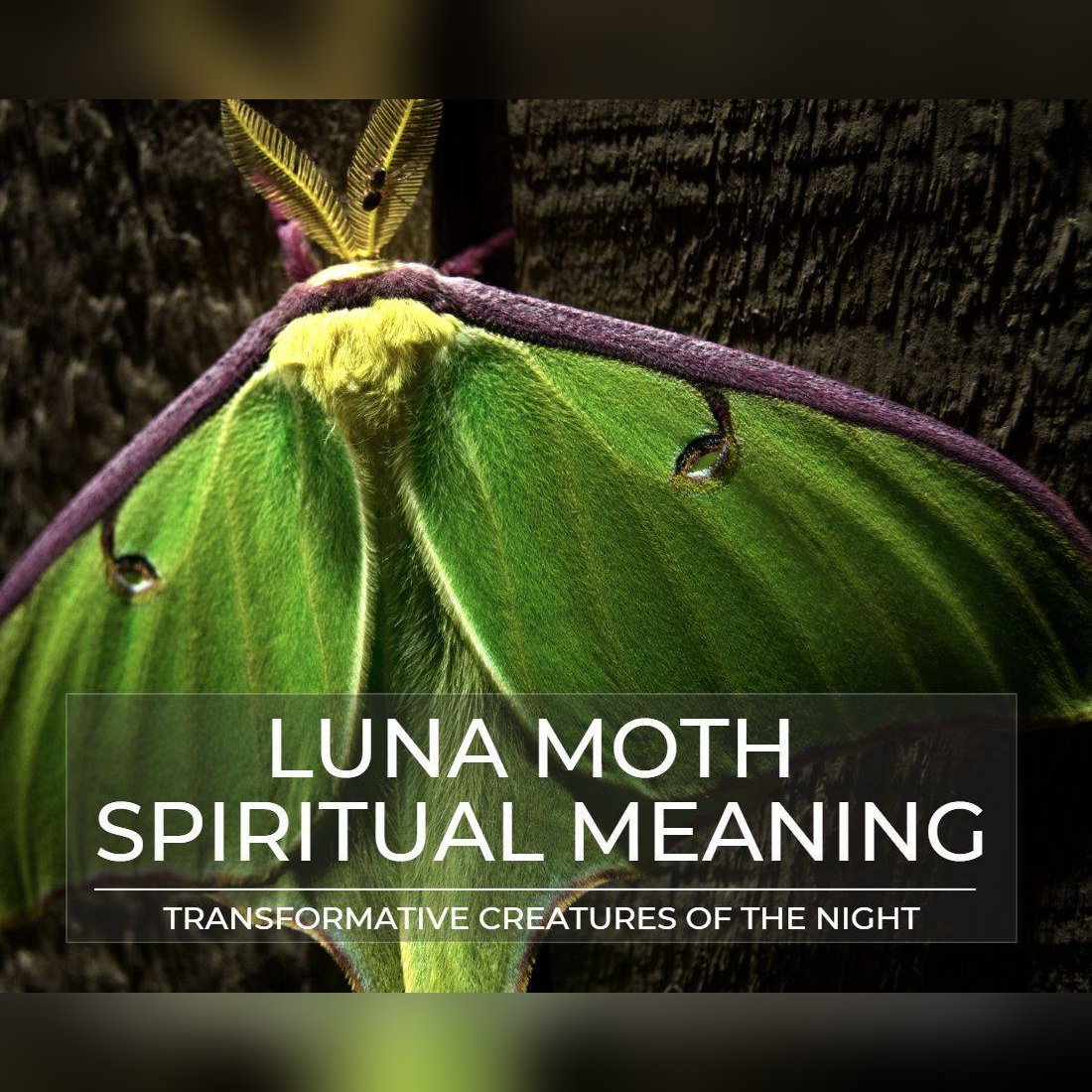
The luna moth’s symbolic life is grounded in things the animal actually does: it lives as an adult for seven to ten days, cannot eat because it has no working mouthparts, flies only at night, and navigates by moonlight. Linnaeus named it after the Roman moon goddess Luna in 1758. The symbolism grew from there, most of it recently. That’s worth knowing before anything else.
Key Takeaways
- The luna moth’s symbolic identity begins with Linnaeus’s 1758 decision to name it after the Roman moon goddess Luna, not with any folk omen tradition.
- Its core meanings map directly onto biology: a 7–10 day non-feeding adult life, strictly nocturnal flight toward light, and hindwing tails that scatter bat sonar.
- The only documented ritual use of a moon moth comes from South African Lowveld practice with Argema mimosae cocoons, not from North American indigenous tradition.
- Claims that “Celtic tradition” or a unified “Native American teaching” names the luna moth as a spiritual messenger have no pre-20th-century sources behind them.
- As a totem figure, the luna moth points toward purposeful action within a short window, intuitive navigation of dark periods, and the reality that some changes cannot be undone or repeated.
What Is the Luna Moth’s Core Spiritual Symbolism?
Transformation, lunar cycles, brief beauty, the soul’s passage through darkness toward light. Each of those connects to something the moth actually does.
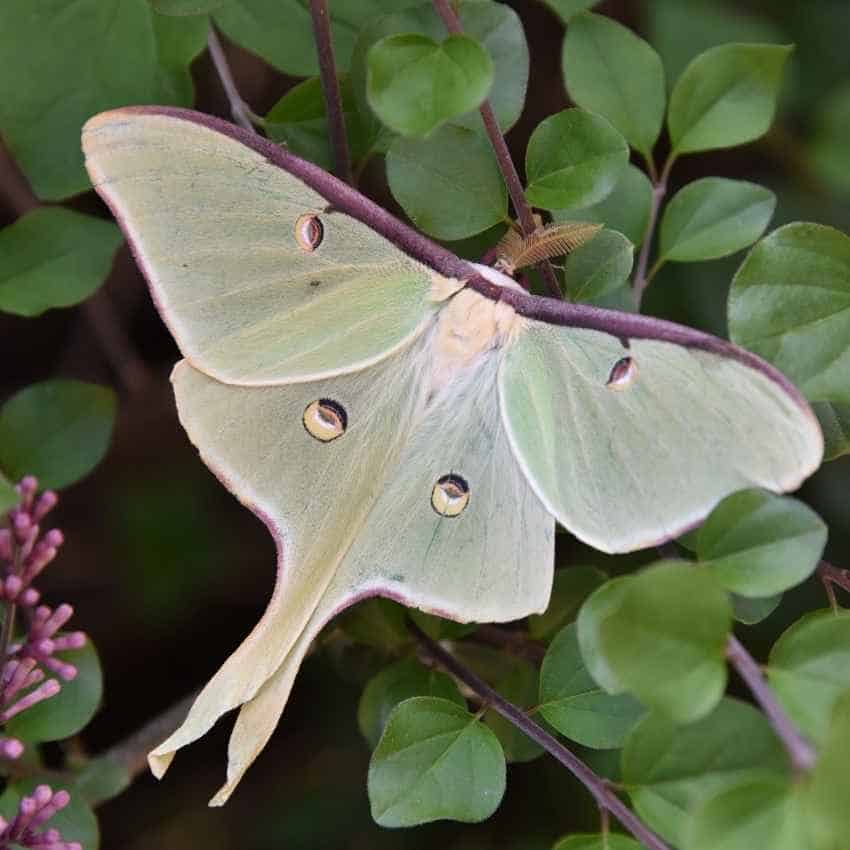
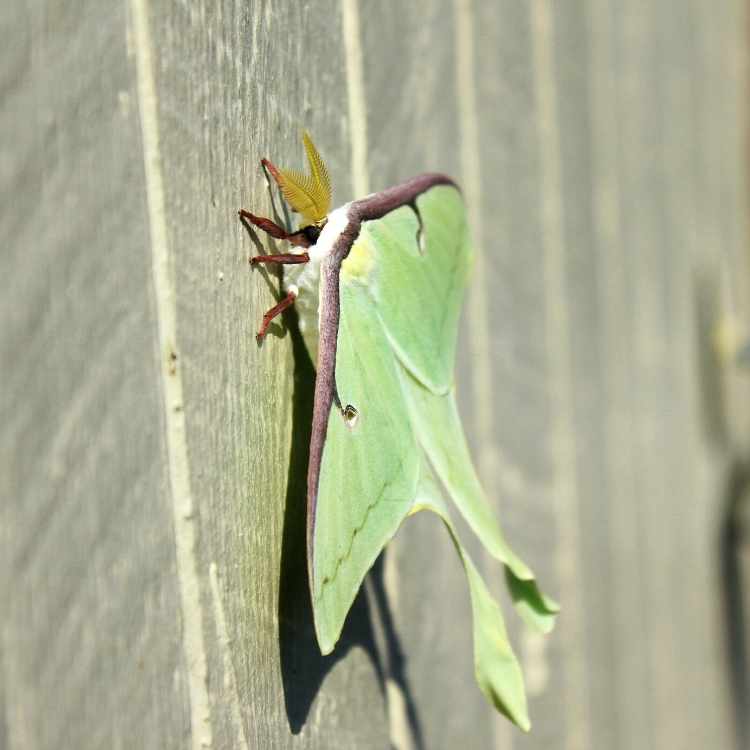
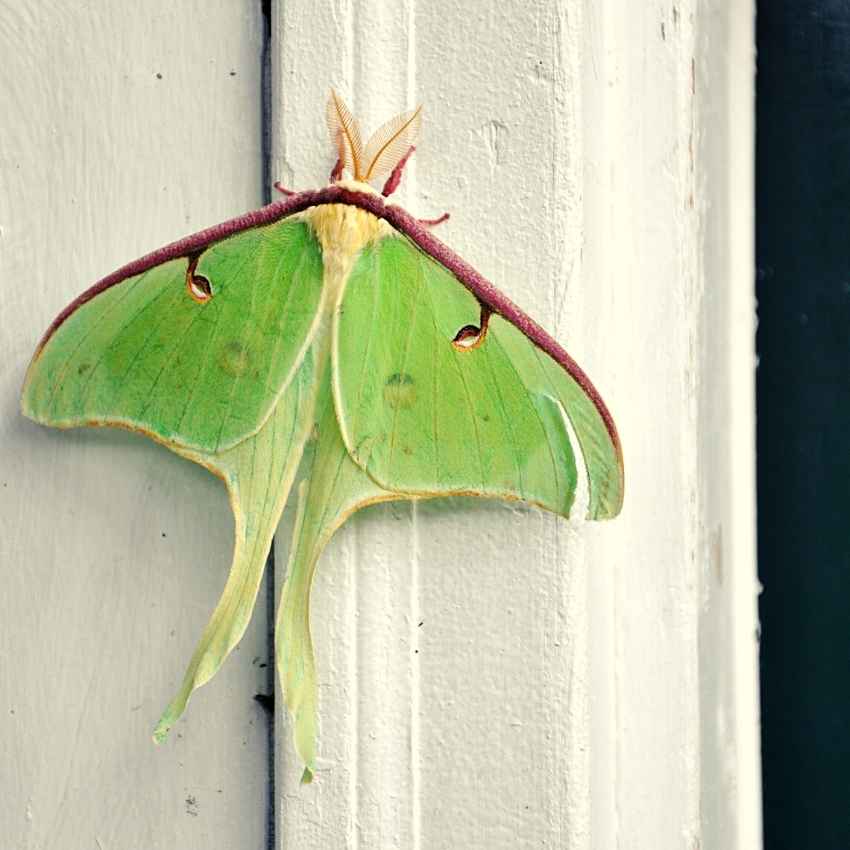
It lives as an adult for roughly seven to ten days. It cannot eat during that time, because it has no working mouthparts. It flies only at night, pulling toward any artificial glow it finds. And those long, twisted hindwing tails that make it look like something out of a fairy tale are acoustic decoys, built to scatter the sonar of hunting bats.
None of that is metaphor. All of it became metaphor anyway, which is how symbolism works. The animal is specific enough, and strange enough, that the mind reaches for it.
I should say plainly: the luna moth’s symbolic life in most of what you’ll read online is recent. The “transformation guide,” the “liminal messenger,” the “Divine Feminine sign”, those readings come from 21st-century spiritual writing, not from Haudenosaunee elders or Irish monks. That doesn’t make them wrong. But it matters to know where they come from.
Why Is the Luna Moth Named After the Moon, and What Does That Mean Symbolically?
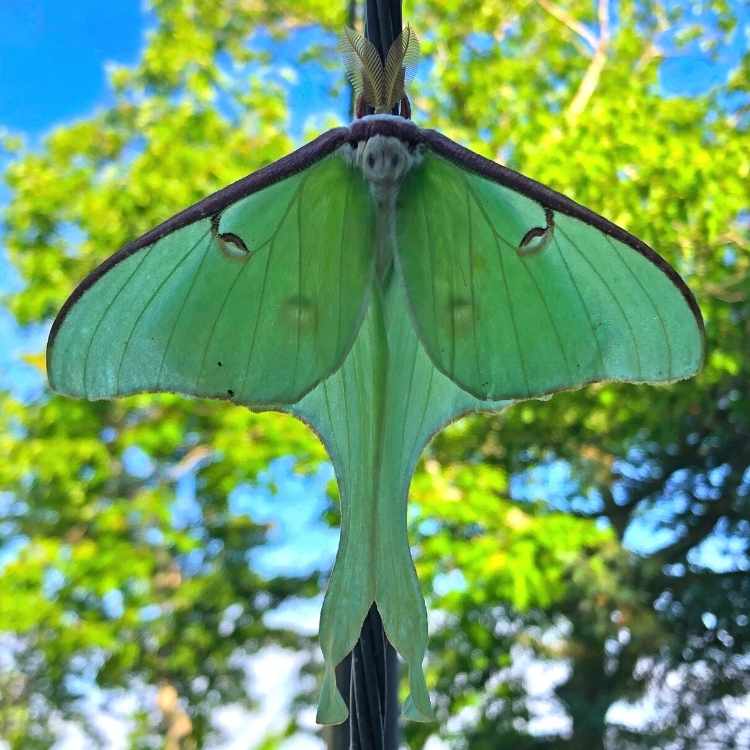
Carl Linnaeus gave this moth its scientific name, Actias luna, in 1758. He was almost certainly responding to two things: the moth’s pale, luminous coloring and the crescent-shaped eyespots on its hindwings, which the Finger Lakes Land Trust documents as the likely inspiration for his choice.
Luna, in Roman religious tradition attested in Ovid’s Fasti and in fragments from Varro, governed cyclical time: the waxing and waning that organized planting calendars, menstrual cycles, tidal patterns. Her domain was the rhythm of things that return. That frame was embedded in the moth’s identity the moment Linnaeus wrote it down. Not through folk belief. Through taxonomy.
So when contemporary writers link the luna moth to cycles, renewal, and the waxing-waning arc of personal change, they are tracing a line back to 18th-century natural history and Roman state religion. The symbolism is real. Its roots are just not where most sites claim they are.
What Does the Classical “Soul-Insect” Tradition Say About the Luna Moth?
In ancient Greek, the word psyche means both “soul” and “butterfly.” This reflects a genuine belief that the soul could take the form of a winged insect, particularly one that passed through a hidden, enclosed stage before emerging changed. Thomas Bulfinch, in Bulfinch’s Mythology (published between 1855 and 1863), popularized the story of Psyche for English readers and reproduced the image of a soul depicted with butterfly wings.
Bulfinch focused on butterflies. But later English nature writers applied the same framework to moths, and the luna moth, with its ghostly green coloring and its brief adult life, was a natural fit. The reading of moths as soul-bearers is a literary tradition, not a field tradition. No grandmother in rural Vermont was hanging luna moths in her window as soul symbols in 1850.
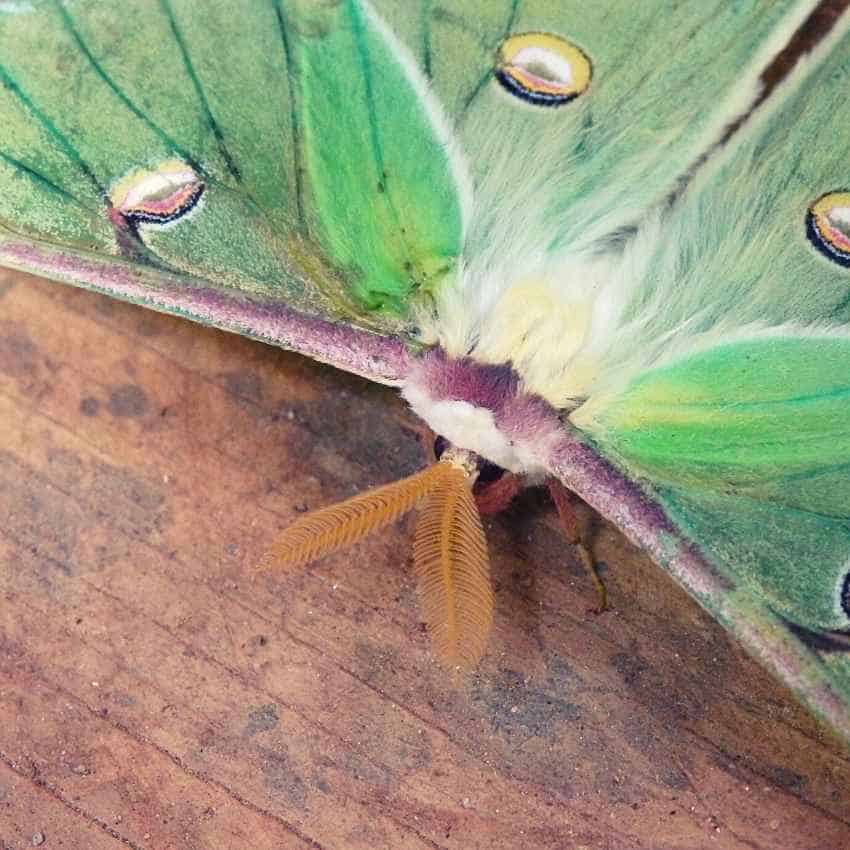
But the idea moved through English writing steadily enough that it now feels old. And it’s not arbitrary. An insect that spends weeks sealed inside a cocoon, then emerges in a form completely unlike its former self, then lives for barely a week, that animal is doing something the mind has always used to think about death and what might come after it. The biology cooperates with the symbolism. That’s why the tradition stuck.
What Do Contemporary North American Spiritual Writers Say the Luna Moth Means?
Transformation, surrender before renewal, intuition in darkness, alignment with the Divine Feminine. These are the readings you encounter most in contemporary spiritual writing, and they’re coherent; they connect to real features of the animal. But I want to be clear about their age.
Explore Deeply’s essay on the luna moth (c. 2019) frames the moth as a guide for people at vocational crossroads or in the middle of identity shifts. Aging Abundantly’s 2017 piece connects the moth to the Divine Feminine and to emotional healing that can only happen in darkness. Both essays are thoughtful. Both draw on the moon-name, the metamorphosis arc, and the brevity of adult life. Neither is channeling a tradition that predates the internet.
That’s worth knowing, not as a reason to dismiss these readings, but as a reason to hold them accurately. If the luna moth’s appearance means something to you, you don’t need to claim it’s Aztec or Druidic. The moth earned its symbolic weight by being what it is.
What Does South African and African Moon Moth Tradition Say About Lunar Moths?
This is the one corner of luna moth symbolism where a documented ritual practice actually exists. And it’s not about Actias luna.
The African moon moth, Argema mimosae, is a close visual and ecological cousin to the North American luna moth, same family (Saturniidae), same luminous coloring, same dramatic tail streamers. In a 2021 field account from Londolozi Game Reserve, Bronwyn Varty-Laburn documents Lowveld practices in which the empty silken cocoons of Argema mimosae are used as ankle shakers in dances and blessings. The same cocoons, crushed together with roots from Peltophorum africanum (the weeping wattle), are added to protective baths intended to guard against evil and curses.
The symbolism here centers on the cocoon, the structure the moth leaves behind when it emerges. The empty cocoon is what was shed. The bath is not about the moth itself but about what the process of emergence leaves behind. That’s a more specific, more grounded reading than anything in the North American spiritual-content tradition, and it’s the only pre-internet, documented ritual use of a moon moth I’ve been able to trace.
What Does the Luna Moth’s Biology Reveal About Its Symbolic Meaning?
Three facts, and then what the mind does with them.
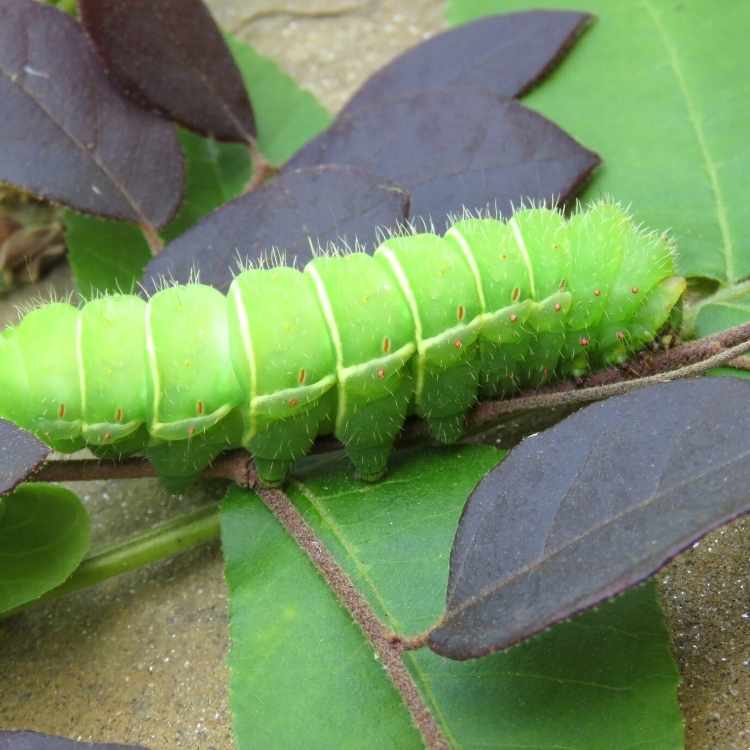
First: luna moth adults live roughly seven to ten days and cannot eat. According to the Finger Lakes Land Trust’s 2020 natural history account, adult luna moths have reduced or absent mouthparts. All the energy they need for flight, mating, and egg-laying was stored during the larval stage. The adult exists entirely to complete what the caterpillar began. Seven to ten days. Then gone.
Second: luna moths fly strictly at night, drawn to light. The Finger Lakes Land Trust notes that this is why most human encounters happen near porch lights and windows, the moth is following any brightness it can find, not seeking you out. It arrives at your door because your door is lit. That’s a harder thing to romanticize, but I’d argue it’s also a more honest kind of meaning: the creature that spends its short life moving toward whatever light it can find.
Third, and this one still surprises me when I think about it: according to a 2015 study by Barber et al. in the Proceedings of the National Academy of Sciences, experimental removal of luna moth hindwing tails led to bats capturing 81% of tail-less moths, compared with only 35% of moths whose tails were intact. Those long streamers twist and scatter the returning sonar pulses of hunting bats, so the bat strikes the tail instead of the body. The moth moves through danger by making the danger aim at something it can afford to lose.
If you want a reason the luna moth became a symbol of protection and the ability to pass through hard things, that’s it. The biology earned the meaning.
What Is the Luna Moth’s Meaning as a Spirit or Totem Animal?
The luna moth as a totem points toward three things: purposeful brevity, intuition in darkness, and the willingness to act within a limited window. Those readings are grounded in what the animal actually does, which is the only kind of totem reading I trust.
Purposeful brevity: the adult moth has one job and roughly a week to do it. No feeding, no resting, no revisiting earlier stages. The tradition I find most credible reads this as a prompt toward whatever you’ve been deferring. Not a warning. A clock.
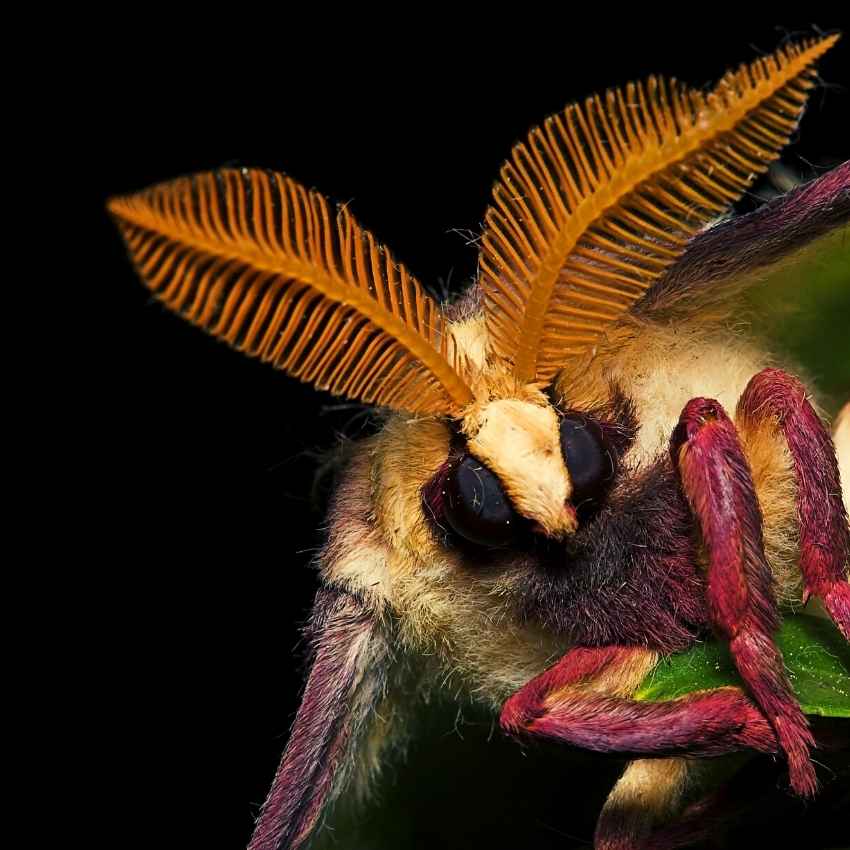
Intuition in darkness: a strictly nocturnal creature that navigates by moonlight and moves toward light in the absence of the sun. That’s a specific kind of knowing, not the clarity of noon but the orientation of midnight, reading the world by dimmer signals.
I want to flag something here. Many sites attribute luna moth totem meaning to “Native American tradition” as a single unified teaching. I don’t have a confident source for that claim, and I’ve looked. Ethnographies from nations within the moth’s eastern North American range, Haudenosaunee, Cherokee, various Algonquian-speaking groups, contain stories about butterflies and moths, but not about luna moths specifically. The “Native American luna moth spirit guide” framing appears to be a contemporary generalization, not a documented tribal teaching. I’d rather say that plainly than repeat it as fact.
What Does Dreaming of a Luna Moth Mean?
A luna moth in a dream most often signals a transition already underway, not one you’re being warned about. The moth’s core registers, brief existence, the soul’s passage, moving toward light, map onto common dream scenarios in ways that feel specific once you know the biology.
If the moth lands on you in the dream, most Jungian-influenced dream analysis reads physical contact with a symbolic animal as the unconscious registering that the change has already touched you. You’re not watching from a distance. It’s already on your skin.
If the moth flies toward light, the reading shifts toward aspiration and guidance, something in you orienting toward clarity, even if the path is nocturnal and uncertain.
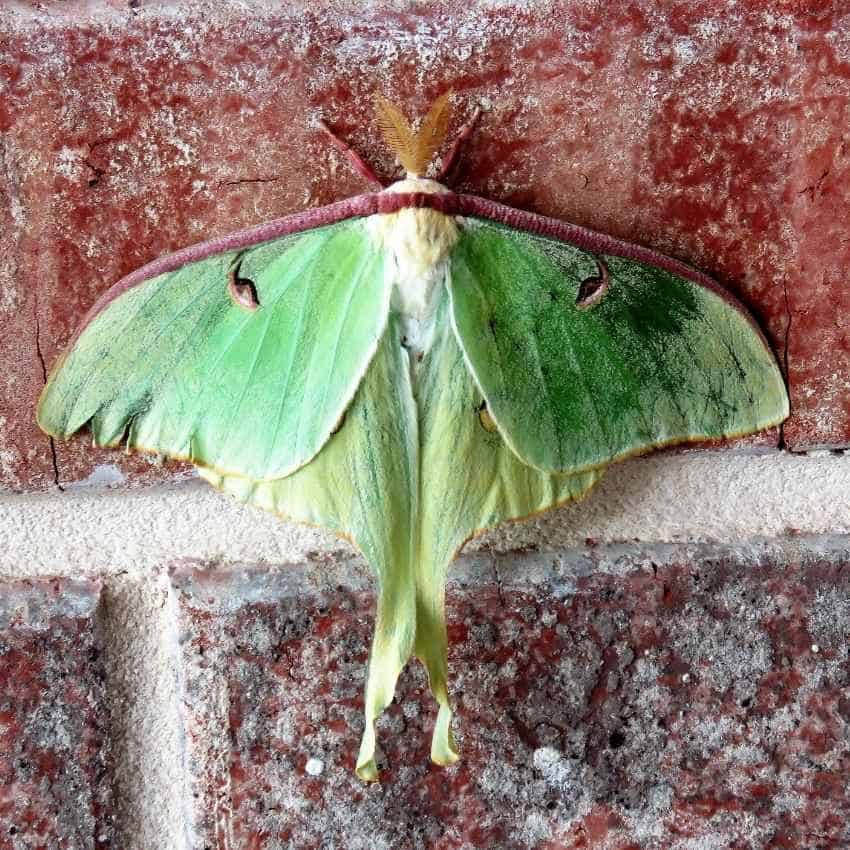
If the moth is dying or already dead in the dream, that’s harder, but I’d read it through the biology: the adult’s death is not a tragedy in the life cycle of Actias luna. It’s the completion of the only phase that ever had wings.
For a fuller treatment of moth dream symbolism, the sibling article on dead moth symbolism covers the death-in-dream question in more depth than I can here without repeating that page.
What Are the Common Misconceptions About Luna Moth Symbolism?
Two claims appear on nearly every luna moth symbolism page I’ve read, and both are wrong in the same way: they assign the moth to a tradition that predates the moth’s symbolic use in that tradition.
Misconception one: Celtic tradition names the luna moth as a faery messenger. The luna moth is native to eastern North America. It did not historically range to Ireland, Scotland, or Wales. W. Y. Evans-Wentz’s The Fairy-Faith in Celtic Countries (Oxford University Press, 1911), the most thorough early academic survey of Celtic fairy belief, documents butterfly and soul-symbolism extensively, but does not name Actias luna, because the people Evans-Wentz interviewed had never seen one. The “Celtic luna moth = faery messenger” reading is a modern invention, probably originating in American pagan writing of the 1990s and 2000s, and retrofitted backward onto Celtic branding.
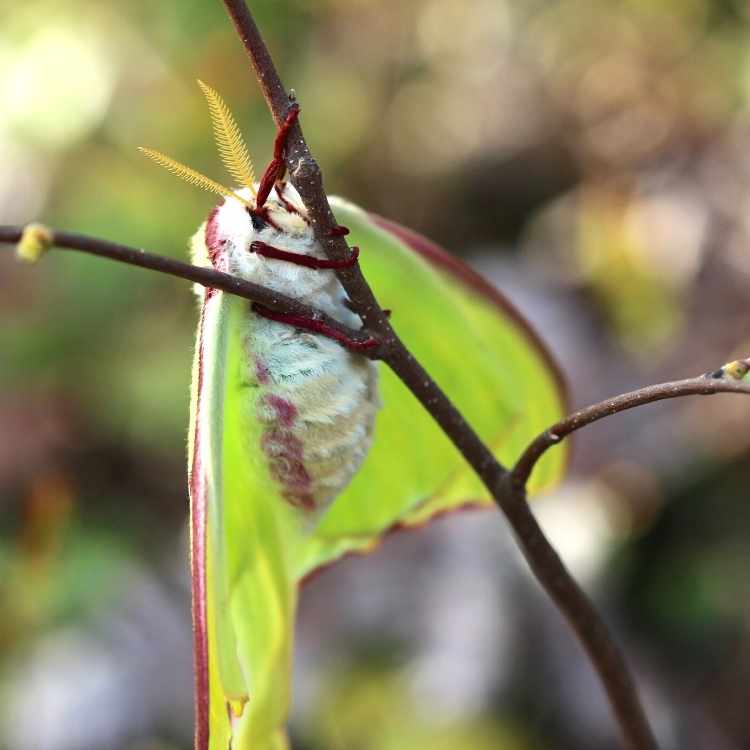
Misconception two: a pan-Native American teaching about luna moths as spiritual guides. This one is harder to pin to a specific origin because it doesn’t cite one. Nations whose territories overlap with the luna moth’s actual habitat, Haudenosaunee, Cherokee, Algonquian-speaking peoples, have rich traditions involving insects. But no pre-20th-century source from any of these nations specifically names luna moths as spirit guides. The unified “Native American luna moth teaching” is a 21st-century generalization that collapses many distinct nations into one imaginary tradition, and attributes to that tradition a teaching that doesn’t appear in any ethnography I’ve been able to locate.
Both misconceptions do the same thing: they make a contemporary symbolic reading feel older and more authoritative by attaching it to someone else’s tradition. The luna moth doesn’t need that. Its actual biology is strange enough to earn the symbolism on its own terms.
Does the Luna Moth Symbolize Good Luck?
No documented tradition frames the luna moth as a luck omen, in the way that a four-leaf clover or a horseshoe carries that specific charge in Western folk belief. But that’s not quite the right question.
Luna moths are genuinely rare encounters. According to the Finger Lakes Land Trust, adults fly mainly for a few hours after midnight during late spring and early summer. Most people never see one. The ones that appear near porches and windows do so because they’ve been drawn to artificial light, which means the encounter is, in a real sense, a matter of being in the right place with the lights on. There’s something in that.
Not luck in the folk-charm sense. Rare. Brief. Oriented toward light in darkness. People who see one in the wild, even people who’d describe themselves as skeptics, tend to stop what they’re doing. The encounter feels significant before anyone assigns it meaning. I think that’s worth naming separately from the question of luck.
What Does It Mean When a Luna Moth Lands on You or Visits Your Home?
The honest biological answer: luna moths are attracted to artificial light, and the Finger Lakes Land Trust’s 2020 account notes this is the primary reason they appear near buildings rather than in forest interiors. Your porch light is brighter than the moon. That’s why it came.
And yet. A creature with a seven-day lifespan, that cannot eat, that spends its brief adult existence navigating by moonlight and moving toward whatever brightness it finds, that creature landing on your arm is going to mean something to most people regardless of the biology. The symbolism follows the biology closely: the moth found its light, and right now that light is you.
Across the contemporary spiritual writing I’ve read, landing-on-you encounters are consistently read as a sign of personal transition. Not a warning. A marking. The moth, in this reading, recognizes something in the person it lands on, a readiness, a threshold, an opening in what was previously closed. I don’t know if that’s true in any metaphysical sense. I do know it’s what people take away from the encounter, and I don’t think they’re wrong to.
If a luna moth visits your window specifically, the sibling articles on moth in the house meaning and what it means when a moth lands on you cover those specific encounters in more detail.
What Does the Luna Moth Mean in Literature and Art?
The luna moth entered Euro-American literary tradition largely through 19th-century Romanticism and Transcendentalism, movements attracted to nocturnal insects as emblems of the soul’s brief beauty. Keats wrote about moths. Emerson noticed them. The luna moth, with its improbable wingspan (up to four and a half inches) and its theatrical brevity, was an obvious candidate.
But literary-symbolic use and folk tradition are not the same thing. When a 19th-century poet reaches for the luna moth as a stand-in for the brevity of human beauty, that’s a writer making a choice. My grandmother Theresa’s notebook, which sits on my desk in German cursive going to pieces at the binding, documents genuine omen traditions from the Bavarian Forest: ravens as messengers, the owl’s call before a death. Those entries describe living practices with social weight behind them, accumulated over generations. The luna moth has nothing like that in North American or European contexts that I’ve found. What it has is a strong literary record, which is real, but works differently.
Both things matter. But they’re not the same thing, and conflating them is where a lot of online symbolism content goes wrong.
How Do Luna Moth Species Around the World Compare Symbolically?
The Saturniidae family, the giant silk moths, includes several species commonly called “moon moths.” Their names alone are worth knowing.
Actias luna, the North American luna moth: range runs from Nova Scotia to Florida and west to the Great Plains. This is the species Linnaeus named in 1758, and the one most North American and European spiritual writers mean when they say “luna moth.” According to the Butterflies and Moths of North America database’s 2017 species account, it produces one to three broods per year depending on latitude.
Argema mimosae, the African moon moth: range covers sub-Saharan Africa, concentrated in woodland savanna. This is the species with documented ritual use, as described by Varty-Laburn at Londolozi in 2021. Its symbolic identity in Southern African Lowveld practice centers on the cocoon as a vessel of transformation and protection, distinct from the North American reading, which focuses on the adult moth.
Actias selene, the Indian moon moth, and Actias maenas, found across Southeast Asia, are closely related and visually similar. I’m not confident about their symbolic traditions; I haven’t found sources I trust on either, and I’d rather say so than fill the space with speculation.
Across traditions, the common thread is the moon-name and the visual resemblance to lunar imagery. What varies is which feature of the moth’s life cycle becomes the symbolic anchor: the cocoon (South Africa), the brief adult life (contemporary North America), or the nocturnal luminescence (literary tradition broadly).
Frequently Asked Questions
Is seeing a luna moth rare?
Genuinely rare. Luna moths are active for only a few hours after midnight during late spring and early summer, and adults live just seven to ten days total. According to the Butterflies and Moths of North America database (2017 species account), they produce one brood per year in northern states and up to three along the Gulf Coast. Most people who live within the moth’s eastern North American range will never see one in the wild. If you saw one, the odds were not in your favor.
What does the color green of the luna moth symbolize spiritually?
In contemporary spiritual writing, the luna moth’s pale green connects to growth, renewal, and healing after dormancy. The specific shade matters, though: it’s not the bright green of new foliage in April. It’s softer, almost gray-green in certain light, closer to moonlight on leaves than to anything actively growing. I find that more interesting than the standard “green means growth” shorthand. It’s the color of something that has already survived the dark and is deciding what to do next.
What does a luna moth symbolize after the death of a loved one?
People who are grieving and encounter a luna moth often read it as a sign that the person they lost is nearby, or that they themselves are being watched over during a hard passage. I don’t believe in messages from the dead. But I do believe the mind reaches for mirrors in moments of loss, and the luna moth, brief, luminous, appearing without warning in the dark, is a compelling one. The soul-insect tradition tracing back through Bulfinch’s Mythology to the Greek equation of psyche with winged insects gives this reading a longer lineage than most people realize.
Are luna moths considered sacred in any religion?
Not in any formal religion with documented doctrine. The luna moth’s name carries Roman religious weight, Luna was a recognized cult deity, not a casual metaphor, but no church, temple, or religious institution has adopted the luna moth as a sacred symbol. The closest thing to documented religious significance comes from the South African Lowveld practices recorded by Bronwyn Varty-Laburn at Londolozi in 2021, involving Argema mimosae cocoons in protective baths and dances. That’s a documented ritual tradition, which is more than most of what gets called “sacred” in online symbolism content can claim.
What does it mean if a luna moth dies in front of you?
A luna moth dying in front of you may simply be a luna moth at the end of its seven to ten day adult lifespan. Adult luna moths die everywhere and constantly during late spring, they have no choice; they are built for a single brief purpose. If the encounter matters to you, the most defensible frame is the one the biology supports: completion, not loss. The moth finished what it came to do. The question the encounter tends to leave behind is what you want to do with the time you have left in your own window.
What is the difference in symbolism between a luna moth and a regular moth?
The luna moth carries specific lunar and transformation symbolism rooted in Linnaeus’s 1758 naming, its dramatic metamorphosis, and its verifiably brief adult lifespan. A generic brown or grey moth, a clothes moth, a miller moth, a noctuid of some kind, carries older and darker associations in Western folk tradition: textiles eaten, flour spoiled, an unwelcome presence in the house. Most symbolism you find for “moth” in European folk tradition does not apply to the luna moth. The two categories are worth keeping separate.
Can a luna moth be a sign from the universe or a deceased person?
That depends on what you mean by “sign.” The luna moth’s appearance near your home has a straightforward biological explanation: artificial light draws it. And yet the encounter is rare enough, the animal strange enough, that most people register it as significant before they’ve assigned it any meaning. I’m not going to tell you what the universe is or isn’t doing. What I can say is that the human instinct to read meaning into a rare nocturnal encounter with a luminous green moth is old and not unreasonable, and you don’t need to apologize for it.
What does it mean to see a luna moth during the day?
Luna moths are strictly nocturnal. Seeing one during the day almost always means the moth is resting, its green coloring helps it blend into foliage when still. A luna moth visible and stationary in daylight is not “visiting” in the active sense; it’s waiting for dark. If you find one motionless on a surface during the day, it’s likely healthy. Leave it where it is. But if the totem reading matters to you, a daytime sighting does carry an interesting charge: the nocturnal creature caught in the open, in unaccustomed light.
Is the luna moth a symbol of the Divine Feminine?
In contemporary spiritual writing, yes. The Aging Abundantly essay from 2017 is one of the clearer examples: it links the luna moth to lunar cycles, intuition, emotional intelligence, and the receiving mode associated with feminine energy in new-age frameworks. The moon-name is the foundation. Luna, in Roman religious tradition, was female, a deity governing tidal rhythms, menstrual cycles, and cyclical time. That association was embedded in the moth’s name in 1758, and contemporary writers have followed the thread. I’d date this specific application to the 1990s and 2000s, not to antiquity.
What chakra or energy is the luna moth associated with in modern spiritual practice?
I don’t have a confident answer here, and I want to say so plainly. The chakra framework comes from Hindu yogic tradition, and its application to animal symbolism is a contemporary synthesis, not a traditional one. Most sources I’ve encountered associate the luna moth with the heart chakra (green, renewal, healing) or the third eye chakra (intuition, nocturnal knowing). But these associations aren’t standardized, different writers assign different correspondences, and I haven’t found a source for luna moth chakra associations I’d describe as authoritative. Take any specific claim in this area as one person’s framework, not received doctrine.
Sources
- Finger Lakes Land Trust, “Goddess of the Moon: the life history of the Luna Moth,” 2020
- Varty-Laburn, Bronwyn, “The Lunar Moth,” Londolozi Game Reserve blog, 2021
- Explore Deeply, online essay on luna moth spiritual meaning, c. 2019
- Aging Abundantly, blog essay on luna moth and Divine Feminine symbolism, 2017
- Tuskes, Paul M., James P. Tuttle and Michael M. Collins, The Wild Silk Moths of North America: A Natural History of the Saturniidae of the United States and Canada, Cornell University Press, 1996
- Barber, J. R., et al., “Moth tails divert bat attack: evolution of acoustic deflection,” Proceedings of the National Academy of Sciences, 2015
- Bulfinch, Thomas, Bulfinch’s Mythology (The Age of Fable), 1855-1863
- Evans-Wentz, W. Y., The Fairy-Faith in Celtic Countries, Oxford University Press, 1911
- Butterflies and Moths of North America (BMNA), species account for Actias luna, Mountain Prairie Information Node database, 2017