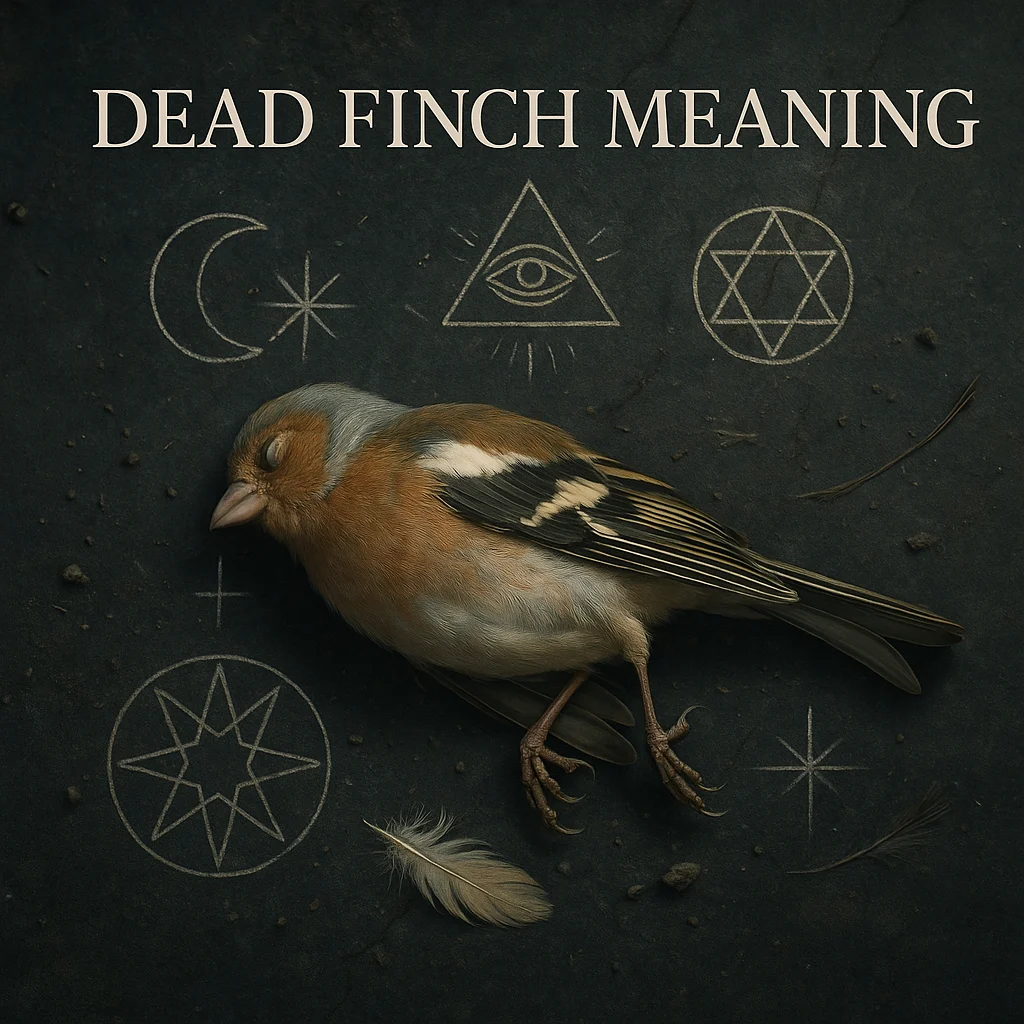
A small finch on your porch or in your yard, wings folded, no longer moving. Many folk traditions read a dead finch not as bad news but as a cycle of joy closing down, something calmer taking its place. What tips the meaning is where it lay, whether it was whole or broken, and what was already off in your life before you found it.
Key Takeaways
- A dead finch is not a death omen in any major documented tradition. The more consistent reading is transition: the close of a light or joyful chapter.
- In Italian Renaissance Catholic iconography, the goldfinch was a symbol of suffering and resurrection. Finding one dead can be read as a memento mori, not a curse.
- Pennsylvania Dutch folk tradition treats the distelfink (their stylized finch figure) as a sign of household joy. A dead finch near the home, in that frame, suggests joy needs conscious renewal, not that it’s gone.
- Where you found it matters. Doorstep, windowsill, and yard each carry different weight in threshold symbolism.
- Most finch deaths near homes have a biological cause: window collisions, Mycoplasma conjunctivitis, or predation. Knowing that is part of the picture.
What Does It Mean When You Find a Dead Finch?
The short answer: it signals the end of a cycle, not a threat. Across the traditions that have thought carefully about small songbirds and what their deaths might mean, the dead finch lands in the same general territory as a door closing. Not a warning that something is about to go wrong, but a marker that something already has its natural shape now, and that shape includes an ending.
My grandmother Theresa kept a leather notebook of animal lore from the Bavarian Forest, and small songbirds appear in it several times, mostly as threshold signs, things to notice when they crossed the boundary between the wild world and the domestic one. She didn’t treat them as omens of disaster. She treated them as a prompt to pay attention. That’s the frame I keep coming back to.

The finch’s symbolic weight comes from its association with lightness, social connection, and what I’d call ordinary joy: the joy of a feeder full of birds on a cold morning, color in a gray hedge. When that bird is dead, the reading shifts toward the idea that easy, reflexive happiness is cycling out. Broader treatments of dead bird symbolism consistently frame this as transition rather than catastrophe. I read it the same way.
You are not making this up. The fact that you noticed this is part of the answer.
Is a Dead Finch a Bad Omen or a Meaningful Sign?
No ethnographic tradition I’ve been able to document specifically names the dead finch as a sign of disaster coming. The fear that it is one comes mostly from a general cultural anxiety about dead animals near the home, which is understandable but not well-grounded in the folk record. The traditions that address small songbirds at all tend to treat them as signs of change.
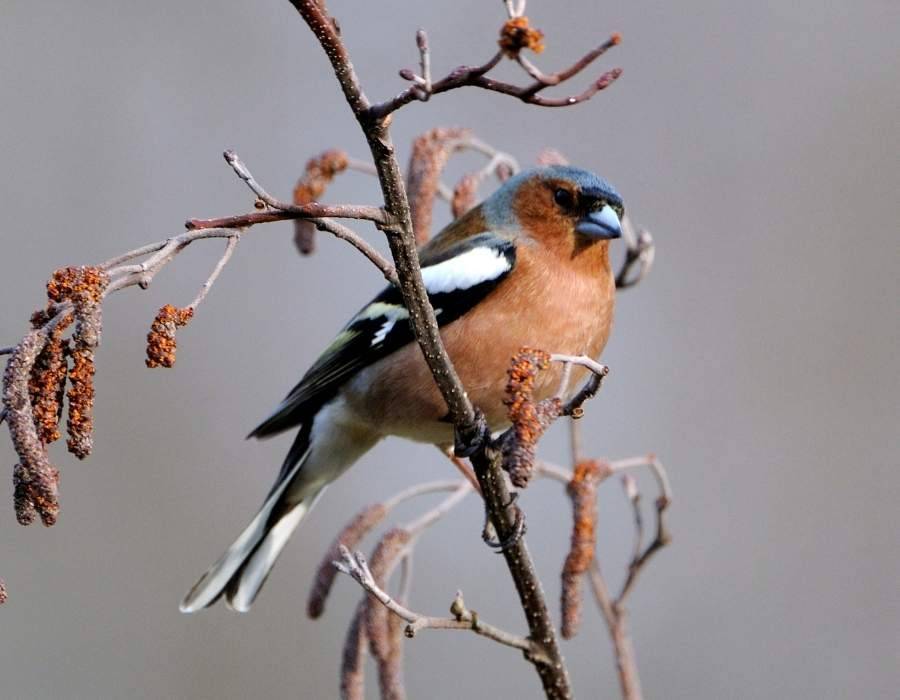
The distinction worth making is between a sign and a threat. A sign says: pay attention, something is shifting. A threat says: something bad is coming to you specifically. The dead finch is, in the traditions covered below, the former. Take a breath. There is no version of this that means you should be afraid.
What Do Renaissance and Catholic Traditions Say About the Finch?
Art historian Herbert Friedmann’s monograph The Symbolic Goldfinch (Pantheon Books, 1946) documented the European goldfinch appearing in more than 480 Italian Renaissance paintings, often held by the Christ Child in Madonna-and-Child compositions. Raphael’s Madonna del Cardellino (c. 1506) is the most famous. The bird was chosen deliberately: its red face and habit of feeding on thistles were read as signs of blood, thorns, and the Passion. A living symbol of suffering that ends in something larger than itself.
In that frame, finding a dead goldfinch, or any finch carrying that symbolic charge, lands differently than finding a dead pigeon. The death is not the final word. It is part of a longer arc. A contemporary reading of the encounter in this tradition would hold that the bird’s death sharpens the memento mori quality: bright things end, and ending is not the whole story.
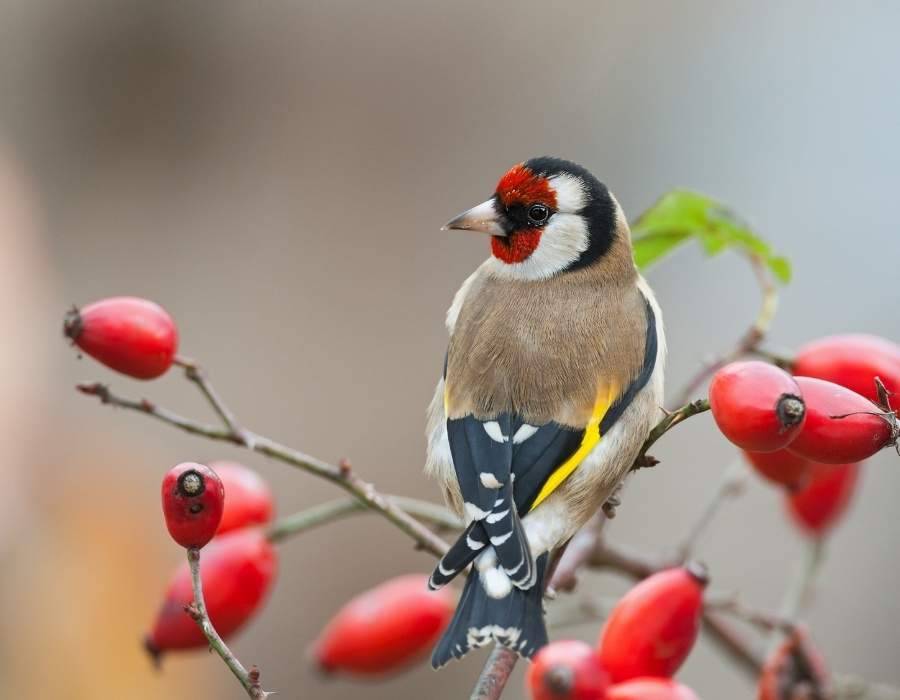
Friedmann’s scholarship focuses on the living bird in painting, not on dead-finch omens as such. The extension to the dead bird is a contemporary one, but it follows the tradition’s own internal logic.
What Does Pennsylvania Dutch Folk Tradition Say About the Finch?
The distelfink, literally “thistle-finch” in the German dialect spoken by Pennsylvania Dutch communities, is one of the most recognizable motifs in Fraktur manuscript art and painted hex signs. According to Donald A. Shelley’s The Fraktur-Writings or Illuminated Manuscripts of the Pennsylvania Germans (Pennsylvania German Folklore Society, 1961) and Patrick Donmoyer’s Hex Signs (Schiffer Publishing, 2015), a distelfink on a household document or barn door was a deliberate blessing: one bird for good fortune, two for doubled happiness.
The bird meant: your house is a place where joy lives. So what does a dead finch near that house suggest, in that same folk vocabulary? I read it as a temporary eclipse of that quality. The tradition is about renewal and maintenance of household spirit. A dead finch near the threshold is a prompt: cheerfulness needs tending. It doesn’t tend itself. The Pennsylvania Dutch tradition would not read this as a curse. It would read it as a reminder to do the work that keeps a house glad.
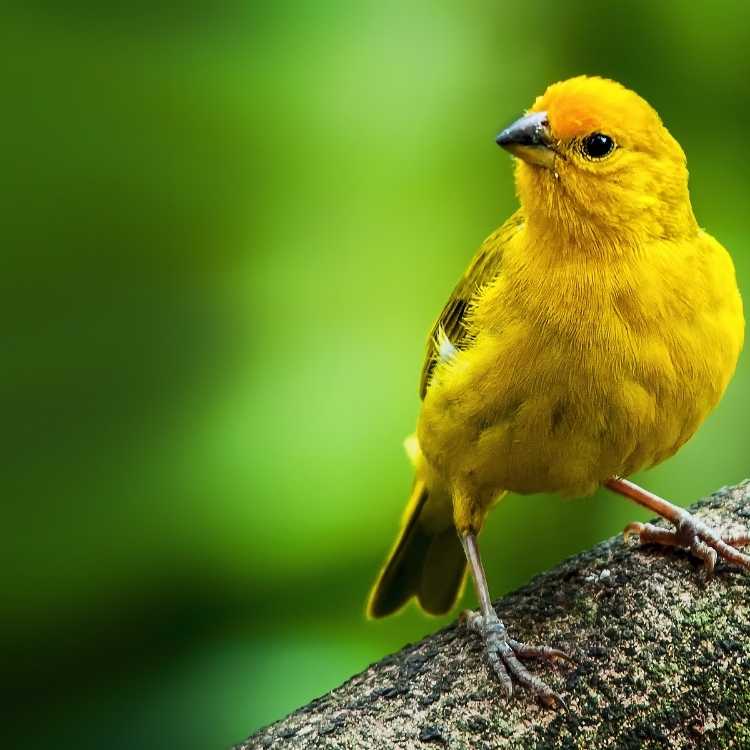
For more on the house finch specifically and its symbolism, see the house finch spiritual meaning article on this site.
What Did Victorian Mourning Culture Make of a Dead Songbird?
In 19th-century Britain, dead birds appear across several domestic mourning practices: still-life painting, cabinet taxidermy, memorial jewelry with pressed feathers. Small songbirds, finches included, were treated as symbols of innocence and the fragility of everyday life. A dead finch under a glass dome on a parlour shelf was not considered morbid. It was considered honest.
The Victorian domestic reading maps onto what I’d call an intimate memento mori: not “someone will die” but “things that seem permanent are not.” The finch, with its brightness and song, made that point sharply. A bright thing, silenced. A life that fit in your palm.
This is not a warning tradition. It is an attention tradition. The Victorians were better at sitting with the fact of ending than we tend to be now, and their dead-bird symbolism reflects that. Cross-cultural treatments of dead bird symbolism note this same domestic grief register across multiple 19th-century European traditions.
Does Where You Found the Dead Finch Change Its Meaning?
Yes. The location changes which symbolic frame applies most directly. Here is how I read the main variants.
On the doorstep or threshold: The threshold has meant the boundary between inside and outside, known and unknown, in folk traditions from Old English þrescold onward. A dead finch on your doorstep sits right at that edge. Something from your outside life, a relationship, a social pattern, a habit of lightness, is ending at the boundary of your domestic world. It is asking to be noticed before you step over it.
On or under a windowsill: Windows, in folk-magic traditions across northern Europe, are where the interior world becomes visible to the outside and vice versa. A dead finch under a window often died from hitting the glass (more on that below). Symbolically, the reading is about reflection: what you have been showing the world, and what the world has been showing you, may be about to shift.
In the yard or garden: Further from the threshold, the reading softens. The yard is where natural cycles play out most visibly. A dead finch in the garden is closest to a simple natural-cycle marker: a joyful season is rounding out. Not dramatic. Just honest.
On a path: Paths are about direction. A dead finch on a path you walk regularly could be read as a sign that the direction you have been going is being reconsidered, by you or by circumstances. I don’t know how to say that with more certainty than that.
Frequently Asked Questions
What does it mean if a finch dies in your hand?
A finch dying in your hands, if you found it injured and tried to help, carries different weight than finding one already dead. You were the last living presence the bird knew. I don’t read that as an omen. I read it as a form of witnessing, which is its own kind of meaning. Folk traditions that address animals dying in human hands tend to frame it as trust, not burden. The bird chose proximity to a person at the end, or you chose to offer it. Both of those things matter.
Is a dead finch a sign from a deceased loved one?
I can’t tell you it is, and I won’t. What I can say is that the mind reaching for connection after loss is doing something real and old, not something foolish. If a dead finch appeared near the time of a loss and something in you responded, that response is worth sitting with. Whether the bird was a messenger in a literal sense is a question I genuinely don’t know how to answer. I have sat with that uncertainty for years and haven’t resolved it. I’m not sure it needs resolving.
What does a dead house finch mean versus a dead goldfinch?
The specific species shifts the resonance, not the core reading. The European goldfinch (Carduelis carduelis) carries the Renaissance Catholic Passion-bird symbolism documented by Herbert Friedmann in The Symbolic Goldfinch (1946): suffering, fragility, and the possibility of redemptive meaning. The house finch (Haemorhous mexicanus) has no equivalent historical iconographic tradition in North America, but its associations with song, domestic familiarity, and the male’s bright rosy-red plumage still place it in the joy-and-lightness category. A dead house finch: a joyful pattern near your home has run its course. A dead goldfinch: that, and also the older European weight of sacrificial meaning.
Does the color of the finch affect the spiritual meaning?
A male house finch has that distinctive red-pink head and breast. A female is streaked brown. A goldfinch has the gold wing bars and red face. I don’t have a confident answer about whether color changes the reading in any documented tradition; the folk record on finch color-variants specifically is thin. What I’d say is this: if the color was what caught your attention, that is worth noticing. The mind flags what is unexpected. A bright-red male, dead, lands differently than a brown female, and that difference belongs to your reading of the encounter.
What does it mean if you find a dead finch more than once?
A cluster, two or three dead finches in a short span, almost always has a biological explanation first. Check for a disease outbreak at your feeders, particularly if birds look rough or have crusty eyes before dying (signs of Mycoplasma conjunctivitis, documented by the Cornell Lab as a recurring issue in house finch populations). Clean the feeder and stop filling it for two weeks. If the pattern continues and you’ve ruled out disease, then the symbolic frame shifts: a repeated encounter asks for more sustained attention than a single one. Not more fear. More attention.
Is it bad luck to touch a dead finch?
No tradition I know names touching a dead songbird as bad luck in itself. The practical caution is about hygiene: gloves, hand-washing, care. The superstition that touching dead animals transfers their death-energy to you is not specific to finches and doesn’t have roots in the folk traditions covered in this article. Handle it carefully. That is the only rule that applies here.
What does a dead finch mean in a dream?
Dream encounters with dead birds tend to work differently from waking ones. In a Jungian frame, the dead songbird in a dream often points to a silenced part of the self, specifically the part associated with spontaneity, lightness, or social expression. If you dreamed of a dead finch and the image stayed with you on waking, ask what you have been setting aside in the name of getting through things. The bird’s silence is the question. What in you has gone quiet that used to sing?
Should I bury a dead finch I found?
Yes, if you can. Not because the earth requires it, but because burial is an act of attention and completion. It closes the encounter in a way that scooping the bird into a trash bag does not. A shallow hole, the bird placed gently, the ground replaced. That is enough. If you want to mark it with a word or a moment of stillness, do that. If you don’t, the burial is still the thing. You found it, you tended to it. That is the whole of what the encounter asked.
Sources
- Peck Perk, “Dead Bird Meaning: Spiritual and Cultural Interpretations”
- A-Z Animals, “Meaning and Symbolism of Seeing a Dead Bird”
- Tharp Funeral Home, “Coping with Grief: Symbolism of Birds in a Loved One’s Passing”
- Herbert Friedmann, The Symbolic Goldfinch: Its History and Significance in European Devotional Art (Pantheon Books, 1946)
- Donald A. Shelley, The Fraktur-Writings or Illuminated Manuscripts of the Pennsylvania Germans (Pennsylvania German Folklore Society, 1961)
- Patrick Donmoyer, Hex Signs: Pennsylvania Dutch Barn Symbols and Their Meaning (Schiffer Publishing, 2015)
- British Trust for Ornithology, BirdFacts species account for Carduelis carduelis (BTO, c. 2020)
- Cornell Lab of Ornithology, species accounts for Haemorhous mexicanus and Carduelis carduelis (Cornell Lab, updated 2019)