If you’re an avid birdwatcher, it’s likely that many birds with a similar appearance have caught your eye. But with somewhat similar size, shape, and even colors, how can you tell one apart from the other?
With good observation skills, a focused technique, and quick research, you can learn the necessary skills to tell two similar-looking birds apart. Let’s look at two such birds that might look alike at first but vary in terms of characteristics: Blackbirds and Grackle Birds.
Differences between the Grackle Bird and the Blackbird
Look
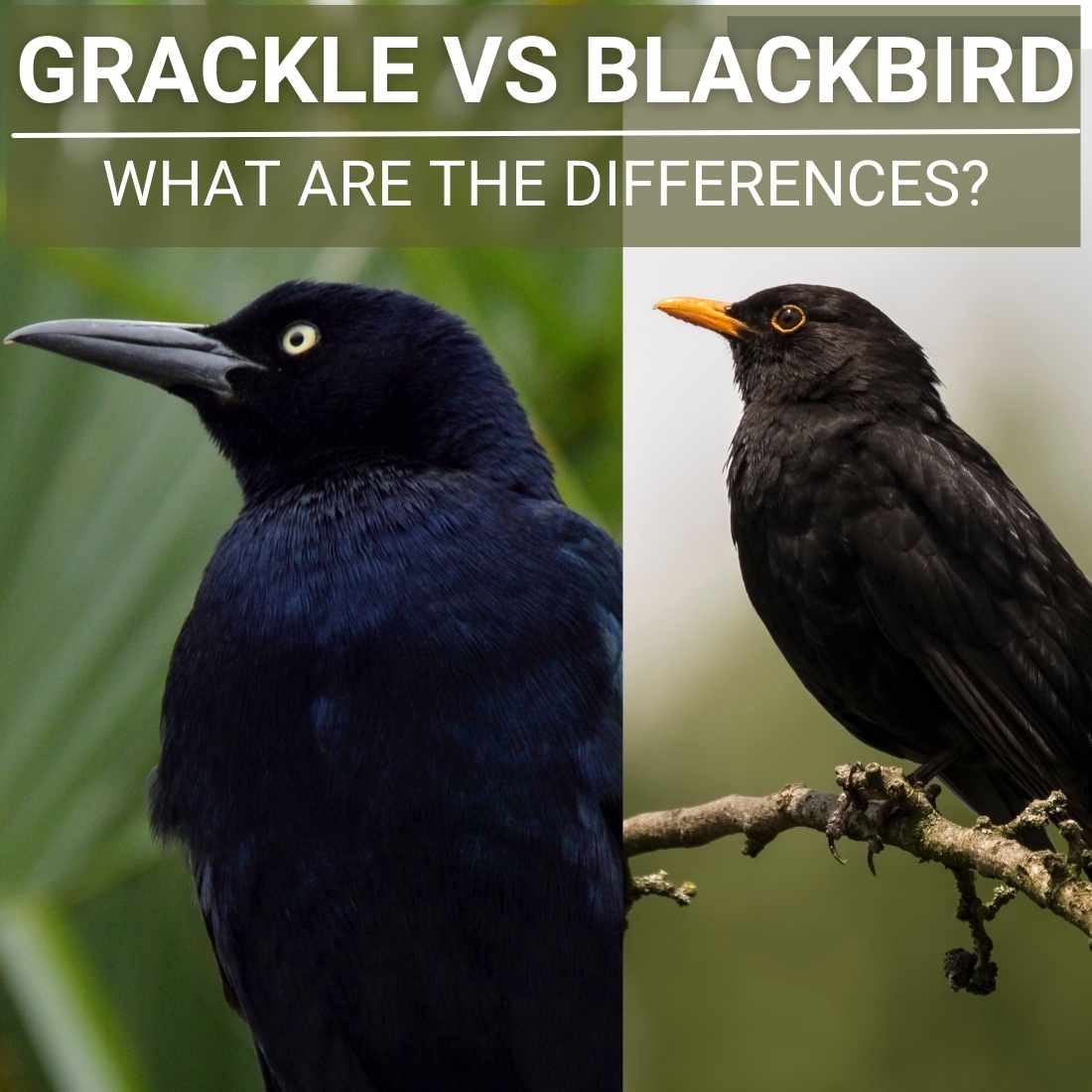
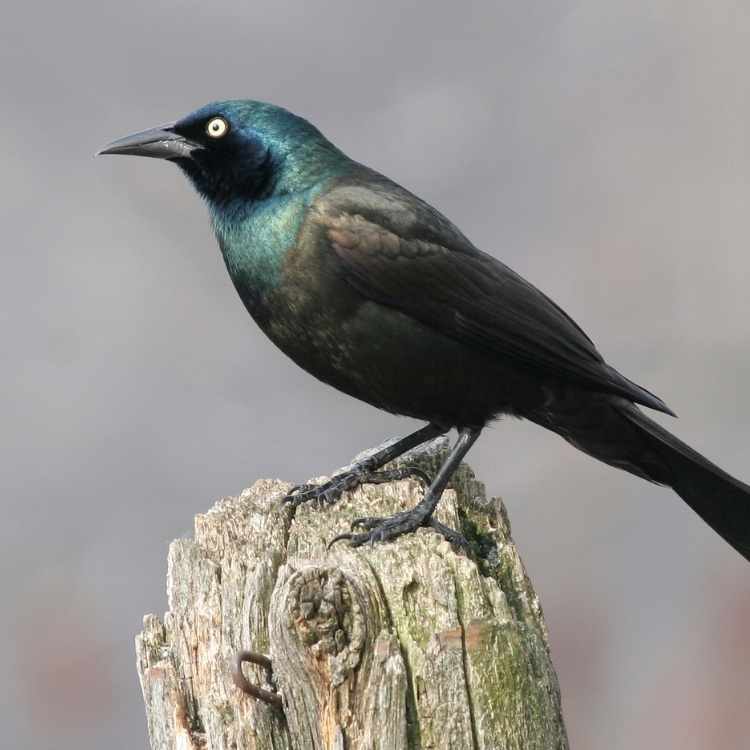
Common Grackles are slim, large birds with long tails and legs. Because of their tall body structure, their tails appear longer than their wings when they fly. Grackles have golden, bright eyes, a bronze-colored body, and a glossy blue or purple head.
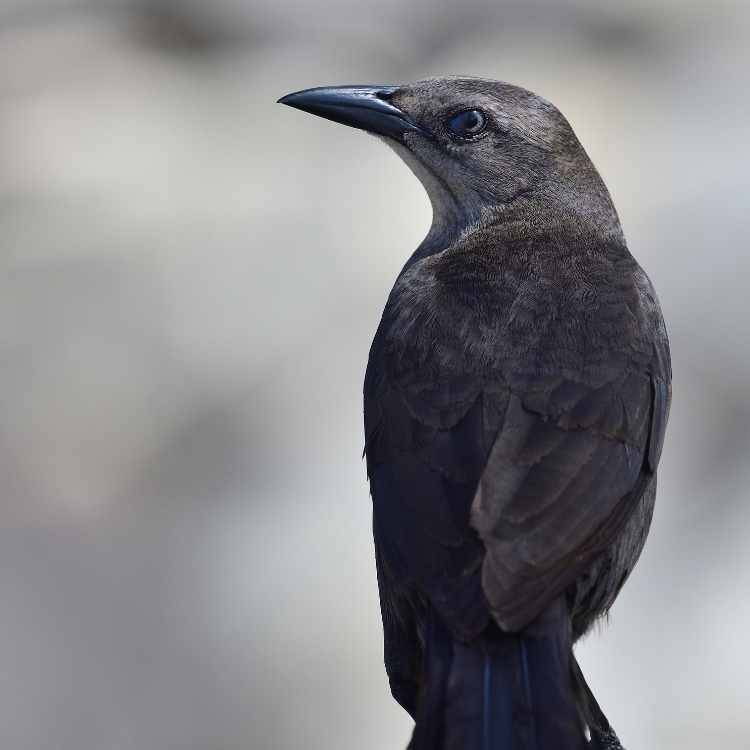
Male grackles have an iridescent coloring and are larger than the brown female grackles, while young grackles have dark brown bodies with brown eyes. Grackles have long and sharp beaks that curve downwards and are longer than those of many blackbirds.
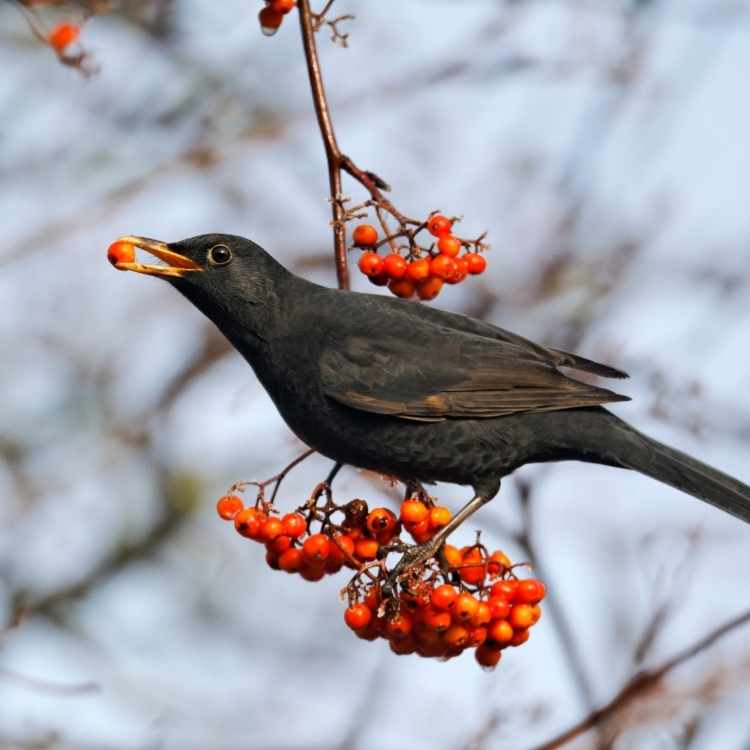
Blackbirds, on the other hand, are all black. Male blackbirds are jet black with a distinct yellow ring around their eyes. Female blackbirds, however, are dark brown and have traces of light brown on their chest.
Young blackbirds look the same as adult female blackbirds but with copper-colored streaks. The size of their wings ranges between 10-12 and 14-15 inches.
Location
Blackbirds breed in North Africa, Russia, Asia, and Europe, while the Grackle birds are predominantly spotted in North America.
Habitat
Most often, you can see grackles in parks, fields, and lawns. They also like to stay in meadows, forests, marshes, and woodlands. You can spot blackbirds in parks, lawns, and wooden locations as well.
Behavior
Most commonly, you can see grackles flying in large flocks above green fields and lawns. You’ll find them chattering away, resting on telephone lines and treetops. Their stiff wings help them ensure direct flight. Grackles search for food in shrubs and trees, but most often, they forage on the ground.
Using their beaks instead of their feet, they look for food such as seeds and insects on the ground.
Male blackbirds like having control of the territory they breed in. Consequently, they chase away other male birds. Meanwhile, female Blackbirds compete against one another to find a good breeding place. Overall, Blackbirds are notorious for having an aggressive nature.
Grackle Vs Blackbird – Similarities
Different species of blackbirds share commonalities with the Grackle bird, especially when it comes to looks. Many people recognize them as birds that look like grackles. Their colors appear dark, but Grackle birds have iridescent heads that help viewers tell them apart.
Even so, the most apparent factor is the difference in shape and size, which makes it easier to tell them apart. So if you see a luminous color, it is a Grackle. Meanwhile, Blackbirds have orange, yellow, or red patches on their wings, breast, or head.
A violent nature is one common Grackle Blackbird similarity. Grackle birds tend to fight with birds over their nesting territory, even with members of their own kind. They take over nests that are already occupied by other birds and their eggs.
At times, they also kill adult birds and eat them up. Blackbirds, too, are aggressive when it comes to nesting time. Their females fight over a good nesting territory and chase away intruders that come their way. Their fighting behavior mostly includes a head-bow and run strategy.
Blackbirds threaten other birds if they have a smaller territory, but to find plenty of food, they can fly much longer distances.
Brewer blackbirds take others’ presence as a threat, especially when nesting, and don’t give up unless they drive enemies away. Male brewers have a more aggressive attack compared to female brewers and can strike when threatened.
On the other hand, Grackles tend to fly and attack in flocks. They often steal newly born birds. A flock of Grackles arrives at the nest early in the morning, and while one starts a fight, the other steals the babies from behind. In a brewer’s Blackbird vs. grackle fight, the grackles are most likely to win because of their intelligent fighting tactics.
Interesting Facts about the Grackle Bird
- Grackles are a big threat to cornfields. They eat the corn and sprouts and come in big flocks to forage. Many homeowners have tried using foul-tasting chemicals on their plants or crops to handle grackles.
- Grackles are very good at foraging. At times, they catch mice by following the plows. They can also stick their beak in the water to catch fish, steal worms from Robins, kill adult birds and eat them, and pick leeches off a turtle’s legs.
- Grackles are experts in anting. They let ants climb their bodies to form a secreting acid that kills parasites. They also use mothballs, limes, marigolds, and walnut juice to get the same effect.
- They also team up with blackbirds to forage for food in the winter. They fly in large flocks to attack cornfields and forage food for the season.
- Grackles rest on treetops, woodpecker holes, birdhouses, barns, and occupied nests of other birds.
- We like Grackles and had compared them to other birds as well: Grackle Vs Crow and Grackle vs Starling.
Here’s What a Grackle Bird Sounds Like
Grackle birds mostly croak, whistle, and squeak in high-pitch notes. Here is a video of how Grackles sound like:
Interesting Facts about the Blackbird
- Blackbirds have a population of 5.1 million pairs in the UK. In 2019, the number of blackbirds in the US declined by 440 million. Besides being the national bird of Sweden, a breeding population of 1 to 2 million pairs there. Their nests are mostly found in residential areas, parks, and fields.
- Blackbirds start singing as January ends and keep singing until summer. A cock, a young blackbird, starts singing a year after it is born. Then, adult birds start singing in March. Blackbirds like singing when it rains. They can do so by memorizing different songs and creating elaborate and complex melodies. It is common for a blackbird to perform long stanzas, especially during dusk and dawn.
- Blackbirds are not legally allowed as pets, but you can lure them to your backyard with some seeds.
- The oldest blackbird was 20 years old.
- We compared the blackbird to other birds too: Blackbird Vs Crow and we discussed the symbolic meaning of the blackbird and red-winged blackbird meaning
Here’s what a Blackbird Sounds like
The Blackbird sings in a low-pitch, melodious voice, earning it the title of Beethoven. Here is a video of what they sound like:
We also compared the Grackle to the Starling in another post: Grackle vs Starling: What Is The Difference?
Sources
https://myanimals.com/animals/wild-animals-animals/birds/the-characteristics-and-behavior-of-the-blackbird/
https://www.allaboutbirds.org/guide/Common_Grackle/overview
https://maxbirdfacts.com/grackle-vs-blackbird-3-easy-to-remember-features-to-look-out-for-when-identifying/
https://www.nytimes.com/2019/09/19/science/bird-populations-america-canada.html
https://app.bto.org/birdfacts/results/bob11870.htm
https://dangleason.wordpress.com/songbirds/brewers-blackbird/
https://www.woodlandtrust.org.uk/trees-woods-and-wildlife/animals/birds/blackbird/
https://www.wild-bird-watching.com/Grackles.html
Frequently Asked Questions
What is the main difference between a grackle and a blackbird?
Grackles have iridescent blue or purple heads, bronze bodies, and long curved beaks, while blackbirds are jet black with yellow eye-rings. Grackles are larger with longer tails and legs, making them visually distinct despite initial similarity.
How can I identify a female grackle versus a female blackbird?
Female grackles are brown with dark eyes and iridescent tinges, while female blackbirds are dark brown with light brown chest traces. Young blackbirds resemble adult females with copper streaks, whereas young grackles are uniformly dark brown.
Where do grackles and blackbirds live geographically?
Grackles are predominantly found in North America, inhabiting parks, lawns, and meadows. Blackbirds breed across North Africa, Russia, Asia, and Europe, preferring parks, lawns, and woodland locations with similar habitat preferences.
Why are grackles considered a threat to agriculture?
Grackles arrive in large foraging flocks to eat corn, sprouts, and newly planted seeds, causing significant crop damage. Their exceptional foraging skills and coordinated group behavior make them particularly destructive in cornfields and agricultural areas.
Both species exhibit territorial aggression during breeding season. Grackles attack flocks and steal nestlings, while blackbirds chase intruders aggressively. Grackles typically win conflicts due to intelligent coordinated tactics, using distraction-and-theft strategies.
How do grackle sounds differ from blackbird vocalizations?
Grackles produce high-pitched croaks, whistles, and squeaks, while blackbirds sing melodious, low-pitched songs reminiscent of Beethoven. Blackbirds create complex melodies, singing from January through summer, especially during rain and dusk-dawn periods.
What is anting behavior in grackles?
Anting is when grackles allow ants to climb their bodies, whose secreted acid kills parasites. They also use alternative substances like mothballs, limes, marigolds, and walnut juice to achieve similar parasite-removal effects on their feathers.
Do grackles and blackbirds ever cooperate with each other?
Yes, grackles and blackbirds team up during winter months, forming large foraging flocks to attack cornfields and gather seasonal food together. This cooperative behavior contrasts their competitive territorial aggression during breeding season.
What physical feature makes grackles easiest to distinguish from similar blackbirds?
The iridescent head coloring is the most distinctive identifier—grackles display luminous blue or purple heads with bronze bodies. Additionally, their longer curved beaks and tails-longer-than-wings flight posture differentiate them from plain-colored blackbirds.
How do grackle foraging techniques differ from typical bird behavior?
Grackles use their beaks instead of feet to search ground-level food, catch fish by submerging beaks in water, steal worms from robins, follow plows to catch mice, and even remove leeches from turtle legs, showing remarkable dietary versatility and intelligence.