In medieval Europe, farmers prayed to ladybugs to save their crops and called them Our Lady’s beetles. When you spot a yellow one now, you’re looking at a creature that carried that same weight for centuries. But yellow changes what the beetle says: it can signal a fresh start, or it can mean trouble’s on the way.
Key Takeaways
- Yellow ladybugs are real, documented species: the twenty-two-spot (Psyllobora vigintiduopunctata) and the fourteen-spot (Propylea quatuordecimpunctata). Their color is biological warning coloration, not a supernatural marker.
- Historical folk traditions in England, Germany, and Scandinavia attach protection, divine favor, courtship luck, and agricultural blessing to ladybirds as a group. A separate doctrine specifically about yellow ladybugs does not appear in the folk record.
- Contemporary spiritual meanings for yellow ladybugs, optimism, renewal, providential guidance, threshold crossing, are modern extensions of older protective symbolism. Worth knowing the difference.
- The strongest cross-cultural thread is the messenger or threshold figure: an insect that arrives at a significant moment and carries news of good fortune.
- Claims that yellow specifically guarantees wealth, or that all ladybirds share seven spots, are not supported by Edwin Sidney Hartland’s 1892 folk record, RHS species data, or entomological sources.
Is a Yellow Ladybug a Real Species?
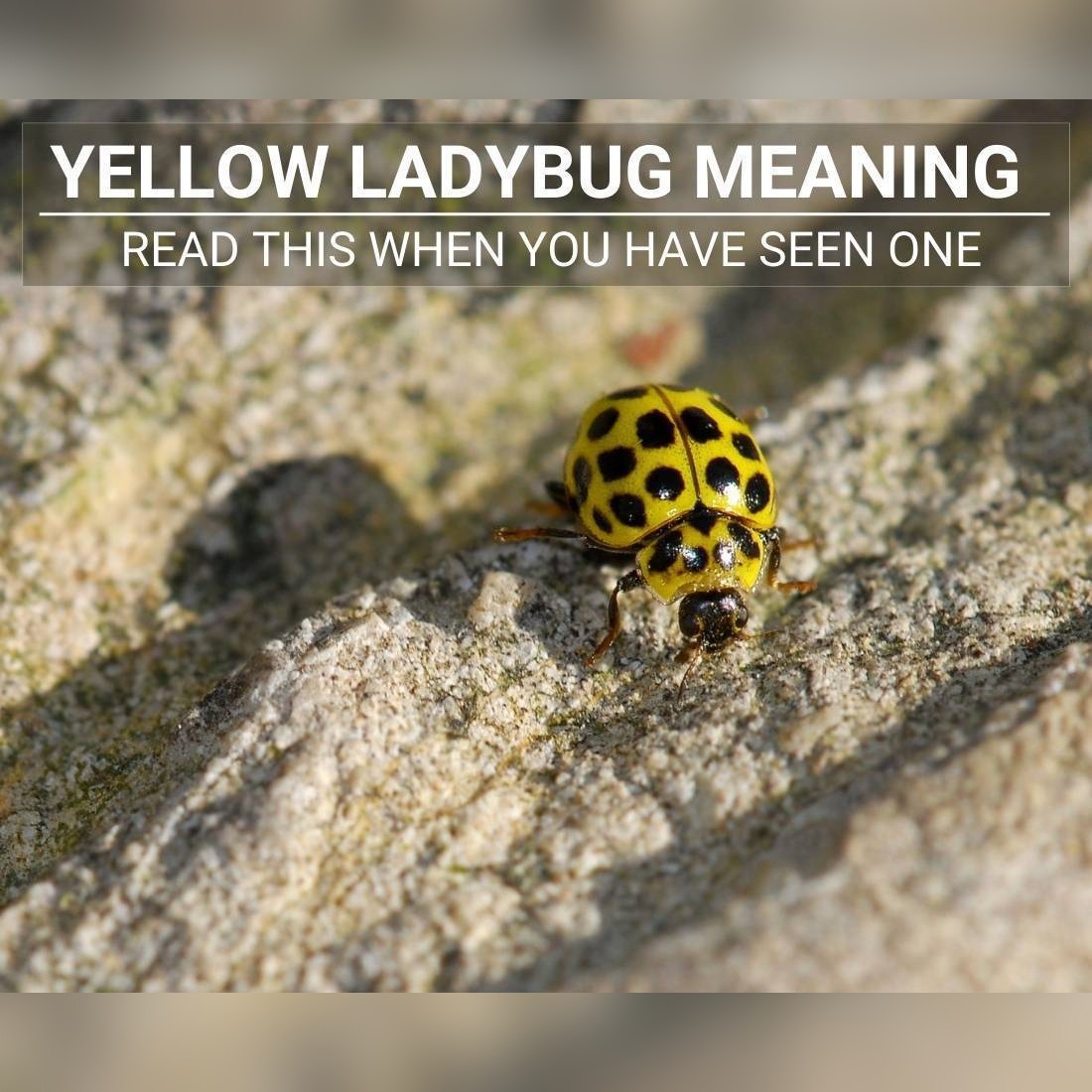
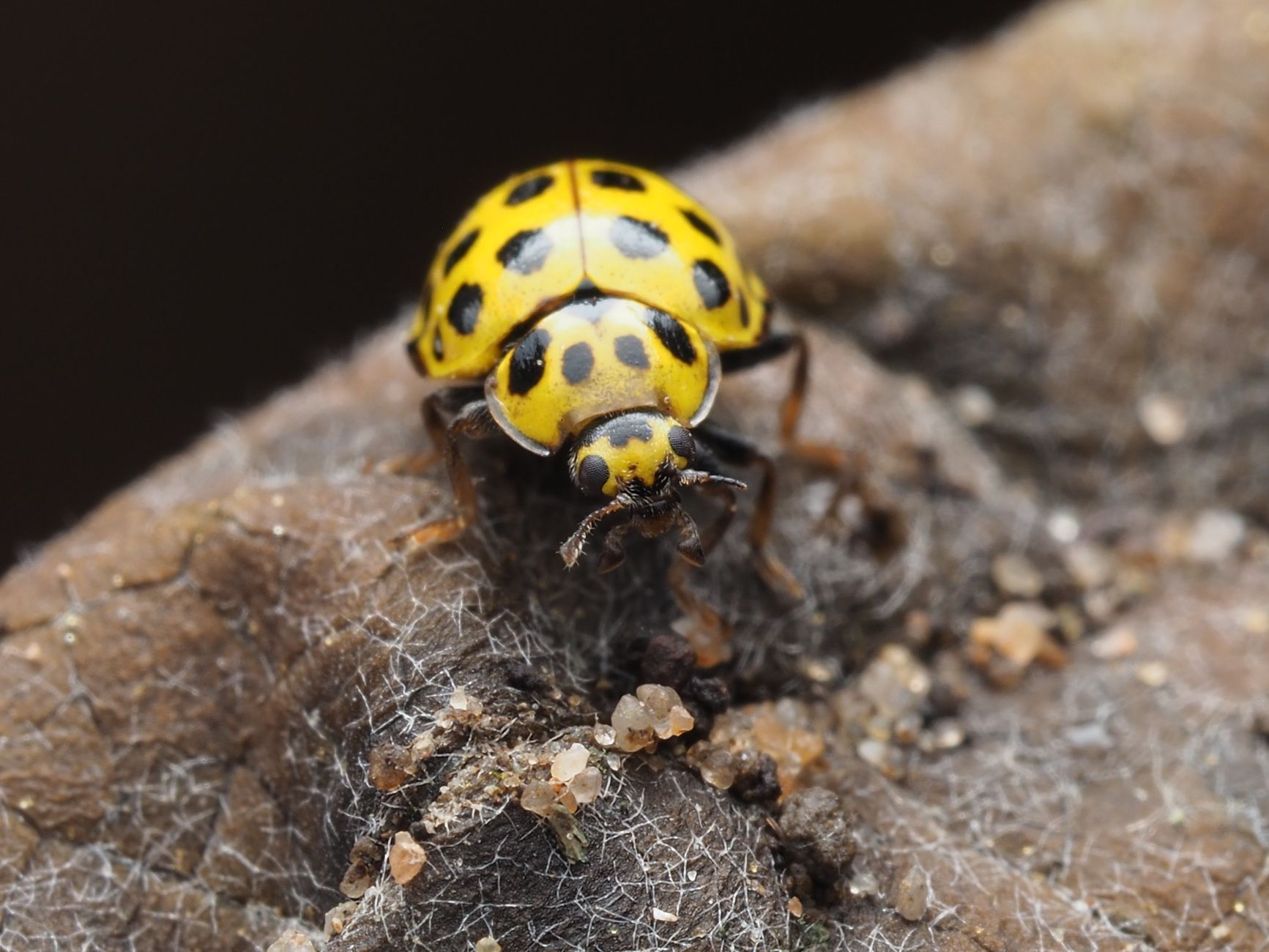
Yes. Completely real. The Royal Horticultural Society’s ladybird guide lists two common yellow species in Britain and Europe: the twenty-two-spot ladybird (Psyllobora vigintiduopunctata), which measures three to four millimeters and feeds mainly on mildew, and the fourteen-spot ladybird (Propylea quatuordecimpunctata), which runs three to five millimeters and primarily eats aphids.
The yellow coloration works the same way red does. According to the University of Kentucky’s entomology program, lady beetles can be yellow, pink, orange, red, or black, and the bright colors signal to birds and other predators that the beetle tastes bad. A disturbed adult releases a foul-smelling fluid from its leg joints. The color is armor.

Knowing the biology does not cancel the question of what the insect has meant to people for centuries. Those are two different questions, and both are worth asking.
What Does a Yellow Ladybug Symbolize?
Yellow ladybugs carry the same core meanings as ladybirds generally: protection, providential good fortune, and the sense that something beneficial is arriving. Yellow adds a layer of solar warmth and openness to change in contemporary readings. The protection meaning is old and well-documented. The yellow-specific gloss is modern, and I’ll say plainly that it’s an interpretive extension rather than a historical doctrine. Both things can be true at once.
My grandmother Theresa kept a leather notebook of animal lore from the Bavarian Forest, and the ladybug appears in it twice. Once as a weather sign. Once as a blessing on a new marriage. She never specified color. The tradition she recorded didn’t need to. The beetle was already holy.

Across traditions, the common thread is an insect that arrives unexpectedly and is understood as a sign of favor. Whether the specific specimen is red, orange, or yellow matters less than the gesture of arrival. Where yellow does distinct work in modern spiritual writing is in connecting the insect to solar energy, mental clarity, and new beginnings. Those meanings come from color symbolism rather than folk practice. Use them if they resonate. Just know where they come from.
What Does English and British Historical Folklore Say About Ladybirds?
The English folk record on ladybirds is older and richer than most people expect. The name “Our Lady’s bird” links the insect directly to the Virgin Mary, probably because the seven-spotted red species (Coccinella septempunctata) was associated with Mary’s red cloak in medieval devotional imagery. Those seven spots connected to her seven joys or seven sorrows. The insect became, in rural practice, a creature under heavenly protection.
The rhymes that survive are strange and good. Tommy Thumb’s Pretty Song Book (1744) includes an early printed version of “Ladybird, Ladybird, fly away home,” with its image of a house on fire and children left alone. John Brand’s Observations on Popular Antiquities (1813) collected regional variants that used the insect for courtship divination: “Bishop, Bishop Barnabee, tell me when my wedding will be.”

Regional names collected across England include lady-cow, gowdenbug, burnie bee, and bishy barnabee. Each carries slightly different local flavor but the same basic function: a small creature consulted about matters of love and household luck.
Edwin Sidney Hartland’s The Folk-Lore of the Lady-Bird (1892) remains the most thorough comparative study. Hartland documented versions of the rhymes from across England and Scotland and compared them to Continental forms. His conclusion: the insect functioned as a messenger, a domestic protector, and a courtship oracle, not as an omen of death or harm. The meanings are favorable, and they attach to ladybirds as a group. No special yellow category appears.
In German-speaking regions, the insect is the Marienkäfer. Mary’s beetle. The name does the same theological work as the English “Our Lady’s bird”: it places the creature under Marian protection and frames it as a religious creature rather than a neutral one. German regional folklore recorded in regional history documentation held that the Marienkäfer was a messenger of God, its presence in a garden a sign of divine favor for crops.
The practical dimension reinforced this. Ladybirds eat aphids and mites, so their arrival genuinely benefited the harvest. Folk meaning and agricultural fact pointed the same direction.

Swedish folk tradition adds a different image. The Swedish name, Jungfru Marias nyckelpiga, translates as “the Virgin Mary’s key-maid” or “Mary’s key-bearer.” The story documented by Hartland in 1892 holds that the ladybird found or guarded Mary’s keys to heaven. That gives the insect a threshold quality: it stands between the earthly garden and something sacred. Swedish rhymes also used the beetle in questions about movement, weather, and fortune, asking it to fly and reveal an answer. Same courtship-oracle function as the English “Bishop Barnabee.”
Neither the German nor the Swedish record creates a separate meaning for yellow individuals. These are traditions about ladybirds generally, built around familiar red species, and they extend to the family as a whole.
How Do Other World Cultures Name and Interpret the Ladybird?
The linguistic record alone is worth sitting with. French speakers called the ladybird bête à bon Dieu, God’s good creature. Spanish speakers called it mariquita, little Mary. Russian speakers said bozhya korovka, God’s little cow. The family name Coccinellidae comes from Latin coccineus, scarlet, which fits red species better than yellow ones, but the naming pattern across European languages is remarkably consistent: a small creature belonging to a divine or protective figure.
The insect shows up across European folk traditions as a protected religious creature, an agricultural helper, a courtship oracle, and a domestic protector. Those functions don’t require a shared doctrine. They seem to arise from the same combination of vivid color, harmless behavior, practical benefit to crops, and seasonal appearance and disappearance.

A. W. Exell’s The History of the Ladybird (2nd ed., 1991) traces the naming and folk belief across these European traditions and finds the same pattern throughout: protection, divine association, favorable arrival. The yellow species, as distinct beetles, simply weren’t common enough in most northern European landscapes to earn their own folklore category. They inherit the ladybird’s general meaning.
What Does the Color Yellow Add to Ladybug Symbolism?
Biologically, yellow signals the same thing red does: stay away, I taste terrible. The University of Kentucky’s entomology data confirms that bright coloration across all lady beetles functions as warning coloration for predators. The twenty-two-spot and fourteen-spot yellow species use yellow the same way the seven-spotted red uses red. No biological basis exists for reading yellow as more solar, more optimistic, or more spiritually charged than any other color in the family.
But folk and contemporary spiritual reading doesn’t follow biology directly. It follows what the mind reaches for. Yellow in Western color symbolism carries strong associations with sunlight, clarity, mental energy, and new beginnings. Those associations are real in terms of how people use color meaning, even if they’re not rooted in folk tradition. When someone reads a yellow ladybug as a sign of hopeful change, or arriving clarity, or a door opening, they’re drawing on color symbolism with its own long history. Just a different one than the Marian tradition.

Use it if it resonates. Name it as modern interpretation rather than ancient doctrine. Both things can live in the same sentence without one undermining the other.
What Is the Spiritual Meaning of a Yellow Ladybug?
Four meanings show up consistently, and it’s worth sorting them by how much historical weight each one carries.
Protection. This is the oldest and best-documented meaning. From England’s “Our Lady’s bird” to the German Marienkäfer to the Swedish key-maid, the ladybird across European folk belief is a creature under divine protection that extends that protection to the household or garden where it appears. Yellow species share this meaning as members of the same family.
Providential good fortune. The folk rhymes and courtship divination practices documented by Hartland (1892) and John Brand (1813) frame the ladybird as a bringer of favorable news, particularly around love and household events. A yellow ladybug landing on you or appearing in your home fits inside this tradition.

Threshold crossing and new beginnings. The Swedish key-maid image is the historical anchor here: an insect that guards the passage between worlds, between states. Colorado State University Extension’s 2025 documentation notes that many lady beetle species go through a winter diapause lasting up to six months before re-emerging. That cycle of disappearance and return plausibly fed folk readings of renewal. The contemporary reading of yellow ladybugs as a sign of new chapters sits on top of this older layer.
Openness to change. This is the most modern of the four, drawing on yellow’s color associations rather than folk tradition. I don’t have a confident historical source for this one specifically. It’s an interpretive extension, and a reasonable one. But I wouldn’t call it ancient.
What Does It Mean When a Yellow Ladybug Lands on You?
The English courtship rhymes collected in Tommy Thumb’s Pretty Song Book (1744) treated a ladybird landing on you as a moment of divination. You asked it a question about marriage, about timing, about what was coming, and its behavior was read as an answer. The Swedish Jungfru Marias nyckelpiga tradition frames the insect as a threshold figure, a creature that mediates between the ordinary and the sacred. Landing on a person is, in that tradition, a contact rather than an accident.
In practical terms, ladybirds land on people because people are warm and sometimes smell faintly of whatever they’ve been near: gardens, fruit, flowers. But folk traditions have always read intentionality into the landing.

Here is what people have made of it: the ladybird landing on you is a sign of incoming good news, especially around love, household events, or a new beginning. Yellow adds optimism and clarity to that reading in contemporary use. And the tradition of asking it a question before it flies away is real and old. Try it if you want. You will not be the first.
What Does a Yellow Ladybug in Your House Mean?
In English rural folk belief, a ladybird inside the house was a positive omen for the household. The “fly away home” rhyme, documented from 1744 onward, implies a creature with a home to return to: a domestic creature rather than a wild intruder. John Brand’s Observations on Popular Antiquities (1813) recorded regional English practices that treated ladybirds in the home as favorable visitors. The German Marienkäfer tradition similarly read the beetle’s presence in a dwelling as a sign of divine favor.
For a yellow ladybug specifically: the fourteen-spot species is a genuine aphid predator. If one has found its way indoors, it almost certainly came in through a window and is looking for a way back out. It is not a sign of infestation. The RHS notes that both the fourteen-spot and twenty-two-spot species are beneficial visitors in gardens and homes.

The practical and the symbolic converge here. The insect is genuinely helpful, and the tradition says so. If you want to read it symbolically, a yellow ladybug inside your home sits squarely in the English and German household-protection tradition. Something good is tending to you.
For more on what different ladybug encounters in your home mean, including what to do when they cluster in windows or corners, see the full guide to ladybugs in the house.
What Does the Yellow Ladybug Mean as a Spirit or Totem Animal?
If the yellow ladybug has shown up as a recurring symbol for you, in encounters, in dreams, in things you keep being drawn to, the totem reading draws on two sources: the insect’s biological life cycle and its cross-cultural messenger symbolism.
On the biology side, Colorado State University Extension’s 2025 documentation of lady beetle life cycles describes complete metamorphosis through four stages, plus a winter diapause that can last six months or more. That is a creature that knows how to go dormant and come back. A person who resonates with this totem is often someone who has learned to wait without disappearing entirely, to rest without giving up, and to re-emerge when the season shifts.
On the symbolic side, the cross-cultural messenger tradition adds the quality of providential timing. The yellow ladybug as a totem tends to be associated with arriving at exactly the right moment, with the ability to carry good news between states, and with a kind of cheerful resilience that doesn’t announce itself loudly. Small, bright, and genuinely useful. Not a predator. Not a symbol of power in the conventional sense. Something more specific and, I think, more interesting than that.
What Does Dreaming of a Yellow Ladybug Mean?
In the framework the folk traditions support, a yellow ladybug in a dream belongs to the same register as one in waking life: a threshold visitor, a messenger, a sign that something good is approaching or already present. The diapause cycle documented by Colorado State University Extension (2025), long dormancy then sudden return, maps onto the dream symbol of something buried coming back to the surface.
If the ladybug in the dream is active, landing, or moving toward you, that directional quality tends to be read as incoming fortune or news. If it is still, the reading leans toward a period of waiting that has a good end.

I should say plainly: dream interpretation is not something I’ll give you a fixed system for. The folk traditions offer registers, not rules. What matters more is the feeling the dream left you with. The ladybug’s general symbolic register is favorable and protective. Work from there.
What Are the Most Common Misconceptions About Yellow Ladybug Meaning?
Misconception one: Yellow ladybugs specifically mean wealth or money is coming. This is a modern color-code reading, not a folk tradition. Hartland’s 1892 comparative study of English, German, Scottish, and Swedish folk practices attaches protection, Marian favor, courtship luck, and agricultural blessing to ladybirds. Financial windfall is not among the documented historical meanings. Yellow being associated with gold, and gold with money, is a chain of modern associations rather than inherited doctrine.
Misconception two: All ladybugs have seven spots, and the spots carry meaning. The seven-spot explanation belongs to Coccinella septempunctata, the familiar red species that anchored the Marian symbolism. The Wikipedia overview of the Coccinellidae family notes the family contains over 6,000 species worldwide. Yellow ladybirds may have fourteen spots, twenty-two spots, fused markings, or no clear spots at all. Spot-counting as spiritual practice only makes sense with the seven-spotted red species, and even there it is a later rationalization of the Marian association rather than its origin.
Misconception three: A single universal omen applies to all ladybug encounters. Hartland’s 1892 record shows real regional variation in England alone. The same insect was a courtship oracle in Norfolk, a household protector in Scotland, and a rhyme character with a house on fire in the standard nursery version. No single fixed meaning covered all encounters in any one tradition, let alone across traditions. Any spiritual writing that assigns a definitive universal message to a yellow ladybug is simplifying something that was always more varied and interesting than that.
How Do Yellow Ladybugs Compare to Other Ladybug Colors in Symbolism?
The honest answer is that color-specific ladybug meanings are largely a modern development. The historical folk record, English, German, French, Swedish, Russian, built its symbolism around ladybirds as a group, with the red seven-spotted species as the default reference because it was the most common and most visible. Red connected to Mary’s cloak, to blood, to the heart, to protection. The other colors existed biologically but did not accumulate separate folk doctrines in most regions.
In contemporary spiritual interpretation, the color distinctions work roughly like this. Red and orange ladybugs carry the strongest historical Marian-protection resonance. Black ladybugs, being unusual and darker, sometimes attract readings of shadow work or significant change. Yellow ladybugs pick up solar, optimistic, and clarity-related meanings from color symbolism. But these are all extensions of the same baseline: a creature that European folk traditions across a thousand years read as protected, beneficial, and favorable to encounter.
The color changes the register slightly. It does not change the fundamental meaning, which is welcome arrival.
Frequently Asked Questions
Are yellow ladybugs rare or common?
Not rare. The twenty-two-spot ladybird (Psyllobora vigintiduopunctata) and the fourteen-spot ladybird (Propylea quatuordecimpunctata) are both documented as common species across Britain and Europe, according to the Royal Horticultural Society’s 2026 ladybird guide. They are less often noticed than the familiar red seven-spotted species simply because people aren’t looking for them. If you found one, you are more observant than average, not uniquely lucky. That distinction matters.
Is a yellow ladybug considered good luck in all cultures?
“Yellow ladybug” as a distinct category doesn’t appear in most traditional folk records. The luck and protection meanings attach to ladybirds generally. English, German, French, Swedish, and Russian traditions all read ladybirds as favorable creatures. Whether a yellow individual specifically carries extra luck in any of those traditions is something the historical record doesn’t clearly document. The favorable reading extends to yellow species by inheritance rather than by specific decree. I think that’s an honest answer, even if it’s a qualified one.
What does it mean if a yellow ladybug lands on your hand specifically?
In the English courtship-divination tradition documented in Tommy Thumb’s Pretty Song Book (1744) and John Brand’s Observations on Popular Antiquities (1813), a ladybird landing on a person was an invitation to ask it a question about love or coming events. The hand is a traditional site of palm-reading and divination in folk practice, so a landing there carries that association too. In contemporary spiritual reading, a ladybug landing on your hand is generally read as direct personal blessing or incoming good news addressed specifically to you.
What does it mean if you keep seeing yellow ladybugs repeatedly?
Repeated sightings of any animal tend to shift the reading from coincidence to pattern, and most folk traditions treat a repeated encounter as a more deliberate message. I find the most useful question to ask is not “what does this mean” in the abstract but “what am I paying attention to when this happens?” A repeated yellow ladybug sighting is read across contemporary spiritual traditions as a sustained sign of protection and incoming change, a reminder that something good is arriving or already present and not yet recognized.
Is there a biblical meaning associated with yellow ladybugs?
The Bible does not mention ladybugs by name, and no specific biblical meaning for yellow ladybugs exists in the scriptural record. The Marian-protection tradition documented in Catholic folk history is the closest historical connection between ladybirds and Christian religious practice. That tradition attaches to ladybirds generally, not to yellow specifically. Contemporary Christian-coded spiritual writing sometimes reads yellow as a color of divine light or hope, but that is interpretive rather than scriptural.
What does a dead yellow ladybug mean?
Folk traditions across England and Germany treated the ladybird as a protected creature, one you did not kill deliberately. Hartland’s 1892 comparative record includes the belief in several English regions that killing a ladybird brought bad luck. A dead yellow ladybug found by chance doesn’t carry the same weight as one deliberately killed. In contemporary spiritual reading, a dead ladybug is sometimes read as the end of a protective cycle, something that was guarding you has completed its work, rather than as a negative omen. The folk record is thin on naturally dead ladybirds, and I won’t pretend otherwise.
Do yellow ladybugs have spots, and does the number of spots carry meaning?
Yes, yellow ladybugs have spots. The twenty-two-spot species has, as the name suggests, twenty-two black spots. The fourteen-spot has fourteen. Neither fits the seven-spot symbolism that developed around Coccinella septempunctata and its Marian associations. Spot-counting as spiritual practice, “each spot is a month of luck” and so on, is a folk extension of the seven-spot tradition and doesn’t map cleanly onto yellow species. The spots are real. The fixed numerical meanings attached to them are not well-documented outside the seven-spotted red species.
What is the difference in meaning between a yellow ladybug and an orange ladybug?
In historical folk terms, not much. Both inherit the general ladybird symbolism of protection and favorable arrival. In contemporary spiritual reading, orange tends to carry associations of vitality and creative energy, while yellow carries solar clarity and mental openness. These distinctions come from color symbolism rather than from separate folk traditions. The multicolored Asian lady beetle, which can range from orange to red, has its own entomological profile but not a distinct folk-belief history in medieval European rural folklore. The color shifts the register slightly. The underlying meaning, welcome arrival and protection, is the same.
What should you do when you see a yellow ladybug?
If it has landed on you: let it. The old practice of making a wish or asking a question before it flies is documented in English folk tradition going back to at least 1744, and there is no reason not to continue it. If it is in your house: it is not a pest. It almost certainly came in through a window and would like to leave the same way. Open the window nearest to it. If it is in your garden: leave it. The fourteen-spot yellow species eats aphids, and that is a genuine service to whatever you are growing.
Can a yellow ladybug be a sign from a deceased loved one?
This is a question I take seriously without being able to answer it definitively. The folk traditions I’ve read don’t specifically frame ladybirds as carriers of messages from the dead. They frame them as creatures under divine protection that extend that protection to the living. Whether you choose to read a yellow ladybug as a visit from someone you loved and lost is a personal decision no folk record can confirm or deny. What I can say is that the human impulse to find such signs is old and reasonable. I don’t know that the people who feel it are wrong.
Sources
- Edwin Sidney Hartland, The Folk-Lore of the Lady-Bird, 1892 (Project Gutenberg)
- Tommy Thumb’s Pretty Song Book, Vol. 2, 1744, via Wikipedia entry on “Ladybird, Ladybird”
- Wikipedia: Ladybird (Coccinellidae), family overview, etymology, and species range
- Tradition in Action: Catholic origins of the ladybug name and Marian folk tradition
- Royal Horticultural Society: Ladybirds, 2026, species identification and ecological role
- Colorado State University Extension: Lady Beetles, 2025, life cycle, metamorphosis, and diapause
- University of Kentucky Entomology: Ladybugs, 2026, coloration, behavior, and species variation
- Cambridge University Press: A Natural History of Ladybird Beetles, 2016, references
- A. W. Exell: The History of the Ladybird, 2nd ed., 1991, via Wikipedia biography
- Regional history documentation of German Marienkäfer folk tradition, Regionalgeschichte.net