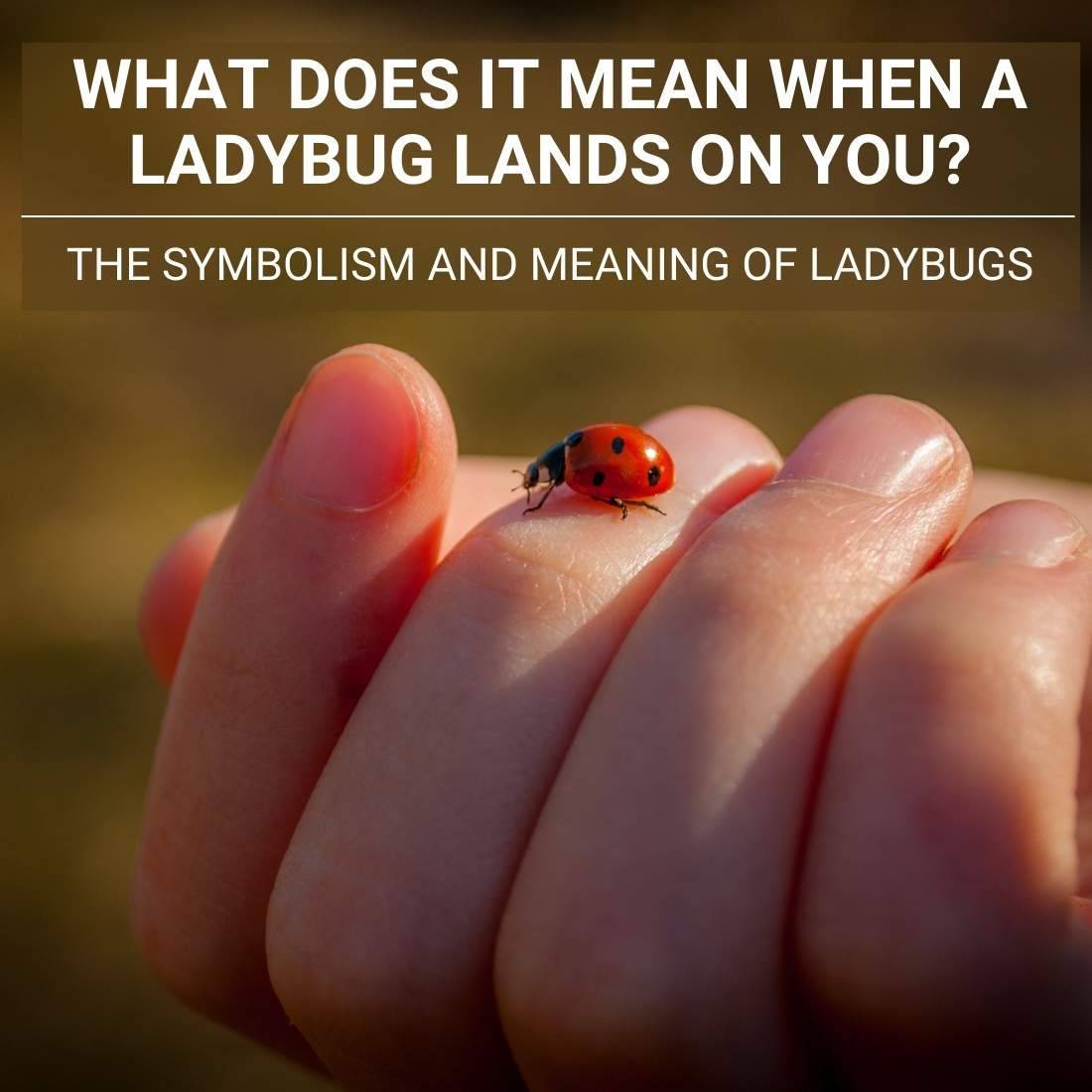
A ladybug landed on you and stayed. You went still, held your breath, waited. That pause is older than you might think, and its meaning is more specific than “luck” suggests. Most traditions documenting this encounter read it as endorsement, not warning, not coincidence, with specifics worth knowing.
Key Takeaways
- Across Lakota, Han Chinese, and medieval European traditions, a ladybug landing on a person is read as a moment of sacred endorsement, not random contact.
- The symbolism has roots in real ecology: ladybugs emerge precisely when crops need protection, which is why farming cultures across three continents attached meaning to their arrival.
- Body location and the direction the ladybug crawls carry specific folk meanings, particularly in Västergötland peasant tradition documented in Sveriges Medeltida Ballader (1924).
- The “seven spots equal seven years of luck” claim traces to 19th-century German almanac culture. No pre-1800 cross-cultural basis exists for spot-count divination.
- The response most traditions agree on: go still, set an intention quietly, and release the insect without harm.
Richard Alois has worked in raptor rehabilitation for years in the North Carolina mountains. My grandmother Theresa kept a leather notebook of animal lore from the Bavarian Forest, and the ladybug appears in it twice. Once as a weather sign. Once as a blessing on a new marriage. I don’t know which entry came first, the notebook is German cursive and some pages have stuck together over the years. But both entries treat the insect seriously, which is the posture I’d ask you to bring to what follows.
You are not making this up. The instinct to read meaning into this encounter connects you to farmers in Jiangnan Province in 1562, to Lakota ritualists releasing beetles near seed beds, to Swedish brides in the 1300s who watched which direction the creature crawled. The question isn’t whether the encounter means something. It’s what it means, in which tradition, and why.
What Does It Mean When a Ladybug Lands on You?
Across the three best-documented folk traditions, Lakota, Han Chinese, and medieval Northern European, a ladybug landing on a person is read as a moment of sacred endorsement. Not a warning. Not a neutral event. An endorsement: the sense that something larger than the encounter has paused to confirm you. The specific content of that confirmation varies by tradition, and I’ll work through each below. But the directional read, in all three, runs the same way. This is good, and it arrived at the right time.
No serious folk record I’ve found frames it as coincidence dressed up. The traditions don’t hedge. They name it.
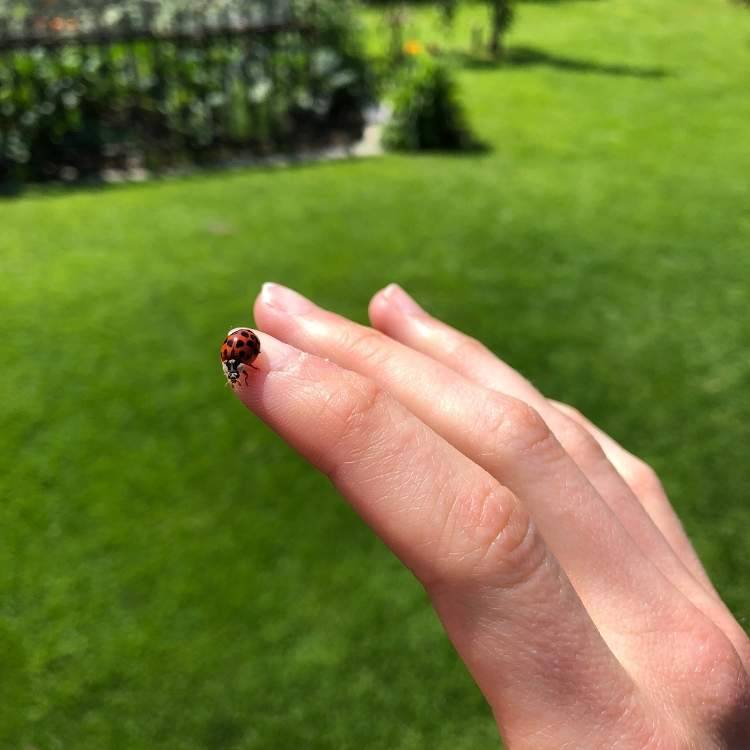
For Christians in this encounter, the name has been built into the insect’s English name for seven centuries. “Ladybug” comes from the Middle English lady-birde, a reference to Our Lady, the Virgin Mary. The French went further: bete a bon Dieu, “God’s beast,” appears in Picard dialects by 1600 and is codified in Emile Littre’s Dictionnaire de la langue francaise (Hachette, 1873). For those who frame the universe differently, as energy, as nature’s intelligence, as something they don’t yet have a word for, the traditions below carry the same weight. The ladybug doesn’t require a specific theology. It requires attention.
What Is the Core Spiritual Symbolism of the Ladybug?
The ladybug’s symbolic profile, across cultures that had no contact with each other, clusters around protection, renewal, and fortune that comes through work rather than waiting. That last point matters. This isn’t a lottery symbol. In every tradition I’ve looked at carefully, the ladybug appears not to people sitting idle but to people engaged, planting, harvesting, walking, asking. The encounter finds you mid-motion.
The linguistic evidence is striking. English has lady-birde. French has bete a bon Dieu. Polish agrarian chants use krowka, “little cow,” referencing the insect’s role protecting cattle and crops from pests. German speakers called it Marienkäfer. The naming patterns across languages that developed independently encode the same instinct: this small red insect belongs to something sacred, and its visit carries weight.
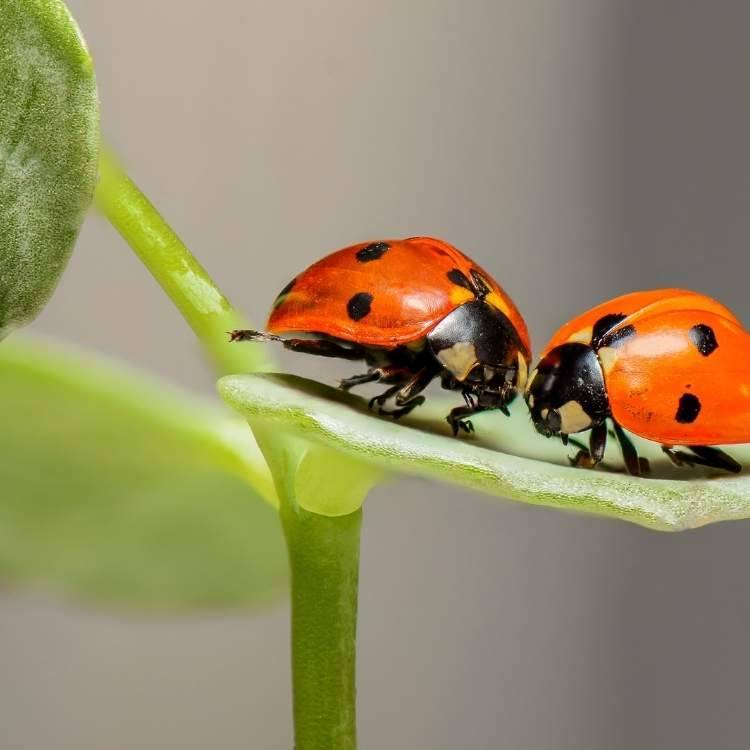
The Marian connection has a specific origin story. According to Rhineland monastic texts documented in J.P. Migne’s Patrologia Latina (Vol. 217, 1855), a legend circulated in German monasteries around 1200 CE that beetles had shielded Mary from knights, and that their red wings bore the color of her cloak. I can’t verify how old the legend actually is, or whether Migne’s compilation accurately represents its earliest form. But the symbolic cluster it encodes, protection, red, sacred feminine, appears independently in Han Chinese tradition and in Lakota oral narrative, which is the more interesting fact. The convergence is the story.
What Does Lakota Tradition Say About a Ladybug Landing on You?
In Lakota oral tradition, a ladybug landing on a person during planting season was read as Wakhán Thánka‘s endorsement of communal labor. Not personal luck. Communal endorsement. The distinction gets lost in most Western retelling of this belief, and losing it changes the whole meaning.
The primary source here is Father Eugene Buechel’s Lakota Dictionary (St. Francis Mission, 1939), where elders describe ladybugs as “red messengers of Blehchela (the earth)” that ensure cornfields thrive by consuming pests. Ritualists would release captured ladybugs near seed beds as a pledge of reciprocity with nature, what the Lakota framework calls wochekiye, sacred reciprocity or prayerful intercession. The landing wasn’t a personal sign. It was confirmation that your labor was aligned with what the earth needed.
Henry R. Johnston’s Ojibwa Vocabulary (Smithsonian Institution, 1855) documents the related Great Lakes term meskwa’kwe, “red insect of good omen,” which suggests the protective read extended across Plains and Great Lakes communities, not only among the Lakota.
I want to be careful here. I’m not Lakota, and I’m not claiming to interpret this tradition from the inside. What I can say is that the Buechel record is specific enough, named informants, specific ritual practice, specific seasonal context, that it reads very differently from the generic “Native Americans believed ladybugs brought good luck” you’ll find on most symbolism sites. The specific version is also the more interesting one.
What Did Han Chinese Folk Religion Teach About the Ladybug Landing on You?
The Ming Dynasty pest-exorcism manual Qu Yao Jing (National Library of China, Manuscript #04872, 1562) instructs Jiangnan farmers to whisper harvest prayers when a ladybug alights on their sleeve. The insect, called qixing zhu (seven-star ladybug), was understood as a sign of Houtu‘s approval. Houtu is the Earth Deity in Han folk religion, and the insect’s red coloration was linked specifically to xi qi, joyful energy, as opposed to the neutral or negative energy associated with similar black-spotted beetles that were not considered benevolent.
This is not a casual distinction. The Qu Yao Jing is a practical manual, not a spiritual text in the Western sense. It was written to help farmers identify which insects to welcome and which to remove. The spiritual meaning was inseparable from the agricultural function. That’s worth sitting with for a moment.
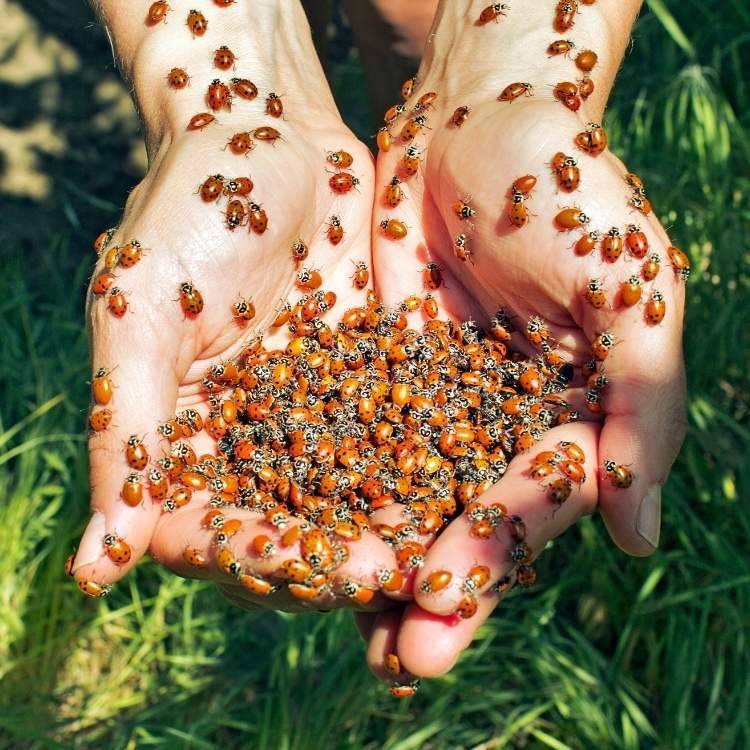
The fu cosmology underlying this interpretation frames fortune as something flowing between heaven, earth, and human action rather than falling randomly. A ladybug landing on you in the Jiangnan agrarian context was Houtu signaling that your effort was aligned with that flow. Keep going. Endorsed labor, not passive luck.
According to the UC Davis IPM Program’s Coccinellidae Pest Control Efficiency Report (2020), a single Coccinella septempunctata consumes approximately 5,000 aphids in its two-year lifespan. That number clarifies why agrarian cultures on opposite sides of the planet arrived at the same symbolic read independently. The insect’s ecological role was visible, seasonal, and consequential. The meaning followed the biology.
What Did Medieval European Peasants Believe When a Ladybug Landed on Them?
In Västergötland, the southwestern Swedish province, the ladybug was called mjolkko, “milk cow beetle,” and carried specific marriage-divination significance. According to Ballad 187 in Sveriges Medeltida Ballader (Sveriges folkskulpturarkiv, Stockholm, 1924), a woman could determine whether a suitor was coming and from which direction by watching how the beetle moved on her hand. Crawling upward meant suitors from the north. Downward meant local prospects. The practice declined after Lutheran reforms swept the region in the 16th century but persisted in bygdemal (rural dialects) into the 1800s.
The Rhineland Marian legend gave the insect a specifically Catholic protective meaning in Germany, France, and the Low Countries. But scholar Alexander Roberts notes in Insect Iconography in Medieval Europe (Journal of Folklore Research, 2017) that this reading was never universal even within Christendom. Irish seanfhocail (proverbs) treated ladybugs as puca, chaotic spirits requiring salt for protection. Eastern Orthodox tradition never adopted the Marian association at all.
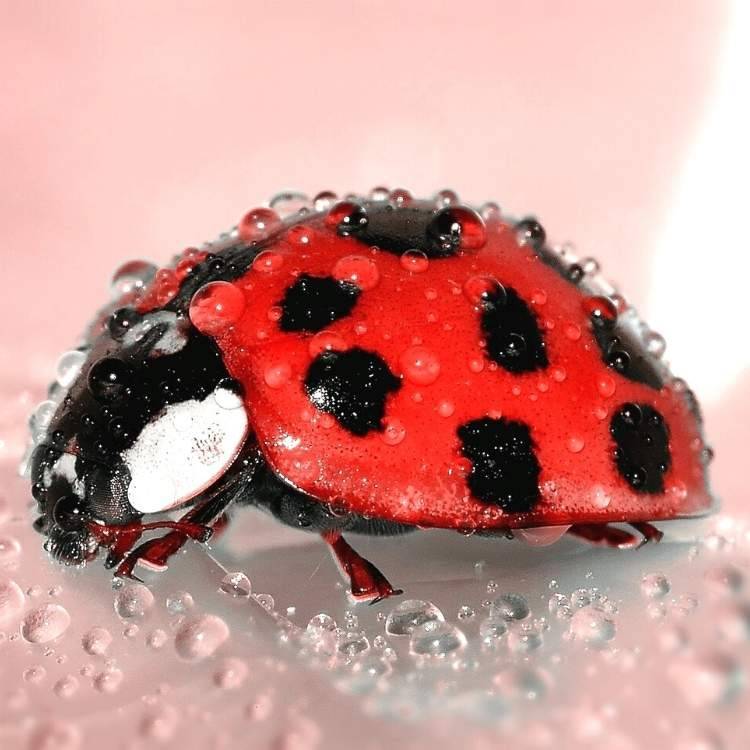
So the “Christian” read on a ladybug landing is actually a Western European Catholic read. That’s more specific and more honest. If your tradition is Orthodox, or Protestant, or Irish folk-inflected, the ladybug’s symbolic history looks different. Not absent. Different.
Where a Ladybug Lands on Your Body, Does the Location Change the Meaning?
In Västergötland tradition, yes, very specifically. The Swedish directional reading (upward crawl versus downward, predicting suitor origin) was about hand landings. The hand was the liminal site, the part of the body most directly engaged with labor, and therefore the right surface for a work-related endorsement from a harvest creature.
Head landings carry a different register in most folk interpretations I’ve read, though I should say plainly that the folk record here is thinner than I’d like. The general read is that a landing on the head suggests a period of mental clarity or decision-making being confirmed, less about love or harvest, more about direction. I don’t have a strong scholarly source for this. It appears in German Bauernregeln and in scattered Appalachian accounts, but neither with the specificity of the Swedish hand tradition.
Arm and shoulder landings are treated in most traditions as equivalent to hand landings, same field of meaning, slightly less precise. The Qu Yao Jing instructs farmers to whisper harvest prayers when the insect alights on the sleeve, any sleeve, without distinguishing wrist from elbow. The consensus across the traditions I trust is that location matters less than the quality of stillness you bring to the encounter.
What Do Ladybug Colors Mean When One Lands on You?
Red is the baseline. Red is the xi qi coloration in Han folk religion, the Marian cloak color, the dominant hue of Coccinella septempunctata across Europe and North America. When someone says “a ladybug landed on me,” they almost always mean a red one, and the traditions above apply.
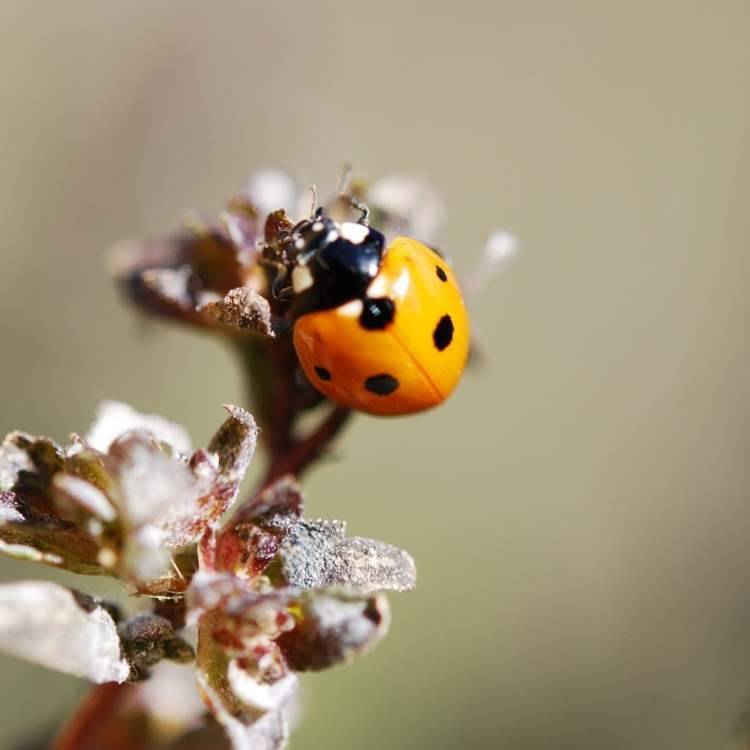
Orange ladybugs (including the Asian lady beetle, Harmonia axyridis, now common across North America) present a more complicated case. In modern folk interpretation, and I want to be transparent that “modern folk interpretation” is not the same as documented traditional lore, orange is read as carrying the red symbolism in a gentler register: still fortunate, still protective, but warmer and less urgent. I don’t have pre-20th-century sources for this specifically.
Yellow ladybugs are rarer in symbolism literature. The few references I’ve found connect yellow to caution or transition rather than full endorsement. The record is thin here, and I won’t pretend otherwise.
The most interesting color data comes from Shasta County, California. According to BAM Annual Reports from 1928 documenting Shasta County Native Californian agricultural records, the spotless Hippodamia convergens (convergent lady beetle) was read as a drought signal. Its absence of spots indicated a disrupted growing season. So in that specific tradition, spotless was not good, it ran directly counter to the European luck association.
The Han tradition makes a related distinction: red, spotted beetles were benevolent; black-spotted beetles with less red were not. The color-to-spot ratio mattered as much as the color itself.
Does Spot Count Actually Predict Luck When a Ladybug Lands on You?
No. Or rather, not in any tradition that predates the 19th century.
The “seven spots equal seven years of luck” reading traces to Friedrich Korn’s Bauern-Kalendar (1843), a German peasant almanac that codified a number of folk beliefs in print for the first time. Ethnographer Ernst Meier found no pre-1800 references in Swiss or Russian folklore for spot-based divination of any kind. The counting tradition appears to be a 19th-century German invention that spread through print culture and got attached to older beliefs retroactively.
I find this detail worth naming because it’s the kind of claim that gets repeated across hundreds of symbolism sites without anyone tracing it back. Seven years of luck per spot. Everywhere. No source. The Korn almanac is the source, and it’s a 180-year-old German farmer’s almanac, not a cross-cultural constant. The Han tradition focused on spot pattern as a species identifier. The Lakota tradition didn’t count spots at all. The Swedish tradition was about directional movement. Spot-count divination is an artifact of 19th-century German rural culture, and it doesn’t travel as universally as most sites suggest.
Why Do Ladybugs Land on Humans, and Does Biology Shape the Symbolism?
Ladybugs land on humans for ordinary reasons. Warmth. Investigating a surface that might hold prey. Disorientation after flight. None of this cancels the symbolic question, but it does clarify why the symbolic traditions were specific about context.
According to University of Kentucky Department of Entomology temperature-dependent development data (2019), ladybugs enter diapause (a form of dormancy) at 10 degrees Celsius and become active again at approximately 15 degrees. Their active season in temperate climates corresponds almost exactly to spring planting and fall harvest, the two agricultural windows when farming cultures were most attentive to signs. The ladybug didn’t just arrive in the fields randomly. It arrived when the fields were being worked.
That biological timing is the substrate of the spiritual meaning. Lakota ritualists releasing ladybugs near seed beds during planting season weren’t imposing meaning on a random event. They were observing a real ecological pattern, a pest predator arriving at the moment the crop needed protection, and naming it as sacred. The spiritual interpretation is downstream of the natural history. This is the part most symbolism writing skips, and it’s the part I find most worth understanding.
So when a ladybug lands on you in April or May, you’re experiencing the same convergence of human activity and insect behavior that shaped these traditions. When one lands on you in January indoors, the seasonal context is absent, and most of the agricultural traditions simply don’t speak to that encounter. I’d be cautious about how much weight you put on a winter indoor landing relative to a spring one in a garden.
What Does It Mean When a Ladybug Lands on You in a Dream?
Dream encounters with ladybugs carry the same symbolic content as waking ones, filtered through what the dreaming mind is working on. This is the Jungian read, and it’s the one I find most honest: the ladybug in a dream is an archetype the mind reaches for when it needs to process something about protection, endorsement, or the arrival of good conditions after a period of waiting. Archetypes are real because the mind makes them real. That’s enough.
In Han fu cosmology, dreams were understood as communications from Houtu or ancestral spirits, and a ladybug appearing in a dream would carry the same blessing register as a waking encounter, perhaps more concentrated, since the dream state was understood as the most direct channel for communication.
The Marian intercessory tradition reads a dream ladybug as a message of protection. For those within that tradition, the dream encounter is arguably more significant than the waking one.
My own read: if you dreamed of a ladybug landing on you and woke feeling something, the feeling is the message. The specific tradition you use to name it is less important than the fact that your mind, in sleep, reached for this particular symbol. That reach tells you something about where you are right now.
Is the Ladybug a Spirit Animal or Totem, and What Does It Ask of You?
I don’t use “spirit animal” as a category, partly because the term belongs to specific Indigenous frameworks I’m not part of, and partly because the totem frame is more honest about what’s actually being described. A totem is a symbol that recurs in your life often enough to constitute a pattern, and a pattern is something you’re responsible for noticing and responding to.
If ladybugs keep appearing to you across seasons and contexts, the traditions above suggest a coherent profile for what that pattern is asking. The Lakota wochekiye framework frames it as sacred reciprocity: you are being endorsed in your communal labor, and the appropriate response is to pledge your continued effort back. The Han Houtu alignment asks the same thing differently: you are in flow with the earth’s cycles, and the ladybug confirms it. Keep going. The Marian tradition adds a protective note: you are covered.
What these traditions agree on is that the ladybug calls its bearer toward attentiveness to small things, the insect itself is small, after all, and toward gratitude expressed through continued care rather than passive receipt. You are not asked to feel lucky. You are asked to keep working, to notice what is being protected around you, and to release the encounter graciously when it ends.
Many people experience this encounter and arrive at some version of that understanding without reading a single tradition. “I just knew,” as one person put it online. That knowing has a long lineage.
What Should You Do When a Ladybug Lands on You?
Go still. That’s the first instruction across every tradition I’ve cited, stated or implied.
The Qu Yao Jing instructs farmers to whisper harvest prayers when the insect lands, which requires stillness. The Lakota reciprocity pledge was made in stillness, a conscious pause in labor to acknowledge what had arrived. The Swedish marriage-divination practice required holding your hand steady long enough to watch the beetle’s direction. Stillness is not passivity. It’s the posture of attention.
Set an intention quietly. You don’t need a formal prayer or a specific cosmology. Something as plain as “I notice this, and I’m grateful” is enough. If you asked for a sign before this happened, take it seriously. The pattern of asking-and-receiving is older than any specific religious framework and shows up in every tradition in this article.
Release the insect without harm. Every tradition that specifies a response, Lakota, Han, European, treats the ladybug as a guest, not a possession. You hold it briefly, you receive what it brings, and you let it go. Keeping it trapped runs counter to the reciprocity framework every one of these beliefs is built on.
And then watch what comes next. The ladybug is not the end of the story. In every agricultural tradition where this encounter was taken seriously, the insect was a signal to pay attention to the season you’re in. What are you planting? What needs protection? What has been consuming your energy that the encounter might be pointing you away from?
If you keep seeing them, that’s a different question. You might want to look at our piece on what it means when ladybugs appear inside your house, which covers the indoor encounter in more depth. And if the encounter connects to a broader pattern of animals finding you in unexpected moments, the animal encounter meaning overview covers the wider symbolic framework I use on this site.
Frequently Asked Questions
Is it good luck when a ladybug lands on you?
Across Lakota, Han Chinese, and medieval European folk traditions, yes, but the specific content of that “luck” varies considerably. Lakota tradition reads it as endorsement of communal labor, not personal fortune. Han folk religion reads it as xi qi, joyful energy aligned with the earth’s cycles. The European Marian tradition reads it as divine protection. None of these are passive lottery-luck. According to the folk record documented in Buechel’s Lakota Dictionary (1939), the ladybug’s blessing was tied to effort and reciprocity, not random fortune.
What does it mean when a ladybug lands on you and stays for a long time?
A ladybug that stays, one that doesn’t fly away when you move, is read across traditions as a more emphatic version of the standard landing. The Västergötland peasant tradition documented in Sveriges Medeltida Ballader (Ballad 187, 1924) specifically noted duration as meaningful: the longer the beetle stayed, the more certain the sign. I read extended contact as the encounter asking more of you. More stillness, more conscious attention to what you’re in the middle of. Not a bigger blessing necessarily, but a clearer call to notice.
What does it mean when a ladybug lands on you after someone dies?
For some people this is the universe speaking. For others, a message from God. For others still, a moment that words can’t quite hold. I don’t have a confident answer about the mechanics of what happens after death, and I won’t pretend otherwise. What I can say is that across the traditions documented here, the ladybug’s arrival has always carried a protective meaning, coverage, the sense that something larger is watching over what you’re doing. If that comfort lands true for you in grief, the tradition isn’t wrong to give it to you.
Does it matter what time of year a ladybug lands on you?
Yes, more than most sites say. According to University of Kentucky Department of Entomology temperature-dependent development data (2019), ladybugs become active at approximately 15 degrees Celsius, placing their peak activity in spring and early fall. The agricultural traditions that gave rise to ladybug symbolism were specifically tied to planting and harvest seasons. A spring landing in a garden carries the full weight of those traditions. A winter landing indoors is an ecologically unusual event, and I’d be cautious about applying the agricultural blessing frameworks to it without some adjustment.
What does it mean if a ladybug lands on you more than once?
Once is an encounter. More than once, across days or weeks, starts to look like a pattern. People who find the same species appearing repeatedly often describe it as the universe insisting on something. I take that seriously. If ladybugs keep landing on you, the question isn’t really “is this a sign”, it’s what in your life right now corresponds to what the ladybug represents: communal effort, protection of what’s growing, readiness to receive what’s coming. The pattern asks for a direct response, beyond mere acknowledgment.
Is a ladybug landing on you a sign from an angel?
The Rhineland Marian tradition documented in Migne’s Patrologia Latina (Vol. 217, 1855) comes closest to an affirmative here. The “Beetles of Our Lady” were explicitly understood as agents of divine protection in 13th-century German monastic culture. Whether that constitutes an angelic sign depends on your framework. I won’t tell you it doesn’t. What I’ll say is that the Marian origin of the word “ladybug” is etymology, not metaphor. The protective sacred meaning is built into the creature’s name in six languages. That’s not nothing.
What does it mean when a ladybug lands on a child versus an adult?
The folk record doesn’t make this distinction explicitly, and I’m wary of inventing one. The Västergötland marriage-divination practice was specifically for young women of marrying age, so the tradition was age-sensitive in at least one context. But in Lakota and Han Chinese frameworks, the landing was community-level endorsement, not individual. My read is that a child’s encounter carries the same blessing content as an adult’s. What changes is how you help the child receive it: as wonder rather than portent, as a moment to practice stillness rather than assign meaning.
Should you make a wish when a ladybug lands on you?
The wish tradition is real and old. It appears in German Bauernregeln almanac culture by the 19th century and connects to the broader “make a wish on a fortunate encounter” pattern that runs through European folk practice. I don’t think it’s wrong. But I’d offer the Han alternative as equally valid and possibly more satisfying: rather than wishing for something to arrive, whisper a statement of gratitude for what’s already in motion. The Qu Yao Jing‘s instruction was to pray over the harvest already underway, not to ask for a different one. That posture tends to feel more honest.
What does it mean when a ladybug lands on you and then flies away immediately?
A brief landing is still a landing. No tradition I’ve read requires duration to validate the encounter. The Lakota reciprocity pledge was made in the moment of contact, not measured by how long the insect stayed. A quick departure does shift the feel of the thing, it asks for a faster, more instinctive response rather than a long held attention. If the ladybug lands and immediately leaves, take that single moment seriously rather than regretting what you didn’t get. The encounter happened. It counts.
Are there any traditions that consider a ladybug landing on you a bad omen?
Yes. Irish seanfhocail (proverbs) treated ladybugs as puca, chaotic spirits, and the prescribed response was to sprinkle salt for protection rather than receive the encounter as a blessing. This is documented by scholar Alexander Roberts in Insect Iconography in Medieval Europe (Journal of Folklore Research, 2017). Roberts notes this diverged sharply from the pan-Christian Marian read. Eastern Orthodox tradition also never adopted the Marian association. The insect’s positive reputation is culturally specific, not universal.
Sources
- Buechel, Eugene. Lakota Dictionary. St. Francis Mission, 1939.
- Johnston, Henry R. Ojibwa Vocabulary. Smithsonian Institution, 1855. / BAM Annual Reports, Shasta County Native Californian records, 1928.
- Littre, Emile. Dictionnaire de la langue francaise. Hachette, 1873. / Migne, J.P. Patrologia Latina. Vol. 217, 1855.
- Roberts, A. “Insect Iconography in Medieval Europe.” Journal of Folklore Research, 2017. / Sveriges folkskulpturarkiv. Sveriges Medeltida Ballader. Stockholm, 1924.
- University of California Davis IPM Program. Coccinellidae Pest Control Efficiency Report, 2020. / University of Kentucky Department of Entomology, Temperature-Dependent Development data, 2019.
- National Library of China. Qu Yao Jing (Pest-Exorcism Manual). Ming Dynasty, 1562. Manuscript #04872. / Korn, Friedrich. Bauern-Kalendar, 1843.