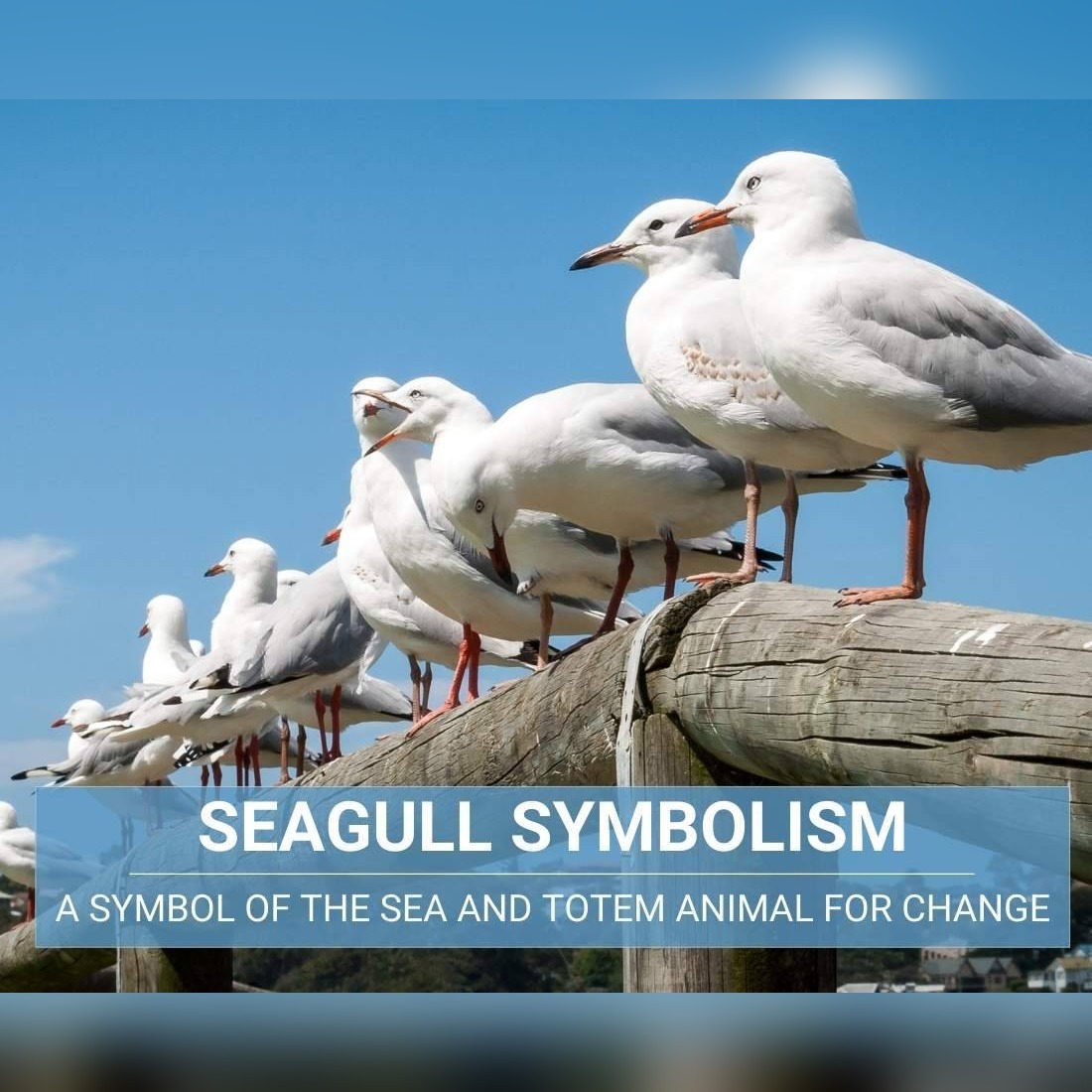
In British and Irish fishing towns, seagulls were thought to carry the souls of dead sailors back from the sea. That belief meant killing one could mean killing someone’s father or brother. Whether a lone gull or a flock means the same thing, or something totally different, splits the old readings in half.
Key Takeaways
- In 19th and early 20th century British and Irish coastal tradition, seagulls were soul-birds, not freedom symbols. Killing one was considered genuinely dangerous.
- The gull’s storm-warning role is rooted in real behavior: herring gulls and other large gulls move inland before rough weather, something coastal communities observed for centuries.
- Scottish Gaelic tradition treats the gull as a creature tied to home and belonging, not adventure. The expression Faoileag againn fhèin means “our own little gull” and refers to a familiar neighbor.
- As a spirit or totem animal, the seagull maps to adaptability, opportunism, and comfort with being in-between, traits rooted in how gulls actually live.
- The seagull holds two readings at once across many traditions: sacred messenger and opportunistic scavenger. That tension is not a contradiction. It may be the point.
What Do Seagulls Symbolize Across Cultures and Spiritual Traditions?
Seagulls carry the freedom label because they are visible, loud, and coastal, and coastal means open water, open sky, movement. That reading is not wrong. But it is incomplete.
The traditions that actually lived alongside gulls for generations produced something older and less comfortable. The common thread is the threshold. The gull lives where land ends and sea begins, which is not quite either world. British and Irish fishing communities saw this and named it: the gull was a soul-carrier, a storm-herald, a creature that crossed between the everyday world and whatever lay beyond the horizon. Scottish Gaelic speakers made the gull a symbol of home attachment rather than escape. Irish folk rhymes recorded in the 1930s cast it as the “sea’s messenger,” reading the weather and warning before the squall arrived.
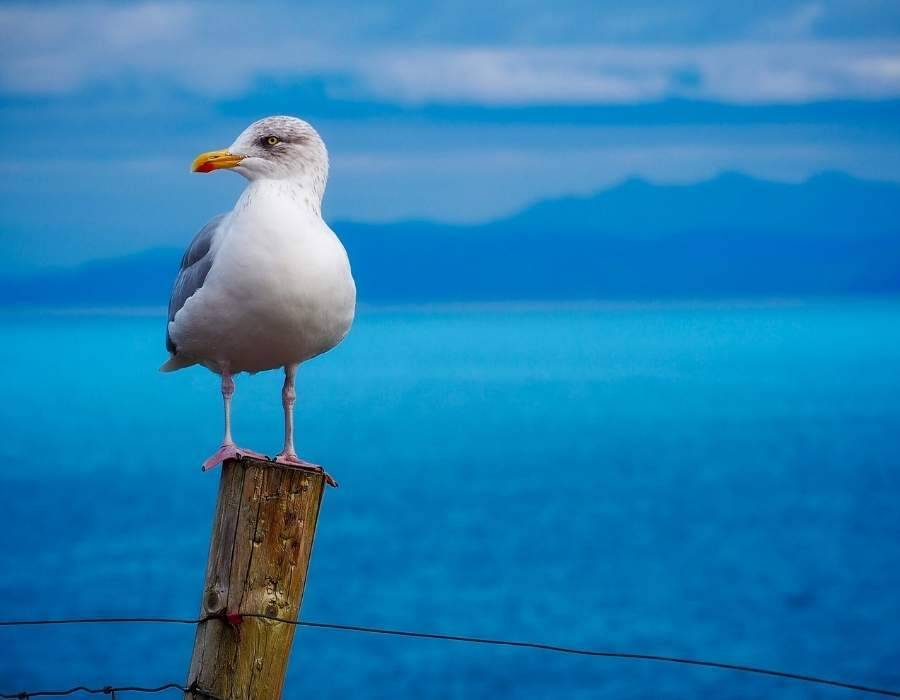
The freedom reading exists too, mostly in later literary tradition and in Richard Bach’s Jonathan Livingston Seagull (1970), which pushed the bird firmly into aspirational territory in the English-speaking world. But the older layers say something different, and they are worth knowing. An overview of gull symbolism across traditions puts the soul-bird reading first, which matches the historical record.
What Does the Seagull Mean in British and Irish Coastal Fishing Folklore?
In 19th and early 20th century coastal districts of Britain and Ireland, the gull was not a symbol. It was a fact of life, and the beliefs around it were practical. Fishermen and their families watched gulls the way farmers watched crows: for what they told you about what was coming.
The most documented belief is this: seagulls carry the souls of sailors who drowned at sea. Not metaphorically. The folklore recorded from lighthouse keepers and fishing villages holds that the bird circling the cliffs might be someone who went down in a storm and never came home. Folklore documented from lighthouse station records shows keepers refusing to harm nesting gulls for this reason. Killing one was considered a bad act not because gulls were sacred in a religious sense, but because you might be killing someone’s father.

The storm-warning role runs alongside this. Gulls moving inland in numbers meant weather was building at sea. This is an observed fact. Coastal communities noticed this centuries before any formal documentation. The practical observation and the spiritual belief reinforced each other until the line between them was hard to find.
What Does Scottish Gaelic Tradition Say About the Seagull?
The Gaelic expression Faoileag againn fhèin translates roughly as “our own little gull” and is used of a longtime neighbor or community member, someone who has always been there, who belongs to the place. Contemporary Gaelic commentary documented at Omniglot notes that the gull’s call carries strong associations with homesickness for people from the islands and coast of Scotland: the sound of the bird is the sound of the place you came from.
This is the opposite of the freedom reading. The Gaelic gull is not heading somewhere. It is the thing that stays, or the thing that reminds you what you left.
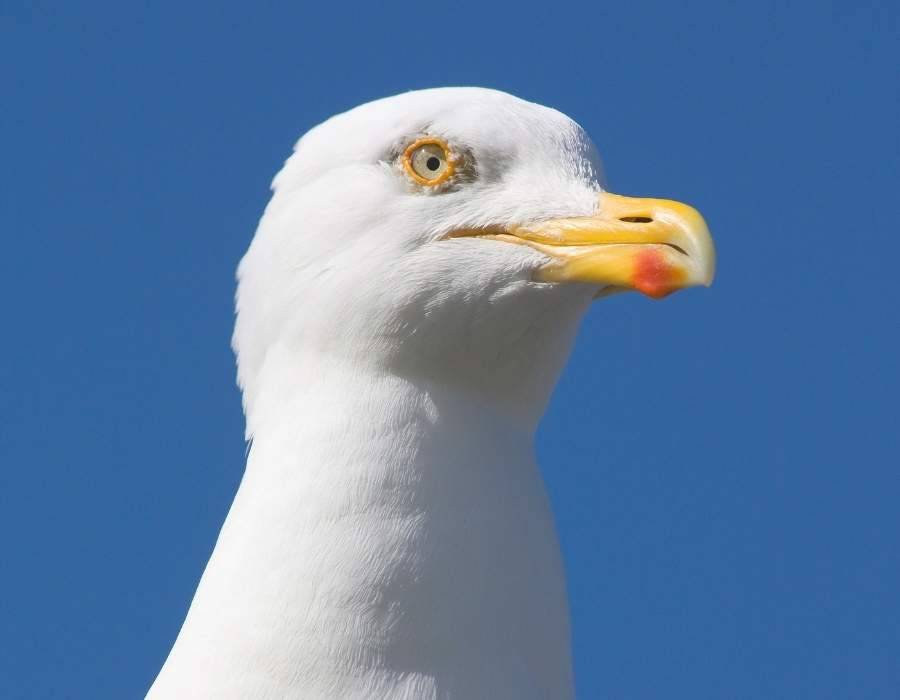
Celtic literary tradition does contain the broader motif of souls becoming birds, documented in medieval Irish and Welsh texts. But specialist analysis is careful here. In the medieval Welsh poem Canu Taliesin (The Singing of Taliesin), the phrase “mewling seagull-men” uses the gull as a metaphor for weakness or complaint, not as a soul-carrier. The gull in Celtic literature is more often a comparison than a primary symbol, which is worth knowing before drawing a straight line from “Celtic tradition” to any single meaning.
What Role Do Seagulls Play in Irish Folklore and the Schools’ Collection?
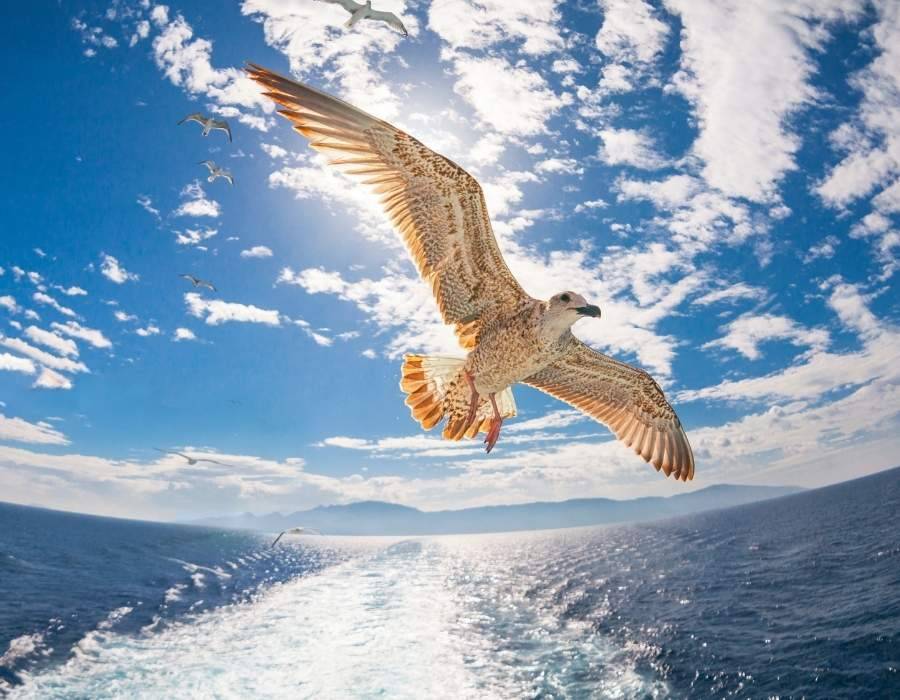
The Irish Folklore Commission’s Schools’ Collection, gathered in the 1930s from schoolchildren across Ireland, preserves a rhyme recorded from Ramelton, County Donegal: “Sea gull, sea gull, sit upon sand / It’s always bad weather when you come upon land.” Weather proverb on the surface. Something older underneath.
The logic of the rhyme is that the gull on land is out of place. Its presence marks a crossing of the boundary between sea and shore, which in Irish narrative tradition is also the boundary between the ordinary world and the Otherworld. Essays drawing on the Duchas schools’ material describe the gull as the “sea’s messenger,” a bird that voices the mood of the ocean and mediates between everyday coastal life and the restless, uncertain world beyond the water.
I find this more interesting than the freedom symbol, to be honest. It is a meaning built from fear and attention, which is usually where the real folklore lives.
What Is the Prophetic and Spiritual Meaning of Seagulls?
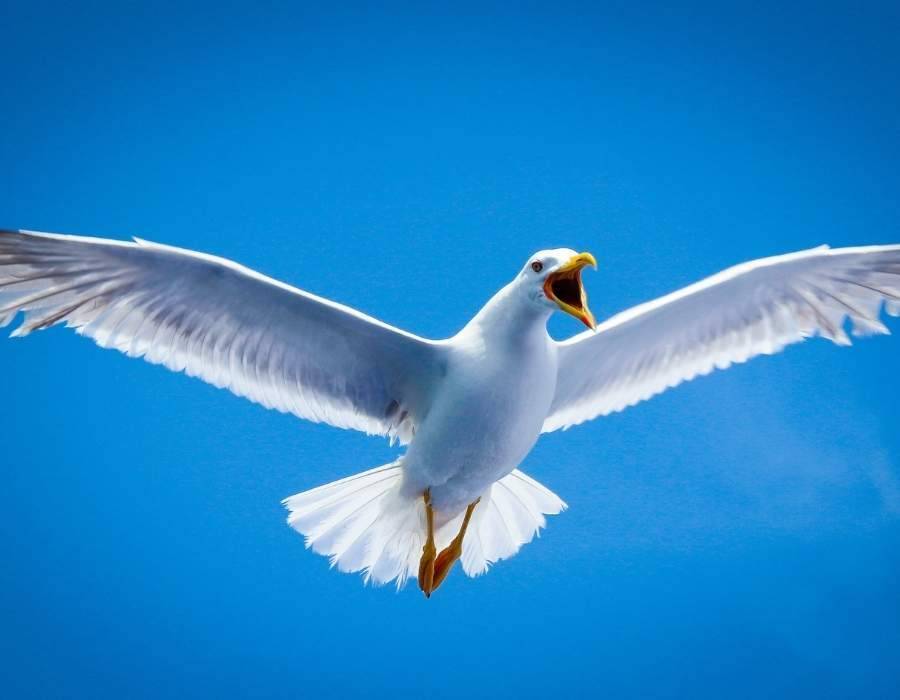
The prophetic reading of the seagull comes directly out of the storm-warning tradition. If you believe the gull reads weather before you can, and if that belief has been confirmed by generations of observation, the gull becomes something that knows the future. The step from “this bird predicts storms” to “this bird carries warnings” is a short one in cultures that already believed birds could carry messages across boundaries.
In a broader spiritual context, thegull belongs to a category of birds that live between worlds. The soul-bird tradition documented in British-Irish coastal folklore fits inside this pattern. So does the storm-herald role. What changes across traditions is not the gull’s basic function, which is reading the boundary, but what boundary the gull is thought to stand at. Weather. Death. Home and away. The living and the dead.
If this species has caught your attention recently, the seagull tends to appear in spiritual readings as a sign of transition: something ending or shifting at the edges of your awareness. Not a dire warning. A reading of the atmospheric pressure, so to speak.
What Does the Seagull Represent as a Spirit Animal?
The seagull as a spirit animal represents adaptability first. Not the inspirational-poster kind. The actual behavioral kind: gulls eat fish, yes, but also chips, garbage, insects, earthworms, and each other’s eggs if the opportunity presents. They have learned to thrive in cities, airports, parking lots, and landfills. They are not picky. Sacred Foods’ documentation of shorebird symbolism names this adaptability as the gull’s defining spiritual trait, the ability to find what you need in conditions that were not designed with you in mind.
People who identify with the seagull as a spirit animal tend to describe themselves as comfortable in uncertain or transitional spaces. Not committed to one place or one way of being. Good at reading social dynamics, sometimes opportunistically so. The gull’s reputation for pushing in and taking what it wants is part of this, not a flaw to be explained away.
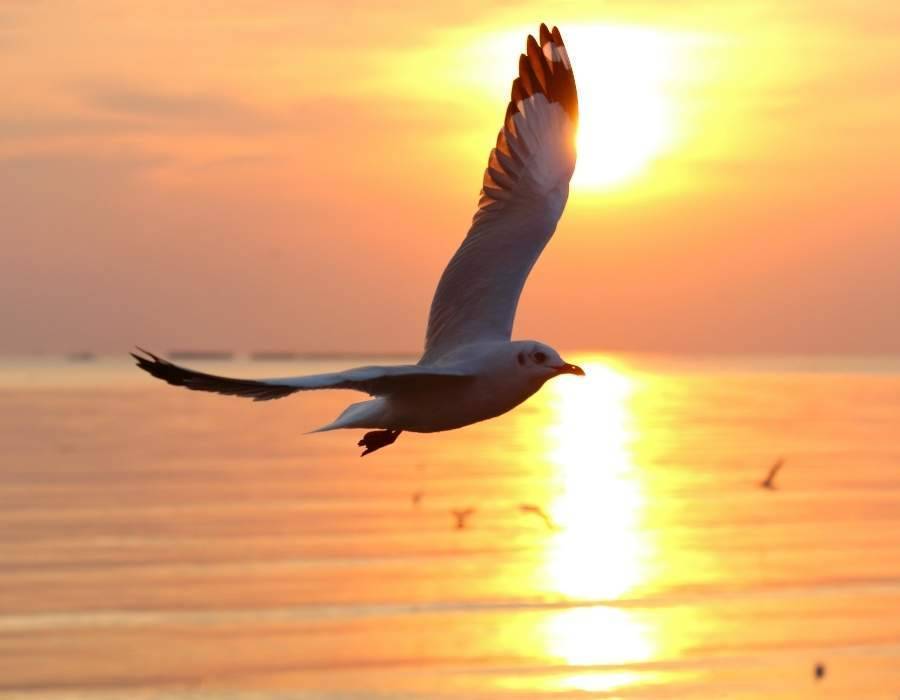
Community navigation is the other piece. Gulls are colonial nesters. They live in large, loud, complicated groups and they coordinate. The noise that humans find irritating is a communication system. If the seagull is your spirit animal, you probably operate in groups, read the room quickly, and move fast when you see an opening.
What Is the Seagull’s Meaning as a Totem and Power Animal?
Totem and spirit animal are often used interchangeably, but they name different things. A spirit animal is an individual relationship with a creature. A totem is ancestral and group-level: the animal associated with a family line or community, carrying its qualities across generations.
Seagull-totem lineages, where documented in coastal and island cultures, emphasize survival at the margin. The bird does not live at the center of anything. It lives at the edge of the land, the edge of the sea, the edge of what is known. Communities who identified with the gull at a totem level were often communities that lived at actual edges: island peoples, fishing villages, communities that understood the coast as their specific competence.

What seagull totem traditions emphasize is not freedom in the abstract but resourcefulness in specific hard conditions. Reading environmental signals before others do. Knowing when to hold ground and when to move. The gull totem is practical in a way that the freedom-symbol reading is not.
What Is the Shamanic Meaning of the Seagull?
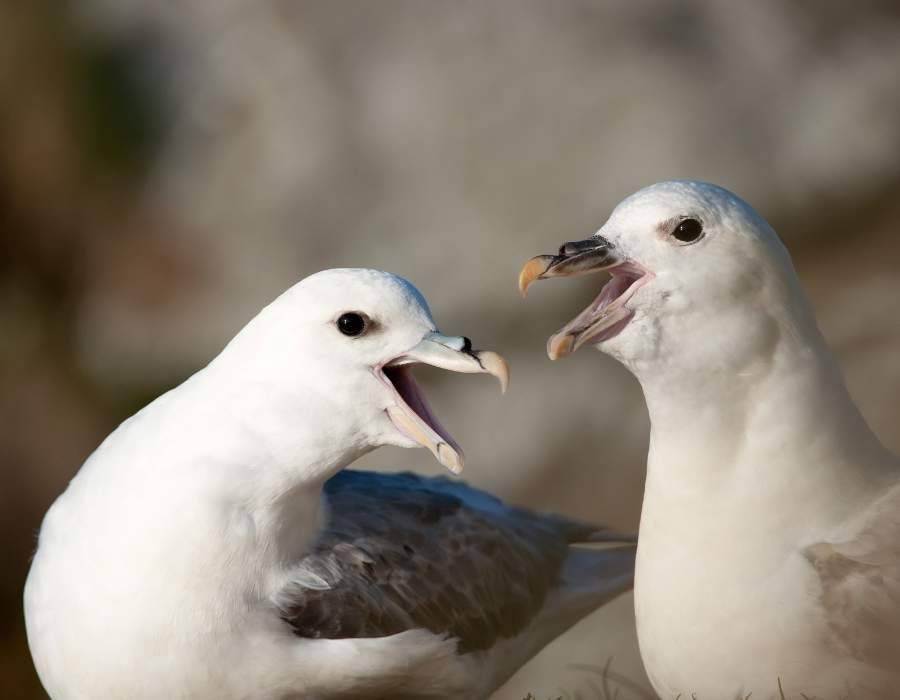
In shamanic cosmologies that work with sea-edge birds, the gull fits into a class of creatures that travel between the world of the living and whatever lies beyond the water or beyond the sky. The soul-bird tradition documented in British-Irish coastal folklore is one version of this: the gull as a vessel for the dead, a creature that crosses back and forth between states.
Broader circumpolar bird-soul traditions, documented across Arctic and sub-Arctic cultures that live with seabirds as a primary part of their environment, place sea-edge birds in psychopomp roles: creatures that guide or accompany souls across boundaries. I want to be careful here because I am not working in those traditions and the specific beliefs vary considerably. What I can say is that the pattern, sea-edge bird as boundary-crosser and soul-companion, appears across cultures that developed independently. That recurrence is worth noting.
The shamanic reading of the gull is less about personal guidance and more about the bird’s functional role in the cosmology. A world-traveler that knows both sides of the line.
What Do Seagulls Symbolize in Literature and Art?
The bird in that play stands for thwarted aspiration, beauty that cannot fully survive contact with the world, something restless and not quite where it belongs. When the character Konstantin shoots a seagull and lays it at Nina’s feet, he is making a gesture about himself, about what he fears his own creative life amounts to.
The medieval Welsh poem Canu Taliesin uses “mewling seagull-men” as an insult: people who complain uselessly, who make noise without effect. The gull in that context is not noble. It is a scavenger with a loud voice.
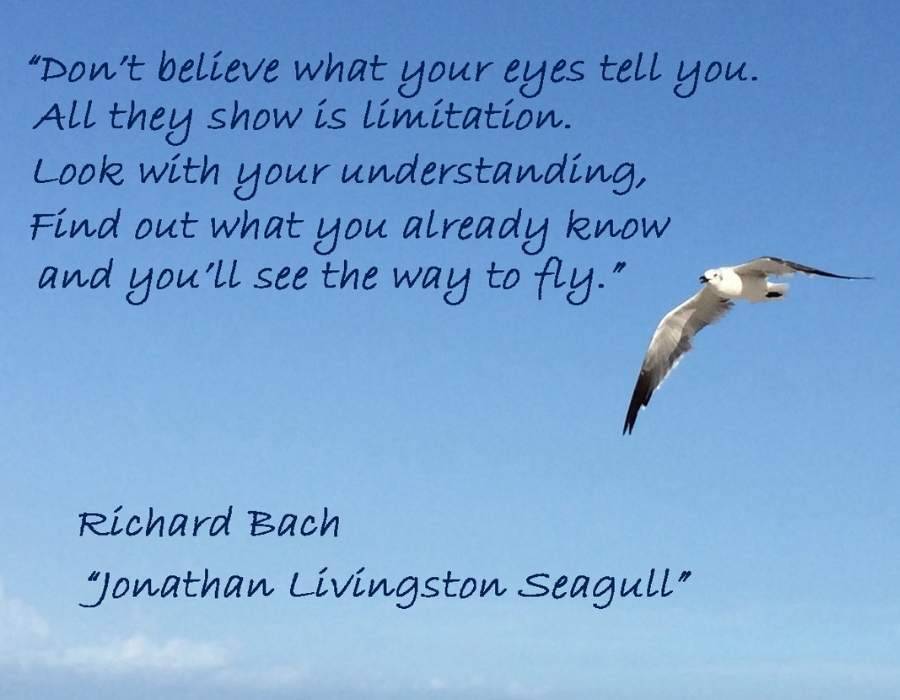
Richard Bach’s Jonathan Livingston Seagull (1970) flipped this. Bach made the gull a seeker, an individualist, a creature that practices flying for its own sake rather than to eat. The book sold millions of copies and permanently attached the freedom reading to the species in popular culture. It is a beautiful book. It is also, ornithologically, ridiculous. Gulls do not practice flight for its own sake. They practice finding food. That gap between the symbol and the actual bird is itself interesting.
What Does a Flock of Seagulls Symbolize Versus a Single Gull?
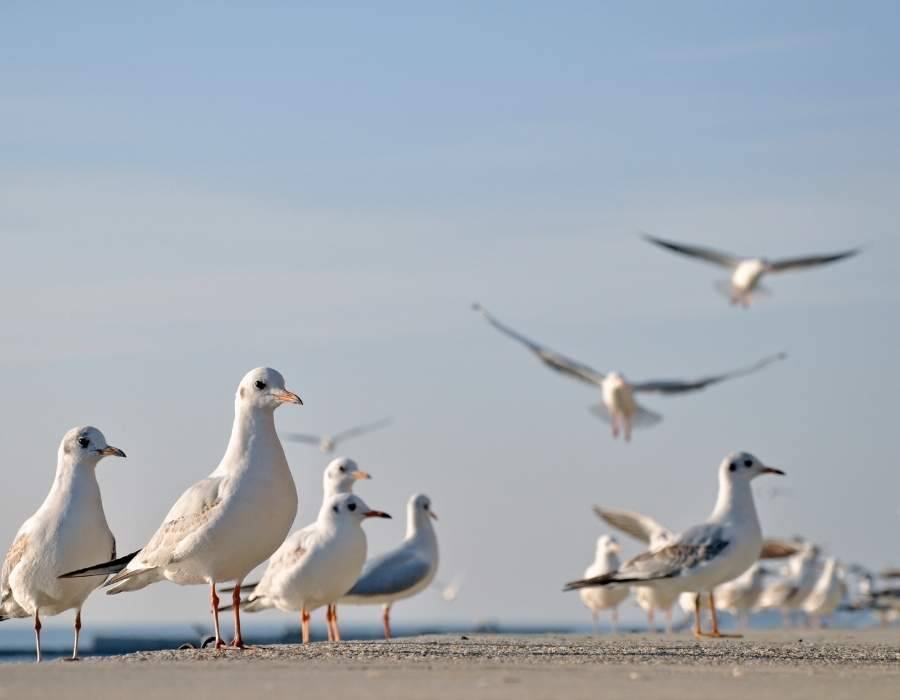
A single gull tends toward the soul-messenger reading in documented coastal traditions. One bird, alone, circling or crying near shore, was often read as a specific soul: a particular person making contact, or a specific warning aimed at one person or vessel.
A flock is different. Gulls moving inland in large numbers before a storm was a collective signal, read as community-level information. The storm is coming for everyone. Get your boats in.
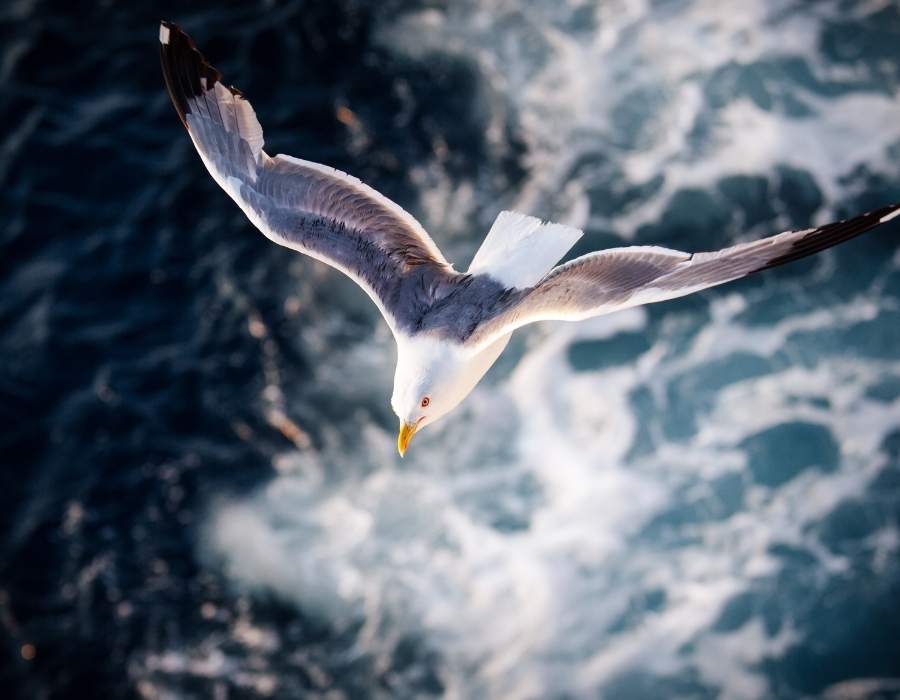
In the soul-bird tradition, a flock might represent many souls together, perhaps the crew of a ship lost in a single disaster. There are accounts from 19th century British coastal communities of large gull gatherings at locations where wrecks had occurred. Whether that was superstition or observation (gulls do gather where fish surface near disturbances in the water) probably depends on who you ask. The practical and the symbolic, as always with the gull, are hard to separate cleanly.
What Does It Mean to Dream of a Seagull?
Dream readings of the seagull follow the same logic as waking-life readings, but they tend toward the internal version of the symbolism. A gull crying in a dream maps, in the tradition documented by dream-symbol analysts at Rosmerta Publishing’s dream symbol archive, to unresolved longing or a message not yet fully understood. A gull landing on you suggests the message has arrived and is waiting for you to notice it.
A dead gull in a dream is the one that gives people pause. In the soul-bird tradition, a dead gull is a soul that has completed its crossing. The Jungian reading of sea-birds in dreams connects them to the unconscious: the ocean as the deep mind, the bird as something that has traveled there and come back with information. A dead bird at the boundary could mean that whatever was in process has resolved.
For the full treatment of dead seagull symbolism, the dead seagull meaning piece covers specific scenarios in detail.
Is the Seagull a Negative Symbol? What About Its Reputation as a Pest?
The gull is objectively a difficult bird to like in person. It is loud. It steals food from human hands without guilt. It will mob you if you get too near a nest. Herring gulls in particular have adapted so well to human food sources that they have become a genuine nuisance in British seaside towns, enough that conservation agencies now publish guidance on how to deter them without harming them.
Maritime tradition held both the sacred soul-bird and the scavenging pest at the same time. These were not contradictions. A gull could be someone’s dead uncle and still steal your pasty. The Cornish fisherman who would not harm a gull was also the one shouting at it to get off the boat. Reverence and irritation coexisted.

And I think this tension is actually the most honest thing about seagull symbolism. It is a bird that refuses to behave according to its symbolic role. It is supposed to be a dignified messenger of the dead and instead it is screaming at a tourist for a chip. That gap between the sacred and the ridiculous is very human, and maybe that is why cultures that watched the gull closely loaded so much meaning onto it.
What Are the Key Behavioral Facts About Seagulls That Shaped Their Symbolism?
Herring gulls (Larus argentatus) live up to 25 to 30 years in the wild, according to the British Trust for Ornithology’s bird facts database. That is a long life for a wild bird, long enough for coastal communities to recognize individual birds and associate them with specific places or people. A gull that returned to the same cliff ledge year after year was a gull that a fishing family could name.
The storm-sensing behavior is real and documented. Large gulls respond to barometric pressure changes and will move away from exposed coastal positions before weather arrives. The Animal Diversity Web records that herring gulls demonstrate this kind of weather-related movement. The coastal communities that turned this into a warning system were reading actual bird behavior, not projecting onto it.

Gulls are also exceptionally vocal.The herring gull has at leastten documented call types used in different social contexts, from territorial warnings to chick contact calls to alarm signals. A community that lived alongside gulls heard specific calls associated with specific situations. The cry of a gull near shore in certain conditions was not random noise. It had a pattern. People learned the pattern.
My grandmother Theresa kept a leather notebook of Bavarian folk beliefs about birds, passed down from her own grandmother in the Bayerischer Wald. The notebook is on my desk right now, German cursive, pages stuck together in places. The entries that held up across generations were always the ones rooted in something someone had actually seen. The symbolism is not arbitrary. It maps directly onto observed behavior. Good animal symbolism always does, when you dig far enough down.
Frequently Asked Questions
What does it mean when a seagull follows you?
In British and Irish coastal fishing tradition, a gull that singles out a particular person was sometimes read as a soul making contact, a deceased family member or lost sailor drawing close. The secular reading is simpler: gulls learn that humans carry food and will follow anyone who has fed them before or who looks like they might. Both readings can be true at once. If the experience felt significant, the soul-messenger tradition gives you a framework for sitting with that. If it happened at a fish and chip stand, the explanation is probably hunger.
Is a seagull a good omen or a bad omen?
Mostly neither, and sometimes both. In documented British-Irish coastal folklore, a gull near shore was neutral until context made it otherwise. Gulls moving inland before a storm was a bad omen in a practical sense: bad weather was coming. A single gull appearing near a grieving family could be comforting, read as a soul checking in. Harming a gull was the genuinely bad omen. The bird on its own was a reader of conditions, not a verdict on your life.
What does a seagull symbolize in Christianity or the Bible?
The seagull does not appear as a named bird in the canonical Bible, so there is no scriptural symbolism to point to directly. In later Christian folk interpretation, gulls sometimes appeared alongside other seabirds as symbols of the soul’s freedom from the body, or as creatures associated with the Holy Spirit by virtue of being white-winged birds. This is folk Christianity rather than doctrine. I don’t have a confident answer on any specific denominational tradition that formally adopted gull symbolism. The folk record here is thin, and I won’t invent certainty where there isn’t any.
What does it mean when a seagull cries or screams near you?
The herring gull has at least ten documented call types used in distinct social situations: alarm, territory, contact, warning. Coastal communities that lived alongside gulls learned to distinguish them. A specific call pattern near shore before a storm meant one thing. A gull crying over open water meant another. In the soul-bird tradition, a gull crying near a home was sometimes read as a soul calling for acknowledgment. The honest answer is that the specific call matters, and most people hearing a gull are not fluent in gull. Pay attention to context and whether other gulls respond.
What is the difference between seagull symbolism and albatross symbolism?
The albatross carries a much heavier symbolic burden in Western literary tradition, mostly because of Coleridge’s The Rime of the Ancient Mariner (1798), which established the albatross as both a good omen when it appears and a curse when killed. Albatrosses are deep-ocean birds that cross entire ocean basins and return. Their symbolism is about long voyages, endurance, and the weight of guilt. The seagull is a coastal bird, a shore-edge creature. Its symbolism is about thresholds, not long crossings. The albatross is the open-sea version of the same soul-bird archetype, carrying greater distance and greater consequence.
What does a white seagull symbolize specifically?
Most seagulls seen at the coast are primarily white in their adult plumage, so white is almost inseparable from the species in most traditions. Where white is called out specifically, it tends to reinforce the soul-bird and messenger reading: white as the color of the threshold, neither one thing nor another. In folk belief more generally, white animals are often treated as visitors from another state of being, not fully of this world. A white gull appearing after a death in the family fits neatly into this framework in British-Irish coastal tradition. The white reads as clean passage rather than warning.
What does it mean when a seagull lands on your head or touches you?
Direct physical contact with a wild bird is unusual enough to carry weight in almost every folk tradition that addresses birds. In the soul-bird reading from coastal British-Irish folklore, a gull making deliberate contact with a specific person was occasionally interpreted as a soul insisting on recognition, not content to simply circle. The practical reading is also relevant: a gull that lands on a human head is probably very accustomed to people and associated with food. Both things can be true. If the contact felt intentional to you, the tradition gives you language for that feeling.
Are seagulls associated with any gods or deities?
No major documented religion names the seagull as a primary symbol of a specific deity.In Celtic traditions that include bird-formdeities, the connections run more strongly through ravens, cranes, and swans.Manannan mac Lir, the Irish seagod, is associated with seabirds in general as creatures of his domain, but the gull is not specifically his bird the way the raven is Odin’s. In Greek tradition, seabirds appear in myth (the halcyon, the Diomedes birds) but the gull is not a named divine symbol. The gull’s religious weight comes from folk tradition, not from formal theology.
What does a dead seagull symbolize?
In the soul-bird tradition of British and Irish coastal folk belief, a dead gull found on shore could mean a soul that had completed its crossing, finished whatever it needed to do. It was not read as a straightforwardly bad omen in itself. The circumstances mattered: where it lay, whether it seemed to have arrived naturally or been harmed, what was happening in the finder’s life. For a full breakdown of this specific encounter, including what different positions and conditions are traditionally associated with, see the dedicated piece on dead seagull meaning.
How does the seagull compare to other sea-bird spirit animals like the pelican or cormorant?
The pelican’s primary symbolic role acrossdocumented traditions is sacrifice and self-giving: the medieval Christian image of the pelican feeding its young with its own blood made the bird a symbol of charity and redemptive suffering. The cormorant carries darker associations in several traditions, partly because of its black plumage and its habit of diving deep and returning, which reads as a descent into the underworld and back. The gull sits between these two. Less sacrifice than the pelican, less darkness than the cormorant. It is the boundary-reader, the one that knows the edge without fully crossing it either way.
Sources
- World Birds, Gull Symbolism Overview
- Sacred Foods, Shorebird Symbolism and the Seagull
- Folklore in Film, Lighthouse Folklore Records (2025)
- Symbol Hubs, Seagull Symbol
- History and Nature, Seagulls in Canu Taliesin (2014)
- Spiritual Living 360, Spiritual Meaning of a Seagull
- Rosmerta Publishing, Seagull Dream Symbols
- A-Z Animals, Seagull
- Animal Diversity Web, Larus argentatus (Herring Gull)
- Omniglot Celtiadur, Gulls in Celtic Languages (2020)
- British Trust for Ornithology, Herring Gull Bird Facts
- Kat Sisters Spellbound, The In-Between Wing: Seagull Lore
- Connolly Cove, The Lore of Lighthouses
- Encyclopedia.com, Soul Birds
- www.shamanism.one
- en.wikipedia.org
- thefaunalist.com
- www.britannica.com
- www.roman-britain.co.uk
- sacred-texts.com