
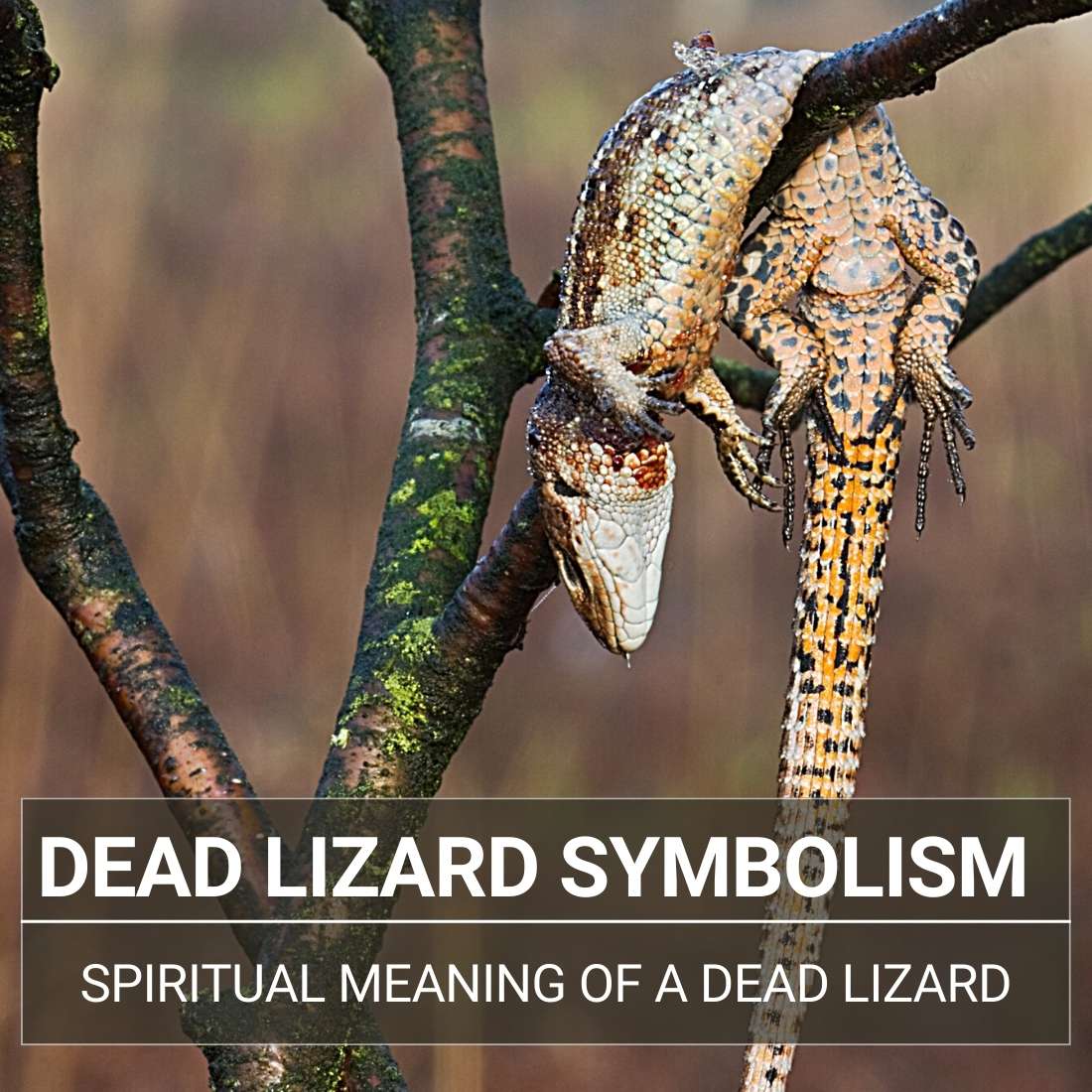
My grandmother Theresa’s notebook has one entry about lizards. One. It’s oblique, tucked between a note on ravens and something about a white deer, and I couldn’t tell you if it records a warning or just an observation. But she wrote it down, which means she thought it mattered. That posture is where I’d start: not with fear, but with attention.
Key Takeaways
- Across the traditions that record lizard symbolism at all, a dead lizard read most consistently as a cycle closing, not a disaster arriving.
- Location matters: indoors points to something domestic in transition; a doorway carries its own reading in several unrelated traditions.
- Hopi cosmology links the lizard to solar energy and the border between waking and dreaming; its death marks a shift in that current, not an erasure of it.
- In Chinese folk belief, the household lizard is a guardian figure; finding one dead asks you to look at what you may have been neglecting at home.
- Timing and condition, fresh or long dead, dawn or dusk, change the reading more than most articles admit.
What Does It Mean When You Find a Dead Lizard?
Most traditions that address lizard spiritual meaning read the animal as a creature of thresholds: between waking and sleep, between the hot world outside and the cool dark under a stone. A dead one, then, is not a curse. It’s a marker. Something active in your life, a pattern, a relationship, a way of seeing, has run its course.
I want to be honest about the limits here. The folk record on lizards is thinner than it is for owls or ravens. The traditions that address them most directly, Hopi, Navajo, Chinese household folk religion, ancient Egyptian, tend to frame the lizard as a guardian or dreaming figure. Its death reads as a signal, not a sentence.
What the traditions agree on, roughly: something has ended. What comes next depends on you and your circumstances, not the lizard.
What Should You Do After Finding a Dead Lizard?
You are not making this up. The instinct to ask what it means connects you to people who have been doing the same thing for a long time, and in circumstances a lot harder than yours, probably.
Practically: remove the body. You don’t need a ceremony for this. But a moment of deliberate attention is never wasted. Several folk traditions, including the Appalachian mountain tradition I live closest to here in Black Mountain (though I’d never claim it as mine), treat a found dead animal as something to be returned to the ground with intention. Bury it if you can. If you can’t, wrap it and dispose of it with care rather than disgust. The care is for you.
After that, sit with the question the lizard raised. Not “am I cursed” but “what in my life has recently gone quiet or stopped working?” The traditions that make the most sense to me read this kind of encounter not as prophecy but as your own attention, called to something you’ve been letting drift.
Does the Location Change What a Dead Lizard Means?
Yes, and this is where most articles fail to be specific.
Inside the house: In Chinese folk belief, lizards are household guardians, connected to good fortune and protection. Finding one dead inside your home reads, in that tradition, not as a bad omen in itself but as a sign that the protection has been used up. Whatever the lizard was guarding against has passed through. The question worth asking is what has recently changed inside your home or family.
At the doorway or threshold: Doors are liminal spaces in nearly every symbolic system that takes thresholds seriously, Hopi, Celtic, even the Roman tradition of Janus. A dead animal at a threshold tends to signal a transition: something entering or leaving your life. The direction matters. Found on the outside of the door suggests something approaching. On the inside, something departing.
In the yard or garden: This is the least alarming reading. Lizards die outside all the time for reasons entirely unrelated to you. If you found it outdoors and it drew your attention, the question is why it drew your attention. That noticing is worth sitting with. But I wouldn’t read urgency into an outdoor find the way I might an indoor one.
For the specific case of a dead lizard found repeatedly indoors, the broader lizard spiritual meaning page covers the living lizard’s symbolism in more depth.
What Do Native American Traditions Say About Dead Lizards?
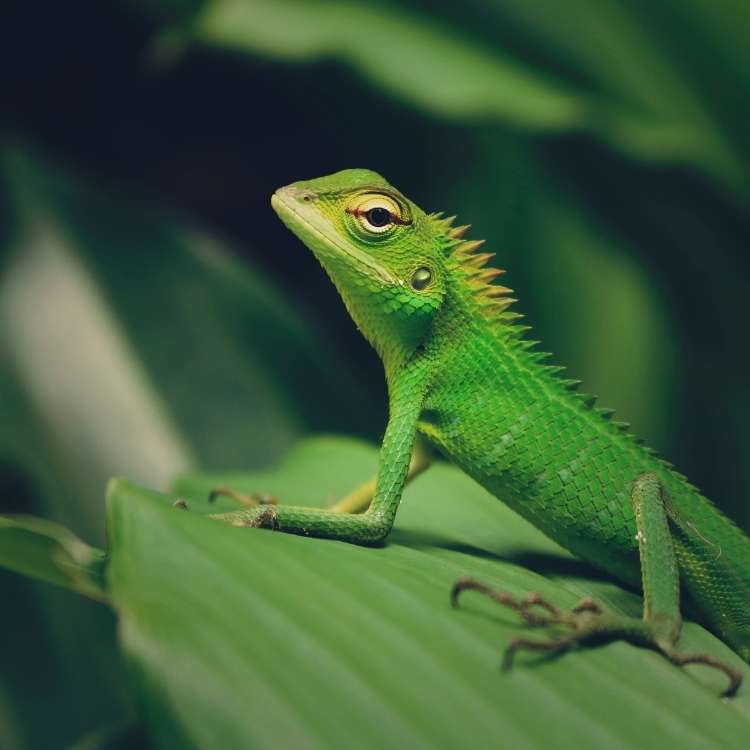
Among the Hopi of northeastern Arizona, the lizard, particularly the horned lizard they call kwewu, carries associations with solar energy, endurance, and the boundary between the waking world and the dream world. Ethnographer Elsie Clews Parsons, who documented Hopi and Pueblo ceremonial life in the 1920s and 1930s, recorded the lizard as a figure that moves between states: between hot and cool, between sun and shadow, between sleep and consciousness.
Within that frame, a dead lizard is not a simple bad sign. It’s closer to a message from the dreaming layer. Something you’ve been carrying in the half-conscious part of your life is asking to be acknowledged. Not acted on in panic. Acknowledged.
Navajo traditions, as documented by Washington Matthews in his late 19th-century work on Navajo ceremonialism, treat reptiles broadly as figures of transformation. Death doesn’t cancel the animal’s meaning; it completes a cycle. The lizard that dies in your space has, in this reading, completed something on your behalf.
I am not Hopi or Navajo, and I won’t claim these traditions as my own. I’m citing named sources because you deserve specific information rather than a vague wave at “Native American tradition,” which covers hundreds of distinct peoples and cosmologies. What I can say is that the Southwestern traditions I’ve read in depth do not treat a dead lizard as catastrophe.
What Does the Dead Lizard Mean in Chinese and East Asian Tradition?
In Chinese folk religion, the five-lined skink and the common wall gecko have long been associated with household fortune. Wolfram Eberhard’s A Dictionary of Chinese Symbols (Routledge, 1986) documents the gecko as a creature whose presence in a home is auspicious, connected to luck, fertility, and the accumulation of good energy.
The death of this creature carries weight in that tradition precisely because of what the living animal represented. A dead household gecko or lizard is sometimes read as a sign that the home’s protective energy has been depleted, or that a period of good fortune is closing. But, and this is the part most sites skip over, the closing of one fortune cycle is understood to precede the opening of another. Transitional, not terminal.
According to folk records on gecko symbolism from East Asian traditions, finding a dead gecko is also sometimes connected to a warning about neglected domestic matters. Something in the home, a relationship, a financial situation, left unattended too long. The lizard dying is the notification, not the problem itself.
A 2020 survey of East Asian folk belief practices in the journal Asian Ethnicity noted that gecko and lizard omens remain part of active household folk practice in rural communities across southern China, Vietnam, and Taiwan, with interpretations varying by region but consistently centering on domestic fortune rather than personal death.
What Do Other World Cultures Say About Lizard Death Symbolism?
Ancient Egypt first. In E.A. Wallis Budge’s The Gods of the Egyptians (Methuen, 1904), Budge documents that the Egyptian hieroglyph for lizard carried the meaning “plentiful” or “many.” The lizard was associated with abundance and with the god Atum in some regional cults. Its death, near a home or tomb, was occasionally read as a transition marker: the close of an abundant period, with renewal implied.
Greek tradition is sparser. Pliny the Elder mentions lizards in natural historical terms rather than symbolic ones, and I haven’t found a clean Greek folk tradition around dead lizards specifically. The salamander, which ancient writers sometimes conflated with lizards, carried its own mythology around fire and endurance. But that’s a different animal.
In several West African animist traditions, and here I want to be careful because “West African” covers enormous geographic and cultural diversity, lizards appear as messenger animals between the living and the ancestral world. Mircea Eliade’s Encyclopedia of Religion (Macmillan, 1987) documents reptile symbolism across several sub-Saharan traditions as connected to ancestral communication and the passage of spiritual information. In that frame, a dead lizard near a home might read not as a warning but as a message delivered and completed.
What these traditions share is a reading of the lizard as a between-creature, and its death as a between-moment. I find that consistent enough to be worth naming.
What Is the Spiritual Meaning of a Dead Lizard’s Timing or Condition?
The timing matters more than most articles acknowledge.
Found at dawn: In traditions that read lizards as carrying solar symbolism, Hopi and Egyptian especially, dawn is the strongest moment for this encounter. A dead lizard found at first light is generally read as something beginning to end, rather than something already over.
Found at dusk or at night: This shifts the reading toward the dreaming and ancestral associations. If you found it in the evening and it sat with you through the night, that is the lizard doing what the dreaming traditions say it does: crossing between states alongside you.
Freshly dead vs. long dead: A lizard that died recently is still, in most folk readings, an active sign. One that has been dead for some time and you’re only now noticing is different. It may be asking you to look at something you’ve already known about but avoided. I don’t know how to prove that distinction rigorously. But it appears in enough traditions that it’s worth naming.
Damaged or missing parts: Worth noting that lizards can and do shed their tails as a survival mechanism, so a detached tail is sometimes just biology. A clearly damaged body in an unusual location carries the weight the placement implies. I read these cases as the same encounter, with the volume turned up.
Frequently Asked Questions
Is finding a dead lizard bad luck?
Not in the traditions I can trace with named sources. Wolfram Eberhard’s A Dictionary of Chinese Symbols treats the household lizard as a guardian figure; its death signals a cycle closing, not incoming disaster. The closest thing to “bad luck” in the record is the idea that something protective has been used up. That’s a transition. You are not targeted. Something has simply ended, and something will follow.
What does it mean if a lizard dies in your home specifically?
Indoor deaths carry more weight than outdoor ones across most folk traditions, because the interior of a home is a bounded, protected space. A lizard that dies inside yours is, in Chinese and several Southeast Asian folk traditions, a signal about the domestic sphere. Relationships, finances, or energy within the household that needs attention. The question worth sitting with: what inside my home or family life has been going unaddressed?
Does the color of the dead lizard change its meaning?
The folk record on lizard color symbolism is genuinely thin, and I don’t trust the sources I’ve found that claim otherwise. Color carries weight in the traditions that address it, white animals signal spiritual significance across European and several indigenous traditions. But for common brown or green lizards, I haven’t found color-specific readings I’d stake anything on. I’d rather tell you the record is thin than invent a tidy answer.
What does it mean if a lizard dies right in front of you?
The directness of the encounter amplifies the reading. When an animal dies in your immediate presence rather than being found after the fact, several traditions read it as a more pointed signal. Something that wanted to be witnessed rather than discovered. What were you thinking about or dealing with in that moment? That context is worth examining. Your attention was called. The question is what it was called toward.
Is a dead lizard a sign from a deceased loved one?
I don’t believe animals carry literal messages from the dead. What I do believe is that grief sharpens attention, and heightened attention catches things the mind would otherwise filter. If you’re grieving and a dead lizard appears somewhere that feels significant, the encounter is real even if the mechanism is psychological rather than supernatural. Several West African animist traditions documented in Eliade’s Encyclopedia of Religion do read reptiles as ancestral messengers. I hold that with respect without claiming it as my own reading.
What does it mean to dream about a dead lizard?
Dream encounters and waking encounters deserve separate treatment. For a full reading of dead lizard dream symbolism, including Jungian and folk-tradition frameworks, see the dream dictionary entry on dead lizards. The short version: a dead lizard in a dream most commonly points to the end of a defensive strategy or a survival pattern you’ve been running that no longer fits the situation you’re actually in.
Should I be worried if I keep finding dead lizards repeatedly?
Two parts to this. First, practical: if you’re finding multiple dead lizards inside your home, check for a possible entry point and rule out pesticide or chemical exposure. Lizards die in groups when their environment changes. Second, symbolic: in folk traditions that address repetition, a pattern of similar encounters reads as insistence. The same signal presented until it’s received. The repetition doesn’t change the meaning. It reinforces it.
Does the species of lizard affect the spiritual meaning?
For geckos specifically, the symbolic tradition is richer and more regionally specific than it is for lizards generally. Gecko symbolism carries its own thread, particularly in Japanese and Polynesian folk traditions where geckos in the home are considered good luck. An iguana carries different cultural weight in Mesoamerican traditions. A skink, by and large, has no symbolic record I’ve been able to find. If species matters to your reading, gecko is the one with the most specific documentation behind it.
Sources
- Spirit Animals: Gecko Symbolism
- Green Matters: Lizard Spiritual Meaning
- Mirror Within: Dead Lizard Dream Dictionary
- Hello Fearless: Gecko Spiritual Meaning and Symbolism
- Wolfram Eberhard, A Dictionary of Chinese Symbols (Routledge, 1986)
- E.A. Wallis Budge, The Gods of the Egyptians (Methuen, 1904)
- Mircea Eliade, ed., The Encyclopedia of Religion (Macmillan, 1987)
- Elsie Clews Parsons, Pueblo Indian Religion (University of Chicago Press, 1939)


In Nigeria,it is believed that seeing a dead lizard,portends evil talk more of seeing one dead and tied with a string in your business surrounding, it means that someone is being fetish just to bring you down and cause you misfortune.