
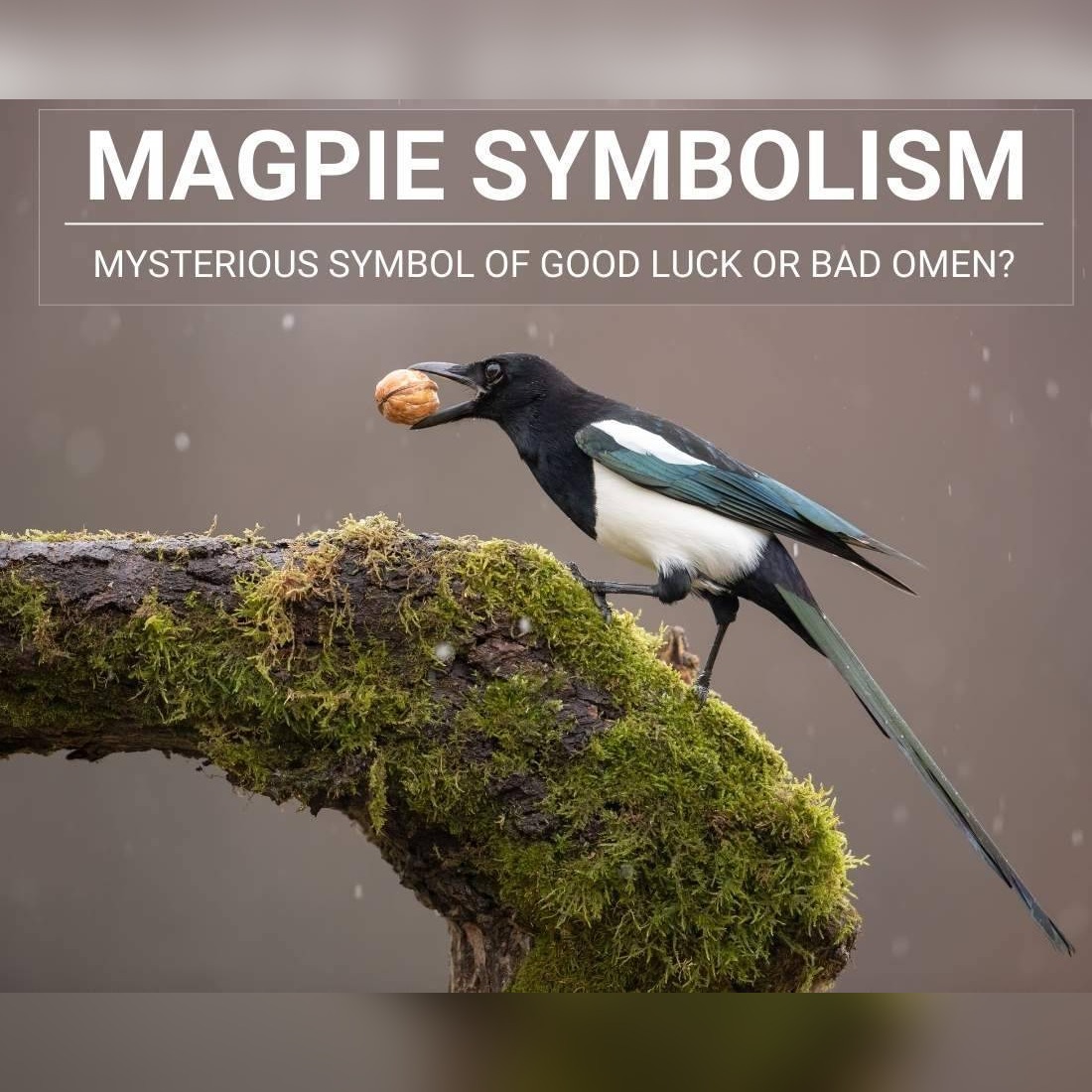
The magpie is the only common bird where the number you see matters. One bird means sorrow in English and Scottish folk tradition; two means joy. This counting system, documented from the late 18th century onward, directly opposes Han Chinese folk religion, where any magpie signifies good news for over a thousand years.
Key Takeaways
- Magpie symbolism splits sharply between European omen-reading and East Asian blessing traditions. The same bird carries opposite default meanings depending on where you look.
- The English counting rhyme (“One for sorrow, two for joy”) is the primary Western interpretive system, documented from the late 18th century onward by folklorist Steve Roud.
- In Han Chinese folk religion and Korean village belief, the magpie is an unambiguous bringer of good news, love, and welcome visitors.
- The bird’s pair-bonding behavior and corvid intelligence explain most of what humans have made of it symbolically. The meanings are not arbitrary.
- As a spirit or totem figure in modern usage, the magpie is associated with communication, duality, and comfort with in-between states.
What Is the Core Spiritual Meaning of a Magpie?
The short answer: sorrow or joy, bad news or good, depending on which tradition you’re drawing from and how many birds you see. The longer answer is that the duality is the point. Across traditions that had no contact with each other, the magpie kept landing in the same conceptual space: the space where news arrives. It is a threshold bird. A border-crosser. A creature that sits between categories, between black and white, between omen and blessing, between the ordinary and the charged. Understanding dead magpie meaning further illuminates this liminal nature.
I write about animal symbolism because I think the symbolism usually maps onto something real about the animal. With magpies, it does. They are loud, conspicuous, and social; they appear and disappear with a kind of theatrical confidence. If you were a pre-industrial person in a quiet world where information traveled slowly, a chattering magpie at the garden gate would feel like an announcement. The only question was what kind.
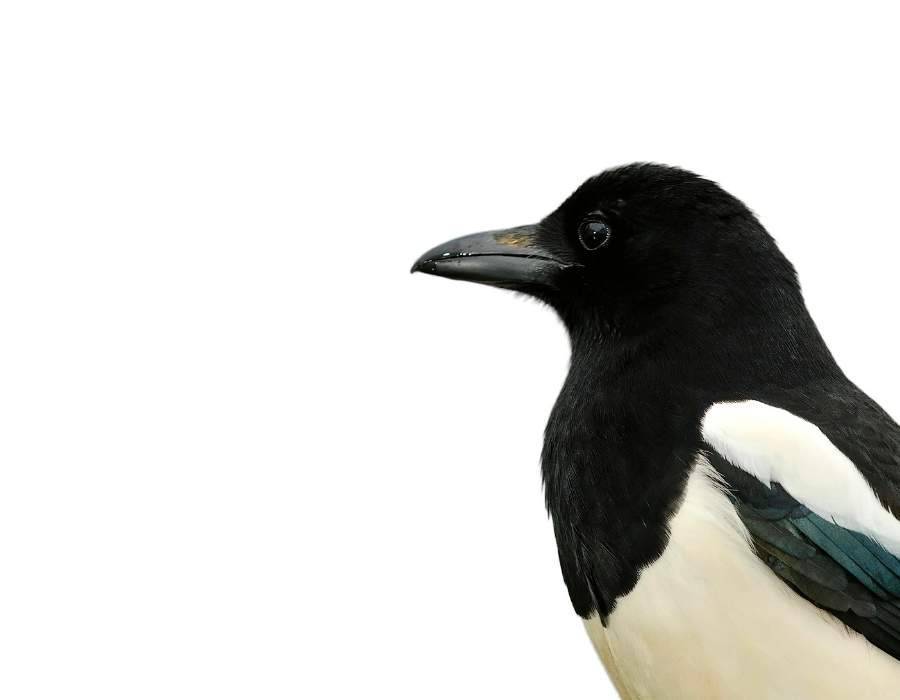
The answer depended on where you lived. In Britain, you counted them. In China, you welcomed them. In Rome, you watched which way they flew.
What Does the Name “Magpie” Reveal About Its Symbolic Role?
The English name is a piece of folk belief frozen in language. It comes from Middle English magot pie: “Mag,” a familiar form of Margaret used generically for a chattering woman, plus “pie” from Latin pica via Old French. The name means, essentially, “Maggie the pie.” It is a nickname for a gossip, a bearer of talk, a creature whose job is to move information from one place to another. That is not neutral naming. It encodes the bird’s symbolic function before any formal tradition got hold of it.
The Chinese name does the same thing, only in the opposite direction. 喜鹊 (xǐquè) means “joy magpie” or “happiness magpie.” The character 喜, joy or delight, is the same one that appears doubled as 囍 (“double joy”) on wedding banners and lucky couplets. The name ties the bird to marriage celebrations before a single folk tale needs to explain why. The Korean name 까치 (kkachi) turns up in compound words like 까치설날, “Magpie New Year’s Day,” linking the bird to the turn of the year, new beginnings, threshold moments.
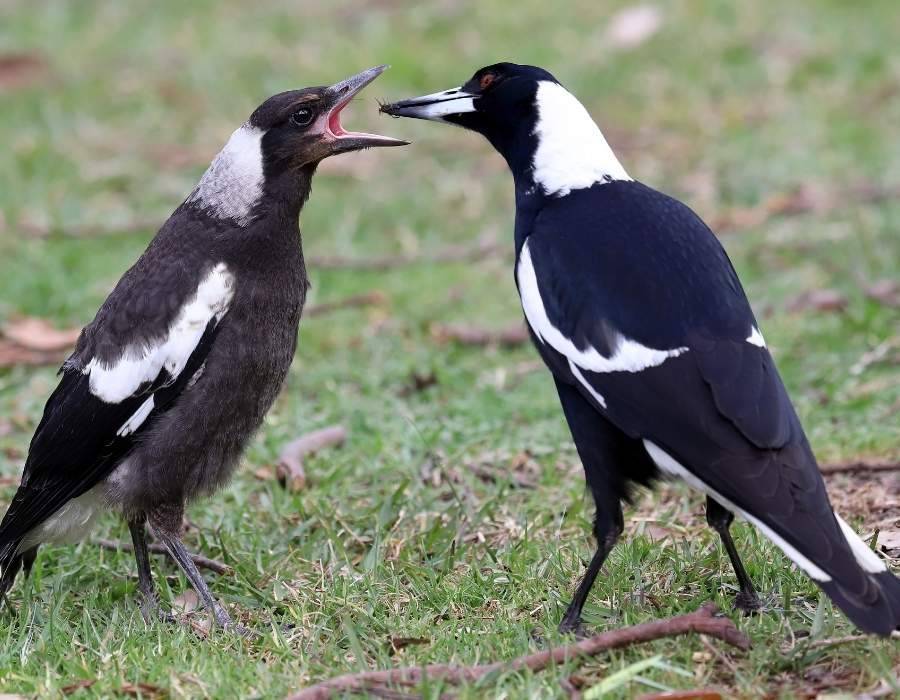
Three languages. Three different emotional valences encoded directly into the name. That is worth a pause.
What Do English and Scottish Folk Traditions Say About Magpie Omens?
According to Steve Roud’s The Penguin Guide to the Superstitions of Britain and Ireland (2003), magpie-counting rhymes and the ritual salutes that accompanied them were among the most widespread bird superstitions in 19th- and 20th-century Britain. The system is simple: the number of magpies you see at once predicts the character of what is coming. One bird means sorrow. Two means joy. Beyond two, the rhyme varies by region, but the structure holds: a numerical code for reading fortune.
The salute is the part most people don’t know. Seeing a lone magpie was considered genuinely unlucky, and the standard defense was to address the bird directly: “Good morning, Mr. Magpie, how is your wife?” The salute acknowledges the bird’s status while deflecting it through social courtesy. It treats the magpie as a person of uncertain intentions rather than an automatic curse, which is, I think, a fairly sensible posture toward uncertainty.

There is also a Christianized explanation for the magpie’s ambiguous reputation in post-Reformation England. The story holds that the magpie was the only bird that did not mourn at the Crucifixion, it chattered and hopped around instead of going silent, and this marked it as spiritually suspect. Whether that story is old enough to be causal or was invented later to explain an already-existing folk unease, I honestly don’t know. The record on this point is thinner than the confident versions of the story suggest.
What Does Chinese Folk Religion Say About the Magpie?
In Han Chinese folk religion, the magpie is not a bird you count nervously. It is a bird you welcome. Wolfram Eberhard, in A Dictionary of Chinese Symbols (Routledge, 1983), documents the magpie’s function as 报喜鸟 (bàoxǐ niǎo), “news-of-joy bird”: a creature whose call or presence at a window meant that good news, a promotion, or an auspicious visitor was coming. Magpies appear on New Year prints, on carved wooden doors, on wedding gifts. Two magpies facing each other is a standard emblem of marital happiness.
The most striking narrative is the Qixi myth. Two star-crossed figures, the Weaver Girl (Vega) and the Cowherd (Altair), separated across the Milky Way, are allowed to reunite once a year on the seventh day of the seventh lunar month. The bridge that makes this possible is built by magpies. They fly up and form a living span of wings and bodies across the sky. The magpie is not a messenger in this story. It is the crossing itself. The thing that makes reunion possible across an impossible distance.

That image is not incidental to Chinese magpie symbolism. It is the center of it. And across traditions, the common thread is the same: the magpie as a creature that moves between separated things and brings them together.
What Role Does the Magpie Play in Korean Folk Belief?
The Korean magpie, kkachi, is a household figure rather than a cosmic one. Zong In-Sob’s Folk Tales from Korea (Routledge, 1952) includes stories where magpies warn humans of danger, repay kindness, and deliver messages. The Horniman Museum’s survey of world bird lore notes that in Korea, the magpie “is thought to bring good news,” which is accurate but understates how embedded the bird is in daily belief.
A magpie calling near a house meant guests were coming. Letters were coming. Something good was on its way. The bird appeared in the New Year song 까치설날, Magpie New Year’s Day, which treats the magpie’s arrival as part of the seasonal transition, a sign of the year turning over into something fresh. The Korean magpie is not a sign to decode. It is a welcome presence.
How Did Ancient Rome and the Classical World Interpret the Magpie?
Roman augury was a formal system, practiced by trained priests called augures who read the movements and calls of birds to interpret divine will. The magpie (pica) fell into this system not as a straightforwardly lucky or unlucky bird but as a bird associated with cleverness, speech, and the capacity for meaningful noise. Its mimicry and conspicuous chatter made it a candidate for divine messaging, in the same way the raven and crow held their own augural roles.
H.R. Ellis Davidson, in Gods and Myths of Northern Europe (Penguin, 1964), traces continuities between the Roman magpie’s liminal status and later Germanic and Scandinavian beliefs, where magpies appear around witches and sorcery. The pattern holds across centuries: the magpie is a bird that knows things, that moves between the ordinary world and something else, that has access to information humans don’t. Whether that makes it a divine messenger or a witch’s familiar depends on the century and the religion. But the underlying type holds.
And the scientific genus name, Pica, is the Latin word straight through. The Romans named it, and the name stuck to every species on the planet.
What Does the Magpie’s Natural Behavior Tell Us About Its Spiritual Meanings?
The symbolism is not arbitrary. It maps directly onto observed behavior. Two facts about magpie biology explain most of what humans have made of them.
First: Eurasian Magpies (Pica pica) form long-term monogamous pairs, remaining together year-round and defending territories jointly, as documented in the British Trust for Ornithology’s 2019 species account. A lone magpie is genuinely anomalous. It is a bird that should have a partner and doesn’t. The folk interpretation, that a single magpie means sorrow because it has lost its mate, is not a superstition imposed on an innocent animal. It is an inference drawn from watching the bird carefully enough to know that solitude is not its natural state.
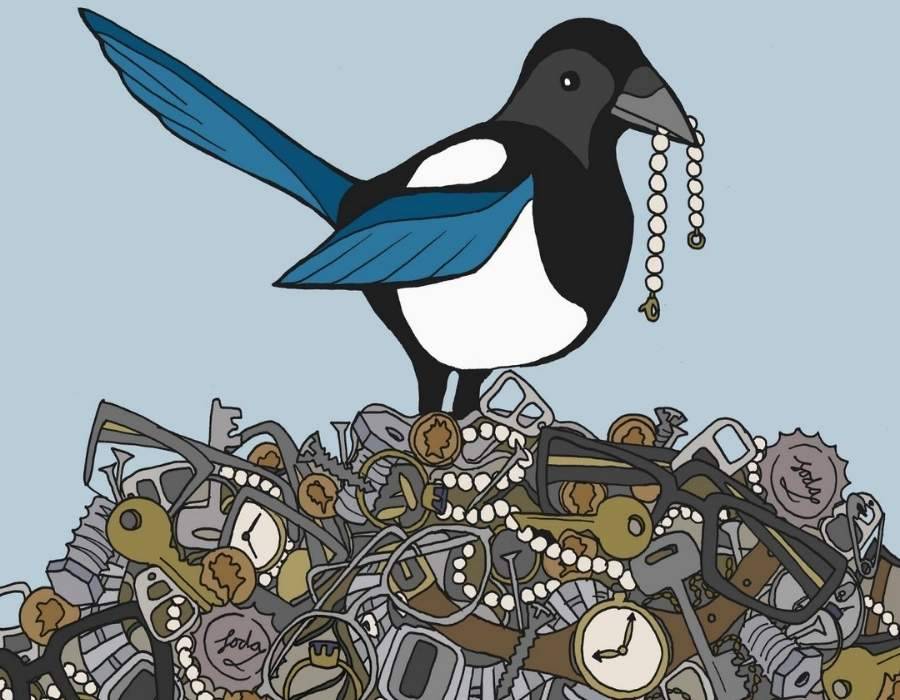
Second: magpies are among the very few non-primate animals known to pass the mirror self-recognition test. A magpie placed in front of a mirror will investigate a colored mark on its own body that it can only see in the reflection. Most animals fail this test. It means the magpie has some form of self-awareness. Whether you call that intelligence, consciousness, or something else, it gives real foundation to the idea of the magpie as a “knowing” bird, the kind of creature that might be paying attention to you while you are paying attention to it.
What Is the Full Magpie Counting Rhyme and What Do Its Verses Mean?
The canonical version, documented from the late 18th century onward, runs like this:
One for sorrow, two for joy, three for a girl, four for a boy, five for silver, six for gold, seven for a secret, never to be told.
Most people know the first two lines from the British television show Magpie (1968-1980), which used a version of the rhyme as its theme. But the rhyme is older and exists in regional variants that extend to ten or twelve birds, with different outcomes at each number. Some versions give eight to a wish, nine to a kiss, ten to a surprise you shouldn’t miss. The details shift. The structure, number as predictive code, stays constant.
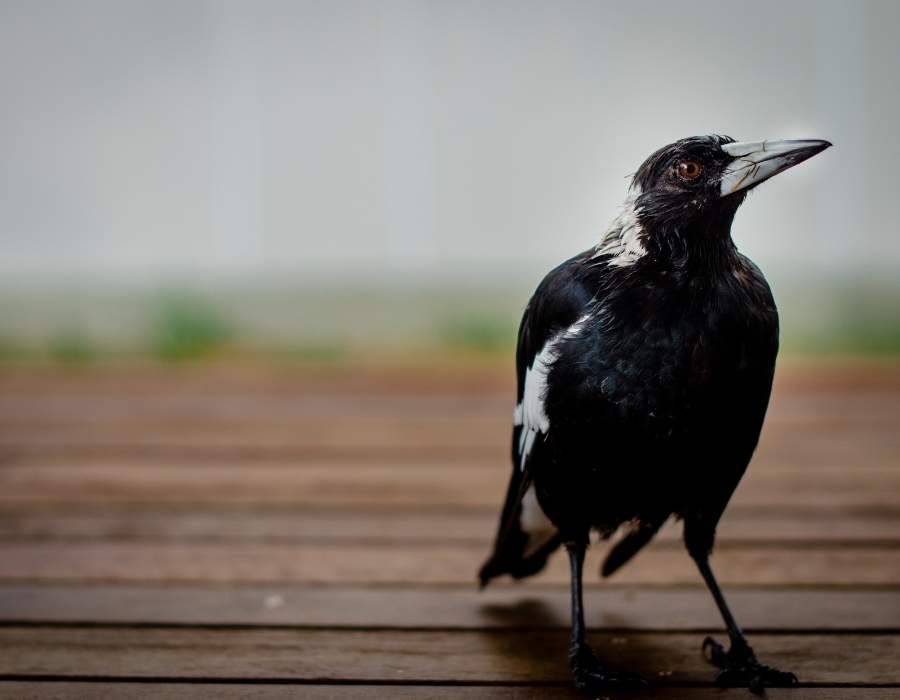
The ritual salute that accompanies a lone sighting varies by county and family. Common forms include “Good morning, Mr. Magpie, how is your wife today?” and “Good morning, Captain,” or touching your hat, or spitting over your left shoulder. All of them do the same work: acknowledge the bird as a figure of uncertain power and treat it with enough respect that whatever it was bringing might be softened.
Some households add a cross sign, or look immediately for a second magpie to cancel the first. I find this piece of folk practice genuinely interesting. It treats luck not as fixed but as negotiable, subject to social maneuver. You can, in this worldview, be polite your way out of a bad omen.
What Does It Mean Spiritually When You See One, Two, Three, or More Magpies?
Here is what the English folk tradition says, number by number:
- One magpie: Sorrow. Avert it with a salute, or look for its partner.
- Two magpies: Joy. No action needed.
- Three magpies: A girl. Traditionally, the birth or arrival of a female.
- Four magpies: A boy.
- Five magpies: Silver, an unexpected financial gain or moderate good fortune.
- Six magpies: Gold, greater wealth or a major piece of good news.
- Seven magpies: A secret never to be told. Most versions stop here.
If you see more than seven, the folk record gets thin fast. I have read several explanations for what eight, nine, or ten might mean, and I don’t trust any of them as genuinely traditional. They feel like later inventions to extend the system.
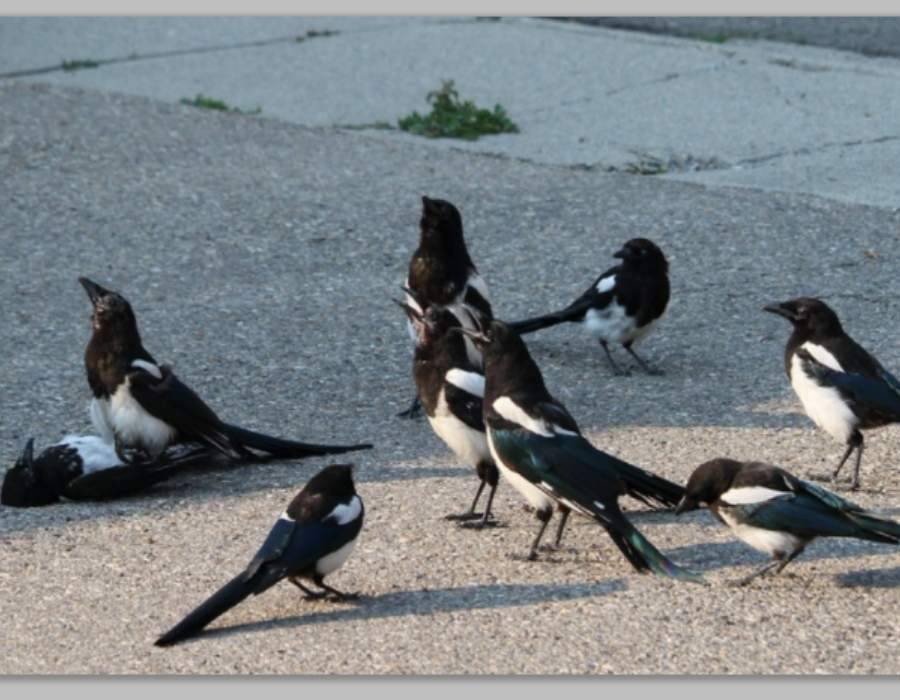
A large group of magpies, for the record, is sometimes called a “parliament” or a “murder” depending on who is doing the naming, and seeing one tends to be read as either very auspicious or simply natural behavior, with no omen attached.
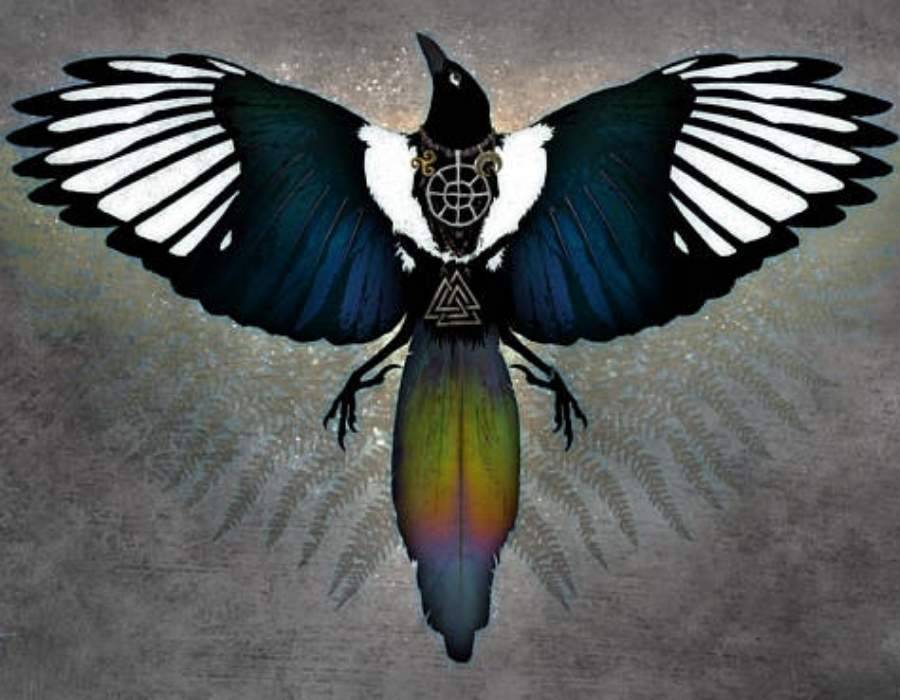
From the East Asian side: any number of magpies is good news in Han Chinese and Korean tradition. The more the better.
If you’ve seen a magpie and are trying to make sense of what happened, you might also find the dead magpie meaning page useful. The symbolism shifts considerably when the bird you find is no longer living.
What Is the Magpie as a Spirit Animal?
In modern spiritual usage, the magpie spirit animal is read as an archetype of intelligence, communication, and comfort with contradiction. The bird’s black-and-white coloring makes it a natural emblem of duality: holding two things at once, moving between states, refusing to be only one thing. If the magpie is said to show up in your life as a spiritual guide, the common interpretation is that it is drawing attention to your capacity to see multiple sides, to communicate across boundaries, to work with what is available rather than waiting for ideal conditions.
I want to be clear that this framing is modern and Western, and it does not come from any specific indigenous tradition I can trace. It draws loosely on the bird’s folk roles as messenger and threshold-crosser and gives them a contemporary spiritual vocabulary. Whether that vocabulary works for you depends on what you bring to it.
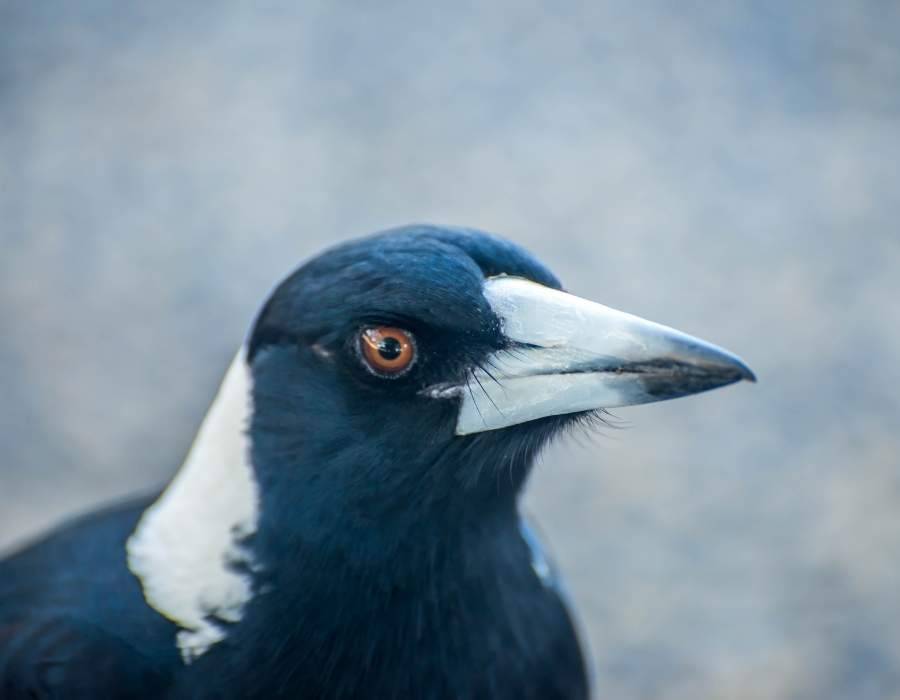
What I can say is that the underlying qualities, adaptability, communication, tolerance of ambiguity, are real magpie traits. The bird is a genuine generalist: it eats almost anything, lives in almost any habitat, and cooperates with other species when it serves its purposes. The symbolism is grounded in something real, even if the framing is recent.
What Is the Magpie as a Totem or Power Animal?
In traditions that distinguish between a totem and a power animal, the totem is generally understood as an inherited guide, something carried by a family line or community rather than chosen individually. The power animal is personally invoked for a specific purpose or period. The magpie appears in both roles in contemporary spiritual practice, though not in most historical folk traditions outside East Asia, where the bird functions more as a general omen figure than a personal guide.
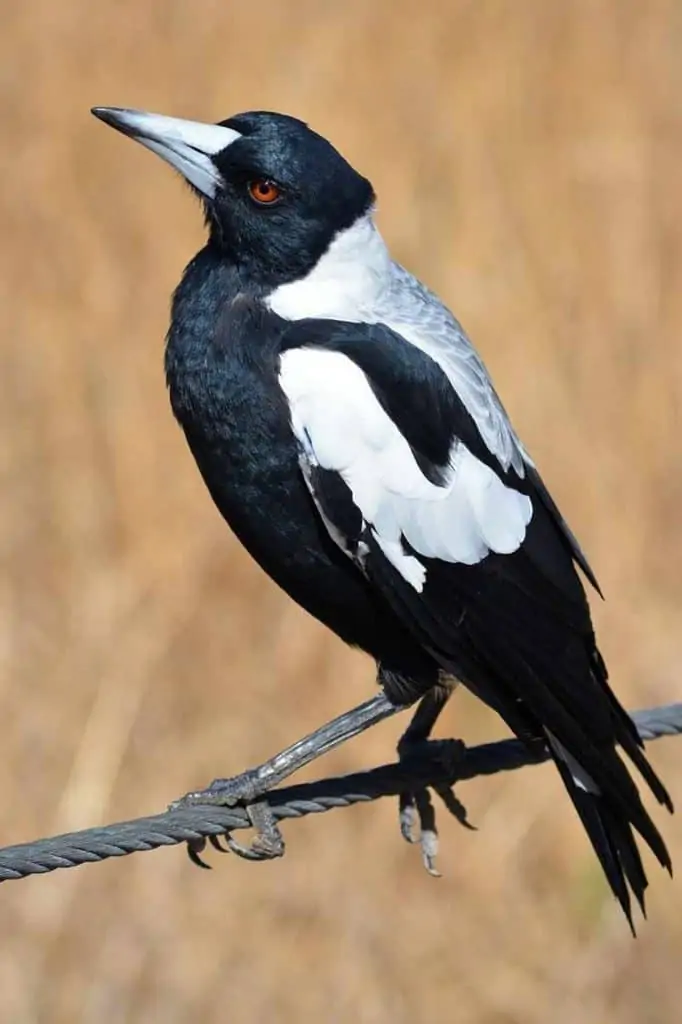
The traits associated with magpie totem energy across most contemporary sources: boldness without aggression, social intelligence, threshold-crossing, comfort with the in-between. People who identify the magpie as a totem figure are often described as communicators and collectors, people who gather information and make unexpected connections. The bird’s reputation for collecting shiny objects is, for the record, largely exaggerated. Magpies are curious, not kleptomaniac. But the symbolic truth of the collector figure holds regardless of the ornithological accuracy.
What Does It Mean to Dream of a Magpie?
Dream readings for magpies tend to follow the bird’s waking symbolism. A single magpie in a dream is often read as a signal of news arriving, not necessarily bad news, but news that will require attention. A pair of magpies is generally auspicious: reunion, a relationship strengthening, a creative collaboration. A chattering magpie in a dream is sometimes read as a sign that something important is trying to get through, some communication being blocked or ignored.
A magpie bringing an object, a coin, a piece of jewelry, something bright, is read in most folk-derived dream traditions as a sign of unexpected gain, or of a message arriving from a distance. This maps directly onto the bird’s role as a news-bringer in Korean and Chinese belief.
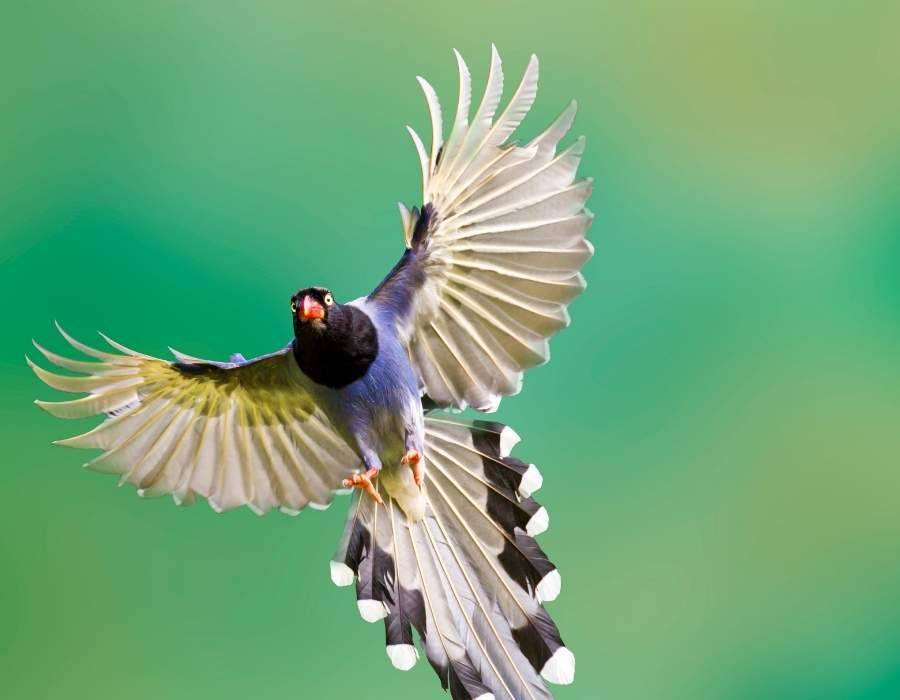
From a Jungian perspective, the magpie in a dream functions as a trickster figure: the part of the psyche that refuses to be categorized, that moves between conscious and unconscious, that brings news the dreamer didn’t ask for and may not want. Jung wrote about the trickster archetype in The Archetypes and the Collective Unconscious (1959) as a necessary disruptor, and the magpie fits that role well.
For a fuller treatment of magpie dream symbolism, the dreaming of birds page covers the broader framework of what birds signify in dreams across cultural traditions.
What Does Magpie Symbolism Mean in the Context of Love and Relationships?
Across traditions, the magpie is one of the more consistent love symbols in the bird world. The English rhyme gives “two for joy,” and the folk reading of two magpies has always been specifically relational: a happy couple, a union that holds. The ethology supports it. Eurasian Magpies pair for life, or close to it, defending their territory together and returning to the same nest site year after year.
But the most specific love symbolism comes from the Qixi myth. In that story, the magpie is a symbol of love and something more. It is love’s infrastructure. The birds give their bodies to make the crossing possible. They form the bridge. That is a striking image: a bird that enacts reunion, that makes the impossible traversal happen between two people who should be together but aren’t yet, rather than one that represents love abstractly.
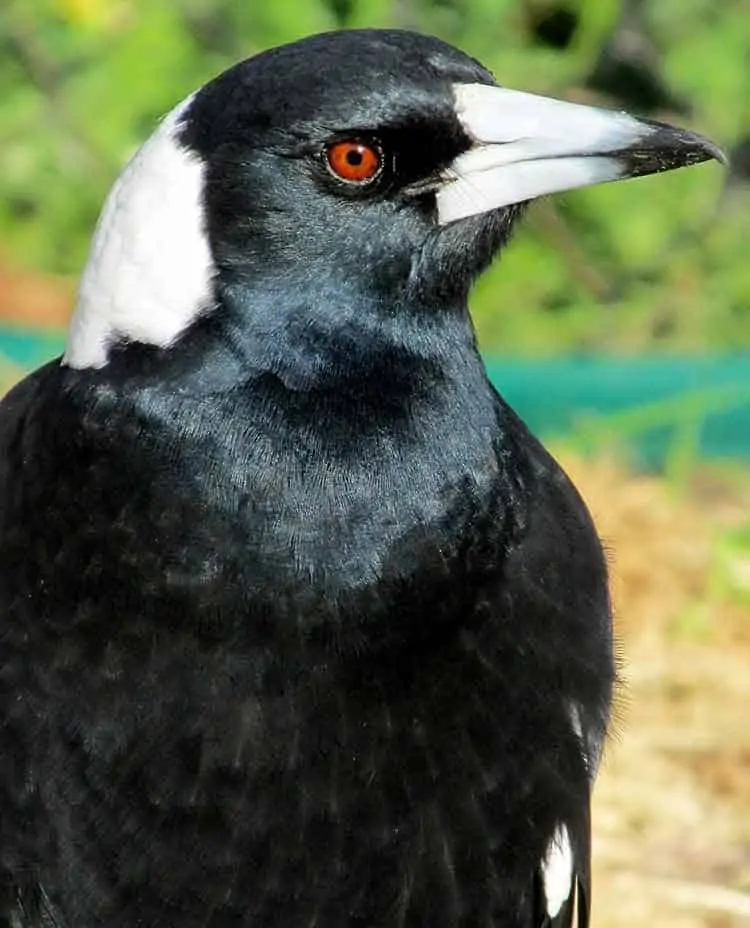
In Korean folk belief, a magpie calling near a house means a visitor is coming. In a romantic context, that visitor is understood to be the person you want to see. So the magpie as a love symbol, across traditions that developed independently, is consistently about connection across distance. Reunion. The restoration of something separated.
Does Seeing a Magpie Mean Good Luck or Bad Luck?
The honest answer: it depends on which tradition you’re working from, and whether you see one bird or two.
In post-Reformation English folk belief, a lone magpie is bad luck, or rather a sign of potential sorrow that can be countered with a salute. Two or more tip immediately into good fortune. The system is not simply “magpies are bad.” It is conditional and numerically coded.
In Han Chinese folk religion, documented by Wolfram Eberhard in A Dictionary of Chinese Symbols (1983), the magpie is straightforwardly lucky. No conditions. No counting required. The bird’s presence, its call, its image on a New Year print, all of it is auspicious. The same holds in Korean village belief. There is no unlucky version of the magpie in East Asian traditions I have found in credible sources.
The gap between these readings is real and worth sitting with. The same bird carries opposite valences in traditions that existed simultaneously. What that tells me is that symbolic meaning is a human projection onto an animal that is simply itself, watchful, noisy, adaptable, and very good at surviving in landscapes shaped by people. The magpie didn’t choose its symbolism. We gave it to the bird, and different communities gave it different things.
My grandmother Theresa’s notebook, a small leather volume from the Bavarian Forest that sits on my desk now, doesn’t mention magpies at all. Ravens, yes. Owls, certainly. But not magpies. They weren’t common in that part of Bavaria, apparently, or perhaps she simply never wrote them down. I notice the absence. The animals that enter a tradition are the ones people actually lived alongside, day after day, close enough to watch carefully. That closeness is where the meaning comes from. Not from the bird, exactly. From the watching.
My own read, for what it’s worth: the English lone-bird omen developed from genuine observation (a magpie without its mate is an anomaly), and the East Asian joy-bird developed from the bird’s conspicuous, herald-like behavior in village environments. Both readings are grounded in something real. Which one applies to you depends on which frame feels honest.
Frequently Asked Questions
Is it bad luck to see a single magpie?
In English and Scottish folk tradition, yes, a lone magpie signals sorrow, and the conventional response is to salute it directly (“Good morning, Mr. Magpie, how is your wife?”) to deflect what it might be bringing. Steve Roud documents this practice as widespread across 19th- and 20th-century Britain. But in Han Chinese and Korean traditions, any magpie sighting is good news regardless of how many birds you see. Which reading you reach for depends on which tradition you’re working from.
What should you say or do when you see one magpie?
The traditional British response is to salute the bird and inquire after its wife. The exact phrasing varies by family and county, but the logic is consistent: acknowledge the bird as a figure of uncertain power and treat it with enough respect that whatever it was bringing might be softened. Some versions involve touching your hat, spitting over your left shoulder, or making a small cross sign. I find the social logic genuinely interesting. It treats luck as negotiable rather than fixed.
What does a magpie symbolize in the Bible or Christianity?
The magpie doesn’t appear in scripture in any significant role. The Christianized folk explanation for its ambiguous reputation in England holds that the magpie was the only bird that did not mourn at the Crucifixion, chattering instead of going silent, which marked it as spiritually suspect. I don’t have a confident answer about how old this story actually is or whether it predates the existing folk unease about the bird. The folk record here is genuinely thin.
What does it mean when a magpie visits your garden repeatedly?
Practically speaking, a magpie returning to your garden is likely doing so because there is food, water, or a nesting site worth revisiting. Magpies are territorial and have excellent spatial memory. In Korean folk tradition, repeated visits are read as sustained good news approaching, or confirmation that the household is under the bird’s favorable attention. In English tradition, you would count the birds each visit rather than treating the repetition itself as a distinct sign.
What is the spiritual meaning of a magpie tapping on your window?
Window-tapping in birds is almost always territorial behavior. The bird sees its own reflection and interprets it as a rival. That is the practical explanation, and it is almost certainly the correct one. The folk reading, in English tradition, is that a bird striking a window is a threshold signal, something trying to get through. In Chinese and Korean belief, a magpie near the house at all is a sign of incoming news or visitors, so the tapping would be read as an unusually insistent announcement. Rule out the territorial display explanation first.
What does a black-and-white magpie symbolize spiritually?
The coloring is not incidental to the symbolism. Black and white together are a visual argument for duality, the capacity to hold two things at once, to operate in the space between categories. Across modern spiritual frameworks, the magpie’s coloring is read as a reminder that most situations contain both difficulty and opportunity, that opposites can coexist. The Taoist resonance is obvious, and I suspect that is part of why the magpie fits so naturally into East Asian symbolic traditions. The bird looks like an argument for balance.
Are magpies associated with death or the afterlife?
Not prominently, and not in the way crows or ravens are. The English lone-magpie omen is a sign of sorrow rather than death specifically. In Germanic and Scandinavian continuities traced by H.R. Ellis Davidson in Gods and Myths of Northern Europe (Penguin, 1964), magpies appear around witches and liminal knowledge, which puts them near the threshold between worlds without making them death symbols per se. The Chinese and Korean traditions have no death association for the magpie that I can find in credible sources.
What does the magpie mean in Native American traditions?
Here is where I want to be careful. The magpie is not native to most of North America. The Black-billed Magpie (Pica hudsonia) is native to western North America and does appear in Plains and Plateau traditions, where it is associated with boldness and communication. But I am not in a position to speak authoritatively about specific tribal interpretations, and “Native American tradition” is not a single thing. It is hundreds of distinct nations with distinct symbolic vocabularies. The details matter, and I don’t have them with the specificity this topic requires.
What is the difference between magpie symbolism in Eastern and Western cultures?
Short version: in Western European tradition, particularly British folk belief, the magpie is a numerically coded omen bird. One means sorrow, two means joy, and a lone magpie is unlucky. In East Asian traditions, particularly Han Chinese folk religion and Korean village belief, the magpie is straightforwardly a bringer of good news, joy, and love. What both traditions share is the magpie’s role as an announcer, a bird whose presence signals that something is coming.
What does it mean when a magpie looks directly at you?
Magpies look directly at things because they are highly intelligent corvids with excellent eyesight and genuine curiosity about their environment. Direct eye contact from a magpie is more likely a sign that the bird is assessing you as a potential threat or food source than delivering a message. But in the context of folk interpretation, a magpie that holds your gaze is sometimes read as an unusually direct communication, the bird as messenger making sure you are paying attention. Both readings can be true at once. I think that is exactly the right way to hold this kind of encounter.
Sources
- BirdSpot: Magpies and Superstition, overview of British folk traditions and counting rhymes
- Horniman Museum: Birds in Myth, Lore, and Legend, survey of world bird symbolism including magpie entries for Korea and Rome
- The Magpie Fairy: Regional British magpie superstitions and salute traditions
- Vine House Farm: Facts, Myths, and Folklore About Magpies
- Owlcation: Legends and Superstitions About Magpies
- Wonderbound: Magpies, Misunderstood, on corvid intelligence and mirror self-recognition
- Steve Roud, The Penguin Guide to the Superstitions of Britain and Ireland (Penguin, 2003), primary scholarly source for English and Scottish magpie folk belief and counting rhymes
- Wolfram Eberhard, A Dictionary of Chinese Symbols (Routledge, 1983), source for Han Chinese magpie symbolism, Qixi myth, and 喜鹊 etymology
- Zong In-Sob, Folk Tales from Korea (Routledge, 1952), source for Korean magpie messenger function in folk narrative
- H.R. Ellis Davidson, Gods and Myths of Northern Europe (Penguin, 1964), source for Germanic and Scandinavian continuities in magpie’s liminal status
- British Trust for Ornithology, Eurasian Magpie (Pica pica) species account (2019), source for pair-bonding behavior and territorial habits


I found a very sick magpie in my garden yesterday – it was missing its tail feathers and its head was hanging to one side. It wouldn’t let me near it to see if I could help, so I left a dish of water. I kept checking on it but it was getting weaker, still it wouldn’t let me help. This morning I found it underneath my car, it had died. I scooped it up and put it in a patch of woodland next to my house, returned it to nature. But I can’t help feeling so sad that I couldn’t save it….