
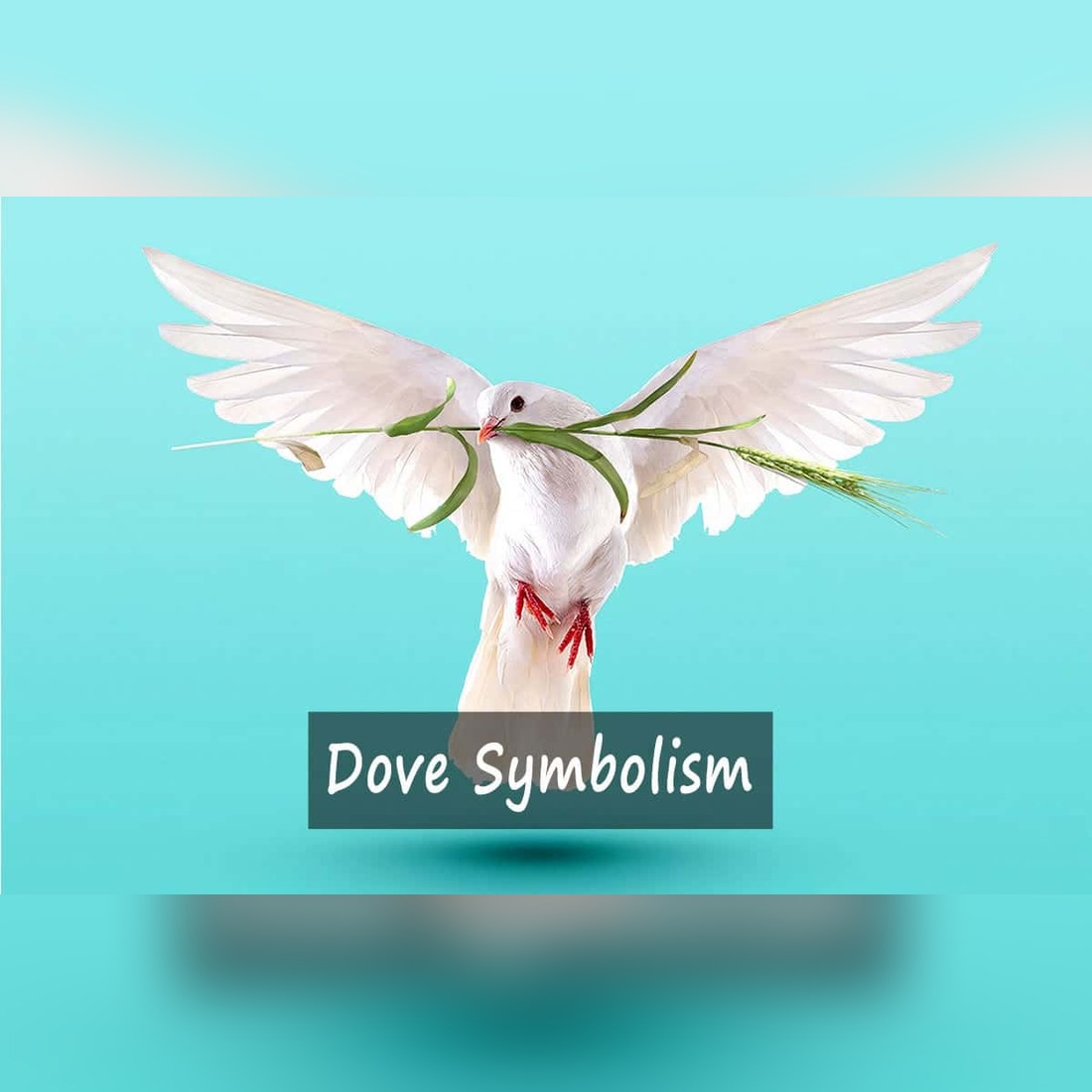
The dove is the most recognized peace symbol on earth, and where that reputation actually comes from is older, stranger, and more specific than most summaries let on. Peace, love, divine presence, sanctuary, grief: these are not one symbol. They are five separate lineages of meaning that accumulated, over centuries, into the image most people recognize today.
Key Takeaways
- The dove’s symbolic meaning shifts considerably depending on which culture and which century you examine. There is no single universal reading.
- Its association with peace traces back to the Hebrew covenant narrative in Genesis 8 and to Greco-Roman iconography of concord, not to the bird’s temperament alone.
- A dove visiting you draws on a cross-cultural pattern around divine presence, comfort, and transition. The traditions differ on the mechanism, not the direction.
- White doves and mourning doves carry distinct symbolic registers. The white dove signals purity and soul-release. The mourning dove encodes grief, remembrance, and passage.
- As a spirit animal or totem, the dove is associated with gentleness, the capacity to stay out of conflict without disappearing from it, and the ability to grieve without being destroyed by grief.
What Does It Mean When a Dove Visits You?
A dove appearing near your home, or landing close to you, is read across traditions that developed independently of one another as a sign of comfort, safe passage, or divine acknowledgment. The specific reading depends on context: whether someone close to you has recently died, whether you have been in a period of strain, whether the dove settled and stayed or simply passed through. Understanding mourning dove symbolism can help clarify these encounters.
The short answer most traditions agree on: something is being offered. Not demanded. The dove does not carry warnings the way crows do in some folk records. It carries the other thing, the news that whatever was difficult may be easing, or that something worth noticing is nearby.
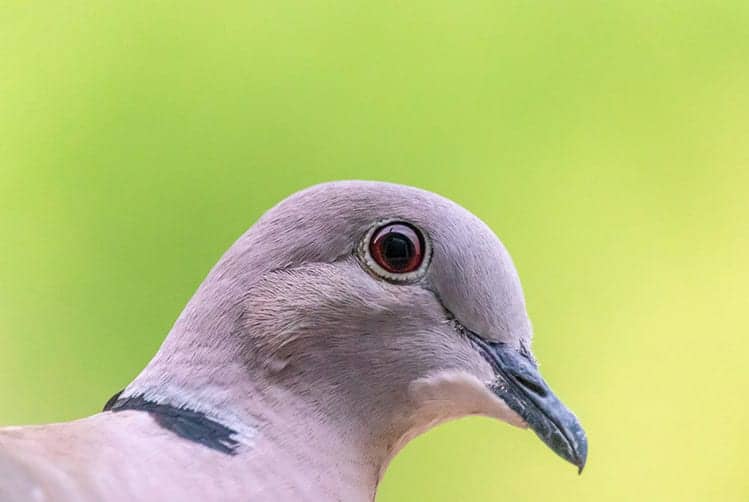
If you’re looking specifically at what a mourning dove visit signals, I’ve gone deeper on that in a separate article on mourning dove symbolism, because the mourning dove carries its own distinct meaning that gets flattened when bundled with general dove readings.
What Is the Core Symbolism of the Dove Across World Cultures?
Peace, love, fertility, divine messenger, sanctuary. Those five words do not mean the same thing across traditions. They represent five separate lineages of meaning that converged, over centuries, into the image most people recognize now.
In pre-biblical Levantine religion, the dove meant female fertility and erotic power. In Hebrew scripture, covenant restored after judgment. In Greek and Roman practice, it was sacred to Aphrodite and Venus: romantic love, domestic harmony. In early Christianity, the Holy Spirit and the soul’s safe arrival. In Japanese Shinto, the end of war under divine protection. In Islamic devotional tradition, sanctuary and the inviolability of sacred space.
The common thread is not any single emotion but a direction. The dove consistently signals a shift from strife toward safety, from separation toward presence. That consistency across cultures that never met is what makes the symbolism hold up. And it maps onto what the bird actually does. Doves return. They find their way home. They nest in pairs. The symbol grew from the behavior, which is always the more durable foundation.
What Did Ancient Israelite and Early Christian Traditions Say About the Dove?
The oldest layer of Jewish and Christian dove symbolism comes from Genesis 8:8-12, and it is worth reading carefully because most summaries get the meaning slightly wrong. Noah sends out a dove to see whether the floodwaters have receded. The dove returns the first time with nothing. The second time, it comes back carrying an olive leaf. The third time, it does not come back at all.
The dove’s return with the olive leaf does not signal generic peace. It signals that divine wrath has spent itself and that the covenant between God and creation is being renewed. A reconciliation signal, specific to judgment having ended. Not an all-purpose emblem of calm.
G. F. Snyder’s Ante Pacem: Archaeological Evidence of Church Life Before Constantine (1985) documents how early Christians absorbed this imagery directly into funerary art. Dove-and-olive-branch motifs appear on tomb walls in the Roman catacombs, marking the soul’s entry into paradise, the covenant of safety extended to the individual dead. The dove does not promise general happiness. It signals that whatever judgment was in motion is done.
The second New Testament layer comes from Matthew 3:16, where the Spirit of God descends “like a dove” at Jesus’ baptism. By the time early Christian iconography is fully formed, the dove carries two related meanings: the end of divine judgment, and the arrival of divine comfort. Both were already present in Genesis. The New Testament sharpened them.
What Role Did the Dove Play in Phoenician, Canaanite, and Near Eastern Religion?
Before the Israelite tradition redirected the dove toward covenant theology, the bird carried a very different charge in Levantine religion. Archaeological finds from Ashkelon and Carthage show numerous dove figurines associated with goddesses including Asherah, Astarte, and the Punic goddess Tanit.
Tikva Frymer-Kensky’s In the Wake of the Goddesses (1992) traces how in these Northwest Semitic traditions the dove marked female fertility, sexuality, and sometimes the ambivalent power of war goddesses, entities who could protect or destroy. The dove was the goddess’s bird. And the goddess was far from gentle.
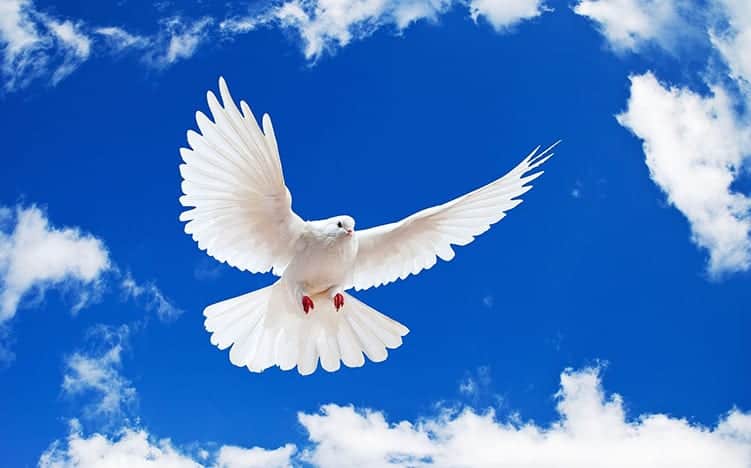
This background matters. When Israelite scribes and later Christian iconographers chose the dove as their bird, they were not working with a blank symbol. They were redirecting a potent Near Eastern religious image, stripping it of its fertility and war-goddess associations and reorienting it toward covenant theology. The power of the image, the reason it stuck, came partly from what it already meant before they got to it.
How Did Greek and Roman Traditions Shape the Dove’s Meaning?
In Greek religion, the dove (peristera) is sacred to Aphrodite. Doves pull her chariot, cluster around her temple statues, appear on votive objects offered at her shrines. Their meaning here is romantic love, erotic desire, and harmonious union: not the peace of post-conflict reconciliation but the peace of two people who have found each other.
Roman religion transferred this directly to Venus. Dove imagery in Hellenistic and Roman domestic art signals affection, fidelity between partners, domestic harmony.

And here the threads start to cross. The Greco-Roman visual vocabulary of concord was available to early Christian iconographers who needed to represent reconciliation between God and humanity. According to the Wikipedia overview of peace symbols (2024), which draws on classical iconographic surveys, the olive branch had its own parallel history in Greek practice as a symbol of truce and supplication. When Christian artists combined the biblical dove with the olive branch, they merged two distinct classical traditions into one image. That combined image carried the weight of both the Hebraic covenant narrative and the Greco-Roman vocabulary of harmonious settlement. It was not invented whole. It accumulated.
What Does Japanese Shinto Tradition Say About the Dove?
The Japanese reading is the one that surprises most Western readers. Worth sitting with, because it complicates the easy equation of dove equals pacifism.
In Shinto practice, doves (hato) are messengers of Hachiman, a deity who combines the roles of war-god and protective kami. At shrines such as Usa Hachimangū, one of the oldest Hachiman sites in Japan, dove imagery appears on votive plaques and shrine decorations. A well-known motif pairs the dove with a sword: the sword representing armed conflict, the dove representing its cessation under divine protection.
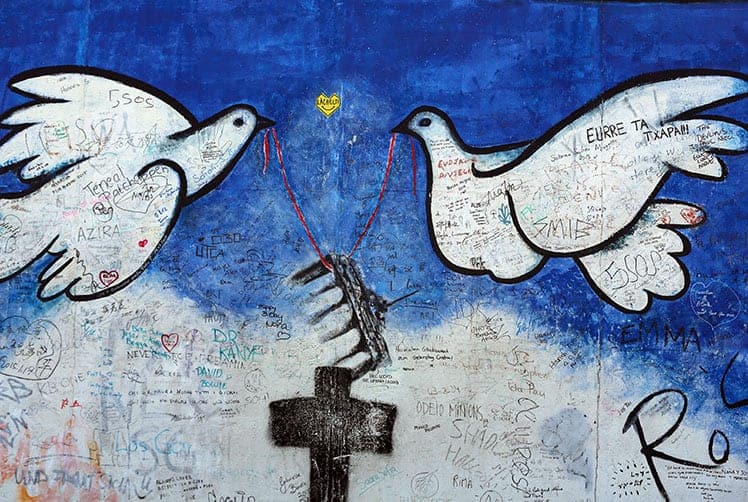
The Kokugakuin University Encyclopedia of Shinto (entries “Hachiman” and “Hato,” c. 2005-2019) notes the dove as a typical messenger animal of Hachiman and discusses its iconographic role in shrine practice. The point this tradition makes is precise: the dove does not oppose war. It marks the moment war ends under divine authority. Hachiman decides when conflict stops, and the dove is the sign that he has decided. This is meaningfully different from the Western peace-symbol reading, where the dove represents an aspiration toward non-violence. In the Hachiman tradition, the dove signals a specific outcome under a specific power. It is news, not hope.
What Is the Dove’s Meaning in Islamic Devotional Tradition?
The Quran does not single out doves as a peace symbol. The Islamic association of pigeons and doves with sanctity comes from a different source: the Hijra narrative in classical sira literature.
Ibn Hishan’s recension of Ibn Ishaq’s Sirat Rasul Allah (9th century) recounts how the Prophet Muhammad and Abu Bakr took shelter in the cave of Thawr during their flight from Mecca to Medina. Pursuers came close but turned back, partly because a spider’s web and nesting birds at the cave’s entrance made the opening appear undisturbed. In this account, the nesting bird (identified in later tradition as a dove or pigeon) is a sign of divine protection and inviolable sanctuary.
The ongoing practice of treating pigeons near sacred sites, especially in Mecca and Medina, as protected and blessed birds grows from this. The meaning here centers on sanctuary and the sacredness of protected space. Related to but not identical with the political peace symbolism that developed in Western iconography. The dove here does not represent the absence of war in any general sense. It represents the specific safety of a place that God has designated as inviolable.
What Does the Dove Mean as a Peace Symbol in Modern Politics and Culture?
The dove-as-peace-symbol in its contemporary political form is younger than most people assume. It arrived, more or less, in 1949, when Pablo Picasso was commissioned to design a poster for the World Peace Congress in Paris. He drew a lithograph of a white pigeon, or rather, a dove his friend Henri Matisse had given him, and the image circulated globally. The dove did not begin there. But that moment is where the symbol became available to secular political use, detached from any single religious tradition.
The United Nations has since codified the dove of peace as a recognized symbol, and replica dove sculptures appear in UN-affiliated spaces worldwide. But the UN version draws on the biblical-classical synthesis described above. It is not a new symbol. It is the accumulated image given a new institutional home.
What the 20th century added was the context of nuclear threat and the Cold War, which gave the old symbol an urgency it had not previously needed. The dove was not simply marking the end of a specific conflict. It was being held up against the possibility of total destruction. In that context, the image carried everything at once: the Genesis olive branch, the Venus concord, the Hachiman messenger, the Islamic sanctuary. Centuries of freight. And it held.
What Is the Spiritual Meaning of a Dove Visiting You?
Across the traditions above, four interpretive frames apply when a dove appears near your home: divine messenger, call to inner quiet, confirmation of a threshold, and the soul of a loved one nearby. Not every tradition supports all four, but each is grounded in one of the lineages described above rather than invented for modern consumption.
The divine messenger reading comes most directly from Hebrew and Christian scripture, where the dove carries news: specifically, that danger has passed or that something sacred is present. If you have been through a hard stretch and a dove appears, this is the oldest reading available. The storm is done, or nearly.
The call to inner quiet is the one I find most honest, because it does not require any supernatural mechanism to work. Doves are calm birds. They do not startle easily. A dove settling near you and staying is a simple fact that can do real work on a nervous system, regardless of what you believe about the rest of it. Most traditions that describe the dove as a spiritual symbol are, at some level, describing what it is like to be in the presence of something that is not afraid.
The soul-of-a-loved-one reading appears in folk traditions across several cultures, though I don’t have a confident single scholarly source for it. The folk record is distributed and often thin. What I can say is that the association between the dove’s call and the voice of the dead is old and widespread enough that it doesn’t belong to any one tradition. The mourning dove, in particular, whose call carries some distance and sounds, to most ears, like something between a lament and a question, appears in Zuni oral tradition and in some Appalachian folk accounts as the voice of someone not quite gone. I’d treat that carefully rather than claiming it as established doctrine.
What Does a White Dove Symbolize Specifically?
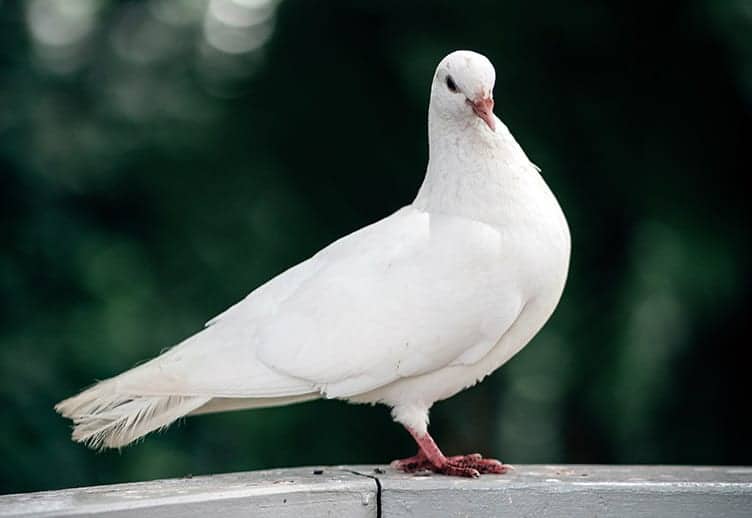
White coloration in bird symbolism almost always amplifies whatever the base symbol carries. For the dove, white adds purity, the Holy Spirit specifically (Matthew 3:16 specifies the Spirit descending as a dove, and most traditional depictions render it white), and soul-release at death.
White doves appear in two ritual contexts with some regularity: funerals and weddings. At funerals, dove releases signal the soul’s peaceful departure, drawing directly on the early Christian catacomb imagery documented by G. F. Snyder in Ante Pacem (1985). At weddings, they signal the union of two people and the peace of that union, drawing on the Aphrodite and Venus lineage. The same bird, the same color, two different ceremonies, two different lineages of the same image. It works in both contexts because the base meaning is compatible: something sacred is present, and what was separate is now joined.
One practical note: the white doves used in release ceremonies are almost always white homing pigeons, not the species technically classified as doves. The symbolism transfers. But if you are planning a release and care about the birds’ welfare, that distinction matters. Homing pigeons can find their way back to a loft; wild-type doves often cannot.
What Does a Mourning Dove Symbolize?
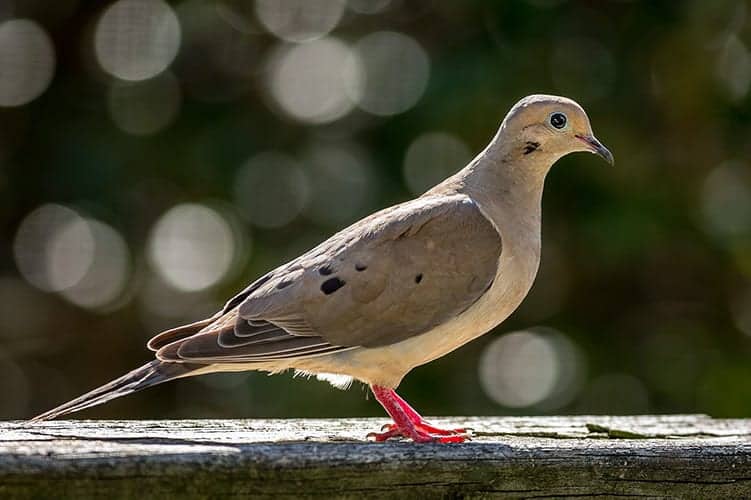
The mourning dove gets its name from its call. A low, hollow coo, three or four notes descending, and it carries across a yard better than most birdsong. The name is doing real work: this is the dove that sounds like it has been in loss.
In Zuni oral tradition, the mourning dove is associated with the passage of souls and with the voice of the dead speaking toward the living. Some Appalachian folk accounts, which I’ve encountered more in conversation than in any single documented source, treat the mourning dove’s call at dawn or dusk as a liminal signal, a sound from the edge of something. I’m not going to dress that up more than it deserves.
What I can say with more confidence: the mourning dove nests early and late in the year, produces multiple broods, and tends to return to the same general area season after season. A mourning dove that keeps appearing near your home is likely the same bird, or a bird from the same family line. Constancy. Return. Presence after absence. Those are the right words for what the mourning dove’s symbolic reputation is actually tracking, and the behavior earns them.
For a full treatment of mourning dove encounters, see the dedicated mourning dove symbolism article.
What Does the Dove Represent as a Spirit Animal or Totem?
The dove as a spirit animal is associated with gentleness, the ability to be in the middle of conflict without adding to it, and the capacity to grieve without being undone by grief. Those three traits are distinct, and all three are traceable to something the bird actually does.
Doves in the wild are not aggressive. They do not compete for territory the way hawks do. They nest near human habitation without much apparent anxiety. And the mourning dove in particular continues singing and nesting through seasons of loss; a pair will remain bonded even after losing young, and will rebuild. That persistence is not nothing. The dove does not resolve grief. It continues through it.
If the dove keeps appearing for you across different days and settings, the reading tradition most consistently offers is toward a similar persistence. Not the resolution of whatever is hard. The capacity to keep going quietly through it. I read that as honest rather than sentimental. The dove is not telling you the hard thing is over. It’s showing you something about how to be in it.
A totem animal differs from a one-time encounter in degree, not kind. A single dove on a porch is an encounter. A dove that was present at your mother’s death, at your child’s birth, and at three or four other turning points is something else, or rather, the same thing with more weight behind it.
What Does It Mean to Dream of a Dove?
A dove in a dream signals incoming resolution, peace after conflict, or a message the dreaming mind is trying to deliver to itself. But the specifics shift considerably depending on what the dove was doing and how the dream felt.
A flying dove, particularly one flying upward or away from you, reads in most traditions as a positive sign: something is releasing, or moving toward a freer state. A dove landing on you in a dream is more intimate, traditionally read as direct comfort or a direct message, sometimes associated with a deceased person being positioned as at peace. A dead dove in a dream is worth taking seriously as a signal of something ending that needed to end, rather than as a bad omen; the dove rarely signals destruction in any tradition I’ve examined.
A dove delivering something, a letter, an object, a sprig, draws directly on the Genesis narrative, with the dream staging the moment of covenant restored.
Frequently Asked Questions
Is a dove visiting your home good luck?
Good luck is not quite the right frame, but the association is strongly positive across most traditions. In Hebrew and Christian readings, a dove appearing signals peace after difficulty; Genesis 8:11, the dove returning with the olive leaf, is a sign that danger has passed. In folk traditions across Europe and the Americas, a dove near the home signals comfort or protection. I would not call it a luck symbol the way a horseshoe is. It is closer to a signal that something has shifted, or that something worth noticing is near.
What does it mean when a dove visits you after someone dies?
This is one of the most common questions I get, and I want to answer it honestly. The folk record, across Appalachian accounts, some Indigenous North American traditions, and various European sources, treats a dove appearing after a death as a sign of the departed soul’s peaceful passage, or of that person’s continued presence. I don’t have a scholarly account of exactly when or where this belief originated. What I can say is that the pattern is old and widespread, and the meaning it points toward is consistent: the person who died is at peace, and they are near. Whether that is literally true is not something I can answer. That it offers real comfort is not in doubt.
What is the difference between a dove and a pigeon symbolically?
Biologically, the distinction is not real. Both are Columbidae, and the names overlap depending on size and how urban the bird is. Symbolically, “dove” has accumulated religious and spiritual associations across centuries, while “pigeon” has come to connote the ordinary, even the overlooked. The white dove at a wedding release carries the full symbolic weight. The rock pigeon on a city ledge carries almost none of it, despite being a close relative. This is cultural projection, not a fact about the birds. The white dove in Picasso’s 1949 peace poster was, technically, a white pigeon. The name on the poster was “dove.”
What does it mean when a dove sits outside your window?
A bird at or near a window has been read across traditions as a liminal signal, the window being a threshold between inside and outside, between the living and whatever is beyond. A dove at the window is generally read as reassuring rather than warning. In some British and American folk accounts, a bird at the window is associated with a message from someone who has died. For the dove in particular, the message is almost always framed as comfort. The bird sits and watches, and does not alarm. That is the thing to notice first, before the interpretation.
Are doves mentioned in the Bible as a symbol of the Holy Spirit?
Yes, directly. Matthew 3:16 describes the Spirit of God descending “like a dove” at Jesus’ baptism. The parallel accounts in Mark 1:10, Luke 3:22, and John 1:32 all use the same image. Earlier in Hebrew scripture, Genesis 8:8-12 establishes the dove as a sign of restored covenant after divine judgment. G. F. Snyder’s Ante Pacem (1985) documents how early Christians in the Roman catacombs used dove-and-olive-branch imagery on tomb walls to represent the soul’s peaceful arrival in paradise, drawing on both layers of that tradition.
What does it mean when a dove lands on you?
A wild dove choosing to land on a person is unusual enough that most people notice it, and they should. Folk interpretations are fairly consistent: direct contact with a dove is read as a blessing, a personal message, or in grief contexts, contact from someone who has died. I’d add that a wild dove landing on you is also a behavioral signal that the bird is either ill or extraordinarily calm in its environment. I’ve seen both at the wildlife center in Asheville. The symbolic reading and the behavioral fact are not in conflict. They are two different questions about the same moment.
What does a pair of doves symbolize?
Doves mate for extended periods and return to the same nesting sites season after season. A pair seen together has been read across Greco-Roman and Western folk traditions as a sign of faithful love, lasting partnership, and domestic harmony. The Aphrodite and Venus association runs through this: paired doves appear on Roman votive objects offered for love and successful marriage. In contemporary usage, paired doves at a wedding carry this lineage, whether the couple knows it or not. I find the behavioral basis persuasive. Doves really do demonstrate the thing the symbol promises.
Is a dove visiting you a sign from a deceased loved one?
This is what most people who come to this article are actually asking. My honest answer: I don’t know, and I don’t think anyone does. What I can say is that the belief is old, widespread, and found in traditions that developed independently of each other. Whether the mechanism is supernatural is not something the folk record addresses. It just notes the pattern and the meaning people have drawn from it. If a dove has appeared for you after a loss and you feel a connection to it, that feeling is not irrational. It is old. It is human. You are not making it up.
What does it mean when a dove coos outside your house?
The mourning dove’s call, that low, descending coo, has been associated in some Appalachian and Zuni accounts with the voice of someone on the other side of a threshold. Practically, a dove cooing near your house is territorial and mating behavior; the male calls to announce himself. But the call’s tone, low and hollow and carrying, has made people reach for meaning in it across cultures. According to Chirp for Birds’ survey of dove symbolism, the mourning dove’s call is one of the most commonly cited reasons for the bird’s grief associations in North American folk tradition.
Do all cultures associate the dove with peace?
No, and this is worth knowing clearly. In Japanese Shinto, the dove is the messenger of Hachiman, a war-and-protection deity; it signals the end of conflict under divine authority, which is different from pacifism. In pre-biblical Levantine religion documented by Tikva Frymer-Kensky in In the Wake of the Goddesses (1992), the dove was associated with fertility goddesses who governed both life and war. The peace association is specific to Hebrew covenant theology and its Greco-Roman synthesis, which then became dominant globally through Christianity and 20th-century political imagery. It is not universal. It just traveled far enough that it feels that way.
Sources
- Chirp for Birds, “Why Doves Are the Symbol of Peace and Other Dove Facts”
- United Nations Gifts, Replica Dove of Peace
- Wikipedia, “Peace symbols” (2024)
- The Symbolism of Doves, pshir.com (citing Frymer-Kensky)
- Susan Shaw, “History Lesson: The Symbolism of Doves” (referencing Snyder, Ante Pacem, 1985)
- The God Who Speaks, “O for the Wings of a Dove”
- Baha’i Teachings, “The Sweet Symbolism and Spiritual Meaning of Doves”
- Centre of Excellence, “The Spiritual Meaning of Doves”
- G. F. Snyder, Ante Pacem: Archaeological Evidence of Church Life Before Constantine (Mercer University Press, 1985)
- Tikva Frymer-Kensky, In the Wake of the Goddesses: Women, Culture and the Biblical Transformation of Pagan Myth (Free Press, 1992)
- Ibn Hishan’s recension of Ibn Ishaq’s Sirat Rasul Allah (9th century)
- Kokugakuin University Encyclopedia of Shinto, entries “Hachiman” and “Hato” (c. 2005-2019)



What does a dove nesting in your tree mean?
settle in, live in, in the ceder of lebanon tree AKA Righteousness and Holiness by the Riverbank in Spirit and in Truth