
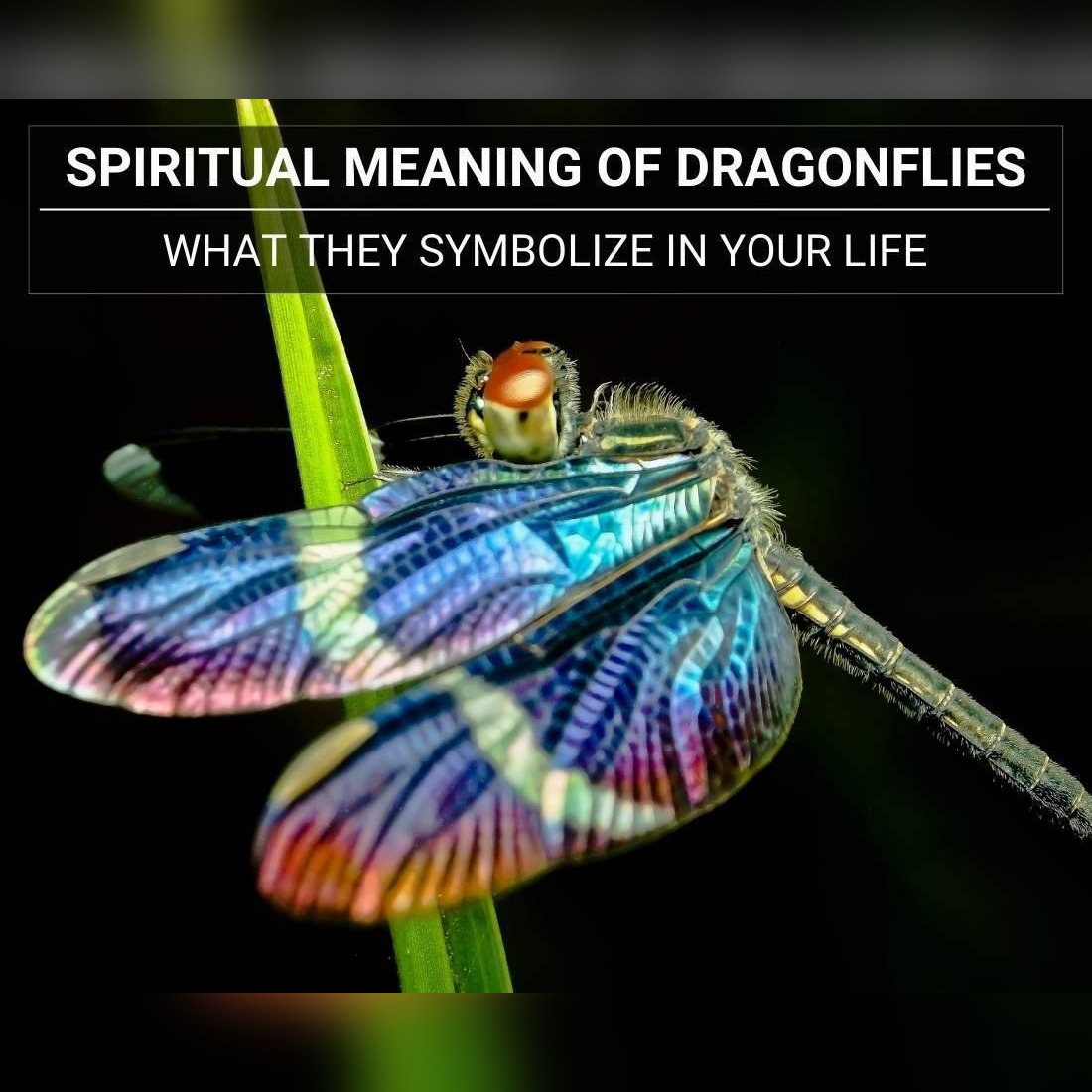
Dragonflies appear across unconnected cultures with consistent symbolic meanings: clear vision, transformation, and a life spent mostly underwater before brief, precise flight. Yet interpretation varies. An 8th-century Japanese chronicle and a Lakota oral narrative from Pine Ridge offer genuinely different readings of these same qualities.
Key Takeaways
- Dragonflies are read across most documented traditions as symbols of perceptual clarity, change, and seeing through self-deception, not, as many sites claim, as generic messengers of the dead.
- Japanese tradition, documented in the Kojiki (711–712 CE) and the 14th-century Taiheiki military chronicles, frames the dragonfly as kachi-mushi (“victory insect”): a samurai emblem and agricultural protector, not a death sign.
- According to Delphine Red Shirt’s Lakota Traditional Teaching Stories (University of Nebraska Press, 2018), Lakota tradition connects dragonflies to wóȟpe, renewed vision after hardship, not ancestral souls.
- Han Chinese folk religion, grounded in texts including Li Shizhen’s Bencao Gangmu (1596), ties dragonflies to marital harmony and scholarly success.
- The dragonfly’s compound eyes, containing up to 28,000 ommatidia per eye (Cornell Lab of Ornithology, 2023), and its two-to-five year larval stage before brief adulthood directly underpin what cultures made of it symbolically. The biology is not separate from the meaning.
What Is the Spiritual Meaning of a Dragonfly?
Across the traditions that have thought carefully about it, the dragonfly’s meaning runs along three lines: transformation after long preparation, clarity of vision that cuts through illusion, and the quality of presence that comes from spending years in the dark before emerging into full light. Those threads appear in Japanese warrior culture, in Lakota oral tradition, in Han Chinese folk religion, and in the European folk record, though Europe gave the dragonfly a considerably rougher reception than the others did.
What I keep coming back to, having read a number of competing accounts before writing this, is that the symbolism is not arbitrary. It maps directly onto what dragonflies actually do. They spend most of their lives, sometimes two to five years, as aquatic larvae crawling through pond mud, before they split their own skin at the waterline and emerge as something entirely different. Their eyes cover most of their head and give them near-360° vision. They catch prey with better than 90% accuracy. A culture paying close attention to those facts would arrive at the same symbolic conclusions whether it was in 8th-century Japan or 19th-century North Dakota. The meanings persist because the animal earns them.
I should also say plainly what this article is not claiming. I’m not a shaman or a spiritual teacher, I hold no certifications of that kind, and I’m not going to tell you that a dragonfly in your yard is a message from someone who has died. What I can tell you is what specific traditions have actually said, where those claims are documented, and where the popular internet version of those claims gets the details wrong.
What Do Dragonflies Symbolize Across World Cultures?
The common thread across traditions is change, but not change as vague encouragement. Change as something the dragonfly enacts in its own body, visibly, at the waterline, in a process you can watch if you happen to be there at the right moment. The aquatic larva and the flying adult are so different in form that early European naturalists thought they were two separate species. That moment of emergence, the skin splitting, the wet wings expanding, the creature rising from water to air, is what most symbolic traditions are actually pointing to when they invoke the dragonfly.
The second thread, almost as consistent, is vision. The Smithsonian notes that a dragonfly’s compound eyes cover roughly 80% of its head surface, giving it nearly complete visual coverage of its environment at once. Cultures that spent time watching dragonflies hunt noticed this. The association with seeing clearly, with piercing deception, with awareness that ordinary eyes can’t achieve, shows up in Japanese, Lakota, and Han Chinese traditions independently.

The third thread is impermanence, but specific rather than generic. Not “everything ends” as a poster sentiment. The particular contrast between years of hidden preparation and a brief, fully realized adulthood. The dragonfly as an image of doing the long invisible work before the short bright one.
And then there is the fact that different cultures looked at the same animal and arrived at genuinely different places. The contrast matters. I’ll come back to it.
What Does Japanese Tradition Say About the Dragonfly?
Japanese tradition gives the dragonfly one of its oldest and most specific symbolic roles. The dragonfly is kachi-mushi, “victory insect,” and its association with martial success appears in the 14th-century military chronicles of the Taiheiki, where samurai commanders used dragonfly motifs on their armor. The logic was behavioral. A dragonfly always moves forward; it cannot fly backward. For a warrior, that quality had obvious appeal.
But the warrior framing is not the whole of it. In the Kojiki, compiled 711–712 CE, Susanoo-no-Mikoto’s mythological association with dragonflies frames them as protectors of the land itself, not weapons of war. The Japanese name tombo (蜻蛉) combines characters meaning rapid flight and swamp, and one of Japan’s ancient names, Akitsushima (“dragonfly island”), appears in the 11th-century Tale of Genji. The country named itself after this insect. That is not an incidental association.
For farmers working rice paddies, dragonflies had a third function: they ate the insects that damaged crops. The same creature that symbolized battlefield aggression also meant that this year’s rice would be protected. The BTO Dragonfly Monitoring Scheme (2022) confirms what Japanese farmers had observed for centuries: dragonflies are genuinely effective controllers of smaller flying insects, with hunting success rates above 90%. The symbolism of protection was grounded in observed fact.
According to Gyōnen’s Kojiki-den (Kamakura period, 1282–1332), the dragonfly’s sacred status as a land-protector was already well-established by the time that commentary was written, which suggests the association in the Kojiki itself was drawing on something older still.
What Do Lakota Sioux Teachings Say About the Dragonfly?
The most common claim on spiritual meaning websites, that dragonflies in Lakota tradition represent “the souls of ancestors” or “messages from the deceased”, is not what the primary sources actually say. This matters, and I want to be direct about it.
According to Delphine Red Shirt’s Lakota Traditional Teaching Stories (University of Nebraska Press, 2018), dragonflies in Lakota tradition embody wóȟpe: renewed vision after hardship. Not death. Not the dead. Vision after hardship. The distinction is significant. Wóȟpe is about what becomes available to see after a period of suffering has been endured, something closer to hard-won clarity than to communication from the other side.
James R. Walker’s fieldwork at Pine Ridge, conducted 1890–1910 and published posthumously as Lakota Belief and Ritual (1980), provides the earlier documentation of how dragonflies were understood within the wičhóȟ’aŋpi sacred hoop ceremony. There, the dragonfly occupies a specific position: it is the nexus between water, associated with spiritual knowledge, and air, associated with communication. The insect moves between those two domains, which is precisely what it does literally, emerging from the water into the air. The symbolism tracks the behavior.
I’m not Lakota, and I’m not claiming any special standing to interpret these traditions. What I can say is that the ethnographic record, as documented by Red Shirt and Walker, is more careful and more specific than most popular accounts suggest. If this tradition matters to you, those are the sources worth reading directly.
What Does Han Chinese Folk Religion Say About the Dragonfly?
Han Chinese folk religion’s relationship with the dragonfly is auspicious and concrete. The associations are not vague “good luck.” They are specific to marital harmony and scholarly success, two domains that mattered intensely in the context of Neo-Confucian social structure.
Li Shizhen’s Bencao Gangmu (Compendium of Materia Medica, 1596) is a pharmacopeia, not a spiritual text, which means it carries a different kind of authority. It specifies dragonflies as remedies for infertility when combined with lotus seeds. The dragonfly’s connection to fertility and marital harmony was medicalized as well as symbolic. During the Mid-Autumn Festival, children released paper dragonflies to represent shedding ignorance, a practice that reflects the Neo-Confucian interpretations documented by Zhu Xi in his Jinsilu (Reflections on Things at Hand, 12th century), which read the dragonfly’s metamorphosis as an image of spiritual preparation: the long larval stage as a period of learning and discipline before the adult stage of visible, realized capability.
This is not “Eastern spirituality” in the broad, unfocused way that phrase gets used on most symbolism sites. It is a specific intellectual tradition, Neo-Confucianism in 12th-century China, applying a specific interpretive framework to a specific animal. The framework is learnable and the sources are real.
What Do European Folk Traditions Say About the Dragonfly?
Europe did not romanticize the dragonfly. Or rather, Northern Europe didn’t.
The Swedish folk name is trollslända: troll’s needle. The Scottish Gaelic is dearg-atile: devil’s needle. Both names reflect a folk belief that dragonflies would stitch shut the mouths, ears, or eyes of people who told lies or slept in the open, practices documented in regional accounts of 17th and 18th-century rural Britain and Scandinavia. The dragonfly as agent of punishment, or at minimum as something unnervingly fast and close, sits in considerable contrast to the Japanese and Lakota readings.
The English word “dragonfly” itself arrived in the 17th century, combining Old English draca (dragon) with flēoge (fly). The dragon association was visual: the predatory head, the articulated body, the speed. European folk memory had dragons as dangerous, not sacred.
And yet even in the European register, the wound-stitching belief has a practical underpinning. Dragonflies were observed near wounds and sick animals, probably because open wounds attracted the insects they hunt. The folk interpretation was wrong in its mechanics but not random. It was still people watching the animal and building meaning from what they saw.
The contrast between European and Asian readings of the same insect is, to me, one of the more interesting things about dragonfly symbolism. The animal is identical. What changes is what the observer brings to it.
What Is the Dragonfly as a Spirit Animal or Totem?
If the dragonfly keeps appearing for you, in dreams, in encounters, in what keeps drawing your eye, the consistent thread across the traditions that have worked with it as a totem is this: the dragonfly asks you to examine what you have been preparing for without knowing it, and if you are ready to act on it now.
That framing comes directly from the Lakota concept of wóȟpe and the Japanese kachi-mushi reading. Both point toward a creature that spends years in invisible preparation before a brief period of complete, precise capability. If this species has caught your attention, here is what people have made of that across traditions: it tends to signal a threshold between a long preparation and an emergence. Not a destination. A threshold.

The totem framing also includes, specifically, the quality of seeing without illusion. A dragonfly with 28,000 ommatidia per eye (Cornell Lab of Ornithology, 2023) has roughly the visual coverage of an animal that can see everything at once. What the dragonfly as totem is said to offer, in Lakota tradition as documented by Red Shirt, is not supernatural sight but the willingness to look at what you have been avoiding. That is a different and more demanding gift than the generic “clarity” you’ll find on most totem animal lists.
I don’t sell readings or run courses. But if you want to work with the dragonfly as a personal symbol, the most honest entry point is the biology: spend some time watching one. They are among the most accomplished hunters on the planet, and watching something hunt with that level of precision tends to quiet the part of the mind that needs to ask what everything means.
What Does It Mean When a Dragonfly Visits You?
A dragonfly landing on you, or hovering near you for longer than seems accidental, is most consistently read across traditions as an invitation toward self-examination rather than an announcement of good fortune. Not bad fortune either. A prompt.
The Japanese and Lakota traditions both emphasize the perceptual quality: what is the dragonfly seeing that you are not? The encounter is less about what will happen to you and more about what you might be ready to see if you slowed down enough to look.
Practically, dragonflies are drawn to water, movement, and warmth. If one lands on you on a warm afternoon near a pond, that is primarily a behavioral event. I say this not to dismiss the symbolic reading but to ground it. Knowing why dragonflies behave as they do makes the encounter more interesting, not less. Both framings hold.
For specific encounter meanings, a dragonfly in your house, a dead dragonfly, a dragonfly following you at length, those variants are covered in more depth on the sibling pages: dragonfly meaning, dragonfly meaning and death, and dragonfly spiritual meaning after a death.
What Does It Mean to Dream About a Dragonfly?
A dragonfly in dreams is read, in the traditions that address it, as a signal that a period of change is either underway or approaching. Not a warning. A signal.
The Lakota framing is useful here. The contrast between the dragonfly’s years-long larval stage and its brief adult flight is not a story about short lives. It is a story about long preparation followed by a period of full capability, and the suggestion that the period of full capability, once it arrives, should not be wasted. A dragonfly dream in that interpretive frame is asking: have you finished your preparation? Are you ready to come up from the mud?
I don’t know enough about your specific dream to interpret it, and I wouldn’t claim to. What I can say is that across the symbolic traditions I’ve been able to document with named sources, the dragonfly in dreams points toward a personal threshold rather than an external event. The question is usually internal.
What Does the Dragonfly’s Biology Tell Us About Its Symbolism?
Oh, the actual numbers on dragonflies. They are strange and worth sitting with for a moment.
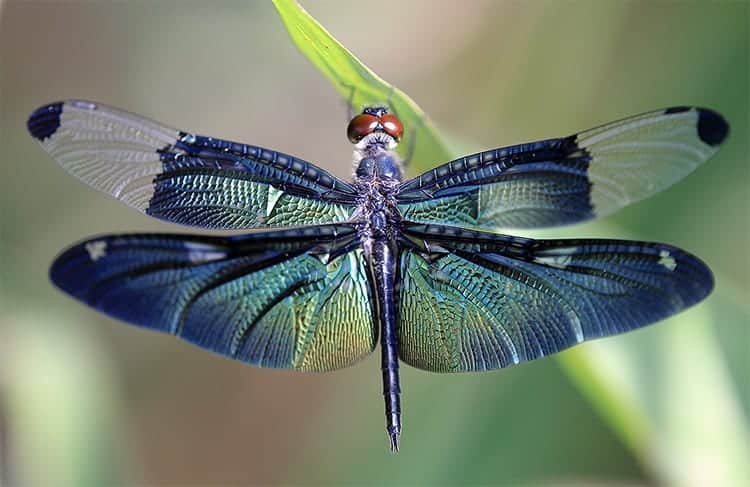
According to the Smithsonian’s documented natural history data, dragonflies catch their prey more than 90% of the time, compared to lions at roughly 25% and great white sharks at around 50%. They are, by that measure, the most effective aerial predators on the planet. Their compound eyes, with up to 28,000 individual ommatidia per eye (Cornell Lab of Ornithology, 2023), give them near-360° visual coverage. They can track a single target insect in a swarm of thousands, adjust their flight path mid-pursuit, and arrive at where the prey will be rather than where it is. That is not hunting. That is anticipation.
And then the lifecycle. The BTO Dragonfly Monitoring Scheme (2022) documents that the aquatic larval stage of most dragonfly species lasts between two and five years. The adult stage, the iridescent flying creature everyone recognizes, lasts weeks to months. A dragonfly spends the vast majority of its life as something unrecognizable, in the dark, at the bottom of a pond, eating with a hinged jaw that extends from its face like something out of an engineering fever dream. Then it climbs to the surface, splits its own skin, and becomes the thing you see hovering above the water.
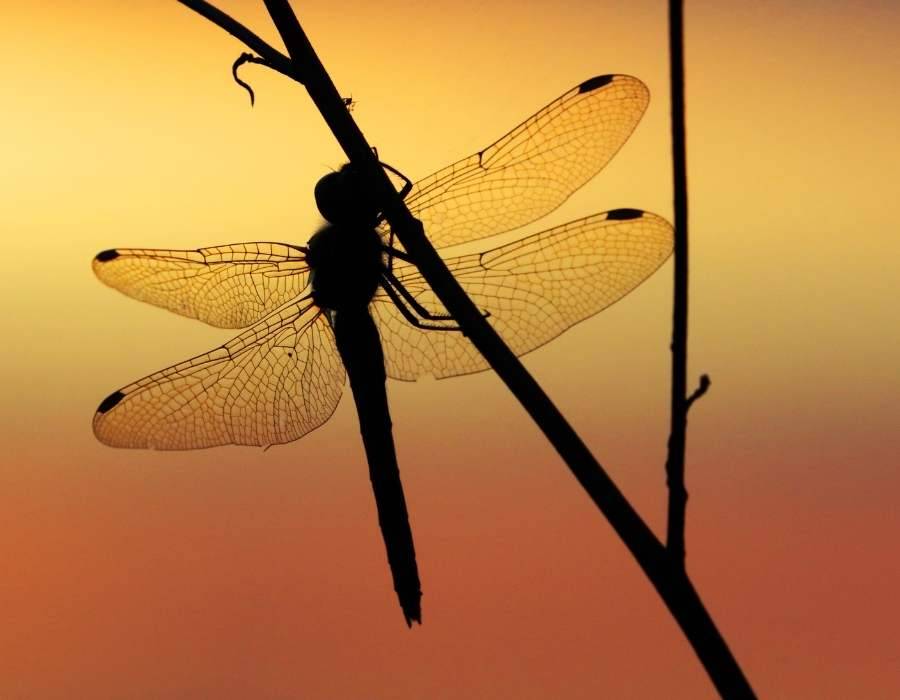
The globe skimmer (Pantala flavescens) completes a migration of roughly 14,000 to 18,000 kilometers, one of the longest of any insect, riding monsoon winds across the Indian Ocean. This was documented through isotope analysis, since no transmitter small enough existed to track it directly.
I find it genuinely hard to write about dragonfly symbolism without the biology, because the biology is where the symbolism comes from. The Japanese and Lakota and Han Chinese traditions were not making things up. They were paying close attention to an animal that earns its symbolic weight through what it actually does.
What Are the Most Common Misconceptions About Dragonfly Symbolism?
Three errors appear on competing sites often enough to be worth addressing directly.
First: that blue dragonflies specifically signal messages from deceased loved ones. This is not supported by the ethnographic record. Anthony F. C. Wallace’s The Death and Rebirth of the Seneca (1970), which documents Seneca Nation symbolism in detail, shows no color-specific associations for dragonflies. The Seneca term gadodi:yo’h, which relates to ephemeral perception, applies to dragonflies as a species, not to particular colors. The “blue dragonfly equals deceased loved one” claim appears to originate in contemporary spiritual content rather than any documented tradition. I have not been able to find a primary source for it. That does not mean the experience of feeling visited is invalid; it means the specific cultural attribution is not accurate.
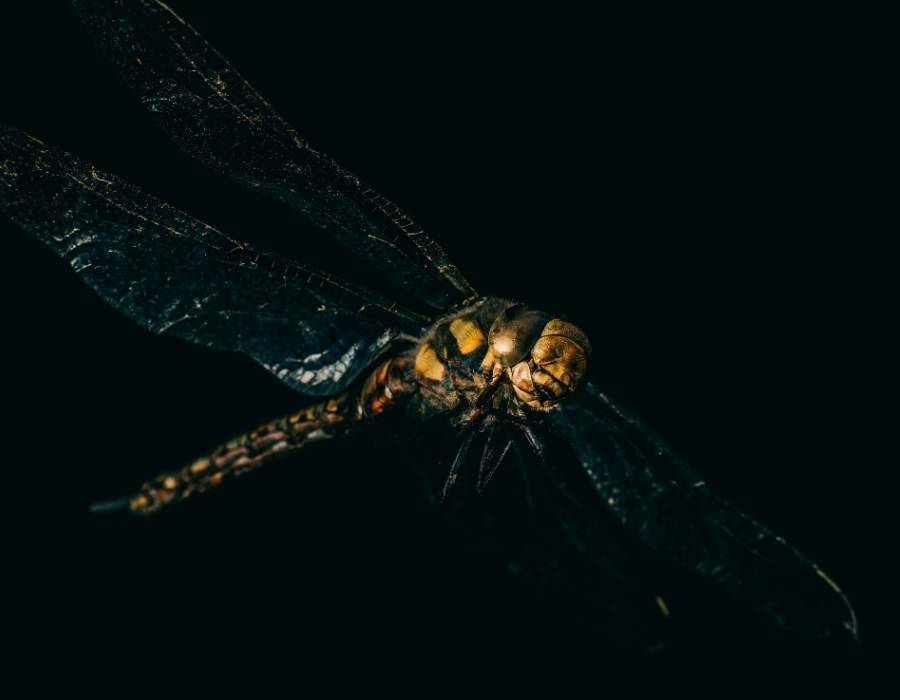
Second: that dragonflies live only 24 hours. Wrong about the adult stage and dramatically wrong about the full lifecycle. According to the BTO Dragonfly Monitoring Scheme (2022), adult lifespans range from two weeks to five months depending on species. The total lifecycle, including the aquatic larval stage, runs two to five years for most species. The folklore emphasis on brief life refers specifically to the adult stage in contrast with the larval stage. The point is the contrast, not an accurate report of the animal’s lifespan.
Third: that all Native American traditions read dragonflies as ancestral messengers. This is a continent-wide attribution applied to hundreds of distinct nations with distinct traditions. Delphine Red Shirt (2018) is explicit that the Lakota reading centers on wóȟpe, renewed vision after hardship, rather than communication from the dead. Other nations have other readings. “Native American tradition” is not a single thing, and any article that treats it as one is not a reliable source on any Native American tradition specifically.
What Does the Dragonfly Mean in the Bible and Christian Symbolism?
The dragonfly does not appear in the Bible. Not in any translation I’ve been able to check, and I want to be straightforward about that rather than manufacture a connection. Locusts appear. Flies appear. The dragonfly, as a named creature with symbolic weight, is absent from the canonical text.
Where Christian interpretive tradition has engaged with the dragonfly, primarily in medieval natural theology, it has done so through the metamorphosis, reading the emergence from larva to adult as an image of resurrection or the soul’s passage from mortal life to afterlife. That reading is a logical application of an established interpretive method (natural things as types of spiritual truths) rather than a claim grounded in scripture. It appears in medieval bestiaries and in some strands of later devotional writing, but it is an interpretive addition, not a textual one.
If the Christian resurrection reading resonates for you, the tradition that produced it is real and has a long history. Just know that it comes from how people read the animal, not from a biblical source.
Frequently Asked Questions
What does it mean when a dragonfly follows you?
Most likely, you are disturbing insects as you walk and the dragonfly is hunting them. That is the honest behavioral answer. The symbolic reading, drawn from the Lakota wóȟpe concept documented by Delphine Red Shirt (University of Nebraska Press, 2018), is that sustained attention from a dragonfly is a prompt toward self-examination: what is coming into clarity that you haven’t yet acknowledged? I hold both readings at once, and I don’t think one cancels the other.
What does it mean when a dragonfly lands on you?
Dragonflies land on warm surfaces with good sightlines. If one lands on you and stays, it has found a suitable perch. Symbolically, across Japanese and Lakota traditions, a dragonfly landing is read as an invitation to stillness and attentiveness, less about fortune than about readiness. Are you paying attention to what is in front of you? I find the behavioral and symbolic readings genuinely complementary here, which is not something I can say about every animal encounter on this site.
Is a dragonfly a good omen or a bad omen?
In most documented traditions, positive or neutral. Japanese tradition frames it as kachi-mushi, victory insect. Lakota tradition associates it with renewed vision after hardship. Han Chinese folk religion reads it as auspicious. The European folk register, particularly the Swedish trollslända and Scottish dearg-atile (devil’s needle), is more ambivalent, but even those associations are about the dragonfly as something that demands attention, not as a predictor of harm.
What does a blue dragonfly specifically symbolize?
Honestly, I don’t have a confident answer grounded in documented tradition. The claim that blue dragonflies carry messages from deceased loved ones is widespread on symbolism sites, but Anthony F. C. Wallace’s ethnographic work on the Seneca Nation (The Death and Rebirth of the Seneca, 1970) shows no color-specific dragonfly associations in that tradition. The folk record on color-specific meanings is thin and the academic record is thinner. What I can say: blue colorations in dragonflies are structural, produced by light diffraction rather than pigment. That is itself a strange and interesting fact.
What does a red dragonfly symbolize?
In Heian period Japanese poetry and aesthetics, the red dragonfly, particularly species like Sympetrum frequens, the autumn darter, carries associations with the harvest season and with autumn as a time of completion. It appears in Japanese poetry from the Heian period onward as an image of fullness and the end of a cycle, not a beginning. That seasonal reading is the most specific documented association I’ve found for red coloration. Outside Japan, I have not located a tradition that makes red dragonflies symbolically distinct from dragonflies generally.
What does a green dragonfly symbolize?
Green dragonflies don’t carry a distinct symbolic weight separate from dragonflies generally in the traditions I’ve been able to document. The association with growth and renewal that gets attributed to green dragonflies on many sites appears to be an extrapolation from color symbolism broadly (green equals growth) rather than a claim grounded in any specific folk tradition. The dragonfly’s base symbolism, clarity and change and preparation, applies regardless of color in the Lakota and Japanese frameworks, which are the most carefully documented sources available.
Are dragonflies associated with death or the afterlife?
In some traditions, yes, but the association is more specific than “messenger of the dead.” The Lakota concept of wóȟpe connects dragonflies to vision renewed after hardship, which can include the hardship of bereavement, but that is not the same as saying dragonflies are souls or carry messages. The medieval Christian interpretive tradition connects the metamorphosis to resurrection, emergence from one state to another, which is adjacent to afterlife symbolism without being a death omen. For dragonfly appearances specifically after a loss, the sibling page on dragonfly spiritual meaning after a death covers this in more depth.
What does it mean when you keep seeing dragonflies repeatedly?
Repeated encounters often have a seasonal explanation first. Dragonflies are most abundant near water in late summer and early fall, and if you are walking near ponds or streams in August, you will see many. But if the frequency feels significant to you, the interpretive frame I find most grounded is the Lakota one: dragonflies as prompts toward renewed vision. Repeated encounters, in that framework, are an extended invitation to examine something you may be circling rather than landing on. What keeps catching your eye that you’ve been avoiding looking at directly?
What is the dragonfly’s significance in meditation or mindfulness practices?
The dragonfly appears in contemplative contexts primarily because of the eye: a creature that can see nearly everything at once, that cannot be surprised from behind, that tracks a single target through complexity with complete attention. In Zen-adjacent practice, the dragonfly has been used as an object of meditation because of its stillness when perched and its total precision when it moves. There is no single canonical tradition for this use, but the behavioral qualities that inform it are real and well-documented. The dragonfly at rest, fully alert, is a good model for a kind of attention worth practicing.
Do dragonflies symbolize love or relationships in any tradition?
Han Chinese folk religion is the clearest documented case. Li Shizhen’s Bencao Gangmu (1596) specifically mentions dragonflies in the context of fertility and marital harmony. During the Mid-Autumn Festival, paper dragonflies were released as symbols of shedding ignorance within relationships as well as in scholarly life. Dragonfly pairs are also noted in Shinto practice and classical Japanese poetry: mating dragonflies form a wheel shape, which appears in poetry and textile motifs as an image of reciprocal attachment. The connection to love is documented, specific, and more interesting than the generic “good luck in love” framing you’ll find on most sites.
What is the difference between dragonfly and damselfly symbolism?
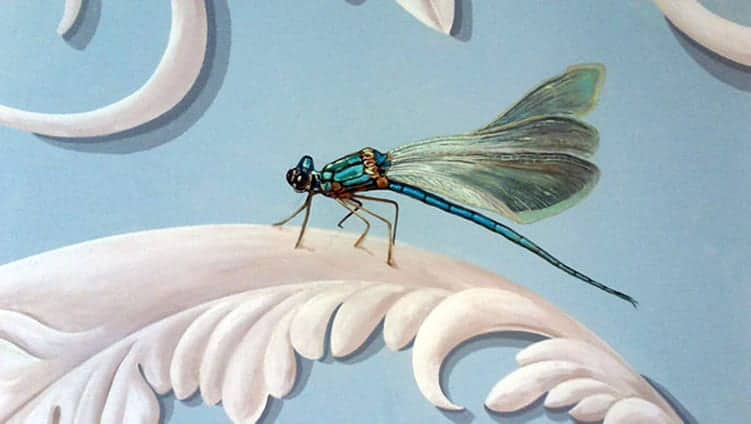
Most folk traditions did not distinguish between dragonflies and damselflies as separate categories, and they are easy to confuse: both are in the order Odonata, both have aquatic larvae, both have compound eyes. The practical distinction is that damselflies fold their wings along the body at rest, while dragonflies hold them out to the sides. Symbolically, they have largely been treated as the same creature in the traditions I’ve been able to document. If you’re trying to identify which you saw, wing position at rest is your quickest field marker.
Sources
- Smithsonian Magazine, “14 Fun Facts About Dragonflies”
- Gulo in Nature, “15 Amazing Facts About Dragonflies” (includes BTO Dragonfly Monitoring Scheme 2022 data)
- JLife International, “Tombo: A Timeless Motif in Shinto and Japanese Folk Belief” (Li Shizhen, Bencao Gangmu, 1596)
- Indian Traders, Native American Dragonfly Symbolism
- Icy Sedgwick, Dragonfly Folklore (European folk traditions)
- USC Scalar, Dragonfly and Butterfly (cross-cultural mourning symbolism)
- Earth Wind Bells, Dragonfly Significance in Cultures Regarding Death and Rebirth
- Palos Verdes Pulse, The Magic of Dragonflies
- Delphine Red Shirt, Lakota Traditional Teaching Stories, University of Nebraska Press, 2018
- James R. Walker, Lakota Belief and Ritual, compiled 1890–1910, published 1980
- Anthony F. C. Wallace, The Death and Rebirth of the Seneca, 1970
- Cornell Lab of Ornithology, compound eye ommatidia data, 2023
- Zhu Xi, Jinsilu (Reflections on Things at Hand), 12th century



I absolutely adore dragonflies they intreged me as a child and as an adult I have collected many, some as ornaments, paper weights, pictures, jewellery, scarves, soft furnishing and have named my two last homes after them. 1st one was Dragonfly Cottage and the home I am in now is Dragonfly Lodge. I was thrilled that this year a beautiful Dragonfly made an appearance at my son’s wedding.