In Homer’s Iliad, Poseidon’s trident shook the earth and ruled the seas with absolute power. That same three-pronged shape appears in Hindu art as Shiva’s triśūla, yet means something different: the destruction of evil and grace. Whether you read the trident as a sea god’s command or a destroyer’s mercy changes everything about what it represents.
Key Takeaways
- The trident has no universal spiritual meaning. The tradition you’re drawing from determines everything.
- According to Homer’s Iliad Book 12, Poseidon’s trident signified maritime sovereignty and earthquake force, not personal awakening or a threefold spiritual law.
- The British Museum catalogue record for object A.2001.1126.1, and T. Richard Blurton’s Hindu Art (1993), establish Shiva’s triśūla as signifying destruction of evil and the bestowal of grace, specific to Śaiva tradition.
- Tibetan Buddhist trident imagery is deity- and lineage-specific; it does not function as a shared omen code.
- Modern claims that seeing a trident signals manifestation or a coming breakthrough are contemporary. They do not appear in any ancient Greek, Roman, or Śaiva source.
What Is the Spiritual Meaning of the Trident?
The short answer: it depends which tradition you’re asking. Poseidon’s trident meant sovereignty over the sea and the power to shake the earth. Shiva’s triśūla meant, in the Śaiva Hindu tradition documented by T. Richard Blurton in Hindu Art (1993), the destruction of evil and the granting of grace. Tibetan Buddhist trident imagery means something else again, and it shifts by deity and rite. There is no master code that unifies them.
I usually write about animal symbolism on this site, and the trident sits slightly outside that territory. But the same error I see made with owls and hawks, flattening a specific, tradition-bound meaning into something vague and universal, gets made constantly with the trident. So the approach here is the same one I use everywhere: start with what the sources actually say, then note where modern interpretation has wandered from them.

The common thread across traditions, if there is one, is force held in check. Whether it’s Poseidon commanding the sea not to swallow a ship, Shiva severing the soul from the wheel of rebirth, or a Tibetan wrathful deity defeating obstruction, the trident tends to represent control over something dangerous and unstable. That’s a real pattern. But the specifics matter, and the specifics differ.
What Does the Word “Trident” Actually Mean, and Why Does Etymology Matter?
The English word “trident” comes from the Latin tridēns, literally “three-toothed”, combining tri (three) with dens (tooth). According to the Online Etymology Dictionary, the word entered English in the fifteenth century, meaning a three-pointed spear, specifically the attribute of Neptune. That’s the whole etymology. Three teeth.
The ancient Greek word was tríaina, which is structurally “threefold” but whose precise morphological history is, as Robert S. P. Beekes notes in his Etymological Dictionary of Greek (2010), debated. What isn’t debated is how Homer uses it: as a weapon that moves earth and water. Not a symbol of spiritual awakening. The epithet that matters most for understanding Poseidon’s trident isn’t anything mystical, it’s Ennosigaios, the Earth-Shaker.

Sanskrit triśūla is a different word entirely. It combines tri (three) with śūla, a sharp spike or thorn. Different language, different religious history, different iconographic system. The words constrain the meanings. A Greek trident and a Hindu triśūla share a three-pronged shape the way English “deer” and German “Tier”, which means any animal, share a sound. Overlap in form does not mean overlap in meaning.
What Did the Trident Mean in Ancient Greek Religion and Homeric Epic?
In Greek religion, the trident was Poseidon’s primary attribute, the thing you painted on a vase to tell the viewer who that figure was. But what did it mean? According to Homer’s Iliad Book 12, Poseidon uses his trident to destroy the wall the Achaeans built on the beach at Troy and to redirect rivers. He is called the Earth-Shaker. The trident is an instrument of massive, environmental force: it opens or alters the boundary between land and sea.
Walter Burkert, in Greek Religion (1985), establishes Poseidon’s domain as sea, earthquakes, horses, and springs, all forces associated with instability, with the ground moving beneath you. The trident in this context is not a symbol of intuition or personal transformation. It is an emblem of divine authority over things that can kill you: waves, earthquakes, horses that throw riders.

By the eighth century BCE, Homeric poetry already treats the trident as a recognized, established attribute. This is not a late or obscure association. It is one of the oldest documented symbolic meanings attached to any three-pronged object in Western literary history.
How Did Roman Religion Reframe the Trident Under Neptune?
Roman Neptune inherited the trident from Greek Poseidon, but the Roman context shifted its weight. Roman state religion was organized around civic order, agricultural cycles, and safe passage, and Neptune’s trident, as it appears on Roman coins and in sculpture, marked his authority over the sea in that civic frame. He kept ships from sinking. He kept water from flooding farmland. The trident became, in Rome, an emblem of maritime order rather than raw earthquake force.
And here is something that gets overlooked: the Latin word tridens was also used for practical fishing tools. A three-pronged fishing spear. The same word that named a god’s divine weapon named an ordinary tool that fishermen carried. That dual use tells you something about how Roman religious language worked, sacred and practical sitting inside the same word without discomfort. No wall between Neptune’s trident and the fisherman’s trident.
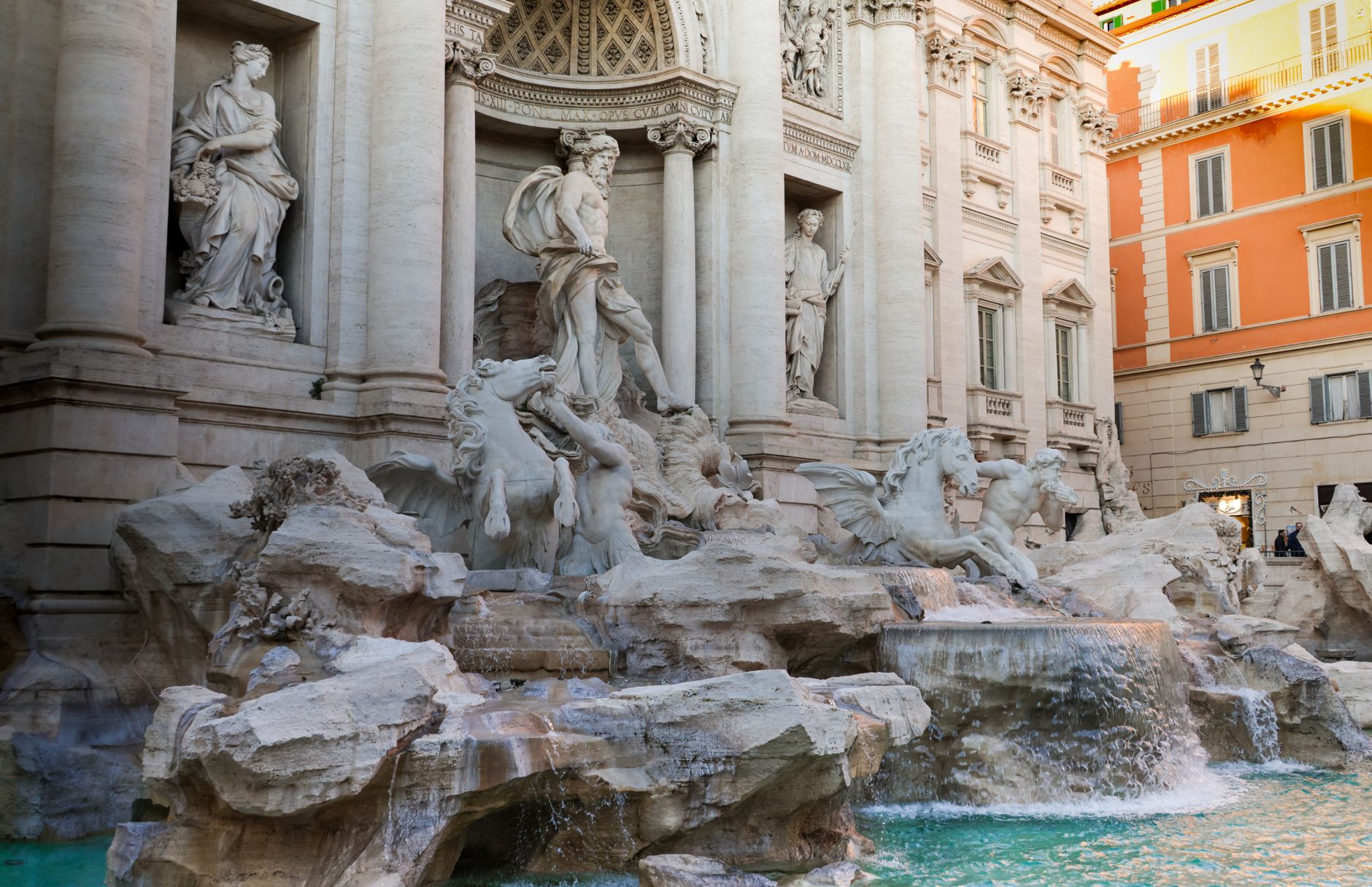
No Roman source I have found establishes the trident as a sign of a personal breakthrough coming. That reading is not there.
What Does Shiva’s Triśūla Mean in Śaiva Hindu Tradition?
The triśūla is one of Shiva’s defining attributes in Śaiva iconography, and its meaning is theologically specific. According to the British Museum catalogue record for object A.2001.1126.1, the triśūla can signify the destruction of evil and the bestowal of grace, specifically, the separation of the soul from the cycle of reincarnation. T. Richard Blurton, in Hindu Art (1993), treats it within this same iconographic tradition: a weapon that severs, that removes what binds.
Later explanatory traditions within Hinduism connect the three points with the three guṇas: sattva (clarity), rajas (activity), and tamas (inertia).Some connect them with creation, preservation, and destruction, the three functions associated with Brahma, Vishnu, and Shiva in the Trimurti framework. These are real, documented interpretations. But they are Śaiva interpretations. They should not be treated as the universal meaning of all tridents, including Poseidon’s.
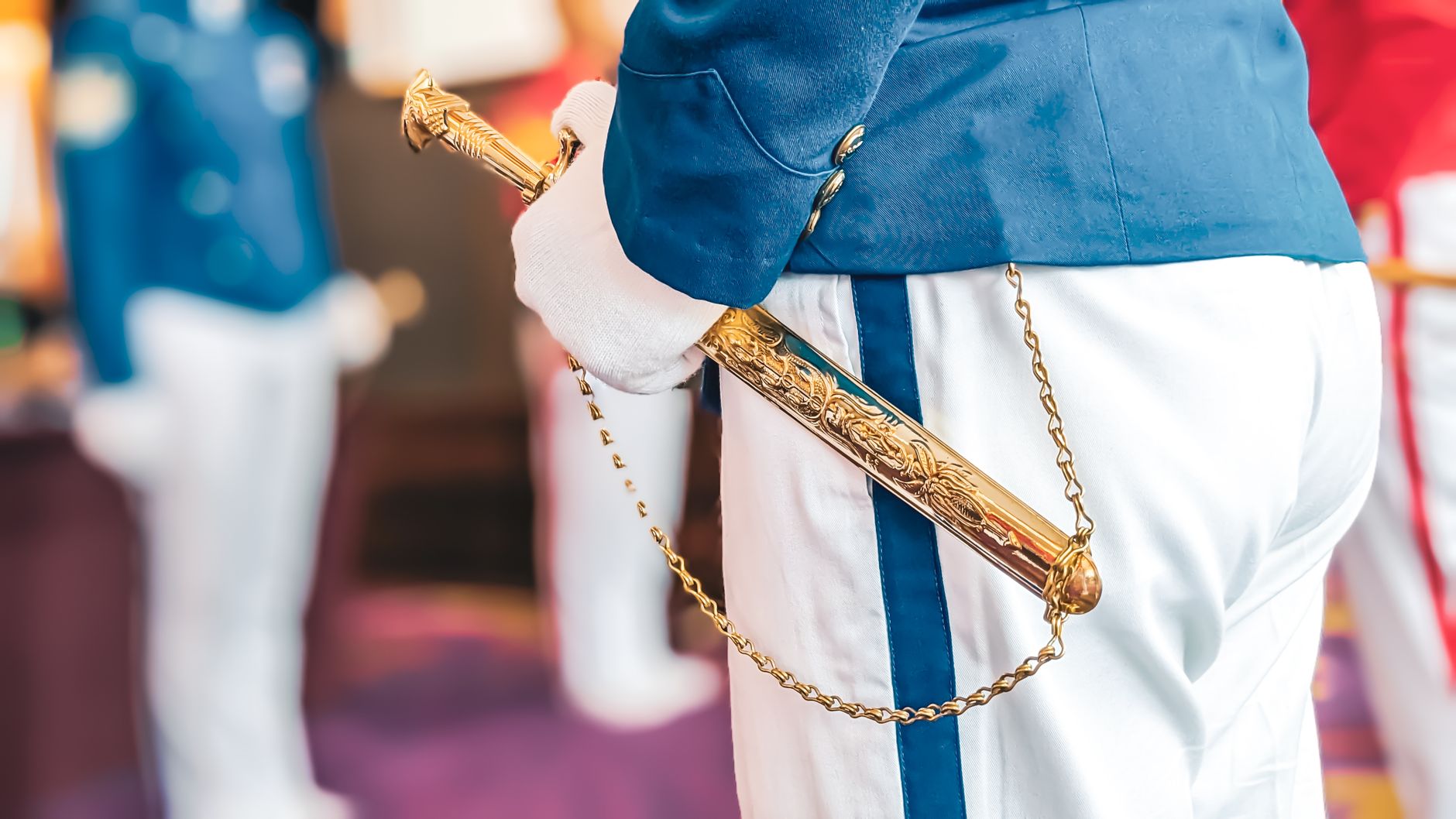
What strikes me about triśūla symbolism is how genuinely different it is from the Greek reading, despite the shared three-pronged shape. Poseidon’s trident shakes the earth. Shiva’s triśūla severs the soul from suffering. Same form. Different history.
How Does the Trident Appear in Tibetan Buddhist and Tantric Imagery?
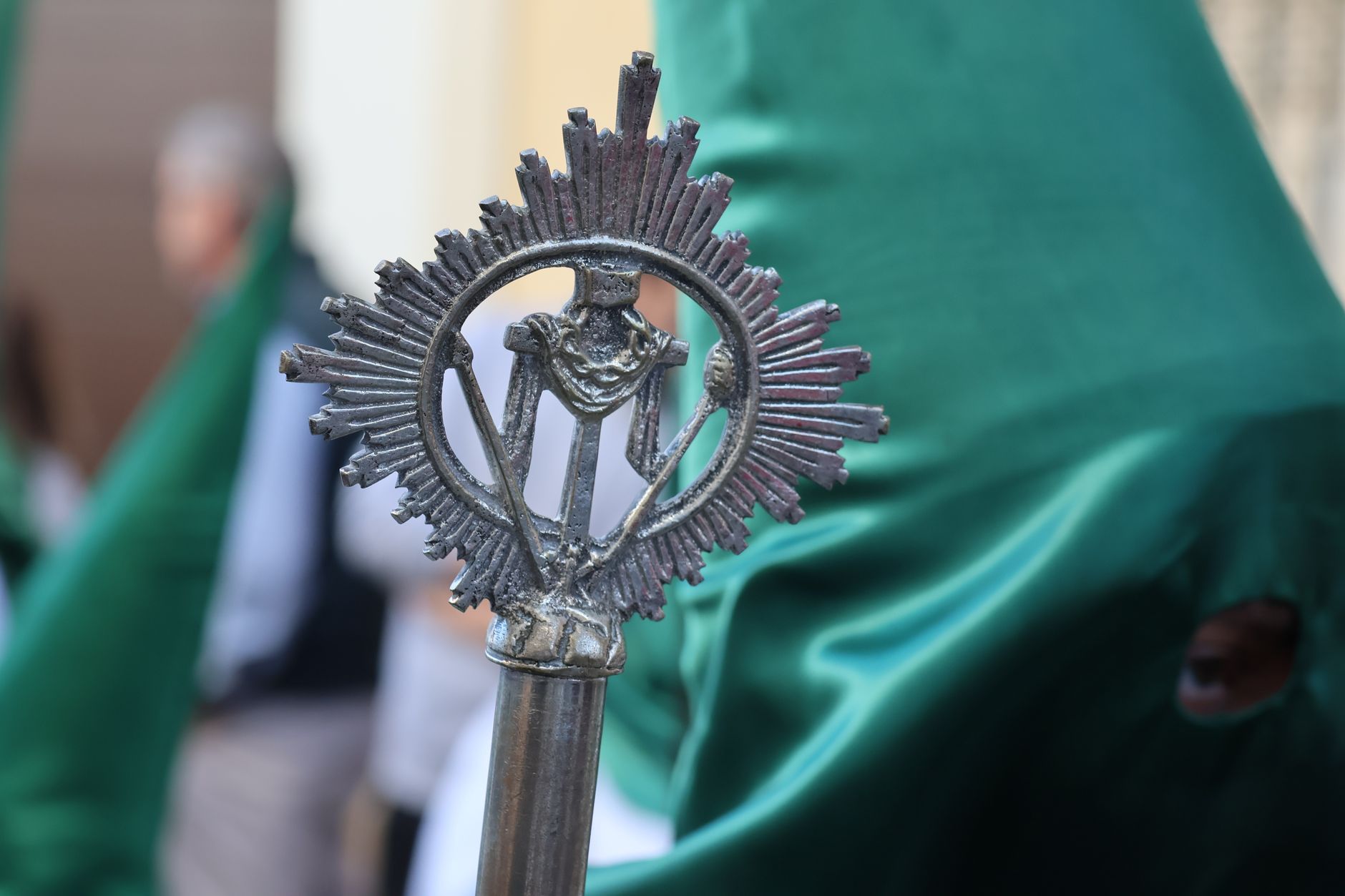
In Tibetan Buddhist and tantric art, tridents appear attached to ritual staffs or held by wrathful and protective deities. The meaning here is not fixed by the shape alone, it depends on the deity, the rite, and the specific work. A trident held by a wrathful deity may indicate the defeat of obstructive forces or power over dangerous thresholds. But you cannot read a Tibetan trident the same way you read Shiva’s triśūla, let alone Poseidon’s.
I have read several explanations of Buddhist trident imagery and I am not confident any single account covers the full range of uses. The lineage matters. The specific deity matters. A trident in Tibetan Buddhist iconography is not an automatic symbol of protection or severance, you need to know what figure is holding it and in which ritual context before drawing any conclusion.
That is not a reason to dismiss the symbolism. It’s a reason to be careful with it.
What Are the Most Common Misconceptions About Trident Symbolism?
The first: every trident represents the same universal threefold law, mind, body, spirit; past, present, future; creation, preservation, destruction. This is a modern esoteric addition. Poseidon’s trident in Homer is primarily an emblem of sea, earthquake, and territorial power. Shiva’s triśūla has several interpretations within Hindu theology, none of which were intended as a universal code applicable to all tridents everywhere.
The second: seeing a trident, in a dream, on a piece of jewelry, in art you keep returning to, is automatically an omen of manifestation or a coming breakthrough. No Greek, Roman, or Śaiva source establishes this as a general omen rule. The trident in ancient sources is an attribute or a weapon, not a sign sent to individuals about their personal futures. A personal encounter can absolutely be given private meaning. But that meaning is yours, and it is contemporary.
The third: that Poseidon’s trident and Shiva’s triśūla are interchangeable because they look alike. Conflating them is roughly like saying a Christian cross and a plus sign mean the same thing because they share a shape. The form is similar. The history is not.
What Do the Three Prongs of the Trident Symbolize Across Traditions?
In Śaiva Hindu tradition, the three points of the triśūla are most commonly connected with the three guṇas, the qualities that, according to Śaiva philosophy, govern all matter and experience: sattva, rajas, and tamas.A secondary interpretation connects them withthe Trimurti: Brahma, Vishnu, Shiva. Both readings are documented within the tradition. Neither is universal.
In ancient Greek religion, the three prongs did not carry a documented threefold theological meaning. The trident was an attribute, not a diagram. Homer does not explain the prongs. Burkert does not assign them separate symbolic values. The modern claim that they represent “sea, sky, and underworld” or “past, present, and future” in Greek religion is not supported by the primary sources. It may be a later reading layered onto the symbol, or it may be a modern one. I don’t know which.
In Roman contexts, I have not found a documented tradition that assigns specific meanings to each prong of Neptune’s trident. Any such claim in contemporary writing should be read with skepticism.
What Does the Trident Symbolize as a Spirit or Power Totem?
If the trident has caught your attention recently, in a tattoo, a dream, a piece of art you keep going back to, here is what the historical record actually offers. Across its major traditions, the documented qualities are sovereignty over unstable forces, protective severance, and the power to alter boundaries. Those are the things the sources say.
My grandmother Theresa’s notebook from the Bavarian Forest doesn’t mention the trident, it’s too Mediterranean a symbol for the tradition she was drawing on. But the notebook taught me something useful about how to read symbols: what a symbol has meant across time is the raw material you start from, not the conclusion you end at. In a contemporary spirit-totem framework, the trident’s historical qualities translate to something like comfort with forces you cannot fully control, the ability to cut away what is harmful, and a relationship with thresholds, moments when one state of things becomes another.
That reading is not ancient. But it is built from the ancient record rather than invented alongside it, which is the most a contemporary interpretation can honestly claim. And for anyone building a personal symbolism practice, that kind of grounded claim tends to hold up longer than the bigger ones.
What Does It Mean to See or Dream of a Trident?
The dream question deserves to be separated from the waking symbolism question, because dream interpretation has its own logic.Carl Jung read symbols in dreamsas products of the unconscious reaching for an image it already carried, not as external messages, but as internal ones. By that reading, a trident in a dream draws on whatever you already associate with the symbol: force, the sea, Shiva, Neptune, a video game. The meaning is partly personal.
If you want a grounded starting point: the trident’s core attributes across traditions are force, protection, and severance. If those qualities appeared in your dream, if you felt protected, if something was cut away, if you were facing something large and survived it, the trident image fits the experience. If it didn’t, the symbol may be visual noise, a shape your sleeping mind borrowed from somewhere without loading it with meaning.
I don’t have a confident answer for what a trident in a dream means at the individual level. Nobody does, honestly. The folk record for dream tridents is thin and the academic record is thinner. What I can say is that the traditions that took this symbol most seriously understood it as an instrument of force and grace, not of punishment, not of warning.
How Has the Trident’s Meaning Shifted in Modern and Popular Symbolism?
The trident now appears in brand logos, tattoo culture, sports team insignia, and contemporary spiritual writing. In most of these contexts, it carries a loose cluster of associations: strength, authority, the sea, something vaguely classical. That is a real cultural meaning, not ancient, but real.
In New Age and contemporary spiritual writing, the trident sometimes appears as a symbol of manifestation or psychic power. These associations are not documented in Greek, Roman, or Sanskrit sources. They are modern additions, assembled from the symbol’s visual authority without its specific historical content. That doesn’t make them meaningless to the people who hold them. But they belong to a contemporary spiritual vocabulary rather than an ancient one, and those are two different things, both worth knowing.
What gets lost in the popular version is the strangeness. Poseidon’s trident is fascinating precisely because it belongs to a god associated with the most unstable forces in the Greek world, sea, earthquake, horses. That’s a stranger and more interesting story than “strength and authority.” The historical meaning is richer than the modern shorthand, and the richness is what makes it worth paying attention to.
Frequently Asked Questions
Is the trident a good or bad spiritual symbol?
Neither, cleanly. In Greek tradition, Poseidon’s trident was associated with destructive force, earthquakes, floods, the sea in a storm, but also with divine order and maritime sovereignty. In Śaiva Hindu tradition, the triśūla destroys evil and bestows grace; destruction here is a necessary good. In Tibetan Buddhist imagery, tridents appear with wrathful protective deities. The symbol is associated with force, not with morality. Whether that force reads as “good” or “bad” depends on what it’s directed at, and by whom.
What does a trident tattoo mean spiritually?
A trident tattoo in contemporary culture generally draws on the symbol’s classical associations: strength, authority, connection to the sea, something powerful held in hand. If you have a specific tradition in mind, Śaiva, Greek, or Buddhist, the meaning becomes more specific. Without that, it sits in the modern symbolic vocabulary: force, independence, classical weight. There is no single spiritual doctrine attached to trident tattoos. The meaning is largely what you say it is, informed by whatever tradition you’re drawing from.
Are Poseidon’s trident and Shiva’s triśūla the same symbol?
No. They share a three-pronged shape, but they arise from different languages, different religious systems, and different theological frameworks. Poseidon’s trident is documented in Greek epic poetry as an instrument of sea-sovereignty and earthquake force. Shiva’s triśūla, as recorded in the British Museum catalogue and in T. Richard Blurton’s Hindu Art, signifies destruction of evil and liberation from the cycle of rebirth. Treating them as interchangeable erases the specific meanings each tradition spent centuries building.
What does a trident represent in Christianity?
Christianity does not have an established positive theological use of the trident. In some medieval and early modern European visual culture, a three-pronged pitchfork became associated with the devil, a negative appropriation of the classical symbol. This appears in folk imagery and literary tradition rather than formal Church doctrine. The number three is deeply significant in Christian theology through the Trinity, but that significance is not attached to the trident as an object. I am not aware of a major Christian denominational tradition that treats the trident as sacred.
What does it mean when a trident appears repeatedly in your life?
No ancient Greek, Roman, or Śaiva source establishes “repeated trident encounters” as a category of omen with a fixed meaning. If you keep seeing one, in art, in dreams, in daily life, the question worth asking is what you associate with it, and whether those associations map onto something happening for you right now. The trident’s historically documented qualities are force, protection, and severance. If any of those are live in your situation, the repetition may be your attention flagging something worth examining. That is a Jungian reading, and it is the most honest one I know.
What is the trident a symbol of in astrology or tarot?
The trident does not have an established fixed role in traditional Western astrology or in the standard 78-card tarot deck. Neptune, the planet, takes its name from the Roman sea god, and Neptune’s astrological symbol is derived from a trident, which creates an indirect connection. In some contemporary tarot decks and New Age frameworks, trident imagery appears with meanings built from the historical associations: power, the sea, force. These are modern interpretive extensions, not elements of classical astrology or the Rider-Waite tradition.
Does the trident have a meaning in Native American or Celtic traditions?
I have not found a documented traditional use of the trident as a meaningful symbol in any Native American tradition. The trident is a Mediterranean and South Asian symbol, and its form does not appear to have an independent symbolic history in pre-contact North American cultures.Celtic traditions have their own triplesymbols, the triskelion, the triquetra, with distinct histories. These are not tridents. Applying the word “trident” to Celtic triple symbols, or claiming a cross-cultural universal meaning, risks erasing the specific history of each tradition.
What does the number three have to do with the trident’s spiritual meaning?
In Śaiva Hindu tradition, the three prongs of the triśūla are connected to the three guṇas, sattva, rajas, and tamas, and sometimes to the Trimurti of Brahma, Vishnu, and Shiva. These are documented connections within that tradition. In Greek religion, the three prongs of Poseidon’s trident do not carry a documented theological threefold meaning, Homer does not assign symbolic values to each prong individually. The modern claim that all trident prongs universally represent some set of three is a contemporary addition without ancient textual support.
Is the trident ever considered a negative or demonic symbol?
Yes, in some Western Christian folk and popular culture, the pitchfork or trident became associated with the devil, partly through conflation with Poseidon’s weapon, partly through the general association of three-pronged tools with infernal imagery in medieval art. This actively repurposed a classical symbol of divine sea-power into a sign of evil. In Hindu tradition, the triśūla is not negative; the destruction it represents is destruction of evil, not a negative force in itself. Context and tradition determine whether the symbol reads as threatening or protective.
How should I interpret a trident symbol you encountered personally?
Start with which tradition the trident came from, if you can tell. A trident in a Hindu temple means something specific within Śaiva iconography. A trident in a dream with no clear cultural context is yours to interpret, starting from the symbol’s core qualities: force, protection, severance, control over unstable things. If those qualities are live in your life right now, the image has something to work with. If none of that resonates, the encounter may simply be visual, and that’s fine too. Not every symbol is a message. Sometimes a three-pronged shape is just a shape you noticed.
Sources
- Homer, Iliad, trans. A. T. Murray, 1924 (hosted by Vancouver Island University)
- British Museum, “Triśūla,” collection object A.2001.1126.1
- Online Etymology Dictionary, “Trident,” accessed 2026
- Wikipedia, “Trident”
- Wikipedia, “Trishula”
- Wikipedia, “Iliad”
- Walter Burkert, Greek Religion, Harvard University Press, 1985
- T. Richard Blurton, Hindu Art, Harvard University Press, 1993
- Robert S. P. Beekes, Etymological Dictionary of Greek, Brill, 2010
- Monier Williams, A Sanskrit-English Dictionary, Oxford, 1899
- www.newworldencyclopedia.org
- www.encyclopedia.com
- www.abc.net.au
- www.thecollector.com