Most people nail gorilla to raw muscle and aggression, but that misses what the animal actually meant. West African traditions, especially among Fang peoples, saw the gorilla as an ancestor and guardian, not a thug. Whether it shows up as protector or brute force depends on what you’re facing when it arrives.
Key Takeaways
- The gorilla as a power animal pairs protective strength with patient caregiving. Most sources lead with the first and skip the second entirely.
- Fang communities of Gabon documented the Ngi society and the epithet Essa-ngui (“Father Gorilla”), framing gorilla power as ancestral and protective, not generic personal empowerment.
- Bakwele and Baka traditions describe dzil-elizaliza, beings gorilla in body but human in spirit, placing the animal at the boundary between the living and the dead.
- The Kwele gon gorilla mask is used against witchcraft, not as a symbol of courage or leadership in any modern motivational sense.
- Roughly 1,063 mountain gorillas remained in the wild as of the 2019 census. Resilience under sustained threat is now part of what this animal means, and you cannot separate the symbol from that fact.
What Is the Gorilla as a Power Animal?
The gorilla as a power animal stands for protective strength, patient leadership, and family guardianship. Not one of them alone. And not the chest-beating, knuckle-dragging caricature version, which collapses most of what is actually interesting about the animal into a single bad cartoon.
I write about animal symbolism because the actual biology and the actual cultural record are almost always stranger and more useful than the shorthand. With the gorilla, that is especially true. What struck me when I first worked through the central African ethnographic sources was how consistently the records pointed away from violence and toward guardianship, ancestry, and the careful management of belonging. The Fang traditions Du Chaillu documented in 1861 were not about power in the modern self-help sense. They were about the right use of a force that required handling.
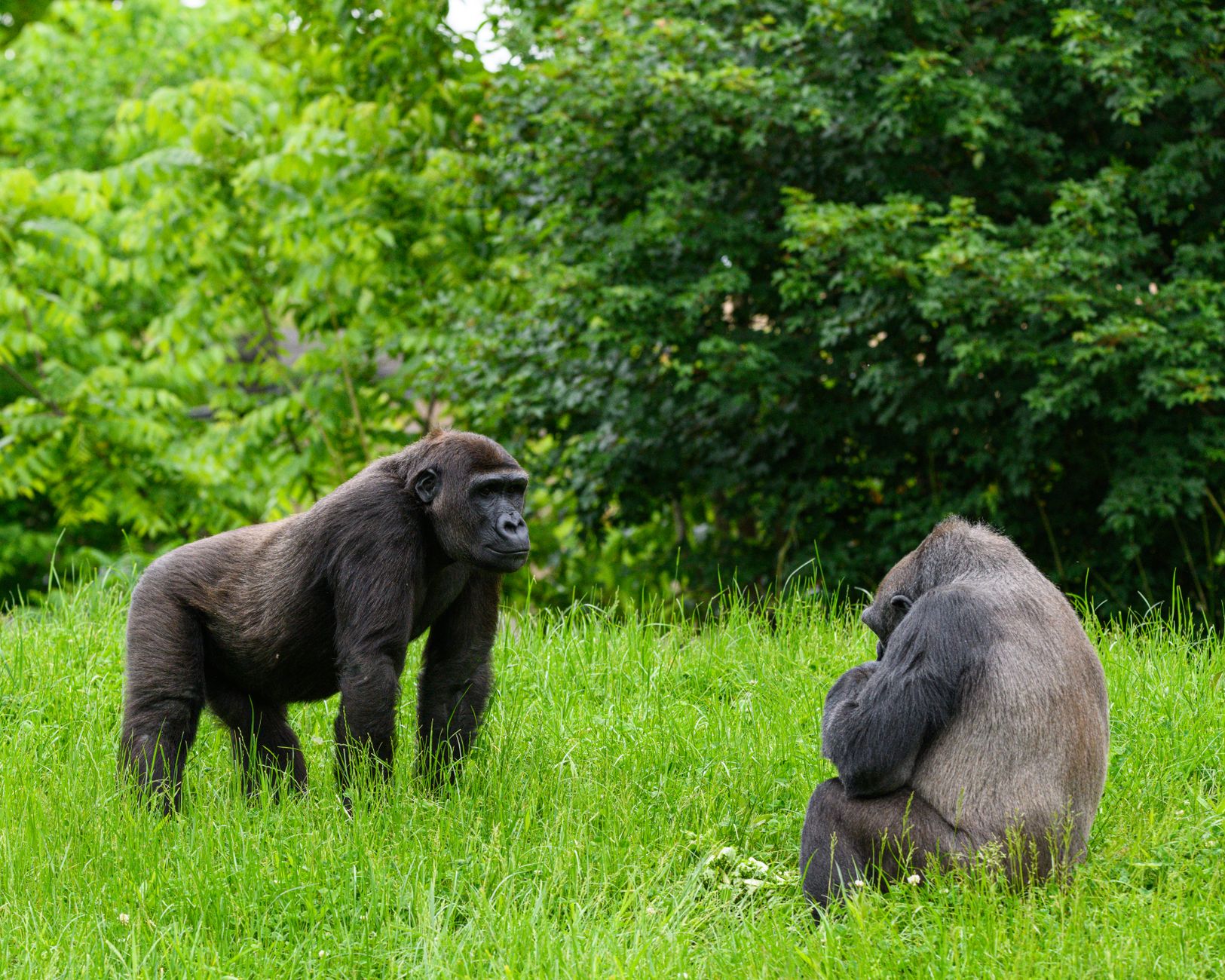
In contemporary personal-spirituality practice, a power animal is an animal whose qualities you feel drawn to, or that appears repeatedly in your life, dreams, or reflection. The gorilla enters that frame carrying real weight: size, stillness, the way a silverback places himself between danger and his group and simply stands there. But the weight is not aggression. That distinction matters, and the behavioral record backs it up.
What Do the Natural Behaviors of Gorillas Reveal About Their Symbolic Meaning?
Silverbacks do not lead through constant aggression. According to the Dian Fossey Gorilla Fund’s 2022 behavioral records, a dominant male directs group movement, maintains cohesion, and protects group members, a job that involves patience and steady presence far more than combat. Adult males begin developing their silver hair at around twelve years old and take on full leadership responsibilities gradually. Not all at once.
The infant weaning data is what really changes the picture. Mountain gorilla infants are fully weaned at an average of about forty months. Three and a half years. Females reproduce only every several years after that. A gorilla group is organized around long, slow investment in the next generation, not fast reproduction and dispersal. Patience, continuity, intergenerational care: these belong in the gorilla’s symbolic profile alongside strength, and the communities that built the richest traditions around this animal noticed them.

The strength was obvious. But what they made meaning from was often the other thing, the steadiness, the family loyalty, the way the animal occupies its ground without wasting effort.
What Does Fang Tradition Say About the Gorilla Spirit?
The Fang communities of Gabon, Equatorial Guinea, and southern Cameroon have the most documented relationship with the gorilla of any group in the ethnographic record. Their symbolism is not about personal empowerment. It is about ancestral potency, protection, fertility, and controlled access to a dangerous forest force.
Du Chaillu recorded in Explorations and Adventures in Equatorial Africa (1861) that Fang people used gorilla teeth, fingernails, hair, and hands as protective and fertility-bearing materials. The gorilla was not a distant symbol, its physical substance carried spiritual charge. The Fang word ngi or ngui is linked to fire and positive force. The epithet Essa-ngui, “Father Gorilla,” frames the animal as an elder, an ancestor, a being of social authority.
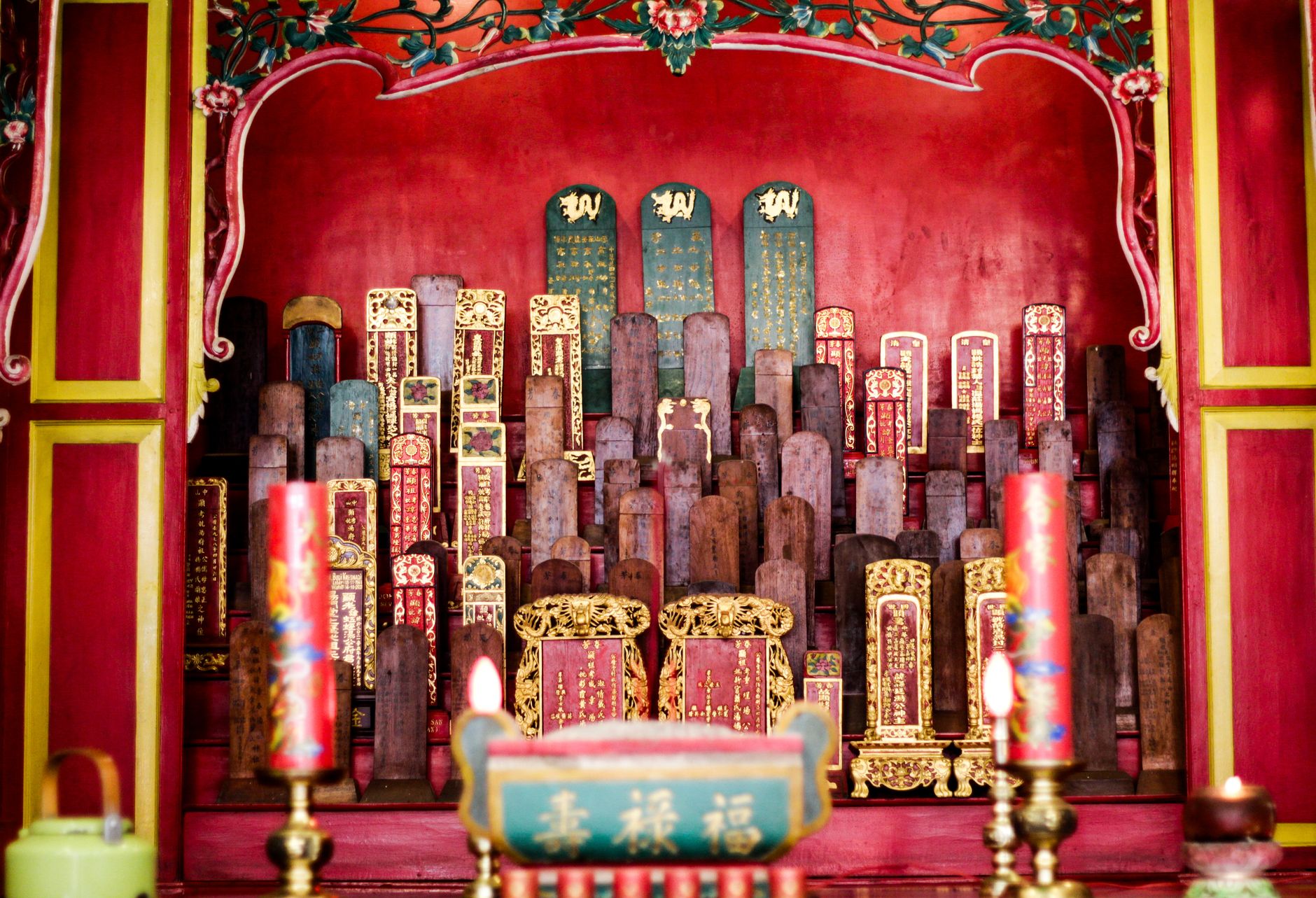
The Ngi society was a ritual association built around gorilla power and its connection to social order. Leon Siroto’s later work confirmed this was not casual folklore but an organized ceremonial system. The gorilla’s power, in Fang understanding, was real enough to require regulation, it had to be handled properly, through proper channels, by people with the right standing. That is a very different thing from the modern phrase “channel your inner gorilla.”
What Do Bakwele and Baka Traditions Say About Human-Gorilla Transformation?
The Bakwele of southeastern Cameroon and the Sangha region of the Republic of the Congo describe a category of being that sits precisely at the line between human and animal. They call them dzil-elizaliza: bodies that are gorilla, spirits that are human.
Two kinds exist. One is peaceful, a person who died and returned as a gentle, tranquil gorilla, a revenant living out the forest’s patience. The other is dangerous, a person transformed by witchcraft, capable of harm. Axel Köhler’s 2005 ethnographic research documented this distinction in detail, and it was analyzed further in “Human-Gorilla and Gorilla-Human: Dynamics of Human-Animal Boundaries” (published in the Journal of Primatology in 2013), which found related beliefs among the Baka, Njem, Djem, Fang, and Mpiemu. The gorilla, across this body of tradition, is not a straightforward symbol of any single quality. It is a threshold being.
That duality matters if you are thinking about what the gorilla means as a symbol. Power, yes. But power that cuts both ways, and that requires discernment to read.
What Does the Kwele Gorilla Mask Reveal About Gorilla Symbolism?
The Kwele of western Equatorial Africa use a gorilla mask called the gon in beete ritual performance. Its purpose is confrontational: used against witchcraft, to find and expose hidden sorcery within the community. Its form, enlarged nose, visible fangs, gorilla-like cranial shape, is meant to intimidate, to drag the dangerous thing into the open.
Leon Siroto documented the Kwele Gorilla Dance Society in his 1969 Columbia University dissertation Masks and Social Organization among the BaKwele People of Western Equatorial Africa. His account makes clear that the gorilla mask’s meaning is contextual and ceremonial, not personal. It is the community’s right to police itself against internal threat. Confrontation in service of social order. That is not courage in any modern self-help sense, it is something more specific and more serious.
So the Fang Ngi society and the Kwele gon mask are both built around gorilla power, but they are doing different ceremonial work. Anyone who tells you gorillas mean one thing, simply and universally, has not looked at the actual record.
What Is the Origin of the Word “Gorilla” and What Does It Tell Us?
The word gorilla entered zoological use in 1847, when Thomas Staughton Savage and Jeffries Wyman applied the name Troglodytes gorilla to the newly described western gorilla. They borrowed it from the Greek word gorillai, which appears in the account of Hanno the Navigator, a Carthaginian explorer whose voyage along the West African coast is typically dated to around the fifth century BCE. Hanno’s interpreters reportedly used the word for hairy, human-like beings the crew encountered. Scholars still disagree about whether those beings were gorillas, chimpanzees, baboons, or people.
The name of the animal you know, in other words, comes from a contested ancient report about something nobody has been able to identify for two and a half thousand years.
The regional names are more grounded. Fang: ngi or ngui. Kwele: gon. Bulu: njamong. Each carries specific cultural weight in its original context. The modern scientific classification built on Hanno’s uncertain account should not be read back onto those traditions as if they were all talking about the same thing.
What Core Qualities Does the Gorilla Power Animal Represent?
Here is what the behavioral and ethnographic record actually supports, with the source attached to each quality.
Protective leadership: documented in Dian Fossey Gorilla Fund silverback behavior data (2022) and in Fang Essa-ngui tradition recorded by Du Chaillu (1861).Patient caregiving: supported by the forty-monthweaning period in mountain gorilla groups, also from the 2022 Fossey Fund data. Ancestral continuity: the Bakwele dzil-elizaliza tradition recorded by Axel Kohler (2005). Boundary-keeping: the Kwele gon mask and its anti-witchcraft function, documented by Siroto (1969). Threshold awareness: the Bakwele and Baka distinction between gentle revenants and dangerous transformed beings.
If this animal has caught your attention recently, here is what people have made of that: a call to stand steady in a place you already belong, to care for what is yours without apology, to notice when something is wrong in your community and name it.
And one more thing that doesn’t fit neatly on a list. The gorilla is an Endangered animal. That adds something to all of the above, something about what it costs to remain, and what strength looks like when it does not come from safety.
What Does It Mean When the Gorilla Is Your Spirit or Totem Animal?
People who identify with the gorilla as a spirit or totem animal tend to describe themselves in similar ways: protective of their family or close community, slow to anger but clear about limits, more comfortable with steady presence than with noise. They are often the person others come to when something has gone wrong, not because they are loud about it but because they are reliable.
The challenges that come with this identification are worth naming. The gorilla person can carry too much. Can become so focused on protecting others that they don’t ask for help themselves. Can mistake stubbornness for steadiness. These are not character flaws, they are the shadow side of genuine caregiving capacity.
One distinction matters here. What I’ve described above is contemporary personal-spirituality usage. It has value as a reflective framework. It is not the same as the Fang Ngi society or the Bakwele dzil-elizaliza, those are specific ceremonial traditions belonging to specific communities. Using the gorilla as a personal symbol is a different thing, and it is worth being clear about that difference.
What Does It Mean to Dream About a Gorilla?
A gorilla in a dream that feels threatening, charging, cornering you, blocking a door, usually points to something in your waking life that feels bigger than you and that you have been avoiding. Not a curse, not a sign of coming danger. Something you already know is there. The dream makes it physical.
A peaceful silverback reads differently. Sitting, watching, not aggressive, that tends to show up when someone is working through a question about their own authority or their place in a group. Do I belong here? Am I doing enough for the people I care about? The gorilla in that dream is not the threat. It is the question.
The Bakwele framework is useful here, even for secular readers. Their two categories of human-gorilla, the gentle revenant and the dangerous transformed being, map onto something real in dream experience. Ask yourself which kind of gorilla it was. That distinction often tells you more than any generic dream dictionary will.
For a fuller treatment of gorilla dreams, including scenario variations by behavior and emotional state, that material lives in a separate article on this site.
What Misconceptions Surround the Gorilla as a Symbol of Power?
The first misconception is that gorillas universally symbolize masculine dominance and aggression. The chest-beating display is real, but it functions mostly as a warning and a show, silverbacks beat their chests to avoid fights, not to start them. The Dian Fossey Gorilla Fund’s own behavior records describe silverback leadership as primarily protective and stabilizing. And the communities that built the richest symbolic traditions around the gorilla, Fang, Bakwele, Kwele, were not focused on dominance. They were focused on protection, ancestry, and the management of dangerous forces.
The second misconception is that “gorilla power animal” is an ancient and cross-cultural category. It is not. The phrase belongs to contemporary spiritual writing. The historical record contains specific names, specific societies, specific masks, specific transformation stories. Those things vary by community. They do not add up to a single doctrine that all of central Africa shared.
I don’t have a confident answer for where the shorthand started. The folk record and the scholarly record both resist the clean version, and I trust that resistance.
What Does the Gorilla’s Conservation Status Add to Its Spiritual Meaning?
The 2019 census of the Bwindi-Sarambwe and Virunga populations counted approximately 1,063 mountain gorillas in the wild. WWF’s 2024 summary notes this is a genuine recovery from lower numbers in earlier decades, the result of intensive conservation work, not a natural rebound. The IUCN changed the mountain gorilla’s status from Critically Endangered to Endangered in 2018, which sounds like good news and is, barely. Western gorilla populations remain under severe pressure.
That number, 1,063, complicates any purely triumphalist reading of the gorilla as a symbol of power. This is not an animal that survives because it is invulnerable. It survives because people decided to protect it, carefully, over decades.
Resilience under sustained threat, survival that depends on cooperation and watchfulness, these are now part of what the gorilla means. If the gorilla resonates with you as a power animal, that might be worth sitting with. Not just strength. Strength in a world that has been trying, for a long time, to shrink what you are.
Animals that share symbolic territory with the gorilla often carry overlapping themes: protective force, boundary-keeping, the fierce defense of home and young. The crab is one such animal, shelled, lateral-moving, known for holding on rather than advancing. If you find yourself drawn to both, you might be working through questions about how to be strong without being rigid. Crab symbolism covers that territory in more depth.
How Should You Work With the Gorilla as a Power Animal?
These are contemporary personal-spirituality suggestions, not inherited ritual. I am labeling them that way because the distinction matters.
Reflection practice: sit with the question of who or what you are currently protecting, and whether the way you are protecting it is working. Silverbacks do not protect through constant action. They protect by being present, readable, and steady. That is a model worth thinking about.
Boundary-setting: the Kwele gon mask exists to name what is wrong and confront it. If you have been avoiding naming something that is causing harm in your community or your family, the gorilla tradition suggests that confrontation, done carefully, in the right context, is a form of care, not aggression.
Caregiving awareness: the forty-month weaning period is worth remembering. Long investment. Slow return. If you are caring for someone or something that is not ready to be independent yet, that is not a failure of the process. It is the process.
And the conservation dimension: if you work with this animal as a symbol, consider what that means materially. The actual gorillas are still here, barely, because of sustained human effort. Supporting organizations doing that work is one way to mean what you say.
Frequently Asked Questions
Is the gorilla a good power animal to have?
Yes, with one qualification. The gorilla as a power animal points toward protective strength, patient caregiving, and steady boundary-keeping, qualities that serve people well in most circumstances. But the shadow side of this profile is carrying too much for too long without asking for help. Gorilla energy, so to speak, tends to absorb rather than delegate. If that pattern sounds familiar, the gorilla might be worth working with precisely because it also models when to simply stand still and let others come to you.
What does it mean if a gorilla appears repeatedly in your dreams?
Recurring gorilla dreams usually point to an unresolved question about authority, protection, or belonging, something in your waking life that keeps asking to be addressed. A threatening gorilla that returns night after night is almost always representing something you already know is there but have not named yet. A peaceful silverback that keeps appearing may be asking if you are giving yourself permission to lead or to rest. The repetition is the signal. The specific behavior of the gorilla in each dream tells you which direction to look.
What is the difference between a power animal and a totem animal?
In contemporary spiritual practice, a power animal is generally understood as an animal that carries qualities you need at a particular time, it can change. A totem animal is understood as a lifelong or lineage-based symbol, sometimes inherited through family or community. Both terms come from specific indigenous traditions and have been adapted, imperfectly, into mainstream spiritual writing. If you are using them outside those original traditions, it helps to know you are working in a contemporary framework, not an ancient universal one.
Are gorillas associated with specific chakras or energy centers in contemporary spiritual practice?
Some contemporary writers associate the gorilla with the root chakra (grounding, safety, survival) and the heart chakra (family, protection, love). I have not found this correspondence in any ethnographic source, it belongs to modern energy-work frameworks, not to Fang, Bakwele, or Kwele tradition. That does not make it useless. It means you should use it knowing what it is: a contemporary interpretive layer, not an ancient assignment.
What does a silverback gorilla specifically symbolize compared to a younger male?
A silverback has earned his position through time, not just size. According to the Dian Fossey Gorilla Fund’s 2022 records, males begin developing their silver hair at about twelve years old and take on leadership responsibilities gradually. The silver marks a transition, from contender to custodian. Symbolically, a silverback is matured authority: protective rather than competitive, responsible for the group’s survival rather than his own advancement. A younger male is potential, unformed power, the force that has not yet found its purpose.
How do gorillas appear in African mythology beyond the traditions covered in this article?
Honestly, the record gets thin outside the central African communities covered here. The Fang, Bakwele, Baka, and Kwele traditions are the most documented in English-language ethnography. Other forest-dwelling communities in the Democratic Republic of Congo, Cameroon, and Gabon almost certainly have their own relationships with gorillas, but I have not found adequate scholarly sources to represent those traditions accurately. The gorilla’s range is limited, west and central Africa, not across the continent, so the symbolism is geographically bounded too.
Is the gorilla power animal associated with masculine energy only, or can it apply regardless of gender?
The silverback is male, and the most visible gorilla behaviors are performed by males. But the qualities those behaviors represent, protection, patience, caregiving, boundary-keeping, are not gendered qualities. Female gorillas are also protective caregivers, slower to be noticed in the literature but present in the behavioral record. The contemporary power-animal framework generally applies regardless of the practitioner’s gender. The Fang concept of Essa-ngui, “Father Gorilla,” is explicitly paternal, but that is one tradition’s framing, not a universal rule.
The bear covers the most similar ground, protective parent, forest guardian, associated with winter endurance and the long patience required to care for the young. The elephant carries overlapping themes of ancestral memory, family protection, and slow accumulated strength. The wolf, in some traditions, shares the group-loyalty dimension. The crab shares the boundary-keeping and home-defense qualities, though from a very different biological context, more on that in the crab symbolism piece on this site. None of these are the gorilla. The gorilla’s specific quality, unmistakable size combined with visible restraint, is harder to find elsewhere.
Does the gorilla appear in any indigenous North American or Asian spiritual traditions?
No. Gorillas are native to west and central Africa. They were unknown in North America and Asia until European contact and later zoo exhibitions. Any attribution of gorilla symbolism to North American indigenous traditions or East Asian spiritual systems is a modern invention, not a documented historical practice. The gorilla’s symbolic record belongs to the communities that actually lived alongside the animal.
How do I know if the gorilla is my power animal?
There is no test that produces a definitive answer, and I want to be honest about that. What people generally describe is a pattern: the animal keeps appearing, in dreams, in things they notice, in images that catch their attention without a clear reason. Or they feel a strong recognition when reading about an animal’s qualities, as if it is describing something they already know about themselves. If the gorilla’s profile, protective, patient, clear about limits, solid when it acts, describes you more accurately than it describes most people, that is worth paying attention to. Whether you call it a power animal or just a useful mirror is up to you.
Sources
- Wikipedia: Gorilla, species overview, taxonomy, and behavioral summary
- Wikipedia: Hanno the Navigator, fifth-century BCE voyage and the origin of “gorillai”
- Wiktionary: Gorillai, etymology and Hanno’s account
- Dian Fossey Gorilla Fund: Gorilla Social Groups, 2022 behavioral data on silverback leadership and group structure
- Dian Fossey Gorilla Fund: Beyond Strength, gorilla personality and caregiving research
- “Human-Gorilla and Gorilla-Human: Dynamics of Human-Animal Boundaries,” Journal of Primatology (2013), Bakwele and Baka transformation traditions documented by Axel Kohler
- WWF UK: Mountain Gorillas, 2024 conservation summary including the 2019 census figure of approximately 1,063 individuals
- Berggorilla & Regenwald Direkthilfe: Where Does the Name Gorilla Come From?, etymology and regional names including Fang and Bulu
- African Archive: Kwele People, overview of Kwele cultural context
- NRWL: Mountain Gorilla, IUCN status and conservation data
- Paul Du Chaillu, Explorations and Adventures in Equatorial Africa (1861), primary source for Fang gorilla traditions, the Ngi society, and Essa-ngui
- Leon Siroto, Masks and Social Organization among the BaKwele People of Western Equatorial Africa, Columbia University dissertation (1969), source for Kwele gon mask and gorilla dance society
- Axel Kohler, ethnographic research on Baka and Bakwele human-gorilla transformation traditions (2005)
- gorillafund.org