Most Western folk traditions read a dead snake as a sign that something threatening has ended. A danger passed, a hard cycle closed. But that’s one reading, pulled from one lineage, and if you’ve already seen somewhere that it’s a bad omen, take a breath, the longer record is considerably less alarming, and considerably more complicated.
Key Takeaways
- A dead snake most often signals the end of a threat or the close of a difficult cycle, but this reading is not universal, and which tradition you consult changes the answer significantly.
- Ancient Israelite and early Christian frameworks read a dead serpent as victory over chaos; Navajo and Yoruba traditions treat it as a site of volatile or disturbed power that requires careful response.
- Hindu tradition links snake death to inauspiciousness and the need for some form of acknowledgment, while also allowing psychological readings around dissolved inner blockage.
- Location shifts the emphasis: a dead snake at your threshold carries stronger boundary symbolism than one found in an open field or on a road.
- In dreams, a dead snake most often points to a resolved fear, or to a change that has stalled and needs your attention.
What Does It Mean When You Find a Dead Snake?
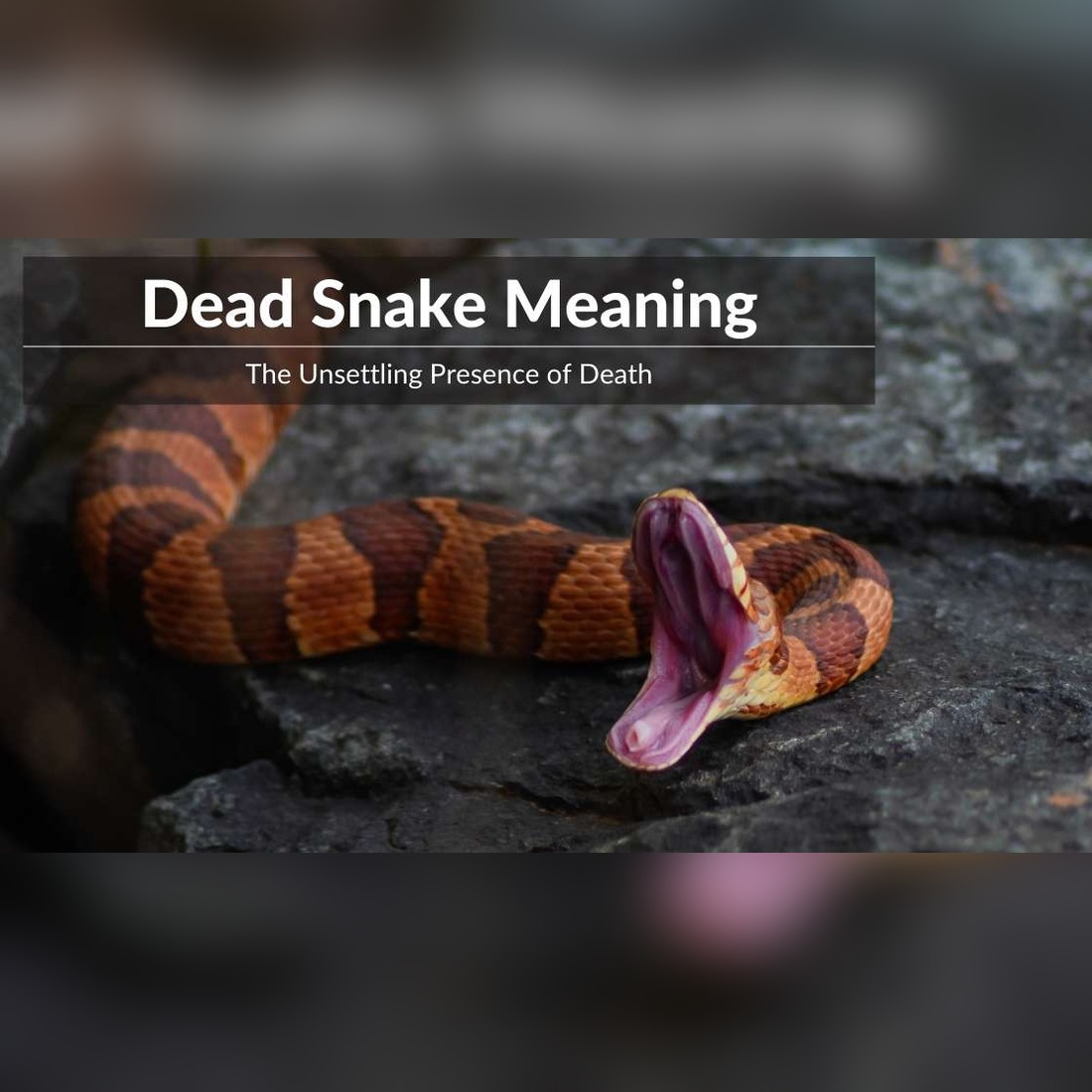
The most common reading, across Western folk traditions documented by scholars of serpent symbolism, is that a dead snake signals the end of something threatening. A danger passed. A cycle closed. Not because the snake itself was evil, but because snakes have carried the weight of danger, transformation, and boundary-crossing in human thought for so long that finding one dead pulls on all of that accumulated meaning at once – a significance that extends whether you encounter a snake indoors, where the spiritual meaning of snake in house takes on additional domestic resonance, or elsewhere.
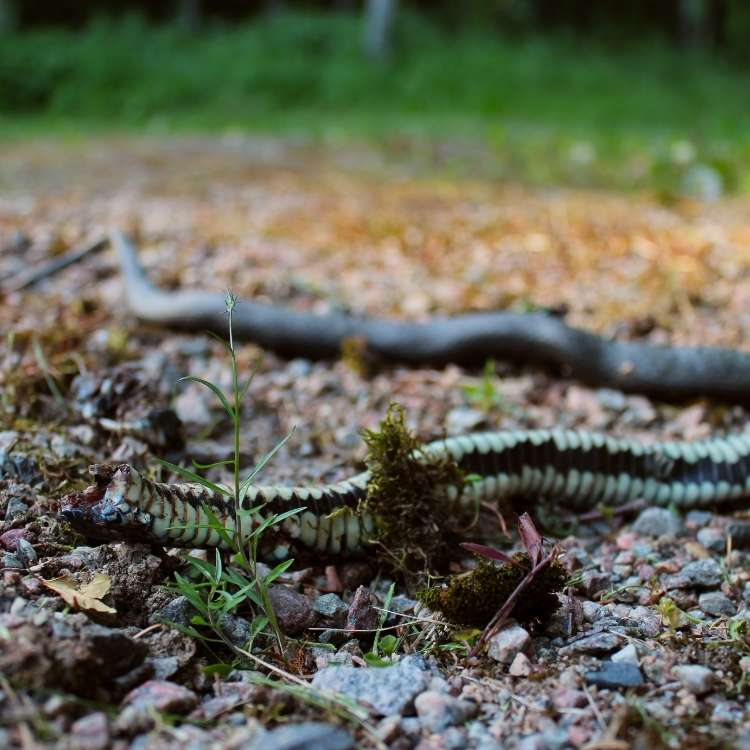
You are not making this up. The fact that you noticed it, that it stopped you on the walkway or in the yard, is part of the answer. People have been pausing over dead snakes and asking the same question for a long time.

But I want to be honest with you: the meaning shifts sharply depending on which tradition you ask. The Christian reading is nearly opposite to the Navajo one. The Hindu reading differs from both. So rather than hand you a single answer that papers over the differences, I want to walk through the main ones and let you take what fits your situation.
What Is the Spiritual Meaning of a Dead Snake?
Three interpretive clusters show up across most traditions, and they don’t all point the same direction.
The first is ended danger. A threat has passed. Something that was coiled and waiting, a difficult relationship, a health scare, a period of real fear, has lost its hold. Naturalist and symbolic tradition both support this reading: snakes are ambush predators, and the dead one at your feet is, literally and symbolically, no longer a threat.
The second is broken covenant. In Yoruba and West African serpent traditions, a dead snake near the home is not automatically good news. It can mean a protective relationship has been severed, and something needs to be done to restore balance. This is the reading that demands action, not celebration.
The third is what I’d call death-rebirth ambiguity. Because snakes shed their skins and were long associated with healing and renewal, the caduceus, the rod of Asclepius, a dead snake sits at an uneasy edge: something has ended, but what grows from that ending isn’t yet clear. I read this as the most honest interpretation for people who find themselves in genuine transition. Or rather, the most honest one for people who aren’t sure whether what ended was a threat or a protection.
I don’t know which of these fits your situation. Only you do. But you can hold all three and see which one resonates without having to commit to a cosmology you don’t actually believe in.
What Do Different Cultures Say About Finding a Dead Snake?
According to John Day’s God’s Conflict with the Dragon and the Sea (1985), the “defeated serpent” motif in Ancient Israelite tradition traces directly to Ugaritic myth, where the storm god Baal defeats Lotan, a chaos-serpent, to establish cosmic order. Isaiah 27:1 in the Hebrew Bible names this directly. Early Christianity inherited the framework and extended it; in Revelation, the serpent bound and destroyed represents the end of demonic power. A dead snake, in this lineage, is a victory image. Something that threatened the order of things has been overcome.
The Navajo reading is nearly the reverse. According to Gary Witherspoon’s Language and Art in the Navajo Universe (1977), snakes in Diné belief are associated with lightning and storm powers. A widespread teaching holds that killing a snake during a rainstorm may draw lightning to the house, and that leaving a dead snake on a rock invites the Lightning People to restore it. The dead snake here is not a trophy. It is a site of disturbed power that requires respect and, in some cases, ceremony.
In Hindu traditions, the naga carries enormous symbolic weight, connected to water, fertility, and the protection of hidden things. Wendy Doniger’s scholarship on Hindu serpent symbolism notes that harming a snake, particularly a cobra, is widely considered inauspicious in many regional traditions and may call for expiation or ritual acknowledgment. The more recent interpretation of a dead snake as “dissolved kundalini blockage”, the serpent energy at the base of the spine finally released, is a modern spiritualization layered on top of this older, more cautious tradition.
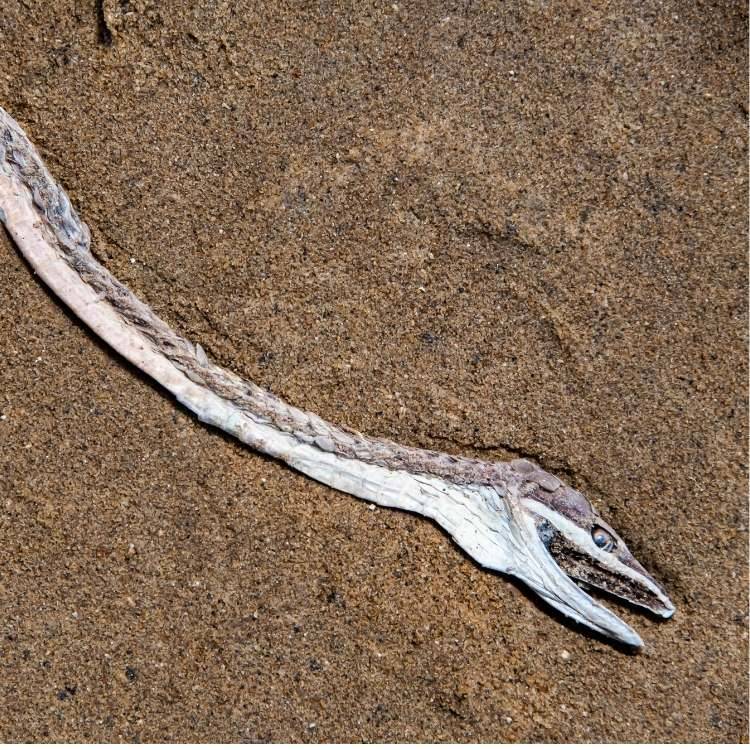
In Yoruba-speaking regions of southwestern Nigeria and in the Fon traditions of coastal Benin, pythons are associated with lineage protection and with deities such as Osumare, the rainbow-serpent Orisha. Jacob Olupona’s City of 201 Gods (2011) and Pierre Verger’s ethnographic work on Orisha worship both document the seriousness with which snake deaths are treated in these communities. A dead python near the home may require formal burial and communal acknowledgment. The governing idea is not triumph but responsibility: something protected has been lost, and the loss matters.
A 2021 survey of serpent symbolism across South and Southeast Asian traditions found that in more than forty distinct regional folk systems, the snake’s death, rather than its appearance, was the rarer and more spiritually charged event, consistently requiring some form of human response rather than passive interpretation.
Does the Location of a Dead Snake Change Its Meaning?
Yes. Location shifts the emphasis considerably, though it doesn’t flip the meaning entirely.
A dead snake at your front door carries the strongest boundary symbolism. The threshold is where inside and outside meet, where the protected space of the home begins. My grandmother Theresa’s notebook, a leather-covered thing from the 1920s in German cursive that’s slowly falling apart on my desk, includes a single line about a dead snake found at the door of a Bavarian farmhouse. The household read it as something turned away, not as disaster approaching. I don’t present that as universal, but it fits the threshold logic you find across Germanic folk belief documented in nineteenth-century collections of rural custom.
A dead snake found in the yard, away from the house, reads more like a general territorial marker. The land has shifted. A cycle in the outdoor space around you has closed.

A dead snake on a road or path is the most context-dependent. Roads in symbolic tradition are places of transition, and a dead snake on a road can suggest an interrupted crossing: something that was moving from one state to another didn’t complete the journey. Worth sitting with if you’re in the middle of a decision or a change in your own life.
For an extended look at how snakes are read symbolically when they appear inside the home, this piece on the spiritual meaning of a snake in the house covers the indoor encounter in much more detail.
What Does a Dead Snake Mean in a Dream?
The dream encounter works differently than the waking one. When you find a dead snake in your yard, you’re responding to something external. When you dream of one, the snake is you, or some part of your inner life that the dreaming mind has chosen to represent as a snake.
The most consistent interpretation across Jungian psychology and folk dream tradition is this: a dead snake in a dream points to a resolved fear. Something that was threatening you, consciously or not, has lost its power.
Frequently Asked Questions
Is finding a dead snake good luck or bad luck?
Depends entirely on which tradition you ask. In early Christian and Hebrew biblical tradition, a dead serpent is a victory symbol, the chaos creature defeated, the threat overcome. In Navajo belief, as documented in Gary Witherspoon’s Language and Art in the Navajo Universe (1977), a dead snake near the home is a site of disturbed power that requires careful response rather than celebration. I read it as neither good nor bad by default; it’s a signal that something has changed, and the question is what.
What does it mean if a dead snake is at my front door specifically?
The threshold reading is the strongest location-based interpretation in Western folk tradition. Your front door is a boundary, the line between protected inside and open outside. A dead snake there is most often read as evidence that something attempting to cross that boundary was stopped. But if the snake itself felt protective to you, as it does in some traditions, its death at the threshold can mean a form of protection has been withdrawn. Which reading applies depends on what you’ve been carrying lately.
Does the species or color of the dead snake change the meaning?
I’ve read several explanations of color-based snake symbolism and I don’t trust most of them, the folk record is thin and the academic record is thinner. What I can say with more confidence: in Hindu naga tradition, cobras carry specific sacred weight, and their death is treated with particular seriousness. A brightly colored snake, particularly a coral snake or a scarlet king snake, tends to register more vividly and may intensify whatever emotional response you bring to the encounter. I wouldn’t build a specific meaning around color alone.
What does it mean if I keep finding dead snakes repeatedly?
A pattern is worth taking seriously, but it usually has a practical layer first. Snakes in North America face significant pressure from habitat loss, cars, cats, and lawn equipment. A 2019 report from the Partners in Amphibian and Reptile Conservation found that several common species, including the eastern garter snake, have declined sharply in suburban areas over the past two decades. So: your yard may simply be a place where snakes die frequently, and you’re the one paying attention. If the practical explanations don’t account for it, the cluster reading from folk tradition is that a sustained protective dynamic is at work.
Is there a biblical meaning to finding a dead snake?
Yes, and it’s more specific than most sites suggest. John Day’s God’s Conflict with the Dragon and the Sea (1985) traces the biblical dead-serpent image to Ugaritic myth, where the storm god defeats the chaos-serpent Lotan. Isaiah 27:1 names this directly. In Revelation, the serpent bound and destroyed represents the defeat of evil at the end of time. Modern Christian folk interpretation that reads a dead snake as “victory over sin or temptation” sits within this lineage. It’s a coherent reading with genuine textual roots, not a modern invention.
What should I say or do spiritually after finding a dead snake?
If you want to do something, keep it simple. Acknowledge the encounter out loud: something ended here. If the location felt significant, clean it. If the snake felt like it carried something negative, treat the moment as a formal close. That thing is gone now. If it felt like a loss, acknowledge the loss. The specific words matter less than the act of paying attention, which is the oldest form of this kind of response. You don’t need a script or a ceremony you don’t already believe in.
Does a dead snake mean someone wishes me harm or that I have an enemy?
Some traditions in West African and Caribbean folk belief do associate a snake placed or found near the home with intentional negative action by another person. But “found naturally dead” and “deliberately placed” are very different situations, and most dead snakes in most yards got there by entirely ordinary means. Unless the placement was clearly deliberate, the snake positioned in a specific way that couldn’t be accidental, I wouldn’t read it as directed harm. This encounter is about your life and your moment.
What is the difference between a dead snake omen and a shed snakeskin omen?
A shed snakeskin is almost universally read as a positive sign: the snake survived, the old was released, renewal is underway. The snake is alive somewhere. A dead snake carries a harder finality, the creature itself is gone. Across symbolic traditions, the shed skin points toward transformation still in motion; the dead snake points toward something that has fully ended. Both involve the snake’s association with change, but the shed skin is mid-process, and the dead snake is after.
Sources
- Wikipedia: Serpent Symbolism, overview of cross-cultural serpent traditions
- Centre of Excellence: The Spiritual Meaning of Snakes
- Kachina House: Snake Symbol Meaning in Hopi and Pueblo Ceremonial Practice
- Symbolostic: Dead Snake Symbolism
- Stella Maris Readings: The Spiritual Significance of Snakes Across Cultures
- Wild Gratitude: Spirit Animal Snake Symbolism