A possum stretched stiff and gray on your porch, exactly where you walk daily. In Cherokee tradition recorded by ethnographer James Mooney, possum symbolizes pride that backfires and shame you flee from—not a death warning. Whether it lay near your home and what you’ve been dodging in your own life changes what it means.
Key Takeaways
- No named historical tradition treats a dead possum as a death omen for the finder.
- Cherokee oral tradition, recorded by James Mooney, links possum imagery to misplaced pride, social embarrassment, and passivity held past its usefulness.
- A separate strand of Cherokee ritual language treats the opossum as a symbol of cold-defying resilience, which gives a dead possum found in harsh conditions its own distinct reading.
- The Kulin-associated Bram-Bram-Bult narrative from southeastern Australia frames a possum’s death as a broken covenant requiring a response, not random bad luck.
- Location matters: roadside, yard, and doorstep carry meaningfully different symbolic registers when read against these traditions.
What Does It Mean When You Find a Dead Possum?
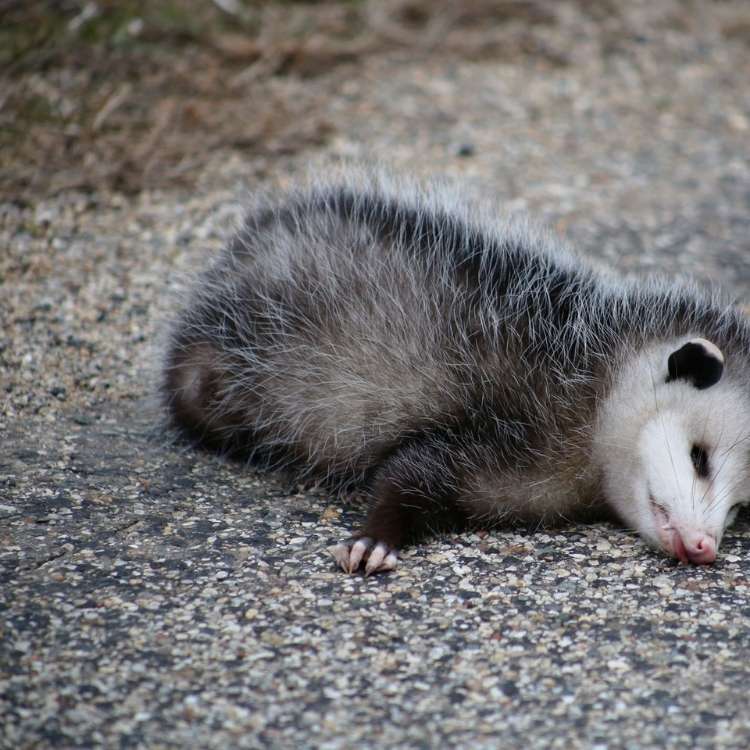
The Virginia opossum, Didelphis virginiana, is the only marsupial native to North America, and its whole reputation rests on one behavior: collapsing and going limp when threatened. The Animal Diversity Web at the University of Michigan documents this reflex as involuntary, the animal enters a genuine catatonic state. It cannot help it. And that biological fact is the floor beneath every symbolic reading that has accumulated around this animal.
When you find it actually dead, the symbolism shifts. The survival strategy that usually works has, this time, failed. In the traditions that actually address this animal, that failure points inward. Not toward you as a target. Toward a pattern of avoidance that may have gone on longer than it was helping.
That’s the most grounded answer I can give you. Take what fits.
Is a Dead Possum a Bad Omen or Something More Specific?
The “bad omen” reading you may have already found comes from a diffuse modern spiritual framework that borrows loosely from several traditions without committing to any. I’ve read through the sources. Not one named historical tradition, not Cherokee, not Algonquian, not the Kulin nations of southeastern Australia, frames a dead possum as a sign that someone close to you is about to die.
What the traditions say is more specific and, I think, more useful. The possum’s death in symbolic terms tends to mean that a strategy of lying low, staying quiet, or pretending a problem doesn’t exist has finally been overtaken by the problem itself. Or that resilience has reached its outer edge. Neither of those is a curse. Both are worth sitting with.
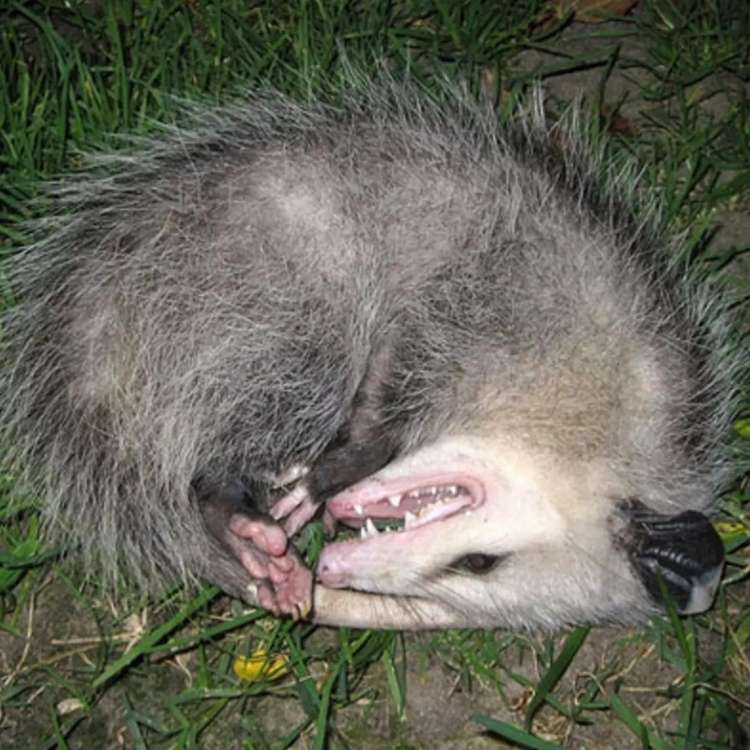
According to the American Folklore archive’s version of the Cherokee origin story, the possum’s defining moment is not death but humiliation, a creature so proud of its tail that it faints from shame when the tail is stripped bare. The dead possum you found is the inheritor of that story. Shame, not doom.
What Does Cherokee Tradition Say About the Possum?
James Mooney spent years in the late 19th century recording Cherokee oral tradition, and his work remains the most careful primary ethnographic record we have. Two stories carry the possum’s symbolic weight.
In “Why the Possum’s Tail Is Bare,” the possum is vain about its tail, beautiful, bushy, admired. Rabbit, jealous, arranges for the tail to be shaved while the possum sleeps. At the council dance, when the bare tail is revealed, the animal is so overcome it “rolled over helpless on the ground and grinned,” as Mooney records it. The grin is a frozen mask of shame. The possum neither fights nor runs; it collapses into a performance of not-being-there.
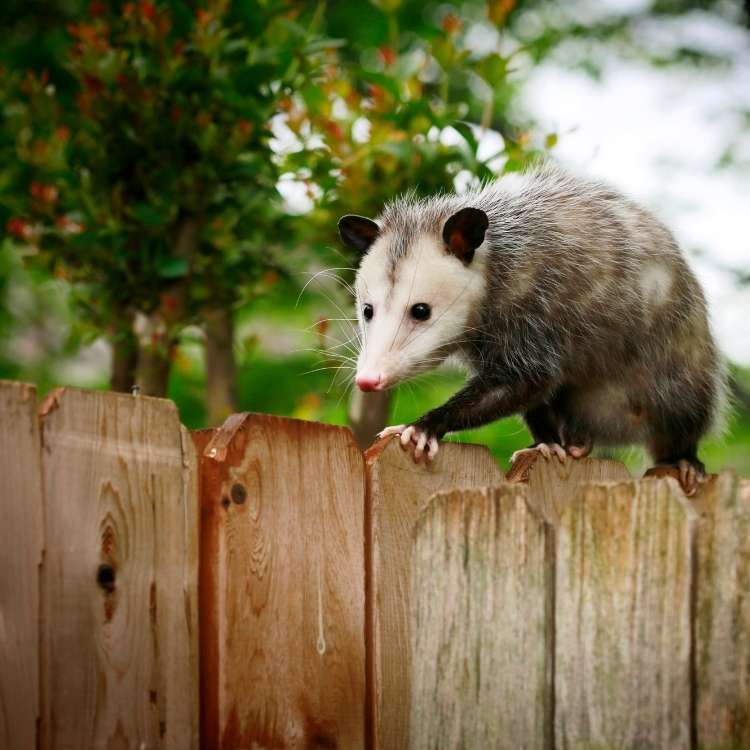
A second legend involves a council fight started by Rabbit. The possum, beaten badly, lies motionless until the attackers lose interest. According to this archived collection of Cherokee legends, the collapse is always tied to social exposure and the desire to disappear, not to any omen directed at whoever finds the body.
Neither story produces a death-sign for you. What they produce is a mirror: where in your own life has avoidance gone on past the point where it was helping?
What Does the Cherokee Frost-Avoidance Ritual Reveal?
This is the part that changes the picture considerably, and it gets skipped.
Mooney also recorded a Cherokee travel charm used to ward off cold. A person rubs their feet in ashes and sings a four-verse formula, acquiring in sequence the cold-defying powers of the wolf, the deer, the fox, and the opossum. The opossum is on that list. It stands alongside animals that nobody mocks.
So the same tradition that turns possum into a figure of comic shame also invokes possum specifically for its power to endure cold that would kill other creatures. The Virginia opossum does not hibernate. It stays active through winter, and the University of Florida EDIS wildlife publication on opossum biology notes that its tail and ears are vulnerable to frostbite, it survives cold seasons but not without cost. The ritual acknowledges that particular toughness.
If you found a dead possum in winter, or in hard conditions, this is the honest layer to sit with. The animal tried. It carried a real power for endurance. That power has limits, and here you are looking at one of them. Not a bad omen. A fact about limits.
What Does the Aboriginal Narrative of Bram-Bram-Bult Say About a Dead Possum?
The Kulin-associated narrative of Bram-Bram-Bult comes from southeastern Australia. A spirit named Doan takes possum form while hunting. An echidna spirit kills him. His kin then undertake a revenge quest that restores moral order.
According to the EBSCO research summary of this narrative, what the possum’s death does in this story is catalyze obligation. It is not random. It is not a curse on whoever finds the body. It is the moment at which a covenant breaks and a duty becomes visible.
I find this reading useful for people who found a dead possum on the same day as a piece of hard news, a diagnosis, a falling-out, a loss. Not because the possum caused it. But because the Bram-Bram-Bult frame asks the same question: what covenant has been broken, and what is your response going to be? That is a responsibility reading. Not a doom reading.
I should say plainly: I am not Aboriginal, not Kulin, not Australian. I’m a German-American writer in Black Mountain, North Carolina, and my grandmother Theresa’s leather notebook on the desk behind me is full of Bavarian animal omens, not Kulin ones. I cite this tradition because the research is sourced and the framework is genuinely distinct from what you’ll find elsewhere. I don’t claim it as my own.
What Does Southern and Appalachian Folklore Say About a Dead Possum Near Your Home?
In Southern rural communities, possums are both nuisance and survivor. They raid gardens, eat carrion, show up uninvited. They’re also genuinely hard to kill. AnAge, the animal ageing database, records the Virginia opossum’s maximum lifespan at around four years in the wild, short for its body size, mostly because roads and predators cut it shorter than the biology would allow. Their reputation for toughness is earned.
Does It Matter Where You Found the Dead Possum?
Roadside. The most common encounter, and the most practical. Virginia opossums are nocturnal scavengers; the Smithsonian’s National Zoo documents that road mortality is among the primary causes of death for the species. A possum killed on the road died doing what it was built to do, moving through the dark, looking for food, taking the risk. In the Southern folklore frame, this reads as neutral at worst. The animal was working, not hiding. If you noticed it, that noticing belongs to you, not to the possum’s death.
What Should You Do After Finding a Dead Possum?
Practically, first. Virginia opossums can carry leptospirosis and fleas; the University of Florida extension guide on opossum management recommends gloves and a plastic bag for removal. Double-bag the body. Wash your hands. This is not fear, it is just care.
Frequently Asked Questions
Is finding a dead possum a sign of death in the family?
No named historical tradition makes this connection. Cherokee oral tradition, as recorded by James Mooney, links possum imagery to shame and failed avoidance, not to human death. The Kulin-associated Bram-Bram-Bult narrative involves death within the story itself, but frames it as a call to duty, not a prediction of loss for whoever finds the body. If you found a dead possum on the same day as bad news, the timing is painful, but the folklore record does not support reading one as the cause of the other.
What does it mean if a possum plays dead in front of you rather than being actually dead?
This is the possum working exactly as designed. The Virginia opossum enters a genuine involuntary catatonic state under extreme stress, it isn’t performing in any conscious sense. In Cherokee tradition, this behavior connects to shame and the desire to disappear. Seeing it happen in front of you is rare enough to be worth noting. I read it as the tradition suggesting a moment of stillness in the face of something overwhelming: the option exists to wait, go quiet, and outlast. Whether that applies to your life right now is your call, not mine.
Does finding multiple dead possums change the meaning?
Honestly, I don’t have a confident answer, because the folk record is thin on this specific variable. What I can say is that recurring encounters with any dead animal tend to reflect ecology more than symbolism, a local food shortage, a disease moving through a population, a road newly cut through a habitat. Before reading a pattern as a sign, check whether your neighbors are finding them too. If they are, the pattern is ecological. If it’s only you, the traditions here ask the same question they always ask: what are you repeatedly not looking at?
What is the difference between opossum and possum symbolism?
“Opossum” derives from the Algonquian word wapathemwa, meaning “white animal,” first recorded in early 17th-century Virginia English. The Virginia opossum is the only marsupial native to North America. “Possum” became American shorthand for the same animal, but the word was later applied to unrelated Australian marsupials, brushtail possums, ringtail possums, and others, when English settlers arrived in Australia. The Cherokee traditions discussed here refer specifically to the North American opossum. The Bram-Bram-Bult narrative refers to Australian possums. Different animals, separate symbolic histories, one name in casual English.
Does a dead possum mean something different in a dream?
The register shifts considerably. In waking life, a dead possum tends toward the practical moral readings covered here, avoidance, resilience at its limit, obligation. In a dream, the same image usually reflects something internal: a part of yourself that has been suppressing its response to something that needs a response. Jungian dream reading would treat the possum as a shadow figure, the part that collapses rather than acts. A dead possum in a dream may mean that particular coping strategy has finally exhausted itself. That is not a bad thing. It may be exactly right.
Can a dead possum be a sign from someone who has died?
I don’t believe animals carry messages from the dead, and I won’t tell you otherwise to make this easier. What I do believe is that grief sharpens attention. When we’re missing someone, we notice things we would otherwise walk past. If you found a dead possum during a period of mourning and it felt significant, the feeling is real even if the causation isn’t. The possum is not your person. But the attention you’re paying right now, that is yours, and it is worth something.
What does it mean spiritually if dead possums keep appearing in the same spot?
Check the ecology first, genuinely. A single location with repeated possum deaths usually means a denning site nearby, a food source that keeps drawing animals into danger, or a predator working the same area. According to the SeaWorld animal facts page on Virginia opossums, opossums are nomadic and rarely stay long in one den, so a repeated death pattern in one spot often has a wildlife explanation. If the ecology doesn’t account for it, the Bram-Bram-Bult frame is the most honest symbolic response: a repeated death at the same location asks whether something there keeps being avoided rather than addressed.
Is there any tradition that views the possum as a totem, and does its death change that role?
The “spirit animal” framing is modern American folk spirituality, not a specific tradition, and I’m cautious about it. Within the Cherokee stories Mooney recorded, the possum functions as a character in moral tales rather than a totem in any formal sense. If you’ve personally identified with possum energy, the ability to go still, to survive through quiet rather than confrontation, then a dead possum may simply be asking whether that approach still serves you. The totem’s death in contemporary folk interpretation often signals that the quality it represents is ready to be retired, or ready to be used more consciously.
Sources
- Animal Diversity Web, Didelphis virginiana (University of Michigan)
- University of Florida EDIS, Virginia Opossum Wildlife Management
- AnAge Animal Ageing Database, Didelphis virginiana
- American Folklore, Why the Possum Plays Dead (Cherokee story)
- Cherokee Myths and Legends, Kentucky GenWeb Archive
- EBSCO Research Starters, Bram-Bram-Bult (Kulin-associated narrative)
- Smithsonian’s National Zoo, Virginia Opossum
- SeaWorld, Virginia Opossum Animal Facts
- Native History Association, Possum
- Wikipedia, Virginia Opossum