A falcon, wings folded against its body, lying where you found it. In Egyptian dynastic religion, Horus the falcon-headed god marked the horizon itself, the exact moment between one state and another. But whether it fell during your waking hours or while you slept changes what the tradition says you’re crossing into.
Key Takeaways
- A dead falcon is not a fixed doom omen in the historical record. Egyptian, Norse, and Baha’i sources read it as a threshold image: the end of one way of seeing, the start of another.
- In Egyptian religious tradition, the falcon was the soul’s solar guardian. Its death carried rebirth imagery, not permanent loss.
- Snorri Sturluson’s Prose Edda (c. 1220) frames the falcon as a liminal world-crosser. Finding one dead can mean an old bridge between outer guidance and inner knowing has closed.
- Baha’i writings compare falcons to purposeful, service-oriented souls. The encounter may be asking where your own sense of direction has gone quiet.
- Location matters. Doorstep, yard, window, road, each carries different weight in folk tradition.
What Does It Mean When You Find a Dead Falcon?
The short answer, for those who need it right now: no serious historical tradition reads a dead falcon as a curse, or as a death sentence for someone you love.
What it is, across the sources I’ve read, is a threshold image. Something that carried vision and authority has come to earth. The symbolic logic runs the same direction in Egyptian tradition, in Norse myth, in Baha’i writing: this is not the end of the thing the falcon represented. It’s the end of the form that thing was taking.

That’s not a comfortable answer if you’re standing in your driveway at 7 a.m. with your phone in your hand. I know. But it is the honest one, and I’d rather give you the honest one than tell you everything is fine or tell you to be afraid.
I’ve spent thirteen years at the Western North Carolina Nature Center working with birds of prey, and I can tell you: the gap between what a dead raptor means biologically and what it means symbolically is real but not as wide as you’d think. Both answers have something true in them. I want to give you both.
What Did the Falcon Symbolize Before It Died?
To read the death, you have to know what was alive. And the falcon, across folk and religious traditions separated by centuries and continents, carried a specific weight: sky-vision, royal authority, the soul’s capacity to rise above the immediate situation and see farther than the ground-bound eye allows.
In ancient Egypt, the falcon was the living king’s divine soul. In Norse myth, it was a shapeshifter’s cloak, a form borrowed to cross between worlds. In Baha’i writings, it stands for souls who dedicate themselves to service with clarity and focus.
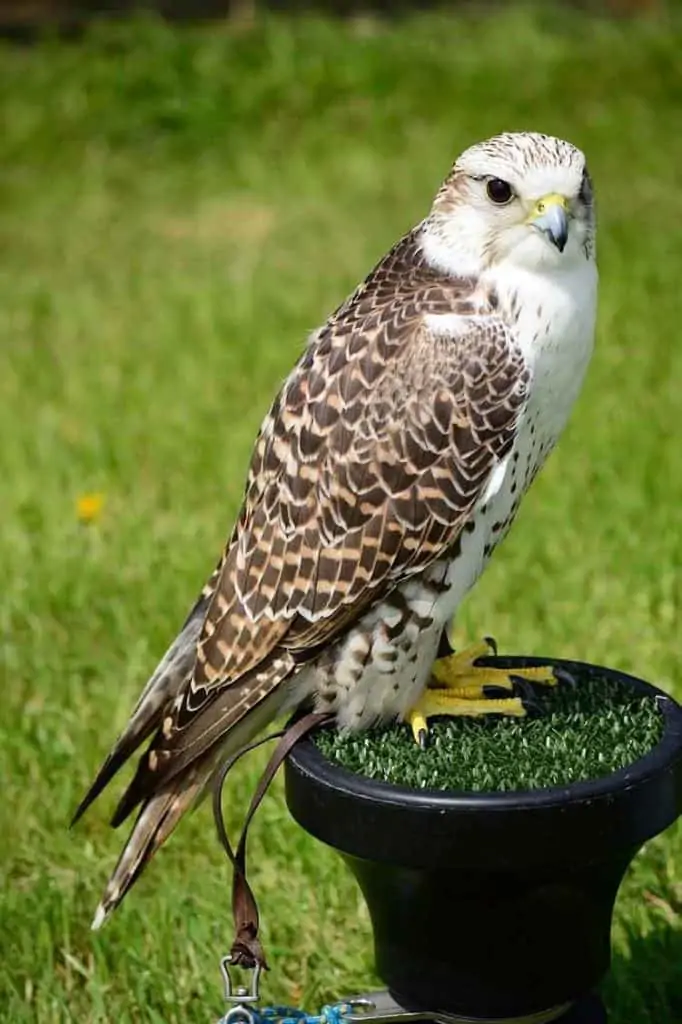
The name itself is older than most of this. Latin falco, likely from falx, meaning sickle, for the curved talons and the silhouette of wings pulled back before the stoop. A cutting thing. A decisive thing.
So when it falls: whatever that decisiveness, that far-seeing quality represented in your life, it’s asking for attention. Not gone. Asking.
What Does Ancient Egyptian Tradition Say About a Dead Falcon?
The Egyptians did not treat the falcon’s death as disaster. They built whole architectures of meaning around it.
Horus, the falcon-headed god whose name meant “the distant one,” was both the living king’s soul and a solar guardian, the eye that could see across the whole sky, from horizon to horizon. According to Egyptologist Erik Hornung in Conceptions of God in Ancient Egypt (1982), falcon iconography in dynastic Egypt clustered specifically around horizons and solar rebirth. Not endings. Transitions at the edge of light.
R. O. Faulkner’s translation of The Ancient Egyptian Pyramid Texts (1969) records falcon-headed figures on coffin walls not as omens of death but as guides: the ba, the individual soul, was depicted as a falcon-headed human, rising from the body after death and continuing to move between worlds. The dead falcon, in this frame, is not the extinguishing of vision. It’s vision changing form.
I don’t know if that helps you right now. But the oldest tradition connecting falcons and death pointed toward continuity, not disaster. The sun goes down. It comes back. The Egyptians built their entire symbolic vocabulary around that fact.
What Does Norse Mythology Say About the Falcon as a Threshold Bird?
Freyja’s falcon-feather cloak is one of the stranger objects in Norse mythology. In Snorri Sturluson’s Prose Edda (c. 1220), the cloak allows whoever wears it to fly between worlds, crossing boundaries that ordinarily cannot be crossed. The falcon here is not a pet, not a symbol of war, not a royal emblem. It’s a threshold device. A way through.
And that matters when you find one dead. In the Norse symbolic frame, a dead falcon means a crossing that’s no longer available in the old form. The feather cloak is grounded. The bridge between where you were and where you were going, that way of moving between your inner knowing and the outer world, is asking to be rebuilt rather than borrowed.

Well, not rebuilt exactly. Or rather: not rebuilt from the outside. The Norse interpretation pushes you inward, toward developing your own second sight rather than waiting for something to carry you. That’s uncomfortable. It’s also, I think, what the symbol is actually for.
What Do Baha’i Writings Say About the Falcon’s Spiritual Role?
This one surprised me when I first came across it. Baha’i educational materials compare falcons explicitly to souls who dedicate their lives to purposeful service. The bird’s speed, its height, its focused descent, all used as metaphors for clarity of intention, the ability to stay above distraction while remaining committed to action.
It’s not a mystical claim about the bird itself. It’s an argument that certain qualities of character look like a falcon in flight. And so a dead falcon, in this reading, turns the question personal: where has that quality gone quiet in you? Where has the purposeful thing stalled, or fallen to earth, or grown tired?

Not a comfortable question. But a generative one. And a long way from “bad omen.”
Does Where You Found the Dead Falcon Change Its Meaning?
Yes. This is the question most people don’t think to ask, and it changes everything.
On your doorstep or at your front door: In European folk tradition across several centuries, the threshold was not neutral space. It was the boundary between the known world inside and everything else. A dead bird at the threshold was read as a message specifically for the household, something about the direction things were heading. The doorstep reading is the most personal of the location variants. I’d ask: what decisions about your home or your closest relationships have been sitting unresolved?
In your yard or garden: Less pointed. More ambient. In folk belief systems that read animal death as omen, a dead bird in the yard was read as a general shift in the household’s circumstances, something changing in the environment around you, not aimed at a specific person.
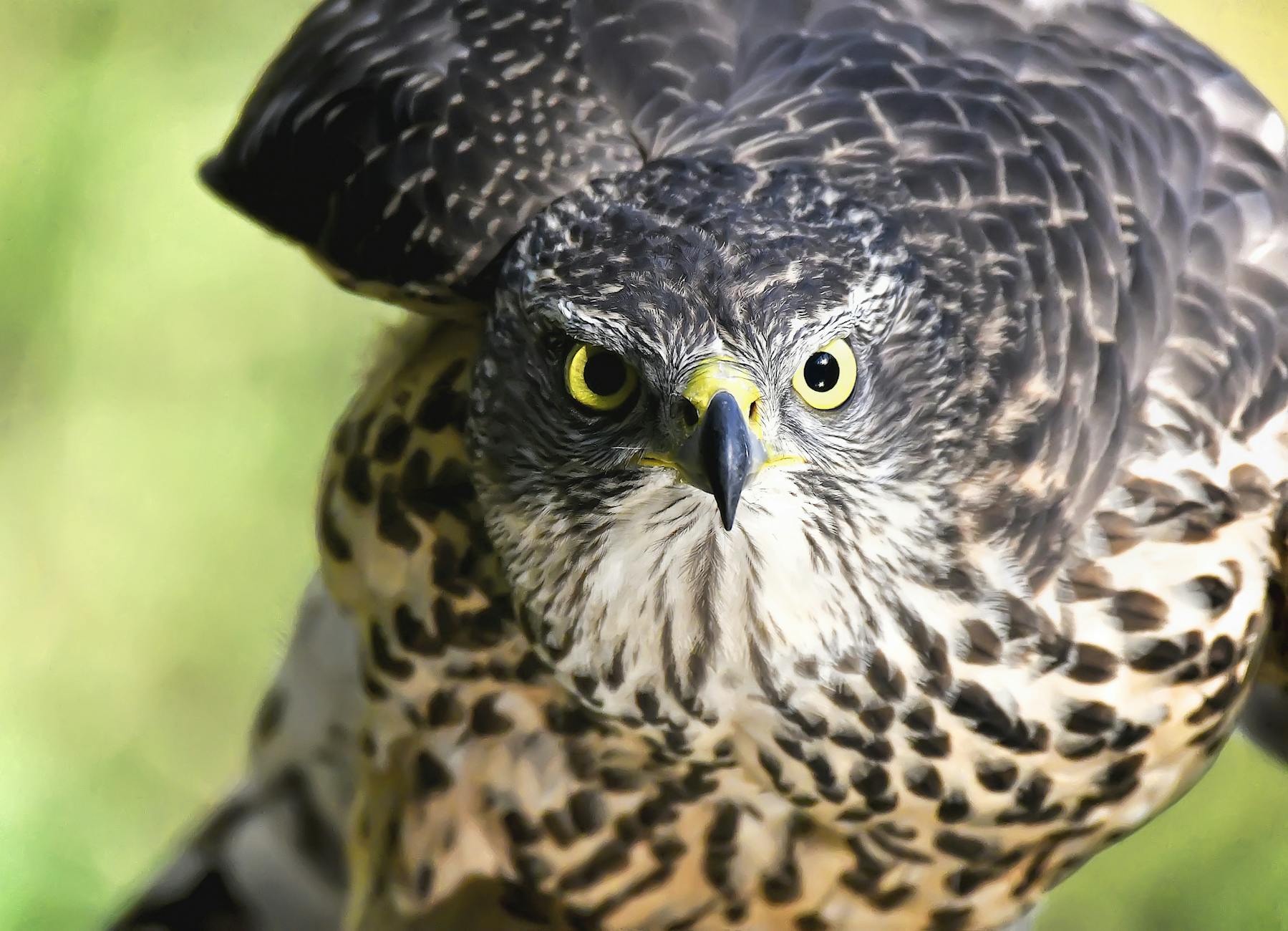
Near a window: Window strikes are common and often entirely physical. Glass is invisible to birds, and falcons, which fly fast and hunt by sight, are not immune. A 2014 study by the American Bird Conservancy estimated that up to one billion birds die from window strikes in the United States each year. But symbolically, a window has historically been read as the eye of the house. A bird that dies against it can mean a collision with illusion: something you thought you could see through clearly, and couldn’t.
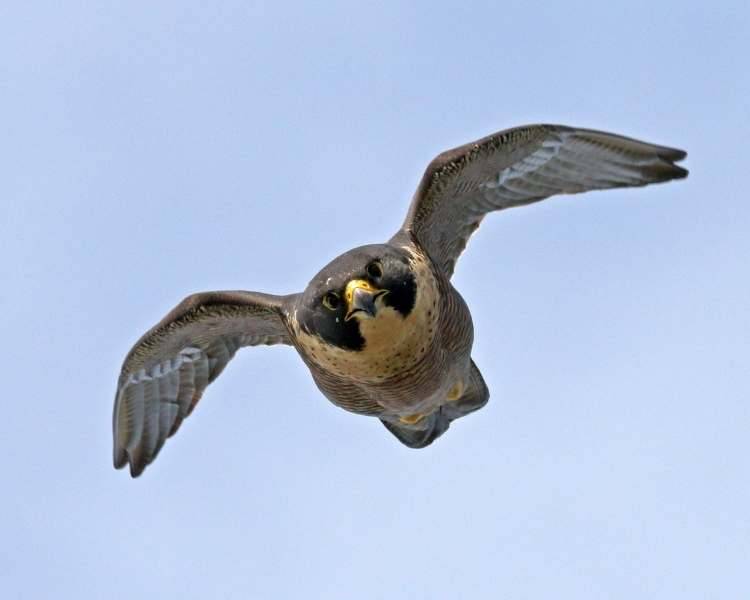
On a road or path: Journey interrupted. The peregrine falcon’s name comes from Latin peregrinus, meaning wanderer, pilgrim. A dead peregrine on a road has a particular resonance in that frame, the pilgrim soul that didn’t complete the crossing.
What Questions Should You Sit With After Finding a Dead Falcon?
I want to say plainly: I don’t know what the falcon meant to you specifically, and I don’t think anyone who says they do is being fully honest. What I can give you are the questions the traditions point toward.
First: where has your vision narrowed lately? The falcon’s symbolic core, across Egyptian, Norse, and Baha’i sources, is the capacity to hold the long view. If that’s been hard recently, the encounter may be pointing there.
Frequently Asked Questions
Is finding a dead falcon good luck or bad luck?
Neither category fits well, and I’d push back gently on the framing. In European rural folk tradition, dead raptors were read as warnings or markers more than as simple good or bad fortune. The Egyptian tradition reads the dead falcon as solar rebirth imagery: loss and renewal together. The honest answer is that the old traditions don’t offer a clean verdict, and anyone who does is simplifying beyond what the sources say. What the dead falcon consistently points toward is a threshold, not a verdict.
What does it mean if a dead falcon appears near my front door specifically?
The doorstep is the threshold of the house. In folk belief systems across northern Europe and the British Isles, it was the boundary between the household’s world and everything outside it. A dead bird at the threshold was typically read as a message aimed at the household, related to the direction things were moving inside it. A dead falcon there is the most personally directed of the location readings. What decisions about your home or closest relationships have been sitting unresolved?
Is a dead falcon a sign that someone close to me will die?
No tradition I trust makes that claim directly for falcons. The sources that come closest are broadly European folk beliefs about dead birds as death omens, but those applied to specific species, the crow, the raven, the owl at the window, in specific contexts, and they are not the dominant reading of the falcon. The Egyptian tradition, the oldest and most documented falcon symbolism we have, reads the dead falcon as a rebirth image. I don’t think you should be frightened for the people you love on this basis.
Does the species matter, peregrine, kestrel, or something else?
To a degree. The peregrine, whose name comes from Latin peregrinus (pilgrim, wanderer), carries specific resonance around crossing and transition. A dead peregrine on a road fits “journey interrupted” in a way that’s hard to ignore. The kestrel, smallest of the falcons and a hovering bird that reads the wind to hold nearly still, has long been tied in European folk tradition to watchfulness and patience rather than decisive action. I wouldn’t overread these distinctions, but they’re there if the specific species matters to you.
What does it mean to dream about a dead falcon rather than find one in waking life?
Dream encounters and physical encounters pull from the same symbolic vocabulary but operate differently. A dead falcon in a dream is more clearly internal, your mind working something through. The Jungian reading would focus on what faculty the falcon represented to you in the dream. Was it yours? Were you watching it fall? The emotional quality of the dream matters as much as the image. I’d treat a dream encounter as an invitation to look inward, where a physical encounter has more of the quality of a threshold marker in the outer world.
Can a dead falcon be a sign from someone who has died?
I want to be straightforward: I don’t believe animals carry literal messages from the dead. What I do believe, and what years of watching people process grief have reinforced for me, is that the mind reaches for meaningful images at meaningful times, and that the reaching is real even when the mechanism isn’t supernatural. If you’re grieving someone and a falcon appears dead, the connection your mind makes is not nothing. It’s your grief looking for a shape. That’s worth respecting, even if you and I would explain it differently than a medium would.
How is a dead falcon different from a dead eagle or a dead hawk?
The eagle, in most Western traditions, is an emblem of national or divine authority, Jupiter’s bird, the king of birds. A dead eagle tends to pull toward readings about lost power or fallen sovereignty. The hawk is more tied to warning and messenger functions in folk tradition. The falcon’s specific territory is vision that rises above the situation, combined with decisive action; it hunts by seeing farther and faster, then committing completely. A dead falcon reads as the end of that combination. The dead eagle is bigger. The dead falcon is, in a way, more personal.
Is it bad luck to touch or move a dead falcon?
Legally, as noted above, you should not handle or keep a wild falcon without a federal permit in the US. Symbolically, I don’t know of any tradition that specifically punishes moving a dead bird of prey. The folk prohibitions tend to focus on bringing dead birds inside the house or keeping their feathers. Moving the bird to a respectful resting place seems, for what it’s worth, like a better act than leaving it where it fell. Use gloves. Say something if you’re inclined. Then wash your hands.