In ancient Egypt, dream scribes recorded dead animals as signs of release and new starts, not disaster. You woke from that dream with a dead cat still sharp in your mind, and now you’re trying to read what it means. The difference between a cat you knew and a stranger’s cat, between peaceful and violent death, splits the whole interpretation in two.
Key Takeaways
- A dead cat dream most often signals the end of something, a relationship, a habit, a period of independence, not a prophecy of literal death.
- The oldest dream traditions read images through context, not fixed rules. The same image could carry different weight depending on who dreamed it and what surrounded it.
- Whether the cat was your own pet or a stranger-cat changes the interpretation significantly.
- Psychology reads this kind of dream as grief processing or a transition your waking mind hasn’t fully accepted yet.
- No single cultural tradition produces a universal dead-cat-dream rule. Take the interpretation that fits your situation.
What Does It Mean to Dream of a Dead Cat?
The short answer: almost never what you fear it means.
Across the traditions I’ve read, Egyptian, Greco-Roman, Scottish Gaelic, psychological, the dead cat maps to loss of independence, a relationship that has run its course, or grief you haven’t quite named yet. Not an omen of someone’s death. An ending of something, which is a different thing.

My grandmother Theresa kept a leather notebook of animal lore from the Bavarian Forest. Dream animals appear in those pages regularly, and the consistent pattern, written in her grandmother’s hand in the early 1900s, is that a dead animal in a dream almost never meant literal death. It meant something was finishing. The notebook sits on my desk while I write this, and I keep coming back to that distinction.
If you already read somewhere that this dream is a bad omen, take a breath. That reading exists. But it comes from a narrow slice of the tradition, and the fuller picture is less alarming and considerably more useful.

What Do Cats Represent in Dreams Before We Get to the Death Part?
Cats in dreams carry a cluster of associations that predate any single culture’s rules: independence, cunning, household protection, a watchfulness that sits at the edge of things. Those qualities matter when you’re trying to read a dream about a dead one.
Artemidorus of Ephesus, writing his Oneirocritica in the second century CE, argued that dream animals should be read through what they do in waking life, not through fixed symbolic codes. The cat steals birds. It moves silently. It belongs to the household but answers to no one. So in his framework, a cat in your dream is already about cunning, or about something quietly taken from you.
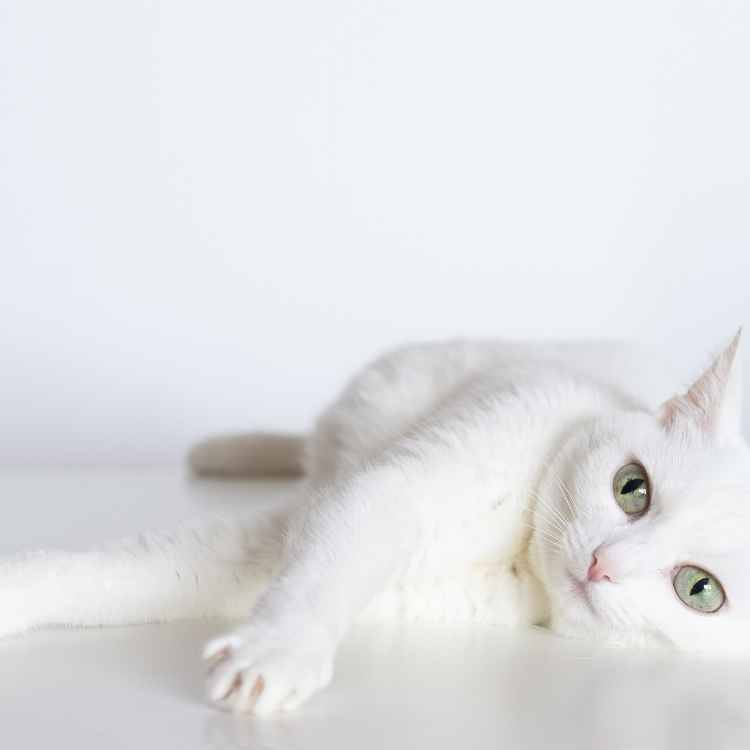
In ancient Egyptian religious practice, the cat was bound up with Bastet, goddess of household protection, fertility, and joy. Not a dark figure. A guardian. The Human Relations Area Files’ survey of global cat beliefs documents how widely that protective association persisted across cultures and centuries. That baseline matters when you’re trying to read what the death of that figure might mean in your dream.

What Does Ancient Egyptian Dream Tradition Say About Dead Cats?
Papyrus Chester Beatty III, dated by the British Museum to around 1220 BCE, is the oldest surviving dream manual we have. It records specific dream images alongside their readings. One entry says dreaming of a large cat predicts an abundant harvest. The point isn’t the specific outcome. It’s the method: disturbing images could yield favorable readings. The Egyptians were not simple about this.
According to Herodotus in Histories, Book 2, Egyptian households mourned a dead cat by shaving their eyebrows. Archaeological evidence bears this out: large-scale cat burials, mummified animals, sacred cemetery sites at Bubastis. The household cat was not a symbol of evil. It was family. Its death was a formal grief event.

So if you dreamed of a dead cat and the Egyptian tradition is where your mind goes, the image points less toward dark omens and more toward the loss of something that protected you. A guardian gone. Not a curse incoming.
What Did Greco-Roman Dream Interpreters Make of the Cat?
Artemidorus didn’t do fixed meanings. In Oneirocritica (Robert J. White translation, 1975), he connects the cat to an adulterer, specifically because it steals birds the way a thief takes what belongs to someone else. Other Roman-era texts link cats to cunning or a difficult relationship.
None of this amounts to a doctrine that a dead cat in a dream predicts literal death. What you get instead is a framework: the cat stands for something that operates by stealth in your life. In the dream, that thing is dead. So ask what it was. A relationship that involved deception? A version of yourself that used to move quietly and now feels gone?

I don’t trust interpretations that jump straight to “here is the meaning.” Artemidorus didn’t trust them either. Context is the whole game.
Frequently Asked Questions
Is dreaming of a dead cat bad luck?
Not according to most of the actual historical record. Papyrus Chester Beatty III (c. 1220 BCE) assigned favorable meanings to images that look disturbing on the surface. Artemidorus read cats through behavioral analogy, cunning, stealth, theft, not as signs of bad luck coming. A dead cat dream is more likely your sleeping mind working through an ending than a warning about what comes next. The panic the dream creates is real. The prediction is not.
What does it mean to dream of your own cat dying?
Dreaming of a specific pet cat you’ve had, or still have, almost always reflects grief or the fear of loss rather than prophecy. Psychologists who study pet bereavement call this a “continuing bonds” dream: the mind keeps running the relationship after the loss, or rehearsing a potential one. If your cat is still alive and healthy, the dream may be processing ordinary anxiety about attachment and impermanence. It isn’t telling you your cat is about to die. It’s telling you that you love the animal and don’t want to lose it.
What does it mean to dream of a dead cat coming back to life?
This variant tends to read as renewal or an unexpected return, something you thought was over that isn’t, or a part of yourself that went dormant and is now active again. Some bereaved pet owners describe a version of this dream as feeling like a genuine visit: the cat appears calm, whole, and present, unlike the replaying of a loss. I can’t say with confidence what that second type is. But the image of return, whatever it means in your specific case, is not a threatening one.
What does killing a cat in a dream mean?
This one sits with people in a particular way because it involves agency. You did something in the dream and woke up disturbed by it. Folk traditions are mixed. In some European contexts, killing a cat in a dream was read as an act against a household spirit. In the Artemidoran framework, it more likely reflects your mind enacting a scenario involving something you fear you’ve damaged, a relationship, a quality in yourself, a bond of trust. The guilt the dream produces is usually the more useful data point than any fixed cultural interpretation.
Does a dead cat dream mean someone close to me will die?
No tradition I trust makes this a reliable reading. The equation of a dead animal in a dream with an impending human death is the most widespread misconception in popular dream interpretation, and it has thin historical support. What I know from years spent with animal symbolism is that the mind reaches for vivid images to express loss, fear, and transition. Death is the most vivid image available. The dream is most likely processing grief or the end of something in your own life. Not a warning about someone else.
What does a dead black cat in a dream mean?
Black cats carry a heavy load of projection from medieval European folklore, the witch’s familiar, the bad-luck crossing. But that tradition is one slice of a much longer story. Katharine M. Rogers’s The Cat and the Human Imagination (2001) documents how the black cat moved from a largely neutral or protective figure in earlier periods to a figure of suspicion in the high medieval period, then back again. In a dream, the color black tends to amplify the emotional weight of the image. The interpretation still depends more on what you felt about the cat in the dream than on its coat.
Should I be worried if I keep having this dream repeatedly?
A recurring dream about the same image usually means something in your waking life hasn’t resolved yet. The mind keeps returning to it the way you keep returning to a problem you haven’t named clearly. Start by asking what has ended recently, or what you fear might end, that you haven’t fully accepted. If the dreams are disturbing your sleep over a sustained period, that’s worth talking to someone about. Not because the dream predicts anything, but because disrupted sleep is its own problem. The dream is a symptom, not the cause.
What does it mean to bury a dead cat in a dream?
Burial in a dream is often the most resolved scenario of the set. It suggests your sleeping mind already knows something is finished and is enacting a ritual of completion. E. E. Evans-Pritchard recorded in Witchcraft, Oracles and Magic Among the Azande (1937) how proper handling of the dead, human and animal, carried real weight in Azande belief around maintaining order. The impulse to bury, to close, to mark an ending formally, runs deep across cultures. In a dream, doing it yourself reads as a form of readiness. Not dread.
Sources
- British Museum / Biblical Archaeology Society, Papyrus Chester Beatty III, Egyptian Dream Book (c. 1220 BCE)
- Artemidorus of Ephesus, Oneirocritica (second century CE, White translation 1975)
- Katharine M. Rogers, The Cat and the Human Imagination (University of Michigan Press, 2001)
- Human Relations Area Files, “The Wild World of Cat Beliefs”
- Antigone Journal, “Egyptian Cats and Greek Curiosity”
- Animal Diversity Web, University of Michigan, Felis catus species account (accessed 2026)
- Global Invasive Species Database, Felis catus profile (2025)
- InterpretDreams, Dead Cat dream dictionary entry
- World History Encyclopedia, “Cats in the Ancient World”