A dead vulture feels like bad news, but that’s not what it means. In Egyptian funerary practice, the vulture goddess Nekhbet stood for passages already finished, not deaths still coming. What matters is whether something in your own life has just closed its door.
Key Takeaways
- A dead vulture is read, across Egyptian, Andean, and Mesoamerican traditions, as a purification cycle finishing, not as a warning of harm ahead.
- The vulture’s stomach acid destroys anthrax and botulism that would kill most other scavengers. When traditions call it a purifier, they are being literal about what they observed.
- Where you found it matters: your yard carries more personal charge than a highway shoulder.
- Do not handle the bird with bare hands. Turkey Vultures carry pathogens their own chemistry neutralizes; yours won’t.
- Writing down what has already been ending in your life, and putting that paper away somewhere, is enough to mark this moment without requiring a full ritual.
What Does It Mean When You Find a Dead Vulture?
The interpretation circling the internet goes like this: the bird is already a creature of death, so its own death must double down on that. I understand the logic. It’s wrong, or rather, it reverses the logic that most traditions actually use.
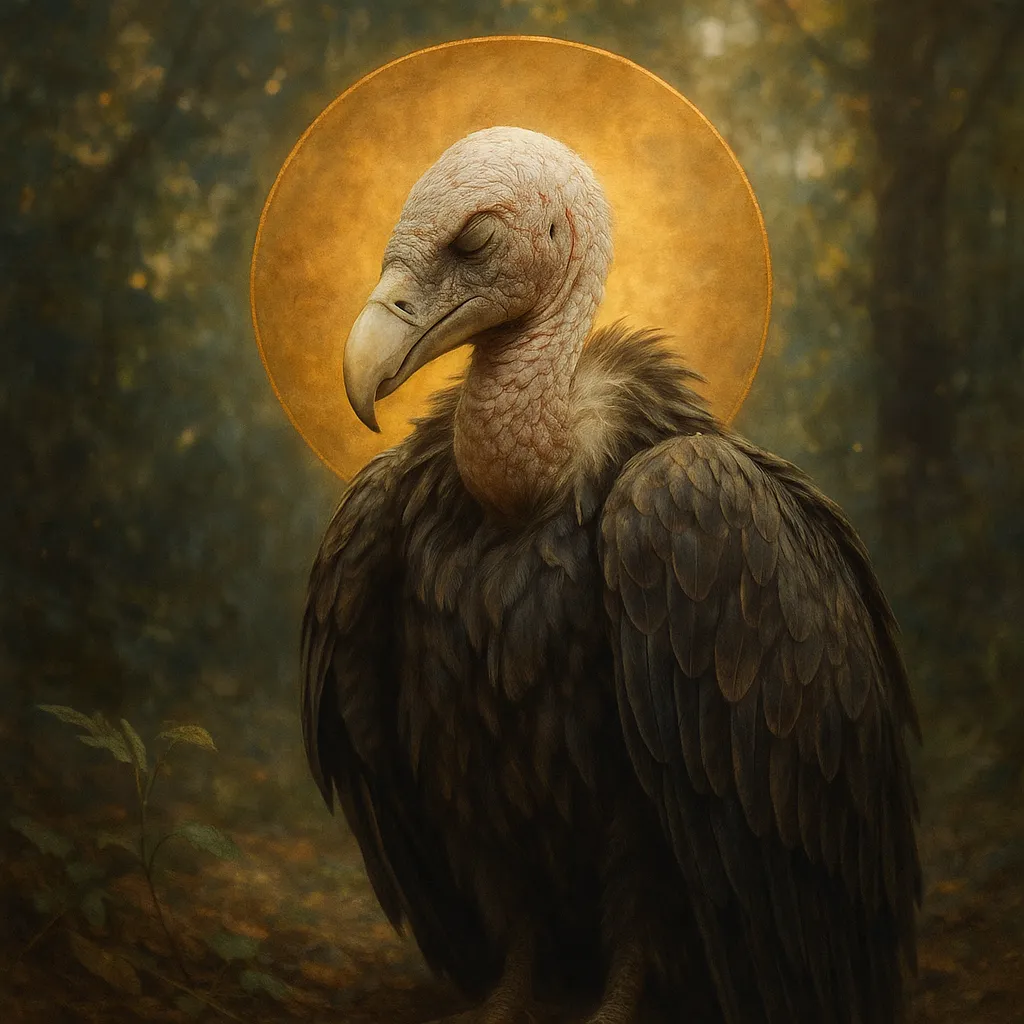
Vultures, in nearly every culture that gave them spiritual weight, are purifiers. Across symbolic traditions documented at MyMythos, the vulture’s role is to take what is dead or decayed and return it to usefulness. When the purifier dies, the older reading is that the purification is done. You are coming out the other side of something.
I’ve been writing about animal symbolism long enough to trust one pattern: the dread we project onto a dead animal almost never matches what the source traditions say. That gap between our instinct and the actual record is where this article lives.
What Is the Vulture’s Spiritual Role That Makes Finding One Dead Significant?
A Turkey Vulture can locate a carcass from a mile away by smell alone. That’s unusual for birds; most have poor olfactory senses. And its stomach acid is strong enough to destroy anthrax and botulism that would kill most other scavengers. The bird walks into contamination and comes out clean.
So when traditions call the vulture a purifier, they’re not being poetic. They’re being literal about what they observed.
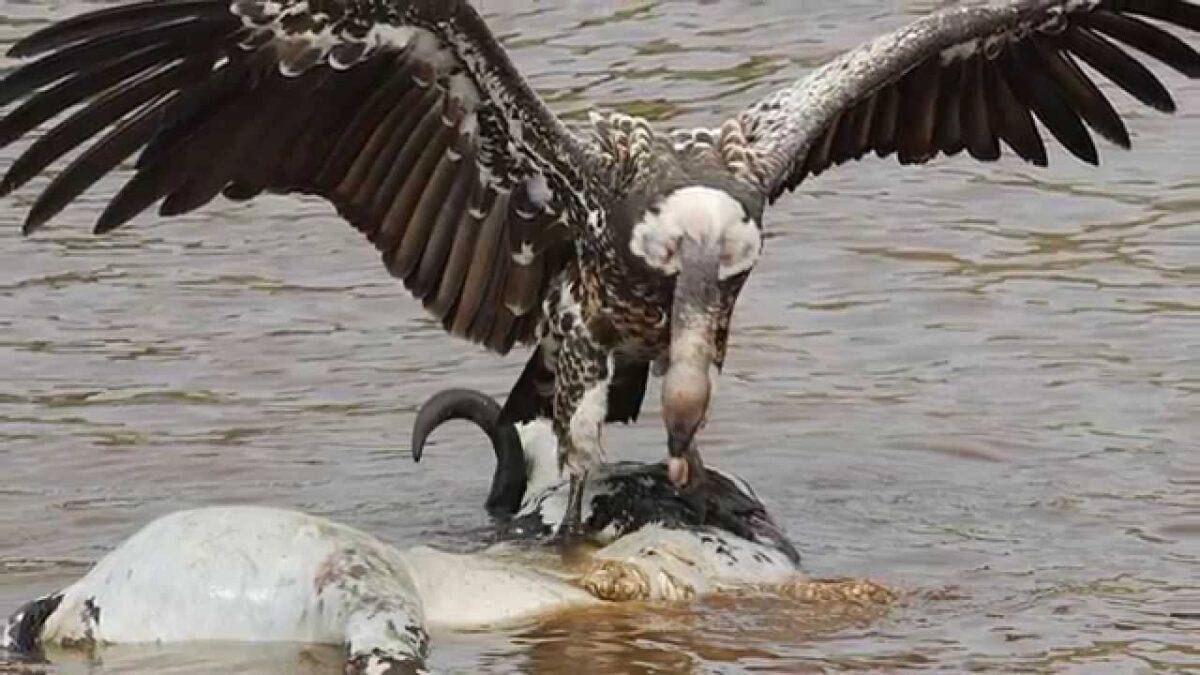
The Maya, according to the Precolumbian Art Research Institute’s published analysis of vulture iconography in Mesoamerican contexts, depicted vulture deities presiding over decomposition not as figures of evil but as engines of renewal. The King Vulture appeared in ritual scenes marking the passage between death and what came after. That baseline matters. If the vulture’s job is to clear away what is finished, then its own death carries a specific charge: the clearing is done. The guardian presence has fulfilled its role.
What Do Different Cultures Say About a Dead Vulture’s Meaning?
According to Wilkinson’s scholarship on Egyptian funerary religion, Nekhbet was depicted as a vulture goddess whose wings spread over both the pharaoh and the dead. Nekhbet’s role, as documented at Ancient Egypt Online, was explicitly protective. She guarded transitions, particularly birth and death. A culture that placed a vulture goddess at the threshold of the afterlife was not reading the bird as a sign of evil. She was the appropriate presence at a crossing.
In the Andean tradition, the condor, which is the New World’s functional equivalent of the Old World vulture, bridges the earthly world and the world above. When a condor died, communities in highland Peru historically treated the event with ceremony rather than alarm. I don’t have a source that says this about dead condors specifically with the same scholarly weight as the Egyptian material, and I won’t pretend otherwise. But the pattern across Andean iconography recorded by ethnographers is consistent: the bird’s death is not ominous.
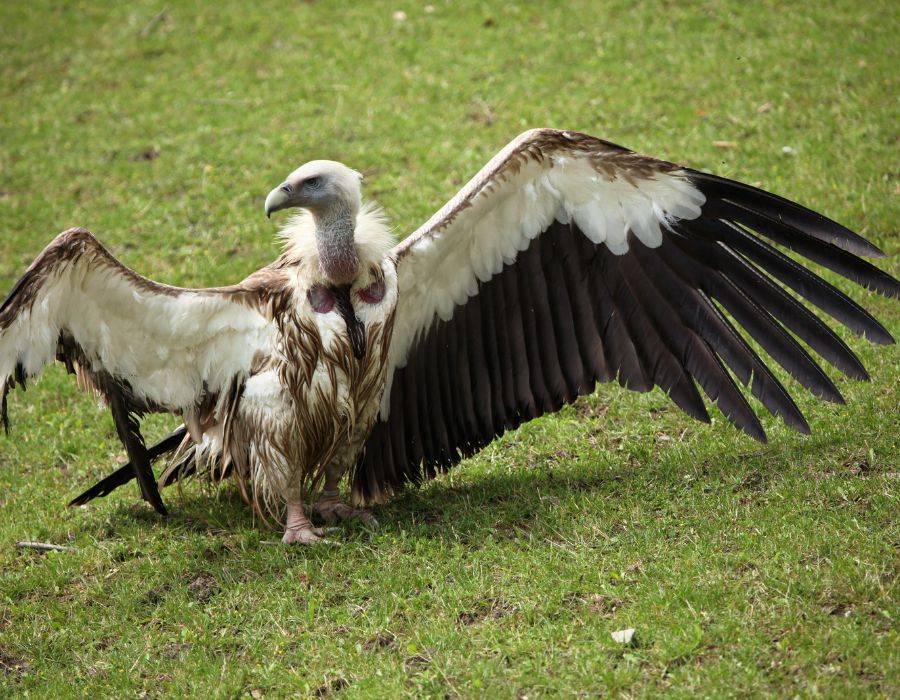
In Tibetan sky burial practice, vultures and Himalayan Griffons are the final agents of return. The body is prepared so these birds can complete the transition from physical form back into the cycle. A bird performing that function is read as sacred. Its death, in that framework, is a release: the guardian has finished its work.
For the Turkey Vulture specifically, several Plains nations viewed it as a solar bird, one that circles on thermals created by the sun’s heat and always returns to the light. Its death inverts the movement only once: the descent is complete, and something else rises.
What Spiritual Message Is a Dead Vulture Sending You?
There are three readings I encounter most in the written record. They are not equally supported by sources, so I’ll be honest about which is which.
The strongest reading, and the one most consistent with how vulture traditions actually work: a purification cycle has ended. Something toxic, finished, or stuck has been processed. The vulture appeared dead because its job is done. This fits the Egyptian, Andean, and Mesoamerican frameworks most cleanly.
The second reading is more psychological than folkloric: you’ve been in a period of intense clearing out, and the dead vulture signals it’s time to stop purging and start building. The work of removal is over. I read this as Jungian rather than traditional, and I flag that so you can weigh it accordingly.
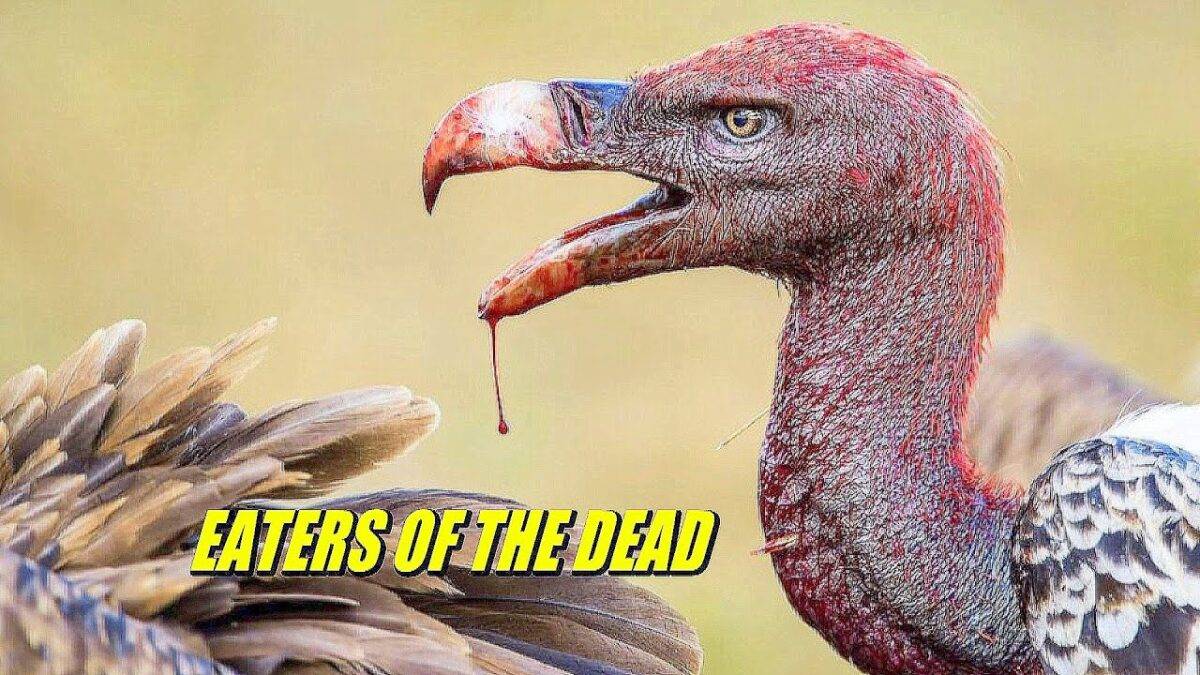
The third reading, which comes up in some folk sources but which I trust less: a protective presence has fulfilled its role. Something watching over a difficult period has finished that watch.
None of these mean someone you love is about to die. None of them.
Does the Location Where You Found the Dead Vulture Change Its Meaning?
Yes. Your specific situation matters more here than the general symbolism.
On a road: Vultures on roads are there because roads kill animals, and Turkey Vultures follow the kills. A dead one on a highway was most likely struck while feeding on roadkill. The placement isn’t chosen. The spiritual charge is lower.
In your yard or garden: This is the encounter that carries weight. A vulture wouldn’t typically die in a domestic yard without a reason. If it appeared whole and recently dead with no obvious injury, note the timing. What has been ending in your life in the weeks before this? The yard is your space, and the bird ended up in it.
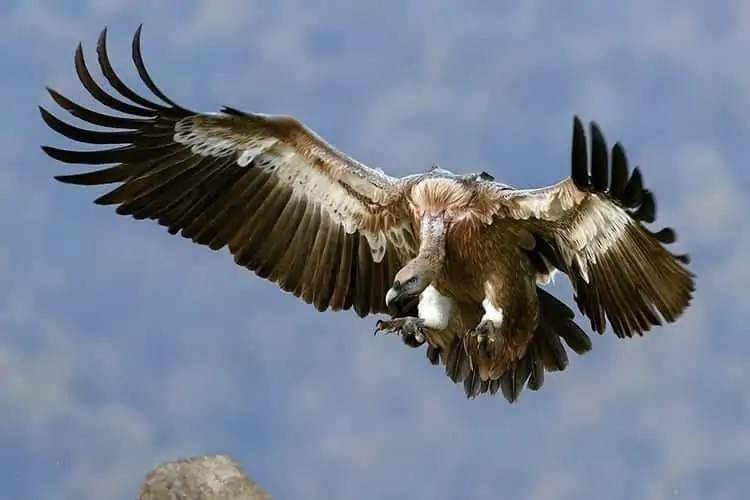
Near your front door or threshold: Threshold encounters with dead animals carry the strongest symbolic charge in almost every folk tradition I’ve read. The door is where inside meets outside, where your life meets the world. In the Appalachian folk-magic tradition I live near (though I don’t claim it as mine; I’m a neighbor to it, not a practitioner), a large bird dying at the threshold of a home marks a transition passed. You are crossing through something.
On a rooftop: Vultures roost on rooftops regularly, especially in warmer states. A dead one on your roof is more likely a natural death in a resting spot than anything placed. The practical reading dominates here. Several West African traditions do read rooftop encounters as the boundary between worlds being permeable, but I don’t know enough about the specific sub-traditions to be more precise than that.
For more on what vulture symbolism means across traditions more broadly, I’ve written a longer piece that goes into the living-bird reading in more depth.
What Does Dreaming of a Dead Vulture Mean?
The dream version is different from a waking encounter. In the waking encounter, you are a witness to something external. In the dream, you are inside it.
If you dream of a dead vulture you discovered: the reading follows the waking one closely. Something is finishing. The dream is processing what you haven’t let yourself recognize yet while awake. Jung would call this shadow material surfacing, the psyche clearing something the conscious mind hasn’t fully acknowledged. What have you been avoiding looking at directly?
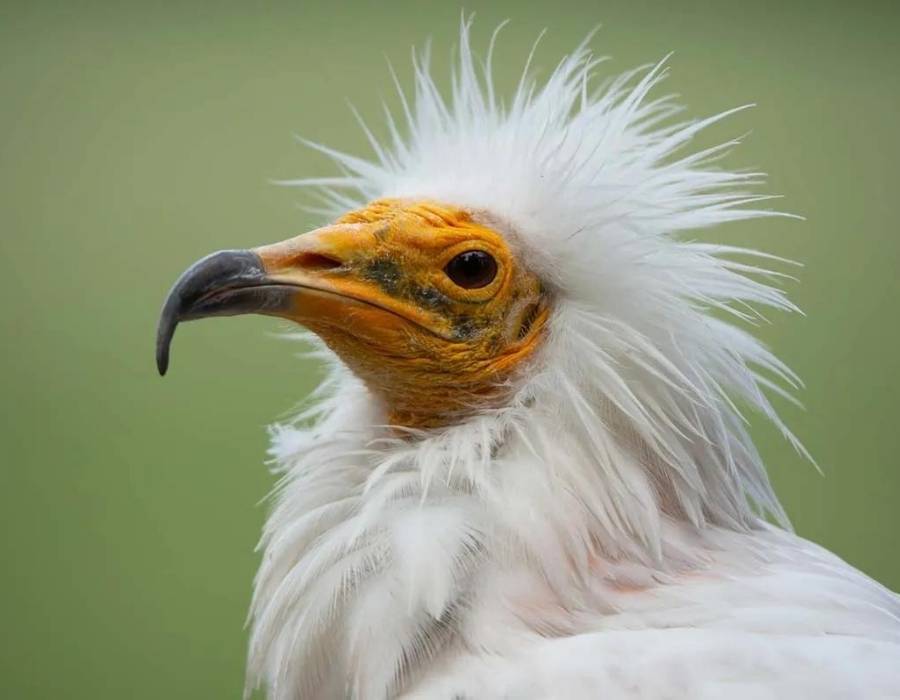
If you dream of a dead vulture you killed: you stopped something. Whether that was right or necessary, the dream is asking you to sit with the consequences of that stopping. Not in guilt. In awareness.
If the vulture dies in your dream and then rises: that’s the full arc in one night. Something completing, something beginning. I read that as the clearest possible version of this encounter.
What Should You Do After Finding a Dead Vulture?
Practically, first: do not touch it with bare hands. Conservation research documented by the 4Vultures coalition notes that lead poisoning from spent ammunition is a leading cause of vulture deaths in North America. If the bird appears to have been poisoned, contact your local wildlife agency. The IUCN Vulture Specialist Group reported in 2021 that several New World vulture populations are declining, and a poisoned bird may indicate a problem in your area that wildlife managers need to know about.
If the bird died of natural causes and you want to mark the moment: you don’t need a ritual. But if one helps, here’s a simple one that doesn’t require anything you don’t already have.
Write down what has been ending in your life. Not what you’re afraid is ending. What has already ended, or been ending slowly. A relationship. A version of yourself. A job, a habit, a belief. Write it on paper. Then bury that paper, or burn it somewhere safe, or fold it and put it away somewhere you won’t see it daily.
You are not making this up. The fact that you noticed this encounter is part of what it means.
Frequently Asked Questions
Is finding a dead vulture bad luck?
No, and I say that with some confidence. The traditions that gave vultures spiritual weight, Egyptian funerary religion, Andean condor veneration, Mesoamerican ritual iconography, consistently read the bird as a purifier, not a sign of coming harm. A dead vulture signals the end of a difficult or toxic cycle, not the beginning of one. The bad-luck interpretation comes from conflating “bird associated with death” with “bird that causes death.” The older traditions knew the difference. They’re not the same thing.
Is a dead vulture a sign that someone I know will die?
The folk record does not support this reading. Finding a dead vulture near your home is not predictive of death for a person close to you. The vulture’s association with death is ecological; it processes what has already died, not what is coming. There is no version of this encounter in the source traditions I trust that reads as a forecast of harm to someone you love. Take a breath. That’s not what this is.
What does it mean if a vulture dies in my yard specifically?
A yard encounter carries more personal charge than one on a public road, because the yard is your space. I read a vulture dying in a domestic setting as tied to your immediate life: something stuck, unhealthy, or unfinished in your personal world is completing. Note what has been slowly ending in the weeks or months before this. That’s where the meaning lives, not in some general forecast.
Are there omens associated with vultures dying near a home or property?
In the Appalachian folk-magic tradition I live near, though I’m a neighbor to it rather than a practitioner, a large bird dying at or near the threshold of a home marks a transition of some kind. Not necessarily a loss; sometimes a departure, a change of state. The Andean and Tibetan frameworks would frame it similarly: the guardian of a difficult crossing has finished its work. You’ve come through something. That’s the consistent read across the traditions I find credible.
What is the difference in meaning between a Turkey Vulture and a Black Vulture found dead?
Honestly, I don’t have a confident answer here. The folk record is thin on species-specific distinctions for vultures in North America, and the academic record is thinner. Turkey Vultures carry more solar symbolism, the circling on warm air, the return to light, so their death might carry a stronger sense of a cycle completing. Black Vultures are more social, more aggressive. Whether that distinction carries symbolic weight, I genuinely don’t know. I’d rather say so than invent a reading.
Should I bury or move a dead vulture I find?
Don’t handle it with bare hands; use gloves or a shovel. If the bird shows signs of poisoning (no obvious injury, found near a farm or shooting area), contact your state wildlife agency before moving it. If it appears to have died naturally and is somewhere distressing to you, moving it to a wilder spot on your property is fine. Burying it is fine. You don’t need to perform a ritual, but if marking the moment helps, the writing exercise above is where I’d start.
Is a dead vulture a sign from a deceased loved one?
I don’t believe animals are vessels for messages from the dead. That’s my honest position, and it’s fair to say it plainly. What I do believe is that the human mind reaches for meaning in moments of grief, and that reach is real and reasonable. If finding this bird on a significant date, or in a significant place, makes you feel connected to someone you’ve lost, that connection is yours. The meaning isn’t coming from the bird. It’s coming from you, and that doesn’t make it less true.
What does it mean if I keep seeing dead vultures repeatedly?
Multiple encounters in a short window are worth paying attention to, but probably not in the way you fear. Turkey Vultures in North America number roughly 4.5 million birds, according to Cornell Lab of Ornithology’s 2019 population estimates, and they congregate where road mortality is high. Repeated dead vultures in the same location may indicate a poisoning event worth reporting to wildlife authorities. Symbolically, if you keep encountering them and can’t account for a practical cause, I’d ask: what keeps not finishing in your life? What are you clearing, over and over, without completing?
Sources
- Nekhbet, Ancient Egypt Online
- Vulture Archetype, MyMythos
- The Symbolic Representation of Vultures Across Civilizations, 4Vultures Conservation Coalition
- Vulture Iconography in Mesoamerican Contexts, Precolumbian Art Research Institute
- Vultures in Cultures, 4Vultures
- Nekhbet, Encyclopaedia Britannica
- Richard H. Wilkinson, The Complete Gods and Goddesses of Ancient Egypt, Thames & Hudson, 2003
- Cornell Lab of Ornithology, Turkey Vulture population data, 2019