You found a brown moth in your house and wondered what it means. Across Irish and Yoruba folk records, a brown moth signals incoming contact: news or a visitor arriving soon, not bad luck. What shifts the reading is where it landed, whether alive or dead, and what else happened that day. This article explains how to read those details.
Key Takeaways
- A moth landing on you is read across Irish, Yoruba, and Cameroonian folk tradition as incoming news or an expected visitor, not a death sign.
- The death-omen reading belongs to one specific species: the large black witch moth (Ascalapha odorata), not ordinary brown house moths.
- Color matters. Brown means a letter coming, in Irish rural lore. White means soul contact, in Yorkshire tradition. Black brings the Aztec underworld reading, but only for the right species.
- Where the moth lands on your body shifts the reading, and so does whether it found you indoors or outside.
- Nothing ritualistic is required after the encounter. Attention is enough.
What Does It Mean When a Moth Lands on You?
The consistent thread across the folk records I’ve read, from Bavaria to West Africa to the Irish countryside, is contact, not danger. News coming. A visitor expected. Someone who has been thinking about you.
Three things shape what that contact means: the moth’s color, where it touched you, and whether it crossed a threshold to reach you. A small brown moth on your hand in Irish lore reads differently than a white moth at your window at midnight in Yorkshire. I’ll go through each. But the baseline reading, for an ordinary moth in ordinary circumstances, is incoming news or a moment of attention the folk record calls significant.
My grandmother Theresa kept a leather notebook of animal lore from the Bavarian Forest, and I’ve had moths in it since I first started reading it seriously. Not the death-messenger version that gets recycled on most symbolism sites. The older version: the moth as a carrier of news, as a creature that slips through gaps the way rumors do. That framing has stayed with me. It matches what the academic record actually says, which is not always true of Bavarian folk belief.
For some readers, the framework is the universe. For others, God working through the natural world. For others still, a moment that doesn’t have a name yet. All three are reasonable starting points.
What Do Different Cultures Say About a Moth Entering Your Space?
The color line in Irish and British rural tradition is clear, and it matters. According to Daniels and Stevans’ Encyclopaedia of Superstitions (1903), a white moth in the house signals death, while a brown moth means an important letter is on its way. Not a warning. A letter. The brown moth tracks human communication, slipping through doorframes the way news does, unannounced.
Polish folk belief runs darker. Ethnographic records from Wileńszczyzna and Lublin, documented in Agnieszka Orkusz’s 2024 study of insect symbolism in Slavic culture, describe a moth flying into the house as a sign of death within the family or household. But the same records give the moth lighter roles: “seeing a flying moth foresees gossip,” which is considerably less alarming. So even within one tradition, the moth is not one fixed thing.
Arnold Van Huis’ peer-reviewed study Cultural Significance of Lepidoptera in sub-Saharan Africa (2019) documents readings among Yoruba people in Nigeria and several Cameroonian groups, including the Bafia, Bakoka, Bamileke, Bassa, and Yambassa, where a moth or butterfly entering the house during the day signals good news, including a safe delivery for a pregnant woman, while a nighttime entrance is read as a bad omen. And in several Cameroonian groups, the reading is simply: an important visitor is coming.
That pattern keeps appearing. The Irish tradition, the Yoruba, the Cameroonian traditions all treat the moth crossing a threshold as a social signal first. News. Visitors. Gossip. The death framing is specific to certain species, certain conditions, certain regional variants. It is not the default.
Is a Moth Landing on You a Death Omen, or Something Else?
No. An ordinary brown moth landing on you is not a death omen. I want to say that plainly because it’s what you’re actually asking when you search for this.
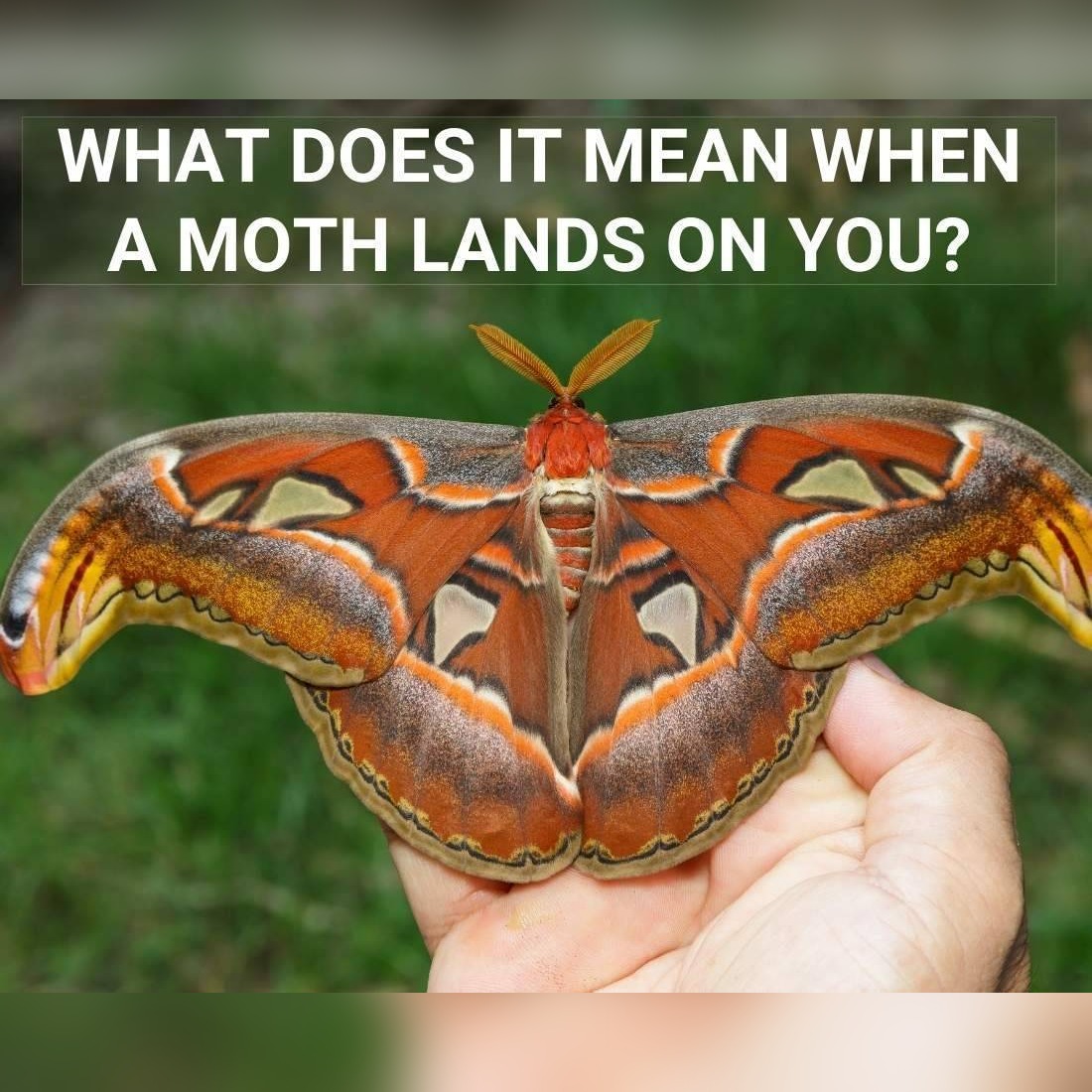
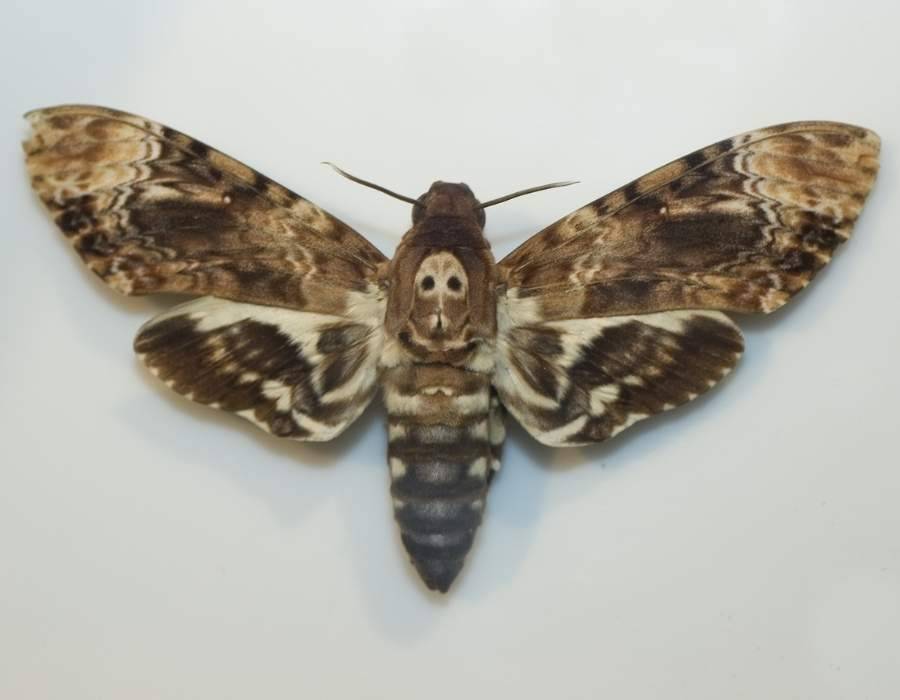
The death-omen tradition that gets attached to moths in general belongs to one specific insect: Ascalapha odorata, the large black witch moth, with a wingspan that can reach nearly seven inches, found in Central America and Mexico. In Nahuatl it’s called mictlanpapalotl, “butterfly from the land of the dead.” According to Michael Quinn’s paper The Black Witch Moth as an Avatar of Tlaloc (2019), this moth is tied to pre-Hispanic underworld associations, specifically to Tlaloc and the realm of Mictlan. When it enters a house where someone is ill, the folk reading in central and southern Mexico is that the person may die, or that a recently deceased soul is visiting.
That is a very specific cultural reading, about a very specific large dark moth, in a very specific regional tradition. A small brown clothes moth landing on your arm in Ohio is not that moth. The species alone disqualifies it.
I’ve read through the folklore record on moths as death omens, and the pattern holds: the death associations attach to large, dark, marked species. Not to the small brown Tineola bisselliella you found on your sleeve.
Does It Matter Where the Moth Lands, on Your Hand, Shoulder, or Head?
Yes, and this is where specificity helps more than it complicates.
A moth landing on your hand reads, across folk and spiritual interpretation, as a call to action. Something you’re being asked to respond to. The hand is where you reach out and make decisions.
On your shoulder, the reading shifts toward companionship. Something staying close. Several traditions read this as guidance rather than warning, a weight that accompanies rather than stops you.
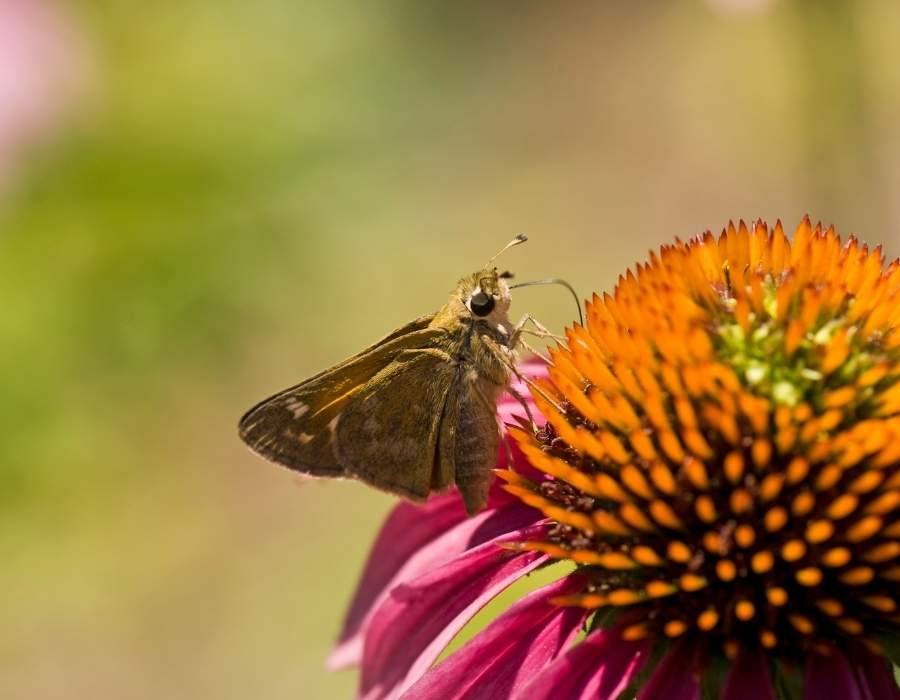
On your head: this is the reading most tied to soul contact or to clarity arriving from an unexpected direction. In the Yorkshire tradition that named night-flying white moths “souls,” any moth touching the head was read as direct spiritual contact. I don’t know exactly how far back that specific reading goes, and I’d rather admit the uncertainty than manufacture a lineage for it.
Where the moth lands changes what the encounter is asking you to notice. That’s not abstraction. It’s how the folk record actually works.
What Does the Color of the Moth Tell You When It Lands on You?
Brown, white, or black. The color matters, and it matters in named traditions, not in generic “energy” language.
Brown: In Irish rural lore per Daniels and Stevans (1903), a brown moth indoors means a letter or news is coming. Grounded change. Something ordinary becoming significant. Brown moths are the most underestimated of the three. They get dismissed as common, and they are common, but common in folklore often means the reading is older and more widely agreed upon, not less worth taking seriously.
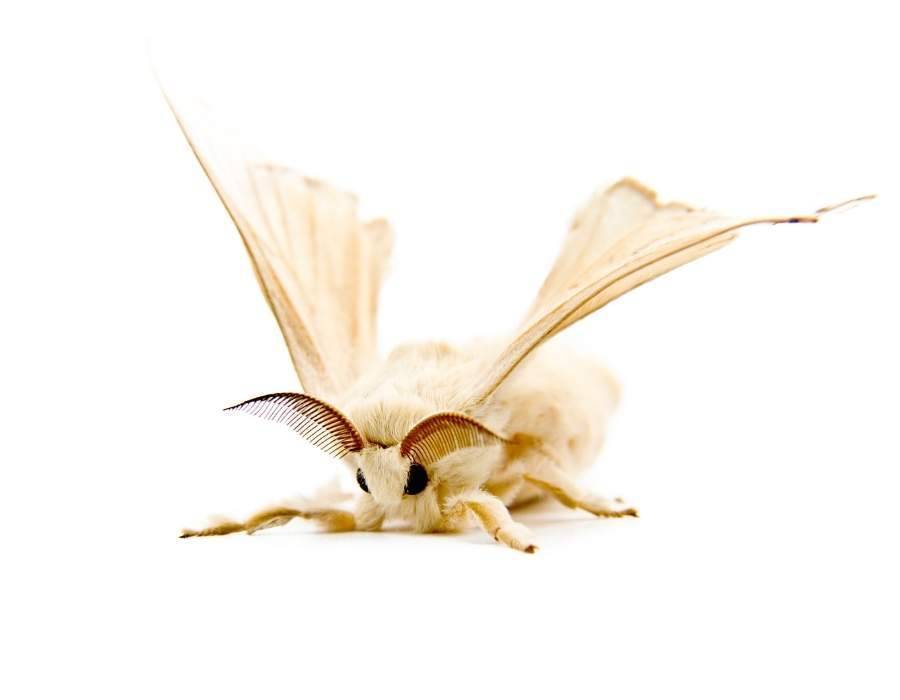
White: In Yorkshire tradition, night-flying white moths were called “souls.” Not messengers. Souls. The reading is direct contact with the dead, not omen-as-warning. It’s specific enough that I take it seriously as a regional tradition even without a pinpoint origin date.
Black: Black brings the Aztec mictlanpapalotl tradition into range. But see the section above. The death-moth reading belongs to a large specific species, not to any dark-ish moth you find near a light bulb. The folklore record is more careful about species than most symbolism writing gives it credit for.
And if you’re seeing a moth repeatedly in your home, color and frequency together may point toward something more persistent than a single message.
What Does It Mean When a Moth Lands on You Inside Your Home Versus Outdoors?
The threshold matters. Irish, Yoruba, and Cameroonian readings all treat a moth crossing into your space as carrying more weight than one you encounter outside. The act of entry, from the world through a door or window, is what triggers the reading. The moth becomes a carrier of something from out there.
What Should You Do After a Moth Lands on You?
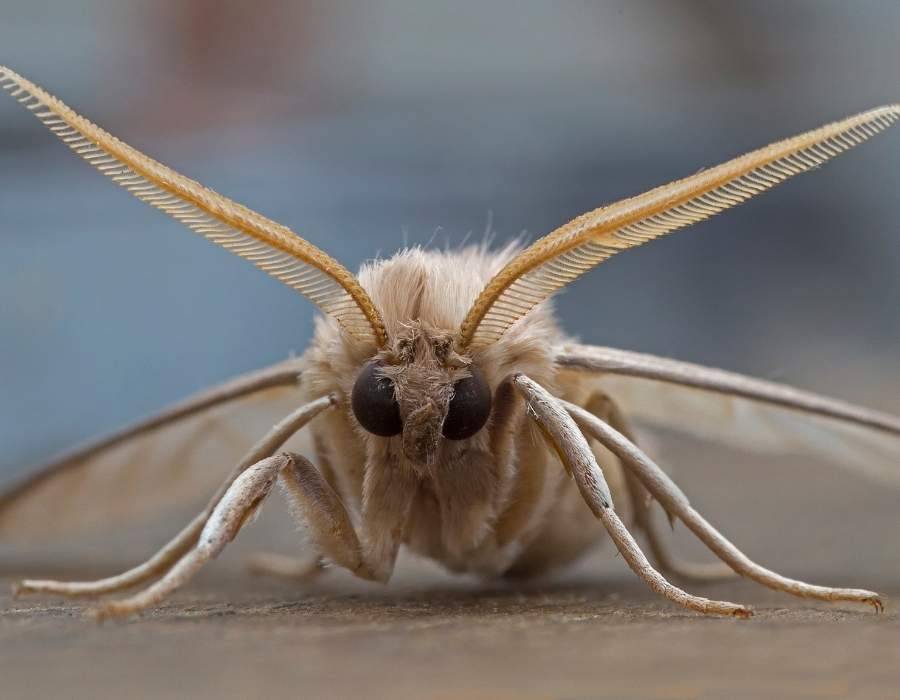
And here’s something about the moth itself that’s worth knowing: according to the University of California Integrated Pest Management program, adult clothes moths live only a few weeks, don’t eat at all as adults, and spend their entire adult lives navigating dark corners to find a mate. They don’t navigate well in open light. They don’t linger on people by accident. If one landed on you and stayed, that’s genuinely unusual behavior for the species.
Frequently Asked Questions
What does it mean when a moth won’t leave you alone?
When a moth keeps returning to you, same moth, same evening, or the same species appearing across several days, the folk record treats repetition as amplification. The Irish “news coming” reading becomes more urgent. The Yoruba “visitor expected” reading becomes more specific. I’d take note of what’s been unresolved or pending. Repetition in these traditions is the signal insisting on itself, not a new message each time. Pay attention to what’s been waiting.
Is a moth landing on you good luck or bad luck?
In most documented folk traditions, an ordinary brown moth landing on you is closer to neutral-to-good than bad. Daniels and Stevans’ Encyclopaedia of Superstitions (1903) puts the brown moth in the “letter coming” category in Irish tradition: news, not harm. The bad luck and death associations attach to large dark species and specific regional contexts. Small moths, in daylight or warm indoor light, don’t carry that weight in any tradition I’ve found convincing.
What does a big brown moth in the house mean spiritually?
Size shifts the reading somewhat. A large brown moth crossing into your home is harder to ignore, which is probably why traditions treat it more seriously. Polish ethnographic records from Wileńszczyzna and Lublin describe a moth flying into the house as a possible sign of a death in the family, though the same tradition also reads it as incoming gossip. The larger the moth, the more the tradition leans toward the stronger reading. But a large brown moth is still not the black witch moth, and I’d be careful about importing that tradition without the specific species.
What does a small brown moth in the house mean?
Almost certainly a common clothes moth, Tineola bisselliella. In folk terms, small moths in the house fit the Irish “letter or news coming” reading more than any death tradition. The threshold crossing matters; the size doesn’t. Practically, a small brown moth inside means checking your wool sweaters. I say that without irony. The folk reading and the practical one are answering different questions. Both can be right at once.
What does it mean when a moth flies around your head?
In Yorkshire folk tradition, where night-flying moths were called “souls,” a moth orbiting your head was read as direct spiritual contact, something circling close to your mind. I don’t have a confident answer about how old that specific reading is or whether it’s recorded before the 19th century. The folk record here is thinner than I’d like. What I can say is that the head-as-contact-point reading shows up in more than one tradition, and that consistency is worth taking seriously even without a clean lineage.
Can a moth landing on you be a sign from a deceased loved one?
The tradition that supports this most directly is the Yorkshire one, where white night-flying moths were called “souls” outright. Lafcadio Hearn’s Kwaidan (1904) also records Japanese folk beliefs in which lepidopterans entering a home may carry the souls of the recently dead. If someone close to you has died recently and a moth lands on you soon after, you are in very old company. I don’t believe in messages from the dead. But I believe the pattern is real, and worth respecting.
Does killing a moth after it lands on you change the omen?
Polish folk belief, documented in Orkusz’s 2024 study, says killing a moth represents overcoming enemies. So in that tradition, the act of killing doesn’t worsen the omen. It resolves it. Other traditions don’t address this directly. My read: if the moth arrived as a message, killing it doesn’t cancel the message. The encounter already happened. What you do with the moth afterward is a separate matter.
What does it mean when a moth lands on you at night specifically?
Nighttime shifts the reading in several traditions. Arnold Van Huis’ 2019 study documents that among Yoruba groups in Nigeria, a moth or butterfly entering the house at night reads as a bad omen, while the same insect during the day signals good news. The Yorkshire “souls” tradition also centers on nighttime moths. Night encounters carry more weight across the folk record. If a moth landed on you after dark and the encounter felt different, you were picking up on something that multiple traditions have also noticed.
Sources
- Daniels and Stevans, Encyclopaedia of Superstitions (1903)
- Agnieszka Orkusz, Edible Insects in Slavic Culture (2024), PMC
- Arnold Van Huis, Cultural Significance of Lepidoptera in sub-Saharan Africa (2019), Journal of Ethnobiology and Ethnomedicine
- Michael Quinn, The Black Witch Moth as an Avatar of Tlaloc (2019), Academia.edu
- Irish Hedgerow Folklore, Amaya Druid Blog (2011)
- University of California IPM Program: Clothes Moths
- Animals Around the Globe: The Moth as an Omen of Death in Folklore
- Wikipedia: Ascalapha odorata (Black Witch Moth)
- Richard Alois: Dead Moth Symbolism
- Richard Alois: Moth in House Meaning