Most people think night means danger or death coming for you. But in ancient Athens, night brought owls that stood for wisdom and good judgment, not fear. Whether the dark feels like a threat or a gift depends on who taught you to read it first.
Key Takeaways
- Night symbolism is culturally plural, there is no single universal code, and any article that offers one is flattening the record.
- The owl carries wisdom in Athenian tradition, witchcraft danger in Yoruba discourse, and medicine power in Lakota ceremonial life, never the same meaning in every place.
- Biblical and literary night symbolism centers on threshold moments: divine encounter, prophetic vision, the unconscious, and grief.
- The biological traits of nocturnal animals, silent flight, exceptional hearing, concealed nesting, decades of territorial occupation, are documented by ornithology and explain why folklore reads them as watchers and messengers, without confirming any supernatural interpretation.
- Three large misconceptions about night symbolism, that nocturnal creatures universally signal death, that the owl has always meant wisdom, and that nocturnal silence is supernatural, are contradicted by the named scholarly record.
What Is Night Symbolism?
Night symbolism is the interpretive framework through which human cultures have made meaning from darkness: from the hours without sun, from the creatures that move through them, from everything the daylight world cannot see or explain. It spans religion, folklore, literature, and psychology, and it has been active in every culture that left a record.
Darkness has carried meanings of mystery, hidden knowledge, danger, renewal, and the unconscious, often all five at once, depending on which tradition and which century you look at. I want to be clear about this from the start: the meaning of night is not a settled question. The record is plural and sometimes contradictory, and that’s exactly what makes it worth tracing carefully.

The symbolism attaches most readily to the creatures that live in the dark. Owls above all others, but also bats, moths, and the whole chorus of sounds that fill a forest after the light goes. The biology generates the mythology. Across traditions, the common thread is that the night reveals something the day conceals, though what that something is, whether wisdom or danger or the faces of the dead, depends entirely on who is doing the reading.
What Do the Core Themes of Night Symbolism Reveal Across Cultures?
The recurring symbolic registers of night, across cultures that never shared a map, come down to five: concealment, death and renewal, the unconscious, the sacred unknown, and the threshold between states. Each maps onto a real feature of nighttime experience. Darkness literally hides things. Seasons die in winter darkness. The sleeping mind produces imagery the waking mind doesn’t. These are not arbitrary associations.
In Taoist Chinese thought, night andits counterpart yin represent the passive, receiving, regenerative side of existence, not inferior to the yang of daylight, but its necessary complement.In the Hebrew biblical tradition, nightis the setting for divine encounter and prophetic vision: Jacob wrestles a stranger until dawn; the magi travel by starlight. In West African Yoruba discourse, night is specifically when hidden powers, protective and destructive, become active. And in Jungian psychology, which draws on folk material from multiple traditions, the night world of dreams is where the shadow self operates, the parts of a person that daylight keeps out of view. The frame differs. The subject, things you cannot see directly, stays constant.
What Does Ancient Greek Tradition Say About Night and Its Creatures?
In ancient Athenian tradition, night was not primarily a symbol of danger or death but of a superior, divinely sanctioned way of seeing. The owl, specifically the little owl, Athene noctua, called glaux in Greek, was sacred to Athena. The Acropolis Museum’s Athenian coin collection shows the bird on silver obols from the late sixth and fifth centuries BCE, paired with Athena’s helmeted profile. Not decorative. Athens’s public emblem, on the currency that circulated throughout the Mediterranean world.
According to the Acropolis Museum’s institutional records, the owl was believed to foretell victory when it flew above warriors. That reading rests on the bird’s perceived night vision, the ability to see clearly where others stumble blind. What the Athenians made of darkness, then, was this: the night is not empty. It is full of information that only certain eyes can read. This is one of the oldest surviving night-symbolism systems in the Western record. And it does not lead with fear.
What Does Yoruba Tradition Say About Night Creatures and Spiritual Power?
The Yoruba tradition documented in Malcolm Ruel’s ethnographic study, “Witchcraft, morality, and doubt,” published in Odu: Journal of Yoruba and Related Studies in 1965 and reprinted in 2017, frames the owl in a fundamentally different register. In Ruel’s account, the owl (owiwi) is a chief form among nocturnal were-animals, creatures associated with witchcraft, child-harm, concealed destructive power, and moral danger. The bird operates specifically in witchcraft discourse, not as a general doctrine about every owl a person might encounter.

I want to be careful about that distinction. Ruel documents how the owl functions within narratives of suspicion, illness, and moral accusation, a framework where the night is the space of hidden, potentially destructive power that those with harmful intentions inhabit. That is not the same as saying that Yoruba people universally fear owls, or that an owl in the yard guarantees a curse. What the tradition tells us about night symbolism is that darkness can be the medium through which hidden human harm operates, and that watching for it is part of how communities protect themselves. Fear and moral seriousness are different things.
What Does Lakota Tradition Say About Night Knowledge and Owl Medicine?
Lakota owl symbolism is one of the most misrepresented subjects in American spiritual writing, where it almost always gets reduced to a single note: death omen. The record is more complicated. Clark Wissler’s 1916 Societies and Ceremonial Associations in the Oglala Division of the Teton-Dakota describes owl feathers attached to a ceremonial staff specifically because “the owl knows everything even if it is night.” That is not death symbolism. That is knowledge symbolism, night knowledge, the ability to perceive in conditions that blind others.
Modern Oglala Lakota oral testimony, as documented by the University of Southern California’s folklore archive on owls and the Lakota, presents owls in more than one register: power, hope, wisdom, and medicine all appear alongside associations with the spirit world. The night, in Lakota ceremonial life, is where certain kinds of knowledge become accessible, dream knowledge, vision-quest knowledge, the knowledge that comes when the ordinary world goes quiet. I find it hard to overstate how much the one-sentence reduction does damage here.
What Does Medieval and Early Modern European Tradition Say About Night Symbolism?
The Latin-Christian European tradition produced a deeply ambivalent record on night and its creatures. The Roman strix, an owl-like creature of the night, appears in classical sources as something harmful and supernatural, associated with blood-sucking and child-harm. That image fed into medieval Christian writing, where the owl’s appearance in ruins, cemeteries, and church towers reinforced associations with desolation and spiritual blindness.Isaiah 34:11 in the Vulgate Biblelists the owl among the creatures that will inherit a desolated city, a sign of abandonment, not wisdom.
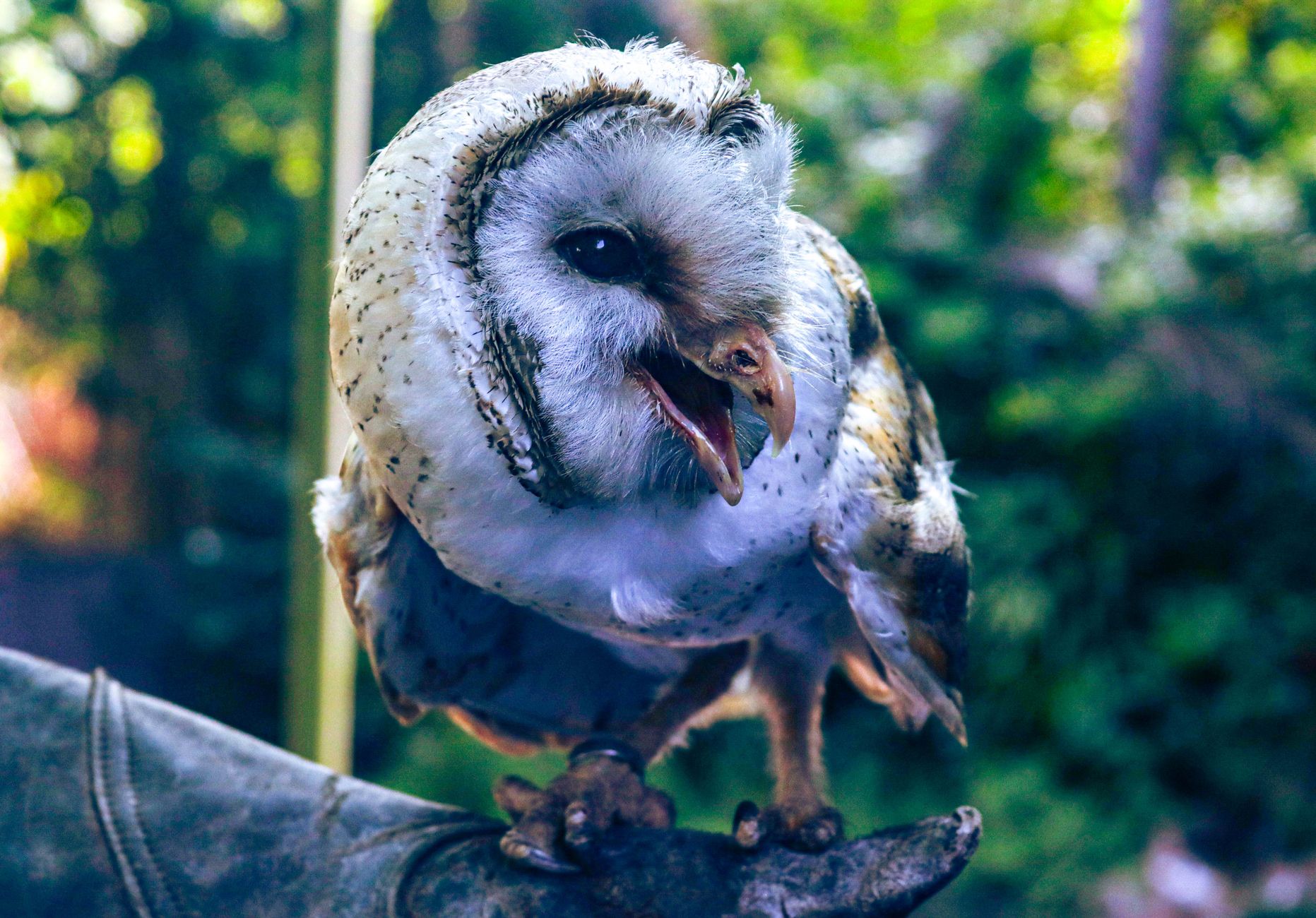
And yet the same tradition produced the “wise owl” of later European literature, drawing on Athena’s bird filtered through classical learning. The result is genuinely two-sided: the medieval owl could represent hidden knowledge, but also darkness, isolation, and demonic danger, depending on which text and which century you are reading. The Online Etymology Dictionary traces the English word owl to Old English ule, rooted in an imitative form suggesting a hoot or wail, which tells you something about how Europeans heard the bird before they started arguing about what it meant. The sound came first. The theology came after.
What Does the Bible Say About Night Symbolism?
Night in the Bible is not simply darkness or evil. It is the setting for encounters that daylight cannot hold.Jacob’s wrestling match with the strangerin Genesis 32 runs from dark to dawn; he is left limping, renamed, changed.Nicodemus comes to Jesus at nightin John 3, the cover of darkness read variously as secrecy, spiritual confusion, or the right condition for a private conversation about rebirth.

In the Book of Job, nightbrings terrible dreams and visions.In the Psalms, the night watchesare a time for remembering God. The pattern is consistent: night in the Hebrew and Christian scriptures is where transformation happens, where the ordinary categories of daylight break down. What strikes me about the biblical treatment is how often night is not the problem but the precondition. You cannot have a wrestling match, a star to follow, a vision of the divine, in ordinary daylight hours. The dark is where the work gets done.
What Does Night Symbolism Mean in Literature?
In literature, night has carried three main loads: the unconscious, creative freedom, and grief.Homer uses the night of theunderworld as a threshold between the living and the dead; Odysseus visits by night and returns before dawn.Keats’s “Ode to a Nightingale” (1819)uses the bird’s dark, unseen song as a vehicle for beauty that cannot survive in daylight. “In embalmed darkness” is his phrase, and it’s worth sitting with.

In modernist fiction the freight shifts toward the psychological. Joseph Conrad’s Heart of Darkness (1899) uses the night river as an image of what daylight civilization suppresses. Virginia Woolf’s Mrs. Dalloway (1925) moves between the social daylight world and the night interior, where Clarissa’s real thinking happens. The common thread across all of these is what night removes: public identity, social performance, the demand to be legible. What remains is something older and less organized. That’s not a symbol system. It’s an observation about what happens to the mind when the lights go out.
What Do the Natural Behaviors of Nocturnal Animals Reveal About Night Symbolism?
The symbolism is not arbitrary. It maps directly onto observed behavior. The British Trust for Ornithology’s 2024 Tawny Owl account records that owls’ highly developed hearing lets them locate prey accurately in darkness and even beneath snow, and that people often hear owls rather than see them because many species are secretive, solitary, and active at night. A bird you hear but cannot see, hunting things you cannot track, in hours you cannot use: of course folklore reads that as a watcher, a messenger, a presence just outside ordinary perception.
BTO ringing data from 2024 shows that Tawny Owls can live more than twenty years, with one individual recorded at twenty-three years, five months, and twenty-seven days, often holding the same territory and nest hole their entire lives. Returning to the same tree for two decades will, over time, make a bird seem like a guardian of a place. The Cornell Lab of Ornithology’s 2026 Barred Owl account records that Barred Owls nest in natural tree cavities twenty to forty feet off the ground, eggs incubated for twenty-eight to thirty-three days in concealment. Hidden birth, decades of return, sound without sight. The biology handed folklore everything it needed.
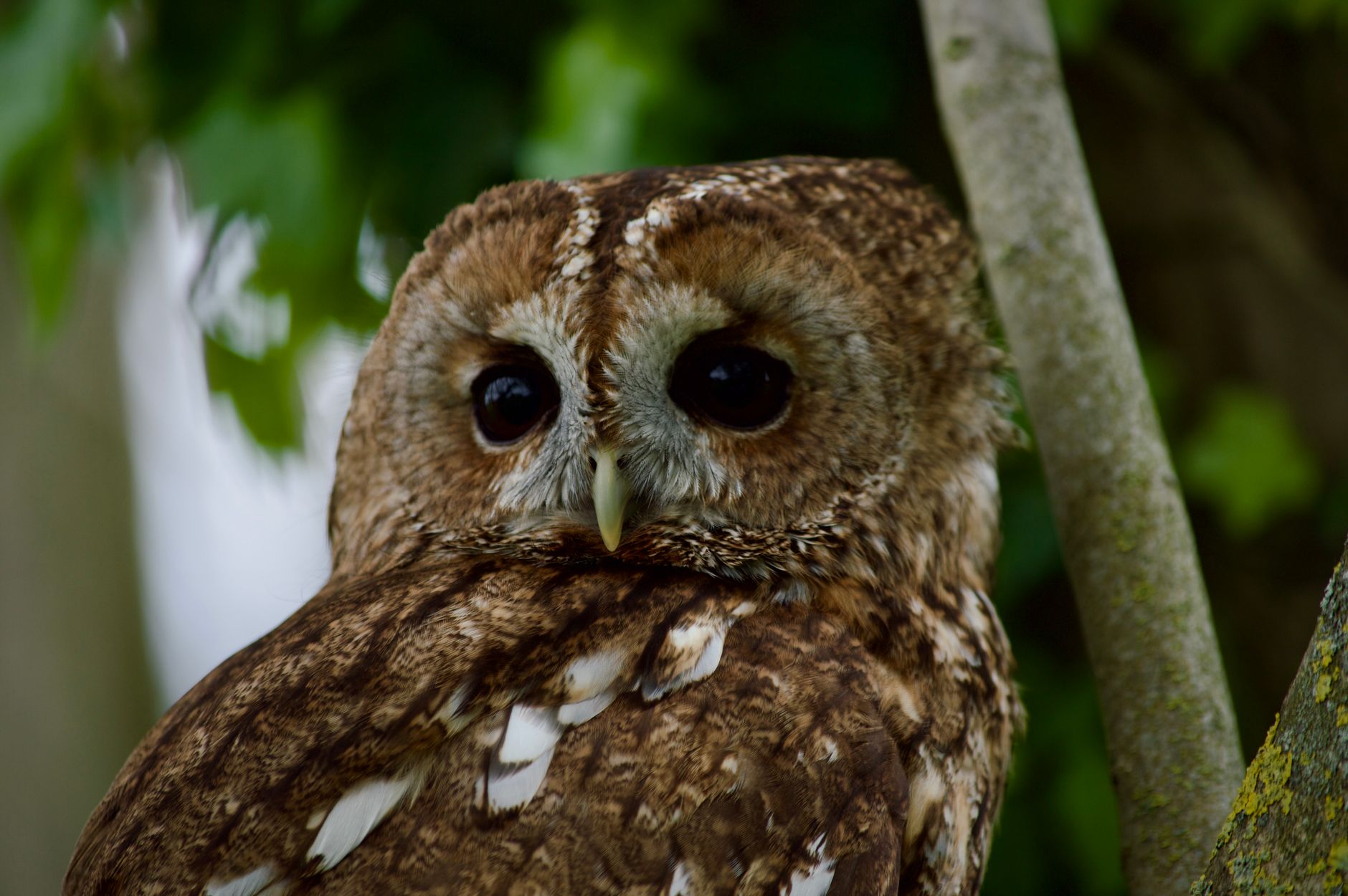
I’ve handled enough injured Barred Owls at the Nature Center to know that silent flight is real, the feather structure is specialized, the trailing edges comb-like, the result almost no turbulence noise. When you know this, you understand why the mythology got so large. The bird is genuinely extraordinary. The mythology then got very large and the biology got forgotten.
What Are the Most Common Misconceptions About Night Symbolism?
Three misconceptions run through almost every popular treatment of night symbolism. All three are contradicted by the named record.
The first: nocturnal creatures universally signal death. The Acropolis Museum’s documentation of Athenian owl iconography shows the bird as a civic emblem of wisdom and military confidence. Clark Wissler’s 1916 Lakota records describe owl feathers used for knowledge and warrior medicine. Death is one reading in particular traditions, Yoruba witchcraft discourse, some medieval European contexts, not a universal rule.
The second: the owl has always meant wisdom everywhere. The “wise owl” image is a product of Athenian culture and later Western literary tradition. Ruel’s 1965 Yoruba ethnography documents the same bird as a frightening witchcraft figure. Medieval European materials read it as a sign of desolation and spiritual blindness as often as insight. The wisdom reading is geographically and historically specific.
The third: nocturnal animals are all-seeing in a supernatural way. Owls have specialized feathers that reduce flight noise and exceptional directional hearing, both documented adaptations, not supernatural gifts. The BTO’s 2024 data on owl hearing explains why folklore read these birds as something more than ordinary. But the biology is the explanation for the symbolic reading, not a confirmation of it.
What Does Night Symbolism Mean in Dreams?
A dream set in darkness or featuring nocturnal animals carries, in most interpretive traditions, the suggestion that something in your interior life is asking for attention, something that doesn’t come up easily in waking hours. Carl Jung’s framework in Memories, Dreams, Reflections (1962) calls this the shadow: the parts of yourself that the daylight ego pushes aside. A night dream is not a warning from outside. In this reading it’s a dispatch from inside, from the part of the mind that operates when your conscious defenses are down.
Indigenous vision-quest frameworks read night dreams differently: as the space where knowledge from non-ordinary sources becomes accessible, where guidance that cannot arrive in waking life finds a way through. These are not identical to Jung’s model, and I would not collapse them together. Folk dream-lore occupies a third position: night in a dream as omen, the specific creature seen as a sign of something coming. Which frame you apply changes what the dream seems to say. I don’t have a confident answer about which frame is correct. I’m not sure anyone does.
What Does Night Symbolism Mean as a Spirit or Totem?
The idea of a night creature as a spirit animal or totem has roots in specific ceremonial traditions that have been heavily commercialized and diluted. In Lakota practice as documented by Wissler, owl medicine is held by particular individuals in particular ceremonial contexts, it is not a personal brand you choose based on a quiz result. The feathers, the songs, the protocols around them belong to a living tradition and are not transferable by internet.
But the broader question, what does it mean to feel drawn to the night, to nocturnal creatures, to the hours after dark, has honest answers that don’t require cultural appropriation. Across traditions, the common thread is that night-oriented people are often those who think better in the quiet, who notice what others miss, who are comfortable with ambiguity and the parts of experience that resist clear naming. You can carry that meaning without claiming a Lakota medicine bundle. The symbolism belongs to you as an observer of your own patterns. The ceremonial practice belongs to someone else.
What Does Etymology Reveal About the Language of Night Symbolism?
The Online Etymology Dictionary’s entry for owl traces the word to Old English ule, related to Old High German uwila, Dutch uil, German Eule, and Old Norse ugla, all connected to an imitative root, the sound of a hoot or a wail. The Latin ulula runs parallel. What this tells you is that the word itself is acoustic. Humans named this bird from the sound it made in the dark before they built any mythology around it.
The Greek glaux names the little owl and is also the word for a type of fish with gleaming eyes, both named for brightness in darkness. The Latin strix names an owl or owl-like night creature, and also a witch or harmful night being; the word’s dual life shows how quickly the biological and the supernatural ran together. Terms like omen, messenger, and threshold are interpretive overlays applied to nocturnal animals by later symbolic tradition. They are not embedded in the animal’s name. The symbolism was built, by human observers, over time. It was not delivered with the bird.
How Do Global Research Reviews Assess Night Symbolism Today?
Lindiswa Buthelezi, Mfundo S. T. Maseko, and Colleen T. Downs published a systematic review of studies on people’s perceptions and cultural beliefs toward owl species in Biodiversity and Conservation in 2026. Their review finds that cultural attitudes toward owls vary significantly by region, with positive associations more common in some areas and fear or superstition more common in others. The key finding for anyone writing about night symbolism: no single cultural reading holds globally. The scholarly record, when surveyed systematically, contradicts any claim to a universal owl meaning.
The Buthelezi, Maseko, and Downs review also raises a practical concern. Where owls are associated with death or witchcraft in local belief, they are sometimes killed as a result, creating conservation pressure on already stressed populations. This is one of the places where symbolism and biology intersect in ways that matter outside the page. The meaning people assign to nocturnal animals has real-world consequences for those animals. I think that’s worth sitting with.
For a broader look at how animal symbolism works across species, I’d point you toward this site’s overview of animal symbolism and what these cross-cultural patterns actually tell us.
Frequently Asked Questions
Is night symbolism always negative or dark in meaning?
No, and the evidence is clear on this. Ancient Athenian tradition read night perception as a sign of divine wisdom, not danger. Lakota ceremonial tradition treats night knowledge as a source of medicine and power. The Hebrew Bible uses night as the setting for blessing and transformation, not just punishment. Night symbolism becomes negative in specific contexts, Yoruba witchcraft discourse, some medieval European readings, but those contexts do not speak for every culture that has looked at the dark and tried to understand it.
Why do so many cultures associate owls specifically with night symbolism?
Because owls are genuinely extraordinary at what they do in the dark. The British Trust for Ornithology’s 2024 data documents owl hearing precise enough to locate prey under snow, and flight feathers adapted to produce almost no sound. A creature that hunts perfectly in conditions where humans are blind, that you hear without ever quite seeing, that is going to accumulate symbolic weight in any culture that encounters it. The biology generated the mythology. The mythology then got very large and the biology got forgotten.
What is the difference between night symbolism and shadow symbolism in psychology?
Night symbolism is a cross-cultural and literary tradition: readings of darkness, nocturnal hours, and night creatures as carriers of meaning. Shadow symbolism in Jungian psychology is a specific technical concept, the unconscious parts of the personality that the ego does not acknowledge. Jung’s shadow operates in dreams and projections, and night is its natural metaphor, but the two frameworks are not identical. Shadow symbolism is an interior, psychological model. Night symbolism spans biology, religion, folklore, and literature, and doesn’t require a psychological framework to function.
Does night symbolism appear in non-Western religious traditions beyond those covered here?
Yes, and I want to be honest that this article covers a fraction of the available traditions.In Hindu cosmology, the goddess Kaliis associated with night, destruction, and liberation simultaneously, the dark as the source of both ending and new life. In Shinto, night is the time of the kami who should not be disturbed.In Sufi Islamic poetry, particularly inRumi’s work, the night of the soul is the precondition for union with the divine. The pattern of night as threshold and transformation holds across all of these, though what waits on the other side varies significantly.
What role does the moon play in night symbolism across cultures?
The moon is the one source of light that belongs to the night, which gives it a mediating role in most night-symbolism systems. In many traditions it represents the feminine, cycles, and what the direct sun cannot illuminate.In Taoist Chinese cosmology, moonlight isyin light, reflective, receptive, secondary to the yang of the sun but necessary to it. In folk traditions across Europe and West Africa, the full moon is when hidden things become visible and when supernatural activity peaks. The moon makes the dark navigable, which is probably why it carries both the night’s danger and its promise in roughly equal measure.
How is night symbolism used in modern spiritual practice, and how does that compare to historical traditions?
Modern spiritual practice, particularly in New Age and contemporary pagan contexts, tends to present night symbolism as an invitation, to rest, to introspect, to sit with mystery. Historical traditions were more mixed. The Greek tradition saw night perception as a gift of the divine. The Yoruba witchcraft tradition saw the night as a space of active moral danger. Medieval Christianity saw it as spiritually perilous, a time for vigilance. Modern practice has largely kept the positive register and dropped the dangerous one, which makes the symbolism easier to sell and less accurate to the historical record.
Can night symbolism apply to daytime experiences?
In practice, yes. The symbolic registers of night, hiddenness, the unconscious, things not yet named, can apply to interior states regardless of the time of day. Jungian psychology applies shadow symbolism to waking projections and daytime behavior, not only to dreams. A meditation that goes somewhere unexpected, a conversation that surfaces something long buried, a piece of music heard in broad daylight that suddenly means something it didn’t yesterday: these are night-world experiences in daylight conditions. The symbol refers to a quality of attention, not a clock position.
What is the difference between a night omen and a night symbol?
A night omen is a specific event, an owl call at a particular moment, a bat entering the house, read as a sign of something about to happen. A night symbol is a general interpretive category: night as a concept carrying meanings of mystery, transformation, or the unconscious that persist across many contexts. The omen is event-specific and predictive. The symbol is structural and ongoing. Most of what this article covers is symbolic rather than omen-based; the omen tradition is real but belongs to specific local folk practices that deserve description on their own terms, not generalization.
Are there positive meanings of night symbolism in traditions that also associate it with danger?
Yes. This is actually the norm rather than the exception. The Yoruba tradition that documents the owl as a witchcraft figure also holds rich positive associations with night knowledge and ancestral protection. Medieval European tradition was genuinely split: the same night that harbored the strix and demonic danger also produced the night offices of monastic life, the hours kept in vigil, the divine encounters documented throughout the Hebrew scriptures the monks were reading. Ambivalence is the historical standard. Traditions that make night purely negative or purely positive are usually later simplifications.
How should someone interpret a personal encounter with a nocturnal animal?
Start with the biology. But knowing that doesn’t have to end the question. The traditions covered here are real, and the need to find meaning in a nocturnal encounter is older and more reasonable than modern skepticism sometimes allows. Read the tradition that speaks to your own background first. Note what the encounter stirred in you. Then sit with both the biological explanation and the symbolic one without forcing a resolution.
Sources
- Acropolis Museum, “Owl Figurine” collection page, 2026
- Acropolis Museum, Athenian obol coin collection page, 2026
- British Trust for Ornithology, “Tawny Owl” birdfacts, 2024
- British Trust for Ornithology, “Learn about owls,” 2024-2026
- Cornell Lab of Ornithology, All About Birds: Barred Owl Life History, 2026
- Lindiswa Buthelezi, Mfundo S. T. Maseko, and Colleen T. Downs, “A global systematic review of studies on people’s perceptions and cultural beliefs towards owl species,” Biodiversity and Conservation, 2026
- Online Etymology Dictionary, “owl,” etymonline.com
- University of Southern California Folklore Archive, “Owls and the Lakota”
- Malcolm Ruel, “Witchcraft, morality, and doubt,” Odu: Journal of Yoruba and Related Studies, 1965, reprinted 2017 (via HAU Journal of Ethnographic Theory)
- www.biblestudytools.com
- data.fitzmuseum.cam.ac.uk
- www.britannica.com
- www.nypl.org
- www.ebsco.com
- library.stlawu.edu
- www.biblegateway.com
- www.biblegateway.com
- www.biblegateway.com
- www.biblegateway.com
- www.biblegateway.com
- classics.mit.edu
- www.metmuseum.org
- www.iemed.org
- www.mdpi.com