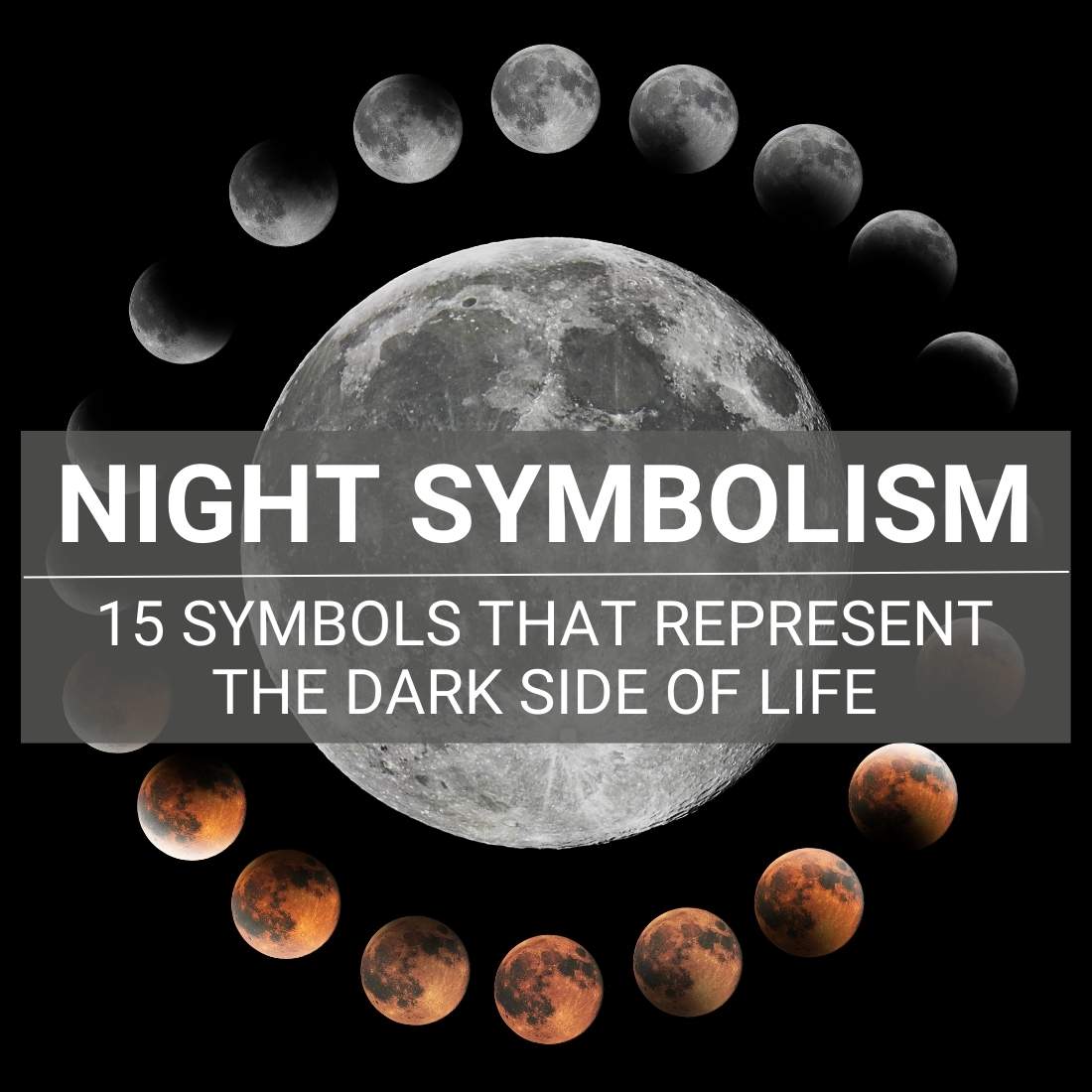
Night Symbolism: The Light That Darkness Brings
Whether it is for work or parenting obligations, many of us feel like we are living our best in the late hours of the night. Considered simply the absence of the sun’s light, various cultures have long perceived its darkness as a symbol of mystery and fear, as well as the feeling of deep sadness and the presence of evil.
From the occasional appearance of the owl to the formidable sound of a wolf’s howl, here are 15-night symbolisms that prove why many think it’s cool to be nocturnal.
“I have loved the stars too fondly to be fearful of the night.”
– Sarah Williams, Author

Night Symbolism in Literature
While daylight offers a long list of allure and charm, there is something about the night that entices people to see this period of darkness as more captivating and fun. Favored by some for its more chilly atmosphere and vibrant ambiance, here are a few literary symbolisms that make the night better than a day.
Intuition
Considered a quick response that seems to pop out instinctively, the uncertainty of the night inspires many of us to be more watchful and observant. By encouraging us to connect deeper with ourselves, our ability to listen to our intuition teaches us how to make decisions by simply tuning in to our soul’s deep wisdom.
Apart from inspiring us to be more mindful and self-aware, trusting your gut effortlessly promotes confidence and creative thinking.
Secrets
Recognized by some as the best way to protect their reputation and relationships, the darkness that envelopes us as nighttime arrives indicates our tendency to keep our ideas and true feelings hidden. Although the practice of concealing may run the risk of feeling isolated from others, it allows you to perform your tasks without inviting attention and helps gain your peer’s trust and confidence.
Known as one of the best ways to practice self-control, this night symbolism enables you to hold back and consider all the outcomes and possibilities before you act.
Blindness
While there may be a handful of countries where darkness blankets the land come dusk, it doesn’t come as a surprise why the night is sometimes used in literature to symbolize the state of being ignorant. Although it may lead others to believe that you are incompetent and unqualified, there is more to maintaining our childlike innocence than meets the eye.
Since we now live in a world where knowledge is just a click away, understanding that we have gaps in our proficiency and wisdom enables us to live at the moment and lead a life that’s pleasing to the Divine.
“Think in the morning. Act in the noon. Eat in the evening. Sleep in the night.”
– William Blake
Fear
Nothing triggers anxiety better than darkness and its ability to cloak and disguise. However, popular literature makes use of the night symbolism to teach us about the importance of staying alert to the dangers of life and ensuring that we are well-prepared to deal with them.
At night wild animals come out to hunt and ghost stories, as well as scary movies, are literary works that incite our hearts to race, this night symbolism enhances our coping skills, encourages us to overcome our worries, and helps develop our self-esteem.
Negativity
Naturally, at our most excellent during the day, it doesn’t come as a surprise why we withdraw back to our shelters at night. As darkness is best described for its ability to conceal things away from our site, the idea of nightfall in literature invokes negative feelings in humans.
Although almost everyone you know would tell you to stay positive, the symbolism for night teaches us to be more grateful for what we have, strengthens our ability to focus, and motivates us to avoid failure.
Death
While some see the night as a period of transition from a time of darkness to light, literary works tend to use the night to symbolize death or loss of life. However, seeing loss from a more positive perspective inspires us to view such a discouraging night symbolism to represent transition, renewal, and cleansing.
Although the dark of the night may be disheartening at first, thinking of it as merely a period of transition from one phase of life teaches us that death is contrastingly just the beginning.

Unconsciousness
We all know how important a good night’s sleep is because we enter into an unconscious state, which means that we lose consciousness and become unaware of our surroundings. When we wake up, we regain awareness and return to our conscious state.
Literary works make use of night symbolism when they want to illustrate that we can be unconscious of certain events and situations. For example, if someone has been drinking alcohol, he or she might fall asleep while driving without realizing it.
Nightmares
In literature, nightmares are often portrayed by depicting a character waking up screaming in the middle of the night. The reason behind this is that dreams are usually associated with the subconscious mind. Since the subconscious mind is not aware of the outside world, it becomes difficult for it to distinguish between reality and fantasy.
As such, nightmares are created when we experience something so terrifying that it causes us to wake up in a state of terror. Because of this, the night symbolism in literature serves as a reminder to us to remain vigilant against any potential danger.
Femininity
The feminine energy is known for being receptive, nurturing, and sensitive. It also represents the moon and the phases of the moon. In literature, these qualities are used to portray women who are kind, gentle, and loving.
Because of this, the night is symbolic of feminine energy and femininity. Although many people associate feminine energy with weakness, the night symbolism shows how it can be beneficial to us.
As the sun sets, so too does the masculine principle. At midnight, the feminine principle is at its peak. It also represents the height of unconscious powers over the conscious power of the world because it’s the hour when most people go to sleep and are dreaming.
It has symbolic significance in fairy tales such as “Cinderella” and in the horror genre, where vampires are released at night.
“I often think that the night is more alive and more richly colored than the day.”
– Vincent Van Gogh
Night Symbolism in the Bible
Much like sacrifice and forgiveness, night symbolism is widely acknowledged in the Bible. While it may easily be seen as an indication of an individual’s loss of faith, the darkness that comes with its arrival is often held to bring about unfavorable meanings. Nevertheless, the Bible shows that darkness does not always indicate loss or the presence of evil.
“You can rest without worry or fear – all night – because while you rest God is watching over you”
– Psalm 33:8
Renewal
Since darkness was effortlessly turned to light at the command of God, the Bible tells us that the night symbolizes how easily our sins are forgiven when we sincerely ask for pardon. From signifying the period of darkness as we live a life of transgression to the time of renewal and rebirth, this night symbolism in the Bible inspires us to go through our own stages of spiritual growth.
Harmony
While nothing beats living a life in constant peace and harmony, a period of darkness is still the best way to maintain the world’s spiritual balance. Although the existence of sin may put us in a bad light, the Bible’s promise of forgiveness and reconciliation makes the dark a bearable part of life.
“There was never a night or a problem that could defeat sunrise or hope.”
– Bernard Williams
Faithfulness
Since hardships can still occur even during the best of times, faith gives us the courage to believe that things will soon get better and turn out right. As numerous stories in the Bible show an array of characters going through periods of darkness in life, their strong belief in the Divine gave them the strength to overcome such difficulties and see things in a more positive light.
Direction
While the absence of light may make it more challenging to identify which path is best to take, the Bible teaches us that the night is always followed by a period of brightness. Through this, we are made more aware of God’s presence in our life. Not only does it help us in our own spiritual journey, but it also gives us the wisdom to acknowledge His gifts amid life’s many challenges.
Conclusion
From the evils that lurk in the dark to the disappearance of light at the end of one’s life, the night offers a handful of symbolic meanings that go beyond the mere absence of light. While tradition tells us that darkness stands for our fear of the unknown, our list of night symbolism clearly shows that there is more to learn about the lack of light from dusk ‘til dawn.
Frequently Asked Questions
What does night symbolize in literature?
Night in literature symbolizes intuition, secrets, blindness, fear, negativity, death, unconsciousness, and nightmares. It represents the subconscious mind, hidden truths, and transitions. Writers use night imagery to explore psychological states, spiritual journeys, and the unknown aspects of human experience.
How does night symbolism relate to intuition and inner wisdom?
Night encourages watchfulness and self-awareness, inspiring deeper connection with your inner self. The uncertainty of darkness prompts you to tune into your soul’s wisdom, promoting mindful decision-making. Trusting your gut during nighttime reflections builds confidence and enhances creative thinking.
What is the biblical meaning of night?
Biblically, night represents renewal, spiritual rebirth, and forgiveness of sins. It symbolizes harmony, faithfulness during hardships, and divine guidance. The Bible teaches that darkness is temporary—always followed by light—reflecting God’s presence and direction through life’s challenges.
Why is night associated with femininity and feminine energy?
Night symbolizes feminine energy through its receptive, nurturing, and sensitive qualities associated with the moon. At midnight, feminine principles peak, representing unconscious power over conscious awareness. This symbolism appears in fairy tales and mythology, contrasting with masculine daytime energy.
How does night symbolize fear and personal growth?
Night’s darkness triggers anxiety but teaches alertness to life’s dangers. Literature uses night symbolism to develop coping skills and self-esteem. Wild animals hunt at night, and scary stories enhance our ability to face worries, preparing us psychologically for real-world challenges and uncertainties.
What does darkness represent regarding secrets and self-control?
Night’s darkness symbolizes concealment and protection of inner thoughts and feelings. It enables you to work without drawing attention and helps gain others’ trust. This symbolism teaches self-restraint, allowing you to consider outcomes carefully before acting impulsively.
How is night connected to death and renewal in symbolism?
Night symbolizes death and loss but represents transition and rebirth. Rather than finality, darkness illustrates the cycle of renewal—from one life phase to another. This perspective teaches that death is merely a beginning, not an ending, promoting spiritual growth and acceptance.
What role do nightmares play in night symbolism?
Nightmares reflect the subconscious mind’s struggle distinguishing reality from fantasy during sleep. Literary works use nightmares to symbolize inner terror and hidden fears. This night symbolism reminds us to remain vigilant, process our anxieties, and address unresolved psychological conflicts.
How does night symbolize blindness and ignorance in literature?
Night represents the state of being ignorant or lacking awareness. However, maintaining childlike innocence and acknowledging knowledge gaps enables present-moment living aligned with spiritual growth. This symbolism teaches humility, acceptance of uncertainty, and continuous learning.
Why is night symbolism significant in both religious and secular contexts?
Night symbolism transcends cultures and beliefs, representing universal human experiences: fear, mystery, rest, and spiritual awakening. Whether in biblical narratives, literary works, or mythology, night explores the human psyche, moral struggles, and transformation—making it a powerful archetypal symbol for meaning-making.