In Han Chinese cosmology, the tortoise held up the world itself and never moved from that post. That one job tells you the animal was never just slow; it was the thing cultures trusted to hold steady when everything else shifted. Whether that steadiness means you should copy it, or whether it warns you about getting stuck, splits the old readings clean in two.
Key Takeaways
- The tortoise appears in Africa, East Asia, Southeast Asia, and the Western literary tradition as a perseverance symbol, independently, without shared origin.
- Its meaning ranges from virtuous steadiness (Aesopic fable) to cosmic endurance (Han Chinese Xuanwu) to morally ambiguous cunning (Igbo Mbe), not one unified positive symbol.
- GPS tracking of Galapagos tortoises published in Ecology and Evolution in 2024 found that some individuals complete over 140 migratory journeys, complicating the “naturally inactive” stereotype.
- The “slow and steady wins the race” reduction flattens a richer and sometimes contradictory symbolic record that scholars like Ben Edwin Perry (1952) and J. O. J. Nwachukwu-Agbada (1992) have documented in full.
- As a totem, the tortoise asks for sustained effort and protective patience, not speed, and each tradition grounds that ask in a different idea of what patience is for.
What Animal Symbolizes Perseverance Most Widely Across Cultures?
The tortoise. I’ve looked at this question from several angles over the years, and no other animal appears in as many separate traditions, on as many continents, doing symbolic work around sustained effort and endurance. The elephant comes close in some South Asian and West African contexts. The salmon matters in several Pacific Northwest traditions. But the tortoise keeps showing up, independently, in cultures that had no contact with each other.
Four traditions are worth going into in depth: the Aesopic fable tradition, where the tortoise wins a race through simple consistency; the Igbo oral tradition of southeastern Nigeria, where the tortoise, called Mbe, is a trickster whose persistence is not always admirable; Han Chinese cosmology, where the tortoise-serpent composite Xuanwu represents cosmic endurance and seasonal protection; and Balinese Hindu belief, where the great turtle Bedawang Nala supports the world itself.

These are not four versions of the same story. They are four different ideas about what it means to keep going. That gap between them is worth understanding before you decide which one to carry.
For a broader look at how animals carry symbolic meaning across traditions, see this overview of animal symbolism on this site.
What Do Behavioral Scientists Know About Tortoise Persistence That Supports Its Symbolism?
More than the “slow animal” reputation would suggest. Blake et al.’s 2024 study in Ecology and Evolution tracked 25 Galapagos tortoises on western Santa Cruz Island using GPS telemetry and recorded 140 migratory journeys. Those routes ran through difficult terrain, often squeezed into narrow corridors between blocks of invasive Cedrela odorata forest. The tortoises were not wandering. They were navigating.
The Galapagos Tortoise Movement Ecology Programme, run by the Charles Darwin Foundation and the Galapagos National Park Directorate since 2009, found something equally interesting: nearly all tracked female tortoises nested more than once per season, some completing four separate nesting journeys. Repeated effort to the same destination, season after season. The symbolic parallel to perseverance is not arbitrary here, it maps onto documented behavior.

Longevity adds another layer. The San Diego Zoo Wildlife Alliance records that some land tortoises live 150 years or more. A single tortoise can outlast several human generations. That lifespan is part of why so many cultures reached for this animal when they needed an image of endurance that transcended a single life.
What Does the Aesopic Fable Tradition Actually Say About the Tortoise as a Perseverance Symbol?
The race is not always to the swift. That is the actual moral of the story, as recorded in the Library of Congress version of The Tortoise and the Hare, and it is more careful than “slow and steady wins” suggests. The tortoise does not win because slowness is a virtue. It wins because the hare stopped. Consistency in the face of an opponent who underestimates you is the point, not pace itself.
Ben Edwin Perry’s Aesopica (1952), the major scholarly edition of the Aesopic corpus, numbers this tale 226. Perry’s work makes clear that the Aesopic tradition is a literary and moral-educational canon, not a record of Greek folk belief about actual tortoises. The fable was designed to teach children and citizens something about effort and hubris. Not to document how Greeks read the animal in the wild.

I read this as a useful distinction. The Aesopic tortoise is a literary character. The associations it built over two millennia of retelling, patience, consistency, humble confidence, are real and worth taking seriously. But they come from a story, not from a doctrine. That matters when you’re trying to understand what the symbolism actually rests on.
How Does Igbo Oral Literature Complicate the Idea That Tortoise Symbolism Always Means Virtuous Persistence?
Mbe, also called Mbekwu or Mbediogu, is the Igbo tortoise, and he is not Aesop’s tortoise. J. O. J. Nwachukwu-Agbada’s 1992 study of Igbo folktale performance identifies Mbe as a recurring animal protagonist whose stories cover intelligence, greed, deception, social consequence, and sometimes outright folly. His persistence is real. But it is not reliably virtuous.
In many Mbe stories, the tortoise’s stubbornness causes his own downfall. He schemes too far, holds on too long, refuses to adapt when adaptation would have saved him. Francoise Ugochukwu’s academic chapter “Les lecons de la tortue, d’Achebe a Adichie” (2013) traces the tortoise through Igbo oral tradition and into the written literature of Chinua Achebe and Chimamanda Ngozi Adichie, noting how the character’s moral ambiguity is part of his didactic function. He shows children what not to be as often as what to become.

So in Igbo tradition, the tortoise carries perseverance as a quality, but whether that quality is admirable depends entirely on what the tortoise is persisting toward. That is a more honest account of perseverance than most symbolism writing offers. Worth sitting with, I think.
What Does Han Chinese Cosmology Reveal About the Tortoise as a Symbol of Endurance?
Xuanwu (玄武), the Dark Warrior, is a composite figure: a tortoise entwined with a serpent, one of the Four Symbols of Han Chinese cosmology corresponding to the cardinal directions. Xuanwu governs the north and winter. It is not a character-trait symbol. It is a cosmic guardian representing seasonal stability, protective endurance, and the capacity to outlast the cold.
The Huainanzi, compiled during the Western Han period and translated into English by John S. Major, Sarah A. Queen, Andrew Seth Meyer, and Harold D. Roth in their 2010 Columbia University Press edition, is one of the key early textual sources for understanding Han cosmological thought. The Huainanzi positions the Four Symbols within a comprehensive theory of natural order, governance, and time, not as individual animal spirit guides, but as structural forces in the cosmos.

What this means for perseverance symbolism is a shift in scale. The Aesopic tortoise persists to win a race. Xuanwu persists across seasons. The kind of endurance encoded in this figure is not personal patience; it is the capacity of winter itself to hold, and of the world to turn through it and come out the other side. That is a different kind of staying power.
What Role Does the Tortoise Play in Balinese Hindu Cosmology as a Symbol of Sustained Strength?
Bedawang Nala is the great world-turtle of Balinese Hindu cosmology, the creature on whose back the world rests. The image draws from the Hindu concept of the cosmic tortoise supporting Mount Mandara during the churning of the ocean of milk, but in Balinese tradition it takes on particular weight, becoming a foundational figure in the layered cosmological structure that includes the earth, the mountain, and the gods above.
The perseverance encoded in Bedawang Nala is not effort. It is load-bearing. The tortoise does not struggle toward a goal; it holds. Strength in this tradition means the capacity to carry an enormous weight across an enormous span of time without putting it down. That reframing of perseverance, from active striving to foundational steadiness, is worth noting if you’re deciding how to work with this symbolism personally.

Research published by Universitas Gadjah Mada’s digital press on Nusantara cosmological traditions situates Bedawang Nala within Balinese beliefs linking turtle imagery with balance, longevity, and cosmic resilience. This is not a folk metaphor. It is a cosmological structure.
What Do the Etymology and Names of the Tortoise Reveal About How Cultures Have Understood It?
My grandmother Theresa’s leather notebook, German cursive, 1920s, falling apart at the spine, doesn’t use a word for tortoise that I can make out clearly on the pages that have survived. But the etymology trail from other languages tells its own story, and it’s a strange one. According to the Online Etymology Dictionary, the English word entered Middle English through Old French tortue and Medieval Latin tortuca, with deeper origins disputed. One proposed route connects it to Tartarus, the underworld, suggesting early Christian or late-antique writers associated the animal with the depths, with what persists below. Another connects it to Latin tortus, meaning “twisted” or “crooked,” referring to the animal’s feet.
Classical Latin used testudo, from testa, “shell.” The Romans also called a military formation of overlapping shields a testudo, soldiers moving forward in a locked unit, protected on all sides. Persistence under siege. The word carried both the animal and the tactic.

In Mandarin, gui (龜/龟) encodes longevity and divination, tortoise shells were used in early Chinese pyromantic practice, the shell read for cracks that revealed the future. The animal’s durability made it a window into time. In Japanese, kame (亀) pairs with tsuru (crane) in the phrase tsuru-kame, a paired symbol of long life that appears in wedding and celebratory art. Igbo Mbe carries no such auspicious weight. The name identifies a trickster, not a guardian.
What strikes me about this linguistic trail is how consistently the tortoise gets associated with what endures across time, through the underworld, the shell, the divination surface, the soldier’s locked shield. The word remembers what the animal meant before anyone wrote it down formally.
What Are the Most Common Misconceptions About Tortoise Perseverance Symbolism?
Three misconceptions show up repeatedly.
First: every tortoise tradition means patience, wisdom, and positive perseverance. It does not. Igbo Mbe is a trickster whose persistence can express greed, moral failure, and self-defeating stubbornness as readily as admirable determination. Nwachukwu-Agbada’s 1992 study documents this clearly. Presenting the tortoise as a universal positive symbol flattens the actual record.

Second: the Aesopic race proves that all historical cultures saw tortoises as perseverance spirits. Perry’s scholarship shows the race is one tale in a literary fable tradition, designed to teach a specific moral in a specific cultural context. It is not evidence that Greek farmers revered the tortoise as a living symbol of endurance.
Third: tortoises are naturally inactive, and the symbolism is ironic. The Blake et al. 2024 GPS data documents 140 migratory journeys by 25 Galapagos tortoises moving through difficult terrain in purposeful, repeated patterns. “Slow” does not mean “stationary.” The more accurate parallel is sustained forward movement at a pace the animal can maintain indefinitely, which is exactly what perseverance means in its most useful form.
What Is the Tortoise as a Spirit or Totem Animal, and What Does It Ask of You?
Spirit animal and totem frameworks vary widely by tradition, and I am not in a position to speak for indigenous traditions I don’t belong to. But looking across the cross-cultural material covered here, there is a coherent picture of what the tortoise asks of someone who works with it as a personal symbol.
From the Aesopic frame: show up consistently when faster, louder competitors have stopped paying attention. The tortoise totem is not about being the most impressive in the room. It is about still being at the table when the impressive ones have left.
From the Han Chinese frame via the Huainanzi: endurance that serves others, not just the self. Xuanwu protects the north through winter. In this reading, the tortoise asks you to be a stable force for people around you, not only to survive your own difficulties.

From the Balinese frame: carry the weight without complaining. Bedawang Nala does not strive. It holds. For people who identify with the tortoise as a totem, this can mean accepting load-bearing roles, caretaker, long-term planner, the person who keeps showing up, and finding dignity in that rather than chafing against it.
And from the Igbo frame: a corrective. The tortoise totem also asks you to check whether your persistence is in service of something worth serving. Mbe persists toward goals that sometimes destroy him. The trickster is a mirror as much as a model.
What Does the Tortoise Mean in Dreams, and How Does That Relate to Perseverance?
Dream interpretation sits in territory where I want to be honest about the limits of what I know. The folk record on tortoise dreams is thin, and I don’t trust most of what I’ve read on the subject enough to present it as tradition. What I can offer is a framework based on the symbolism established here.
A tortoise moving steadily in a dream tends to read, across most frameworks, as a signal about long effort paying off, a Jungian reading would likely connect it with the self’s capacity for sustained development over time, not rapid change. A tortoise retreating into its shell points toward protection, withdrawal, the need for a boundary. A nesting or migrating tortoise, given what the Movement Ecology Programme has documented about repeated purposeful journeys, might map onto a situation requiring the same return, again and again, to something important.

What the traditions agree on: the tortoise in a dream is almost never urgent. It does not appear as a warning. It appears as a reminder that some things take the time they take, and that the right response is not to panic but to keep moving.
How Does the Tortoise Compare to Other Animals That Symbolize Perseverance?
The elephant is the closest rival, documented as a symbol of patience, memory, and sustained effort in South Asian Buddhist traditions and in several West African contexts. But elephant symbolism spreads across strength, wisdom, grief, and community, it is not specifically organized around perseverance the way tortoise symbolism is.
The salmon matters in Pacific Northwest traditions, particularly as a symbol of return and persistence against current. That symbolism is specific and powerful, but it is geographically narrow compared to the tortoise’s global footprint.
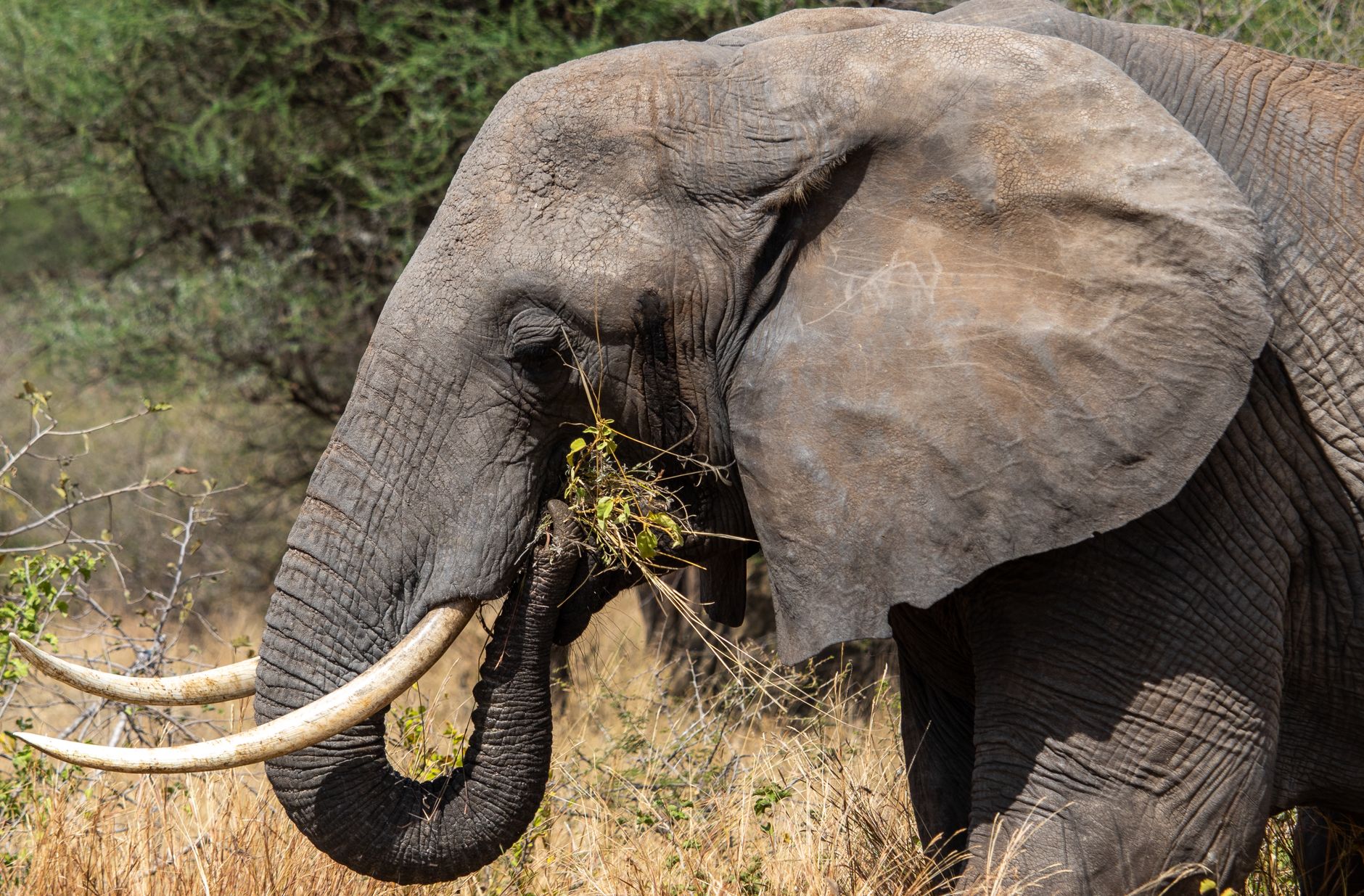
The hummingbird, which some frameworks list as a perseverance symbol, strikes me as a different category entirely. The hummingbird is about intensity and speed, not sustained long-term effort. The associations are real but they describe endurance in a different register, sprint, not marathon.
What makes tortoise symbolism distinct is its cosmological scope. The elephant and salmon are powerful cultural symbols. The tortoise carries the world. That difference in scale, from the personal to the structural, is what gives the tortoise its particular weight across traditions that never shared notes with each other.
How Can You Work With Tortoise Symbolism to Build Perseverance in Daily Life?
The traditions covered here each suggest a different practice, and I think it matters to keep them separate rather than blend them into something generic.
From the Aesopic tradition: pick one long-term project you have been avoiding because it seems too slow or too unglamorous, and work on it for twenty minutes every day without measuring your progress against anyone else’s pace. The fable’s moral is about consistency in the absence of external validation. The hare was watching. The tortoise was not.
From the Han Chinese tradition of Xuanwu as seasonal guardian: consider what you are protecting for others through a long, cold stretch. Naming that explicitly, writing it down, telling someone, connects the effort to its purpose. Xuanwu endures through winter not for its own sake but because spring requires it.
From the Igbo tradition: use Mbe as a check rather than a model. When you find yourself persisting in something, ask if that persistence is in service of a goal worth reaching, or if you’re holding on out of stubbornness, pride, or habit. Mbe’s stories often end badly because he cannot answer that question honestly.
And from the Balinese frame: practice load-bearing without complaint. Find one place in your life where you carry weight for other people, name it privately as an act of sustained strength rather than obligation, and see if that reframing changes how the effort feels.
None of these are magic. They are applications of a symbolic tradition to a real problem. That, I think, is what symbolism is for.
Frequently Asked Questions
What insect or bird also symbolizes perseverance alongside the tortoise?
The salmon is the strongest bird-or-animal parallel, documented in several Pacific Northwest traditions as a symbol of return and persistence against current. Among insects, the ant carries strong perseverance associations in Aesopic tradition, specifically in “The Ant and the Grasshopper” (Perry index tale 373), which makes the same moral argument as the tortoise and hare: consistent effort outlasts sporadic brilliance. Neither rivals the tortoise’s cross-cultural breadth, but both appear in serious folk and literary records.
Is the tortoise a symbol of perseverance in Haudenosaunee tradition?
Turtle symbolism appears in several Indigenous traditions of North America, most notably in Haudenosaunee (Iroquois) and Anishinaabe cosmologies, whereTurtle Island is the name forthe continent itself, resting on the back of a great turtle. That is a cosmological symbol of foundational strength, close to Bedawang Nala in structure. I want to be careful here: I am not Haudenosaunee or Anishinaabe, and attributing a single “perseverance meaning” to diverse Indigenous traditions would be an oversimplification. Specific symbolic meanings vary significantly by nation and by story.
What is the difference between tortoise and turtle symbolism?
The distinction matters more in English than in most other languages. In Mandarin, gui covers both. In Igbo, Mbe refers to what English speakers would call a tortoise (land-dwelling). In practice, most cross-cultural symbolism writing uses “turtle” and “tortoise” interchangeably, and the folk traditions being described do not always draw the ecological line. Land tortoises tend to carry stronger associations with longevity and steadiness; sea turtles carry navigation and return. But the overlap is large.
What does a tortoise tattoo mean in the context of perseverance?
In contemporary tattoo culture, the tortoise most often signals long-term commitment to a goal, patience under pressure, or a personal history of surviving something that took a long time. Some people pair it with the Aesopic hare to make the reference explicit. Others use Xuanwu, the tortoise-serpent composite, for a design that carries both protective and endurance associations. The meaning is personal, but it draws on a real symbolic tradition. The tortoise is one of the more honest tattoo choices in this category, the symbolism is earned, not borrowed.
What does it mean if a tortoise crosses your path?
Folk interpretations vary. In several West African traditions, encountering a tortoise unexpectedly is read as a prompt to slow down and think before acting, a warning against the kind of overconfidence that Mbe stories often punish. In some East Asian folk beliefs, a tortoise crossing your path signals good fortune connected to longevity and steady progress. I don’t have a confident answer about which of these (if any) is older or more widespread, the folk record on spontaneous tortoise encounters is thinner than the literary and cosmological record. What most traditions seem to agree on: it is not a bad sign.
Is the tortoise a symbol of perseverance in Buddhism?
Yes, though the emphasis in Buddhist contexts tends to fall on longevity, mindfulness, and the slow accumulation of merit rather than on competitive perseverance specifically. The turtle appears in Pali Buddhist texts as one of the forms the Buddha took in Jataka tales. In East Asian Buddhism, the turtle carries Xuanwu associations from Han cosmology alongside Buddhist ideas about patience and the long path to awakening. The two traditions reinforce each other in Chinese and Japanese Buddhist art, where turtle imagery often appears in temple garden design.
What flower or plant is paired with the tortoise as a perseverance symbol?
In Japanese tradition, the tortoise pairs most naturally with the pine tree, both are emblems of longevity and steady endurance, and both appear together in formal garden design and in celebratory art. The tsuru-kame (crane-tortoise) pairing is better known, but pine-tortoise combinations appear in lacquerwork and textile design. In Chinese decorative tradition, the tortoise sometimes pairs with bamboo, associated with flexibility and survival under pressure. I am not aware of a specific flower with established cross-cultural pairing to the tortoise as a perseverance symbol, though the lotus appears alongside turtle imagery in some Buddhist contexts.
Does the color of a tortoise change its symbolic meaning?
In most traditions I have looked at, color is not the primary variable for tortoise symbolism the way it is for birds. Shell pattern occasionally matters in folk divination contexts, particularly in early Chinese pyromantic practice, where the cracks in heated shells were read rather than the shell’s color. In contemporary spiritual writing, golden or yellow tortoises sometimes get attributed with wealth symbolism, drawing loosely from Chinese folk belief about gold as an auspicious color. I would treat that attribution with some skepticism. The older traditions are more interested in what the tortoise does and how long it lives than in what it looks like.
What is the difference between perseverance symbolism and endurance symbolism in animal lore?
Perseverance tends to imply active, goal-directed effort sustained over time, you are going somewhere and you keep going. Endurance tends to imply surviving a condition rather than moving through it, you hold on under pressure. The tortoise, interestingly, appears in both registers. The Aesopic tortoise is perseverance: it is moving toward a finish line. Xuanwu and Bedawang Nala are endurance: they hold, they sustain, they bear weight. That is part of why the tortoise works as a symbol across so many cultures, it covers both ideas with the same animal.
Are there any negative associations with the tortoise as a symbol?
Yes. In Igbo Mbe stories, the tortoise’s persistence can represent greed, selfishness, and the failure to know when to stop, Mbe often engineers his own punishment by pushing one scheme too far. In some medieval European contexts, the tortoise’s slowness was read as sluggishness or cowardice rather than patience. And in Chinese folk tradition, there are some contexts where turtle imagery acquired negative connotations in later dynasties, particularly in slang expressions I won’t detail here. The tortoise is not a universally positive symbol. Its meaning depends on what the tortoise is persisting toward, and whether the tradition telling the story approves of that goal.
Sources
- S. Blake et al., “Invasion by Cedrela odorata Threatens Long Distance Migration of Galapagos Tortoises,” Ecology and Evolution, 2024
- San Diego Zoo Wildlife Alliance, “Turtle and Tortoise,” updated 2026
- Library of Congress, “The Tortoise and the Hare” (Aesop’s Fables)
- Francoise Ugochukwu, “Tortoise Tales and the West African Ethos,” The Manitoban, 2023 (referencing Ugochukwu’s academic chapter on tortoise figures in Achebe and Adichie)
- Online Etymology Dictionary, “Tortoise”
- Universitas Gadjah Mada Digital Press, research on Nusantara cosmological traditions including Bedawang Nala
- Charles Darwin Foundation, Galapagos Tortoise Movement Ecology Programme Impact Report, 2024
- Wikipedia, “The Tortoise and the Hare” (with reference to Perry index tale 226)
- thecanadianencyclopedia.ca