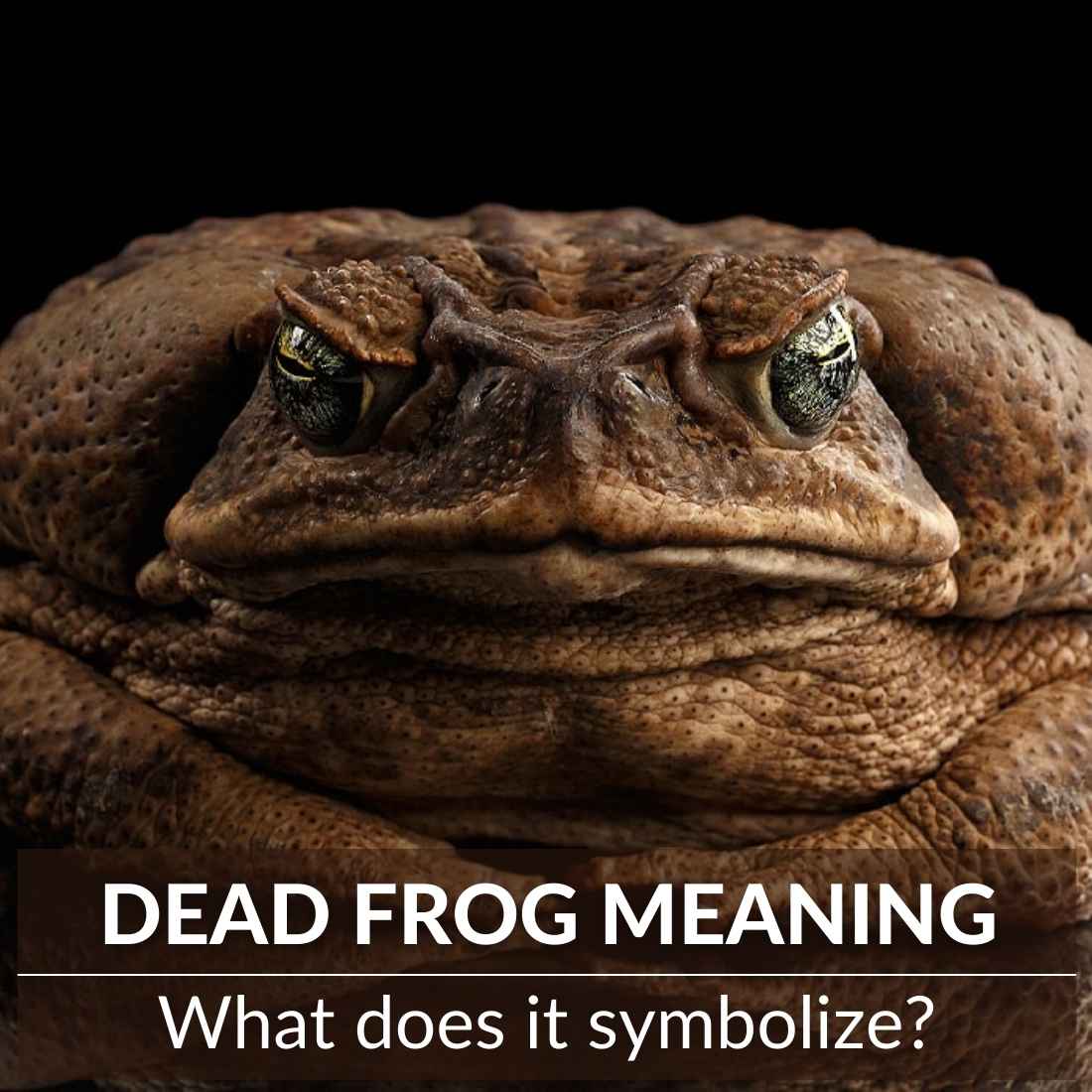
The oldest traditions I find credible don’t read a dead frog as a curse. They read it as a notice, probably overdue, that something in your life has been sitting still too long. That’s a different thing entirely, and it’s worth understanding the difference before you decide how to feel about what you found.
Key Takeaways
- A dead frog is not a simple bad-luck sign. In Egyptian, Mesoamerican, and Greek traditions, frog death sits at the low point of a renewal cycle, not outside it.
- Location changes the reading. A dead frog at your front door carries different weight than one in your garden or inside your home.
- The Egyptian frog goddess Heqet presided over birth and rebirth. A dead frog in that tradition is still inside that cycle, just at a different point in it.
- The boiling-frog story is wrong as biology. Real frogs jump out. But as a moral fable about the cost of ignoring slow change, it has lodged itself into how we read dead frogs today.
- Across the traditions I trust most, the reading is this: something is ending. The question the encounter puts to you is whether you were paying attention before it did.
What Does a Dead Frog Mean?
The frog’s whole symbolic identity is built around water, change, and the kind of fertility that requires something to die back first. Understanding the frog in house meaning reveals how finding one dead doesn’t cancel that identity. It presses on one part of it.
I want to be upfront: the folk record on dead frogs specifically is thinner than for dead birds or dead crows. Most of what we have is built backward from frog symbolism in general, and I’ll tell you where I think that inference holds and where it gets shaky. But the core reading, that a dead frog points toward stagnation, a blocked transition, a warning that change is overdue, is consistent enough across multiple traditions that I trust it as a starting point.

You are not making this up.
The instinct to ask what this means connects you to a longer tradition than most people realize. It deserves a real answer, not a paragraph of vague reassurance followed by a list of crystals.
Is a Dead Frog a Bad Omen or a Sign of Change?
Not exactly either. The frog is an animal whose symbolic life is built around transformation: tadpole to frog, water to land, wet season to dry. The Jewish Climate Futures organization’s overview of frog mythology frames this plainly: frogs carry teachings about resurrection and renewal across multiple religious traditions. When you find one dead, you’re at the shadow half of that same cycle.
An animal that symbolizes change doesn’t become a death omen when it dies. It becomes evidence the cycle is turning. The question is which part of the cycle applies to your situation right now. If you’ve been holding something static that needed to shift months ago, a dead frog in your path is the tradition’s blunt way of naming that.
You don’t have to decide whether you believe in signs to pay attention to this one. That’s the posture I’d ask for. Skeptical, but not dismissive.
What Does It Mean When You Find a Dead Frog at Your Front Door?
The threshold reading is the most specific, and the traditions are reasonably consistent here. The doorstep is a boundary between inside and outside, between your private world and everything beyond it. A dead frog there points toward a blocked crossing of some kind.
In Japanese folk belief, the frog (kaeru) is a safe-return symbol. Small frog amulets are sold at Shinto shrines for travelers and for the “return” of luck or money, because the word sounds like the verb “to return.” A dead frog at the door, in that frame, signals that a return of some kind, a plan, a relationship, a phase of life, may not arrive the way you expected. The path forward needs reconsidering.
The Greek tradition in Aristophanes’ The Frogs (405 BCE) places frogs at thresholds between worlds. The frog chorus accompanies Dionysus literally into Hades. A dead frog at your entrance maps onto that liminal logic: a threshold has become blocked or heavy. In practical terms, most traditions read this as a prompt to examine what you’re letting into your life, what habits or decisions you’ve been waving through without looking carefully.
If you want to read further about what finding a live frog inside the home means in a broader context, I’ve written more on that in my article on frog in house meaning.
What Does a Dead Frog in the House Mean?
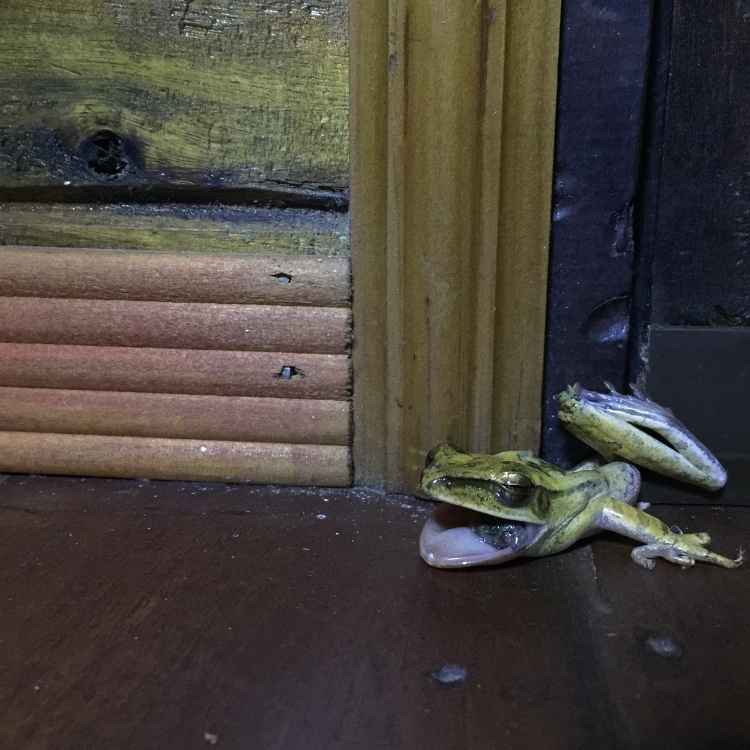
Inside the home, the reading turns inward. A dead frog found in your kitchen, hallway, or living room is read in most European folk traditions as a signal about the household’s emotional weather. Something in the domestic environment has gone stagnant.
And here is where the modern boiling-frog story becomes genuinely useful, even though it’s factually wrong. The story, a frog placed in water that heats so slowly it doesn’t notice until too late, is biologically false. Real frogs jump out; herpetologists have been saying so for decades. But as a moral fable about the cost of not noticing gradual change, it has embedded itself into Western culture deeply enough to function as shared shorthand. A dead frog inside your home asks you, in exactly those terms: what have you been sitting in while the temperature crept up?
The practical reading and the symbolic one aren’t far apart here. Frogs inside homes often signal moisture: a leaking pipe, a damp basement. Worth checking both the literal and the figurative, in that order.
What Did Ancient Cultures Believe About Dead Frogs?
My grandmother Theresa’s leather notebook, which is sitting on my desk right now in the shape it was in when she died in 2004, doesn’t mention frogs. Ravens, yes. The owl before a death, yes. But the frog traditions I know best come from further south and east, and they’re worth understanding on their own terms.
Heqet was depicted as a frog or a frog-headed woman, and she presided over birth and the first moment of new life in ancient Egypt. Her association with the Nile flood was direct: frogs appeared in enormous numbers after the annual inundation, and the connection between frog abundance and agricultural fertility wasn’t metaphorical. It was observed. Save The Frogs documents that the frog hieroglyph came to represent the number 100,000 in Egyptian notation, a symbol of abundance so large it nearly defied counting. In that system, frog death as the flood receded wasn’t catastrophe. It was a phase. The waters fall, the bodies are left, and the fields that remain are fertile because of what just happened.

In Mexica rain-cult religion, frogs and toads were attendants of Tlaloc, the storm deity. Ethnohistorical sources on Mesoamerican religion describe frog croaking as a herald of rains and agricultural fortune. When frogs died off, or when rains failed, this was a withdrawal of Tlaloc’s favor: something in the ritual or ecological balance had broken. The reading was not “you are cursed.” It was “something is wrong that can be addressed.”
What Does the “Boiling Frog” Story Reveal About Dead Frog Symbolism?
I find this genuinely interesting, not as a spiritual claim but as a cultural one. A folk tradition of dead frog as warning and a modern fable of dead frog as the cost of inattention converged on the same reading without ever meeting. According to the overview at Symbolostic, the dead frog’s meaning has shifted in Western contexts from cyclical renewal toward this more urgent wake-up reading. I think that shift tracks the boiling-frog story’s spread. The two ideas reinforced each other without anyone arranging it.
What Should You Do After Finding a Dead Frog?
- Dispose of the frog with basic respect. Bury it if you can, away from foot traffic. Most traditions suggest a simple acknowledgment. You can say something or say nothing.
- Ask what has been stagnant. The consistent reading across traditions is that a dead frog points toward something that has stopped moving: a relationship, a decision you’ve been avoiding, a habit that stopped serving you. Sit with that question for a few days before dismissing it.
- Check the literal environment. Frogs need moisture. If one died inside your home or near a drain, look at whether there’s a water issue. The practical and the symbolic are not always separate questions, and the practical one is easier to act on.
- Don’t catastrophize the timing. If the frog appeared on a hard day, take that seriously as a signal, not as a cause. The tradition’s logic is that you’re being asked to pay attention, not punished.
Frequently Asked Questions
What does it mean to find a dead frog in your yard or garden?
A dead frog in the garden is generally a natural-threshold signal rather than a personal warning. Gardens are outdoor spaces where frogs live and die regularly. Save The Frogs estimates that global frog populations have declined by roughly a third since 1980, so finding dead frogs outdoors is increasingly common and often reflects habitat stress rather than anything aimed at you. The symbolic reading, where it applies, is about the health of what you’re growing, literally or otherwise. Something may need more attention before it fails entirely.
Is a dead frog a sign of death in the family?
I haven’t found a named tradition that specifically links dead frogs to family death the way some traditions link dead owls or certain bird calls to mortality. The Egyptian, Mesoamerican, and Greek frameworks I trust most don’t make that connection. The “bad omen” reading that circulates online tends to be generic, applied to any dead animal without a named cultural source. I wouldn’t take a dead frog as that kind of warning, and I’d be skeptical of any site that confidently tells you otherwise.
What does a dead frog mean in a dream?
Dream readings are harder to source reliably, and I’ll be honest that the folk record here is thin. In Jungian terms, a frog in dreams is a symbol of the unconscious, of something waiting to emerge from a less-formed state. A dead frog may signal that a phase of inner development has completed, or that a potential you were aware of has been allowed to lapse. Whether that reading lands for you depends on what else was happening in the dream and what you’re working through. I can’t tell you from a paragraph description, and I won’t pretend otherwise.
Does the color of the frog change the meaning?
I’ve read several frameworks on this and don’t trust any of them enough to repeat with confidence. The color readings in circulation, green for abundance, brown for groundedness, and so on, feel loosely constructed. I’d pay more attention to the species and location than the color. A brightly colored dead frog found outdoors may be a poison dart frog or a warning-colored tree frog, and that practical information is worth noting before the symbolic. The color of a dead animal is often just what it looked like.
What does it mean if a frog dies in my pond?
In the traditions that link frogs to water health, Egyptian and Mesoamerican both, a frog dying in a body of water you tend is a direct signal about that water’s condition. Frogs are extraordinarily sensitive to water quality; their permeable skin absorbs whatever is in the water around them. Before any symbolic reading, check the pond’s pH, oxygen levels, and whether any chemicals have run off nearby. The practical answer and the symbolic one converge here: something in the environment needs addressing.
Is finding a dead frog good luck or bad luck?
The good-or-bad framing doesn’t fit the older traditions well. Egyptian and Mexica readings treat frog death as cyclical information, not a verdict. The Japanese tradition would lean toward caution about a planned return or path. The modern boiling-frog frame is a wake-up call, not a curse. None of these are “bad luck” in the passive sense. They all assume you can do something with what you’re being shown. I’d resist the binary and ask instead: what is this pointing at?
What does a dead frog mean spiritually in Christianity?
Frogs appear in the Hebrew Bible primarily in the plague of Exodus 8, which puts them in the context of disruption of natural order and divine judgment. Dead frogs aren’t specifically addressed in Christian scripture or major theological writing that I’ve found. Some Christian folk practice treats any dead animal near the home as a prompt to pray for protection or examine the household, but that’s folk practice, not doctrine. If that tradition is yours, it’s worth consulting someone in your own faith community rather than a symbolism site. That’s an honest answer.
How is a dead frog different symbolically from a live one?
A live frog signals active change, fertility, and transition in motion. According to the renewal frameworks documented by the Jewish Climate Futures organization’s analysis of frog mythology, the frog’s movement between water and land makes it a symbol of passage, of life in the act of becoming something else. A dead frog sits at the edge of that same cycle; the passage has stopped, at least for now. The live frog asks: are you moving? The dead one asks: why have you stopped?