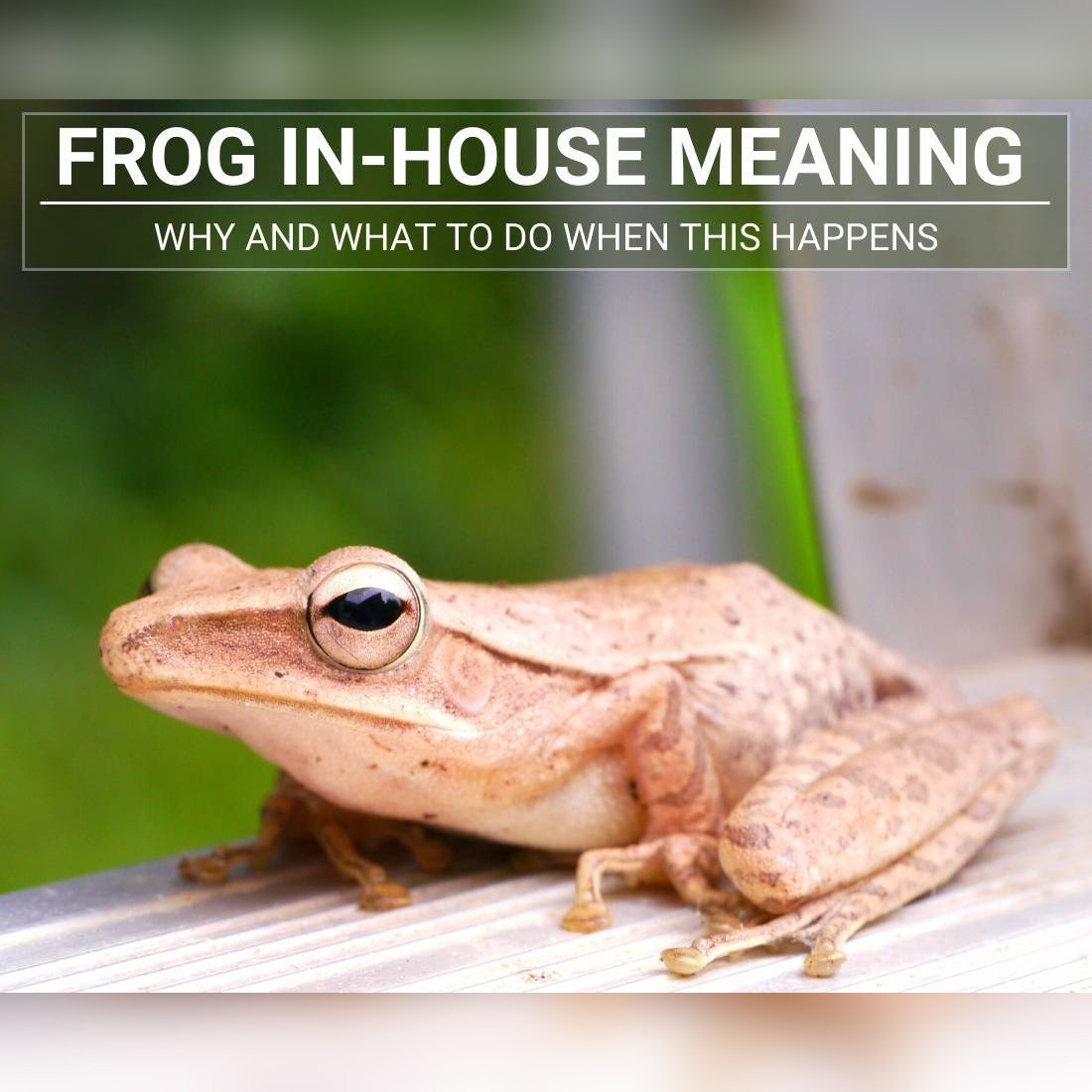
Most folk traditions read a frog in the house as good news. The longer answer depends on which tradition you’re in and where the frog appeared, a frog at your front door and one in your bedroom aren’t quite the same thing, and old records treat them differently.
Key Takeaways
- Most documented traditions read a frog in the house as a sign of good fortune, fertility, or coming change, not a warning.
- The primary exception in the ethnographic record is Xhosa belief in South Africa, where a frog inside the home can signal spiritual contamination requiring ritual response.
- Han Chinese folk belief and Japanese Shinto practice both treat house frogs as auspicious, specifically tied to prosperity and safe return.
- A baby frog carries extra weight: it has just completed one of the stranger transformations in the animal world, and that maps onto new beginnings in almost every tradition that uses frog imagery.
- Where in your house matters. Front door reads differently than bedroom or kitchen.
What Does It Mean When a Frog Enters Your House?
A frog crossing the threshold between outside and inside is what folklorists call a threshold omen. That boundary, wild to domestic, exterior to interior, is what makes it feel like something. You are not making this up. The instinct to ask what it means connects you to the same question people have been asking for a long time, longer than any of the specific answers we have.
I want to be clear about what I can actually give you here. There is no single unified rule that says “frog in the house means X” across all traditions, because no such rule exists. What I can give you is what specific named traditions actually record. I find that more useful than a vague assurance that the universe is sending you a message, and I think you probably do too, or you wouldn’t still be reading.
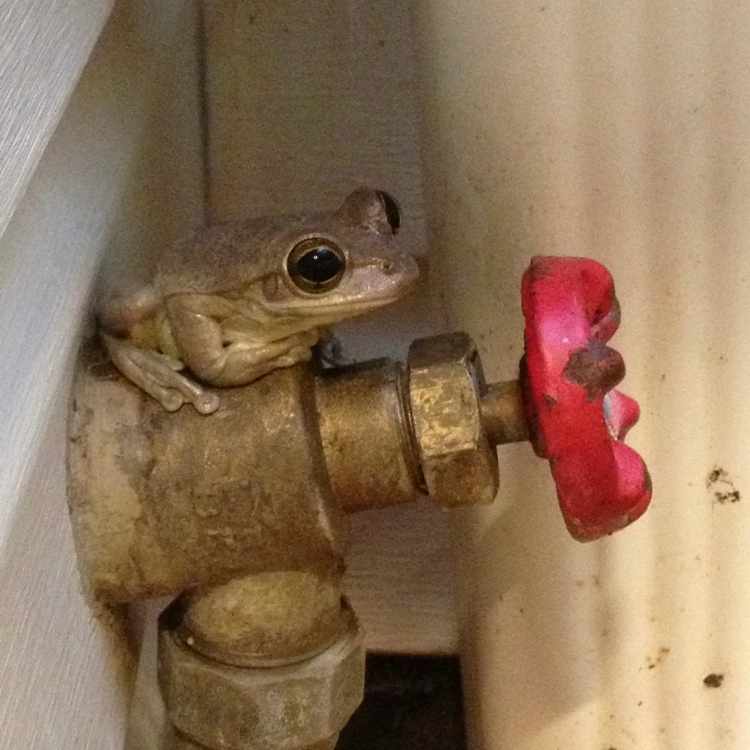
There’s also a practical fact worth holding: frogs enter homes for concrete reasons. The American bullfrog (Lithobates catesbeianus), according to the IUCN Red List assessment, is well-adapted to urban water features, garden ponds, and drainage systems. Frogs in suburban homes are genuinely common, especially in spring and after rain. A frog under your kitchen door is not necessarily a cosmic event. And yet the question of meaning doesn’t dissolve because there’s a mundane explanation. Both things can be true at once.
Is a Frog in the House Good Luck or Bad Luck?
Mostly good, if you’re weighing the documented record. But “mostly” is doing real work in that sentence, and the exceptions matter.
The Ancient Origins survey of frog symbolism across world mythology finds frogs appearing as signs of fertility, abundance, and good fortune in Egyptian, Chinese, and Japanese traditions going back thousands of years. A frog crossing your threshold, especially one that came in on its own rather than being carried, fits a pattern that might be described as “life arriving unbidden,” which is how abundance tends to work.
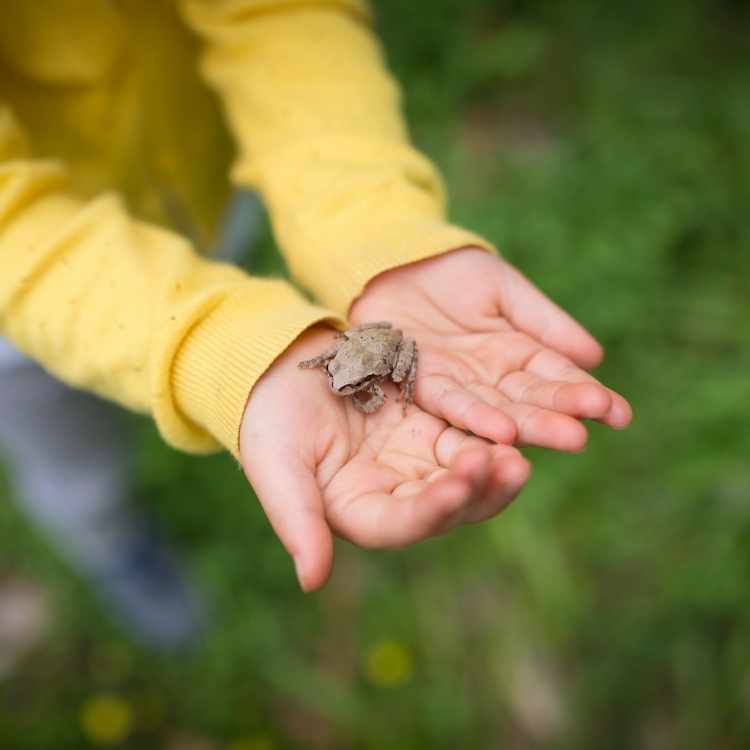
The documented negative reading comes primarily from Xhosa belief in South Africa, where a frog found inside the house can signal witchcraft-related spiritual contamination. This is a specific, named tradition with specific ritual responses, not fringe material. But it is not the default reading in most of the world’s folk record.
So: good fortune in most documented traditions. Something to take seriously and respond to in others. The answer depends on your own tradition, your own gut, and where the frog appeared.
What Do Different Cultures Say About a Frog Inside the Home?
Four traditions with named sources are worth knowing, because they’re specific enough to be useful.
Ancient Egyptian religion. The goddess Heqet (also spelled Heket) appeared as a woman with a frog’s head, associated specifically with childbirth and midwifery. Frog amulets were placed in the hands of women in labor. Gray’s survey of amphibian symbolism in world religion notes that the Egyptian hieroglyph for “frog” also stood for the number 100,000, the word hufnu, making the frog an emblem of multiplication and surplus, of birth and regeneration. The Nile flooded every year and left small frogs everywhere; the Egyptians read that as the world replenishing itself. A frog in your home fits that frame: life overflowing the threshold, abundance arriving unsolicited.
Han Chinese folk religion. The figure of the jin chan, the three-legged money frog, usually depicted sitting on coins, goes near the front entrance of homes and businesses to draw wealth. This is modern feng shui practice, but it builds on older associations between frogs, the moon, and the spirit Ch’ing-Wa Sheng, documented in Han Chinese folk belief as connected to healing and business fortune. A living frog that finds its own way into your home is often read through this same lens: a spontaneous version of the good-luck figure you’d otherwise buy at a shop. I find that detail worth sitting with.
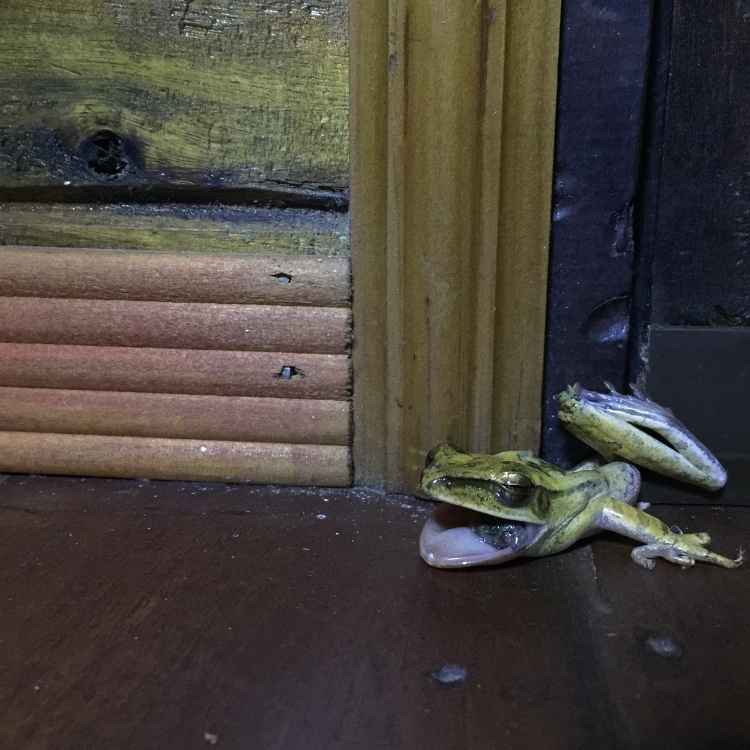
Xhosa tradition, South Africa. This is the tradition that complicates the optimistic picture. In Xhosa belief, frogs found inside the house without obvious explanation can be read as carriers of harmful magic. The Endangered Wildlife Trust’s documentation of frogs in South African cultural belief notes that in some communities, an unexplained frog indoors raises the question of whether it was placed there intentionally as part of a curse. The ritual response typically involves removing the frog and cleansing the space. I don’t have enough direct ethnographic depth to say how widely this belief varies within Xhosa communities, and I want to be honest about that limit.
Japanese folk belief. In Japanese, the word for frog, kaeru, is a homophone of the verb meaning “to return.” Frog charms go in wallets and near doorways so that money and good things “return” home. A frog that has entered your house on its own is sometimes read as the living version of that charm: something coming back to you that had been gone. Or rather, someone coming back. The ambiguity is part of it.
What Does the Location Inside Your Home Tell You?
This is the question most sites skip, and it changes the reading more than anything else.
Front door or entryway. This is the clearest threshold position. In virtually every tradition that treats threshold crossings as significant, an animal at the front entrance is a messenger. In Han Chinese practice, the front door is precisely where the money-frog figure belongs. A frog at your front door is about as on-the-nose as these things get.
Kitchen. The kitchen is the center of household abundance: food, warmth, daily provision. A frog in the kitchen maps naturally onto the fertility and abundance frame. Some Appalachian folk-magic traditions (which I know from living in Black Mountain, though I don’t claim them as my own) treat unexpected animals in the kitchen as signs about the household’s provision and health. I’ve heard this from neighbors, not from books.
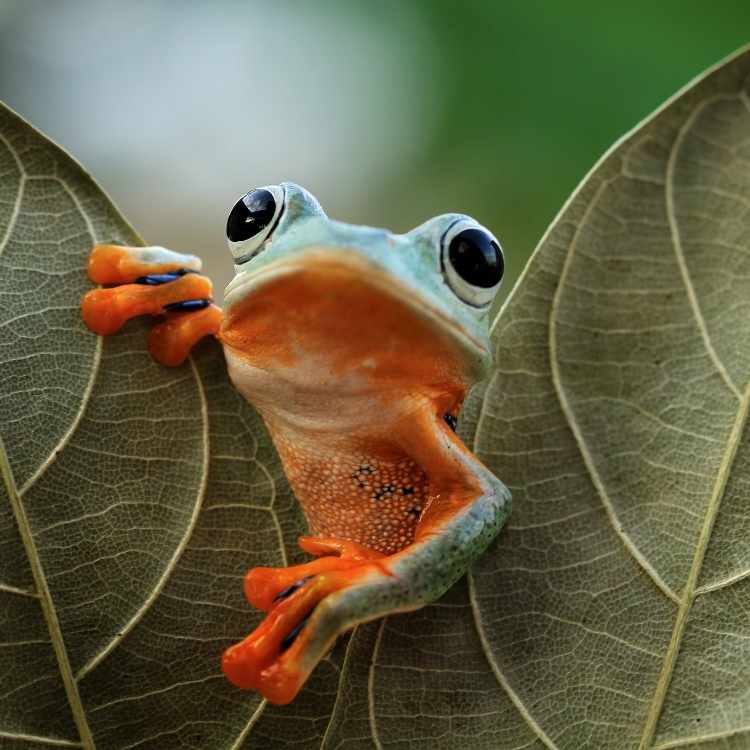
Bedroom. This is where the fertility reading gets most specific. In Egyptian and some East Asian folk traditions, a frog in the bedroom carries a direct association with pregnancy or new life in the intimate sphere. If you’re hoping for a child, or in the middle of a major personal transition, this is the frame that fits.
Bathroom. Honestly, I don’t have a strong traditional answer here. Frogs genuinely prefer damp, cool spaces, so bathroom appearances are common and may be less symbolically weighted than a living-room visit. I’d rather say that than fill the gap with something I’ve made up.
What Does a Baby Frog Specifically Signify Compared to an Adult?
A baby frog, a froglet, which is what you’re looking at if it’s very small and has just lost its tail, has just done something genuinely strange. According to AmphibiaWeb’s 2019 data on Rana temporaria, the common European frog completes its metamorphosis from egg to land-capable froglet in roughly 8 to 12 weeks. It entered the water as one kind of creature and came out the other side as a completely different one. That’s not a metaphor. That’s what happened.
So when a tiny frog appears in your house, you’re looking at an animal that has just finished one of the most complete changes in the vertebrate world. And yes, that’s where the symbolism comes from. In most traditions that distinguish between juvenile and adult, a baby frog in the house reads as a transition just completed or just beginning. A new phase, arrived. Fragile, small, but already on land. Already here.
For what specific religious traditions like Christianity say about frogs, there’s a separate page worth reading, the biblical frame is quite different from the folk-magic frame I’m covering here.
What Should You Do After a Frog Enters Your House?
Three honest options. I’m not going to tell you which one is correct.
Frequently Asked Questions
Is it bad luck to kill a frog that enters your house?
Across most folk traditions that address this directly, yes. In Han Chinese folk belief, the money frog brings fortune; harming it reverses that. In Irish and broader European rural tradition, frogs were associated with good weather and household protection, and killing one was thought to bring rain or misfortune. The practical answer is simpler: if a frog came in on its own, releasing it outside is less work and, by most accounts, the right move.
What does it mean if a frog keeps coming back to your house?
In Japanese folk belief, a returning frog is almost directly auspicious. The word kaeru means both “frog” and “to return,” so a frog that keeps showing up is a living play on the idea of good things coming back. In a more practical frame, it likely means your home has something the frog wants: moisture, insects, a gap in the foundation. Both readings can coexist. The fact that you noticed the pattern is part of the answer, repeated appearances are how most folk traditions distinguish an omen from a one-time event.
Does the color of the frog change the meaning?
I don’t have a confident answer here. The folk record on frog color is thinner than the record on frog presence. Green frogs appear most often in prosperity contexts, probably because green carries abundance symbolism in many traditions anyway. A white or albino frog would likely be read as unusual and therefore weighted more heavily, the way white animals generally are in folk-omen traditions. But I’ve gone through several sources on frog color and none of them cite primary ethnographic material I trust enough to repeat as settled fact.
What does a frog in the house mean in Christianity or the Bible?
The biblical frame is worth knowing because it’s essentially the opposite of the Egyptian one. Frogs appear primarily in Exodus 8 as the second plague against Egypt, which gives them a complicated position in Christian tradition, associated with divine judgment and, in some medieval church iconography, with sin and spiritual impurity. For a fuller treatment, the frog biblical meaning page covers that ground in more depth than I can here.
What does it mean if a frog jumps on you inside your home?
Direct contact generally intensifies whatever the base reading is. In Shinto practice, a frog that physically touches you is returning something to you directly. In Egyptian birth-protection symbolism, contact with a frog was part of Heqet’s protective function. I read it as the encounter becoming personal rather than general, the frog picked you specifically within the space, if “picked” is even the right word for frog behavior. Take a breath. It’s not a bite, it’s not a sting. It’s a small cold weight on your hand for a moment, and then it’s gone.
Is a tree frog in the house different from a regular frog spiritually?
Most folk traditions don’t distinguish species; they distinguish behavior and location. A tree frog in the house has gotten somewhere harder to reach than a ground-level frog. It’s on the wall, the ceiling, somewhere that required effort. In broader frog symbolism documentation, the frog’s ability to move between water, land, and elevated spaces is part of what makes it a threshold creature. A tree frog that managed to get inside and climb crossed more barriers than most. I’d read that as a stronger version of the same message, not a different one.
What does it mean if my cat or dog brought a frog inside?
This sits right at the edge of what I can honestly answer. The frog arrived in your house. The cat was the vehicle. Whether the vehicle changes the meaning depends on your tradition, in some folk-magic frameworks, the intent behind a thing’s arrival matters; in others, arrival is arrival. My honest position: a frog in your house is a frog in your house. The cat didn’t assign meaning to it. You’re the one doing that work, and you’re allowed to take whatever reading fits your situation, regardless of how it got through the door.
Sources
- Gray’s survey of amphibian symbolism in world religion and folklore
- Ancient Origins, “The Ambiguous Amphibian: The Everchanging Frog Symbol in World Myth”
- Endangered Wildlife Trust, “Frogs: Friends, Fortune or Foes?”
- Exploratorium, Frog Folklore archive
- Wikipedia, Frogs in culture
- Centre of Excellence, The Spiritual Meaning of Frogs
- Save the Frogs, Frog Myths, Folklore, Proverbs and Fairytales
- DailyOM, Animal Symbolism: Frog Meaning
- YourTango, Frog Symbolism and Spiritual Meaning