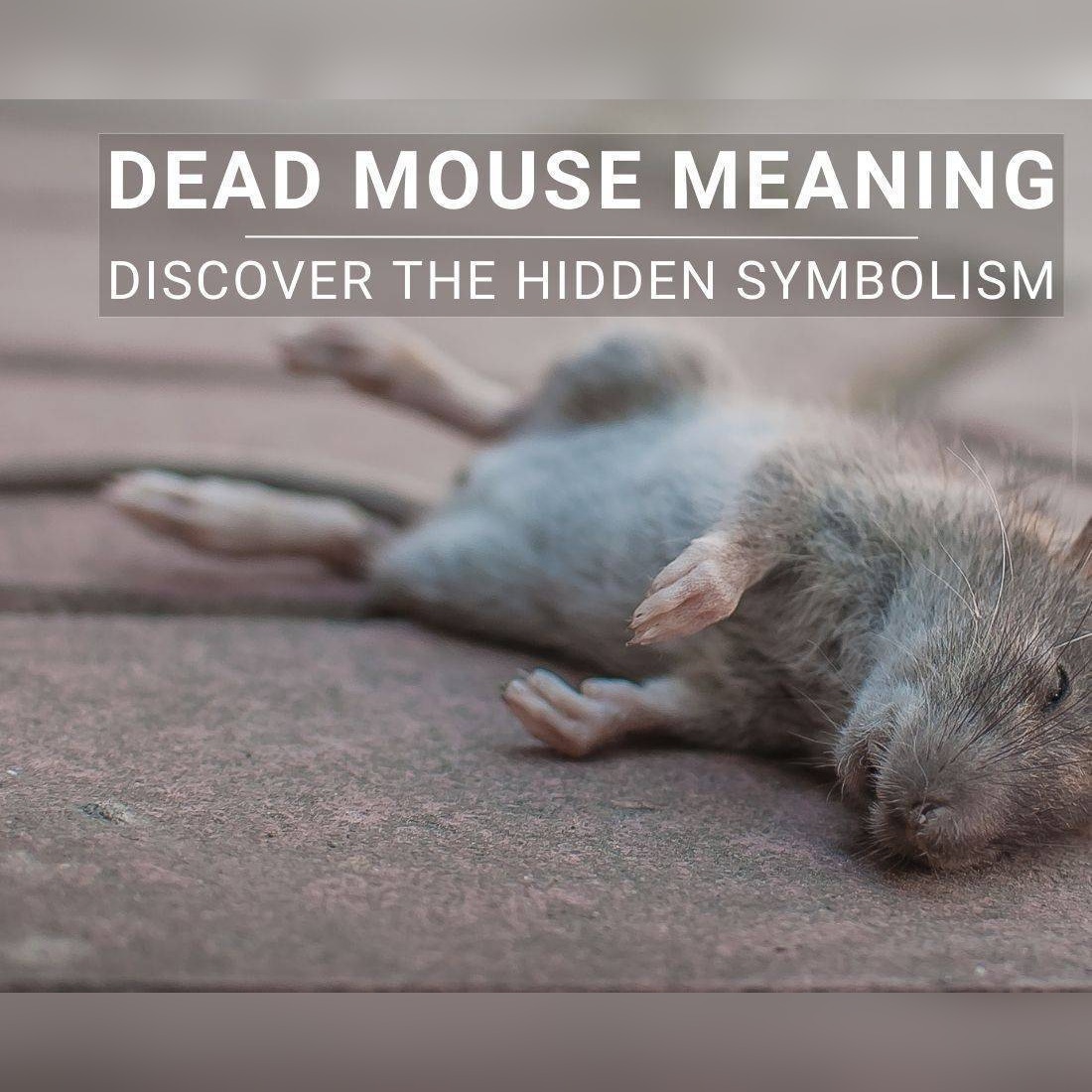
You found a dead mouse somewhere in or around your home, and now you’re looking it up. That instinct is older than you think. Most folk traditions that have anything to say about this read it as a nudge toward something small you’ve been ignoring, not a curse, not a death omen.
Key Takeaways
- Most folk traditions read a dead mouse as a prompt to notice small, neglected problems before they grow, not as a curse or death omen.
- Where you found it changes the reading: inside the home points to domestic blind spots; at the threshold points to a transition you’ve been postponing.
- Most cultural traditions treat this as cautionary, not punitive.
- In dreams, a dead mouse tends to signal the end of a small but persistent anxiety.
- The right response combines practical removal with an honest look at what you’ve been putting off.
What Does It Mean When You Find a Dead Mouse?
The short answer: most traditions that have anything to say about mice read a dead one as a nudge, not a verdict. Research on insect symbolism shows that the mouse is the animal of small things. The overlooked. The detail that fits under the floorboard. When it turns up dead, mouse symbolism in the folk record reads that as an invitation to look at what you’ve been ignoring before it gets harder to ignore.
My grandmother Theresa kept a leather notebook of animal lore from the Bavarian Forest, and mice appear in it exactly twice. Once as a household spirit that had gone sour, once as a sign that the grain stores needed checking. Neither reading was catastrophic. Both were practical. That’s the register most of the folk record holds.
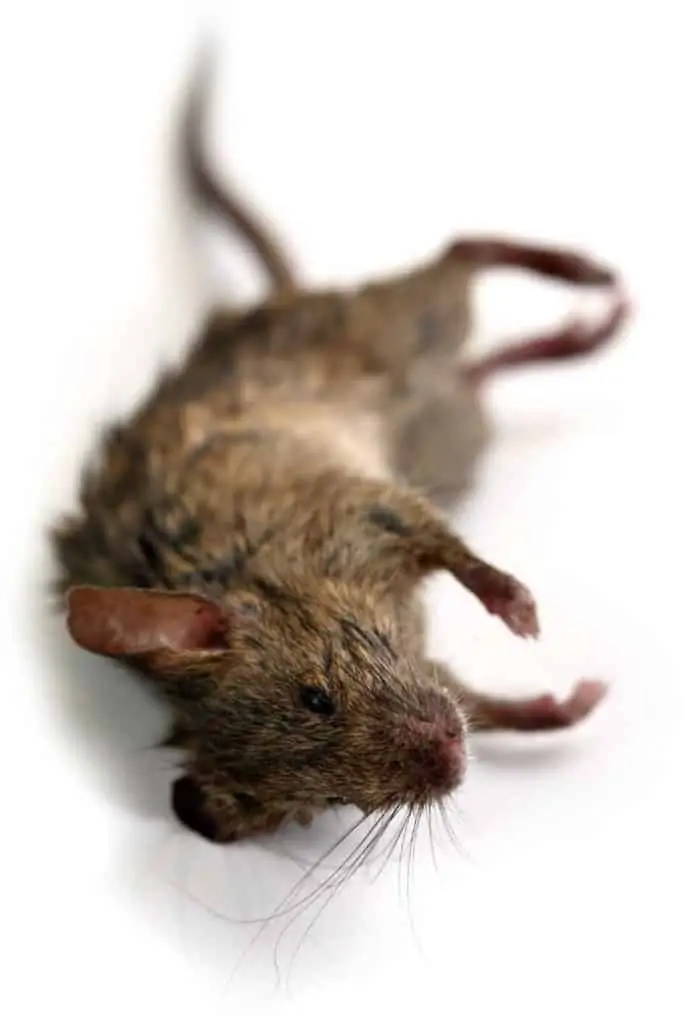
The mouse is not the hawk. It doesn’t carry death and prophecy. It carries the domestic scale, the small thing, the forgotten corner, the problem that fits through a crack.
Is a Dead Mouse a Bad Omen or a Warning Sign?
Not a curse. I want to say that plainly, because if you read elsewhere that it is, take a breath. That’s one interpretation, drawn from a narrow tradition, and the longer history of this encounter is more nuanced.
The distinction worth making is between an omen and a warning. An omen announces something that will happen regardless. A warning points at something that could change if you pay attention. Most of the traditions I trust read the dead mouse as a warning, closer to your smoke detector than to a prophecy. Something small has been overlooked. Something has run its course.
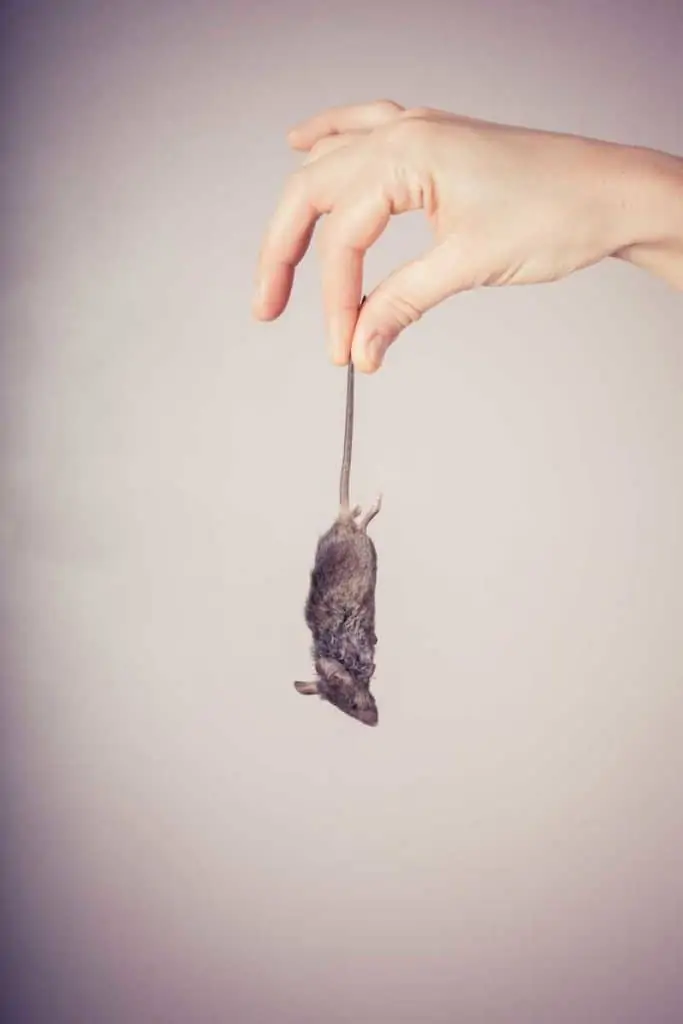
The question the mouse is asking is: what have you been not-quite-dealing-with?
And you are not making this up. The fact that you noticed this is part of the answer. The mind that goes looking for meaning is the mind that’s ready to do something about what it finds.
What Does Where You Found the Dead Mouse Change About Its Meaning?
Location matters more than most articles admit. The folk record is fairly specific about this, even if the internet version of it isn’t.
Inside the house, particularly the kitchen or bedroom, points inward. The domestic space is already compromised, symbolically speaking. The reading I find most consistent across European rural folk belief is that something inside your daily routine has quietly gone wrong. Not dramatically. Quietly. A relationship pattern, a habit, a task you keep postponing.
On the doorstep or threshold, this is the reading that tends to rattle people, and I understand why. In German rural folklore and in much of the British Isles folk tradition, the threshold is a boundary between what you’re putting out into the world and what’s coming back in. A dead animal at the threshold is a transition signal: something that worked before has stopped working. A door that needs to open or close.
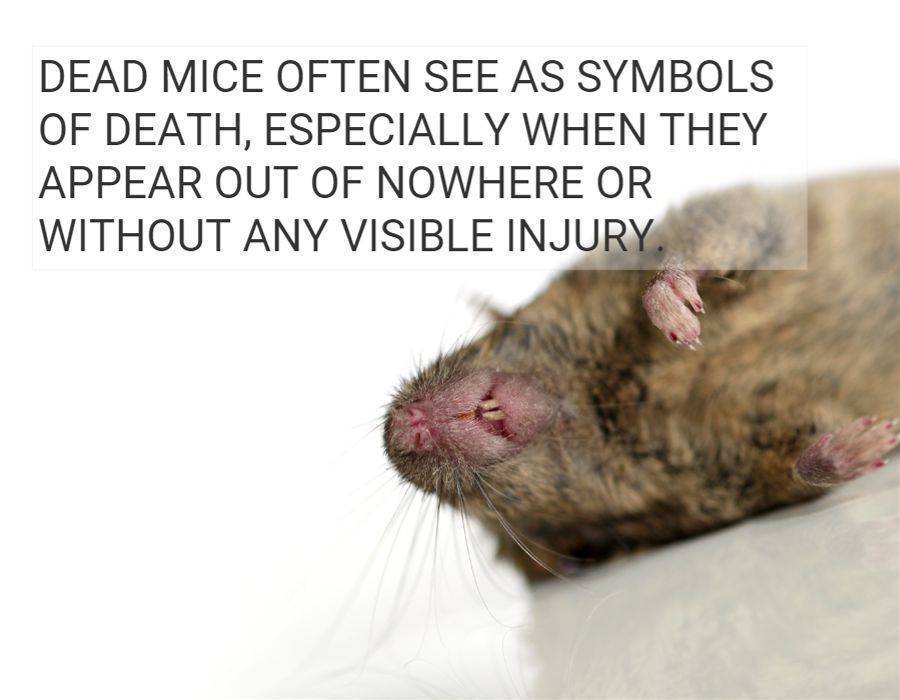
In the basement, foundations, old systems, things built a long time ago that now need review. I’ve read this one three different ways and the most consistent thread is about structural issues, not supernatural ones. Or rather: the symbolic reading points at the structural one.
On the porch, somewhere between inside and outside. Something public-facing that has stalled. Something you were presenting to the world that needs updating.
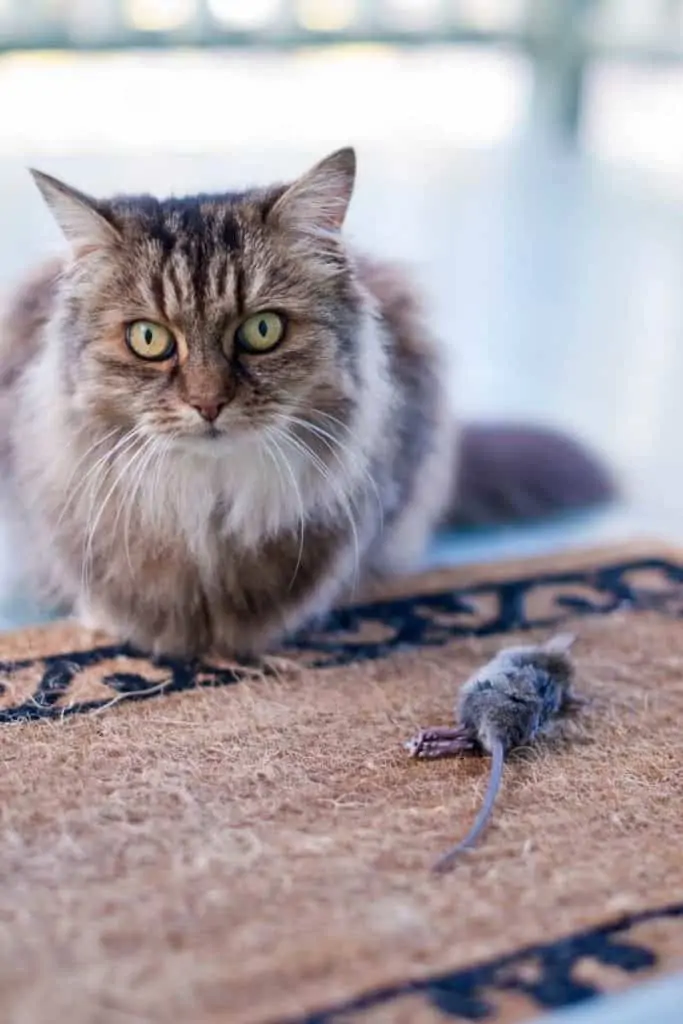
If your cat brought it in, that’s a different conversation, I cover that in the FAQ below.
What Do Different Cultures and Traditions Say About Dead Mice?
This is where it gets genuinely strange. And I mean that as a compliment.
In ancient Egyptian religion, mice appear at the edge of the underworld domain of Sokar, the falcon-headed funerary god. According to Richard H. Wilkinson’s analysis in The Complete Gods and Goddesses of Ancient Egypt (Thames & Hudson, 2003), Sokar’s territory covered plague, decay, and the transitional space between life and the afterlife. Mice in this context were linked to the same liminal zone, present in granaries (the food supply, survival) but also tied to death and the spreading of illness. A dead mouse, in that tradition, was a reminder of the boundary between sustenance and loss.
Norse folk belief, documented in the Poetic Edda (translated by Carolyne Larrington, Oxford University Press, 1996), carries a thread about small animals as containers for the soul during transition, specifically in the old Scandinavian folk imagination around sleep and near-death, where the soul was said to exit the body as a small animal. A dead mouse in this reading signals a completed transition. Something has finished its run.
In medieval European households, mice were associated with witchcraft and household spirits gone wrong. A dead mouse left at a threshold was sometimes taken as evidence that a protective spirit had neutralized a threat. Not an attack on you. A resolution.
The common thread across all three: the mouse marks a completed cycle. Something ends. The question is what.
What Does a Dead Mouse Signal About Your Current Life?
The mouse, as a living animal, is built for resourcefulness. For surviving on very little. For finding the gap, navigating by feel in the dark. A 2017 study by the Max Planck Institute for Ornithology found that house mice (Mus musculus) can navigate mazes and remember solutions for up to six months, which is genuinely impressive for an animal that fits in a shirt pocket. They are not stupid. Small, efficient, and good at the overlooked route.
When the mouse turns up dead, that quality inverts. The resourcefulness has stalled. The gap-finder has stopped finding gaps. I read this as a signal about something in your life that used to handle itself quietly, some system, some relationship dynamic, some coping pattern, that has now run out of road.
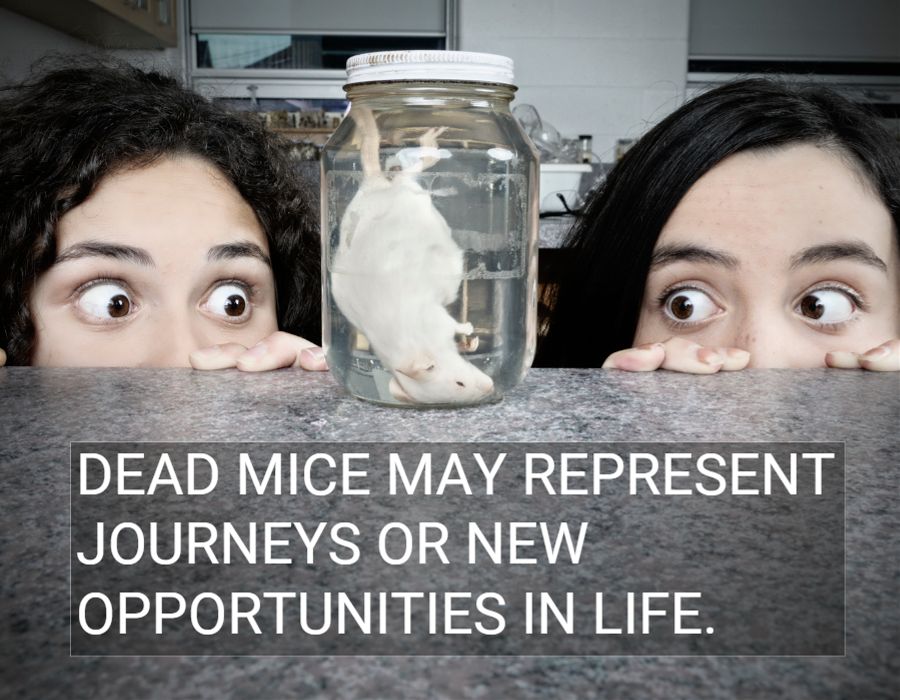
The mouse is not asking you to catastrophize. It’s asking you to check the small thing. The email you haven’t sent. The conversation you’ve been almost having. The habit that was useful for a while and isn’t anymore. There is no version of this that means you should be afraid. There is a version that means you should look around your own house, literally and otherwise, and notice what needs attention.
For more on how small animals carry this kind of domestic symbolic weight, the full mouse symbolism page covers the living mouse in more depth across a wider range of traditions.
What Does Finding a Dead Mouse Mean in Dreams?
Dream mice are different from doorstep mice. The emotional register shifts.
In a dream, a dead mouse most often signals the end of something small but persistent, a worry that has been quietly running in the background, a fear that has finally finished its work. Well, not exactly finished: more like it has revealed itself as smaller than it seemed. Jung’s framework in Memories, Dreams, Reflections (Pantheon, 1962) reads small animals in dreams as stand-ins for the overlooked parts of the self, the aspects we’ve dismissed or minimized. A dead one suggests that part of you has stopped needing to hide.
If the mouse in the dream was damaged or headless, the reading shifts toward something forcibly ended rather than naturally concluded. Something that didn’t get to finish on its own terms. Worth sitting with, not because it’s ominous, but because it points at something unresolved.
If you felt relief in the dream when you saw the mouse, trust that. The dream is probably right.
What Should You Do After Finding a Dead Mouse?
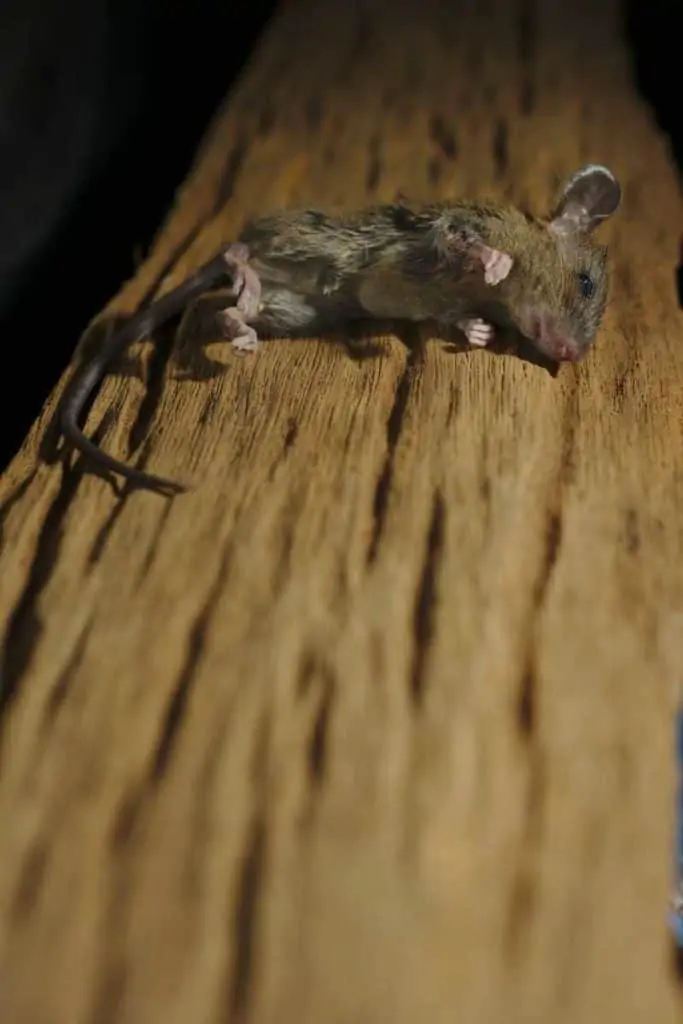
First, the practical. Wear gloves. Mice can carry hantavirus, which spreads through droppings and direct contact. Seal the body in a plastic bag and dispose of it with household waste. Disinfect the area. This is not spiritual hedging, it’s just correct.
After that, the optional but not meaningless: a number of folk traditions, including Appalachian mountain practice (which I know and respect without claiming), involve a small acknowledgment at the place where you found the animal. Not a ritual in any elaborate sense. A moment of attention. You might say something out loud or just stand there for a few seconds. The point is to mark the event rather than just sanitizing past it.
If you want to cleanse the space: open the windows. Salt the threshold if that means something to you. Burn a little cedar or sage if you have it. These are not guarantees of anything, but they are ways of telling your own nervous system that the event has been acknowledged and addressed. That matters.
Then take ten minutes and ask yourself, honestly, what you’ve been not-quite-handling. Write it down if you can. That’s the part the mouse was pointing at. For related encounters with other small animals, the insect symbolism pages cover similar threshold and household readings across traditions.
Frequently Asked Questions
Is finding a dead mouse inside my house bad luck?
Not in any tradition I’ve been able to trace that names its sources. German rural belief, British Isles folk practice, Scandinavian household tradition, all of them read a dead mouse inside the home as a sign of something in the domestic sphere that needs attention, not as a punishment incoming. The closest thing to “bad luck” in the record is the idea that the problem was already there. The mouse surfaced it. That’s not the same as being targeted.
Does a dead mouse mean someone in my household will get sick?
No folk tradition I know of makes this connection directly. The Egyptian association between mice and plague is a historical one tied to actual disease ecology, mice did spread illness in grain stores, not a predictive omen. A dead mouse in your home is a practical reason to check for an infestation and clean the area carefully. Hantavirus is real. But a single dead mouse is not a prophetic signal about your family’s health.
What does it mean if my cat brings me a dead mouse?
Practically: cats bring prey to their people as a form of resource sharing. It’s affiliation, not a sign. Your cat thinks you’re incompetent at hunting and is trying to help. Symbolically, a gifted animal carries different weight than one you discovered on your own, it wasn’t placed; it was given. I read this as your household’s own protective instincts running correctly, not as an external message. The cat handled it. Take that at face value.
Is there a difference in meaning between a dead mouse and a dead rat?
The folk record treats them differently in several traditions. According to Carolyne Larrington’s translation of The Poetic Edda (1996), rats in Norse folk imagination carried heavier associations with hidden rot and systemic failure than mice, which stayed in the register of small-scale domestic oversight. A dead rat tends to point at a larger or older problem than a dead mouse. The scale shifts; the basic reading, something needs attention, stays consistent.
What does finding multiple dead mice mean?
When it happens more than once in a short stretch, the first thing to do is rule out the practical explanation. An active infestation produces dead mice; so does a predator working the space, or a poison laid by a neighbor. Check that first. If there’s no practical explanation, the folk reading would intensify the single-mouse reading: the thing being overlooked is being pointed at with increasing insistence. Not more ominous. More persistent.
Does the condition of the mouse change the meaning?
A fresh mouse suggests a recent ending, whatever the transition is, it just happened. A decomposed one suggests something that ended a while ago and hasn’t been acknowledged yet. Headless or damaged: a cat or predator is most likely the cause, which shifts the symbolic register from natural ending to forced interruption. The folk record around damaged animals is thin and I don’t have a reading I trust completely. What I’d say is: if it disturbed you more than a whole body would have, that emotional signal is probably the useful information.
What crystals or cleansing rituals are recommended after finding a dead mouse?
I don’t sell crystals and I’m not going to pretend I have a strong opinion about which ones work. Black tourmaline and obsidian appear consistently in contemporary folk practice for boundary-setting and clearing space after an unsettling event. Smoke cleansing with cedar, sage, or rosemary has a longer documented history across multiple traditions. The point of any of these is to give your own nervous system a concrete action that closes the loop. That part is real, even when the metaphysics stay uncertain.
Does finding a dead mouse near my front door have a specific meaning?
The threshold reading is one of the more consistent threads in European folk belief. A dead animal at the front door is a boundary signal: something that was crossing between your world and the outside world has been stopped. In German rural tradition, this was sometimes read as evidence that household protective forces were functioning. In British Isles folk practice, it more often pointed at a transition in the homeowner’s life that was overdue. The front door you use alone every morning is not a neutral location. You already knew that, which is probably why you’re here.
Sources
- Richard Alois, About the Author and Methodology
- Centipede Symbolism, Richard Alois (richardalois.com)
- Richard H. Wilkinson, The Complete Gods and Goddesses of Ancient Egypt, Thames & Hudson, 2003
- Carolyne Larrington (trans.), The Poetic Edda, Oxford University Press, 1996
- Anthony Faulkes (ed.), The Prose Edda, Everyman, 1987
- Max Planck Institute for Ornithology, house mouse navigation and memory study, Scientific Reports, 2017