Most people think a rooster crows to announce the day, so you must wake up to something in your life. But in Han Chinese folk religion, the rooster represents five things: learning, guts, kindness, strength, and keeping your word. The rooster’s meaning depends on what you’re examining, its actions or its representation in your tradition.
Key Takeaways
- Across traditions, the rooster is a threshold guardian, marking the border between night and day, danger and safety, ordinary time and something larger.
- In Han Chinese folk religion and Confucian tradition, the rooster is the “Bird of Five Virtues,” carrying qualities of scholarship, courage, benevolence, martial readiness, and reliability, not just luck.
- In Norse Eddic myth, three roosters crow at Ragnarok: one from Valhalla, one from the realm of giants, one from Hel. Their combined call is the end of one world and the start of whatever follows.
- Christian tradition ties the rooster to Peter’s denial of Christ, and to the repentance and restored vigilance that came after. It is a symbol of failure turned into faithfulness.
- As a spirit animal, the rooster tends to show up for people being asked to speak when it would be easier to stay quiet, and who already know what they need to say.
What Is the Core Spiritual and Cultural Meaning of the Rooster?
The rooster’s core meaning, across cultures, is this: it stands at the boundary and tells you which side you’re on. Dawn herald. Threshold guardian. Spiritual alarm clock.
Those aren’t poetic additions layered onto a plain bird. They come directly from watching what a rooster actually does, every single morning, before anyone else in the yard is awake. The rooster crows because that’s what roosters do. Every culture that lived alongside them noticed, and built meaning from the same observation.

The common thread across traditions is the rooster as the one who speaks first. Before the sun is visible, before the danger is obvious, before the rest of the world has decided to pay attention. Whether that speaking is read as protection, warning, or divine announcement depends on the tradition. But the act is consistent.
What Does the Rooster’s Name and Linguistic History Reveal About Its Symbolism?
The names we give animals are a compressed record of what we believe about them. A polite replacement for “cock,” which derives from Old English cocc and had acquired meanings that made it awkward in mixed company.
But the older name held the older meaning. Cocc had nothing to do with furniture. It was the bird that calls, the bird that makes noise. Function, not location.

In Old Norse, more direct still. Gullinkambi combines gull (“gold”) and kambi (“comb”), giving you “golden comb.” A name that is purely physical, purely visual. The golden crest catching early light. Before any mythology is consulted, the name has already told you what matters: the crown, the color of morning, the part of the bird that appears first over the henhouse roof.
Names encode priorities. The Norse named their cosmic rooster after its crest. English speakers named theirs after where it slept. Both tell you something true about what each culture saw when it looked at the same bird.
What Does Han Chinese Folk Religion and Confucian Tradition Say About the Rooster?
In Han Chinese folk religion, the rooster is a yang bird, associated with fire, the sun, and the Vermilion Bird constellation of the south. The China Online Museum’s 2017 essay “Great Fortune for the Year of the Rooster” documents how household and temple practice used images of red roosters to ward off evil forces and protect homes from fire. The logic flows directly from the bird’s behavior. It crows before the sun appears. In a tradition that mapped good and evil onto the cycle of light and dark, the rooster became a logical guardian.
The more layered reading comes from Confucian literati tradition, which named the rooster the “Bird of Five Virtues.” Its crest evokes the scholar-official’s cap (civil talent). Its spurs signify martial readiness. Its willingness to fight stands for courage. Its care for the hens represents benevolence. Its punctual crowing signals reliability. Five virtues. One bird.

There is also a linguistic layer that doesn’t translate cleanly. The Chinese character for rooster, ji (雞), shares its sound with the character for good fortune (ji, 吉) and rhymes closely with gong (功), meaning achievement. The Hirshhorn Museum’s interpretive text for Ai Weiwei’s “Circle of Animals/Zodiac Heads” picks up on exactly this wordplay, noting that the rooster in Chinese material culture became an emblem of scholarly success and promotion in office. The bird that crows at dawn became the bird that announces your advancement. Homophony as destiny.
What Role Does the Rooster Play in Norse Eddic Mythology?
Three roosters. That’s how many the Völuspá, the vision-poem at the center of the Poetic Edda, deploys at the end of the world, crowing in sequence from three different realms.
Gullinkambi crows from the branches of Yggdrasil, rousing the Aesir and the einherjar for their final battle. A second rooster, Fjalar, crows among the giants. A third, rust-red, nameless, crows at the gates of Hel, waking the dead. According to the Sjamanistisk Forbund’s interpretive framework on Norse roosters, these three function as threshold guardians across all nine realms, their voices carrying not an invitation but an inevitability.

What strikes me is the scale. The Norse weren’t using the rooster as a household protective symbol. They were using it to mark the end of an entire cosmic order. The dawn-herald function, scaled up as far as it can go, becomes the herald of Ragnarok. Same bird. Same crow. Larger consequences.
And then, in the Norse understanding, a new world rises after. Which means the rooster that crows at the end is also the rooster that crows at the beginning of what comes next. Threshold guardian. Both directions.
How Does Shinto and Japanese Mythic Tradition Interpret the Rooster?
In Shinto tradition, the rooster’s connection runs directly to Amaterasu, the sun goddess, and to one of the oldest stories in the Kojiki.When Amaterasu withdrew into a caveafter her brother’s violence, the world fell into darkness. One of the things the gods tried was releasing roosters to crow, the sound that should precede the sun. Amaterasu heard the commotion, grew curious, and looked out. Light returned.
That story encodes something important about what Shinto understood the rooster to be doing every morning: announcing the sun while participating in its return. The crow as a ritual act. The bird as a collaborator in cosmic order rather than a passive observer of it.

This helps explain why roosters roaming Shinto shrine precincts were historically left undisturbed, treated as sacred. A 2017 cross-cultural essay drawing on Japanese mythological sources notes that this practice reinforced the rooster’s identity as a sun-linked, ritually pure presence, a bird whose daily call announced the re-entry of divine light into the world. Not a metaphor. A daily event.
What Does Medieval European Christian Tradition and Folklore Say About the Rooster?
The most famous rooster in Christian tradition crows three times, and you know the story. Peter denies knowing Jesus three times, the rooster crows, and Peter weeps. The rooster here is not malicious. It is simply punctual, it does what roosters do, and in doing so marks the moment of failure precisely.
But the tradition didn’t stop at the denial. The medieval church reframed the rooster as a symbol of restored watchfulness, of the Peter who failed and then became the bedrock of the church. Weather vanes shaped like roosters were placed on church steeples across Europe from the ninth century onward, partly as a reminder of that story, partly as an active symbol of spiritual awareness. Look up. Pay attention. Don’t be caught sleeping.
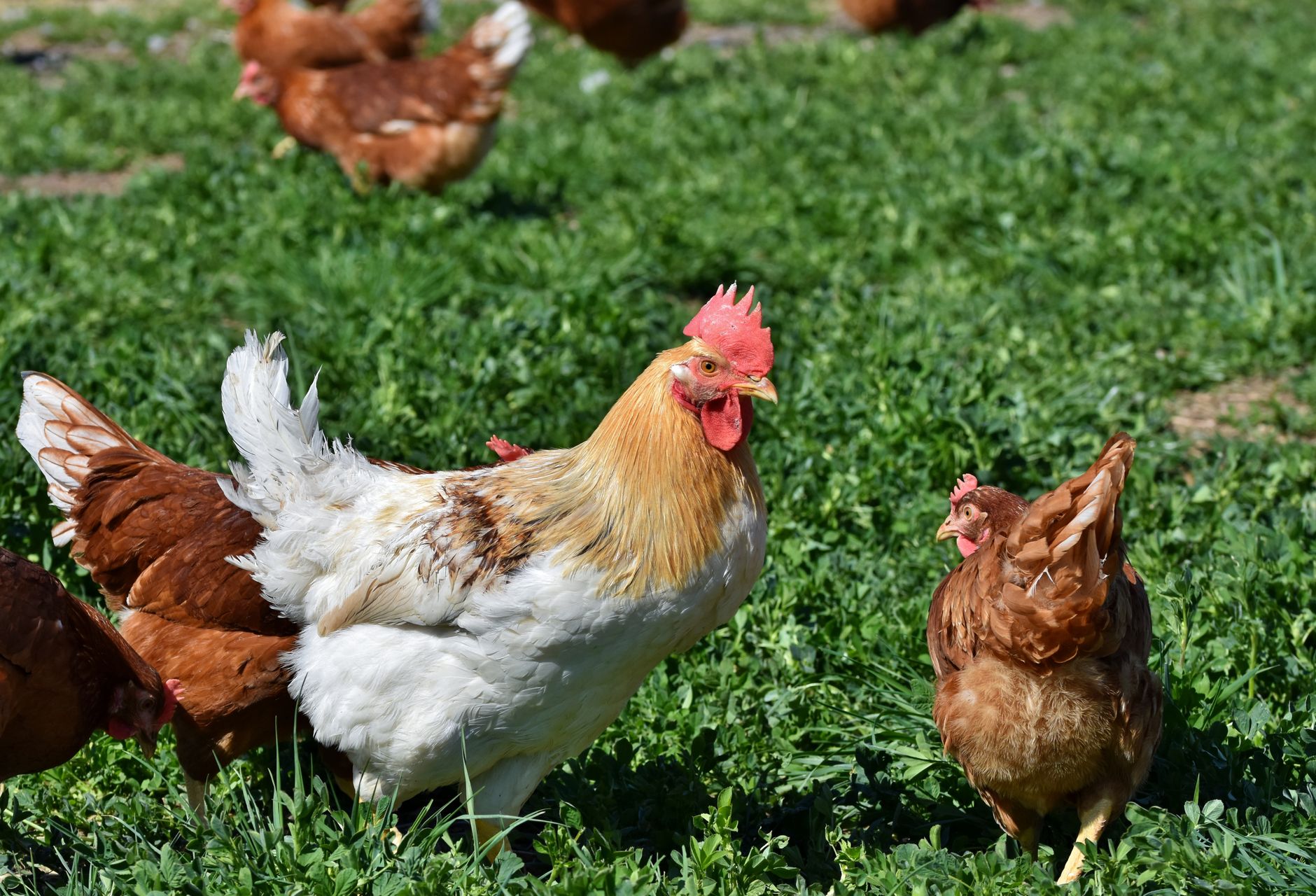
Rural European folklore took the protective function further. The rooster’s crow at dawn was believed to disperse night spirits, witches, and harmful influences, the same logic as the Chinese red-rooster ward, arrived at independently. In German-speaking regions, this belief was embedded deep. I don’t know what exactly she made of it. But she wrote it down.
What Is the Rooster’s Symbolism Across Other World Cultures and Folklore?
The rooster’s threshold role appears well outside the traditions above.In ancient Greece, the rooster wassacred to Asclepius, the healer.Socrates’ last words, according to Plato, were a reminder to sacrifice a rooster to Asclepius, a debt of gratitude for the healing of death itself. The bird marks the ultimate threshold.
In Persian Zoroastrian tradition, the roosterwas a sacred animal specifically because its crow heralded the defeat of Ahriman (the spirit of darkness) by Ahura Mazda (the spirit of light) at each dawn.Killing a rooster was a sin. The bird was protected because it did necessary spiritual work, daily, without fail.

West African traditions, particularly in Yorubareligious practice as documented by the late scholar Wande Abimbola, use the rooster in ritual contexts centered on communication with the divine, the crow as a signal to the orishas that attention is being paid. The specifics vary by ceremony, but the rooster’s voice as a bridge between human and spiritual realms runs consistently through multiple West African traditions.
What is striking is how consistent rooster symbolism is across cultures that never met. The symbolism maps directly onto the bird’s actual behavior. It crows at the threshold of dark and light. Every culture that lived alongside roosters built meaning from that same observed fact.
What Does a Fighting Rooster Symbolize Spiritually and Culturally?
The fighting rooster carries a different set of associations, grounded in the Confucian “five virtues” framework but extending beyond it. Courage and martial readiness are two of those five virtues, the rooster’s willingness to fight, to not back down, gave it specific symbolic weight in traditions that valued those qualities.
In Mesoamerican cultures that encountered cockfighting through Spanish colonization, the practice took on layered meanings: the rooster as a stand-in for solar forces, its blood as a ritual offering, the contest itself as a smaller version of the cosmic struggle between light and dark. I’m not in a position to speak in depth to indigenous Mesoamerican interpretations here, and I won’t pretend otherwise. But the ritual weight that cockfighting carried in those contexts is documented, and it connects back to the same solar symbolism found elsewhere.

In Southeast Asian traditions, ritual cockfightingcarries ceremonial significance in specific Balinese Hindu contexts, where it functions as a blood sacrifice required to appease negative spirits, the tabuh rah, as described in anthropological literature on Balinese ritual. The fighting rooster here is not a symbol of aggression but of necessary confrontation: the willingness to meet darkness directly rather than wait for it to pass. That reading aligns with the warrior-bird qualities in Confucian symbolism and with Gullinkambi crowing into the face of Ragnarok. Different traditions, same essential posture.
For those drawn to free-spirit symbols, the fighting rooster is worth considering alongside the eagle and the wolf, animals whose symbolic weight comes from their refusal to be dominated.
What Does Rooster Crowing at Night Symbolize?
A rooster crowing at night means something different than a rooster crowing at dawn, and folk traditions across cultures treat it as a distinct signal. The dawn crow is the announcement of order. The night crow is a disruption of it.
In Chinese rural folk belief, a rooster crowing at midnight or in the early hours before its normal time was read as a warning of coming change, not necessarily disaster, but a signal that the household should pay attention to what was approaching. The same protective bird that expelled evil at dawn was, when crowing out of sequence, sending a warning of its own.

In European rural folklore, nocturnal crowing was often read as a sign of spiritual unrest: a ghost that had not settled, a wrong that needed attention, a death approaching.The German folk tradition recorded severalvariations of this. What they share is the idea that the rooster, normally the marker of return to light and order, crowing in darkness indicated that the natural order was under pressure.
Biologically, roosters do crow at night, often in response to artificial light, other animals, or disturbances. That practical fact doesn’t cancel the folk reading. It’s exactly the kind of out-of-sequence event that attentive people in premodern communities would have noticed and tried to interpret. The symbolism of nocturnal crowing is a folk record of that noticing.
What Is the Rooster as a Spirit Animal or Totem?
If the rooster shows up as a spirit animal, in repeated encounters, in dreams, in a pull toward the image, the cross-cultural symbolism points toward a consistent set of qualities. Confidence. Punctuality in the old sense of the word, meaning being on time while also being precise: doing the right thing at the right moment. Moral courage, specifically the courage to speak clearly when it would be easier to stay quiet.
The rooster totem is not about aggression. It’s about announcement. People who feel the rooster as a guide tend to be those who see things others miss, who are awake when others are still in the dark, and who are being asked to say so out loud. That’s not a flattering or comfortable role. It involves being loud before anyone else is ready to be loud.
The shadow side, if there is one, is the tendency toward self-importance, the rooster who crows because he enjoys the sound of himself rather than because he has something to announce. The tradition distinguishes between those two. The respected rooster crows at the right moment. The one who crows constantly loses his authority in the henhouse and everywhere else.
What people have made of this encounter: a call to be more deliberate about when you speak and what you say, and to trust that your timing, when it comes from genuine attentiveness rather than habit, is usually right.
What Does the Rooster Mean in Dreams?
Rooster dreams map fairly consistently across the interpretive frameworks I find credible. A rooster crowing at dawn in a dream tends to signal an awakening of some kind, a realization coming, a decision that can no longer be delayed. Rarely alarming. More often the mind’s way of telling you that something has become clear.
A silent rooster, one that should crow and doesn’t, tends to read as missed opportunity or hesitation. Something you know you should say or do, but haven’t. The silence is the meaning.
A fighting rooster in a dream usually points to conflict already present in waking life, or to a confrontation you are either approaching or avoiding. Worth asking, in that case, whether the rooster in the dream wins or loses. The tradition tends to read a rooster that fights and holds its ground as a sign of eventual resolution, while a rooster that is overwhelmed often signals that the approach to the conflict needs to change.
A dead rooster in a dream is harder to read with confidence. I don’t have a single clean answer here, and the folk record is thin and the academic record thinner. Some traditions read it as the end of a cycle of watching out for danger, a rest earned. Others treat it as a warning that something protective has been lost. What I’d say: pay attention to how you felt in the dream. The emotional register is usually more informative than the image alone.
What Does It Mean When a Rooster Appears at Your Home?
An unexpected rooster in your yard or at your doorstep is, across most traditions that addressed this, a positive sign.In Chinese folk belief, a roosterarriving at your home carries the same auspicious associations as the rooster symbol on New Year decorations: good fortune coming, a change for the better, an improvement in family standing. The bird that expels evil at dawn, showing up at your threshold, is a protective visitation.
In European rural folklore, a rooster appearing uninvited at a farm or household was generally read as a sign of coming good news, a guest arriving, a problem resolved, an improvement in circumstances. The warning readings were reserved for the bird crowing at night or behaving strangely, not for simply showing up.
A single visit and a repeated presence carry slightly different weight. A rooster that appears once and moves on is usually read as a passing sign, something to notice and not to dwell on. A rooster that returns, or that stays, is more likely to be treated as a guardian presence in folk traditions. Whether that distinction matters to you depends on your own framework. I wouldn’t force it either way.
Is the Rooster a Symbol of Good Luck?
Yes, and the case is strong across multiple independent traditions. In Han Chinese folk religion, the rooster is among the most consistent good-luck symbols in the tradition, its image appears on New Year decorations, household talismans, and official emblems specifically because of those homophonic connections between ji (rooster), ji (fortune), and gong (achievement). The China Online Museum’s 2017 analysis documents the rooster’s luck associations in Chinese material culture as thoroughly as any symbol in the tradition.
In Japanese Shinto-influenced culture, the rooster’s solar connections made it a positive, protective presence. In medieval European Christian practice, the rooster on the church steeple was a symbol of hope, the reminder that staying alert and watchful, even after failure, is possible.
But the contexts where the rooster signals warning rather than fortune are specific: crowing out of sequence, appearing in dreams in silence or in defeat, behaving in ways that break the normal pattern. The baseline, across traditions, is positive. The exceptions are the out-of-sequence moments, and they’re worth noting precisely because they’re exceptions.
Frequently Asked Questions
What does a rooster symbolize in the Bible?
In Biblical tradition, the rooster is most directly connected to Peter’s denial of Christ in the Gospel accounts. A rooster crows three times to mark each denial, making the bird a symbol of the moment someone stops paying attention. But the tradition didn’t stop there. Medieval Christian interpretation reframed the rooster as a symbol of restored attention, the failure that becomes the foundation of something better. The rooster on church steeples across Europe carried that second meaning: the denial alongside the repentance and faithfulness that followed it.
What does the rooster represent in the Chinese zodiac?
The rooster is the tenth sign in the Chinese zodiac. People born in rooster years (1945, 1957, 1969, 1981, 1993, 2005, 2017) are traditionally associated with the five Confucian virtues the bird embodies: civil talent, martial courage, care for others, willingness to fight when necessary, and reliability. According to the China Online Museum’s 2017 “Great Fortune for the Year of the Rooster,” rooster-year people are seen as honest, organized, and confident, sometimes to the point of bluntness. The 2017 Year of the Rooster was considered particularly auspicious for career advancement.
Is a rooster a good or bad omen?
In most traditions, good. The exception is a rooster crowing out of sequence, at night, at unusual hours, or in ways that break the normal pattern, which folk traditions across China, Germany, and rural Europe treated as a warning worth noticing. A rooster behaving normally is almost universally positive: a protective presence, a sign of fortune coming, a symbol of the household’s continued luck. The warning associations attach to aberrant behavior, not to the bird itself.
What does it mean to see a rooster in meditation or visualization?
I’m honestly less certain about this one than I am about the historical and folk material. What I can say is that in the traditions I find credible, a rooster appearing in a contemplative state tends to carry its core symbolic weight: paying attention, the call to wake up, the moment of announcement. If you’ve been sitting with a question and a rooster image arrives, the cross-cultural reading would point toward clarity coming, something hidden about to become visible. But I’d trust your own felt sense of the image over anything I can offer from the outside.
What does a white rooster symbolize versus a black rooster?
White roosters appear across several traditions as symbols of purity and strong protective power. In Chinese folk belief, a white rooster placed on a coffin during funerary rites was intended to guide the soul safely, the white plumage associated with clarity and the spirit world. A black rooster carries more ambiguous associations in European folklore, sometimes appearing in protective rituals but also in contexts of confrontation with dark forces. In West African religious practice, black roosters are used in specific ritual contexts requiring direct engagement with powerful spiritual forces. Neither color is simply good or bad, context matters more than color.
What does a red rooster symbolize specifically?
Red roosters carry the most direct fire-and-protection associations in Chinese folk religion. According to the China Online Museum’s analysis, red rooster images were used specifically to protect homes from fire and to expel malign influences, the red color amplifying the bird’s yang, solar nature. In European alchemy and folk magic, a red cock occasionally appears in texts dealing with transformation through fire. The association with active protection, heat, and the expulsion of danger runs through both traditions, arrived at independently.
What does it mean when a rooster crows three times?
Three crows carry specific weight in Christian tradition because of Peter’s denial, three denials, three crows, a marking of the moment. Outside that tradition, three as a number carries general folkloric significance in European and Asian contexts as a number of completion or emphasis. A rooster crowing three times at an unusual hour was often read in European rural folklore as a stronger warning than a single crow, the repetition as insistence. In Chinese folk belief, the specific count matters less than the timing; a rooster crowing before midnight is the anomaly that draws attention, regardless of how many times it crows.
What is the difference between rooster symbolism and hen symbolism?
The rooster is almost always the public symbol: the announcer, the guardian at the threshold, the fighter. The hen carries different associations centered on nurture, protection of what is already present, and hidden creativity. In Han Chinese folk religion, the hen’s maternal qualities gave her a separate symbolism around family and home, quieter, more interior.In Christian iconography, Jesus uses theimage of a hen gathering her chicks under her wings as a metaphor for protective love (Matthew 23:37), a specifically maternal image the rooster does not carry. The two birds are complementary, not redundant: one faces outward, one inward.
What does a rooster tattoo symbolize?
Traditional sailor tattoos included roosters onthe top of the foot, often paired with a pig on the other foot, the folk belief being that these animals, which float in their wooden crates, would protect a sailor from drowning. That’s the Western maritime origin. In contemporary tattoo culture, the rooster more broadly carries its folk tradition’s symbolism: confidence, early rising, the willingness to announce yourself clearly in a world that might not be ready to listen. People often choose it to mark a period of personal renewal or a commitment to speaking more honestly.
How does rooster symbolism differ between Eastern and Western traditions?
The clearest difference is emphasis. In Han Chinese and Japanese traditions, the rooster’s solar and virtuous qualities dominate, it is a symbol of positive moral qualities, scholarly achievement, and family luck. In Western traditions, including Norse and Christian, the rooster’s threshold and warning functions tend to dominate: the bird who marks the end of the world, the bird who marks the moment of betrayal. Both traditions honor the rooster’s watchfulness, but Eastern readings tend to celebrate it as an active good, while Western readings tend to locate its meaning at moments of crisis or transition.
Sources
- China Online Museum, “Great Fortune for the Year of the Rooster” (2017)
- Hirshhorn Museum, Interpretive Text for Ai Weiwei’s “Circle of Animals/Zodiac Heads: Rooster”
- Wikipedia, “Gullinkambi”, Eddic sources and Norse mythology overview
- Sjamanistisk Forbund, “Roosters in Norse Mythology”, interpretive framework on the three Eddic roosters
- Wikipedia, “Cultural References to Chickens”, survey of chicken symbolism in Christian texts and global material culture
- Malevus, “Gullinkambi: The Golden Rooster of Norse Mythology”
- Encyclopedia Mythica / Pantheon.org, “Gullinkambi”
- The China Journey, “Year of the Rooster”, cross-cultural essay drawing on Chinese and Japanese mythological motifs
- www.kokugakuin.ac.jp
- www.rcpe.ac.uk
- classical-inquiries.chs.harvard.edu
- printsofjapan.wordpress.com
- authenticgathazoroastrianism.org
- www.scribd.com
- en.wikipedia.org
- journals.us.edu.pl
- statuesandfigurines.org
- biblehub.com
- www.yachting.com