Bird gods appear in nearly every culture because people observed what birds actually do, then saw divinity in it. The falcon hunted from the sky, the raven spoke in darkness, the eagle ruled the air, each became divine to explain power. Yet the same bird often meant opposite things in neighboring cultures, separated by merely a river or mountain range.
Key Takeaways
- Bird gods across world religions represent sky-power, sovereignty, and the go-between role: the creature that lives where humans cannot reach.
- The specific birds chosen, falcons, ravens, eagles, were selected because their real behavior matched the divine qualities cultures wanted to encode: speed, memory, territorial command, long sight.
- The symbolism ranges from solar renewal in ancient Egypt to dharmic order in Vaishnava Hinduism to war and fate in early Irish literature.
- The Latin word augury literally means watching birds. The connection between birds and divine messages is older than most religions currently practiced.
- Across traditions that never met, the core pattern holds: the bird stands at the border between the human world and the cosmic one, and crossing that border is what makes it sacred.
What Are Bird Gods and What Do They Symbolize Across Cultures?
Bird gods show up in ancient Egypt, South Asia, Japan, Scandinavia, Ireland, Mesoamerica, and the Indigenous traditions of North America. What they symbolize, taken together, is this: sovereignty, the sky, and the ability to move between worlds that ordinary creatures cannot cross. That common thread appears independently in cultures that had no contact with each other.
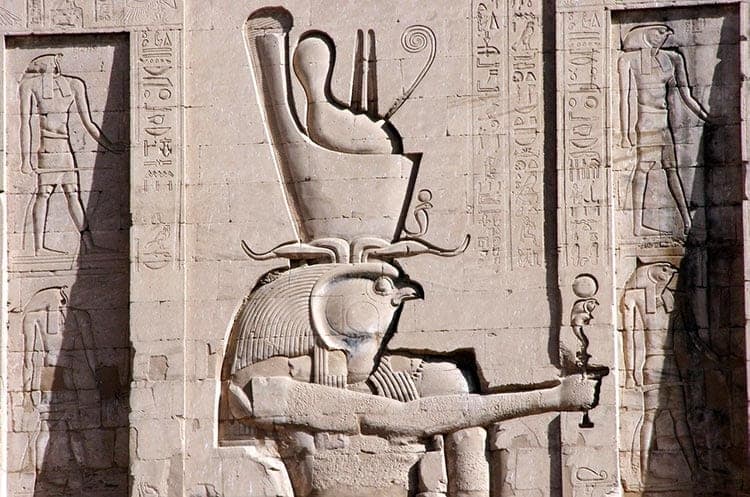
But each tradition emphasizes a different piece of that cluster. In Vaishnava Hinduism, Garuda embodies dharmic order and the defeat of chaos. In ancient Egypt, the falcon-headed Horus encodes legitimate kingship. In Norse mythology, Odin’s ravens carry thought and memory across the world each day. In early Irish literature, the Morrígan’s raven forms mark the threshold between victory and death. Same archetype, very different emphasis.
For a broader look at how bird symbolism developed across history before it crystallized into deity form, the history of bird symbolism covers the longer arc.
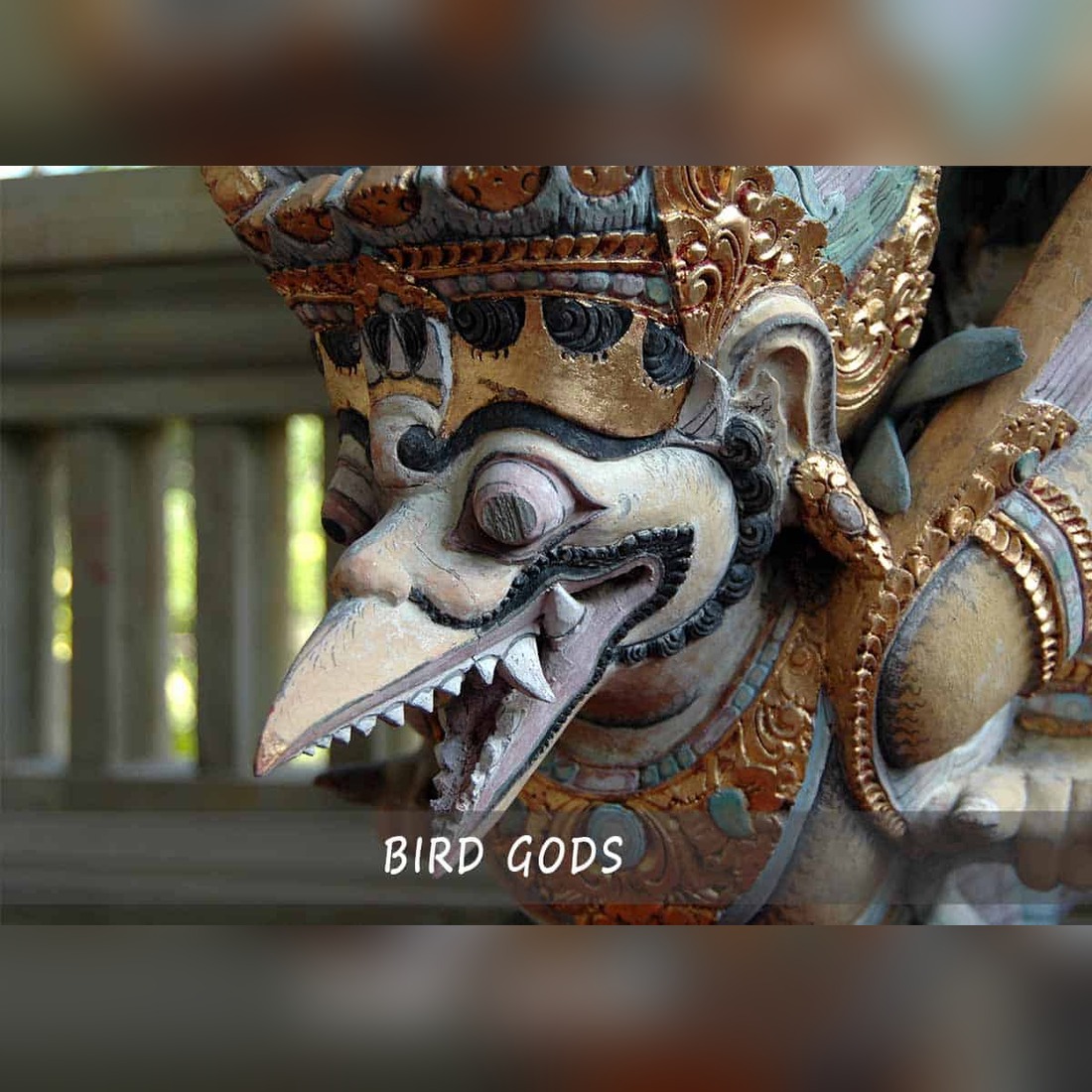
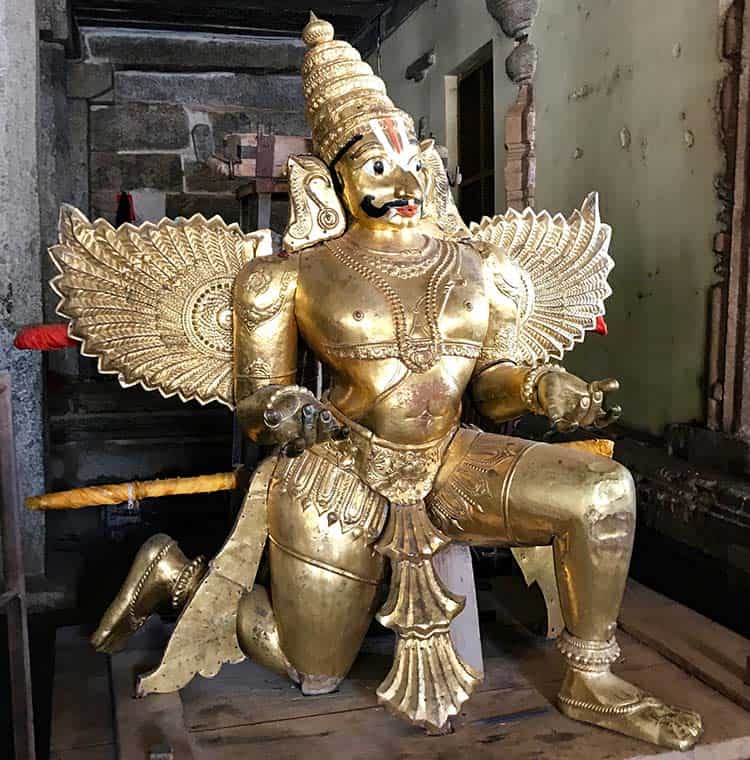
According to the Encyclopaedia Britannica‘s entry on Garuda, he is the divine eagle- or kite-like being who serves as the mount of Vishnu and is recognized as the king of birds in Vaishnava tradition. In the Rigveda and the Shatapatha Brahmana, he appears as Garutman, a celestial winged figure associated with solar power and courage. He carries Vishnu across the cosmos the way a peregrine carries itself across a ridge: with a speed that looks, to anyone watching from below, like divine authority.
The Garuda Purana and later Vaishnava iconography frame him as a serpent-devourer. This is not decorative detail. Serpents in South Asian cosmology represent subterranean, chaotic forces; Garuda defeating them encodes the victory of cosmic order over what would undo it. His Sanskrit epithets say this plainly: Gaganeshvara (“lord of the sky”), Suparna (“beautiful-winged”), Amritaharana (“stealer of amrit,” the nectar of immortality). He didn’t just fly. He retrieved what could not die and brought it back.
Garuda is, to my mind, the most interesting bird god in the world’s catalog, partly because he is not a symbol of transcendence in the vague sense people use that word. He is a specific actor with a specific job, and the job is to keep chaos from winning. That is something I understand.
How Is Garuda Interpreted in Tibetan and Japanese Buddhism?
When Buddhism moved north and east out of India, Garuda traveled with it, but changed shape along the way. In Tibetan Buddhism, Garuda becomes a giant eagle-like deity whose wingspan can block the sun. He is linked to Vajrapani and the class of wrathful protectors, and his primary function shifts from sky-ruler to active defender. According to Tibetan Buddhist sources, Garuda protects against snake-related illness and works to transform poisonous energies rather than simply defeat them. The emphasis is on ferocity in service of liberation, not power for its own sake.
In Japanese Buddhism, Garuda is adapted phonetically as Karura. The adaptation is a transliteration, not a translation: the sound came first, the meaning followed. Karura appears in Japanese temple iconography as a celestial bird-man who breathes purifying fire and devours dragon-serpents. He is a guardian of the Dharma rather than a sky sovereign, which reflects Buddhism’s general tendency to repurpose the bird god’s raw power into protective service. Same creature, different job description.
What Did Falcon and Heron Gods Symbolize in Ancient Egypt?
Ancient Egypt gave its bird gods some of the clearest job descriptions in the ancient world. Horus, falcon-headed, personifies the sky and legitimate kingship. Every pharaoh carried a Horus-name as part of his royal title, linking the ruler’s authority directly to the bird’s high vantage and long sight. The connection was not metaphorical in the Egyptian sense. The pharaoh was Horus, or stood in his place. The bird’s eye looking down on the Nile valley was the same eye that governed it.
Ra, the solar deity, is also frequently depicted with a hawk or falcon head, which ties the daily arc of the sun to the flight path of a bird that actually crosses the sky. And the Bennu bird, a heron or crane figure linked to Ra and the city of Heliopolis, encodes creation and periodic rebirth. It rises from its own conflagration every several centuries, which is the earliest known version of what Greeks later called the phoenix. According to the Myth Encyclopedia’s entry on birds in mythology, Egyptian bird gods combine sovereignty, solar renewal, and the regulation of cosmic time into a single symbolic system. Not three separate ideas. One.
What Role Did the Morrígan and Ravens Play in Irish Mythology?
The Morrígan is not a raven goddess in the sense of ruling over ravens. She is a goddess who takes raven form when the situation requires it, which is usually when armies are about to die or kings are about to lose their legitimacy. In early Irish literature, including the Ulster Cycle, her appearance over a battlefield as a raven or crow signals fate shifting, not a spiritual message in the reassuring modern sense. She blesses some warriors and curses others. She is not neutral.

What distinguishes the Morrígan’s raven symbolism from almost everything else in this article is its martial, territorial character. These ravens do not carry thought or memory, as in the Norse tradition. They do not defeat serpents or protect the righteous. They are present at the threshold between victory and death, and their presence tells you which way things are going. The Morrígan’s ravens mark who holds the right to rule and who has lost it. The bird here is a witness to political reality, not a messenger of comfort.
Frequently Asked Questions
Which bird is most closely associated with gods across world cultures?
The eagle and the falcon together claim the widest spread.Falcons appear in ancient Egypt asHorus and Ra, eagles anchor Garuda in South Asia and the Thunderbird in North America, and the Roman eagle carried Jupiter’s authority across the empire. Ravens are a strong second, concentrated in Norse and Celtic traditions. No single bird wins globally, but a large diurnal raptor, a bird that hunts in daylight from height, is the most consistent choice across independent traditions.
Is Garuda actually worshipped as a god, or only treated as a symbol?
In Vaishnava Hinduism, Garuda is worshipped in his own right, not only as an attribute of Vishnu.Temples dedicated to Garuda exist acrossSouth and Southeast Asia, and his image often stands at the entrance to Vishnu temples as a guardian figure.Indonesia’s national airline, Garuda Indonesia, takesits name from him, and his image appears on the national emblem. That is not symbolic use. That is a living religious figure with active devotion. The distinction between deity and symbol is less clean in Vaishnava tradition than in Western theological frameworks.
What is the difference between a bird god and a bird omen?
A bird god is a divine being who takes bird form or who is essentially bird-natured: Garuda, Horus, the Morrígan in raven form. A bird omen is an ordinary bird whose behavior is read as a message from the divine. The augurs of Rome were watching ordinary birds, not gods. The raven that appears in your yard after a death is an omen in folk tradition, not a god. The line blurs in some traditions, the Morrígan’s raven forms suggest a goddess actually present in the bird, but the general distinction holds: one is a deity, the other is a sign.
What does the phoenix symbolize, and does it count as a bird god?
The phoenix in Greek tradition is not a god. It is a creature of cosmic time, dying and rising on a cycle measured in centuries.Its origins trace to the EgyptianBennu bird, a heron linked to Ra and the city of Heliopolis, which embodied creation and periodic rebirth. The phoenix inherits that function without inheriting divine status: it symbolizes cyclical renewal and the long view of time. Whether it qualifies as a bird god depends on how strictly you define the category. I would call it a bird archetype rather than a deity, something closer to a cosmic fact than a person.
Are ravens gods or messengers in Norse mythology?
Messengers, not gods. Huginn and Muninn belong to Odin. They are his instruments, extensions of his thought and memory. They are not worshipped independently and do not act with independent divine authority. The Norse tradition treats them as remarkable beings in service of a god, which differs from the Morrígan in Irish tradition, where the goddess herself inhabits the raven form. Odin’s ravens are tools of divine cognition; the Morrígan’s ravens are the goddess in animal shape. The distinction matters.
What bird represents the divine presence in Christianity?
The dove, specifically at the baptismof Jesus in the Gospel accounts, where the Holy Spirit descends “like a dove.” This is the primary and most consistent bird association in Christian theology. The dove also appears in the story of Noah as a sign of the end of divine judgment.Some medieval Christian traditions read thepelican as a Christ figure, based on a folk belief (inaccurate ornithologically) that pelicans fed their young with blood from their own chests. A natural model for self-sacrifice, even if the biology was wrong.
What does it mean spiritually when a bird of prey appears to you?
Honestly, I am cautious here. The folk record is thinner and more contradictory on personal encounters than on established deity symbolism. What I can say is that across traditions where raptors appear as divine models, Egyptian, Vaishnava Hindu, various Indigenous North American, the consistent associations are with clarity of vision, the ability to see what others miss, and the authority that comes from a high vantage point. If a hawk or falcon has caught your attention, those are the ideas worth sitting with. Whether the bird is carrying a message or just hunting your neighbor’s voles is a question I cannot answer from here.
Which cultures have a bird as their supreme deity?
Very few treat a bird as the single supreme deity. Most bird gods are high-ranking but subordinate: Garuda serves Vishnu, Horus operates within a larger Egyptian pantheon, the Morrígan is one goddess among many. The Thunderbird in some Indigenous North American traditions comes closest to supreme status within its own domain, associated with the highest atmospheric powers. Bird gods tend to occupy a specific cosmic role, sky-power, sovereignty, divine mediation, without monopolizing the entire divine hierarchy.
What is the Thunderbird and what does it symbolize?
The Thunderbird appears across multiple distinctIndigenous nations in North America, including Ojibwe, Lakota, and various Northwest Coast peoples. Each nation’s tradition is specific and should not be collapsed into a single reading. In general terms, the Thunderbird is a giant raptor-like being whose wing-beats produce thunder and whose eyes flash lightning. It represents the raw power of storms and sky, often in conflict with underwater serpent powers, which echoes the serpent-opposition pattern found in Garuda’s mythology half a world away. That parallel is worth noting without over-explaining it.
How do bird gods relate to the idea of the soul leaving the body at death?
Many traditions connect birds to the soul’s departure because birds already do what the soul needs to do at death: they leave the ground and go somewhere inaccessible. In ancient Egypt, the ba (one aspect of the soul) was depicted as a human-headed bird that could move between the living and the dead. In some European folk traditions, the soul departing the body takes the form of a bird, usually small, a wren or a sparrow rather than a raptor. The bird god’s connection to death is usually about sovereignty and fate rather than personal soul-travel, but the underlying logic is the same: wings cross the border that bodies cannot.
Sources
- Encyclopaedia Britannica, Garuda
- Wikipedia, Garuda
- Study.com, Garuda: Bird Demigod, Origin & Mythology
- New World Encyclopedia, Garuda
- Tibetan Buddhist Encyclopedia, Garuda
- Tibetan Buddhist Encyclopedia, Garuda, The Eagle King
- Tibetan Buddhist Encyclopedia, Karura
- World History Encyclopedia, Garuda
- Myth Encyclopedia, Birds in Mythology
- Bird Gods (1912), University of Michigan digitized archive (PDF)
- Owen Deutsch, Bird Gods
- mythicalarchives.com
- www.youtube.com
- www.celticwebmerchant.com
- scienceinsights.org
- en.wikipedia.org
- www.biblegateway.com
- www.lf2.cuni.cz