
The phoenix is not one bird. It is a family of related myths, spread across Egypt, Greece, Rome, China, Persia, and the early Christian world, all circling the same idea: that something can burn completely and come back. Which tradition you ask determines what that return means, and the differences between them are more interesting than the parts they share.
Key Takeaways
- The phoenix is not a single unified creature but a convergent symbol across at least seven traditions, all sharing a regeneration core.
- The original phoenix is solar and red-gold. “Blue phoenix” imagery comes from Byzantine heavenly-color conventions and the Chinese qīngluán, not from a separate ancient water-element bird.
- Canonical rebirth accounts vary widely: myrrh-egg transport, worm-from-marrow regeneration, ceremonial burning. The cinematic instant flame-burst is a modern simplification.
- As a spirit animal or totem, the phoenix teaches that identity is rebuilt through destruction, not despite it.
- The phrase “phoenix rising” carries unbroken symbolic continuity from Roman imperial coinage to modern recovery language.
What Is the Phoenix, and Where Does It Come From?
A mythic bird that dies and returns to life, and every major civilization that developed the idea fixed on the same essential feature: not the fire, but the return. The Egyptian Bennu, the Greek phoînix, the Chinese fènghuáng, and the Persian Sīmorgh are not the same creature, but they share a regeneration core that the Encyclopaedia Britannica‘s entry on the phoenix traces across distinct literary and artistic traditions going back at least three thousand years.
What makes the phoenix unusual among mythic animals is that its symbol was never fixed to a single culture’s cosmology. It traveled. It changed. The Greek version absorbed Egyptian elements. The Christian version reinterpreted the Greek. The modern “blue phoenix” of tattoo studios and fantasy novels is an amalgam of at least three separate traditions, none of which originally featured blue as the bird’s primary color.
That history matters, because it explains why the symbol still works: it kept getting adopted because it kept being useful. And it is useful because the idea underneath it is real. Things end. Something survives the ending. Nobody owns that.
What Does the Phoenix Symbolize Spiritually?
The core reading, across traditions, is this: destruction is not the opposite of renewal. It is the mechanism of it. You do not get the return without the burning. This is why the phoenix shows up in grief literature, in recovery communities, in post-disaster rebuilding language. The symbol maps onto real experience because it names something real.
But the traditions diverge on what kind of return the bird represents. In early Christian readings, the phoenix illustrated bodily resurrection, specifically the resurrection of Christ, and by extension the soul’s survival of death. In Confucian Chinese thought, the fènghuáng was less about personal renewal and more about righteous governance: the bird appeared when a virtuous ruler held power and vanished when the court fell into corruption. In Sufi readings through Farid ud-Din Attar’s Conference of the Birds (ca. 12th century), the Sīmorgh was not about personal rebirth at all. It was about the dissolution of the self into something larger.
Three very different teachings. Same bird.
Across all of them, the phoenix does not symbolize escape from pain. It symbolizes what pain can produce if you do not look away from it.
What Do the Etymology and Names of the Phoenix Reveal About Its Meaning?
The names encode meaning directly, and the encodings do not agree, which is itself instructive.
The English word comes from Latin phoenix, from Greek phoînix (φοῖνιξ). As James P. Allen explains in Middle Egyptian (2000), the Greek root links to “blood-red” and “Phoenician,” a color association that made the original Greek bird emphatically solar and fire-colored. Nothing blue in the etymology.
The Egyptian Bennu’s name comes from the root wbn, meaning “to rise” or “to shine,” according to van den Broek’s analysis in The Myth of the Phoenix (1972). The bird’s name was a sunrise verb, not a noun for a creature so much as a verb for a process. Rising. Appearing. Coming back into view.
The Chinese fènghuáng (鳳凰) originally distinguished a male bird (fèng) from a female (huáng), two birds that later fused into one royal creature. Its cousin, the qīngluán (青鸞), is the true lexical ancestor of “blue phoenix” imagery in East Asia. The adjective qīng covers blue, green, and sometimes blackish tones depending on context; modern translators often land on “azure.” But the qīngluán is a music-loving auspicious court bird, not a water deity. That distinction matters when you see modern sites claiming the blue phoenix rules the water element. It does not. Not in any classical text I have found.
What Did Ancient Egypt Believe About the Phoenix?
The Bennu bird of Heliopolis was a heron-like creature linked to the solar god Re and to the moment of first creation. According to the Coffin Texts and the Book of the Dead, the Bennu “comes forth from the benben stone” at dawn, embodying both the original sunrise and the promise that the sun will rise again. R. van den Broek’s The Myth of the Phoenix (1972) remains the most thorough scholarly analysis in English; he traces how the Bennu’s symbolism moved from Heliopolis into Greek accounts, picking up new features at each translation.
The Bennu’s color in primary sources is not strongly systematized. Some New Kingdom art gives it red and gold tones, fitting the solar association. Occasional bluish tones around the head appear in certain depictions, reflecting the Nile’s role in Egyptian cosmology rather than any “water element” doctrine. The bird was solar above all else. Its blue tints were incidental.
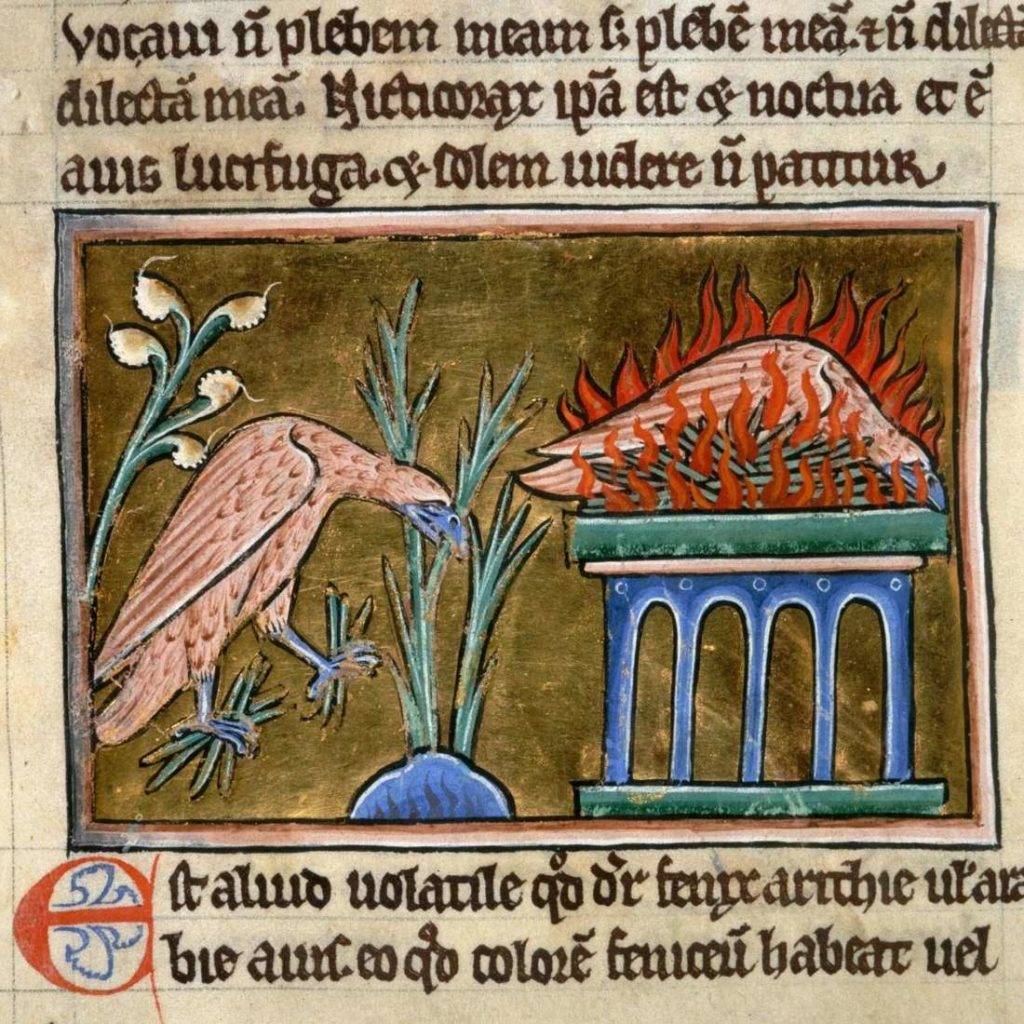
What matters about the Bennu is the benben stone connection. The benben was the primordial mound that rose from the waters of chaos at creation. The Bennu landed on it first. The bird was a symbol of renewal and of the first moment, the original appearance of order out of formlessness. That is a larger claim than most modern phoenix content makes, and I think it’s the more honest one.
What Did Greek and Roman Tradition Say About the Phoenix?
Herodotus, writing in Histories II.73 in the 5th century BCE, described the phoenix as a bird from Arabia that appeared at Heliopolis only once every five hundred years, carrying its father’s remains in a myrrh egg. He was skeptical about having seen it himself. That skepticism is usually omitted from modern summaries, which is a shame; it tells you something important. Even the earliest Greek source treated this as a marvel worth scrutinizing, not a given.
Pliny the Elder in Naturalis Historia 10.2 described jeweled, many-colored plumage with “purple” and iridescent hints. Later artists read those hints as blue. But “purple” in Roman usage often meant crimson-violet, not the cool blue of modern fantasy art. The Roman phoenix was imperial: radiant, singular, associated with eternal power. The phrase unica avis, “the unique bird,” appears in Lactantius’s De ave phoenice, stressing that only one phoenix exists at any time. This is where the bird’s association with rare, non-repeatable experience gets fixed in Western tradition.
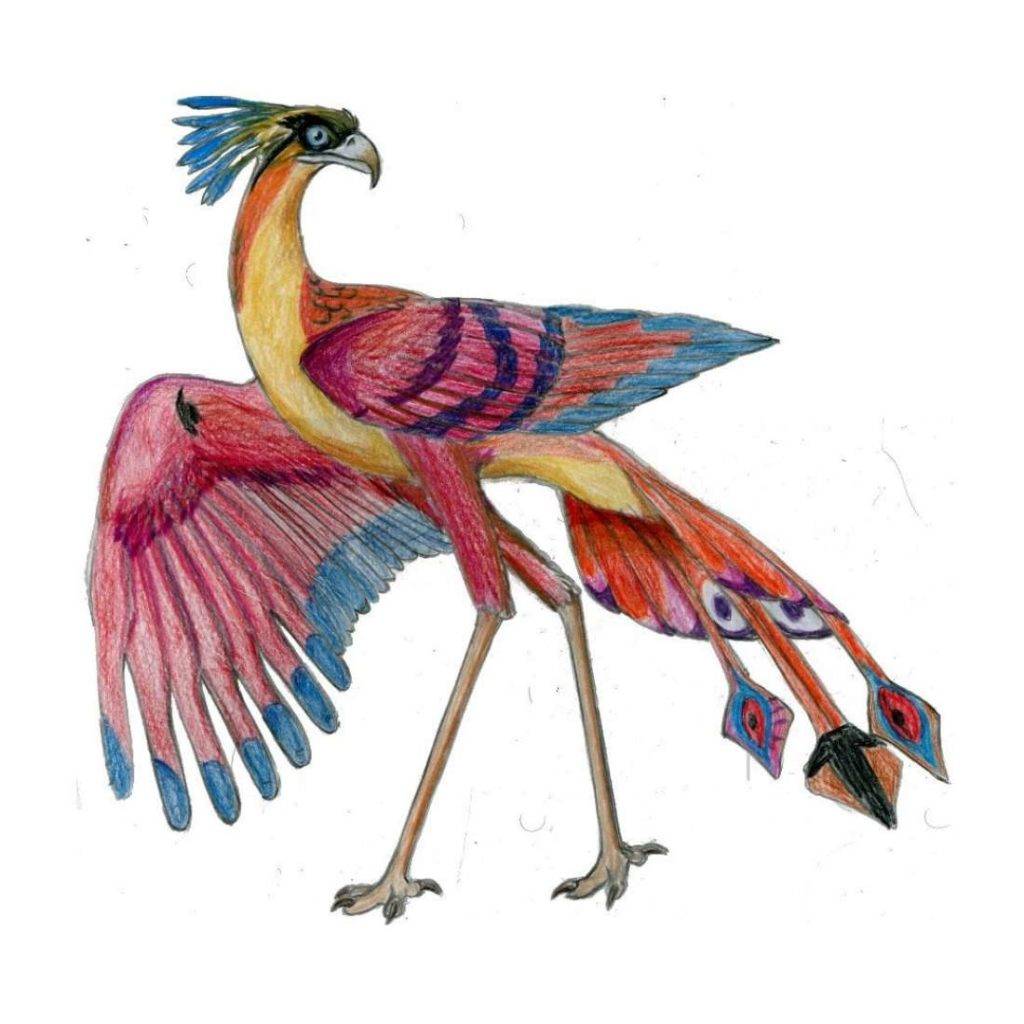
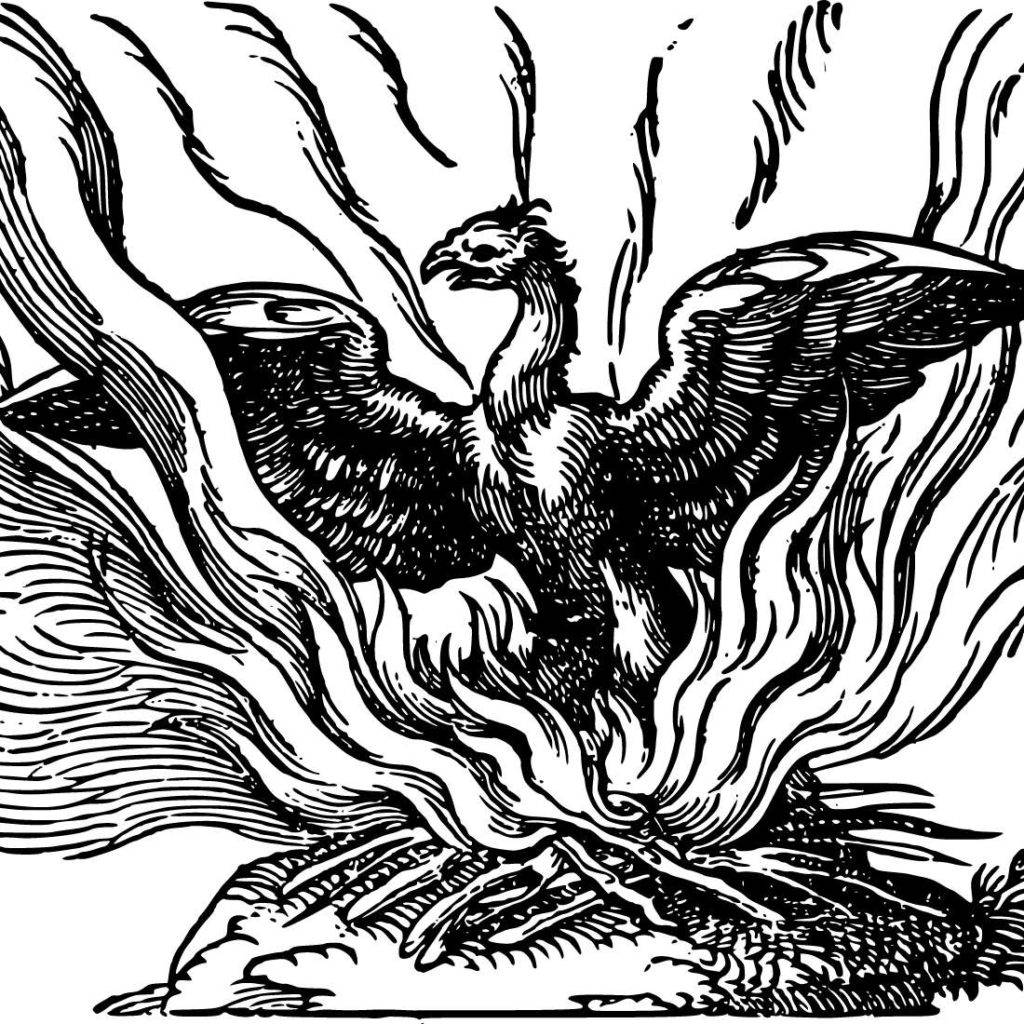
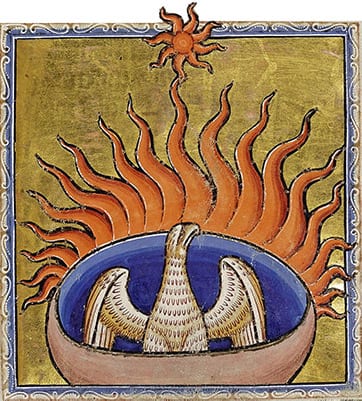
And the rebirth mechanism in Greek and Roman sources is not the cinematic instant flame-burst of modern film. Herodotus’s version uses the myrrh egg. Pliny’s version involves a more ceremonial burning. Lactantius describes something closer to decomposition and regeneration from marrow. The Yale-New Haven Teachers Institute’s 1998 curriculum unit on universal myths and symbols summarizes this variation in primary texts clearly: no single canonical method exists. The fire is a later simplification.
How Did Early Christianity and Byzantium Interpret the Phoenix?
The phoenix entered Christian writing early. The anonymous Physiologus, a natural history with moral commentary compiled between the 2nd and 4th centuries CE, included the phoenix as a demonstration of bodily resurrection. Clement of Rome, writing in the late 1st century, used it the same way: the bird proves that God can restore what death has taken. Lactantius wrote a full poem, De ave phoenice, that reads the bird’s cycle as an allegory for the soul’s journey through death and return.
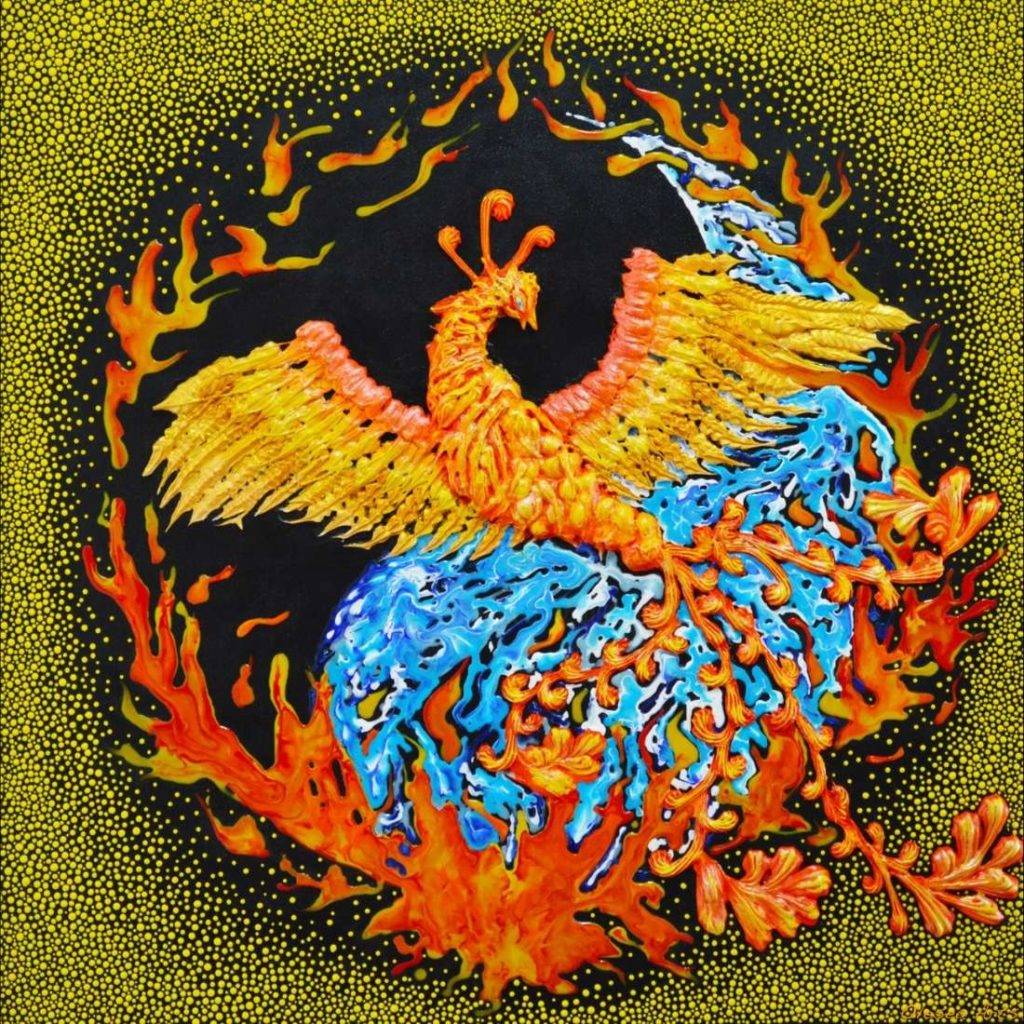
Byzantine visual tradition added the blue. Gold and blue were the heavenly color pair in Byzantine mosaics and manuscript illumination, so a phoenix depicted against a heavenly ground acquired blue wings, a blue nimbus, blue surroundings. This is where “blue phoenix” iconography enters Western art. It signals the bird’s location in heaven, not its alignment with water or ice. The color was atmospheric, not mythological.
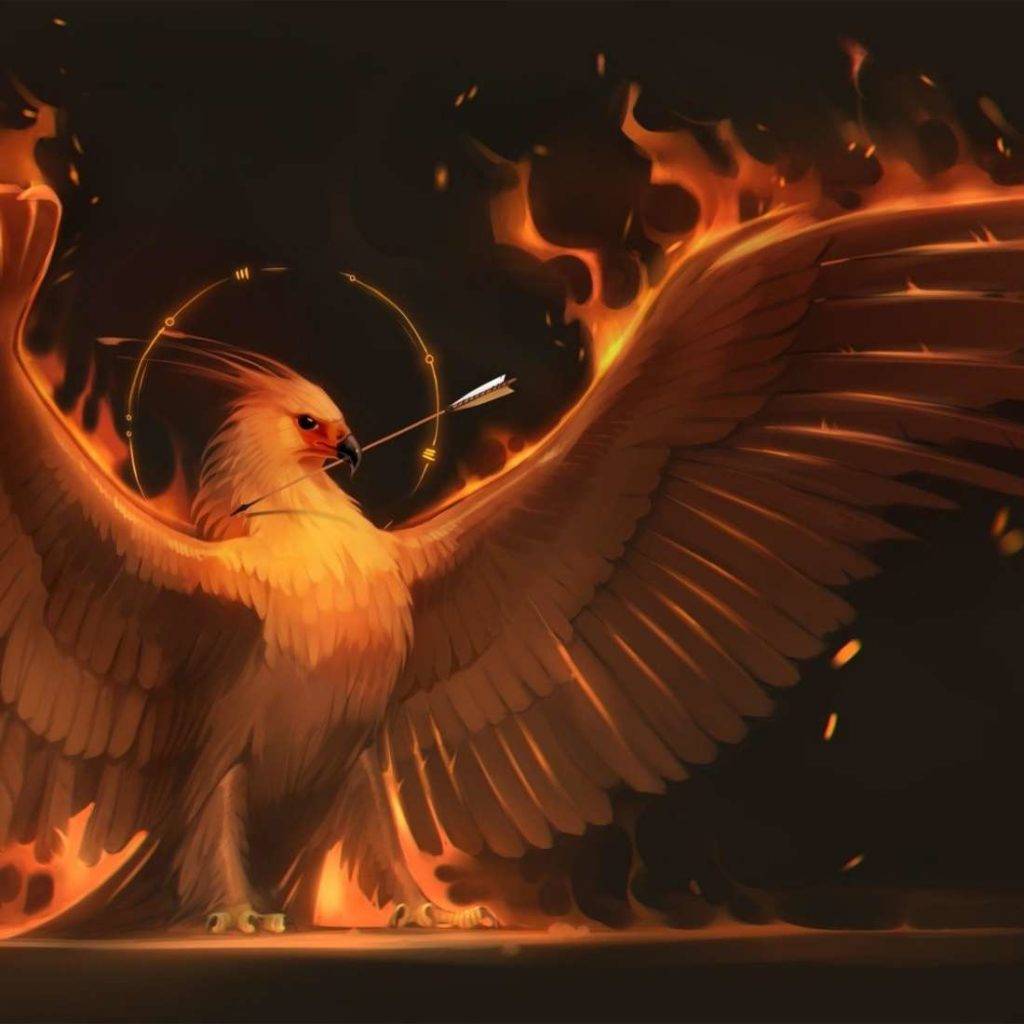
A blue phoenix in a Byzantine context means a phoenix in God’s presence. Not a phoenix of the sea. This distinction gets lost almost completely in modern spiritual content, which treats blue phoenix symbolism as if it had ancient roots in a separate water-element tradition. It does not. The blue came from church aesthetics.
What Does the Phoenix Mean in Chinese, Persian, and Islamic Traditions?
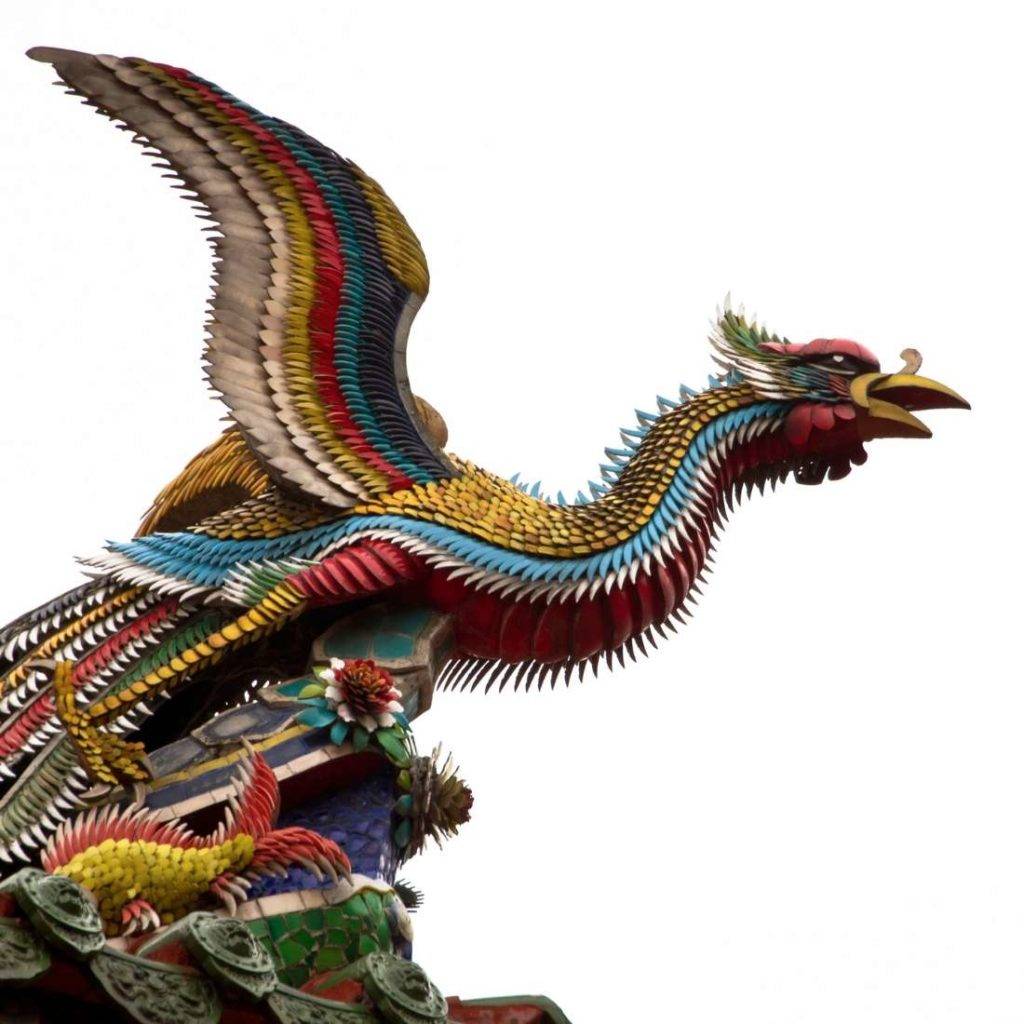
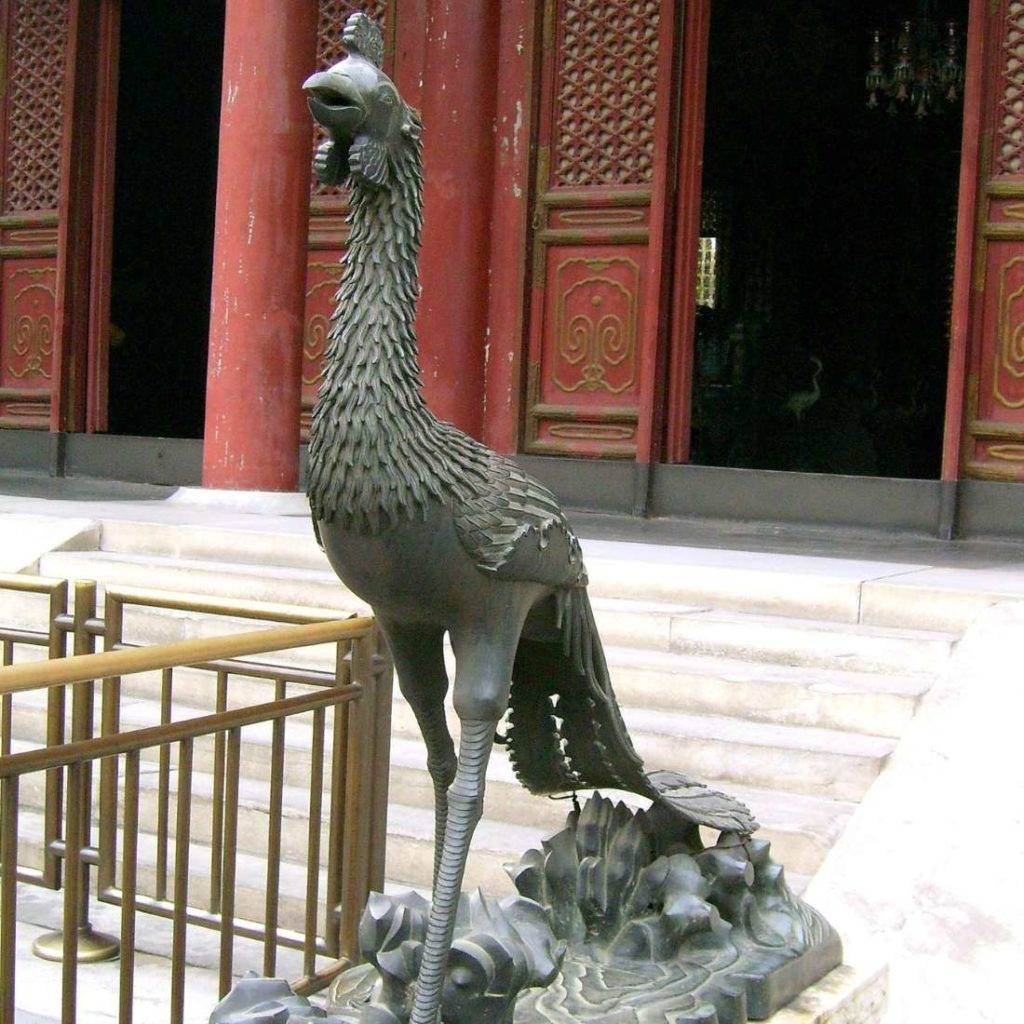
In Han Chinese tradition, as documented in the Shan Hai Jing (Classic of Mountains and Seas) and analyzed in Lihui Yang and Deming An’s Handbook of Chinese Mythology (2005), the fènghuáng is a five-colored bird embodying the Five Phases: black, white, red, yellow, and qīng. The Shen Yun Collections blog’s essay on the phoenix notes how the bird’s body parts were moralized in Confucian terms: the head represents virtue, the wings righteousness, the back benevolence. It is a cosmic civics lesson as much as a spiritual symbol.
The qīngluán, the azure luan-bird, appears in later texts as a messenger of immortals and a creature of celestial music. Because qīng renders as blue or green depending on context, modern depictions that emphasize a predominantly blue phoenix in East Asian style are drawing on the qīngluán more than on the fènghuáng proper. Related, but not identical.
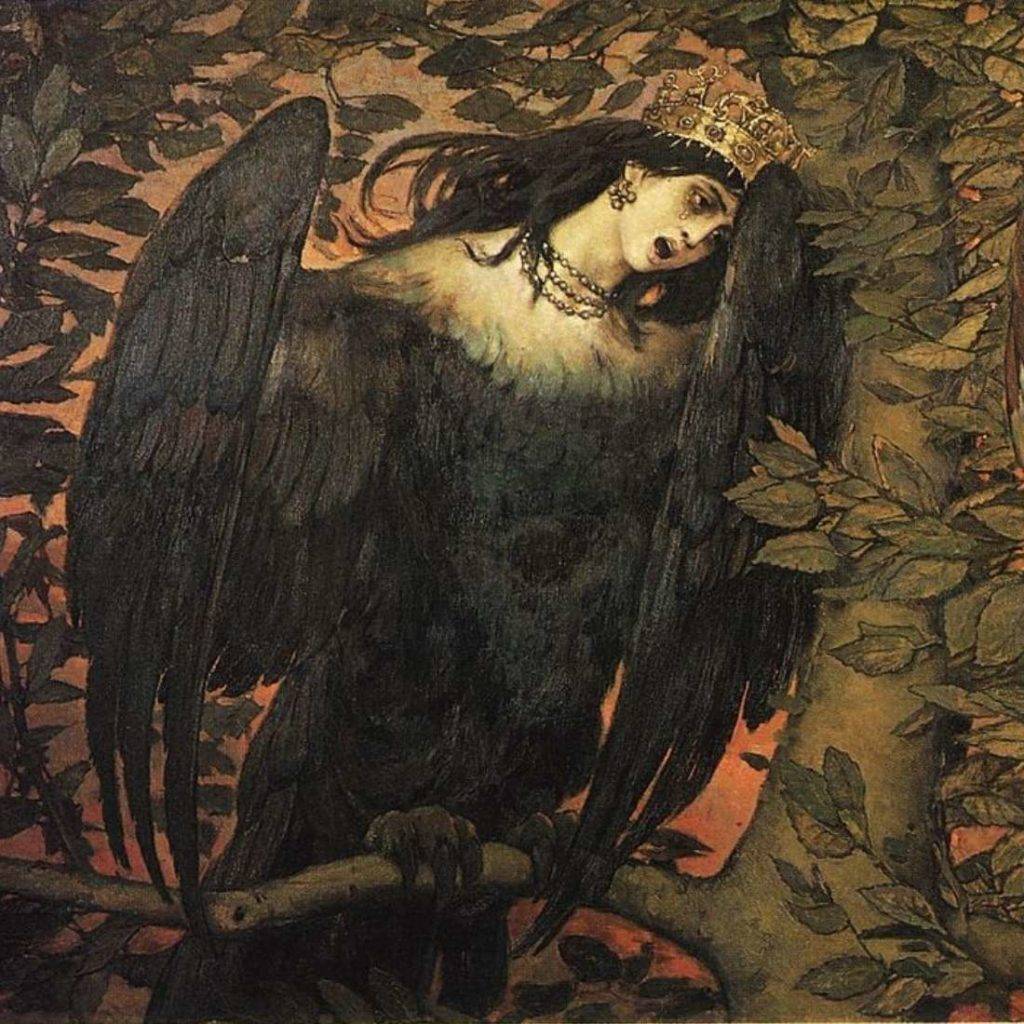
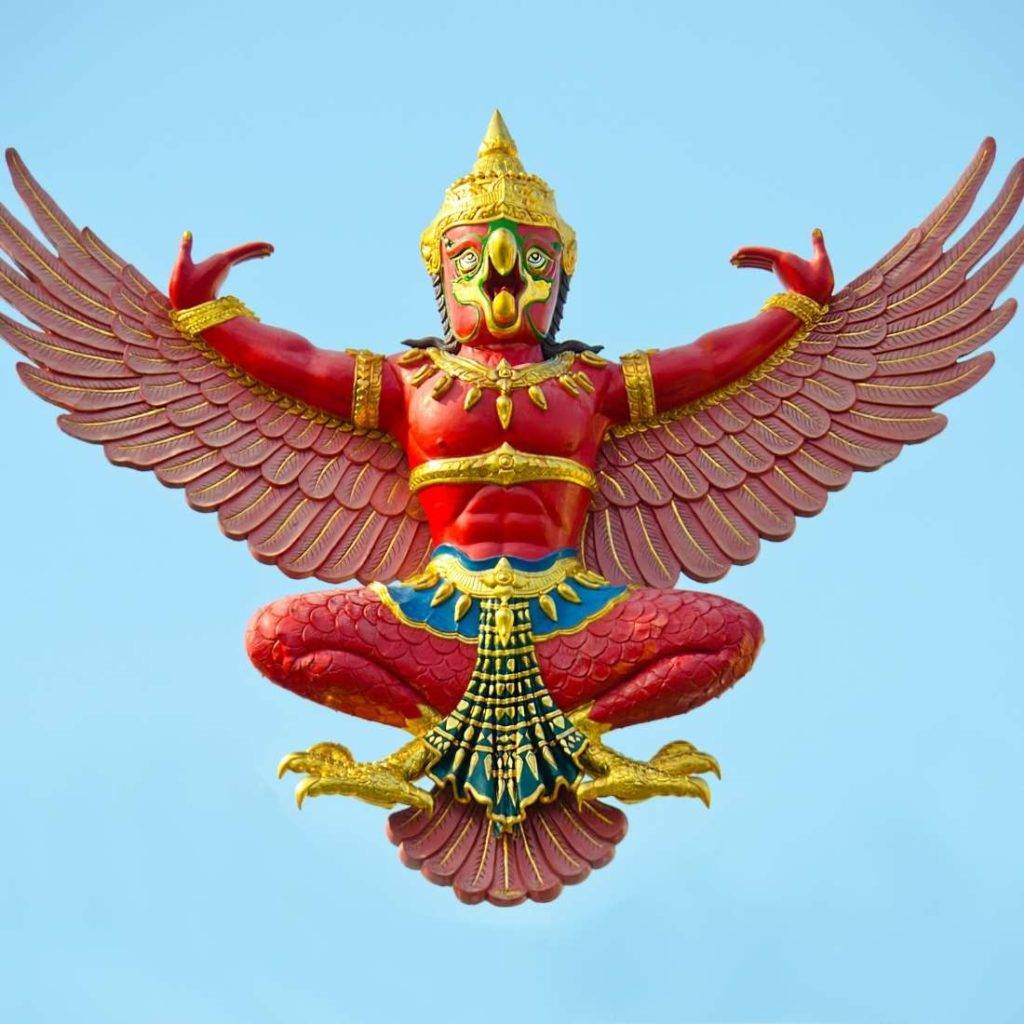
In the Persian and Islamic traditions, Zakariyya al-Qazwīnī’s 13th-century ʿAjāʾib al-Makhluqāt describes the ʿanqāʾ as a vast, sometimes destructive bird that later commentators equated with the Sīmorgh. But Farid ud-Din Attar’s reading in the Conference of the Birds is the one that travels furthest: thirty birds search for the Sīmorgh and discover that the Sīmorgh is the thirty birds. The lesson is not personal rebirth. It is ego-dissolution. The self that survives the fire in Attar is not the same self that went in, and the tradition insists this is the point, not the problem. I find that reading more demanding than what most modern phoenix content offers, and more interesting for it.
What Real Birds Likely Inspired Phoenix Mythology?
Two real birds did most of the work. Neither is a phoenix, but both had features that mythmakers found useful.
The greater flamingo (Phoenicopterus roseus) is extraordinarily long-lived. Tour du Valat and EURING ringing studies summarized by Wetlands International in 2010 document wild individuals living over thirty years, with one banded bird in France reaching at least forty-three. And flamingos visibly renew their color: as the Cornell Lab of Ornithology’s 2019 carotenoid data explains, birds that molt and re-accumulate pigments “re-flush” from pale back to vivid pink. A bird that lives forty-three years and keeps getting its color back is a natural template for a creature that periodically renews itself entirely.
The Indian peafowl (Pavo cristatus) contributed the visual vocabulary of the blue phoenix. Its brilliant blue-green body, iridescent tail, and dramatic fan display, documented in the Cornell Lab’s Birds of the World (2020), provide a clear model for a solitary, jewel-colored, regal bird. Wild peafowl reach fifteen years; captive individuals can exceed twenty. The peacock’s tail, spread and shaken, looks like nothing so much as a bird made of living fire. Or living water, depending on the light.
Large herons and storks seen against the smoke of a wildfire, or silhouetted against a sunrise, round out the natural history. The Bennu was drawn as a heron. The link is not accidental.
What Is the Phoenix as a Spirit Animal or Totem?
The phoenix as a spirit animal reads differently than most other birds, because there is no behavioral template to observe. You cannot watch how a phoenix hunts or nests or calls. The totem teaching comes entirely from the myth’s logic: the bird that dies and returns is the bird that has survived everything.
I read the core totem teachings across the Sufi, Christian, and Chinese frameworks in this order, not as a tidy list but by weight.
Endings are not failures. The fènghuáng appears when governance is good and withdraws when it fails, but the withdrawal is not a death sentence; the bird returns. Identity is rebuilt through the loss, not preserved from it. This is Attar’s reading from the Conference of the Birds: the self that emerges is not the self that went in, and the tradition insists this is the point, not the problem. And resilience is not about enduring without being changed. It is about being changed completely and continuing anyway.
If the phoenix has caught your attention recently, here is what people across these traditions have made of that: they read it as a signal that something is ending, not as a warning, but as a fact worth sitting with. The question the bird asks, if you want to put it that way, is not “will you survive?” It is “who will you be on the other side?”
For a broader look at birds associated with change and transition, see our piece on bird symbolism.
What Does the Phoenix Mean in Dreams?
A phoenix dream signals an active or imminent personal change. That is the consistent reading across Jungian, folk, and spiritual frameworks, and I don’t think it’s wrong. But the details of the dream matter more than the symbol alone.
A phoenix burning in a dream is not a nightmare. Jung, in Memories, Dreams, Reflections, read fire in dreams as psychic energy in motion, not necessarily destructive. The burning phoenix is the process mid-cycle, which suggests you are in the middle of something unresolved, not at the beginning or end.

A phoenix rising is the easier image: completion, a chapter closing, a new orientation becoming visible. If you were holding a phoenix feather in the dream, the folk reading tends toward a sense of being trusted with something rare. I cannot source that precisely and won’t pretend to. The classical sources don’t address it, and the modern folk record is thin on this specific variant.
Your emotional state in the dream matters as much as the image. Fear during the burning suggests resistance to a change already underway. Calm suggests acceptance. Grief suggests you know what is ending. For a fuller treatment of dream symbolism involving birds, we have a dedicated section in our bird symbolism article.
What Is the “Phoenix Rising” Meaning in Modern Spiritual Use?
The phrase “phoenix rising” is not a modern invention. It has a straight, unbroken line from Roman imperial coinage through Lactantius’s resurrection poem to the language of recovery communities today.
On coins from the late Roman empire, the phoenix stood on a globe with the legend Roma aeterna, eternal Rome. The bird was not private or personal. It was civic and cosmic, a symbol that the city itself could not be finally destroyed. Lactantius used the same bird to argue for individual resurrection. The two uses, civic and personal, ran side by side for centuries.
What happened in the 20th century, accelerating into the 21st, was the phrase detaching from its classical and theological moorings and landing in personal-development language. Addiction recovery. Grief work. Trauma therapy. The language of “rising from the ashes” appears in contexts with no explicit connection to either Roman imperialism or Christian theology, but the symbolic logic is the same: something was reduced to nothing, and what stands now is built from that nothing.
The continuity is real, not invented. The phrase traveled because the idea it carried was true in a way that kept getting confirmed.
For a broader look at animals associated with personal change and survival, see our piece on symbolism for transformation.
What Are the Most Common Misconceptions About Phoenix Symbolism?
Two misconceptions dominate the internet’s phoenix content, and both are worth correcting directly.
Misconception one: the blue phoenix is an ancient, separate water or ice element bird. Popular spiritual sites describe the blue phoenix as ruling emotional healing, the water element, or “ice fire.” No classical source I have found supports this. Not in Egypt, Greece, Rome, early Christian writing, or classical Han Chinese texts. Blue tones in phoenix imagery come from Byzantine artistic conventions (heavenly blue backgrounds) and from the East Asian qīngluán, an auspicious court bird associated with music and celestial messengers, not with water as an element. The qīngluán is not a water deity. The Byzantine blue phoenix is not an ice bird. The color was aesthetic or cosmological, not elemental.
Misconception two: the phoenix always bursts instantly into flame and rises from the ashes in one cinematic moment. Herodotus describes a myrrh egg and a transport ritual. Pliny describes a ceremonial burning with variation. Lactantius’s version focuses on decomposition and regeneration from marrow. The Yale-New Haven Teachers Institute’s 1998 curriculum unit on universal myths and symbols summarizes this variation clearly. The instant cinematic rebirth is a modern simplification. The classical accounts are stranger, slower, and more interesting than the movie version.
And honestly, the stranger versions feel truer. The worm-from-marrow regeneration is not a pretty image, but it is a more honest account of how recovery from real loss actually works: slow, unglamorous, starting from almost nothing.
What Does a Phoenix Tattoo Symbolize?
Phoenix tattoos are among the most searched tattoo meanings, and the symbolism is consistent enough across the traditions covered here that a short answer is possible: a phoenix tattoo marks survival through destruction. Specifically, it marks the identity that exists on the other side of a collapse, not the one that preceded it.
Color variants carry distinct weight, and the traditions support this.
Red-gold phoenix tattoos draw on the original solar tradition: Egyptian Bennu, Greek phoînix, Roman imperial bird. Fire and sun readings. Resilience, renewed power, the capacity to outlast destruction. The Centre of Excellence’s phoenix symbolism guide covers this color variant well.

Blue-toned phoenix tattoos draw on the Byzantine heavenly tradition and the East Asian qīngluán. In these readings the color signals something closer to transcendence than raw survival: the change was so complete that what emerged is of a different order than what went in. Some people who have been through grief choose this version for that reason, and I think that’s a defensible read even without a clean classical source for it.
The fènghuáng five-color tattoo is rare outside of specifically Chinese cultural contexts, but for people with a connection to that tradition, the full five-color bird carries the complete Confucian moral symbolism: virtue, righteousness, benevolence, fidelity, and propriety, one for each color, encoded in the bird’s body.
What I notice, having read a fair amount of tattoo symbolism over the years (which is not the same as having any special authority over it), is that people choose the phoenix after something has already ended. Not before. Not as a wish. As a record.
Frequently Asked Questions
What is the difference between the phoenix and the Chinese fènghuáng?
The Greek phoînix is a solitary bird, one of its kind at any moment, that dies and is reborn through fire or decomposition. The Chinese fènghuáng is a composite of five colors representing the Five Phases of Chinese cosmology, appears in pairs (male fèng, female huáng), and signals righteous governance rather than personal rebirth. According to Lihui Yang and Deming An’s Handbook of Chinese Mythology (2005), the two birds come from entirely separate mythological systems. The comparison is a Western imposition more than a genuine parallel.
Is there a female phoenix in any mythology?
In early Greek and Roman sources, the phoenix is almost always a single, genderless unica avis. Sex was not part of the original mythology. In Han Chinese folk religion, the fènghuáng originally distinguished male (fèng) from female (huáng), though the two later merged into a single royal symbol. I have not found a classical Western source that assigns the phoenix a consistently female identity, though later European poetry occasionally feminizes the bird. The gendering in modern spiritual content is largely a contemporary addition.
What does a blue phoenix specifically represent in modern spiritual practice?
In modern practice, the blue phoenix is read as a symbol of emotional depth, calm after crisis, and change that operates at the level of identity rather than circumstance. The association with water, healing, and inner change comes from a loose combination of Byzantine blue-as-heavenly and East Asian qīng-as-azure imagery. No single classical text defines a blue phoenix as a water-element creature. I want to be clear about that, because I have read versions of this claim that present it as ancient fact. The blue color tradition is real. The ancient water-element doctrine is not.
What does a phoenix feather symbolize?
In the limited folk and literary record I have found, a phoenix feather represents contact with something that survived the fire. Lactantius’s De ave phoenice does not address feathers specifically. Later European folk tradition treats them as objects of rare protection, a remnant of the impossible. In modern spiritual practice the feather tends to read as a sign of personal resilience, something carried through a hard period. I don’t have a confident classical source for the feather’s symbolism in isolation. The folk record on this specific question is thin.
What is the phoenix’s connection to the sun?
The Egyptian Bennu bird was a solar creature first. Its name derives from the root wbn, meaning “to rise, to shine,” per James P. Allen’s Middle Egyptian (2000). The Bennu landed on the benben stone at the first sunrise. Greek and Roman accounts placed the bird’s origin in Arabia and its destination in Heliopolis, the Egyptian city of the sun. Herodotus in Histories II.73 describes the bird arriving every five hundred years to deposit its father’s remains at the temple of the sun. The solar connection is the oldest and most consistent feature across Western phoenix traditions.
How long does the phoenix live before it dies and is reborn?
Sources disagree, and they disagree by a lot. Herodotus says five hundred years. Pliny the Elder in Naturalis Historia 10.2 says the same. Tacitus gives 1,461 years, a number linked to the Egyptian Sothic cycle. Later Roman and early Christian writers propose figures ranging from 300 to 12,994 years. There is no canonical lifespan. The disagreement is itself instructive: the specific number mattered less than the idea of immense age followed by renewal. The bird lives long enough that its return is genuinely surprising. That is the function of the number, whatever it is.
What does the phoenix symbolize in the context of grief or loss?
The phoenix is one of the oldest symbols for being reduced to something you do not recognize and continuing anyway. In early Christian readings through the Physiologus (2nd-4th century CE), it illustrated the resurrection of the dead, which was consolation for grief. In modern grief communities the language of “rising from the ashes” appears regularly, not because people are reading Lactantius, but because the symbol maps cleanly onto what grief actually does. It burns the previous version of the life. What survives is not the same. The phoenix says that is the point, not the tragedy.
Is the Sīmorgh the same as the phoenix?
Not quite. The Encyclopaedia Britannica notes that medieval Islamic encyclopedists, including Zakariyya al-Qazwīnī in his 13th-century ʿAjāʾib al-Makhluqāt, sometimes equated the ʿanqāʾ with the phoenix. But Farid ud-Din Attar’s Sīmorgh in the Conference of the Birds (ca. 12th century) operates very differently from the Greek or Christian phoenix. The Sīmorgh is not a bird that dies and returns. It is a bird that turns out to be what the seekers already were, once all else was stripped away. The lesson is ego-dissolution, not personal rebirth. Related idea, different teaching.
What does the phoenix symbolize in alchemy?
In European alchemical tradition, the phoenix represented the final stage of the Opus Magnum, the Great Work: the rubedo, or reddening, which followed the albedo (whitening) and signified the completed change of base matter into gold or, spiritually, the perfected soul. The bird’s red-gold color matched the color of the completed stone. Carl Jung, whose Psychology and Alchemy (1944) remains the most thorough psychological reading of alchemical symbolism, read the phoenix as an image of the self achieved through the full process of individuation. The alchemical phoenix is not about surviving catastrophe. It is about completing a process that most people stop before the end.
Where does the city of Phoenix, Arizona get its name, and does it carry the bird’s symbolism?
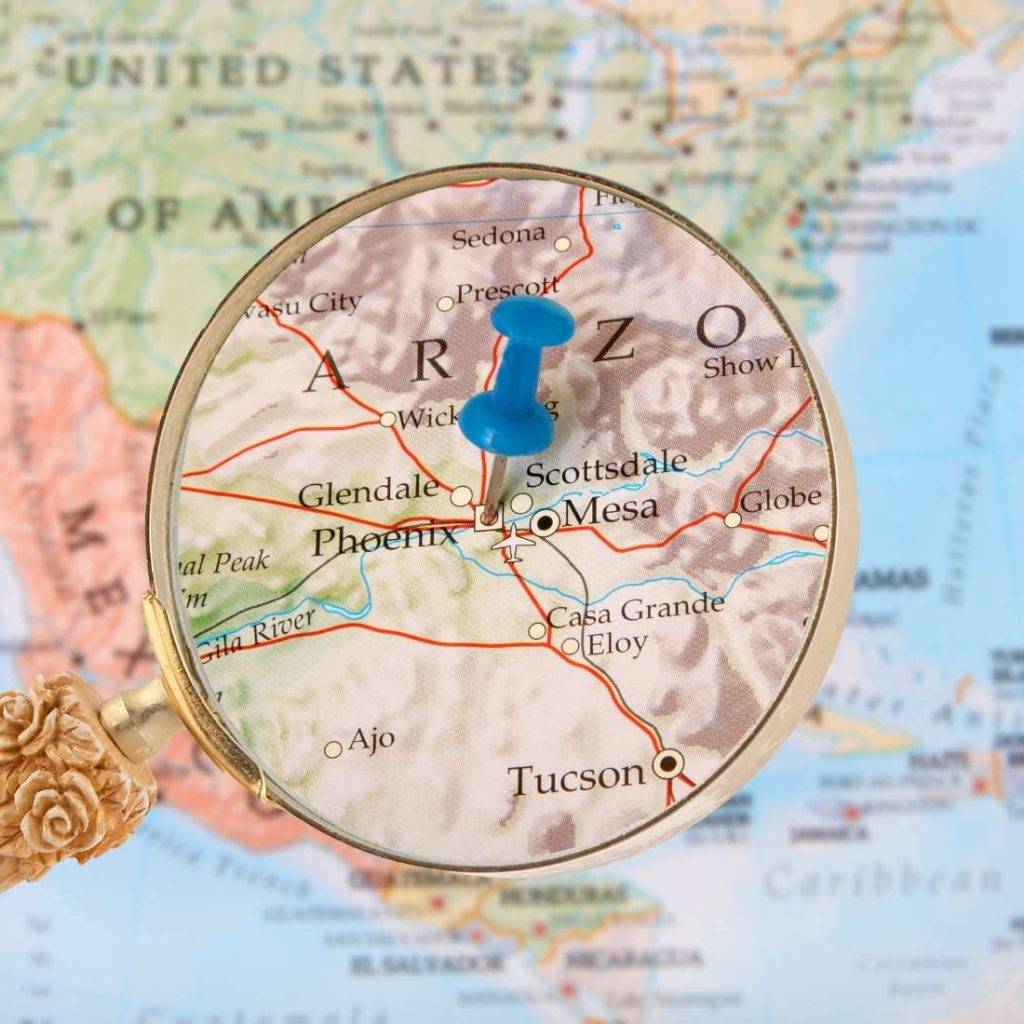
Phoenix, Arizona was named in 1868 by Darrel Duppa, a British settler who observed that the new settlement was being built on the ruins of a Hohokam civilization that had flourished and then collapsed centuries earlier. The name was deliberate: a city rising from the remains of a prior city. The bird’s symbolism was consciously applied. Whether the city lives up to the name is a different question, and not one I am qualified to answer, but the intention behind the naming was specific and the myth was the right one to reach for.
Sources
- Encyclopaedia Britannica / Wikipedia – “Phoenix (mythology)”
- Curationist – “The Phoenix: A Universal Mythical Bird?”
- Centre of Excellence – “Phoenix Symbolism: What Do Phoenixes Represent?”
- Yale-New Haven Teachers Institute – “Universal Myths and Symbols” (1998)
- Shen Yun Collections – “The Phoenix: A Source of Divine Inspiration in Han Chinese folk religion”
- Encyclopaedia Britannica – “Phoenix (mythological bird)”
- Latelita – “Rising from the Ashes: The Timeless Symbolism of the Phoenix”
- R. van den Broek, The Myth of the Phoenix (1972) – cited via Wikipedia and Britannica summaries
- James P. Allen, Middle Egyptian (Cambridge University Press, 2000)
- Lihui Yang and Deming An, Handbook of Chinese Mythology (ABC-CLIO, 2005)
- Farid ud-Din Attar, Conference of the Birds (ca. 12th century)
- Zakariyya al-Qazwini, ʿAjaʾib al-Makhluqat (13th century)
- Lactantius, De ave phoenice
- Herodotus, Histories II.73
- Pliny the Elder, Naturalis Historia 10.2
- Physiologus (2nd-4th century CE)
- Cornell Lab of Ornithology, Birds of the World (2020)
- Wetlands International / Tour du Valat EURING flamingo longevity data (2010)



Thank you, so much for this enjoyable and insightful read. I am currently writing a novel, and my main MC is a fire Phoenix. This page is filled with information that is going to be very helpful. (Again thank you.)