In Han Chinese tradition, an oriole singing in spring was a sign that prosperity and growth were on their way. When you hear or see an oriole now, that old reading is still there, waiting in the back of your mind. But the catch is whether a bird showing up in summer carries the same weight as one that arrives right on schedule.
Key Takeaways
- The oriole’s best-documented symbolism comes from Han Chinese literary tradition, where it stands for spring, seasonal renewal, and a refined singing voice, not universal good luck or spirit-world contact.
- The English name “oriole” derives from the Latin aureolus, meaning “golden.” The color association is linguistic in origin, not the product of an ancient spiritual system.
- The oriole appeared on the Ming-dynasty embroidered rank badge for Grade Eight civilian officials, a specific heraldic use that has nothing to do with folk omens.
- A Bengali folk tale connecting the Black-hooded Oriole to a wronged merchant’s wife has been reported by birding sources, but has not been verified against collected ethnographic material.
- Modern claims that orioles are ancestor messengers or abundance symbols are not supported by any named, historically grounded source.
What Is the Oriole’s Core Spiritual Symbolism?
Where the record is clearest, the oriole’s symbolism centers on song, the return of spring, and a kind of vivid beauty that gets coded into joy. That much holds. But it holds in specific places and specific literary traditions.
In Han Chinese literary culture, the oriole’s song announced spring. It appeared alongside swallows in set phrases that described a prosperous, peaceful scene. Its voice was used as a comparison for delicate, refined singing, a compliment, not a warning. None of this amounts to “if you see an oriole, good luck is coming.” It amounts to something older and more specific: a bird that meant the cold was ending, that things were opening again.
The broader claims, abundance, ancestors, spirit messages, are much more recent. They come from contemporary spiritual writing, and they don’t have a named historical source behind them. I’ll say more about that below, because it matters if you’re trying to understand what the bird actually meant to people who watched it carefully.

What Does the Oriole’s Name Reveal About Its Symbolic Identity?
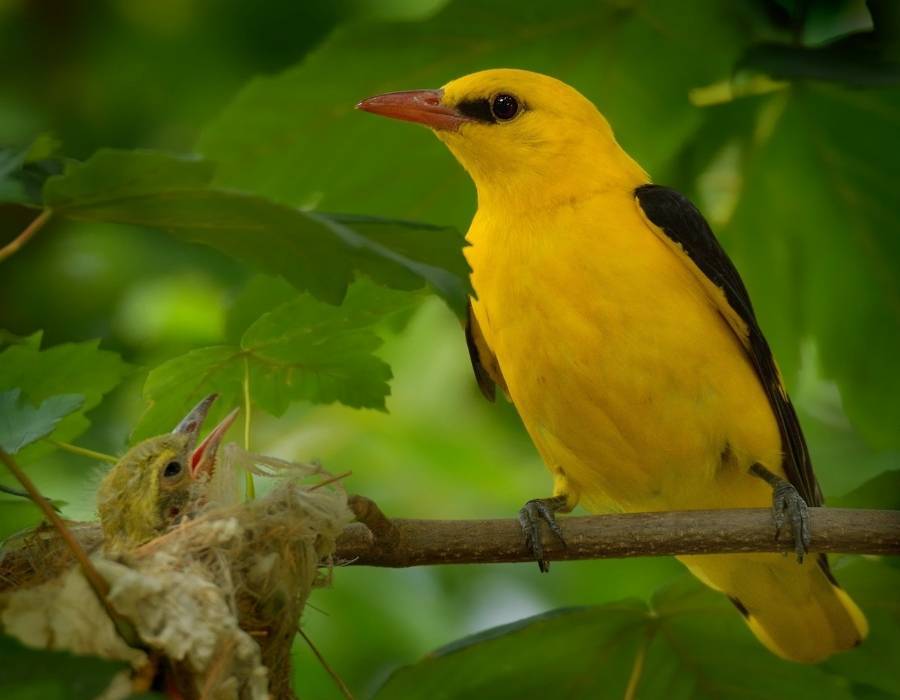
The English word “oriole” came into the language through French, from the Latin aureolus, a diminutive of aureus, meaning golden. The Online Etymology Dictionary records that the name was originally applied to the Eurasian Golden Oriole (Oriolus oriolus), and the color reference is built into the word itself. You can’t separate the name from the gold.
Birds and Nature, Volume IX, Number 5 (1901) corroborates this derivation and situates it in early natural-history writing. The name was carrying its color meaning before any systematic symbolic tradition attached to it in Western contexts.
This matters because a lot of contemporary symbolism writing treats the oriole’s golden color as evidence of ancient solar significance. But the color association is linguistic. It’s the name doing the work, not centuries of accumulated spiritual attention. That doesn’t make it meaningless, it just means the meaning is different from what gets claimed.
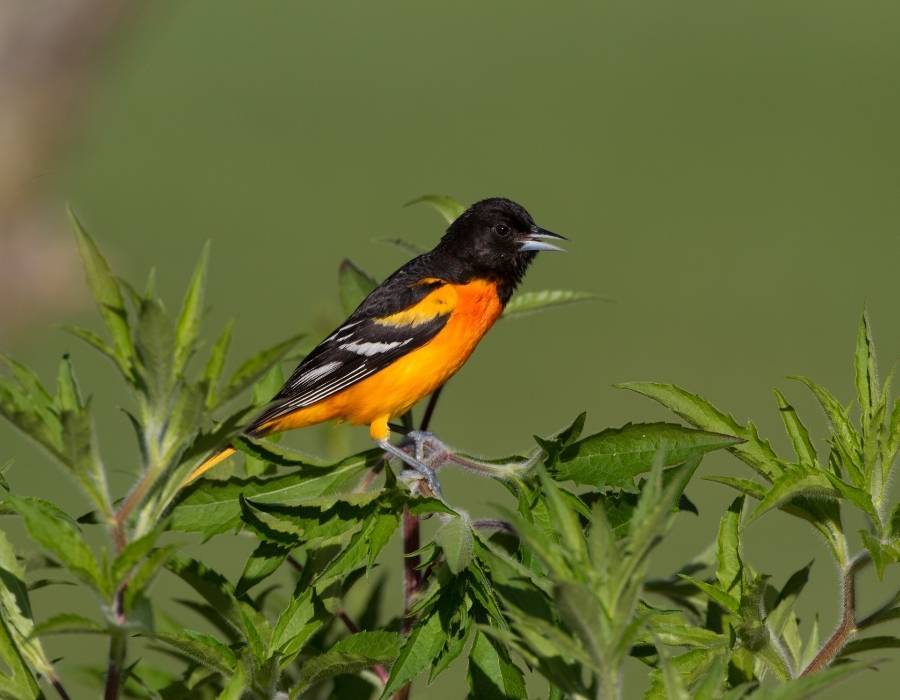
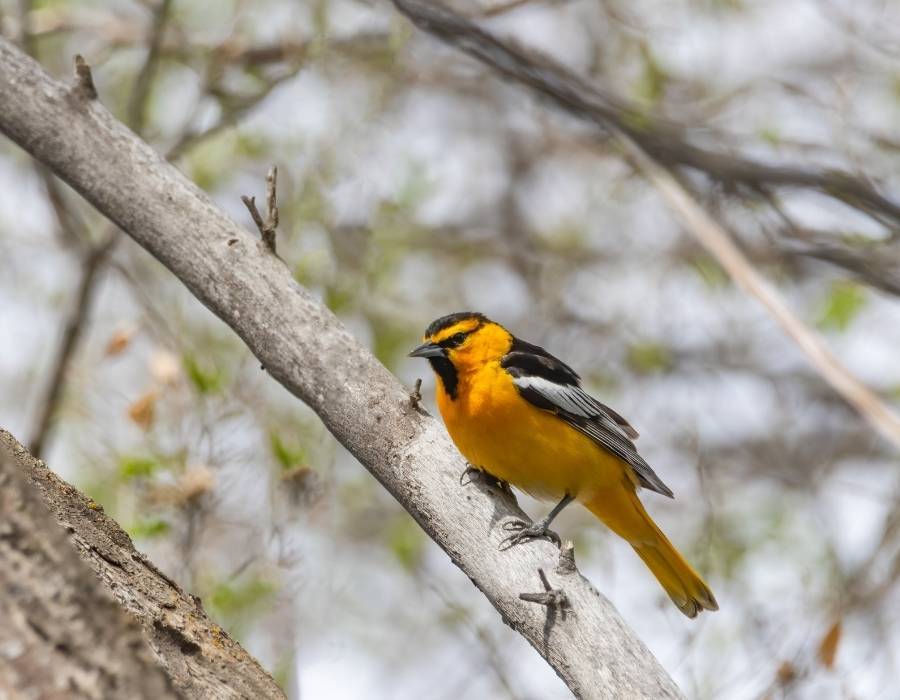
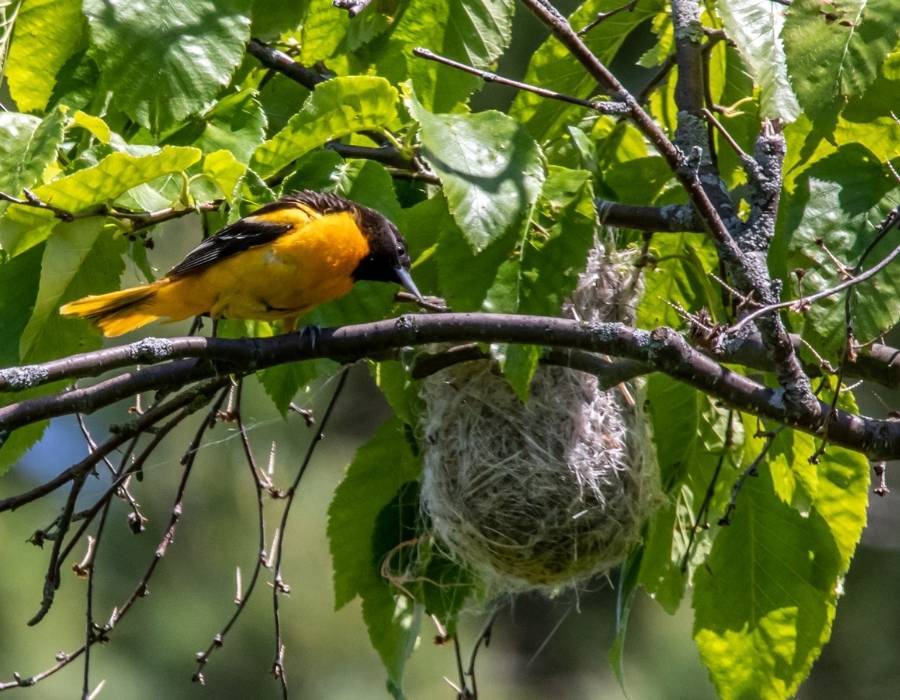
One further wrinkle. “Oriole” does not name one bird. The Eurasian Golden Oriole of European literary reference and the Black-naped Oriole (Oriolus chinensis) of Chinese literary tradition are distinct species.The Baltimore Oriole, native to easternNorth America, belongs to an entirely different family, the Icteridae, not the Oriolidae. Symbolism attached to one of these birds should not be transferred automatically to the others.
What Do Chinese Literary Traditions Say About the Oriole?
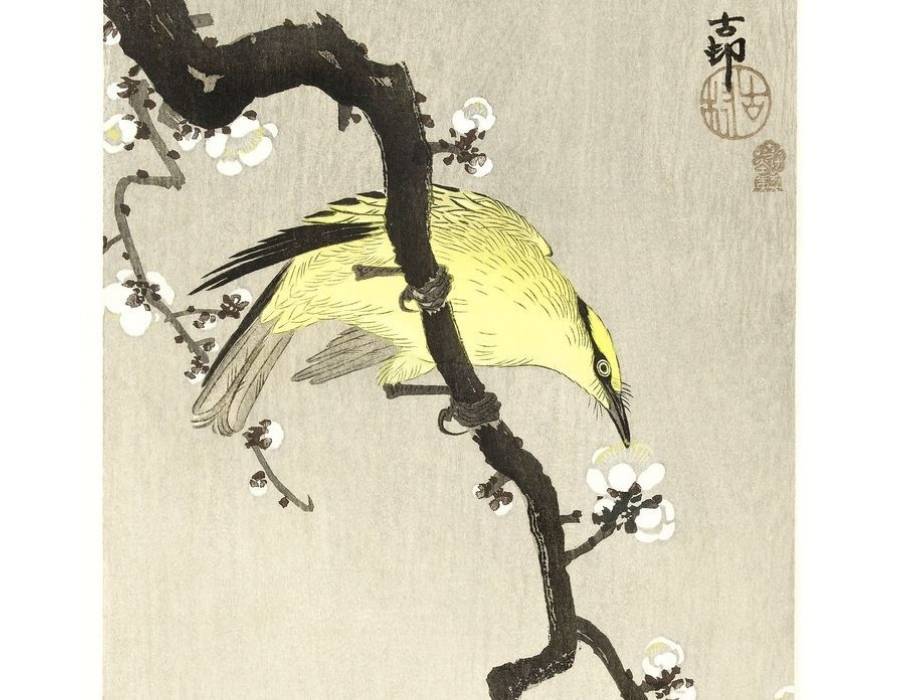
In Han Chinese literary language, the oriole appears most often under names that already tell you what people noticed: huangli (黃鸝), “yellow oriole”; huangying (黃鶯), “yellow warbler-like bird”; and the older classical name cangeng (倉庚 / 鶬鶊). According to Siba Gu’s specialist account of Oriolidae, the bird prominent in this literary tradition is the Black-naped Oriole, and its role is consistent: it arrives with spring, it sings, and its song sets the scene.
The phrase yingge yanwu (鶯歌燕舞), orioles singing, swallows darting, describes a scene of peace and prosperity. It’s a set phrase for a particular kind of fine spring day, the kind that implies things are going well. The oriole’s voice is also used as a simile for delicate, accomplished singing, particularly in classical descriptions of women’s voices.
What the Chinese literary tradition does not establish is an omen system. Seeing an oriole in a garden was not, in this record, a signal that an ancestor was visiting or that money was coming. The bird carried meaning, seasonal, aesthetic, social, but that meaning was woven into poetry and literary language, not into a divination practice.
How Did the Oriole Function in Ming-Dynasty Court Culture?
Siba Gu’s account of Chinese Oriolidae identifies the oriole as the bird depicted on the embroidered rank badge, or buzi (補子), worn by Grade Eight civilian officials under the Ming-dynasty court dress system. Each rank had its designated bird or animal, and the oriole fell to the eighth grade. That’s regulated heraldic use, not folk belief.
It means the oriole carried enough prestige to function as an official symbol within a highly formalized visual system. It does not mean that ordinary people associated orioles with rank or wealth in their daily lives. And it certainly doesn’t mean that a Ming official spotting an oriole on his walk to work read it as a sign from the spirit world.
The rank-badge use and the folk-omen use are different things. Collapsing them into a single claim that “the oriole symbolizes prosperity in Han Chinese folk religion” flattens a distinction that the historical record actually preserves.
What Does Bengali Folk Tradition Say About the Oriole?
This is where I want to be careful, because the source is a secondary account, not a collected ethnography. A birding reference from 2018 reports a Bengali folk narrative in which a merchant’s daughter-in-law, wronged by her mother-in-law, is transformed into a Black-hooded Oriole. The bird’s Bengali names, benebou, meaning “merchant’s wife,” and haldi pakhi, meaning “turmeric bird”, are said to preserve this story.
Those names are genuinely interesting. Benebou as a vernacular name for a bird is the kind of detail that usually points to a real folk narrative rather than an invented one. But I can’t verify this against a collected oral source or an academic study of Bengali folk tales. The birding account is a useful lead. Not an established fact.
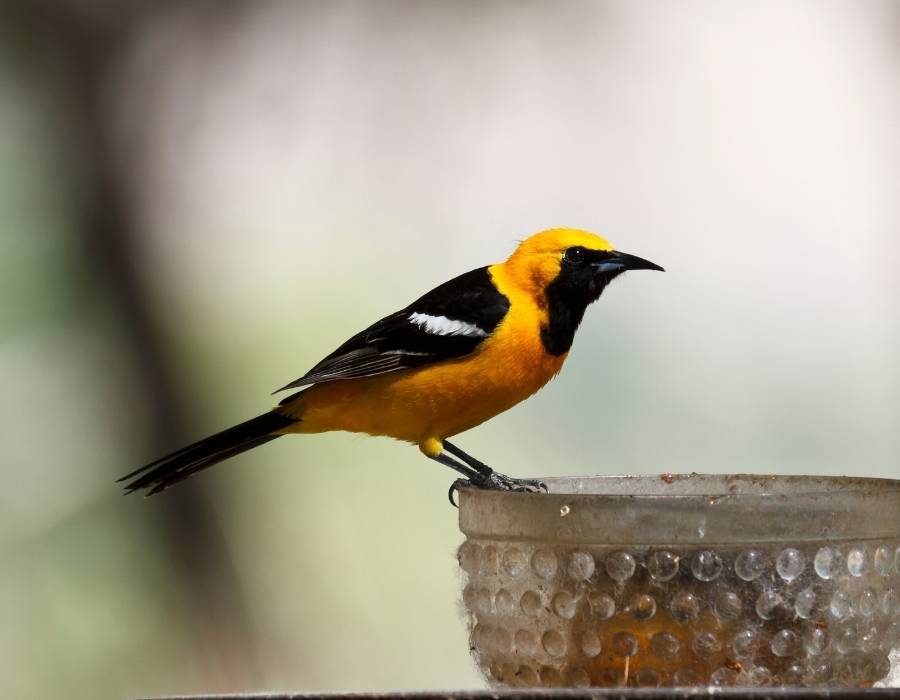
And if the tale is accurate, it shows the oriole functioning as a figure of transformation and injustice, not abundance. A wronged woman becomes a bird. That’s a darker and more complicated story than the good-luck reading that gets attributed to it.
What Are the Most Common Misconceptions About Oriole Symbolism?
Three claims turn up constantly. None of them holds against the actual record.
Claim 1: Orioles universally signal good luck or abundance. The documented record supports something narrower, in Han Chinese literary culture, the oriole signaled spring and prosperity in a seasonal, poetic sense. That is not the same as a universal good-luck omen. Feathered Realm’s 2023 overview presents broader claims but doesn’t name the historical traditions behind them. Broad doesn’t mean true.
Claim 2: Orioles are documented ancestor messengers or spirit-world contacts. This is the claim I see most often, and it has the weakest foundation. The Chinese literary tradition concerns song and season. The Ming rank badge is a court heraldic convention. The Bengali tale involves transformation, not spirit contact. None of these support the idea that seeing an oriole means a deceased relative is visiting. Spirituality Animals’ 2025 oriole piece states the ancestor-messenger claim as if it were ethnographic documentation. It is not.
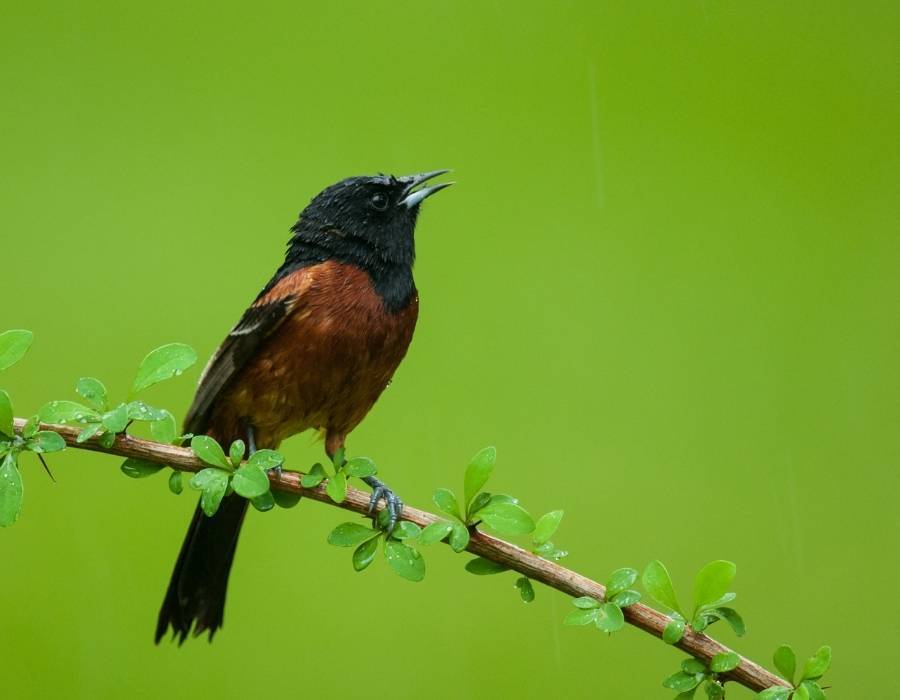
Claim 3: All “oriole” symbolism concerns the same bird. It doesn’t. The Chinese literary oriole is the Black-naped Oriole. The historical Western oriole is the Eurasian Golden Oriole. The Baltimore Oriole, which most North American readers picture, belongs to a different family entirely and has its own regional associations, including its naming history with the Baltimore Orioles MLB franchise, which drew on the state bird’s colonial-era name rather than any spiritual tradition. Symbolism attached to one of these birds cannot be transferred to the others without argument.
What Does the Oriole Represent as a Spirit Animal or Totem?
If you’re working with the oriole as a spirit animal or totem in a personal spiritual framework, you’re drawing on the bird’s documented qualities rather than a historically grounded system specific to this species. That’s worth knowing so you can use it more precisely.
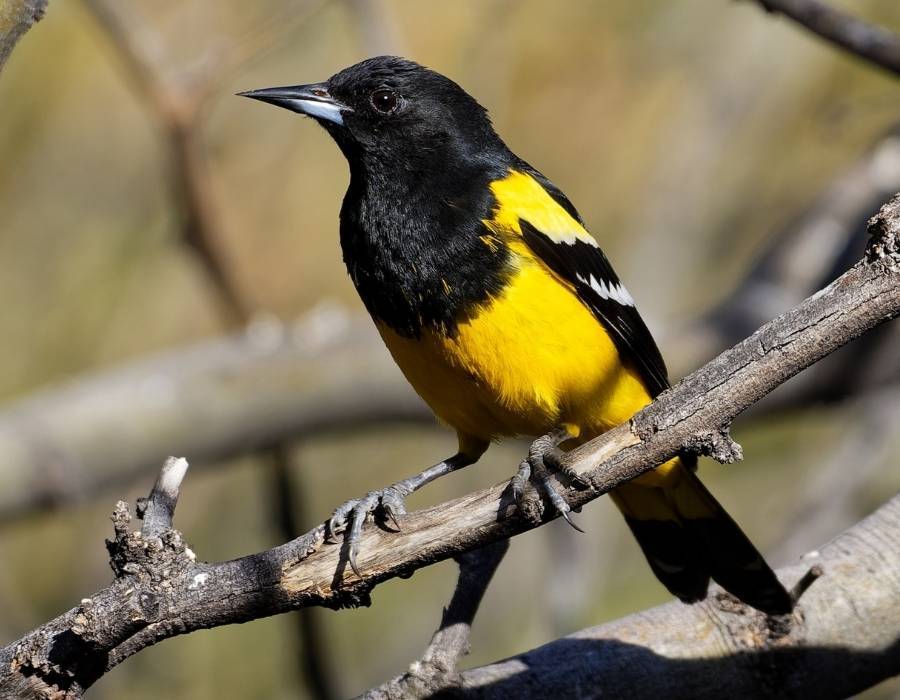
The qualities the oriole actually has: a voice that carries further than its body suggests, a seasonal reliability that means it shows up at the same time every year, a golden coloring that stands out against green canopy. These do ground a particular kind of meaning. Voice over visibility. Constancy over force. Warmth that is felt before it is seen.
If this bird has caught your attention recently, here is what people have made of that encounter: the oriole is not a watchdog or a warning. It is more like a reminder that something worth noticing is happening, and the noticing is the whole point.
As for the distinction between spirit animal and totem, in most modern usage, that line isn’t drawn from a single tradition. Spirit animal language comes loosely from several Indigenous frameworks, though its current popular use is far removed from any of them. Totem in the popular sense usually means a guiding symbol you identify with over time. Neither term has an oriole-specific tradition behind it that I have been able to locate.
What Does the Oriole’s Behavior Reveal About Its Symbolic Meaning?
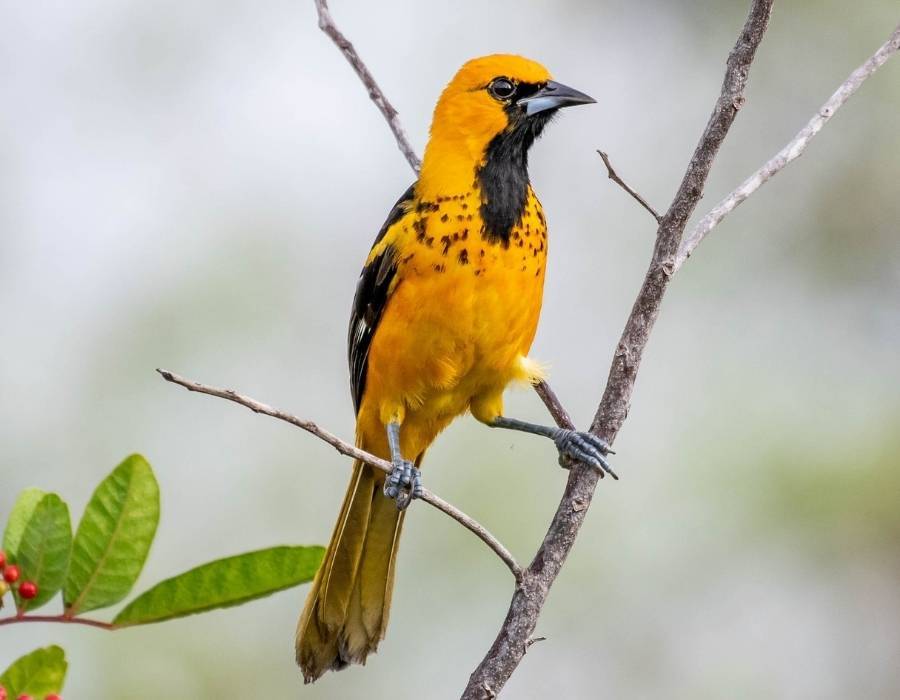
The Eurasian Golden Oriole announces itself before you see it. The song is loud, clear, and distinctive, a two-note whistle that carries a long way through the canopy. The bird itself stays high in the leaves and is genuinely difficult to spot despite its color. You hear it first. You may hear it for a long time before you see it, and some days you don’t see it at all.
That behavioral fact is not incidental to its symbolism. It is probably the source of it. The literary emphasis in Han Chinese tradition is on the voice, not the sighting, the voice as a sign of spring, the voice as a standard of refined singing. These are not arbitrary metaphors. They map directly onto what the bird actually does.
But the principle that animal behavior underlies animal symbolism is one I trust. The symbolism is not arbitrary. It maps onto what the animal does in the world. A bird that makes itself known by sound before appearance is going to gather meaning around concealment, around the gap between presence and visibility, around the way something can be real and nearby and still not quite in view.
I find that more interesting than the broad claims about luck. It is a more honest description of what the bird is actually like.
What Does It Mean to See an Oriole in a Dream?
Dream symbolism for the oriole connects most naturally to the same associations that show up in the waking record: song, seasonal arrival, a presence that is heard or felt before it is fully seen. If an oriole appears in your dream, the question worth asking is not “what does this bird universally mean” but “what was it doing, and what did I feel.”
A singing oriole in a dream pulls toward the Han Chinese literary association, something is opening, spring is coming, a period of difficulty may be giving way. A silent one, or one that stays hidden in leaves, might suggest something present but not yet articulated. Hearing the song but not finding the bird is a different experience from watching it sit in plain view.
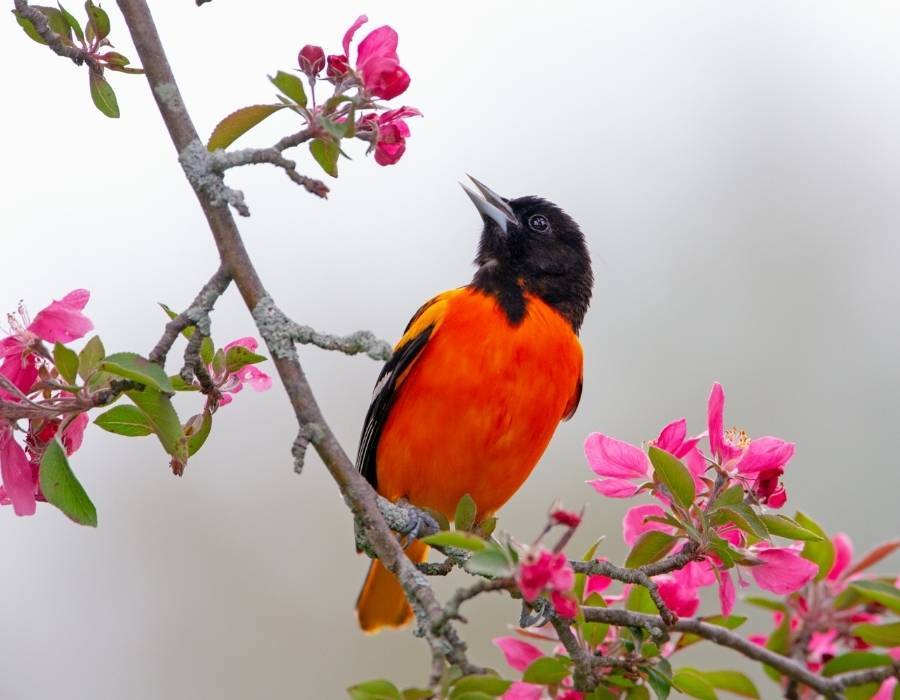
These are not ethnographically established interpretations. They are frameworks drawn from the bird’s documented qualities. I think that’s a fair way to use them, as prompts for reflection, not prescriptions.
I don’t have a confident answer about whether dreaming of an oriole carries a specific, culturally universal meaning. The folk record on this is thin, and the academic record is thinner. What I do know is that the mind tends to reach for meaningful symbols it has already encountered. If the oriole has meaning for you, your dream knows that.
What Symbolic Meanings Do Different Oriole Colors Carry?
The golden-yellow coloring common to many oriole species connects naturally to solar associations, warmth, and vitality. Gold is a near-universal shorthand for value and light in visual symbolic systems. But for the oriole specifically, that association began as a name.
Aureolus means golden. The bird was named for its color. The color then became part of its symbolic identity in Western contexts. That is a different sequence from a tradition that independently observed the bird and decided its golden feathers carried spiritual weight. The name did some of the work that got attributed to the bird.
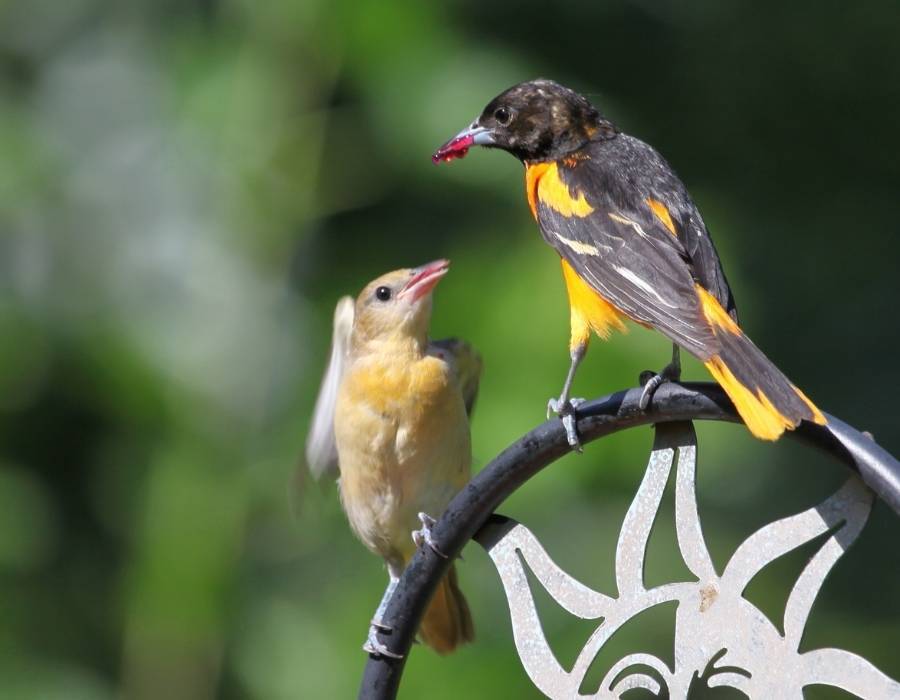
The black and orange coloring of the Baltimore Oriole had its symbolic life shaped more by regional and political history. The colors were associated with the Calvert family, Maryland’s founding proprietors, before they became the state bird’s colors. That is a heraldic and colonial lineage, not a spiritual one.
In Chinese visual culture, the yellow-green of the Black-naped Oriole appears in literary descriptions that emphasize brightness and spring vitality. The color supports the seasonal meaning but doesn’t independently carry a separate symbolic system. The meaning is about the season, and the color is part of how you know it’s that bird.
What Should You Know Before Trusting Oriole Symbolism Sources?
The quality of sources on this topic varies considerably. A short guide for evaluating what you find.
Look for named traditions and named scholars. “In Han Chinese literary tradition, the oriole means prosperity” is less useful than “in Han Chinese classical poetry, documented in the yingge yanwu pairing, the oriole signals spring and a prosperous scene.” The second version tells you what culture, what evidence, and what the evidence actually says.
Distinguish literary uses from omen systems. The fact that a bird appears in poetry is not the same as the fact that seeing that bird predicts something. The oriole in Chinese poetry signals spring because that is when it arrives. It is not a divination tool.

Ask whether the source names its primary source. Contemporary spiritual sites can be useful as aggregators of popular belief, but they should not be treated as evidence of historical tradition. When a site says “ancient traditions hold that the oriole is an ancestor messenger,” ask: which ancient tradition? Where is that documented? If there is no answer, the claim is modern, not ancient.
Remember the species problem. If a source doesn’t specify which oriole it’s discussing, be cautious. The Chinese record concerns the Black-naped Oriole. The Western historical record concerns the Eurasian Golden Oriole. North American sources often picture the Baltimore Oriole. These are different birds with different ranges and different cultural contexts.
What strikes me about oriole symbolism is not how consistent it is across cultures that never met, it isn’t. What strikes me is how the documented meanings all circle back to the bird’s actual qualities: its voice, its timing, its color. That is where the real symbolism lives, and it is more interesting than the invented versions.
Frequently Asked Questions
Is the oriole considered a good luck symbol?
In Han Chinese literary tradition, the Black-naped Oriole is associated with spring, prosperity, and a refined singing voice, but as part of a seasonal and poetic system, not a direct good-luck omen. The phrase yingge yanwu evokes a scene of peace and abundance, not a prediction for an individual. The modern “good luck” reading is a simplification of that older literary association. It doesn’t have a firm historical foundation in the direct-omen sense, but whether you find it meaningful depends on what you bring to the encounter.
What does it mean when an oriole visits your yard?
The oriole is migratory in most of its range, so a visit usually means the season is right and food is available.Baltimore Orioles, for instance, arrive ineastern North America in late April and May, drawn to fruit, nectar, and certain tree species. The symbolic reading you bring to that depends on your own belief system. If the arrival feels significant, the Han Chinese literary tradition offers the oldest documented frame: the oriole’s appearance signals something is opening. That’s not nothing.
Are Baltimore Orioles and Golden Orioles symbolically the same bird?
No, and this matters more than most sources let on.The Baltimore Oriole belongs to thefamily Icteridae, while the Eurasian Golden Oriole belongs to the family Oriolidae, they are not closely related. The Black-naped Oriole of Chinese literary tradition is also Oriolidae, so it shares more with the European Golden Oriole than with the Baltimore Oriole. Symbolism developed around one of these birds does not automatically apply to the others. If you’re working with specific cultural meanings, confirm which species the source is discussing.
What does the oriole represent in Haudenosaunee traditions?
I have not located a documented, named oriole-specific tradition among Indigenous North American peoples that I can cite with confidence. The Baltimore Oriole has regional significance in parts of its range, but I don’t have access to named oral traditions or academic documentation about oriole symbolism from specific nations. Attributing a general “Native American” meaning to the oriole without naming the specific nation and its documented tradition would be misleading. If this matters to you, look for sources from specific cultural communities rather than pan-Indigenous generalizations.
Is the oriole associated with any deity or mythological figure?
Not in any tradition I’ve found with a named source behind it. The Bengali transformation narrative, in which a wronged merchant’s daughter-in-law becomes a Black-hooded Oriole, involves human transformation rather than a deity. The Chinese literary tradition associates the bird with spring and refined beauty, but not with a specific god or mythological character. I don’t have a confident answer here, and I’d rather say so than reach for a claim I can’t support.
What is the difference between the oriole as a spirit animal and as a totem animal?
In popular usage, a spirit animal is typically a guide encountered during a moment of significance, it shows up, something passes between you, and the encounter carries meaning. A totem animal is more of a long-term identifying symbol, something you carry with you over time. Neither usage maps cleanly onto any single historical tradition, and neither has an oriole-specific version I can point to in documented cultural practice. If the oriole resonates as a long-term symbol for you, the totem frame fits. If it showed up once with force, the spirit-animal frame fits. Use whichever is useful.
Does the oriole appear in any sacred or religious texts?
The Yellow Bird (huangniao, 黃鳥) appears in the Book of Songs (Shijing), the oldest existing collection of Chinese poetry, compiled around the 6th century BCE. Some scholars identify this bird as an oriole. The appearances are poetic rather than theological, the bird signals season, movement, and emotional state rather than sacred doctrine. I’m not aware of the oriole appearing in the Hebrew Bible, the New Testament, or the Quran in a named, species-specific way. Classical Chinese poetry is where the textual record for this bird is richest.
What does it mean if an oriole sings near your home?
The song is one of the oriole’s most distinctive qualities, loud, clear, carrying through dense canopy in a way that seems disproportionate to the bird’s size. In Han Chinese literary tradition, hearing an oriole song was associated with spring arriving and a scene of peaceful prosperity. What I’d say practically: an oriole singing near a home is usually a territorial male in breeding season, directing his song at rivals and potential mates rather than at the people inside. Both things can be true. It is doing something real and purposeful, and you can still find it worth sitting with.
Why do so many spiritual sites say the oriole is a messenger from the dead?
The short answer is that this claim moved through the internet without a source and kept getting repeated. The ancestor-messenger reading is not documented in any named historical tradition I can locate. It may derive from a general tendency to assign spirit-messenger status to bright, unusual birds, a pattern that does appear in various folk traditions, but not specifically for orioles. When a claim appears on many sites but none of them cite a primary source, that’s worth noticing. Contemporary spiritual writing about animal symbolism sometimes generates meaning rather than records it.
How should I interpret an oriole encounter if I don’t follow a specific spiritual tradition?
Start with the bird. The oriole announces itself by voice before it shows itself by sight. It arrives at the same time every year, reliably. Its coloring is vivid in a way that reads as deliberate. If you’re building your own meaning from an encounter, those qualities are a reasonable foundation: something worth noticing is present but not fully visible yet; a recurring pattern deserves attention; warmth is close. Not prescriptions. Prompts. Use what fits and leave what doesn’t.
Sources
- Siba Gu, “Oriolidae of Taiwan,” sibagu.com (updated 2026)
- Siba Gu, “Oriolidae of China,” sibagu.com (updated 2026)
- Etymonline, “Oriole”, English etymology and Latin aureolus derivation
- Birds and Nature, Volume IX, Number 5 (1901), historical natural-history account of the name’s derivation
- Aladdin’s Bird Watching / Birding in India, “Black-hooded Oriole” (2018), secondary report of the Bengali folktale and vernacular names; primary ethnographic verification pending
- Feathered Realm, “Understanding the Oriole Spiritual Meaning” (2023), cited as example of contemporary claims, not as historical documentation
- Spirituality Animals, “Spiritual Meaning of Oriole” (2025), cited as example of the ancestor-messenger claim category, not as ethnographic documentation
- Wikipedia, “Oriolus”, taxonomy and species distribution overview
- Birdspot, “Birds in Chinese Symbolism”, overview of Chinese literary bird associations
- MLB.com, “Baltimore Orioles Team Name Origin”, historical context for the Baltimore Oriole’s heraldic and regional naming history
- www.allaboutbirds.org
- books.openedition.org
- www.chicagobotanic.org