
In 1885, Shropshire folk records tied live birds crossing a doorstep to omens, not dead ones left there. A dead bird on your step now gets read as witchcraft, but that’s a modern mix of old tradition and Hollywood. The real split is whether the bird flew into your window or was placed there on purpose.
Key Takeaways
- A dead bird on a porch is most commonly caused by a window collision or predator drop. The Cornell Lab of Ornithology estimates up to 1 billion birds die from window strikes in the U.S. each year, with 44% of fatal strikes occurring at 1–3 story residences.
- Folk traditions from Shropshire, Sussex, and Southern Appalachia attach omen-weight to living birds crossing thresholds. Burne’s 1885 record is specific on this point: the omen is a bird that flies in or repeatedly strikes glass, not a bird found dead on a step.
- The claim that a dead doorstep bird is a standard Voodoo or witch’s curse is not supported by older ethnographic sources. It is a modern conflation of several distinct traditions.
- Species identity shifts the reading: doves and pigeons carry soul-bird associations in 19th-century Sussex lore; corvids carry death-guide associations in early Germanic and British sources.
- Remove the bird safely with gloves, check the nearest window for strike marks, and apply deterrent film or tape if you find them.
What Does a Dead Bird on Your Porch Actually Mean?
Before any folklore: the bird almost certainly flew into your window or was dropped by a hawk or a cat. The Cornell Lab of Ornithology puts U.S. window-strike deaths at up to 1 billion birds annually, and the U.S. Fish and Wildlife Service confirms that single-family homes account for a disproportionate share of those collisions. The bird fell where it fell. No one carried it there, despite what bird symbolism history might suggest.
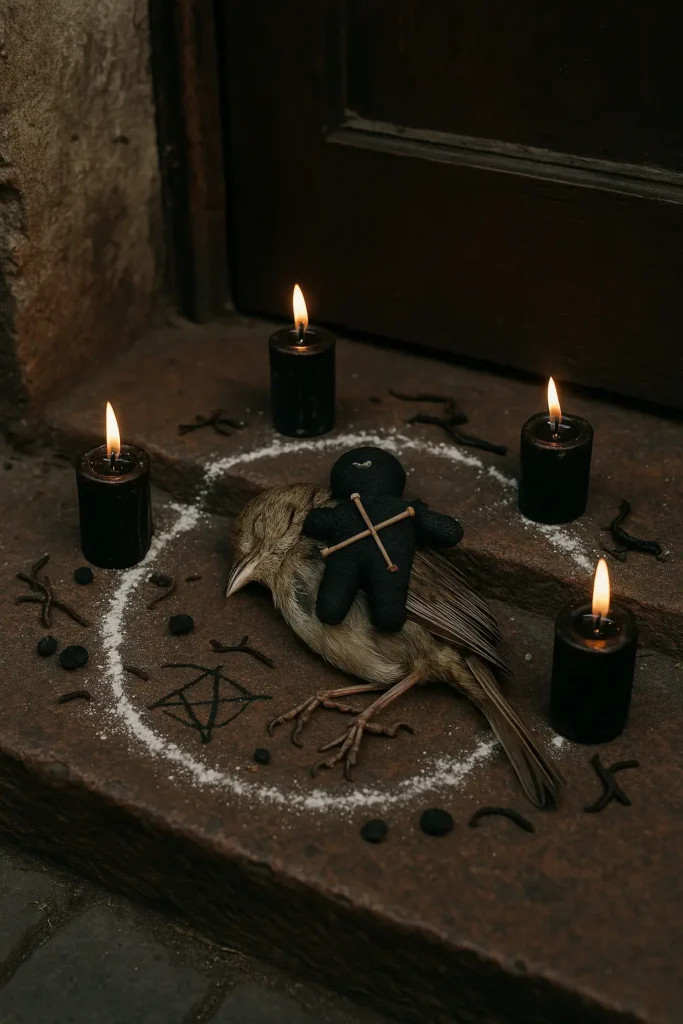
But the question behind your search is probably not purely biological. You are not making this up. The placement, right at your door, first thing in the morning, feels like it means something, and that feeling is older than any article on the internet. Folk traditions across Northern England, Appalachia, and Sussex all record the doorstep as a charged space, the point where the ordinary world and whatever is outside it press against each other. The practical answer and the symbolic one are both real. I want to give you both.
Why Is the Threshold the Spiritually Charged Space in Bird Omens?
The doorstep matters in folk belief because the doorway is where inside becomes outside. That is not metaphor. It is how pre-industrial households understood physical and spiritual vulnerability. Charlotte Sophia Burne’s Shropshire Folk-Lore (1885) records the threshold as the place where omens could enter, where living birds crossing into a home signaled disruption or death. Burne is specific: the omen is a bird that flies in, or that repeatedly strikes a window, not a bird left dead by an unknown hand.
William Henderson’s Folk-Lore of the Northern Counties of England holds to the same frame. A bird tapping at the glass. A bird circling the house and landing on the roof. Not a body placed at the door as a witchcraft act. The oldest sources consistently put the agency on the bird, not on a human actor.
Daniels (1903, reprinted 1971) and Marie Trevelyon (1909), working from Sussex and Kent material, add a related cluster: doves and pigeons at the doorway, or peacocks seen from the front of the house in the morning, read as death foretellings. Doves flying over a fresh grave signified the soul’s passage. All of this is about living birds at in-between places like doorways and edges. The threshold carries the charge; the deliberate-placement reading came much later.
What Do Different Cultural Traditions Say About Birds Found at the Door?
Four distinct tradition clusters. They do not agree on everything, but they agree on more than the internet suggests.
Northern English rural lore (19th century). According to Burne’s Shropshire Folk-Lore, a bird striking or entering a home could signal a death in the household, particularly if the event repeated. The omen was the crossing, not the death of the bird. A corpse on the step is not the same thing.
Sussex and Kent dove-and-soul-bird belief. Trevelyan (1909) records doves as soul-carriers: a dove cooing in a doorway meant death was near; a dove over a coffin meant the soul had gone safely. White pigeons specifically carried this association. The belief is about the soul’s passage, not about harm directed at the living.
Southern Appalachian granny-witch tradition. Here in the Blue Ridge, the bird omen tends toward the bird entering the house or hitting the same window repeatedly. Appalachian folk belief treats these as warnings, sometimes as visits from ancestors, with species and circumstances shaping what kind of warning. A dead bird on the porch registers as a general bad-luck sign in some accounts, but claims that it is specifically a witch’s curse placed by an enemy are modern additions, not recorded in the older oral history of this region.
Corvid lore in early Germanic and British sources. Crows and ravens earned their death associations because they eat carrion; they appear where things have already died, so the link feels inevitable. In early Germanic and Norse sources documented in Folklore Thursday’s analysis of birds and death lore, corvids are soul-guides rather than curse agents. A dead crow at the threshold in some British sources reads as “bad luck turned aside,” the death absorbed by the bird rather than directed at the household. I find that reading more interesting than the witch-hex version, and better supported.
What Does Voodoo Actually Teach About Dead Birds, and What Is Misrepresented?
Haitian Vodou does not feature dead birds on doorsteps as a standard curse mechanic. Full stop. Vodou is a religion with West African Fon and Ewe roots, French Catholic syncretism, and a rich cosmology of lwa (spirits) that governs healing, protection, and community ritual. Dead animals appear in some ceremonial contexts, but a bird corpse at a private threshold is not a recognized Vodou working in any ethnographic source I have been able to locate.
What happened, I think, is this: New Orleans Hoodoo (a distinct American folk-magic practice), Hollywood horror films from the 1930s onward, and a general cultural tendency to bundle anything unfamiliar under the word “Voodoo” produced a composite image with very little to do with actual Vodou practice or actual Hoodoo practice. New Orleans Hoodoo does include some threshold-working traditions, but even there the dead-bird-as-curse reading is contested among practitioners and not well documented in the pre-20th-century record.
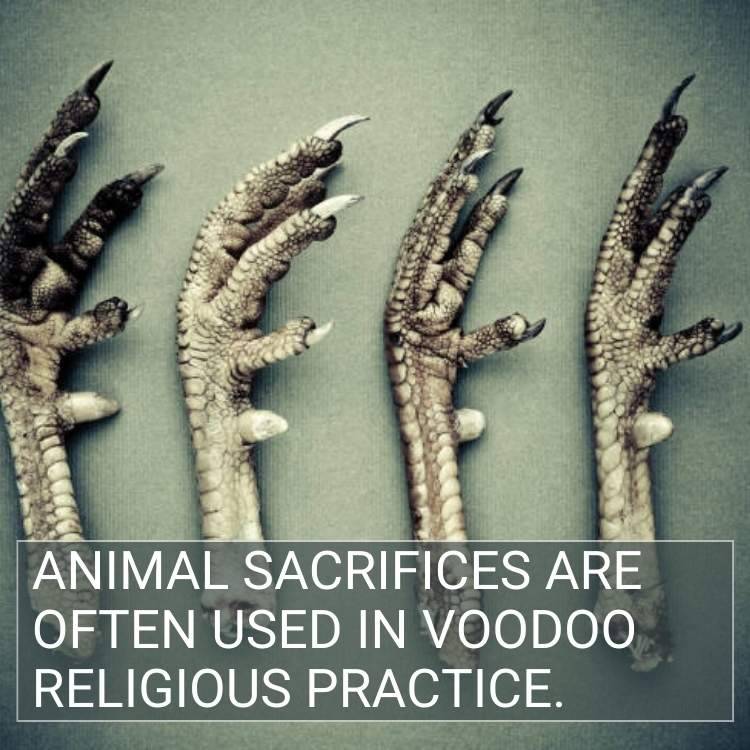
If someone told you the bird was Voodoo, they were drawing on the Hollywood version. You are not being targeted by a religion that most of its own practitioners would not recognize in that description.
Does the Species of Dead Bird Change the Meaning?
Crow or raven. Death-guide in early Germanic and British lore, as documented in Folklore Thursday’s corvid piece. The association runs toward transition and passage rather than directed harm. A dead crow at the threshold sometimes reads as bad luck deflected rather than delivered. I don’t know whether I believe that, but I find it more honest than “someone cursed you.”
What Should You Do After Finding a Dead Bird on Your Porch?
If you found a window strike smudge, the Cornell Lab recommends applying external window film, tape strips spaced two inches apart, or CollidEscape film to break up the reflective surface. This is the single most effective thing you can do.
Frequently Asked Questions
Is a dead bird on my porch a sign of bad luck?
Not in the oldest records. Charlotte Sophia Burne’s Shropshire Folk-Lore (1885) attaches bad-luck and death omens to living birds entering a home or striking a window repeatedly, not to a bird found dead on a step. The doorstep bird reads as a threshold event, a marker at a boundary, rather than a directed sign of misfortune. If you are going through something difficult, the encounter may feel significant. That feeling is real. It does not require a bad-luck verdict to be taken seriously.
What does it mean if the same spot keeps producing dead birds?
Check the window first. A spot that keeps producing dead birds almost always has a glass surface nearby that birds cannot see. The Cornell Lab confirms that collision risk at any given window is consistent from season to season once the reflective problem exists. In folk terms, a repeating death at the same threshold was read as a persistent warning, or an ancestor trying to be heard. Both readings point toward the same practical response: pay attention to that spot and change something about it.
Is a dead bird at my front door different in meaning from one on my back porch?
In the folk traditions I have read, yes, the front threshold carries more weight. The front door is the public face of the household, the boundary between family and the wider world. Back doors and back porches tend to mark service and daily life rather than symbolic passage. A bird at the front door was the omen; a bird at the back door was more likely read as ordinary bad luck, or simply as a dead bird. I don’t have a confident answer on whether this distinction holds everywhere. The folk record is geographically scattered on this point.
What does a dead white bird on my doorstep mean specifically?
White birds, particularly white doves and white pigeons, carry soul-bird associations across Sussex and Kent folk belief documented by Marie Trevelyan in 1909. White marks purity and passage in these traditions; a dead white bird at the threshold was sometimes read as a soul departing safely rather than as a curse or a bad sign. If the bird you found was a white dove or pigeon, the older symbolic register is mourning and passage, not harm. That is a gentler reading, and it is better supported by the actual folk record than the curse interpretation.
Should I be worried that someone left the bird there deliberately?
Almost certainly not. The Cornell Lab’s data puts window strikes at the cause of up to 1 billion annual bird deaths in the U.S., with a large share falling near residential porches and doorsteps. The odds that a bird at your threshold was placed by a person, rather than killed by glass or a predator, are genuinely very low. The deliberate-placement reading comes from modern internet folklore about curses, not from documented practice in any tradition I can point to with a named source.
What does it mean spiritually if the bird is a baby or fledgling?
This one is harder, and I want to say so plainly. The folk record is thin on fledgling deaths specifically, probably because fledgling deaths are so common in spring and early summer that they did not register as exceptional enough to encode in tradition. What I notice is that a fledgling’s death tends to feel different to the person who finds it: smaller, more unfinished, sadder. If you have recently lost something that felt unfinished, the mind will connect these. That connection is yours to hold or set aside. I cannot tell you what it means with any certainty, because I don’t know.
Are there any protective gestures associated with finding a dead bird at the door?
Some Appalachian folk-magic traditions, documented in oral history from mountain communities, suggest salting the threshold after removing a dead animal. Salt at the doorstep is one of the older protective gestures in European folk practice, appearing in British, German, and Slavic household customs. Whether you find that meaningful or not is your call entirely. A simpler version: say a few words over the bird before disposal, clean the porch, and consider placing something living near the door, a plant or a pot of herbs. These are small gestures, not spells. They work by making you feel like you have done something deliberate in response to something that felt unchosen.
How do I stop birds from dying on my porch in the first place?
External deterrents on the nearest window are the most effective fix. The Cornell Lab recommends tape strips in a grid with two-inch spacing, commercial products like CollidEscape or ABC BirdTape, or external netting. Moving a bird feeder to within three feet of a window (so birds cannot reach fatal speed before impact) or more than thirty feet away (so they have time to see the glass) both reduce strikes significantly. A roll of painter’s tape in a grid pattern costs almost nothing and works. See the Cornell Lab’s guide to making windows bird-safe for specifics.
Sources
- Cornell Lab of Ornithology, Seven Simple Actions to Help Birds
- Cornell Lab / All About Birds, Bird Mortality from Collisions with Glass
- Cornell Lab, Making Windows Safer for Birds
- Folklore Thursday, Death Takes Wing: Birds, Folklore and Death
- Folklore Thursday, As the Crow Flies: Corvids in Lore and Legend
- Country Miracles, Appalachian Mountain Superstitions
- Icy Sedgwick, Ornamental Birds and Their Folklore
- C.M. Rosens, Bad Omen Birds in British Folklore
- PeckPerk, Dead Bird Meaning: Spiritual and Cultural Interpretations
- The Faunalist, Dead Bird Symbolism
- Cambridge University Press, Living Planet: How Birds Reveal the Scale of the Biodiversity Crisis (2023)
- IUCN Red List / BirdLife International, 2021 Bird Assessments

I have had 2 dead birds on my door step with nohead and a lot more going g on to me
Not good, who is it?
A bird, maybe sparrow or mockingbird fell and died near me on the back porch of a house I was cleaning, shortly after, my sister called and asked if I could help out this girl who needed a place to stay temporarily, I agreed to help but didn’t know anything about this girl. She later told me she was a witch and practiced magic. Paranormal things started to happen centred around her mostly. she violated my boundaries by taking up all my free space with a lot of clutter. After she moved out, I threw out anything and everything she left behind. Shortly after, in the morning found dead bird on driveway of my house, and my in law (who the roommate didn’t like) found dead bird on her porch. My house is paranormal free before and after she left, only while she was there, did weird things happen. Where the birds omens of a beginning and end of her passing through my life? What did it mean?
I understand how unsettling this experience must be for you. The coincidence of the dead birds and the unusual events in your home is indeed intriguing. While some might interpret these as omens, often such occurrences are just coincidences. It’s great that you took steps to reclaim and cleanse your space, as personal comfort and peace in your own home are crucial. If you’re still concerned, consider engaging in practices that align with your beliefs to restore harmony. Remember, it’s important to prioritize your well-being.
Take care, Richard