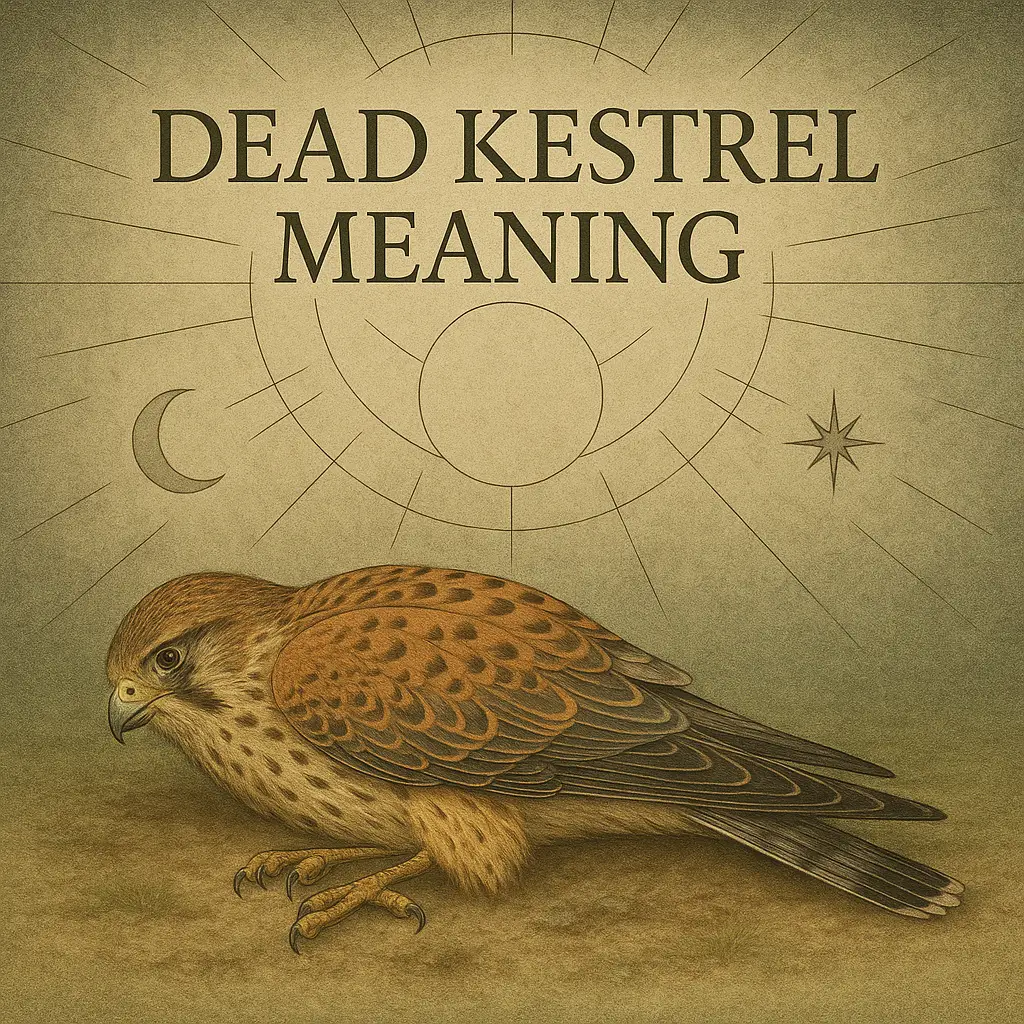
You found a dead kestrel on the path, and the first thing you did was Google if it’s a bad sign. It almost never is: in old English falconry records, a dead hawk pointed at the keeper’s mistake, not at the person who found it. What changes the meaning is where the bird lay, whether it was whole, and what was going on in your life that day. And there is a right way to deal with the body, one small step that lets you put the moment down.
Key Takeaways
- A dead kestrel is read across traditions as a threshold marker: elevated sight or protection has stepped back, and you are called to navigate by your own judgment.
- Norse tradition frames it as a broken vehicle of spirit-flight; Egyptian symbolism reads it as the royal eye withdrawing; medieval English falconry culture reads it as a discipline that has run its course.
- Where you found the bird changes the reading. Doorstep encounters carry stronger boundary weight than open-field findings.
- This is not a death omen. No tradition examined here reads a dead kestrel as a sign that someone close to you will die.
- Handle it responsibly, acknowledge the bird with a simple intention, and treat the moment as an invitation for honest self-assessment rather than fear.
What Does Finding a Dead Kestrel Mean Spiritually?
Take a breath. No serious folk tradition frames a dead kestrel as a warning of coming death. What it does signal, across Norse, Egyptian, and medieval English readings, is a confrontation with limits. Specifically: the withdrawal of elevated perspective. The kestrel’s whole symbolic currency is its ability to hover, to hold perfectly still forty feet up while the world moves below it. When you find one dead, the image that stays with you is that stillness gone.
I’ve handled a lot of raptors over thirteen years at the Western North Carolina Nature Center, and I can tell you that a dead hawk or falcon on the ground carries a different weight than a dead songbird. Something about the eyes. Even closed, they look like they had been watching something you hadn’t seen yet. That feeling is worth taking seriously, not because the bird was sent to you, but because the feeling itself is real information about where you are right now.
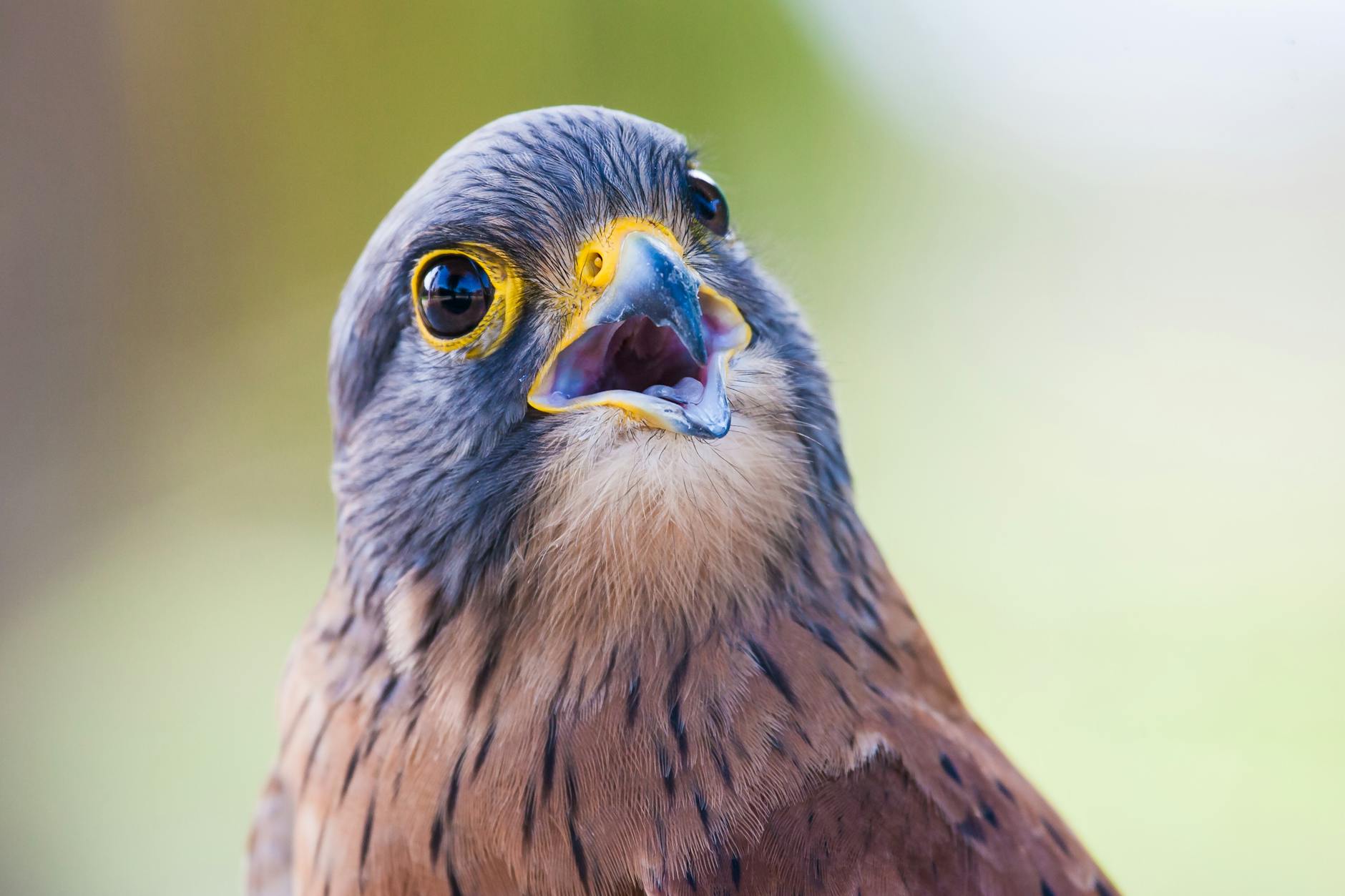
The core reading, consistent across traditions: you are at a threshold. Whatever had been protecting you, guiding your sight, or doing the high-altitude scanning on your behalf has changed. The question is not “what disaster is coming?” It is “what do you see now, on your own?”
What Did the Kestrel Symbolize Before It Died?
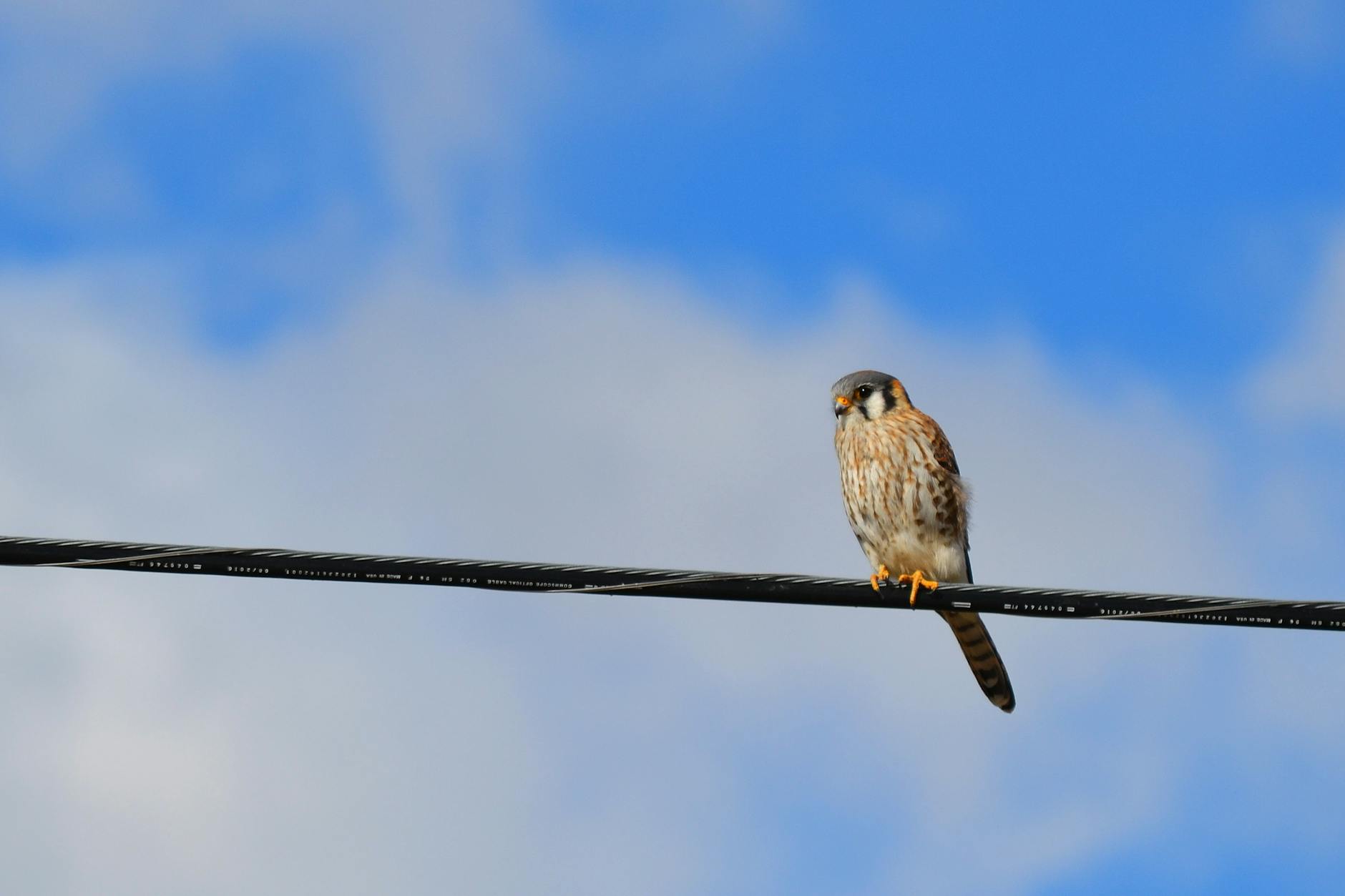
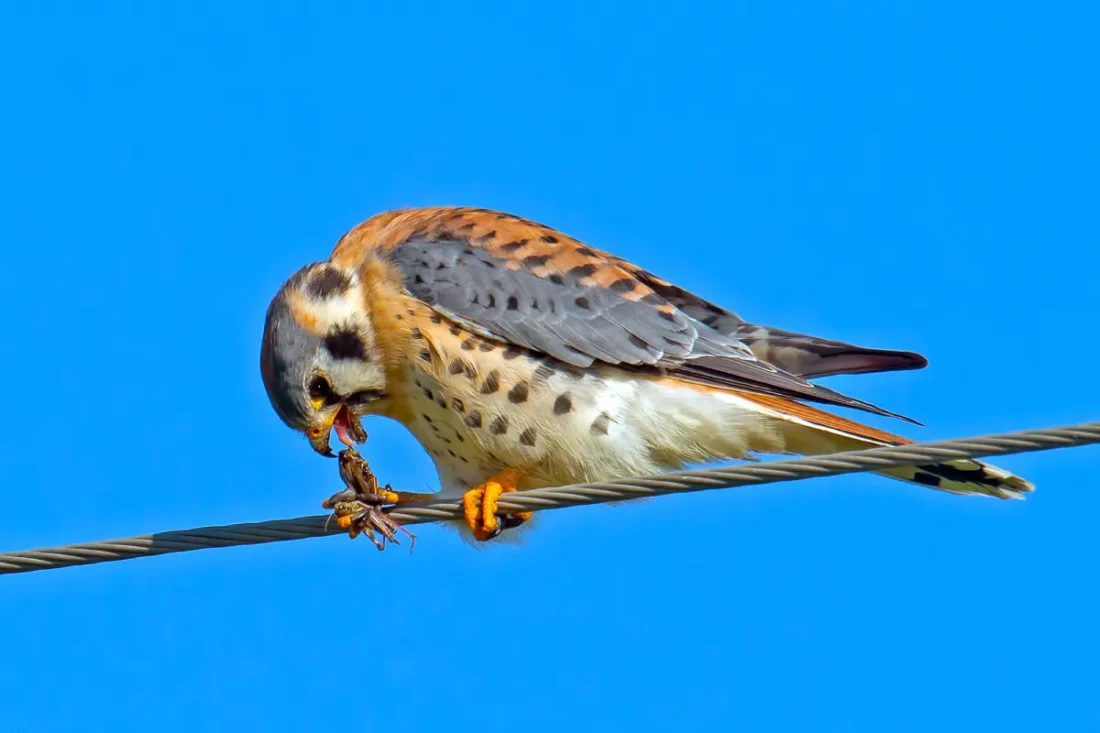
The living kestrel does one thing no other raptor does as well: it hovers. A Falco tinnunculus (the common kestrel, whose Latin name comes from tinnire, “to ring,” for its call) can hang motionless in a 30-mph wind by making tiny adjustments to its wings and tail, holding its head completely still while its eyes lock onto prey in the grass below. Patience and precision at the same time. That hovering behavior is the direct source of the bird’s symbolic meaning: sustained focus, the ability to hold still while the world moves, clarity that comes from waiting rather than rushing.
A 2019 study by the British Trust for Ornithology found that common kestrel populations in England declined 36 percent between 1995 and 2017, largely due to agricultural changes reducing small mammal prey. Worth knowing. A dead kestrel in your garden may be a bird navigating a harder world than the one its grandparents knew. That doesn’t cancel the symbolic reading, but it adds a layer of honest grief to it.
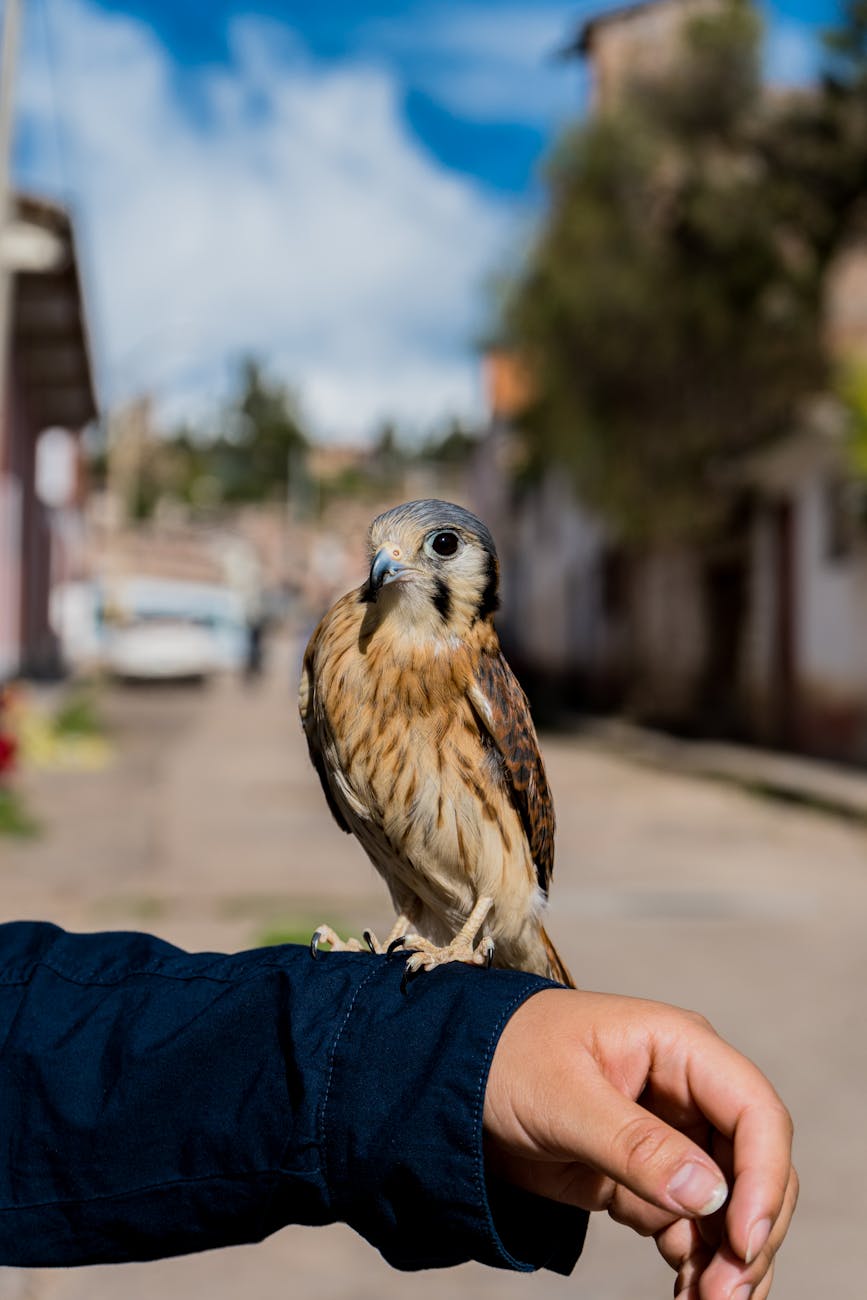
So when you find it dead, the contrast is what carries weight. The bird that could hold still forty feet up is now still on the ground. And the question the old readings ask is whether you, without that hovering oversight, can still see what you need to see.
What Does Norse and Icelandic Tradition Say About a Dead Falcon?
Norse tradition gives the falcon an unusually specific role: it is the shape worn by those who need to cross between worlds quickly. In Gylfaginning and Skáldskaparmál, both sections of Snorri Sturluson’s Prose Edda (c. 1220), Freyja’s valshamr, “falcon skin” or “falcon shape,” is a feathered garment that enables spirit-flight between realms. The cloak is loaned to other gods, including Loki, who borrows it to retrieve the goddess Iðunn, which means the bird-form is a vehicle, not a permanent state. Borrowed wings for a specific crossing.
Read a dead kestrel through this lens and the image clarifies: the borrowed wings are gone. Whatever had been ferrying messages, visions, or guidance back and forth is no longer airborne. But the Prose Edda framing is not catastrophic about this. Loki returns the cloak. Freyja lends it again. The vehicle disappearing does not mean the journey is over; it means the easy passage has closed and you proceed differently. On foot, between worlds, with your own legs.
I find this reading genuinely useful, not because I hold any particular belief in Norse cosmology, but because it matches something I’ve noticed across years of paying attention: there are periods when guidance arrives easily, when you seem to see farther than usual, and then periods when that stops. The Norse framing names the second period without making it a punishment.
What Does Ancient Egyptian Falcon Symbolism Say About This Encounter?
In ancient Egyptian religion, the falcon is the primary form of Horus, the sky god and protector of kingship. Temple reliefs at Edfu show Horus as a falcon enthroned above the Nile valley, wings spread across the sky. According to Richard H. Wilkinson’s Symbol and Magic in Egyptian Art (Thames and Hudson, 1994), the falcon’s eyes were understood as the sun and moon; the bird’s sight was literally cosmic, watching over everything below.
Dead falcons were not discarded. R.O. Faulkner’s translation of The Ancient Egyptian Coffin Texts (Aris and Phillips, 1973) records ritual contexts in which mummified falcons served as offerings and as containers for the god’s presence. Death did not mean the bird’s power was gone; it meant the power had shifted form.
For a modern encounter: the Egyptian reading frames a dead kestrel as the “royal eye” stepping back. The external guardian, whether you read that as a literal deity or as a psychological structure that had been doing the protective watching for you, is no longer visibly active. Wilkinson notes that in Egyptian belief, this kind of withdrawal was not abandonment but transition: the protection moves inward. Your own judgment is asked to take the throne. That is a harder assignment than being watched over. It is also a more honest one.
What Does Medieval English Falconry Culture Say About a Dead Kestrel?
Here is where it gets specific in a way I find worth sitting with. In medieval England, as Robin S. Oggins documents in The Kings and Their Hawks: Falconry in Medieval England (Yale University Press, 2004), the kestrel occupied the lowest rung of the falconry hierarchy. It was the bird assigned to knaves and servants, the “windfucker” (an old English term for its hovering habit, entirely literal, nothing salacious). A gyrfalcon was for a king; a merlin for a lady; a kestrel for the person at the bottom of the table.
But the Physiologus bestiary tradition, from 12th- and 13th-century manuscripts, assigned the hawk and falcon a symbolic meaning that transcended social rank: the bird that turns its eyes to the sun to clear its sight is an allegory for the soul seeking God. The hooding of a hawk, in sermon literature, represented the discipline of redirecting desire. The hunt was a metaphor for spiritual pursuit.
A dead kestrel in this framework reads as a completed or exhausted discipline. Folk interpretations of kestrel symbolism consistently return to the idea of a practice that once worked losing its grip. Not because the practice was wrong, but because it has done what it could. The hood that kept your attention focused in one direction may need to come off. Something else is waiting to be seen.
Does Where You Found the Dead Kestrel Change the Meaning?
Yes. And I think this is the question most people are actually asking when they search this.
A dead kestrel on a doorstep or windowsill is a stronger boundary marker. Doorsteps are liminal in nearly every folk tradition I’ve read, European and otherwise. The bird appeared exactly at the line between inside and outside, between your protected space and the larger world. Kestrel totem traditions that treat threshold encounters often read them as messages arriving at a point of decision rather than within either world. You are standing at the door, and the question is whether you step out differently.
What Should You Do After Finding a Dead Kestrel?
- Pause where you found it. Take one long breath. Say something out loud, even just “I see you.” The Norse tradition values naming what has been; the Egyptian tradition values witnessing. Both begin with attention.
- Ask yourself what the kestrel represented in your life lately. Clarity? A person who held a watchful eye over you? A practice that had been working? The symbolism gets most useful when it points at something real.
- Write down one thing you want to see more clearly on your own. Not as a resolution. Just an honest inventory of where your vision is right now.
Frequently Asked Questions
Is finding a dead kestrel a bad omen?
Not in any tradition I’ve examined carefully. The consistent reading across Norse, Egyptian, and medieval English sources is threshold, not disaster. A dead kestrel signals the withdrawal of elevated perspective or external protection, a change in how you see, not a warning that something terrible is coming. If you read something that said otherwise, take a breath. That reading exists, but it’s drawn from a narrow vein of folk superstition that doesn’t represent the longer record.
What is the difference in meaning between a dead kestrel and a dead hawk or falcon?
Kestrels carry a more personal, intimate symbolic weight. In Oggins’s analysis of medieval falconry hierarchy (The Kings and Their Hawks, 2004), the kestrel was the everyday bird, assigned to ordinary people, not kings. A dead gyrfalcon or peregrine carries more “royal” symbolic weight, linked to large-scale power transitions. A dead kestrel tends to point inward, toward personal vision and daily discipline rather than public authority. The threshold meaning is similar; the scale is smaller and more immediate.
Can a dead kestrel be a sign from a deceased loved one?
I don’t believe in messages from the dead, and I won’t pretend otherwise. What I do believe is that grief reaches for animals, and that reaching is real and reasonable and very old. If you found a dead kestrel shortly after losing someone and the connection felt true to you, it’s worth sitting with, not because the bird was sent, but because your mind is doing something honest and necessary. The meaning you feel is your own. That doesn’t make it less real.
What does it mean if a kestrel dies on or near my property specifically?
The boundary weight increases when the bird appears within your personal space. Folk traditions across England and parts of Northern Europe treat a bird death at the home boundary as a marker of personal transition rather than communal warning. On your property, the reading is about your life, your vision, your threshold. What the old traditions would call “address”: the encounter found its recipient.
Is there a difference in meaning if the kestrel died from a window strike versus naturally?
I don’t have a confident answer here. The folk record doesn’t distinguish cause of death with much consistency. What I can say is that a window strike introduces a different practical element: the bird died because of a boundary it couldn’t see. That detail has its own resonance, something approaching at speed, not recognizing the barrier until too late. Whether that adds meaningful weight to the reading or is simply a glass problem is honestly up to you. I’d look at both without forcing them together.
How is the kestrel different from other birds of prey in spiritual symbolism?
The hovering. No other raptor is so strongly associated with holding still in midair. The eagle soars; the owl watches from a perch; the osprey dives. The kestrel hangs, making small constant adjustments, eyes locked on a single point below. That behavioral specificity gives kestrel symbolism its particular quality: sustained focus, patience, clarity that comes from stillness rather than movement. When you lose a kestrel, you lose specifically that kind of sight. Not power or authority, but patient, hovering attention.
Should I bury the dead kestrel, and does burial carry symbolic weight?
Burial is the most common right response across the traditions covered here, and yes, it carries weight. The Egyptian ritual of mummifying sacred birds was about returning the animal to a contained, honored state rather than leaving it exposed. In practical folk terms, burial means you acknowledged what you found rather than dismissing it. You don’t need ceremony. A hole, the bird, the dirt back over it, and a moment of attention. That is enough. In the US, raptors are federally protected; you can bury the bird, but you cannot keep feathers or any part of it.
Sources
- Auntyflo, Kestrel Symbolism and Folk Meaning
- Native American Totems, Kestrel Totem Medicine
- Soul Life Lessons, American Kestrel: Clarity and Focus
- Compass Dreamwork, Accepting the Kestrel’s Invitation
- Spirit Animals, Kestrel Symbolism
- Shamanic Journey, Kestrel Power Animal
- Snorri Sturluson, Prose Edda (c. 1220), Gylfaginning and Skáldskaparmál
- R.O. Faulkner, The Ancient Egyptian Coffin Texts (Aris and Phillips, 1973)
- Richard H. Wilkinson, Symbol and Magic in Egyptian Art (Thames and Hudson, 1994)
- Robin S. Oggins, The Kings and Their Hawks: Falconry in Medieval England (Yale University Press, 2004)
- Physiologus bestiary tradition, 12th–13th century manuscripts
- British Trust for Ornithology, Common Kestrel population data, 2019