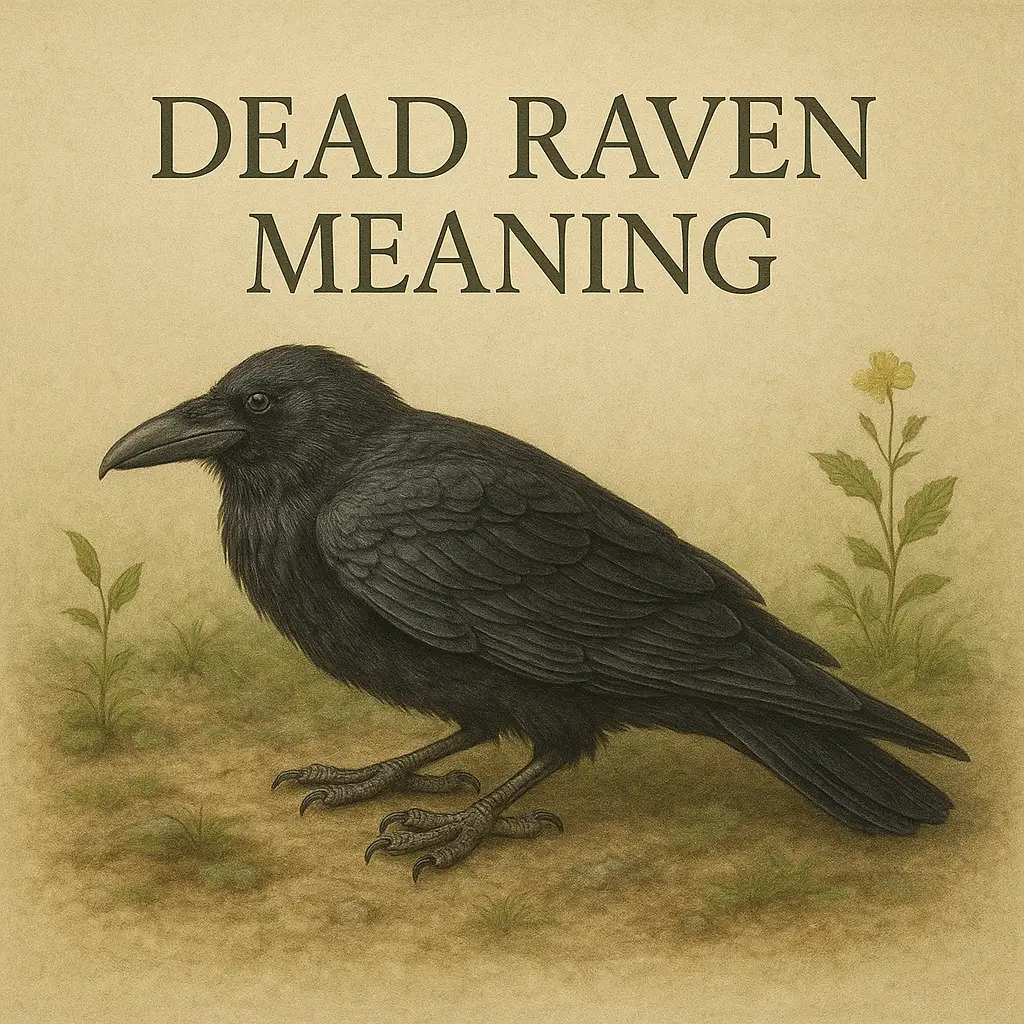
When you encounter a dead raven, time seems to pause as the universe delivers a potent spiritual message. This isn’t merely a random occurrence – across cultures and throughout time, ravens have served as messengers between worlds, keepers of ancestral wisdom, and symbols of transformation. Finding one that has passed carries profound symbolic weight, inviting us into contemplation of both shadow and light. Whether this discovery stirs fear, curiosity, or reverence in you, there’s a deeper meaning waiting to be uncovered.
Also, a dead raven gets read as a death warning way too fast. In Norse myth, a fallen raven meant a message broke its path, not that harm was headed your way. What the bird’s location tells you decides if the reading is about loss of word or loss of life.
Key Takeaways
- A dead raven intensifies the bird’s existing ties to thresholds and messages. It does not simply mean bad luck.
- In Irish and Celtic tradition, as documented in Proinsias Mac Cana’s Celtic Mythology (1970), it can signal the withdrawal of prophetic protection rather than an incoming curse.
- Norse tradition reads it as a silenced message: Óðinn’s ravens Huginn and Muninn carry thought and memory across the world; when one falls, something meant to reach you did not.
- Among the Haida and Tlingit of the Northwest Coast, Raven is the creator who brought light to the world. Finding one dead points toward a creative or protective force disrupted, not a death foretold.
- Location matters. A dead raven at your door carries different weight than one found in open land, and the traditions that address placement say so directly.
What Does It Mean When You Find a Dead Raven?
The answer is not “someone close to you will die.” That reading exists, but it comes from a narrow slice of the tradition, and it travels fast because fear does. The fuller picture: ravens were already the birds of battlefields, thresholds, and messages between the living and the dead long before anyone found one on a porch. When the bird itself dies, it doesn’t reverse that symbolism. It intensifies it. The question the older traditions ask is not “what disaster is coming?” but “what has gone quiet?”
My grandmother Theresa kept a leather notebook of folk stories from her own grandmother in the Bavarian Forest. Ravens as messengers. The owl’s call before a death. The white deer. In that tradition, a dead messenger bird was read as a message interrupted, not as a sentence handed down. That notebook is on my desk now, pages stuck together, German cursive fading at the margins. It is still the frame I find most useful, and most of the sources I trust land somewhere near it.
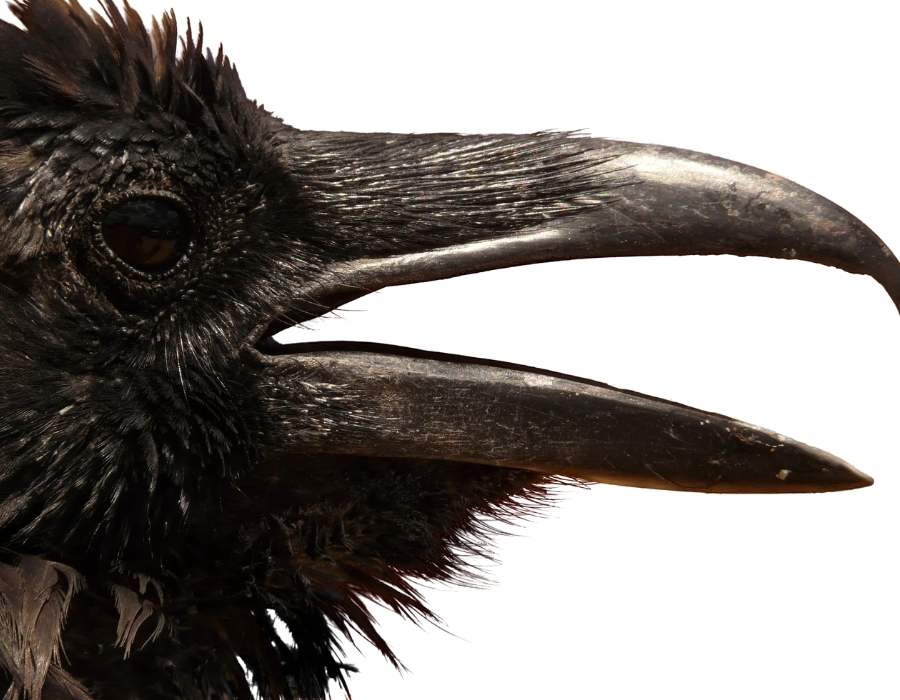
You are not making this up. The instinct to notice this bird, to feel that its placement was somehow chosen, connects you to a much older way of paying attention.
What Do Ravens Symbolize Before We Talk About Death?
Ravens are carrion birds. They have been following armies and feeding on the dead since before any human wrote it down. That biological fact sits underneath all the mythology, and it matters, because the symbolic weight came from watching actual ravens. A raven on a medieval battlefield was not a symbol of death in the abstract. It was present at death, feeding on it, and somehow unbothered. That combination, intelligence, boldness, total comfort around mortality, is what every tradition built on.
According to Kevin Dyer’s overview of Celtic, Scottish, and Viking raven mythology, the raven sits at the crossing point between worlds in nearly every Northern European tradition: battlefield prophet, divine messenger, cosmic transformer. Not separate ideas that later merged. They grew from the same root: the bird that knows where the dying are.
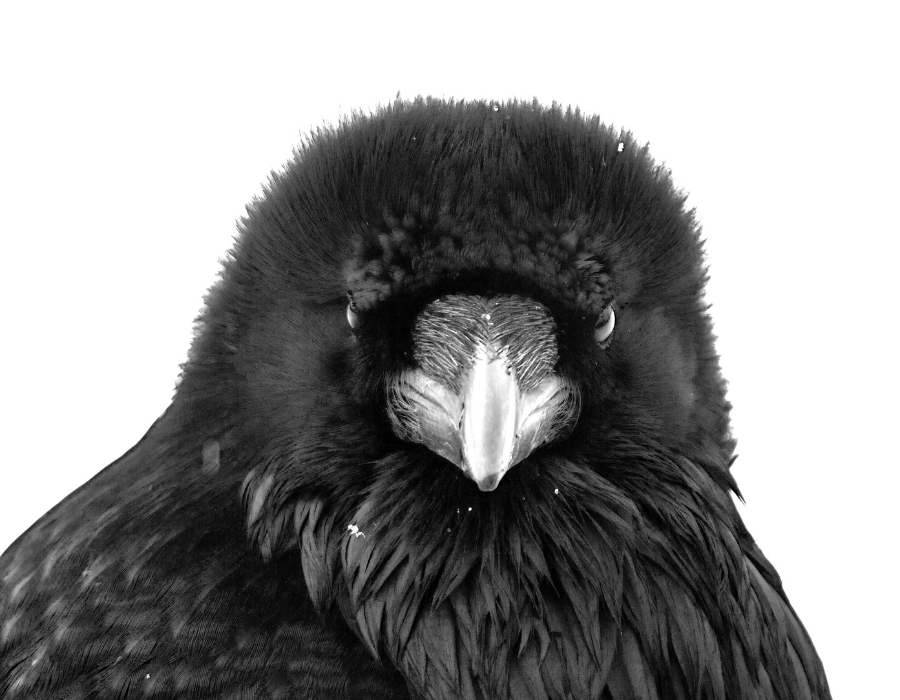
So a living raven carries all of that in its feathers. When you find one dead, you are not starting from zero. You are starting from there.
What Does Celtic and Irish Tradition Say About a Dead Raven?
The Irish war-goddess Morrígan takes raven form in Táin Bó Cúailnge, the great cattle raid epic of early Irish literature. When she perches on a hero’s shoulder, she is marking him. His fate is already in motion. Mac Cana’s Celtic Mythology (1970) documents how battlefield scenes filled with feeding ravens became images of fate fulfilled rather than fate approaching. The ravens were the confirmation, not the warning.
A dead raven in this frame reads one of two ways. Either the Morrígan’s bird has been withdrawn, prophetic protection ended, a fate-current that was moving through your life exhausted. Or the encounter is a boundary marker: you are standing at the edge of something, and the old stories say the edge is always where the bird was.
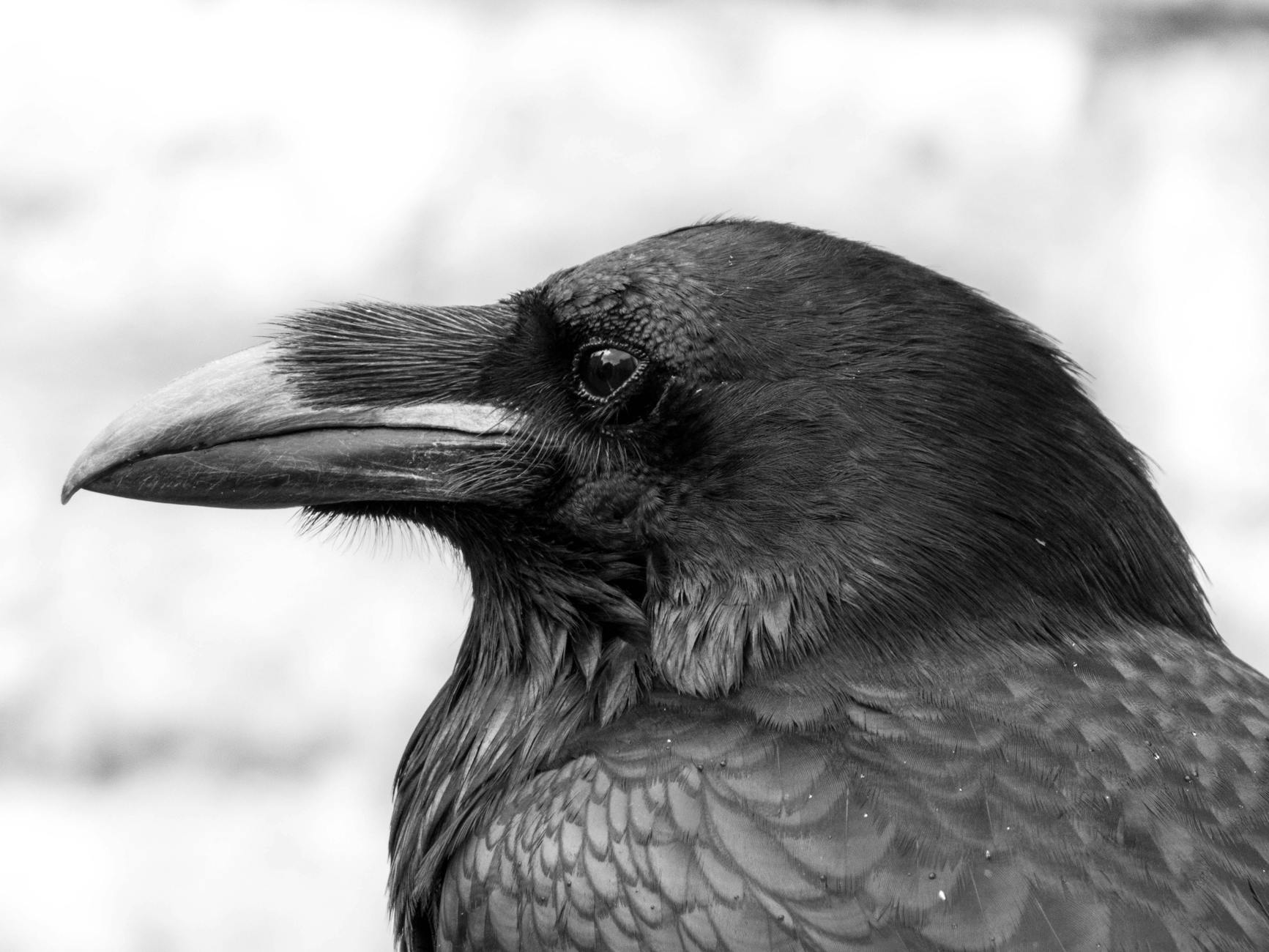
I read the first interpretation as more honest to the source than a straight death-omen reading. The idea that something is ending, not arriving, is where the Celtic material actually points. Most people who write about this skip that distinction. I don’t think they should.
What Does Norse Mythology Say About a Dead Raven?
Huginn and Muninn. Thought and Memory. Óðinn sends them out each morning to circle the world and return with news. H. R. Ellis Davidson, in Gods and Myths of Northern Europe (1964), notes that Óðinn himself admits he fears one day they won’t come back. That Thought might not return. That Memory might fail. That anxiety is older than almost anything else in the Norse material.
When a raven dies in this tradition, the frame that makes the most sense to me is the failed message. Something was in transit. A piece of insight, a warning, a connection between you and something larger. It didn’t arrive. That is not a death sentence; it is closer to a call that dropped before the message got through.
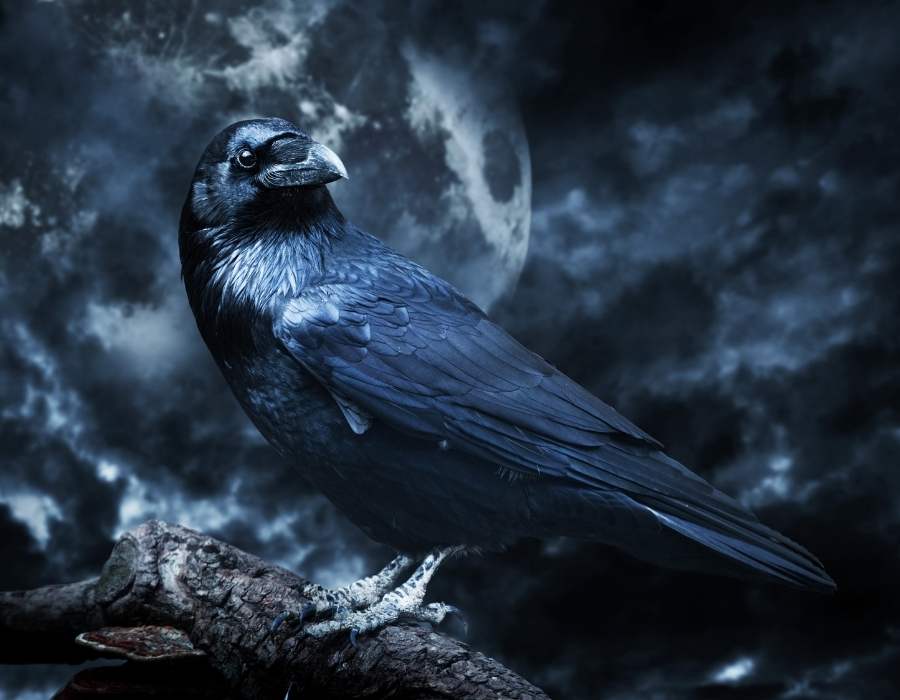
The raven standard, the banner carried by Viking war-bands, went limp before a defeat. Ellis Davidson records this as a functioning battlefield omen read by actual soldiers, including warriors and poets alike. The bird’s death, or the banner’s stillness, meant Óðinn’s attention had moved elsewhere. Not punishment. Absence.
What Do Pacific Northwest Coast Traditions Say About Finding a Dead Raven?
Here the story is different, and I want to be careful with it. I am not Haida or Tlingit, and I am not claiming this tradition. What I can do is point to what the ethnographic record actually says.
John R. Swanton’s Haida Texts and Myths (1905) and Franz Boas’s Tsimshian Mythology (1916) both document Raven as the transformer who brought light to the world, the being who stole the sun from the box where it was hidden and released it. Among the Haida and Tlingit, Raven is not primarily a death-bird. He is the creator, the trickster, the one who made the world habitable. As the Lakota oral tradition also records about Raven’s broader Indigenous significance, this is a bird that carries the weight of the beginning of things.
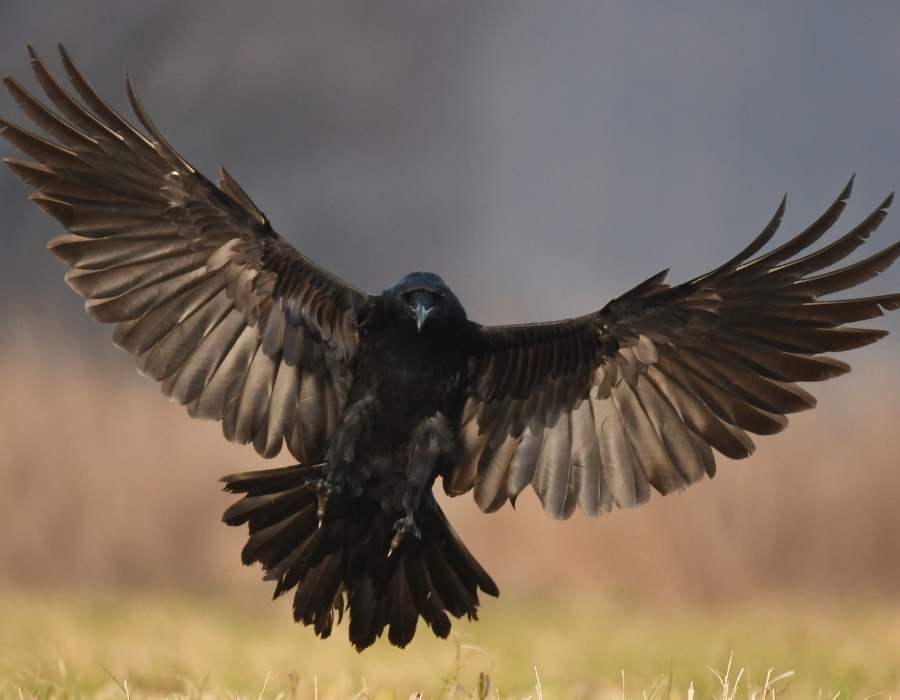
Finding one dead carries a different register here: not the withdrawal of a death-goddess, but the disruption of something generative. If you are in the middle of building something, a relationship, a new phase of life, a creative project, and a raven turns up dead nearby, this is the tradition that feels most relevant to me. Not “something will be destroyed” but “something that was helping you create has gone quiet.”
I don’t know how widely this was used as an omen-formula historically. The ethnographic record is rich on Raven’s creative role and thin on dead-raven protocols specifically. That’s an honest answer.
Does It Matter Where You Found the Dead Raven?
Yes. And the Scottish folk record is the most specific tradition I know of on this point.
Scottish rural lore, which inherits both Norse and Gaelic strands, treats ravens over houses and churchyards as death-markers. But it distinguishes between the raven that hovers and the raven that has arrived. A dead raven at or near the home reads as a doubly-charged sign. The doorstep in particular has been a threshold space in British folk tradition for centuries: things that cross it, or die on it, carry extra weight because the doorstep is the boundary between inside and outside, known and unknown.
A dead raven in open land, a field, a roadside, a park, reads as more impersonal. The bird was passing through. It landed. Something ended. That is sad, but it is not the same as the bird appearing at the door you alone use.
In a yard but not at the door: somewhere between. The closer to the house, the stronger the traditions that address it. The further out, the more you are probably looking at a natural death with no particular address.
Frequently Asked Questions
Is finding a dead raven bad luck?
Not exactly, though I understand why you’re asking. The traditions that take ravens seriously, Irish, Norse, Scottish folk belief, don’t frame this as a curse landing on you. They frame it as a signal that something has shifted: a message interrupted, protective attention withdrawn, a fate-current exhausted. That is different from bad luck the way a stopped clock is different from a broken one. The question the older sources ask is what has gone quiet, not what is coming.
Is a dead raven a sign that someone close to me will die?
This is the reading you’ve probably already seen, and I want to be direct: it is not well-supported by the primary sources. The Morrígan’s ravens in Irish tradition mark deaths already in motion, for warriors already in battle. Extending that to a bird you found in your yard on an ordinary morning, as a prediction of a specific person’s death, is a significant leap. I have read several versions of this claim and don’t trust any of them as scholarly readings. What the traditions say is closer to “threshold” than “prophecy.”
What is the difference in meaning between a dead raven and a dead crow?
Ravens and crows are both corvids, and in folk tradition they blur together. The Morrígan’s bird gets called a crow in some translations, a raven in others. The key difference in the scholarly record is scale: ravens carry the weight of Óðinn’s specific messengers and the Morrígan’s battlefield presence, while crows appear more often in local, domestic omen-lore. A dead raven carries more formal weight in the Norse and Irish material. Practically speaking, a raven is noticeably larger, with a wedge-shaped tail and a deep croak versus the crow’s flat caw.
What does it mean if a dead raven appears on your doorstep specifically?
Scottish rural omen-lore treats the doorstep as the most charged location for any death-sign. The threshold marks the boundary between inside and outside, and something dying there is read as a sign addressed to the household. According to the pan-Celtic record documented at TransCeltic, ravens near the home were already read as death-markers in Scottish tradition. A dead raven at your specific door intensifies that. The placement matters. I read it as the most significant location variant in the record.
Does a dead raven have a different meaning depending on the time of day it is found?
Honestly, the folk record is thin here and the academic record is thinner. I have not found a primary source that assigns meaningfully different readings to morning versus evening finds for ravens specifically. In Norse tradition, Huginn and Muninn depart at dawn and return at dusk, so finding a dead raven at first light carries a mild association with a message that never completed its circuit. But I wouldn’t build much on that. Time of day matters more in Islamic omen-tradition than in Northern European folk belief.
Is a dead raven ever considered a positive or protective omen?
In the Celtic frame, yes, cautiously. If the Morrígan’s bird dying means a destructive fate-current has exhausted itself, that something gathering against you has spent itself, then the bird’s death can read as release rather than warning. Some Scottish interpreters read it this way: the raven that was hovering over something difficult has finally fallen. The danger has passed, not arrived. I find this reading honest to the material, and it is underrepresented in most discussions of this encounter.
What does Islamic tradition say about the raven and death?
The Qur’an (5:31) records a raven demonstrating to Qābil (Cain) how to bury his brother Abel’s body, scratching the earth to show what should be done with the dead. Islamic exegetical commentary treats this as the raven acting as a moral teacher: the first lesson in proper burial, and by extension the first lesson in what we owe the dead. A dead raven in this frame is not an omen of future harm. It is an echo of that original teaching, a reminder of what it means to attend to the dead with care.
Should I be worried if I keep seeing dead ravens repeatedly?
If you are finding multiple dead ravens in the same area over several weeks, check for a practical cause first. West Nile virus kills corvids in clusters, and a local outbreak will leave dead birds in a neighborhood without any particular message attached to any one of them. The U.S. Geological Survey tracks corvid mortality as a West Nile indicator. If the pattern feels personal, birds near your property specifically, repeatedly, and you have ruled out a local disease event, the traditions that address cluster encounters suggest sitting with what is repeatedly trying to get your attention, not escalating the alarm.
Sources
- Kevin Dyer Art, “The Raven: Messenger of the Gods in Celtic, Scottish and Viking Mythology”
- Judson L. Moore, “The Raven in Native American Mythology”
- Akta Lakota Museum, Raven (Kȟaŋǧí Tȟáŋka) Spirit Animal
- TransCeltic, “Ravens in Celtic and Norse Mythology”
- Wikipedia, “Cultural Depictions of Ravens”
- Wikipedia, “Ravens in Native American Mythology”
- Proinsias Mac Cana, Celtic Mythology (Hamlyn, 1970)
- H. R. Ellis Davidson, Gods and Myths of Northern Europe (Penguin, 1964)
- John R. Swanton, Haida Texts and Myths (Bureau of American Ethnology, 1905)
- Franz Boas, Tsimshian Mythology (Bureau of American Ethnology, 1916)