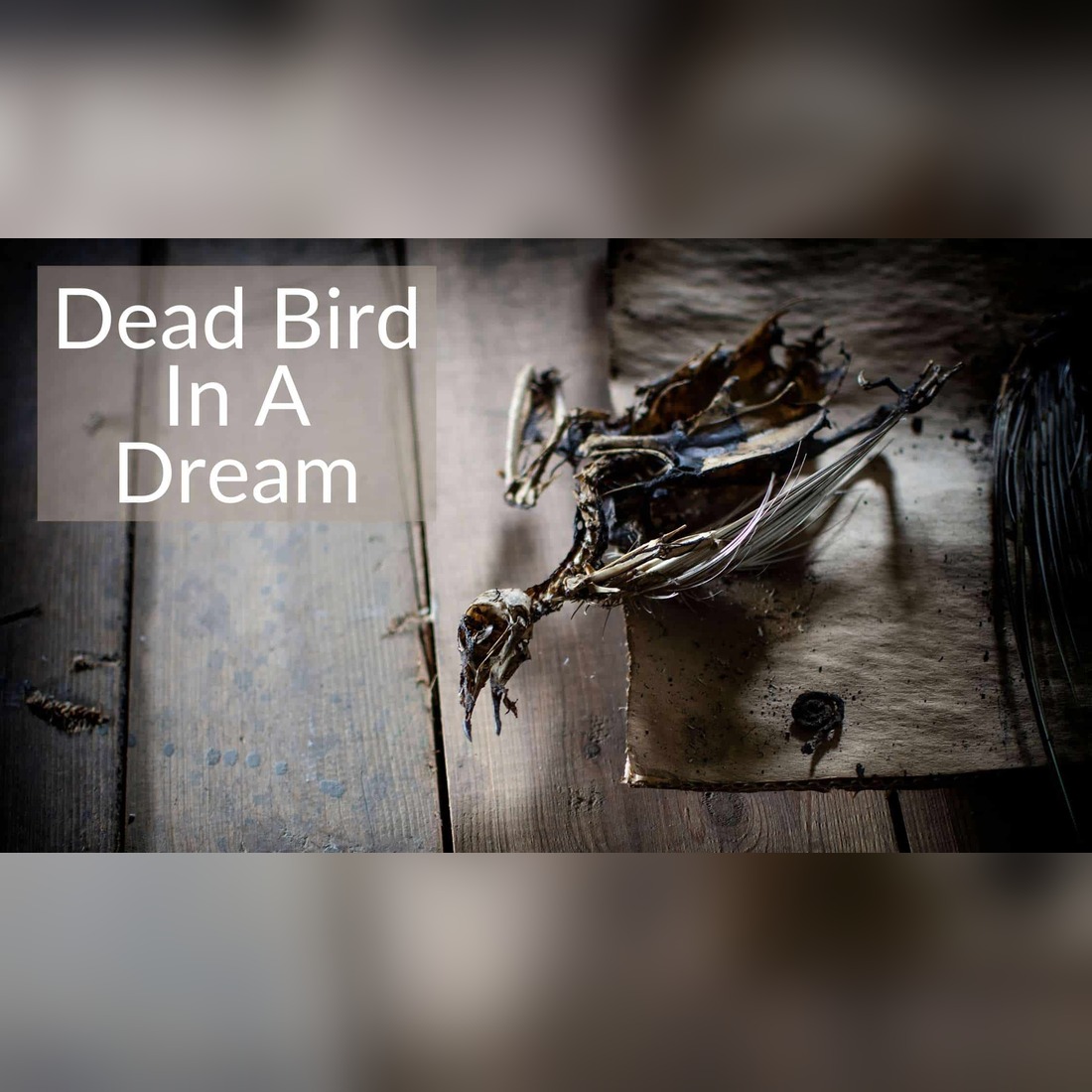
In the quiet stillness of finding a dead starling, we often encounter a sacred moment that stirs our deepest questions about life, transition, and meaning. The delicate form of a once-vibrant creature, with its iridescent feathers catching the light one final time, speaks to us in a language beyond words.
But you found the starling on your step, and the first thing you thought was: what does this mean for me? In Roman augury, recorded by Cicero, a silenced bird-messenger meant a closed channel between you and someone else, not a punishment coming down. But starlings are flock birds, and a solo death reads different than one among many.
Key Takeaways
- A dead starling most consistently points toward broken or completed communication and a cycle closing, not a death omen or personal curse.
- Roman augury, documented in Cicero’s De Divinatione and discussed in starling folklore, read a silenced bird-messenger as a closed channel, not a catastrophe.
- Welsh tradition, through Branwen’s starling in The Mabinogion, links a dead starling near the home to a severed or neglected family bond.
- Victorian culture read dead songbirds as memento mori: a reminder of fragility, not a prediction about named people.
- Location changes the reading. Doorstep, window, and garden carry different weight, but no tradition I’ve read treats this as a targeted curse.
What Does It Mean When You Find a Dead Starling?
Take a breath first.
The traditions that actually recorded what a dead starling means are not catastrophic about it. Roman augurs read living starlings as divine messengers. When the messenger went silent, the channel closed. Not the world. That is the oldest and most consistent reading across the written record: something that was supposed to be said, wasn’t. Or something that needed to close, has.
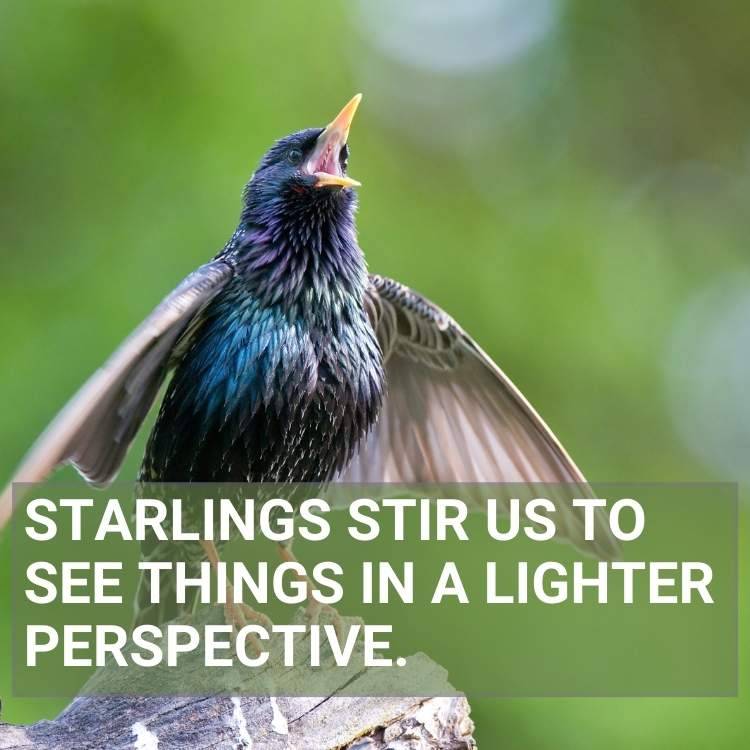
My grandmother Theresa kept a leather notebook of animal lore from the Bavarian Forest, written in German cursive that’s half-stuck together at this point. She didn’t record starlings specifically, but she recorded the logic that runs underneath every dead-bird omen in the European folk tradition: the bird was carrying something. When it stops, you ask what it was carrying, not how bad the news is.
The three themes that come up consistently across sources are: broken communication, a cycle completing, and the memento mori, the quiet tap on the shoulder that says pay attention to what you’re taking for granted. No tradition I’ve found says this means someone close to you will die. I want to be honest that the folk record is thinner on starlings specifically than it is on crows or owls. That matters.
What Did Starlings Symbolize Before They Became Dead Omens?
The dead-bird reading builds on what the living bird meant, so it helps to start there.
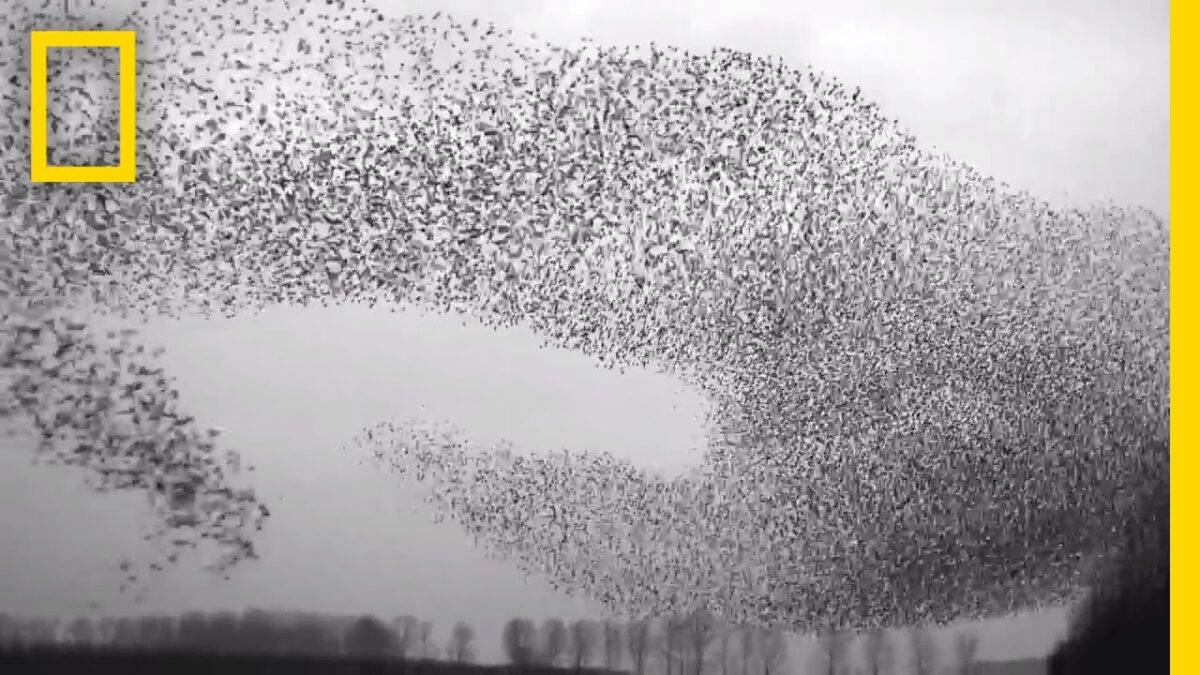
Starlings are, biologically, extraordinary communicators. A murmuration, thousands of birds turning in patterns that look coordinated but have no single leader, is one of the genuinely strange things in nature. Each bird tracks its seven nearest neighbors. No one is in charge. The whole flock thinks, in some loose sense of that word.
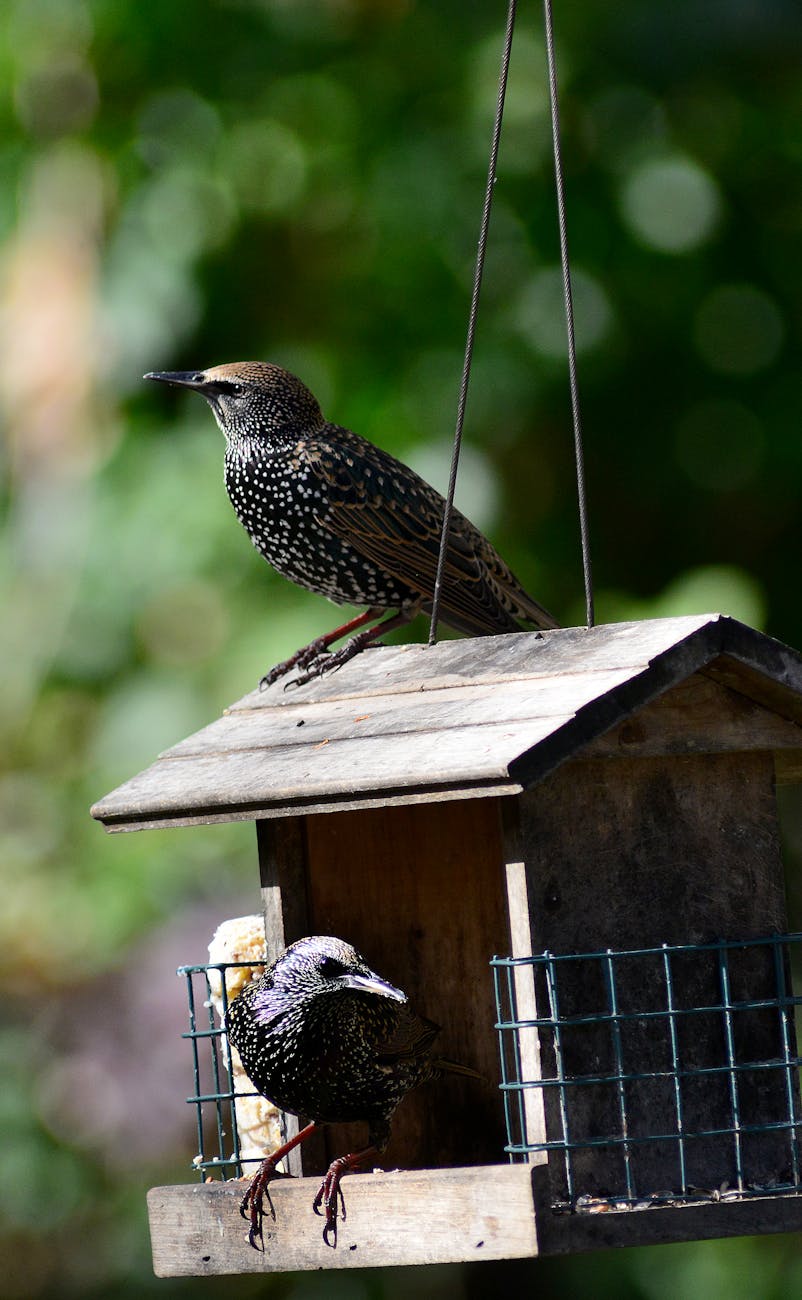
That’s what people were responding to when they made starlings into symbols: collective intelligence, community, the ability to shift direction fast. Voice, too. Starlings are exceptional mimics. They reproduce the calls of other species, and in captivity they learn human words. Pliny the Elder noted trained starlings speaking at the household of Agrippina the Elder, which tells you how closely Romans watched these birds. Birdfy’s overview of starling symbolism traces this mimicry as the root of the bird’s association with messages and the movement of information between people.
So when you find one dead, what you’re encountering symbolically is the silencing of that voice. The messenger stopped. The murmuration scattered. And that frame points toward one question: what’s gone quiet in your life, what hasn’t been said, what connection has frayed?
What Does Roman Augury Say About a Dead Starling?
Roman augurs watched starlings among many species. In ornithomancy, the number, direction, and behavior of birds told augurs whether the gods favored a campaign, a treaty, an election. Cicero’s De Divinatione, written in the first century BCE, documents both the practice and his own skepticism about it. Pliny the Elder’s Naturalis Historia from the first century CE describes those trained starlings at Agrippina’s household speaking human words.
The logic of augury was consistent: a bird that should deliver a sign, but cannot, means the channel is closed. A dead bird at a threshold, in this framework, would have been read as divine communication withdrawn or completed. Not punishment. A shift in the conversation between the household and whatever forces watched over it.
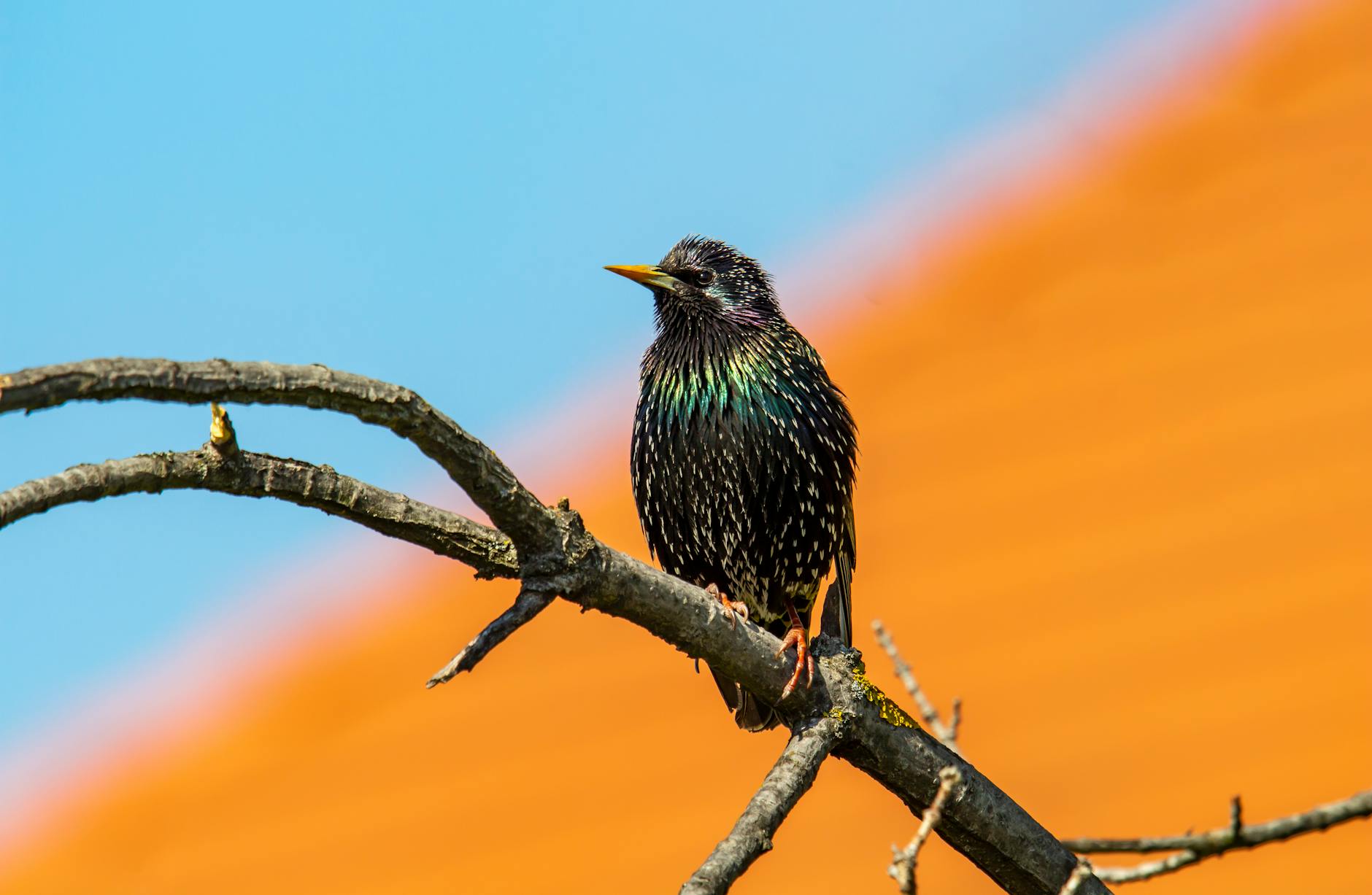
That’s not a catastrophic reading. It’s a practical one. Something ended. Something that was being said is no longer being said. The question the tradition asks is: did the message get through before the bird fell silent?
What Does the Welsh Story of Branwen’s Starling Tell Us?
This is the story I find most useful, and it’s old enough to carry weight.
In Branwen ferch Llyr, the Second Branch of the Mabinogi, translated by Sioned Davies for Oxford University Press in 2007, Princess Branwen is held in Ireland, mistreated, cut off from her family in Wales. She tames a starling, teaches it her brother’s name and situation, and sends it across the sea. The bird gets through. Her brother Bran mounts an army.
The starling in Branwen’s story is the one who crosses the uncrossable distance, who carries the word that saves a life. The loyal messenger who goes where no human can.
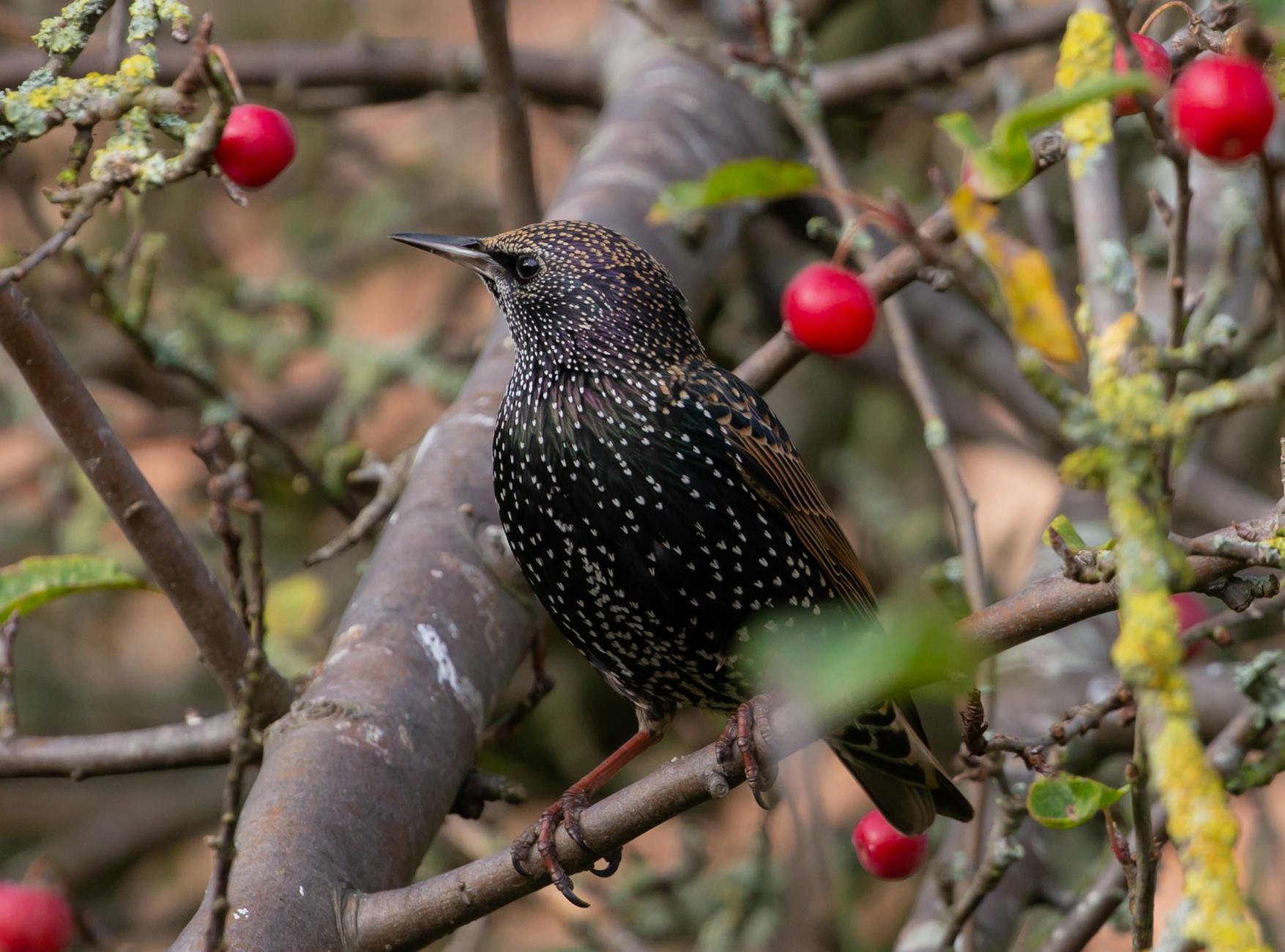
When that messenger dies near the home, near the threshold, the symbolic implication in this tradition is a severed or neglected bond. Something or someone who needed to hear from you hasn’t. A family connection that’s frayed. An unspoken grief. Not a death omen. A communication omen. It’s asking: who are you not reaching?
I should say clearly: I don’t know if the medieval Welsh storytellers intended this reading for dead starlings specifically. The folk extension from narrative logic to omen-reading is always a gray area, and I’d rather say that than claim more than the sources support.
What Did Victorian Culture Read Into a Dead Bird on the Doorstep?
Victorian mourning culture was specific about dead birds. Dead songbirds appeared in mourning jewelry, in embroidery, in posed memorial photographs that were standard in middle-class grief practices. The reading wasn’t prophetic. Victorians weren’t treating a dead bird on the step as a sign someone would die. They were treating it as a memento mori.
The Latin phrase means “remember you will die.” The Victorians meant it gently. A dead bird at the doorstep fit into a tradition of objects that reminded a household of life’s shortness: the skull on the scholar’s desk, the hourglass, the withered flower. Innocence lost, time passing.
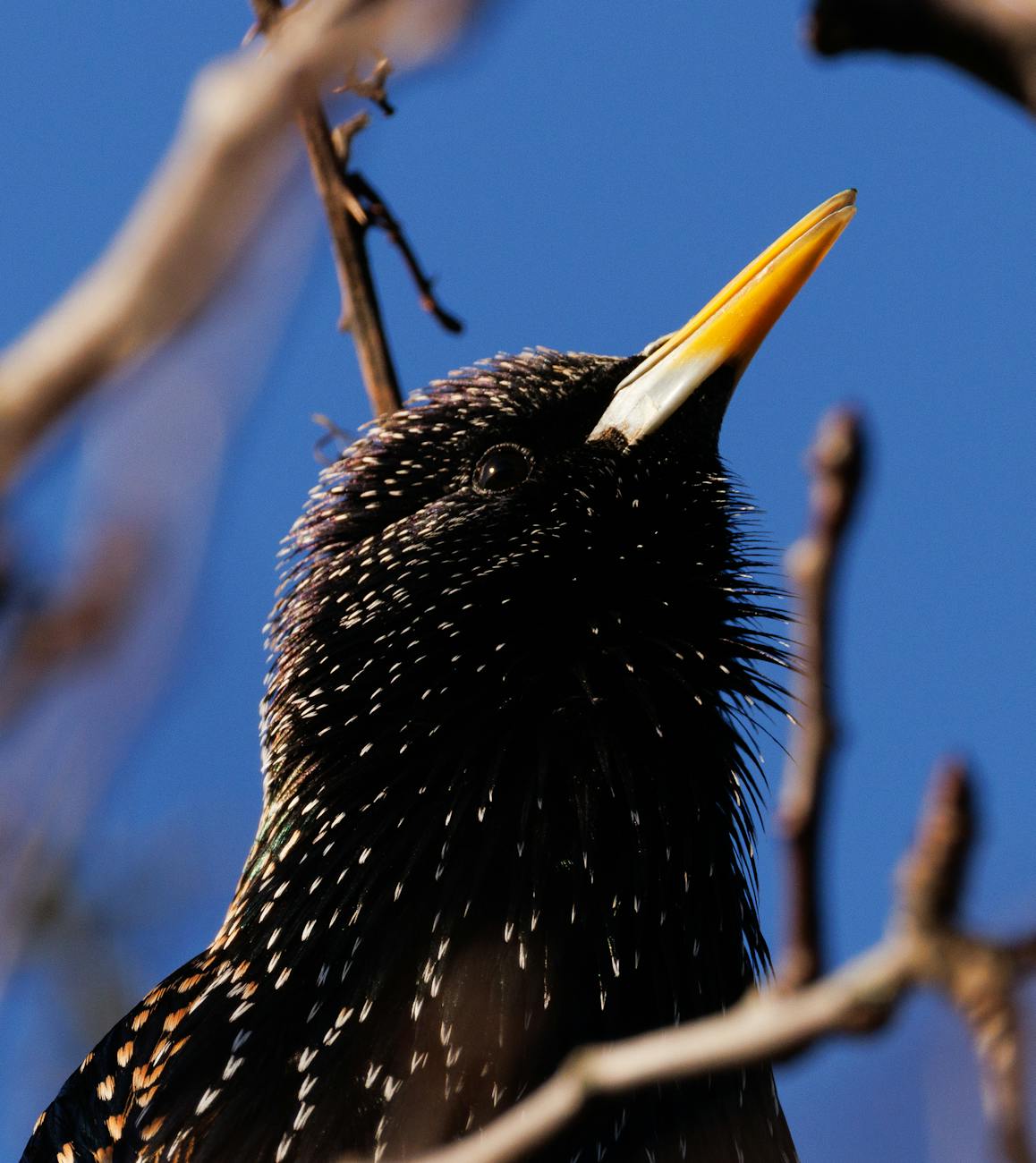
A starling specifically, small and common and overlooked in life, fits this frame well. The bird nobody thinks about until it’s gone. The voice you stop hearing because it was always there. That’s not a curse. That’s a reminder that the people and things you take for granted are not permanent.
Does Where You Found the Dead Starling Change Its Meaning?
Yes. Location has always shaped how people read encounters with dead animals, and I’d map the most common sites this way.
Doorstep or front threshold: This is the most loaded location in almost every folk tradition, because thresholds mark the boundary between the household and the outside world. A dead starling here points most directly toward the communication theme. Something was trying to reach you, or something you haven’t yet said to someone outside the home.
Windowsill or below a window: Window strikes are the most common cause of bird death around houses. A 2014 study in The Condor: Ornithological Applications estimated between 365 million and 988 million birds die annually from building collisions in the United States. That’s worth knowing before you read anything else into it. But in folk terms, windows have always marked the boundary between visible and unseen. A starling dead at the glass is read as a message that didn’t quite make it through.
Garden or yard: Less urgent, in most traditions. The garden is the bird’s natural territory; dying there is ordinary. The weight is lighter here. More reminder than warning.
Inside the house: Rarer, and I understand why it unsettles people. A bird inside has crossed a boundary it shouldn’t have. Folk traditions across northern Europe read this as a more pressing sign that something in the household needs attention, a relationship, a silence, something unaddressed.
What Should You Do After Finding a Dead Starling?
Practically: wear gloves. Don’t handle the bird with bare hands. Dead wild birds carry bacteria. Wrap it in paper and dispose of it, or bury it if that feels right. There’s nothing in the folk record that requires burial for the symbolism to resolve. That’s a modern addition, and it’s not backed by older sources.
For the other part of what you’re feeling, I’d suggest sitting with two questions. First: is there a conversation you’ve been avoiding? A message you haven’t sent, a person you’ve been out of touch with, something you’ve been telling yourself you’ll get to? The starling’s primary reading points there. Second: is there something in your life that’s genuinely completing? A phase ending, a chapter closing? That deserves acknowledgment, not panic.
You are not making this up. The fact that you noticed this bird, out of all the ordinary things in your day, is the mind doing what it has always done, finding the mirror. What you do with what you see in it is yours to decide.
For more on what living starlings represent across traditions, I’ve written a longer piece that goes into the murmuration symbolism and the starling’s place in folk belief in more depth.
Frequently Asked Questions
Is finding a dead starling bad luck?
Not in any tradition I find credible. Roman augury and Victorian mourning symbolism both read dead songbirds as signs of something closing or completed, a cycle, a communication, a phase, not as omens of personal misfortune. The “bad luck” framing tends to come from generic dead-bird content that doesn’t distinguish between species or sources. A dead starling is an encounter worth pausing over. It is not a hex.
Does a dead starling mean someone I know will die?
No named tradition in the written record makes this specific claim about starlings. That reading gets applied to owls and ravens in some folk traditions, and even there the connection is looser than popular accounts suggest. A dead starling points most consistently toward communication and completed cycles. If you’re frightened about someone’s health, that fear is real and worth attending to on its own terms. It doesn’t need a dead bird to be valid.
What is the difference between a dead starling and a dead crow, spiritually?
Crows carry a much longer and more documented association with death and the underworld across European and North American traditions. Norse mythology, various Celtic accounts, and Appalachian folk belief all name crows specifically. Starlings carry a different set of associations: messenger, voice, collective connection. A dead crow points more directly toward the spaces between life and death in the folk record. A dead starling points toward silence where there should be speech. Different birds, different questions.
What does it mean if a starling dies at my window specifically?
Window strikes kill hundreds of millions of birds each year in the US alone, according to research published in The Condor: Ornithological Applications by Loss, Will, and Marra in 2014. So there is a plain physical explanation, and I’d start there. In folk terms, the window has traditionally marked the boundary between the known and the unknown. A bird that falls there is often read as a message that didn’t complete its crossing. I’d hold both readings without insisting one cancels the other.
Is a dead starling a message from a deceased loved one?
I don’t believe that personally, and I won’t tell you it’s true just because it would be comforting. What I can say is that the mind reaches for connection when it’s grieving, and animals have always been the mirrors it reaches toward. Whether that reaching is metaphysical or psychological, the experience is real and the meaning you find in it is real. I’d be dishonest if I claimed the starling was literally sent. I’d also be dishonest if I told you the connection you felt meant nothing.
Do dead starlings appear in any religious scripture?
Not that I’ve found, and I’ve looked. Starlings appear in Roman civic religion through augury practices documented by Cicero and Pliny, and in medieval Welsh literary tradition through Branwen’s messenger in The Mabinogion. But they’re not named in the Bible, the Quran, or major Hindu or Buddhist scripture in any specific context I can verify. Scriptural bird references tend to name sparrows, ravens, doves, and eagles. The dead-starling omen is largely a folk and literary tradition, not a religious one.
How is a dead starling different symbolically from a dying or injured one?
An injured starling raises different questions. Death is complete: the cycle closed, the message delivered or not. An injured bird is in between, and folk traditions generally read that as a situation requiring a response, something struggling that might yet be helped. If you find an injured starling, contact a local wildlife rehabilitation center. The symbolic reading, if you want one, is that a relationship or communication is in trouble but not beyond reach.
Sources
- Marble Crow Blog, “The Magical Meaning of Starlings” (2023)
- Birdfy, “What Do Starlings Symbolize? Insights Into Their Spiritual Meaning”
- PeckPerk, “Dead Bird Meaning: Spiritual and Cultural Interpretations”
- Cicero, De Divinatione (1st century BCE), primary source on Roman augury and bird-sign reading
- Pliny the Elder, Naturalis Historia (1st century CE), documents trained starlings and Roman bird observation
- Sioned Davies, trans., The Mabinogion (Oxford University Press, 2007), source for Branwen’s starling messenger in Branwen ferch Llyr
- Loss, S.R., Will, T., and Marra, P.P., “Estimates of bird collision mortality at buildings in the United States,” The Condor: Ornithological Applications (2014), window strike mortality statistics