You found the hawk still warm on your porch, and your chest went tight. In Anishinaabe teaching, a hawk’s death means a message got cut off, a watch that stopped mid-turn. But the spot where it fell, and what you’ve been waiting to hear, will tell you what it means.
Key Takeaways
- A dead hawk reads across most traditions as a broken message or a gap in protection, not a death omen for you or someone close.
- Location changes the reading: a hawk dead at your front door carries different weight than one found in open land.
- In Anishinaabe and Cherokee frameworks, the hawk’s death near you calls for restored attention, not fear.
- A hawk that died striking a window has its own specific reading: blocked vision, an invisible barrier on a path that looked clear.
- You cannot legally keep raptor feathers in the US, even from a bird you found dead. There is a right way to handle the body.
What Does It Mean When You Find a Dead Hawk?
The instinct to read this as a bad omen is understandable. It’s also the narrowest possible reading of what traditions actually say, especially when you consider deeper interpretations like what is the meaning behind the hawk cry.
Hawks across most folk and spiritual traditions are understood as messengers, boundary-keepers, birds that carry sight farther than we can. When that carrier goes down, the more common reading is that a message was interrupted. Not that something terrible is coming.
I’ve spent thirteen years working with raptors at the Western North Carolina Nature Center, and I can tell you a hawk can die from a window strike, a car, a power line, a rival, or disease. The body in your yard wasn’t placed there for you in any biological sense. But the fact that you noticed it, that it landed in your space and shook you, that is worth taking seriously. You’re not making this up.
What Did Hawks Represent Before They Died Near You?
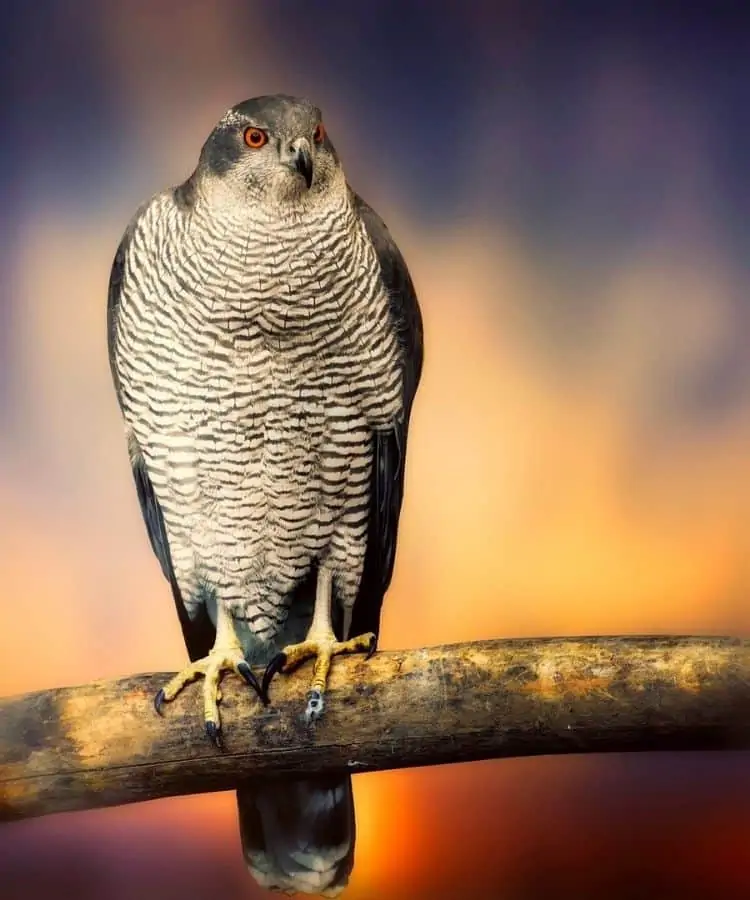
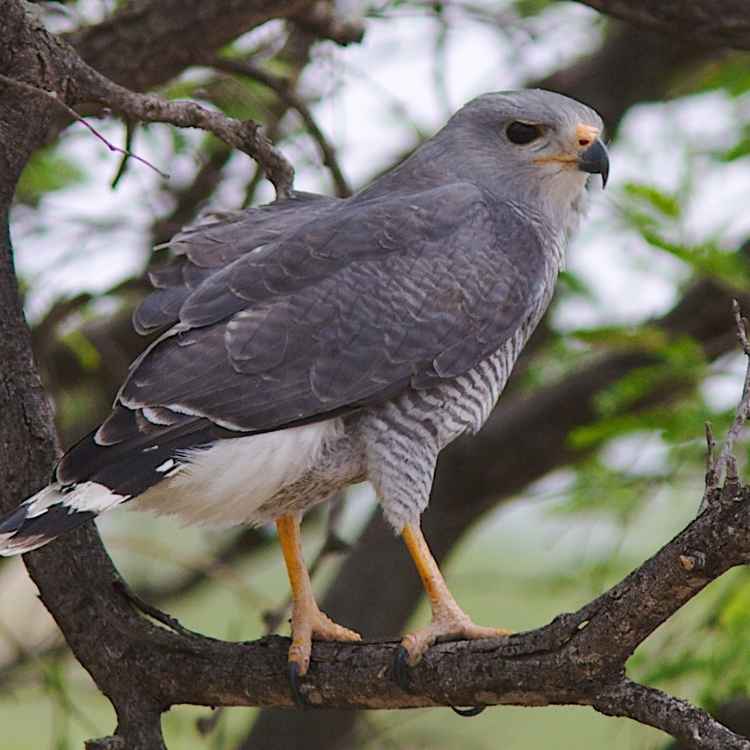
Hawks are, across an unusually wide range of traditions, the bird most tied to clear sight and guarded passage. Red-tailed Hawks, Cooper’s Hawks, Sharp-shinned Hawks: each species hunts differently, sees differently, moves differently. But in symbolic terms they share something. They watch from height. They see what others miss. They cross the boundary between the visible and the overlooked.
That baseline matters for understanding the death. If hawks are messengers, a dead hawk is a message that didn’t complete its delivery. If hawks are guardians, a dead hawk marks a gap where the watching stopped. Neither reading is catastrophic. Both are worth sitting with.
According to Stacey L. L. Couch’s work on Red-tailed Hawk symbolism at Wild Gratitude, the hawk is specifically tied to the capacity to discern truth, to see past surface appearances and act on what is real. A dead hawk, in that frame, asks a plain question: what in your life needs clearer sight right now?
What Do Anishinaabe Traditions Say About a Dead Hawk?
In Basil Johnston’s Ojibway Heritage (1976, McClelland & Stewart), Anishinaabe cosmology describes animal relationships as reciprocal. The animal is not a symbol laid on top of the world; it is a participant in ongoing exchange. When an animal dies near a person in this framework, the question it raises is relational: what has been disrupted? What obligation has lapsed?
A hawk’s death, in this reading, is not a punishment. It’s more like a signal that the balance between you and the world, or between you and a specific relationship or commitment, has shifted and needs attention. A call to restore something. Not a verdict on your future.
I don’t claim any authority to interpret Anishinaabe tradition from the outside. I’d point you toward Johnston’s work directly rather than any secondhand summary, including mine.
What Does Cherokee Tradition Say About Hawks as Messengers?
Cherokee oral teaching identifies Red-tailed and Red-shouldered Hawks as vision birds and go-betweens, carrying awareness from the physical world into the seen-but-unseen world where decisions echo. Cherokee speakers describe these hawks as messengers of vision, linked specifically to the moment of clarity before a choice becomes permanent.
If that’s the hawk’s role, carrying a message across a threshold, then its death near you reads as an interrupted transmission. Something was in transit and didn’t arrive. Not a curse. A gap. The appropriate response in this tradition is not fear but attention: what question were you not asking? What decision were you avoiding that may now need to be faced without the bird’s guidance?
And I want to be plain here: I’m not Cherokee. I’m a German-American man who has been paying close attention for a long time. These are not my traditions to claim. I cite them because they offer something the “bad omen” framing doesn’t: a way to sit with what happened that is actually useful.
What Do Biblical and Abrahamic Traditions Say About a Dead Hawk?
Leviticus 11:16 lists the hawk among the birds considered ritually unclean. Not evil, but outside the boundary of the sacred in the Levitical dietary code. The hawk here is a creature of blood, of predation, of the wild edge. Set apart, not cursed.
In broader Abrahamic folk interpretation, birds of prey appearing at moments of death or transition are sometimes read as escorts rather than omens, presences at the boundary rather than causes of what happens there. Finding one dead shifts this. The escort has gone down. In some rural Christian folk traditions of the American South, a dead hawk near the house was understood as a sign that something requiring protection had passed through and left you to handle it alone. Not a catastrophe. A shift in what was carrying you.
I’ve read three different academic treatments of this and I don’t trust any of them completely. The folk record is genuinely thin, and the biblical text itself says nothing about dead hawks. Only about eating them.
Does the Location Where You Found the Dead Hawk Change Its Meaning?
Yes. This is the question most people are actually asking. Not “what does a dead hawk mean” in the abstract, but “why was it there.”
At your front door or threshold: threshold symbolism is among the oldest and most consistent in folk traditions across Europe, the Americas, and parts of East Asia. The threshold is where inside and outside meet, where protected space ends. A dead hawk at a front door carries more weight than one found in open land, because the location doubles the message. Something that was watching your boundary has stopped watching.
In your yard, away from structures: lower intensity, symbolically. The hawk was working its territory. That territory happened to include your yard. I’d read this as an encounter that found you, rather than a message placed for you.
On a windowsill or directly under a window: likely a strike. The window introduces its own specific symbolism. See the next section.
In open land, away from your home: here the encounter is about proximity in time rather than placement. You walked past. You were the one who noticed. The hawk in life already carried meaning in many traditions, and in death, crossing your path carries its own weight.
What Does It Mean When a Hawk Dies Striking a Window?
Window strikes kill an estimated 600 million birds a year in the United States, according to a 2014 study by Scott Loss and colleagues published in The Condor. Hawks hit windows because glass reflects sky and trees, and a raptor moving at speed cannot distinguish the reflection from the real thing. This is a practical fact worth knowing. It means a window strike is not a sign that the hawk chose to die there. It was flying toward what looked like open sky.
But.
The symbolism of this specific encounter is distinct, and I think it earns its own reading. A hawk flying full-speed at a clear surface and hitting the invisible barrier is a literalized image of a path that looked open and turned out to have something in the way. If this happened at your window, the question it raises is specific: where in your life does something look clear but actually has a barrier you haven’t seen yet?
That’s not a comfortable question. It wasn’t meant to be.
What Should You Do After Finding a Dead Hawk?
The legal piece first, because most people don’t know this. Hawks are protected under the US Migratory Bird Treaty Act. You cannot keep the body, the feathers, or any part of a hawk you find dead, even if you had nothing to do with the death. This applies to all raptors. If you want feathers preserved for spiritual use, the US Fish & Wildlife Service maintains a National Eagle Repository (it covers non-eagle raptors too) where federally enrolled tribal members can request feathers through a formal process. If you are not an enrolled tribal member, the feathers are not legally yours to keep. Set them down.
For disposal: bury the hawk. Dig a hole at least a foot deep, deeper if you have loose soil. You don’t need a ceremony. But if it feels right to say something, say something plain. Something about the bird having done its work in the world.
My grandmother Theresa kept a leather notebook of folk practices from the Bavarian Forest, and one thing that recurs across her entries is the idea that a witnessed death deserves a witnessed burial. Not an elaborate one. Just witnessed.
After that, pay attention to what the encounter stirred up. Not in a superstitious way. In a practical one. What were you thinking about when you found it? What question had been sitting with you? The hawk doesn’t answer those questions. But it may have been the thing that made you stop long enough to notice them.
Frequently Asked Questions
Is finding a dead hawk bad luck?
Not in most traditions I’ve read closely. The “bad luck” reading tends to come from European death-omen traditions applied broadly to all birds of prey, without distinguishing what hawks specifically stood for. In Anishinaabe and Cherokee frameworks, a dead hawk near you is a disruption or an interrupted message, something that asks for attention rather than announcing harm. You found it. You noticed it. That noticing is not bad luck. It’s the beginning of paying attention.
What does it mean if a hawk dies in front of you specifically?
The proximity and timing are what people find hardest to dismiss, and I understand why. A hawk dying in your direct line of sight, not found later but witnessed, carries more weight symbolically than a body you stumble across. According to cross-cultural hawk symbolism documented at PeckPerk, hawks dying in someone’s presence are sometimes read as a moment of forced reckoning, something the person was meant to see, something that marks a before and after. I’d take that seriously without inflating it into catastrophe.
Does the species of hawk change the meaning?
Somewhat. Red-tailed Hawks are the most commonly cited in both Cherokee oral tradition and American folk belief generally, probably because they’re the most visible: large, loud, familiar. Red-shouldered Hawks share similar associations. Cooper’s Hawks and Sharp-shinned Hawks, which are smaller and move differently, appear far less in the symbolic record. I don’t have a confident answer about species-specific meanings beyond Red-tailed and Red-shouldered. The folk record on the smaller accipiters is genuinely thin.
What does a dead hawk in a dream mean compared to finding one in waking life?
A dead hawk in a dream is working through your own mind’s material rather than responding to an external event. Dreams involving dead birds of prey are often read in Jungian terms as the end of a period of being extra alert or seeing things clearly, something protective going quiet inside you. The waking encounter is different because you didn’t generate it. Something external entered your space. The dream asks what in you has gone quiet. The waking encounter asks what outside you has shifted.
Can a dead hawk be a sign from someone who has died?
People believe this, and I’m not going to argue them out of it. The hawk’s association with boundary-crossing, moving between the visible and the hidden, makes it a natural vehicle for this kind of reading, especially when the encounter happens close to a loss. I don’t personally believe animals carry messages from the dead. I do believe the mind reaches for images that hold grief, and hawks hold it well. Whether that’s the bird carrying something or your own need for it doesn’t have to be resolved before you take the comfort.
What is the difference between a hawk that hit a window and one found dead on the ground?
A window strike has its own specific reading: blocked vision, an invisible barrier, something that looks like clear passage but isn’t. A hawk found already dead on the ground with no obvious cause is a different encounter. The absence of explanation tends to amplify the feeling of significance. Both are worth sitting with. But the window-strike hawk is, symbolically, about a specific kind of obstruction. The hawk on the ground is more open in what it might be pointing toward.
Should I keep a feather from a dead hawk I found?
Legally, no, not in the United States. Hawks are protected under the Migratory Bird Treaty Act, and possession of raptor feathers, even from a bird you didn’t kill, even from a bird you found, is a federal violation with real penalties. This applies whether or not you intend to use them spiritually. Set the feathers down with the body. Bury them together if you can. The impulse to keep something from the encounter is understandable, but there are other ways to mark it.
Sources
- Hawk Spiritual Meaning Across Cultures, Faith and Life, PeckPerk
- Red-Tailed Hawk Symbolism, Wild Gratitude (Stacey L. L. Couch)
- Cherokee Hawks as Messengers of Vision, Cherokee oral teaching context
- Hawk Spiritual Meaning: What Their Appearance Reveals, Birdfy
- Birds After Loss: Meanings, Myths, and Why People See Them as Signs of Hope, Funeral.com
- Basil Johnston, Ojibway Heritage (1976, McClelland & Stewart)
- Scott R. Loss, Tom Will, Sara S. Loss, Peter P. Marra, “Bird-building collisions in the United States,” The Condor (2014)
- U.S. Fish & Wildlife Service, Migratory Bird Treaty Act