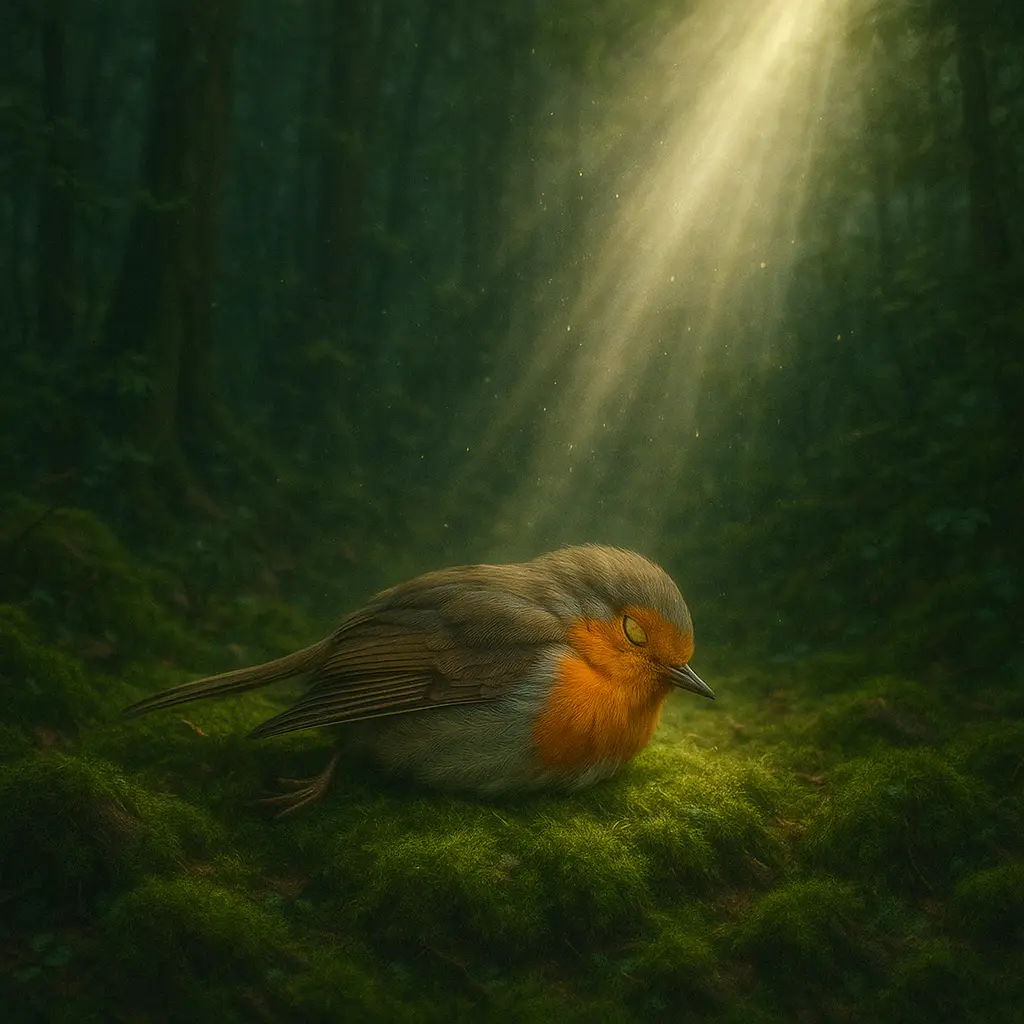
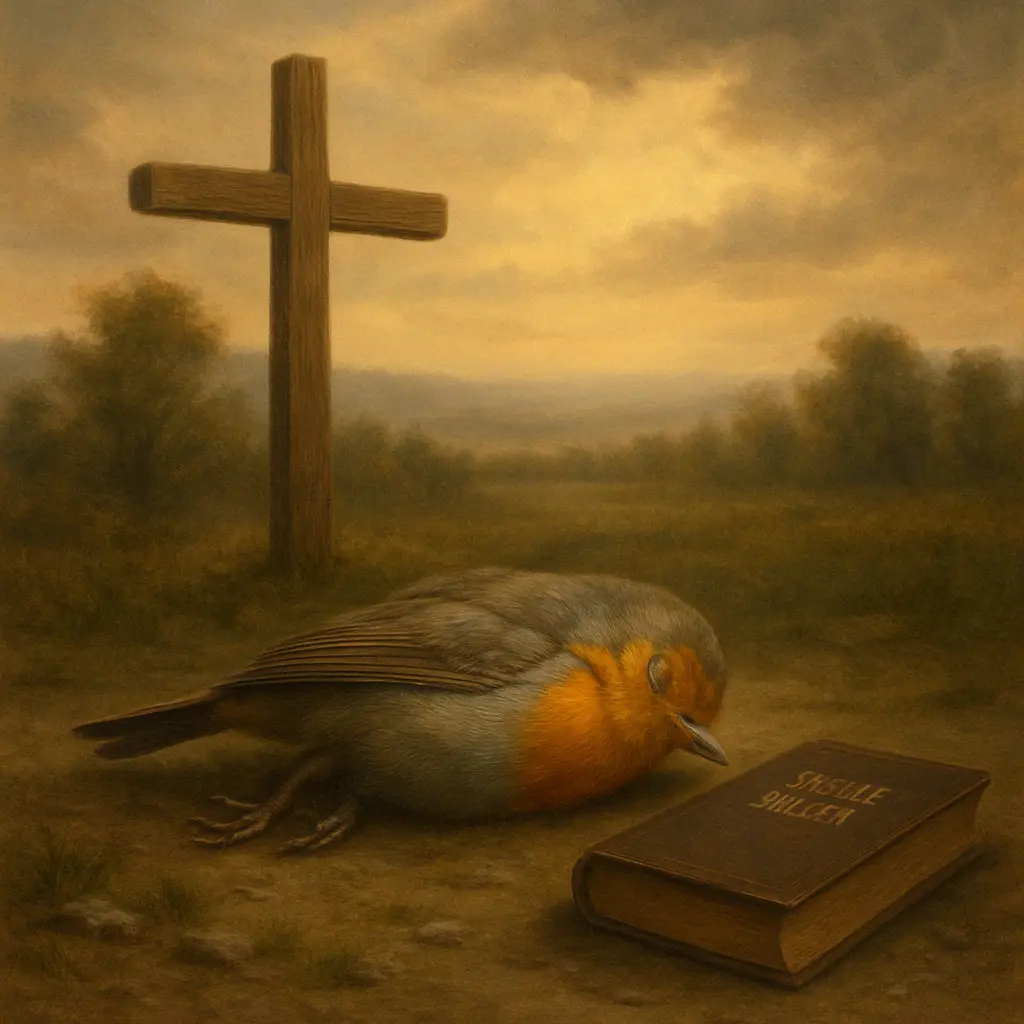
The moment you discover a lifeless robin — its vibrant red breast now still against the earth — can be both jarring and deeply moving. This small creature that once filled your garden with melodious songs and flashes of russet plumage now lies silent, prompting an almost instinctive search for meaning. Throughout human history, the dead robin meaning has transcended mere coincidence, carrying profound spiritual significance across cultures and traditions.
Key Takeaways
- A dead robin is read in Irish and English tradition as a threshold signal: the end of a protective cycle, not a simple bad omen.
- Irish folk belief, recorded in the UCD National Folklore Collection, treats the robin as a sacred soul-bird; finding one dead suggests protection has lifted or a transition is underway.
- English and Welsh Christian lore gives the robin a quasi-sacred status tied to the Passion narrative; finding one dead carries that same charged weight.
- Location matters. A dead robin on your doorstep reads differently than one found in the garden or after a window strike.
- Robins appearing after a loved one’s death is one of the most consistent threads in contemporary grief culture, and it fits the bird’s long-standing folk role as a messenger between the living and the dead.
What Does It Mean When You Find a Dead Robin?
You found it, and now you can’t stop thinking about it. That’s where you are, much like the deeper meaning behind Robin Symbolism that captures the mind once discovered.
The honest answer is that a dead robin, across the folk traditions that take this bird most seriously, is not a death warrant. It signals that something is ending. A chapter. A period of protection. Something you may already feel closing around you, even if you haven’t named it yet.
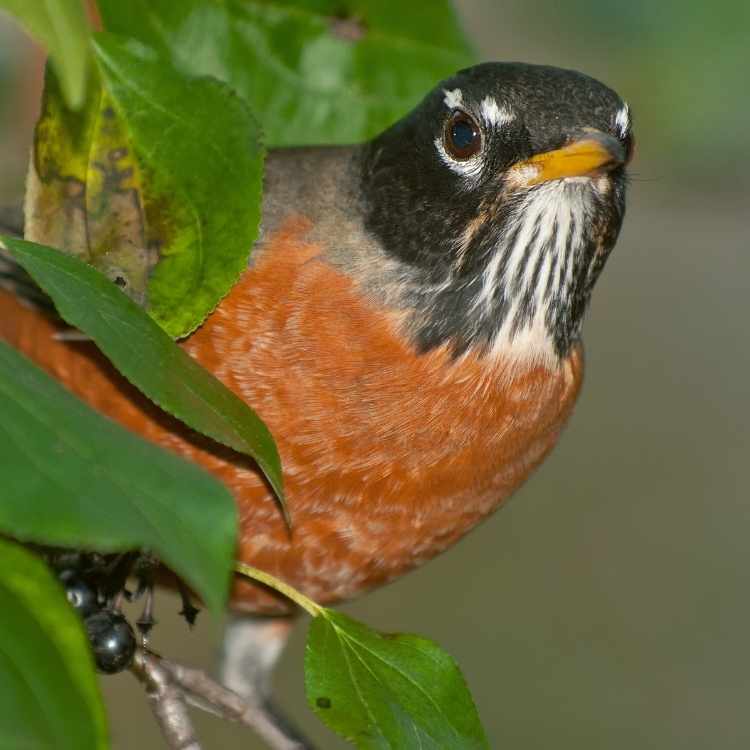
The European robin (Erithacus rubecula) is one of the most symbolically loaded small birds in the Western folk record. Finding one dead lands differently than finding, say, a house sparrow. The weight you feel is not you being dramatic. The robin has held this charge for centuries, and your instinct to take it seriously connects you to that long line of people who paid attention.
My grandmother Theresa kept a leather notebook of animal lore from the Bavarian Forest, and the birds in it are all treated with that same seriousness: the raven at the window, the owl’s call before a death. The robin doesn’t appear in it by name, but the posture does. You notice the bird. You respond to it. You continue. That notebook is falling apart on my desk, German cursive, pages stuck together, and it still tells me what to do when I find something dead and feel uneasy about it.
For more on what this bird means when it’s alive, the fuller robin symbolism guide covers the living bird in much more depth.
What Do Irish and Celtic Traditions Say About a Dead Robin?
In Irish rural Catholic folk belief, the robin is a creature that exists between two worlds. A bird that moves between the ordinary world and whatever lies on the other side of it. According to Dáithí Ó hÓgáin’s Myth, Legend and Romance: An Encyclopaedia of the Irish Folk Tradition (Prentice Hall, 1991), the robin holds a close association with sacred themes, soul-protection, and the boundary between life and death. Hurting one was considered genuinely dangerous. Not taboo in a vague, superstitious way. Dangerous the way breaking a promise to someone who trusted you is dangerous.
The UCD National Folklore Collection holds 19th and 20th-century Irish narratives in which a robin entering the house signals death or serious illness in the household. Finding one dead reads differently: not as an incoming threat, but as a disruption of something that was protecting you. The sacred creature is gone. The ward has lifted.
What the folk tradition asks you to notice is not whether punishment is coming. It asks what chapter of your life just ended.
And that, I think, is the more useful question. Not “is this bad?” but “what has been closing for me lately?”
What Does English and Welsh Christian Folklore Say About a Dead Robin?
The robin’s red breast has its own origin story in English and Welsh Christian lore, and it is strange and rather beautiful. The bird, in Passion narrative folk tellings, flew to the cross to pull thorns from Christ’s head, or to fan the flames of a fire warming a freezing infant Jesus, and was stained red in the attempt. That cluster of similar stories gave the robin a quasi-sacred status that persisted long after formal theology moved on from it.
The old English rural saying “A robin in a cage puts Heaven in a rage” is part of this stream. So is its companion: “Kill a robin or a wren, never prosper, boys or men.” These weren’t gentle suggestions. Finding a dead robin in this tradition carries the weight of a sacred thing interrupted. Treanor Stone Ireland’s documentation of robin grief symbolism notes how deeply this runs in contemporary British and Irish memorial culture, where the robin appears on gravestones and memorial cards precisely because of this long history as a soul-adjacent bird.
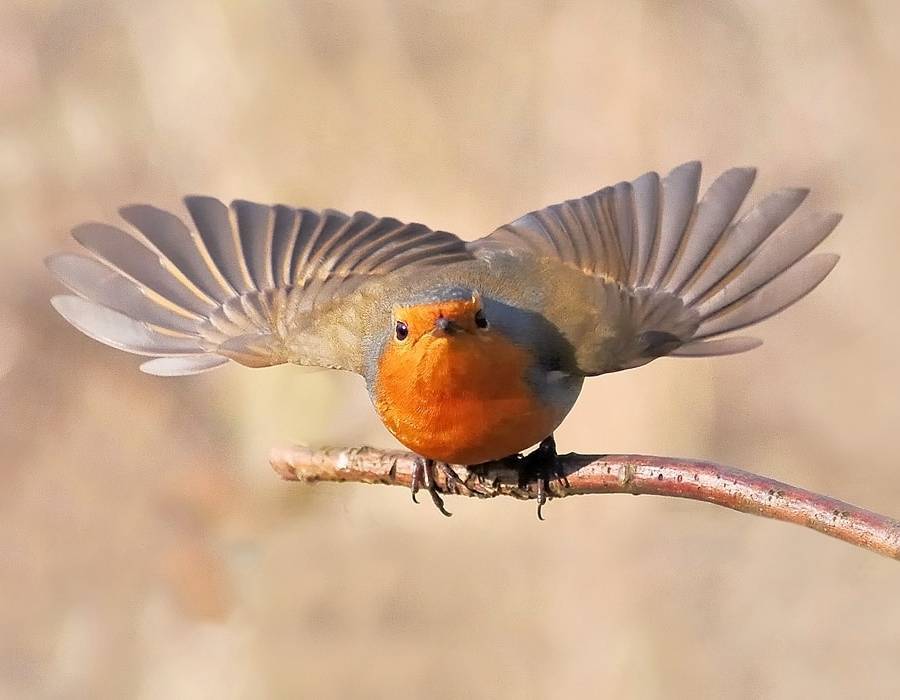
A dead robin, in this tradition, signals the end of a period of grace. Something that was held together is now releasing. Or rather, that’s closer to how the folk belief actually works. It’s not a warning about what’s coming. It’s a recognition of what’s already gone.
Is a Dead Robin a Bad Omen or a Spiritual Message?
Rarely read as simple bad luck. Almost never read as a death sentence for someone you love.
What most traditions agree on is that the robin’s death marks a threshold. A closing. The word “omen” suggests something incoming; the folk reading of a dead robin is more often about something outgoing. A cycle ending. A protection lifting. A version of your life that is finished.
That distinction matters. It is the difference between bracing for impact and being invited to pay attention to what is already changing.
I have read three or four explanations of this that try to flatten it into either pure doom or pure reassurance, and I don’t trust any of them. The truth sits in the middle. The bird is gone. That matters. But it does not mean what you are afraid it means.
If you have been seeing robins regularly and wondering about that, the robin symbolism guide covers the living bird’s role as a messenger and what repeated sightings tend to mean across traditions.
Where You Found the Robin, Does Location Change the Meaning?
On your doorstep or threshold. This is the reading people feel most deeply in their gut, and the folk tradition backs the feeling. The threshold is a boundary in Irish and English folk belief, the point where inside and outside meet, where this world and the next are closest. A dead robin on your doorstep is a dead bird at the boundary. Most folk readings treat this as a significant signal: the protection surrounding your household has shifted, or a spiritual chapter tied to your home is closing.
Inside the house. A robin inside the house is already a serious sign in Irish lore, traditionally read as illness or death approaching. Finding one dead inside carries that same weight. I would not catastrophize it, but I would not dismiss it either.
In the garden, away from the house. This is the most common scenario and the least alarming one. Robins are territorial and combative; searches around dead robins in yards often surface quickly after spring territorial fights or window strikes. A dead robin in the open garden is still significant in folk tradition, but the urgency of the threshold reading does not apply. More of a general signal: something in the wider sphere of your life is in transition.
Do Robins Appear as Signs From Loved Ones Who Have Died?
Grief and Loss UK’s writing on robin synchronicity addresses this specifically from a grief-support perspective, and may be useful if you are reading this in the context of a recent bereavement.
What Should You Do After Finding a Dead Robin?
- Irish folk tradition: acknowledge the bird aloud. Say something simple. “Thank you” is enough. The vernacular tradition holds that a sacred creature deserves to be sent off with words, not silently scooped into a bag.
- English rural practice: some families leave a small offering near where the robin was found, a handful of seeds, a cup of water. Folk practice, not high ritual. It’s about closing the encounter with intention rather than leaving it open.
- Your own version: if you are not from either of these traditions, what you do matters less than that you do something. Even a moment of stillness before you walk back inside counts.
Frequently Asked Questions
What does it mean if a robin dies on your doorstep specifically?
The doorstep carries its own weight in Irish and English folk belief. It is the threshold, the boundary between inside and outside, between your household and the wider world. A dead robin there is read in these traditions as a signal that the protective charge around your home has shifted. Not a threat arriving. A guard departing. Something is ending. The threshold reading is the most charged location for this encounter, and the folk tradition takes it seriously without treating it as catastrophic.
Is finding a dead robin good luck or bad luck?
Neither, cleanly. The folk record, particularly in Irish rural Catholic tradition documented in the UCD National Folklore Collection, does not frame the dead robin as a luck event. It frames it as a threshold signal, the closing of a cycle. Some people, after the fact, read the change that followed as positive. Others read it as the end of something they valued. The bird doesn’t decide which. You do, once you see what changes.
What does the robin’s red breast have to do with death symbolism?
In English and Welsh Christian folk narrative, the red breast comes from the Passion. The bird tried to ease Christ’s suffering and was marked by his blood. That origin gave the robin a quasi-sacred status in rural lore, where killing one was considered a serious offense against heaven. The red breast is not a death symbol on its own. It is a symbol of sacrifice and protection, which is why the bird’s death reads as the lifting of something, not the announcement of something new.
Does a dead robin mean someone close to me will die?
No, not in any tradition I trust. The folk reading of a dead robin inside the house, which is the most alarming version, signals illness or disruption in the household, not a specific death. A dead robin on the doorstep or in the garden is several steps further from that reading. I am not aware of any tradition that makes a direct, one-to-one connection between a dead robin and the death of a named person. If someone is telling you otherwise, I would be skeptical of that source.
What is the difference between a robin visiting you and finding one dead?
A living robin visiting is read as comfort and connection. In both Irish folk belief and contemporary grief culture, a robin that returns repeatedly is often experienced as a sign of a loved one checking in. A dead robin is something else: the ending of a protective or connective presence. The living bird is a visit. The dead bird is a closing. Both deserve attention, but they ask different questions of you.
Should I feel worried if I find a dead robin near my home?
No. Robins in spring are among the most aggressively territorial small birds in the UK and Ireland; males fight hard, and they lose those fights. Window strikes kill many more. The folk tradition asks you to notice the bird and respond to it, not to brace for consequences. Worry is not what this calls for. Attention is.
Can a dead robin be a message from a deceased relative?
My honest position: I don’t believe the dead send messages through dead animals. What I do believe is that the mind of a grieving person is working hard, and that the folk tradition of the robin as a soul-carrier exists because that working-hard is ancient and human and reasonable. If you experience a dead robin as a message from someone you loved, that experience is real. Whether it is also literally true is a different question, and I don’t know the answer.
What does it mean if a robin hits my window and dies?
Practically, it means your window is reflecting sky or vegetation in a way that looks like open space to a bird in flight. The American Bird Conservancy estimated in 2019 that window strikes kill between 365 and 988 million birds annually in North America alone. For robins, strikes happen most often in spring when males chase rivals. The folk reading is of a message that was trying to reach you but was stopped. Hang something in that window. It will save the next one.
Sources
- Songbird Survival, Robin Folklore
- Treanor Stone Ireland, Red Robin Symbolism and Meaning
- Grief and Loss UK, When a Robin Appears: Synchronicity, Symbolism and Meaning After Loss
- TikTok Discover, Meaning of Dead Robin in Yard (community search context)
- Forteana Forums, Are Robins Symbols of Dead Loved Ones?
- Dáithí Ó hÓgáin, Myth, Legend and Romance: An Encyclopaedia of the Irish Folk Tradition, Prentice Hall, 1991.
- UCD National Folklore Collection, 19th and 20th-century Irish narrative variants on robin taboos and death omens.
- American Bird Conservancy, Bird-Window Collision Estimates, 2019.