
You found a dead woodpecker and wondered if it means your hard work is cursed. It almost never does: in old records, a woodpecker’s death marked the end of a job well done. What shifts the reading is where it lay, whether it was whole, and what you’ve been working toward. There is a right way to handle this and move forward.
Key Takeaways
- A dead woodpecker most consistently signals the end of a persistent effort, something you’ve been hammering at is asking for a pause or a change in direction.
- Location matters. Finding one at your doorstep carries more personal weight than finding one in open yard or field.
- In Roman, early Slavic, and some Woodland Indigenous contexts, the woodpecker connects to protection and the world-tree. Its death completes that connection; it doesn’t erase it.
- The silence where the drumming was is the message. Something that was working on your behalf has finished its work.
- No tradition I’ve read treats this as a sign that someone you love is about to die.
What Does a Dead Woodpecker Symbolize?
The woodpecker is not a generic bird. It’s the bird that keeps returning to the same spot until the wood gives way. A Downy Woodpecker drums roughly 15 to 20 times per second. A Pileated, biggest woodpecker in North America, about the size of a crow, drums slower but loud enough to hear from two hundred yards. The drumming is territorial announcement and mate-calling at once. This coded communication and boundary-setting happens simultaneously.
That’s not metaphor. That’s what the bird actually does.
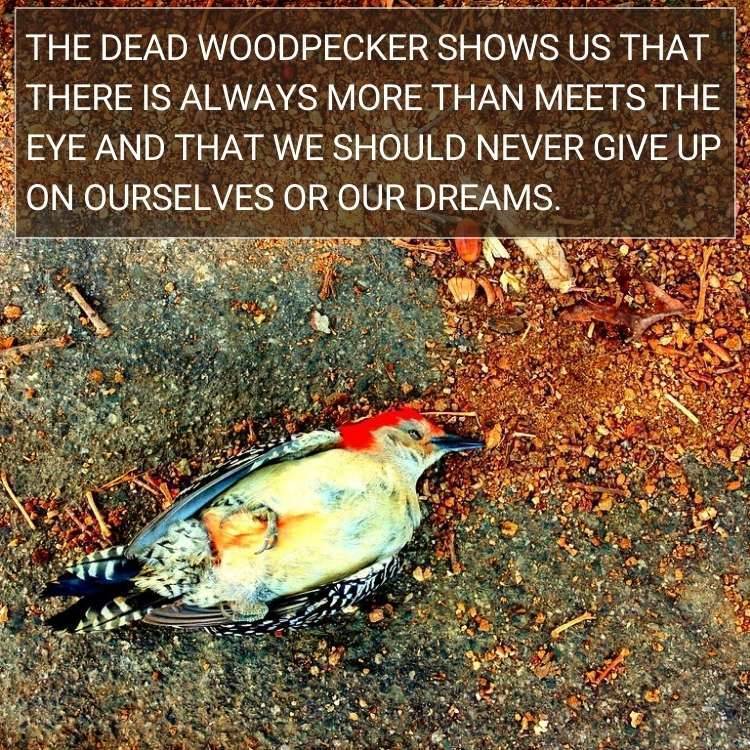
When it dies, the drumming stops. And the folk traditions that grew up around this bird aren’t wrong to find meaning in that silence. Across the sources I find credible, the reading converges: something that was actively persisting, protecting, maintaining a rhythm, has finished. The project may not be dead. The rhythm needs to change.
I write about animal symbolism because I’ve spent years watching what grief and wild animals do to a person’s attention. I’m not a shaman. I don’t sell readings. What I can tell you is that the traditions worth trusting on this specific bird are old, specific, and not catastrophic.
What Should You Do When You Find a Dead Woodpecker?
First thing is not interpretation. It’s grounding. You found something unexpected in a place that felt personal, and that feeling is worth sitting with before you decide what it means.
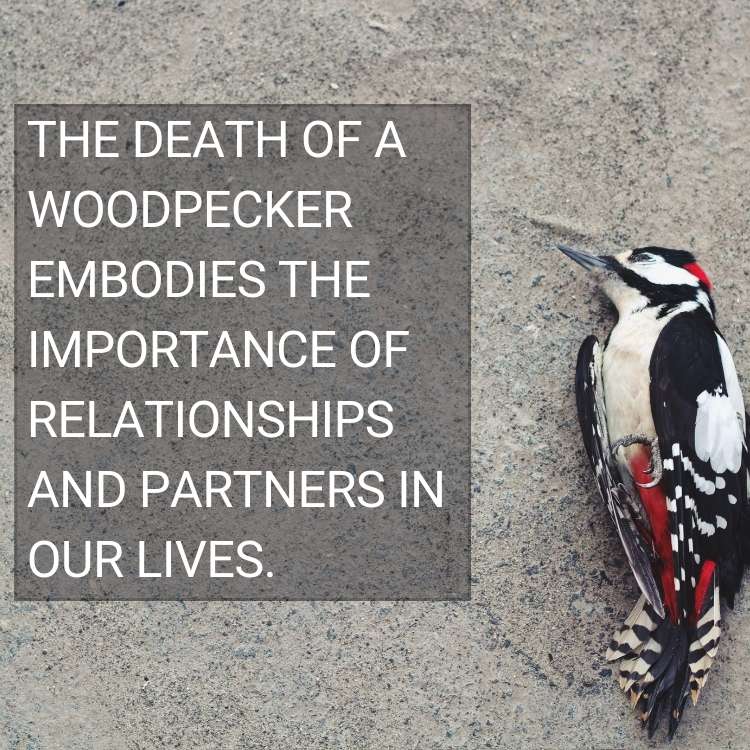
Practically: wear gloves. Double-bag the bird. Under the Migratory Bird Treaty Act of 1918, possessing wild bird remains is federally restricted in the US, so burial in your own yard is the standard option. If you want to mark the moment, and many people do, a brief acknowledgment before you cover the bird is enough. Say something simple. Thank it for the drumming. You don’t need a tradition for that.
The reflection comes after. What have you been working on without a break? What has felt like returning to the same wall over and over? A dead woodpecker, in the traditions I find credible, is less a warning and more a prompt. Sit with that before you proceed to what it “means.”
Does Where You Found It Change the Meaning?
Yes. More than most people realize.
In the yard or field, the reading is broad. Something in your outer life is asking to slow down. The bird died in open territory. The signal is general.
At your doorstep or porch, it tightens. The threshold in folk tradition across cultures is not neutral ground. It’s the boundary between your private world and everything outside it. In Slavic rural folklore documented by German and Russian ethnographers through the 19th century, a dead woodpecker at the front door was taken as a sign that something guarded in the home was completing a cycle. Not ending badly. Completing.
Inside the home is rarer, and harder to sit with. If a woodpecker died inside, flew through an open window, came down a chimney, the older Appalachian folk-magic traditions I’ve read about (I grew up hearing some of this secondhand; I don’t claim it as my own) would treat this as a more urgent personal signal. Something you’ve been holding onto may need to be released rather than kept.
And if the bird was damaged, headless, broken, I know that detail is hard to get past. You’re not making it up. Condition and placement together do carry weight in omen traditions. But damaged doesn’t mean cursed. It means the cycle ended abruptly, not gently. That’s a different thing.
What Do Different Cultural Traditions Say About the Woodpecker in Death?
The most specific Western source I know is Ovid’s Metamorphoses, Book XIV, where the figure of Picus, a prophetic king, is changed into a woodpecker by Circe. Picus in Roman religion wasn’t minor. He was a god of agriculture and augury; the woodpecker’s role as a protective sign runs through Roman folk belief from at least the 3rd century BCE onward. Pliny the Elder, writing in 77 CE, records the bird as sacred to Mars and tied to both prophecy and active defense. Its death, in that framework, closes a protective watch.
In early Slavic folk tradition, and I want to be honest that the documentation here passes through 19th-century German and Russian folklorists, so read it with some caution, the woodpecker connected to the world-tree, the cosmic pillar that holds everything up. The bird’s drumming was the tree’s pulse. When it stopped, the belief was that something in the structure of your personal world was ready to shift. Restless souls were sometimes associated with the bird. Not malevolent. Restless.
In early Irish literature, as Proinsias Mac Cana documents in Celtic Mythology (Hamlyn, 1970), shape-shifting figures carrying otherworldly knowledge appear as large birds perched at boundaries. The woodpecker doesn’t show up directly in the Irish material I’ve read, but the symbolic grammar maps clearly: bird at the threshold, bird as carrier of knowledge from in-between places.
What Does the Woodpecker’s Drumming Symbolize, and What Stops When It Dies?
The Cornell Lab of Ornithology’s Birds of North America account (updated 2019) notes that drumming serves two functions simultaneously: territorial announcement and mate attraction. It is, in behavioral terms, coded communication and boundary-setting at once.
A bird that spends its life announcing its presence and defending its ground carries a specific symbolic grammar. When it dies, the announcement stops. The boundary goes unguarded. Most traditions converge on that silence as the spiritual message: something that was actively working has finished.
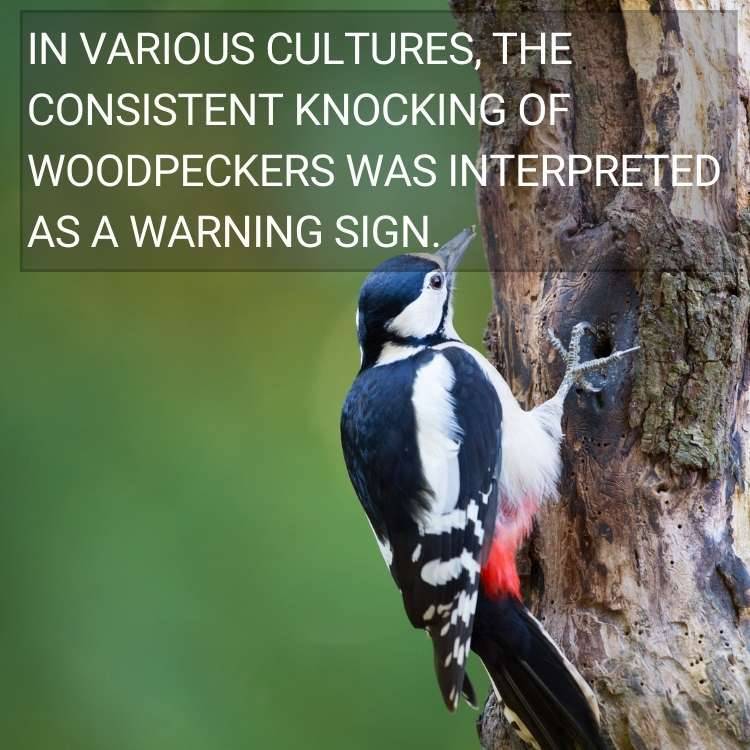
I read this as less threatening than it sounds. The drumming was not all that was holding things together. Your life doesn’t collapse when the woodpecker stops. But if the bird was working your yard or your windowsill regularly and then appeared dead, the question worth sitting with is: what in your own life has been running on the same automatic rhythm, and is that rhythm still serving you?
What Is the Spiritual Meaning of a Dead Woodpecker Across Native American Traditions?
I want to be careful here. “Native American traditions” covers hundreds of distinct nations with distinct relationships to this bird. I’m not going to collapse them into one reading.
What Thomas E. Mails documents in The Mystic Warriors of the Plains (Doubleday, 1972) is the role of bird regalia and feather medicine in Plains warrior societies, where specific birds, hawks, eagles, particular woodpecker species, associated with protection, acute perception, and disciplined scouting. In some Woodland contexts recorded by the National Museum of the American Indian, the woodpecker connected to persistence and steady work rather than the soaring vision of the eagle. According to NMAI interpretive material on bird symbolism in Native regalia and ceremony, the death of a medicine bird could be read as the closing of a protected cycle. Completion, not punishment.
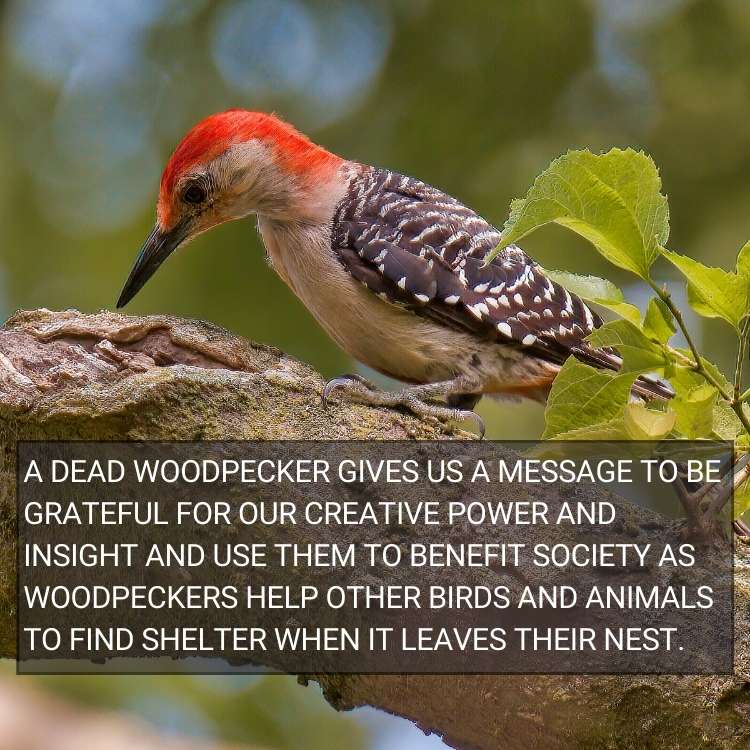
I’m not Cherokee, Lakota, or Ojibwe, and I don’t claim those frameworks as my own. What I can say is that across the Plains and Woodland records available to me, no tradition I’ve found treats the dead woodpecker as a sign of harm coming to the finder.
Frequently Asked Questions
Is finding a dead woodpecker a bad omen?
Not in the traditions that treat this bird specifically. Pliny the Elder in Natural History records the woodpecker as sacred to Mars, tied to protection rather than destruction. Its death signals the end of a protective watch, not the arrival of harm. The bad-omen reading you may have come across tends to come from generic dead-bird articles that don’t distinguish between species. The woodpecker carries its own symbolic grammar: persistence, protection, rhythmic effort. When it dies, those things pause or shift. They don’t reverse.
What does it mean spiritually if a woodpecker dies at your window?
Window strikes are common, the American Bird Conservancy estimates up to a billion birds die from window collisions in the United States annually, so there’s a plain physical explanation worth knowing first. But the placement at your window, the boundary between inside and outside your home, does carry weight in folk traditions. The reading I find most consistent: something you’ve been watching from a distance, or something watching over your home, has completed its task. Not a warning about what’s coming. A signal that something is finishing.
Does the species of woodpecker change the spiritual meaning?
Somewhat, though I’m not confident the folk record is detailed enough to give species-specific readings with any authority. What I can say is that size and drumming volume appear to correlate with symbolic weight. A Pileated Woodpecker, the largest in North America, carries more presence in Woodland Indigenous contexts than a Downy. A Pileated dying near your home feels different in the body, and I think that physical difference is part of the meaning. But the folk record is thin here, and I won’t pretend otherwise.
What does a dead woodpecker mean in love or relationships?
The direct folk evidence connecting woodpeckers to romantic relationships specifically isn’t strong. The broader reading does apply if that’s where your life’s main effort has been lately. If you’ve been trying to break through a wall in a relationship, the dead woodpecker reads as a prompt to try a different approach rather than the same rhythm again. But I wouldn’t read it as a sign the relationship itself is over. That’s a much larger claim than the bird supports.
Is a dead woodpecker a sign from a deceased loved one?
I don’t believe animals carry messages from the dead. I want to be plain about that. What I do believe is that grief makes us more attentive, and that attentiveness is real even when the mechanism isn’t supernatural. If someone you lost was associated with persistence, steady work, a particular kind of drumming through life, a dead woodpecker appearing in a tender moment can land like a recognition. That recognition is yours. I won’t tell you it’s nothing. I also won’t tell you it’s a message in the literal sense.
What does it mean if you find a dead woodpecker more than once?
Take it seriously on a practical level first. Woodpeckers die from window strikes, predation by Cooper’s Hawks or Sharp-shinned Hawks, and in some years from disease outbreaks. If you’re finding multiple dead birds in a short period, contact your state wildlife agency; they track disease patterns and can tell you if something is moving through local populations. Once you’ve ruled that out, the symbolic reading of repetition in most folk traditions is simply: the message is asking to be heard. Not that the warning is worse. That you haven’t yet sat with it.
How is a dead woodpecker different symbolically from a dead crow or dead robin?
Each bird earns its reading from its own life. The crow, in Celtic and Norse traditions, connects to prophecy and the battlefield, and to a cognitive complexity most birds don’t match behaviorally. A dead crow tends to read as a closing chapter in how you see the world. The robin, in English folk tradition, ties to the hearth and domestic protection; its death near the home carries a gentler grief. The woodpecker’s specific meaning comes from its drumming, its persistence, and its protective associations in Roman and Native traditions.
Should you bury or move a dead woodpecker you find?
Move it, yes. Leaving it in a public space means someone else finds it, which isn’t ideal. Under the Migratory Bird Treaty Act of 1918, it’s federally illegal to possess wild bird remains in the US, even found ones, so burial in your own yard is the practical answer. Whether you make a small ritual of it is your choice. Many people find that a brief acknowledgment settles something. You don’t need a belief system to stand over a small grave and say: I saw you. I’m sorry you’re gone. That’s enough.
Sources
- Richard Alois, About This Site
- Richard Alois, Animal Symbolism Index
- Richard Alois, Symbols Overview
- Woodpecker Feather Spiritual Meaning, richardalois.com
- Ovid, Metamorphoses, Book XIV (Picus and the woodpecker-king of Roman augury tradition)
- Pliny the Elder, Natural History, 77 CE (woodpecker as sacred to Mars; prophetic and protective associations)
- Thomas E. Mails, The Mystic Warriors of the Plains (Doubleday, 1972)
- National Museum of the American Indian, Smithsonian Institution, interpretive texts on bird symbolism in Native regalia and ceremony
- Proinsias Mac Cana, Celtic Mythology (Hamlyn, 1970)
- Cornell Lab of Ornithology, Birds of North America accounts for Downy and Pileated Woodpecker (updated 2019)
- American Bird Conservancy, window collision mortality estimates for North American birds

What if your the one that accidentally hit them with a car?
Hi there Annabelle,
Accidents happen, and it’s unfortunate when they involve animals. It’s important to remember that it wasn’t intentional. Use this as a reminder to be more mindful and cautious on the road. Nature will understand.
Best,
Richard Alois
It flew not my sliding door in the living room and died what is this telling me
Hey Denise,
I’m sorry to hear about the woodpecker flying into your sliding door. Encountering a dead woodpecker can be a powerful symbol. In various cultures, it can signify the need for reflection or a transition in life. It might be a reminder to appreciate our unique qualities, or it could symbolize the end of a phase and the beginning of something new. Take a moment to reflect on any changes or feelings you’ve been experiencing lately. Nature often has its way of communicating with us, even in unexpected ways.
Warm regards,
Richard
Last week a bird’s scream got my attention and I checked what kind of bird it was. It was a woodpecker. Beautiful bird. I checked the significance and it was a wonderful encouraging message. I was grateful. Yesterday I found it dead at my doorstep… a trophee from one of my cats offered to me. In reading your article it has further enhanced his message for me. Thank you for this article. ??. It all matches with my current situation and it brings me comfort, reassurance and clarity.
Dear Francine, I’m really sorry to hear about the woodpecker, that must have been tough. It’s always a bit heart-wrenching to lose a creature that brought a bit of joy and hope, isn’t it? But I’m genuinely glad the article could offer you some comfort and clarity during this time. Nature does have its unique way of sending us messages, and it’s pretty special that you could find the positive in it. I hope you keep stumbling upon little signs and symbols that bring you peace. Thanks a bunch for sharing your story with us, it’s really touching. ??
Hello. Any thoughts on having witnessed a flying green woodpecker getting attacked in flight by a bird of prey? (guessing it was a falcon, maybe a buzzard)
Dear Cesare, Witnessing such a dramatic moment in nature can be both awe-inspiring and unsettling. The green woodpecker, with its vibrant plumage and energetic flight, represents joy and the vitality of life. Seeing it attacked by a predator like a falcon or buzzard reminds us of the natural cycle and the raw realities of survival. It’s a powerful observation of nature’s balance—predation plays a critical role in maintaining healthy ecosystems. If you’re feeling troubled by the event, try to see it as a natural process. It’s also a reminder of the resilience of life and the importance of appreciating the beauty and fragility of our natural world.
Thx for your comment?